Boston Fern vs Kimberley Queen Fern: Which Fern Fits Your Room?
Boston fern vs Kimberley Queen fern compared by frond shape, humidity needs, mess, light, and pet safety — pick the right Nephrolepis fern.
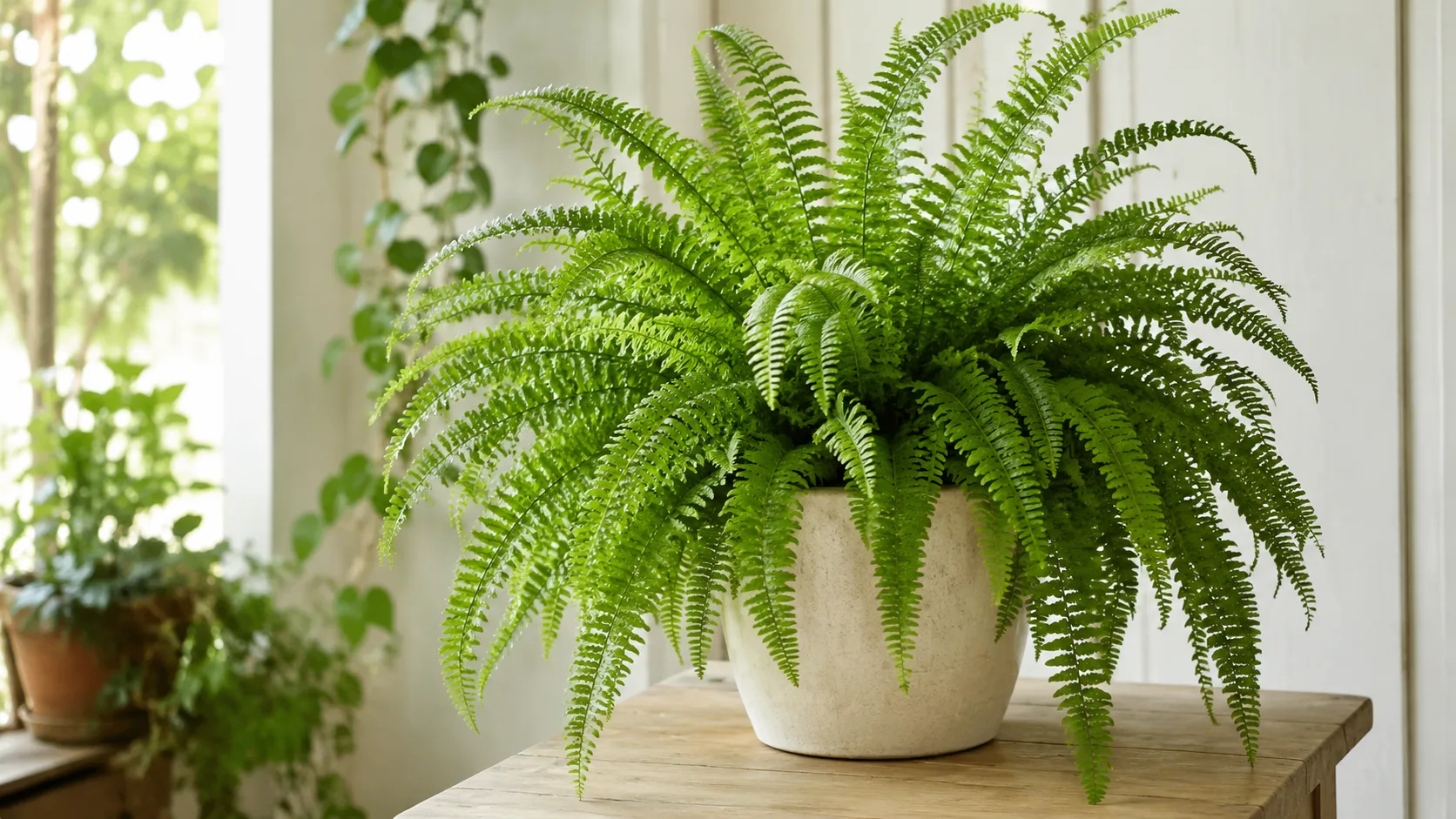
Boston fern (Nephrolepis exaltata) and Kimberley Queen fern (Nephrolepis obliterata) sit beside each other in the fern aisle — both Nephrolepis, both pet-safe reputations — but they behave differently indoors. Boston is the weeping hanging-basket classic that punishes dry air. Kimberley Queen is the upright sword fern that forgives average rooms a little more.
We have swept Boston fern fronds off a living room floor every January when the heat kicked on — dry air triggers mass shed within days. Kimberley Queen in the same room held fronds with only minor tip crisping. We have also hung Boston fern in a steamy bathroom where it looked lush for months — the humidity it actually wants. The fern that thrives is the one matched to your room’s air, not the one with the prettier photo on the tag.
Use the Boston fern hub and the dedicated Kimberley Queen fern guide for species routines.
Two Nephrolepis species, two silhouettes
NC State on Boston fern describes long arching fronds, high humidity needs, and bright indirect light — classic porch or bathroom fern.
Kimberley Queen (N. obliterata) is profiled by USDA PLANTS as a distinct species with upright sword fronds — see our Kimberley Queen fern guide for indoor targets.
Missouri Botanical Garden on N. exaltata frames Boston fern as a common indoor hanging plant. Clemson HGIC on indoor ferns covers humidity fundamentals for the group.
Bench ID: weeping soft vs upright sword
Boston fern: soft, arching, feathery fronds that weep over pot edges — built for hanging baskets. Fronds are flexible, bright green, often 2–3 feet long on mature plants.
Kimberley Queen: stiff, upright, sword-shaped fronds in a bushy clump — grows vertical, not cascading. Fronds are narrower and more rigid than Boston.
If fronds hang like a green waterfall, it is Boston. If they stand like blades in a vase-shaped clump, it is Kimberley Queen.
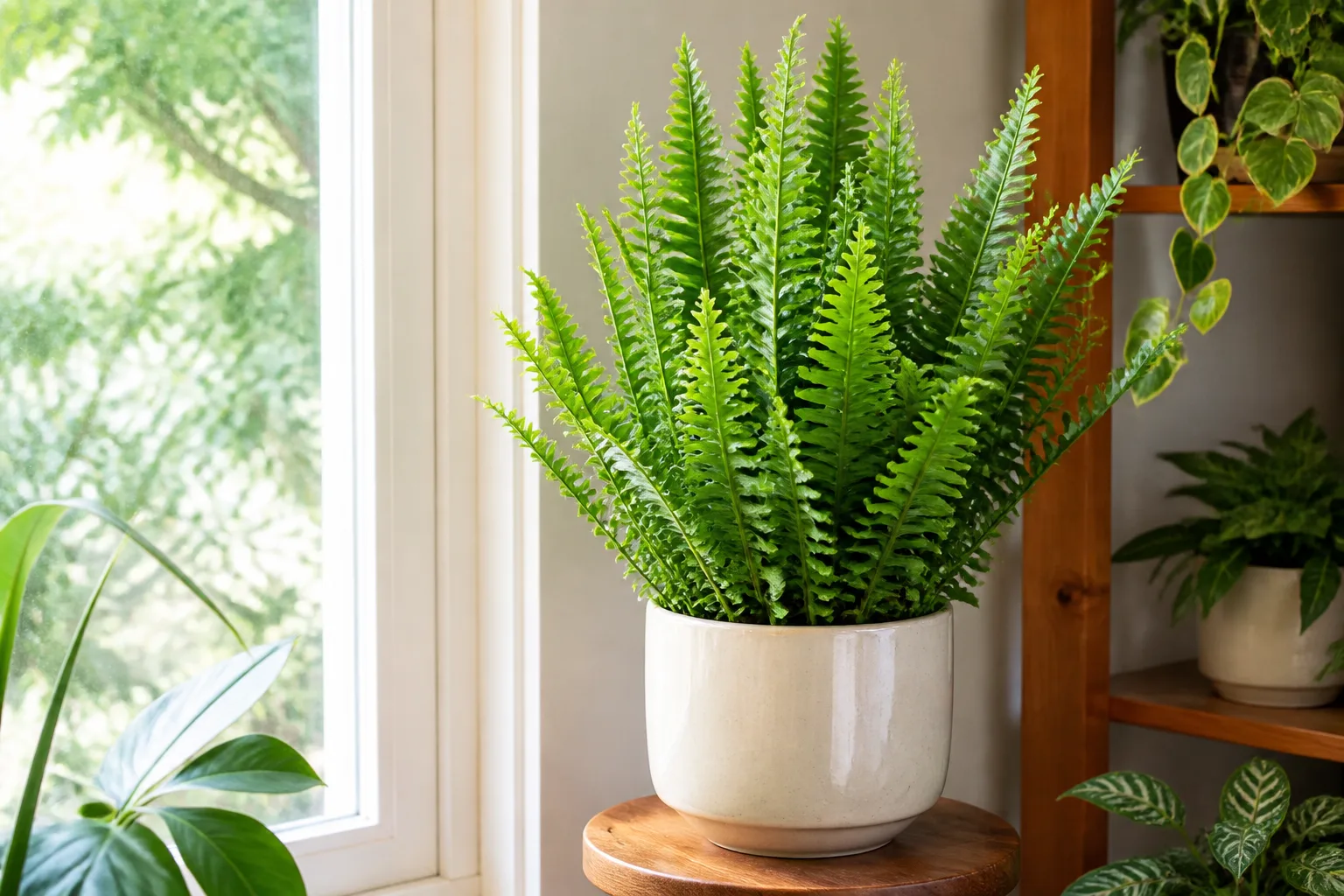
Do not confuse with asparagus “fern” — not a true fern, different care, different pet listing. Confirm Nephrolepis on the tag.
Humidity and the winter shed problem
Boston fern is the first to drop fronds when winter heat dries the air. RHS on N. exaltata emphasizes moist compost and shaded humid conditions.
Kimberley Queen still wants humidity but holds fronds longer when air is merely average — a humidifier helps both, but Boston needs it more urgently in arid climates.
Our winter pattern: Boston fern in a dry living room loses dozens of fronds unless we run a humidifier or move it to the bathroom. Kimberley Queen on a plant stand survives with pebble tray humidity alone.
For humidity gear, see indoor fern plant care guide.
Light and placement
Boston prefers bright indirect or dappled shade — UF/IFAS on Boston fern highlights shaded hanging baskets outdoors; indoors, avoid harsh south glass.
Kimberley Queen accepts slightly brighter positions without scorching as quickly — useful away from the dampest bathroom corner.
Humid bathroom hanging basket: Boston fern — if the window provides enough indirect light.
Heated living room floor pot: Kimberley Queen — less mess under the pot when humidity dips.
Watering: both moist, Boston collapses faster
Neither likes bone-dry root balls or saucers full of water. Boston collapses faster when dry — fronds yellow and fall within days.
Kimberley Queen tolerates brief surface dry-down if you soak thoroughly afterward. Both need drainage holes and emptied saucers within 30 minutes.
Compare Boston fern watering with Kimberley Queen guidance in growing Kimberley Queen ferns.
Summer vs winter: both slow evaporation in humid months — check soil, not calendar. Overwatering in winter when evaporation is slow rots both.
Pet safety: both generally pet-safe
ASPCA lists Boston fern as non-toxic to cats and dogs.
Kimberley Queen is not separately listed but shares the Nephrolepis genus — widely sold as pet-safe with the same family profile.
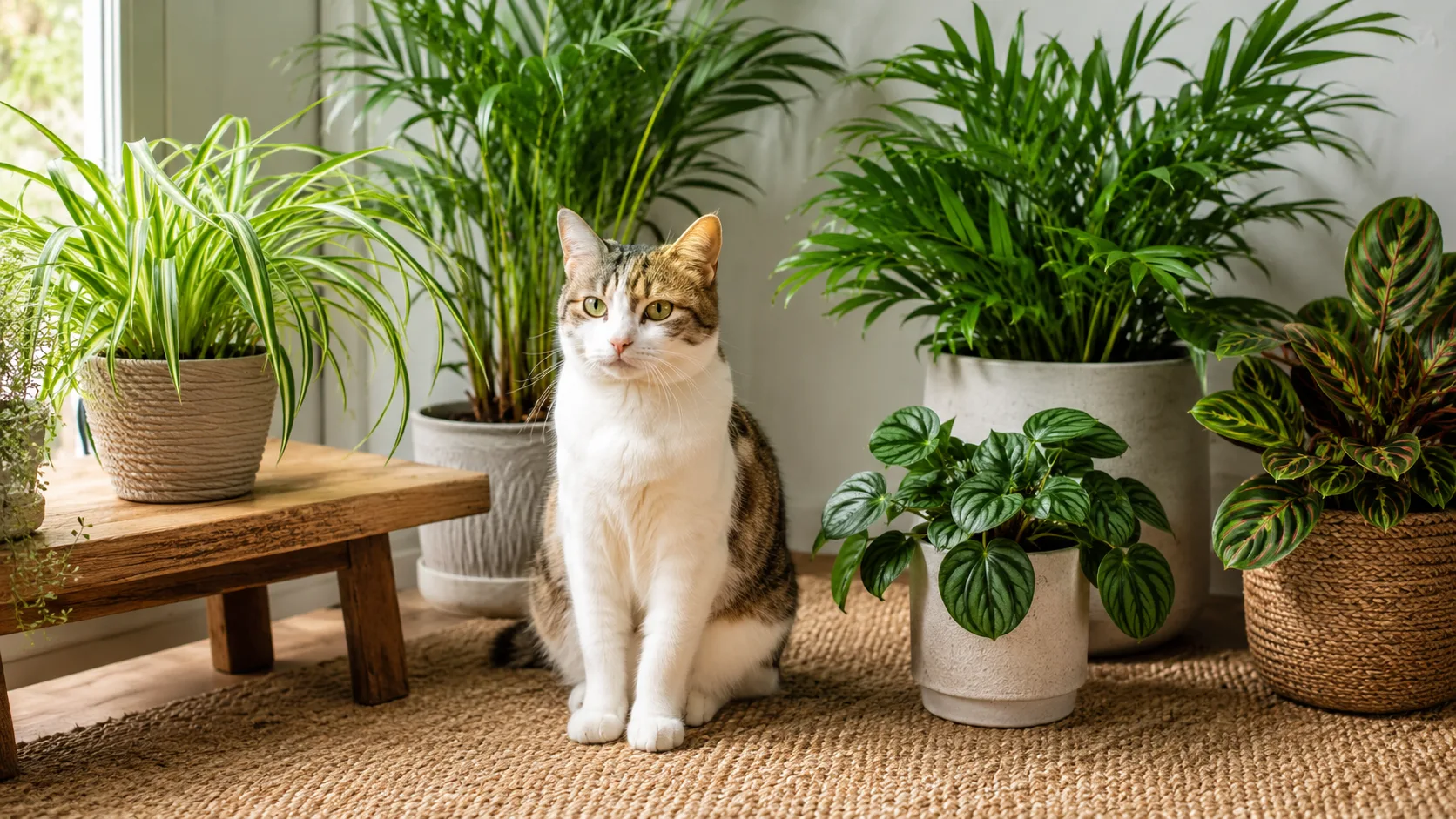
Chewing any plant can cause mild stomach upset. Low-hanging Boston fronds tempt cats — hanging height helps. Browse pet-safe houseplants for more options.
Side-by-side comparison
| Factor | Boston fern (N. exaltata) | Kimberley Queen (N. obliterata) |
|---|---|---|
| Frond shape | Soft, arching, weeping | Stiff, upright, sword-like |
| Habit | Hanging basket classic | Upright floor pot |
| Humidity | High; crisp/drop if dry | Moderate; tolerates average rooms better |
| Light | Bright indirect; shade tolerant | Bright indirect; some morning sun OK |
| Mess | Sheds fronds when stressed | Sheds less under mild stress |
| Water | Evenly moist; wilts when dry | Evenly moist; top inch dry briefly OK |
| Pet safety | ASPCA non-toxic | Same genus; widely pet-safe |
| Beginner fit | Challenging in dry heat | Moderate |
Which fern to choose
Humid bathroom hanging basket: Boston fern.
Heated living room floor pot: Kimberley Queen.
Maximum soft cascade: Boston.
Less sweep-under-the-pot cleanup: Kimberley Queen.
Pet-safe greenery: either — confirm Nephrolepis on tag, not asparagus “fern.”
Dry desert winter without humidifier: consider cast iron plant instead of Boston.
Frond grooming and the mess factor
Boston fern sheds brown fronds at the soil line constantly — even when healthy. This is normal aging, not always a crisis. Snip dead fronds at the base with clean scissors; do not pull — you may uproot live crowns.
Kimberley Queen sheds less under mild stress but still needs dead frond removal at the crown. Less sweep-under-the-pot debris is the main indoor advantage — not zero maintenance.
Division and repotting: both divide at repot in spring. Boston fern divisions fill hanging baskets fast — one pot becomes three gifts. Kimberley Queen divisions stay upright and bushy — better for floor-pot multiplication.
Never use leaf shine on either fern — it blocks stomata and accelerates crisping in dry air.
Outdoor summer option
Both can summer outdoors in shaded, humid spots — porch or dappled patio. Boston fern weeps beautifully from a hook; Kimberley Queen handles slightly more morning sun on a stand.
Bring indoors before first frost. Acclimate gradually — sudden move from humid patio to dry heated living room triggers Boston shed within days. Kimberley Queen transitions with less drama.
Common mistakes we see in real homes
Hanging Boston fern directly in AC airflow — dry blast beats humidity from the bathroom down the hall. Move the basket or deflect the vent.
Assuming ferns want shade means no light — both need bright indirect. Dark corners produce sparse, yellowing fronds on either species.
Confusing asparagus fern with Boston fern — asparagus fern is not Nephrolepis; different pet listing, different care, different mess.
Letting Kimberley Queen sit in a full saucer because “ferns like water” — wet feet rot both. Moist mix, not standing water.
Related: types of fern, Boston fern hub.
Conclusion
ID: weeping soft fronds → Boston. Upright sword clump → Kimberley Queen.
Choose: cascade + humidity commitment → Boston. Easier fern in average rooms → Kimberley Queen.
Care: both want moist mix and drainage; Boston punishes dry air faster.
Follow the Boston fern hub or Kimberley Queen fern guide — not a generic “fern” schedule.