Boxwood Turning Brown? 6 Causes and How to Fix Them
Brown boxwood leaves can mean winter burn, drought, root rot, salt, pests, or blight. Learn what to check first and which fix matches your shrub.
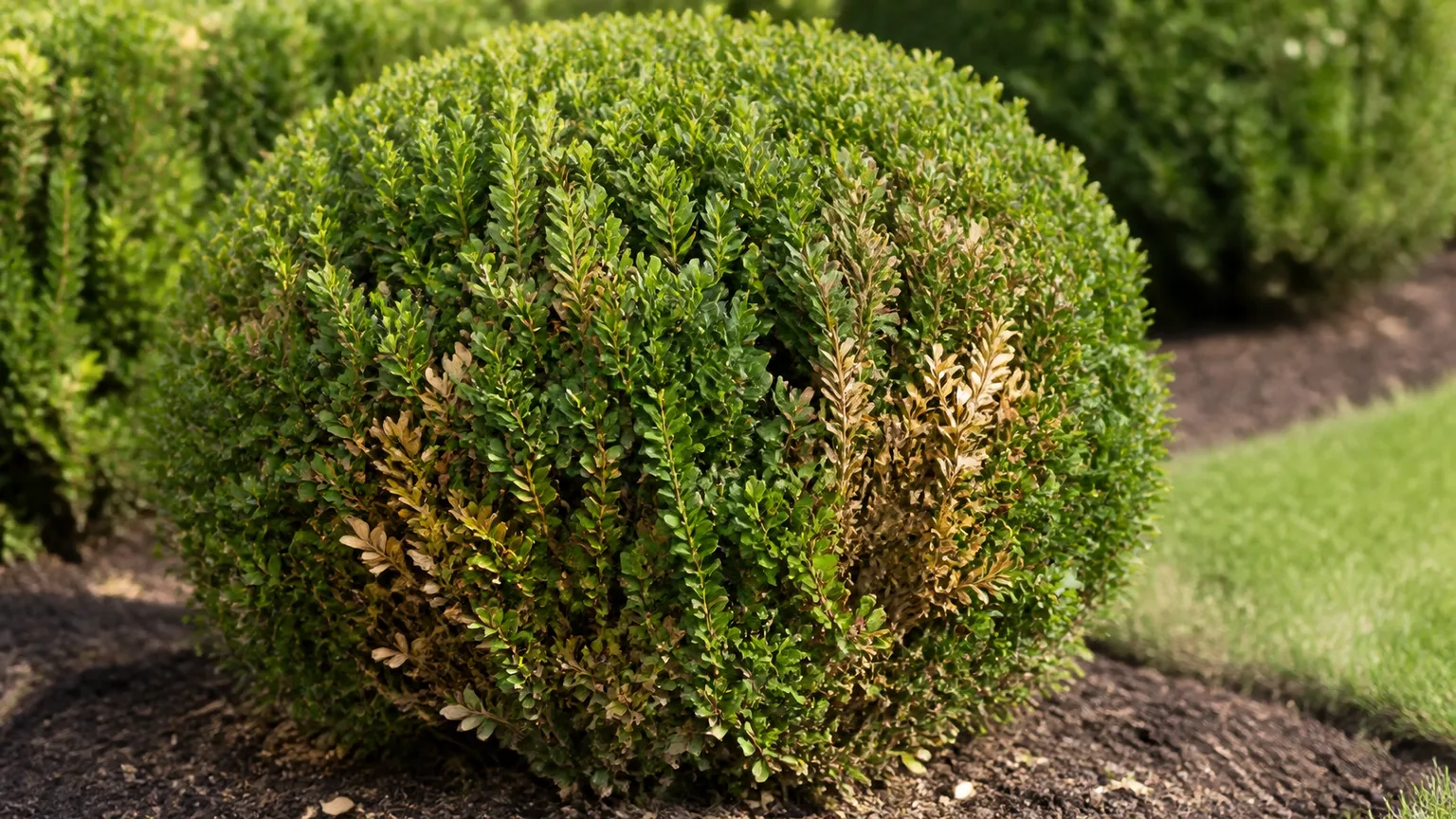
A boxwood hedge can look fine in November and bronze by March without any single obvious culprit. Brown leaves may mean winter wind pulled moisture from foliage while frozen soil blocked uptake, or they may mean roots are rotting in a bed that never dries out. The same brown color can follow salt spray, concentrated dog urine, mite stippling, or a fast-moving foliar disease.
The fix depends on the pattern, timing, and what you find under the mulch—not on the color alone. Before you water again, fertilize, spray oil, or shear the shrub into a smaller shape, spend fifteen minutes mapping the damage. The six causes below are the practical buckets most brown boxwoods fall into, and each one has a different first action.
Brown Boxwood Leaves Are a Symptom, Not a Diagnosis
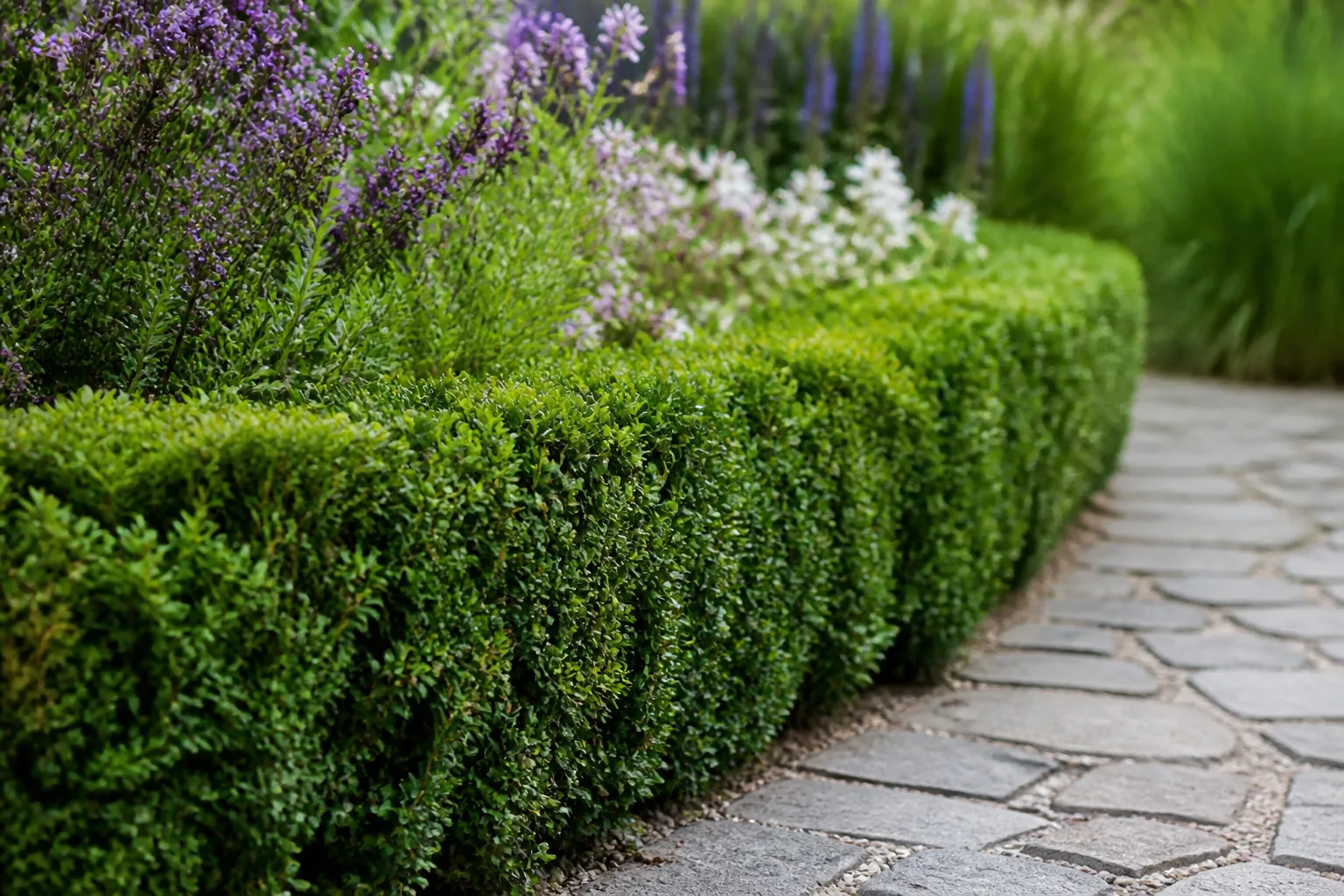
Boxwoods (Buxus spp.) are evergreen, but evergreen does not mean every leaf stays green forever. Older interior foliage ages out, newly planted shrubs react to root disturbance, and exposed leaves can bronze after a dry, windy winter. A whole row can also brown from one shared problem—a leaking emitter, compacted soil along a driveway, or deicing runoff that collects in a low spot.
The useful distinction is between localized, seasonal discoloration and progressive decline. A few dry outer leaves on an otherwise vigorous hedge are less alarming than browning that climbs into new growth, comes with black stem streaks, or appears while the soil stays saturated and the plant wilts anyway.
University of Illinois Extension emphasizes that boxwood blight is difficult to confirm by eye because winter injury, root rot, leafminer damage, Volutella blight, and other disorders can look similar. That is why a brown leaf by itself is weak evidence; the combination of where the color appears, when it started, and what the roots and stems look like is far more reliable. (University of Illinois Extension)
If your shrub is yellowing rather than browning, or the color is mixed yellow and bronze, see our companion guide on yellow boxwood leaves for overlapping causes and a parallel diagnostic map.
Read the Pattern Before You Treat
Use this table to choose your first check. It is not a substitute for a lab diagnosis, but it prevents the most expensive mistake: treating leaf color instead of the underlying stress.
| What you see | More likely direction | Check first |
|---|---|---|
| Bronze, tan, or orange on the windward or sunny side after winter | Winter burn or cold desiccation | Sheltered foliage, buds, and stem flexibility |
| Crispy brown tips during heat or after a dry spell | Drought or shallow watering | Soil moisture below the mulch at the drip line |
| Whole shrub dull, soil wet, wilt despite moisture | Root stress or Phytophthora | Drainage, crown burial, and fine roots |
| One-sided browning by a road, walkway, or dog route | Salt spray or concentrated urine | Exposure edge and soil salinity |
| Fine stippling, mines inside leaves, bumps on stems | Pests | Leaf undersides, new tips, and inner canopy |
| Spots, black stem streaks, rapid leaf drop | Fungal disease including blight | Lower canopy, stems, and nearby boxwoods |
Do not assume the shrub is thirsty because it looks brown. Phytophthora root and crown rot can make a well-watered plant wilt and discolor, and adding more water accelerates root decline. Conversely, do not assume disease because a few outer leaves browned after a freezing, windy week when the inner canopy is still green and buds are firm.
1. Winter Burn and Cold Desiccation
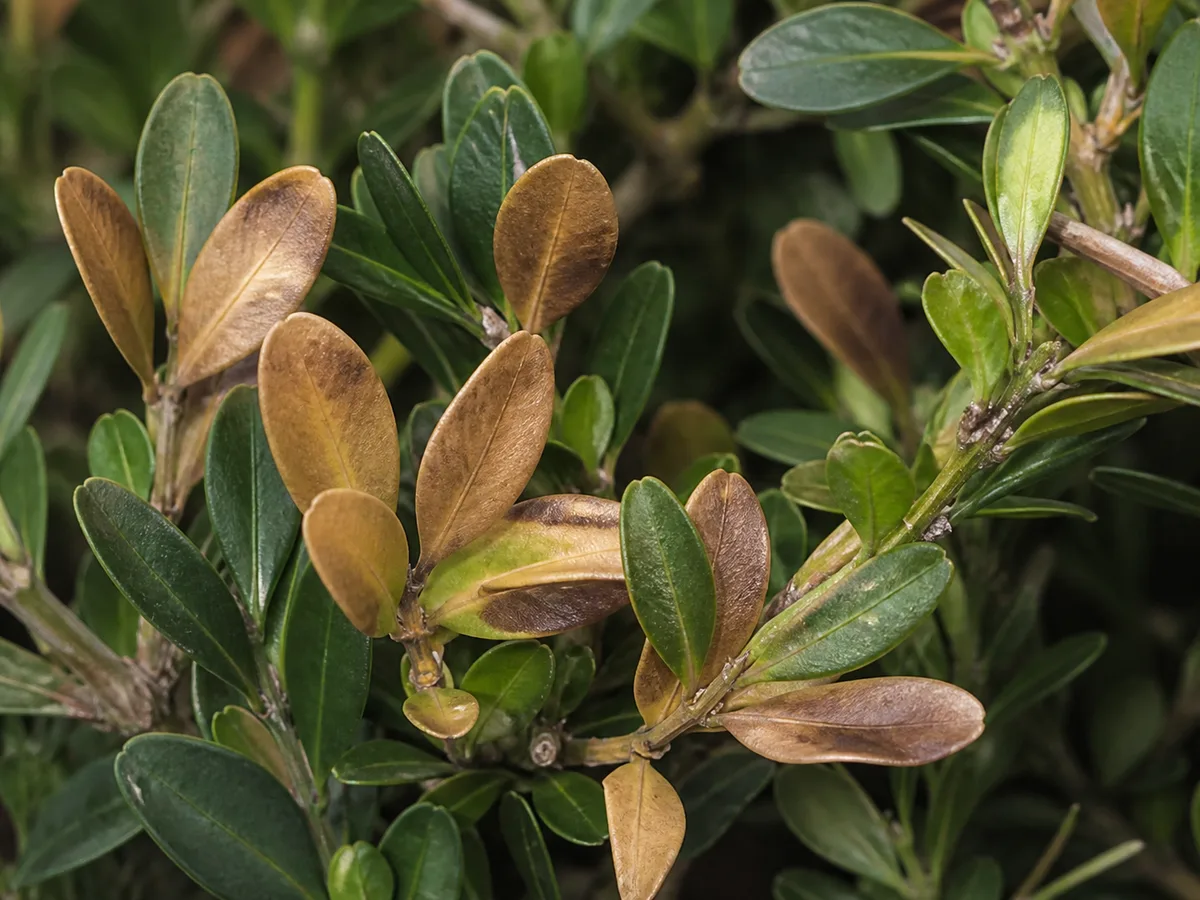
Winter burn is dehydration, not freezing tissue in the way many gardeners imagine it. Cold, dry wind and direct winter sun pull moisture from evergreen leaves while frozen or cold soil limits the roots’ ability to replace that water. The result is bronze, tan, orange, or brown foliage, often concentrated on the southwest face, the windward side, or the top of a hedge rather than spread evenly through the plant.
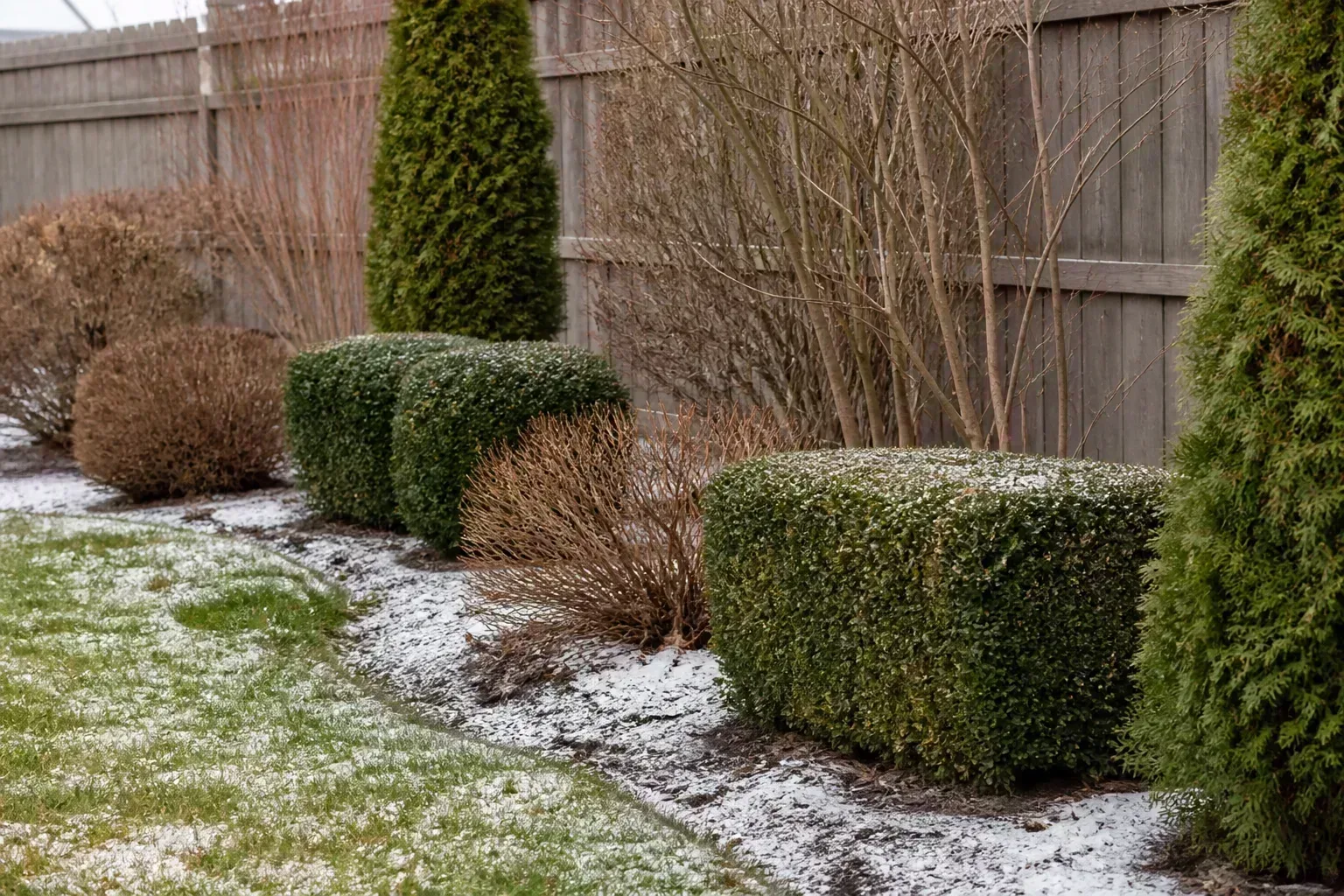
Damage frequently becomes obvious in late winter or early spring, when the shrub resumes growth and the injured leaves fail to regain color. A “snow line”—healthy lower growth protected by snow below a distinct band of damaged foliage—can also point to winter injury. Newly planted boxwoods, shrubs beside reflective pavement, and plants that went into winter with a dry root zone are especially vulnerable.
The Morton Arboretum Plant Clinic has repeatedly noted that harsh winter conditions, including polar cold and drying wind, are a leading reason Chicago-area boxwoods brown in spring even when no disease is present. The pattern is often directional and seasonal rather than spotted or rapidly defoliating.
How to Tell Weather Damage From Disease
Start with direction and timing. If browning is mostly on the exposed face, appeared after a freeze or drying wind event, and the inner canopy remains green with plump buds, weather stress is the better first hypothesis. Gently bend a few twigs; flexible wood with live buds means waiting for spring growth before making heavy cuts.
Disease is more suspicious when browning is accompanied by circular leaf spots, black linear or diamond-shaped stem lesions, white spore masses under leaves, or rapid defoliation from the lower or interior canopy. Boxwood blight can spread through a hedge in warm, wet weather, while winter injury often traces to a single weather event on an exposed surface. The Pacific Northwest Plant Disease Management Handbooks recommend scouting the lower and interior canopy after wet periods because the most useful disease signs hide inside dense growth. (Pacific Northwest Plant Disease Management Handbooks)
For winter burn, water only when the root zone is actually dry and the soil can accept moisture—usually after the ground thaws. Apply a 2- to 3-inch mulch layer over the root zone while keeping it away from stems and the crown. Before the next severe season, consider a breathable burlap wind screen on the exposed side; avoid wrapping plants tightly in plastic or keeping wet fabric pressed against foliage.
Anti-desiccant sprays can reduce moisture loss on some evergreens when applied in late fall and again during mid-winter thaws on label-approved plants, but they are a supplement, not a substitute for soil moisture and site protection. If buds are dead on a branch, that wood may not leaf out again; if buds are alive, patience through one growing season is often the real “fix.”
2. Drought Stress and Root-Ball Dryness
The opposite moisture problem also turns boxwood brown. Dry soil, reflected heat from pavement, hot wind, and shallow irrigation all reduce water available to leaves. Drought stress often begins in older or outer foliage; leaves may look dull, slightly curled, or progress from yellow-brown to tan and crispy at the margins.
Young boxwoods are especially vulnerable because the nursery root ball can dry out while the surrounding bed still feels damp on the surface. A finger test at the surface is misleading—push a narrow trowel or soil probe several inches deep at the drip line. If the root ball is dusty dry while outer soil is moist, the plant needs slow, deep watering at the ball, not another sprinkle on the mulch.
Container boxwoods brown faster for the same reason: limited soil volume heats and dries quickly. Confirm the drainage hole is open and that a decorative outer pot is not holding standing water after you water; alternating drought and waterlogging is common in pots.
Do not fertilize a drought-stressed boxwood to “green it up.” Fertilizer salts can burn tender roots when the plant cannot take up water normally. Recovery begins with consistent moisture through the root zone, then watch for firm new growth with normal color—not the immediate recoloring of old leaves.
3. Waterlogged Soil and Phytophthora Root Rot
Too much water is not simply a scheduling error. When soil stays saturated, oxygen leaves the pore spaces, feeder roots decline, and Phytophthora species can infect roots and crowns. The canopy may turn dull green, yellow-brown, reddish, or bronze, and the plant can wilt even though the soil feels wet.
Look for site clues: the brownest plant is often in a low spot, below a downspout, beside a leaking drip emitter, or in compacted clay where runoff collects. One shrub declining in the wettest part of a hedge points toward the root zone; several shrubs declining after the same irrigation change points toward a shared water-management problem.
UC IPM identifies prolonged saturation and poor drainage as central risk factors and cautions that plants with Phytophthora do not recover simply because they are irrigated more. Mildly affected plants may stabilize when drainage improves, but a substantial root or crown infection is difficult to reverse. (UC IPM)
What to Inspect Below the Soil
If the soil is wet and the shrub is declining, do not start by digging up the entire plant. Clear mulch from the crown and check whether the trunk-like base is buried. Boxwood should sit at its original soil line, and mulch should not be piled against stems. Then dig a small inspection hole near the outer edge of the root ball where you can see roots without destroying the whole system.
Healthy fine roots are usually firm and light-colored. Rotten roots are sparse, dark, brittle, or mushy; crown bark may also be discolored or loose. Utah State University Extension describes yellow, reddish-brown, or gray foliage as a late symptom of Phytophthora on ornamentals and stresses that roots and the crown must be examined for a confident diagnosis. (Utah State University Extension)
If drainage is the issue, redirect downspouts, repair irrigation, or raise a future planting area before replanting. Do not bury a boxwood deeper in compost hoping the amendment acts like a drain—a bowl-shaped hole can hold water around the root ball. When roots are badly decayed, removal may be more practical than rescue; keep soil and wet debris from moving into healthy beds, clean tools, and ask a local Extension office whether a root sample would clarify the cause before replanting another susceptible shrub in the same spot.
4. Salt Spray, Deicing Products, and Dog Urine
Boxwoods beside salted roads, driveways, sidewalks, or heavily treated paths can bronze or brown from salt spray and salt-laden runoff. Spray injury is often one-sided and becomes visible in spring; salts that enter soil damage roots more slowly and may show as weak growth, marginal burn, or decline during hot, dry weather.
The University of Delaware explains that road salt can dehydrate evergreen foliage, disrupt nutrient uptake, and enter the landscape through runoff, splash, wind, and melting snow. The Missouri Botanical Garden makes the same distinction: salt spray injures foliage directly, while salt in soil is absorbed by roots and causes slower, more general loss of vigor. (University of Delaware Plant Diagnostic Health Topics; Missouri Botanical Garden)
Repeated concentrated dog urine creates a similar localized problem, especially on the side of a shrub used as a regular route. Urine adds soluble salts and nitrogen in a small patch; foliage can scorch quickly, and soil chemistry along that edge can remain hostile long after the leaves brown.
When Flushing the Soil Helps—and When It Does Not
If salt has entered a well-drained soil, several deep spring waterings can help move soluble salts below the main root zone—but only when water can drain freely. The Missouri Botanical Garden warns that leaching is ineffective in fine-textured, compacted soil where water does not move readily; adding more water to an already saturated bed worsens root stress.
For salt spray, rinse foliage with clean water after a salt event when practical, and block future spray with a barrier or shrub screen. Keep deicing materials away from the root zone and never apply fertilizer as a guess on an already stressed plant. If browning began within days of a heavy feeding, stop fertilizer, check for crust on the soil surface, and irrigate only if drainage is good.
The fix for persistent salt exposure is often site correction—relocating the shrub, raising the bed, or choosing more salt-tolerant plants for that edge—not another product applied to brown leaves.
5. Pests That Bronze or Brown Boxwood Foliage
Pests usually leave more specific evidence than a uniform brown wash. Split the canopy and examine leaf undersides, young tips, and interior stems. If several nearby plants show the same stippling or defoliation pattern, identify the pest before treating the whole hedge.
Mites, Leafminers, Scale, and Psyllids
Boxwood mites are tiny and easy to miss until damage is widespread. Their feeding causes fine yellow or bronze stippling, a dull or dusty appearance, and in severe cases bronzing of outer foliage. Hold a white paper under a branch and tap the stems; moving specks confirm mites. Hot, dry conditions favor outbreaks along leaf undersides.
Boxwood leafminer larvae feed between leaf layers. Damage looks like pale or brown mottling, blisters, or pouches within the leaf rather than a whole-shrub color change. Hold a suspect leaf to the light; internal mines differ from surface fungal spots.
Boxwood psyllids feed on unfolding terminal leaves, causing cupped, distorted new growth more often than uniform browning of the entire canopy. If only the newest tips are cupped, inspect them before spraying the whole hedge.
Scale insects appear as small, relatively immobile bumps on stems or leaf undersides. Their feeding can cause mottled or yellow-brown foliage, and soft scales may leave sticky honeydew that supports sooty mold. The Pacific Northwest Insect Management Handbook recommends identifying the scale species and following current label and local Extension guidance rather than assuming every bump is a disease lesion. (Pacific Northwest Insect Management Handbook)
A strong stream of plain water to leaf undersides can dislodge mites when done repeatedly in cool weather, but horticultural oils and soaps must be used only according to label directions and only when temperatures and plant stress levels make application safe. Neem and other oils can phytotoxically burn boxwood foliage in heat or strong sun; always test a small section and read the label for Buxus.
6. Fungal Diseases Including Boxwood Blight
Fungal problems demand accurate identification because the wrong response wastes time or spreads infection. Two diseases dominate the conversation: boxwood blight, a serious foliar pathogen, and Volutella blight, which often colonizes already stressed tissue.
Boxwood blight, caused by Calonectria pseudonaviculata, produces circular tan-to-brown leaf spots that may merge, dark brown to black sunken stem lesions, and rapid leaf drop—sometimes stripping a shrub within days in warm, humid weather.
Wisconsin Horticulture notes that infected leaves turn brown and fall quickly, and that the disease can kill plants shortly after defoliation; holiday wreaths containing boxwood sprigs have also introduced the fungus into landscapes. (Wisconsin Horticulture)
The Oregon Department of Agriculture summarizes the field pattern as leaf spotting, black stem lesions, and an overall straw-colored plant. Volutella blight may show pink-to-salmon spore structures on dead or dying stems under moist conditions and tends to progress from damaged tissue; winter injury can look similar until you inspect for spots, streaks, and spore masses. (Oregon Department of Agriculture)
Blight and Volutella Warning Signs
If blight is plausible, stop shearing and avoid working in the hedge while foliage is wet. Remove only material you can identify as dead or infected, bag it rather than composting it, and clean soil and plant debris from tools before disinfecting them. Wisconsin Extension recommends at least 30 seconds in 70% alcohol or isopropanol for tool decontamination after handling suspected blight material.
Fungicide is not a magic eraser for an already defoliating shrub, and preventive programs belong on a confirmed risk basis with labeled products—not as a reflex on any brown leaf. Spraying before you know the problem can hide diagnostic clues while contaminated debris moves through the bed.
A 15-Minute Boxwood Recovery Plan
When the cause is not obvious, use this sequence:
- Stop adding inputs. Do not water, fertilize, spray oil, or apply fungicide solely because leaves are brown.
- Check soil below the mulch. Feel several spots at the drip line. Record whether it is dusty dry, evenly moist, or saturated.
- Map the browning. Note one-sided vs whole-shrub, outer tips vs interior, lower canopy vs top.
- Look underneath leaves. Search for mines, stippling, webbing, honeydew, spots, and unusual spore growth.
- Inspect stems and crown. Part the canopy for black streaks, cankers, loose bark, or a buried crown; if soil is wet, inspect a small sample of fine roots.
- Check one small twig for life. After additional frost risk has passed, scratch a young branch lightly. Green tissue and live buds suggest recovery is possible; brown cambium on that twig does not prove the entire shrub is dead.
- Make one matched change. Repair a leak, adjust irrigation, protect the exposed side, block salt or urine, or isolate a suspected disease case. Recheck new growth over several weeks.
The scrape test is useful only as a small branch check, not as permission to strip bark from every stem. Fully brown leaves rarely turn green again; the meaningful recovery signal is firm new growth with normal color after the stress is corrected.
What to Prune and What to Leave
Do not shear a brown boxwood uniformly to make it look green. That removes living buds that could replace winter-damaged leaves and opens more wounds when disease is present. Once the main frost threat has passed, prune winter-damaged twigs back to flexible, living tissue or a healthy branch junction.
For suspected disease, work during dry weather with clean, sharp tools and remove only clearly affected tissue. Disinfect tools between plants after removing sap, soil, and debris. If the plant has widespread dieback or a suspected blight pattern, get a diagnosis before making a severe cut that removes the hedge’s structure.
How to Prevent Browning Next Season
Prevention is mostly about keeping roots and foliage out of repeated extremes.
- Water by soil conditions, not the calendar. Give new plantings consistent deep watering while roots establish, then adjust for rain, heat, and soil texture. Let excess water drain; keep irrigation off crowns and lower stems.
- Protect shallow roots. Maintain 2 to 3 inches of mulch over the root zone without burying the crown. Avoid cultivation that severs surface roots.
- Choose the site carefully. Skip low spots, downspout lines, compacted beds, and places where winter road spray collects. Shelter exposed boxwoods from drying wind where the design allows.
- Keep foliage dry when disease is active. Avoid overhead irrigation, prune when plants are dry, thin crowded growth for airflow, and remove fallen diseased debris instead of composting it.
- Inspect new plants. Do not install boxwoods with unexplained spots, rapid leaf drop, or discolored roots. Isolate new purchases briefly when local blight reports make that prudent.
- Feed from evidence. Use a soil test to guide fertilizer; extra nitrogen is not a substitute for oxygen at the roots or protection from salt.
Gardening Know How and similar practical references emphasize the same split homeowners struggle with: winter or heat stress, wet-root decline, blight, and pests can all brown a boxwood, but the treatment still depends on the specific clues on your plant. (Gardening Know How)
When to Get Extension or Diagnostic Help
Ask for help when browning is rapid, spreads from shrub to shrub, or comes with black stem streaks, circular leaf spots, white spore masses, sudden defoliation, or a wet-root decline you cannot explain. A high-value hedge and a suspected boxwood blight outbreak justify a lower threshold for confirmation because moving the wrong material can spread disease or waste a salvageable plant.
Use your county or state Extension plant clinic, university diagnostic lab, or agriculture department instructions. Send the sample type they request—often a fresh section showing the transition between healthy and affected tissue, not a bag of dry brown leaves. If blight is suspected, do not carry samples into a nursery where they could contact other boxwoods; Illinois Extension specifically recommends the plant-clinic route for suspected blight cases.
Bring notes on planting date, irrigation, recent fertilizer, weather, salt exposure, pruning date, and whether browning is directional. Photos of the whole shrub, inner canopy, leaf undersides, stems, and roots help diagnosticians far more than the phrase “my boxwood turned brown.”
Conclusion
Brown boxwood leaves fall into six practical buckets: winter or weather stress, drought and shallow watering, wet roots and root rot, salt and concentrated urine, pests, and fungal disease including blight. Directional bronzing after winter with live buds calls for patience and selective pruning; browning in wet soil calls for a root-zone response; mines, stippling, spots, black stem streaks, and rapid leaf drop call for close scouting and possibly a plant-clinic diagnosis.
Check the soil, map the pattern, inspect one twig and a small root area, then make one targeted change. A boxwood recovers when the underlying stress is corrected—not when a brown leaf receives a stronger product.