What to Do If Bulbs Sprouted Too Early in Storage
Bulbs sprouted in the bag or box? Learn how to assess shoot size, slow growth, pot up, refrigerate safely, and plant without losing spring blooms.
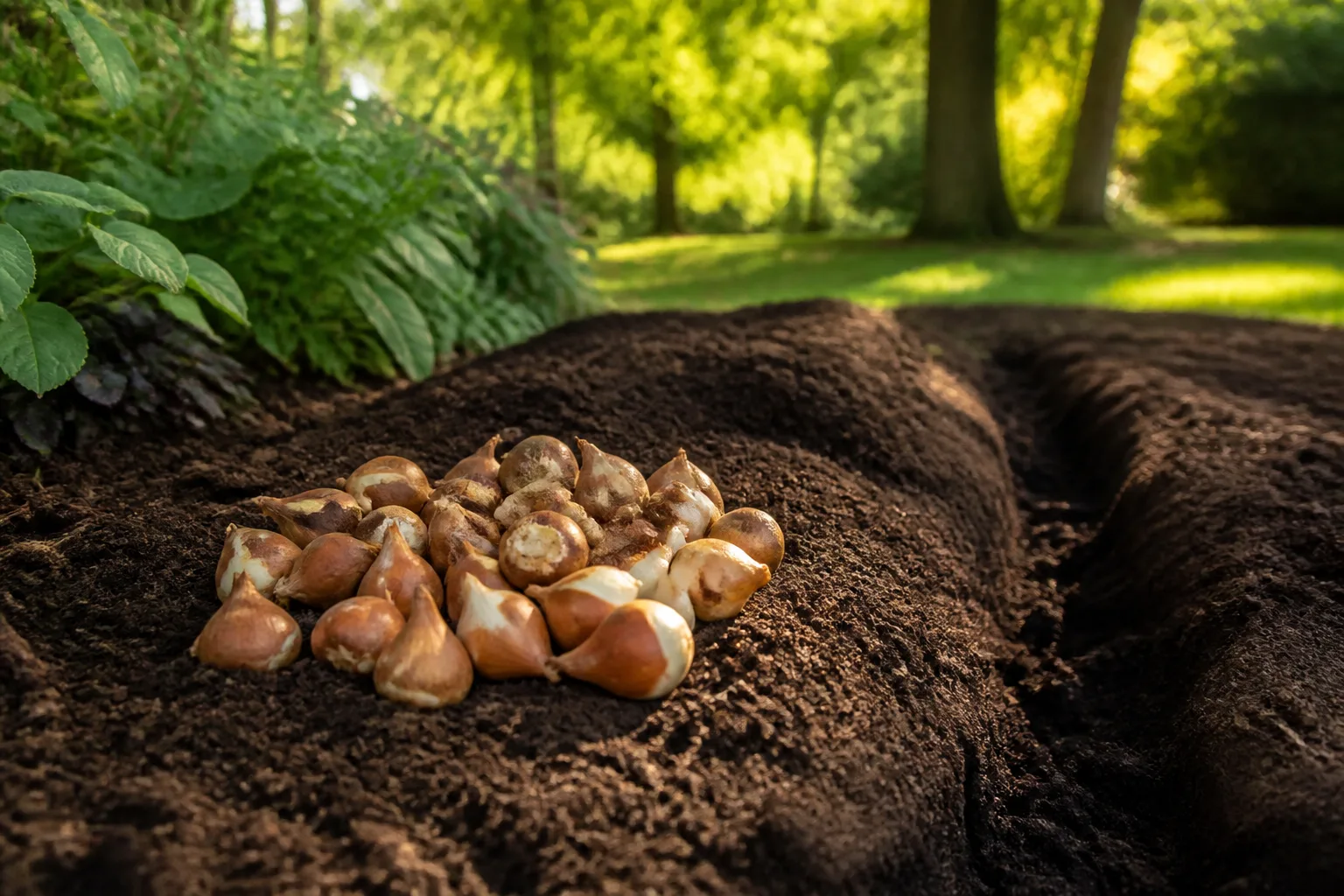
You ordered tulips in September, stashed the bag in the hall closet, and opened it in November to find pale shoots poking out of the papery skins. That jolt is normal—and in most cases, the bulbs are still usable. Bulbs sprout prematurely in the bag or box when storage feels more like early spring than winter dormancy: too warm, too bright, too humid, or too close to ripening fruit. The fix depends on how far growth has progressed and whether your soil is ready to receive them.
This guide walks you through assessment, immediate action, slow-down storage, potting workarounds, and prevention so you can salvage the season instead of composting a bag of perfectly good geophytes.
The First Thing to Check When Bulbs Sprout in Storage
Before you refrigerate, repot, or rush to the garden bed, sort bulbs by sprout stage and firmness. Squeeze each bulb gently at the base. Healthy stock feels solid, like a firm onion. Soft, mushy, or moldy bulbs go in the compost—no rescue protocol fixes rot.
Next, look at the shoots. Length and color tell you whether you are dealing with a minor nudge out of dormancy or a bulb that has already committed to full growth indoors.
Tiny White Shoots vs. Full Green Leaves
Tiny white or pale-green nubs—often just a few millimeters—are common on properly stored spring bulbs and usually mean the bulb is viable and eager to grow. Gardeners sometimes see these after bulbs have been held in cool, correct conditions following harvest. They are not automatically a problem.
Elongated green leaves or stems mean the bulb has broken dormancy more fully. Growth this advanced is harder to slow down, and the bulb is telling you it wants soil, light, and root space now. University of Maine Cooperative Extension notes that prematurely sprouting tulips are a familiar issue even when gardeners try to keep bulbs cold and dark; the goal becomes slowing growth while keeping foliage healthy until outdoor conditions improve (UMaine Extension).
Use this quick triage:
- Nub only, bulb firm → Store cooler if ground is not ready, or plant if soil temperature allows.
- Short pale shoot, bulb firm → Plant as soon as possible; pot up if soil is frozen.
- Long green leaves, bulb firm → Plant or pot immediately; do not return to warm storage.
- Soft bulb, mold, sour smell → Discard; isolate from healthy stock.
Why Bulbs Break Dormancy Before You Plant Them
Bulbs are storage organs. They hold the energy for next year’s leaves and flowers, and they stay dormant until environmental cues—chiefly cool temperatures, darkness, and later warmth plus moisture—tell them the growing season has arrived. Break that sequence in a hallway, garage, or shipping truck and shoots appear weeks before you intended.
Warmth, Humidity, and Light Exposure
The most common trigger is heat combined with humidity. Bulbs stored near a furnace vent, in a sunlit mudroom, or inside a closed plastic bag in a warm room behave as if spring arrived early. Even brief warmth can initiate sprouting; sustained warmth pushes leaves out of the papery tunic.
Light matters too. Dormant bulbs belong in darkness. A partially opened box on a bright shelf can stimulate growth even when temperatures are acceptable. Penn State Extension emphasizes that spring bulbs are planted in fall before frost so they can develop roots during cool weather and bloom after winter chilling (Penn State Extension). When those cool-dark conditions never arrive in storage, the internal clock advances.
Late Planting and Shipping Stress
Buying early and storing too long is the second major cause. Bulbs purchased in August or September and held until late November or December have more weeks to encounter a warm spell. Mail-order shipments that sit on a porch in afternoon sun—or linger in a non-climate-controlled warehouse—often arrive with shoots already started.
Poor packing makes it worse. Bulbs jammed together without insulating material transfer heat and moisture bulb to bulb. Proper holding means spaced bulbs in breathable containers with dry peat moss, wood shavings, or mesh bags—not sealed plastic.
Bulb Types That Sprout Early More Often
Not every bulb responds the same way. Hardy spring tulips and daffodils can sprout early under bad storage, but some species are naturally aggressive about breaking dormancy.
Fall-Blooming and Indoor-Forced Bulbs
Colchicum (autumn crocus) is notorious. Sold in late summer, it often produces leaves and flowers without soil if left on a warm counter—behavior some gardeners exploit for windowsill displays, but it surprises buyers expecting dormant bulbs.
Paperwhite narcissus and amaryllis are bred for indoor forcing. Warm room temperatures alone can trigger sprouting in the shipping bag. That is expected for holiday forcing projects; it is a problem only if you planned to hold them for weeks before potting.
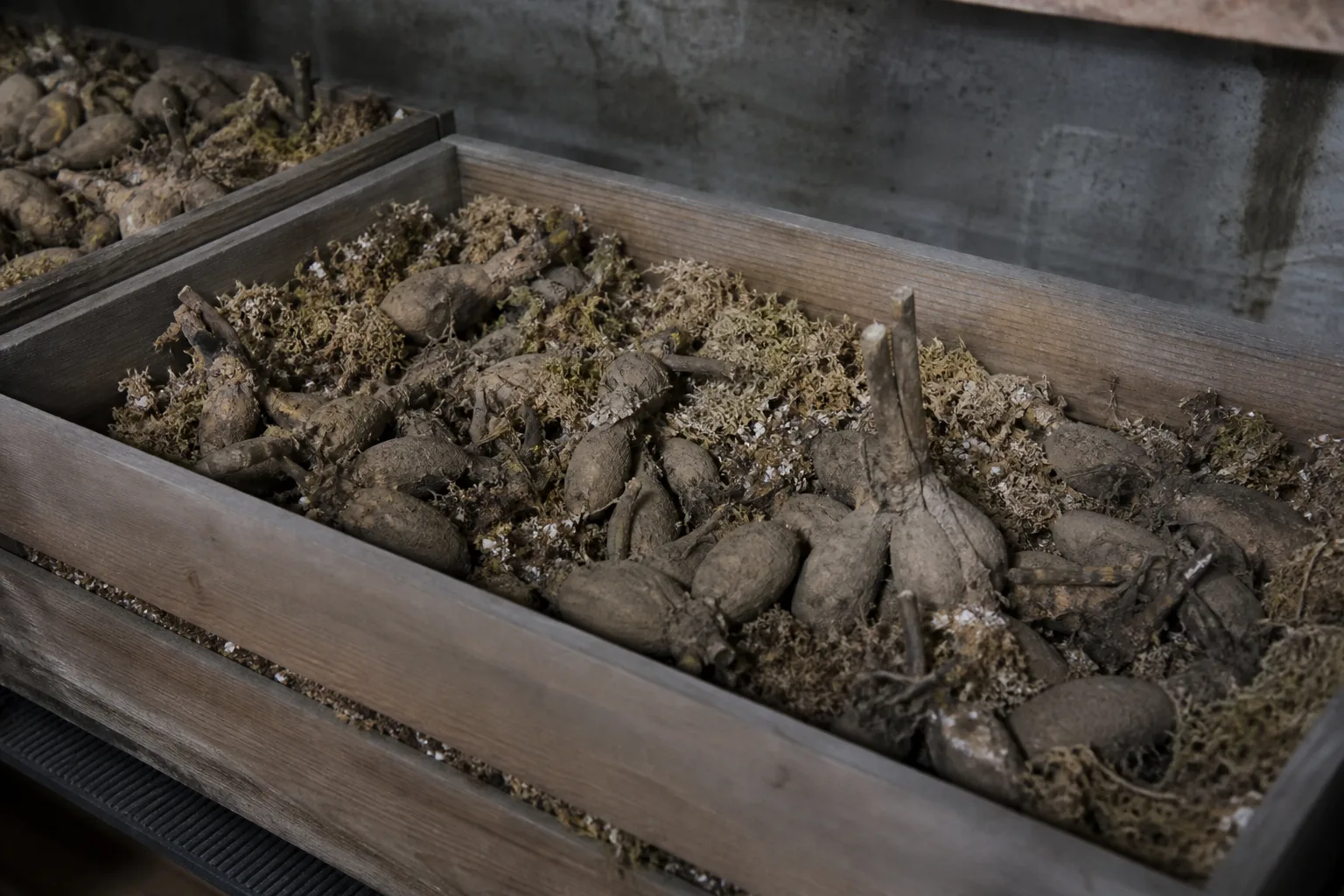
Tender summer bulbs—dahlias, gladiolus, cannas—follow different rules. They are lifted in fall and stored frost-free; early sprouting in spring storage usually means temperatures crept above the ideal 35–50°F (2–10°C) range. Our dahlia tuber planting and storage guide covers eye-up orientation and winter packing if you are managing tubers rather than true bulbs.
For standard tulips, daffodils, hyacinths, crocus, and alliums, early bag sprouting is almost always a storage or timing issue, not a varietal quirk.
Can You Still Plant Sprouted Bulbs?
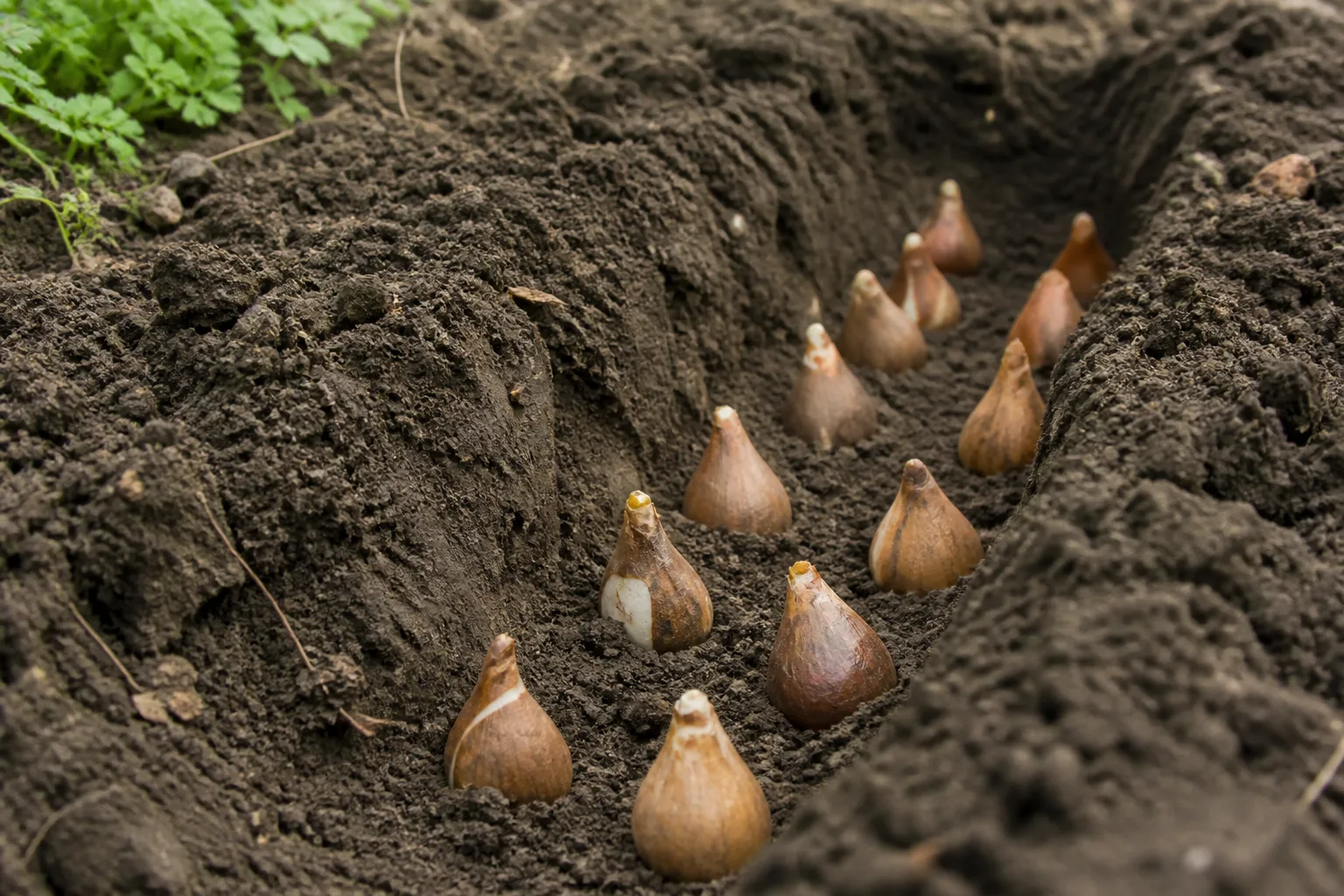
Yes—in most cases, plant sprouted bulbs rather than trying to stuff growth back into dormancy. The bulb has already spent some stored energy on shoots, and soil gives roots the stability refrigeration cannot.
Follow the same planting fundamentals as dormant stock:
- Choose a site with full sun to light shade and excellent drainage. Bulbs rot in soggy clay.
- Plant at two to three times the bulb’s height deep, pointed end up. A two-inch tulip sits five to six inches below the soil surface (Penn State Extension).
- Water once at planting if soil is dry; do not soak repeatedly while shoots are tender.
- Mulch two to three inches after planting to buffer soil temperature swings.
Bloom impact: Early sprouting may reduce flower size or count the first spring—especially if leaves yellowed in warm, dark storage—but the bulb itself rarely suffers permanent damage from one premature break (UMaine Extension). You will know in spring; mark the spot and adjust expectations rather than digging up healthy-looking foliage.
When the Ground Is Ready vs. Still Frozen
If soil is workable and nights are cool but above hard frost, plant in the ground the same day you discover sprouts. Fall planting windows vary by zone—September through November in many northern gardens—but the rule is simple: roots need time before the ground freezes solid.
If the ground is frozen or saturated, do not force outdoor planting. Instead, use the pot-up protocol below or hold bulbs just above freezing until a thaw. Sprouted bulbs left in a warm room will stretch and weaken; cold slow-down is better than hallway heat.
Link your timing to regional fall planting guides such as our bulbs to plant in November roundup if you are catching up late in the season.
How to Slow Sprouting Until Planting Day
When shoots are small and outdoor planting is still weeks away, you can often slow metabolic activity by improving storage conditions. You are not reversing dormancy—you are buying time.
Cool, Dark Storage Rules That Actually Work
Target these conditions for hardy spring bulbs:
- Temperature: 35–50°F (2–10°C), ideally 45–50°F (7–10°C) for slow-down without freezing injury.
- Light: Total darkness—a closed paper bag inside a cardboard box works.
- Humidity: Moderate; dry enough to prevent mold, humid enough that bulbs do not shrivel.
- Airflow: Breathable containers—mesh bags, paper bags, or ventilated crates. Never sealed plastic.
- Spacing: Bulbs not touching; dry peat moss or wood shavings between layers if stacking.
Check weekly. Remove any bulb showing rot immediately so decay does not spread. Lightly shriveled firm bulbs can be nestled in slightly damp (not wet) packing medium; mushy bulbs belong in the trash.
Using the Refrigerator Without Ruining Bulbs
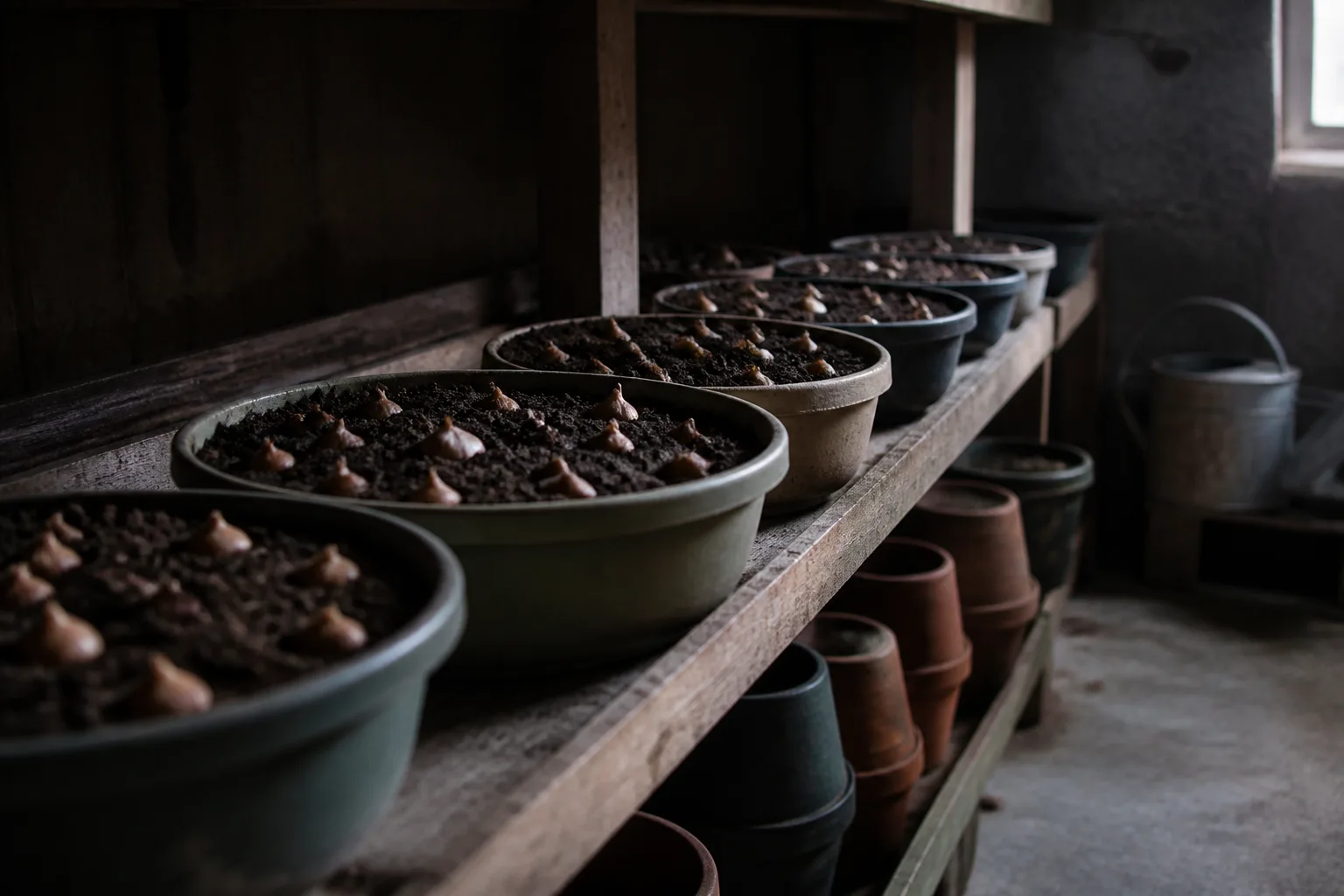
Refrigerator storage mimics the cold period many spring bulbs need—especially tulips and hyacinths in warm climates where outdoor soil does not chill long enough. It also rescues sprouted bulbs when the only cool space is the fridge.
Refrigerator rules:
- Clean and dry bulbs gently; brush off soil, do not wash.
- Pack in paper bags or perforated cardboard, not plastic.
- Set temperature to 37–45°F (3–7°C) in the main compartment; avoid the door, which fluctuates.
- Label variety and date so you do not forget them behind leftovers.
- Limit storage to the chilling window your species needs—often six to twelve weeks for pre-chill tulips—not indefinite holding.
Critical: Keep bulbs away from ethylene-producing fruit and vegetables—apples, bananas, pears, avocados, tomatoes. Ethylene is a ripening gas that can trigger or accelerate sprouting and shorten bulb life. Store bulbs on a middle shelf, fruit in a separate drawer or a different fridge if possible.
If sprouts continue lengthening in the fridge, UMaine Extension advises moving bulbs to cool, low to moderate light rather than letting leaves yellow in darkness—then plant as soon as soil allows (UMaine Extension). Worst case, pot them indoors and enjoy unexpected house tulips.
For planned indoor forcing—not accidental sprouting—see our spring bulbs to start indoors in January guide for chilling calendars and stem-staking tips.
Pot-Up Emergency Plan When You Cannot Plant Outside
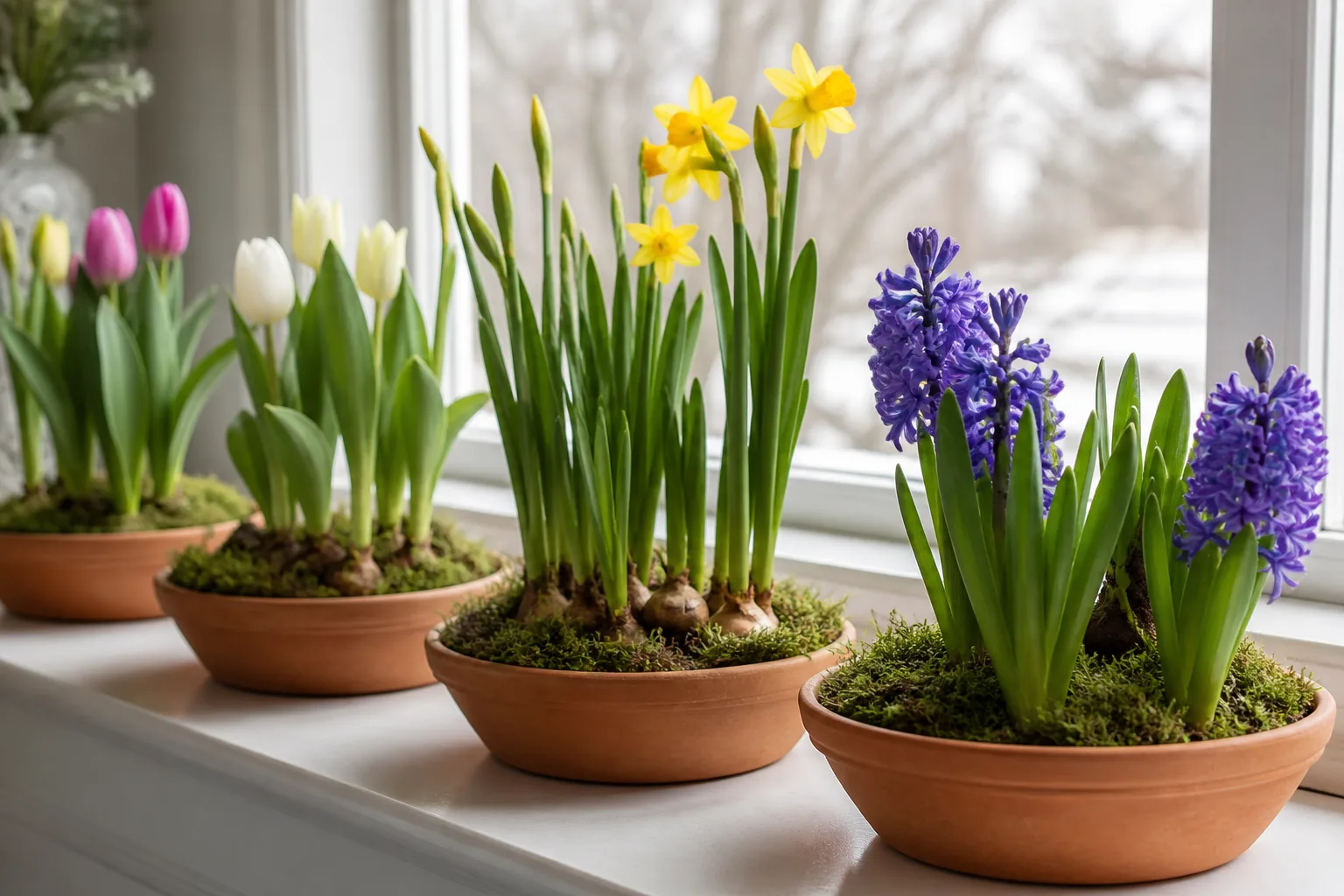
When the garden is frozen and sprouts are growing, potting is the safest bridge. Treat it as temporary housing, not a houseplant project.
- Choose a pot with drainage holes slightly wider than the bulb cluster.
- Add moist but not soggy potting mix—two to three inches in the bottom.
- Set bulbs pointed end up; leave one-third of the bulb above soil if shoots are already emerged.
- Fill around bulbs gently; do not snap fragile shoots.
- Place the pot in a cold frame, unheated garage, or cool bright window—above freezing, below 55°F (13°C) if possible.
- Water sparingly until roots form; soggy cold soil rots bulbs faster than dry cold air.
Do not fertilize during holding. The bulb already contains the food for this season’s bloom. Fertilizer pushes soft, weak growth that will not survive transplant shock.
When soil thaws, slide the root ball into the garden bed at the proper depth, or grow out the season in the container on a patio. Either works; in-ground planting generally produces stronger perennial returns for hardy types.
Common Storage Mistakes That Trigger Early Sprouting
Most premature sprouting is preventable. These errors show up repeatedly in gardener forums and extension mailbags:
- Warm indoor closets instead of cool basements or garages.
- Plastic bags or bins that trap moisture and heat.
- Sunlight on the storage box, even indirect afternoon light.
- Storing with apples or bananas in the same refrigerator drawer.
- Buying months early without a cool storage plan.
- Ignoring tiny mold spots, which spread under humid conditions.
- Watering or misting dormant bulbs “to keep them alive”—moisture plus warmth equals sprout.
Summer bulbs lifted in fall need curing and dry packing; our seed and bulb storage principles overlap on temperature and dryness, though bulb humidity targets differ slightly from seed envelopes.
Keep Bulbs Away From Ripening Fruit
Ethylene deserves its own warning because it is easy to overlook. Ripening fruit in a shared refrigerator, fruit bowl on the same pantry shelf, or apples stored with onions and bulbs in a root cellar all raise ethylene levels in enclosed air.
Symptoms of ethylene exposure include shortened, distorted shoots and bulbs that sprout unevenly. Prevention is spatial: bulbs on one shelf, fruit elsewhere, with ventilation between. If you only have one fridge, use a paper bag barrier and consume fruit quickly rather than letting it sit for weeks.
Shopping and Inspecting Bulbs Before You Buy
The best fix starts at the garden center or checkout screen. Choose firm, heavy bulbs without mold, cuts, or strong odor. A little dried root at the base is fine; a six-inch green leaf inside a mesh bag at the store is not.
At the display bench:
- Reject bags with visible mold or moisture condensation inside plastic wrap.
- Accept tiny pale shoot tips on fall-planted tulips and daffodils if bulbs are firm and you will plant within days.
- Pass on sprouted bags if you cannot plant or refrigerate immediately—those bulbs will only advance in your warm car ride home.
- Buy closer to planting time when possible; August impulse buys need a cool storage plan through October.
Mail-order? Open boxes promptly, inspect, and move bulbs to proper storage the day they arrive—not the weekend. Photograph damage for refunds on mushy or dessicated stock.
If you are still building a fall planting list, our bulbs you can plant in August guide helps sequence early and late purchases so storage time stays short.
Conclusion
Finding bulbs sprouted prematurely in the bag or box is alarming but rarely a death sentence. Assess shoot size and bulb firmness first, then choose the path that matches your calendar: plant now if soil is workable, cool and darken if shoots are tiny and weeks remain before planting, refrigerate without fruit if you need artificial chilling, or pot up when the ground is still frozen.
Early sprouting may cost you a few blooms this spring, yet healthy firm bulbs usually recover for future seasons. Next year, store cool, dark, dry, and breathable—and plant soon after purchase so the bag stays a shipping container, not an unintended greenhouse.