How to Grow Butternut Squash: From Seed to Storage
Learn how to grow butternut squash with clear advice on planting dates, spacing, watering, pollination, harvest signs, curing, and storage for your climate.

Butternut squash is a warm-season vine that rewards a long, sunny stretch with firm, sweet fruit that can keep for months. The main challenge is fitting its vigorous growth into your garden and giving each fruit enough time to mature before frost. Plan around the cultivar’s days to maturity, soil warmth, pollinator activity, and your first fall frost—not a single planting date that supposedly works everywhere.
Butternut squash growing essentials at a glance
| Need | Practical target | What to watch |
|---|---|---|
| Planting window | After frost danger passes and soil is warm | Cold, wet soil delays germination and can rot seed |
| Sun and soil | At least 6 hours of direct sun; fertile, well-drained soil | Poor drainage and shade slow growth and ripening |
| Water | About 1 inch per week from rain and irrigation, adjusted for heat and soil | Keep moisture even, especially at flowering and fruit enlargement |
| Space | Several feet between plants; allow a vigorous vine to run | Compact types use less room; read the seed packet |
| Harvest | Deep tan rind, hard skin, firm corky stem | Pick mature fruit before frost; cure undamaged squash for storage |
These are starting points, not rigid rules. A sandy bed in a hot, dry climate needs more frequent watering than deep loam after rain, and a bush cultivar occupies less ground than a full-length vine. Seed packets also differ in maturity time and recommended spacing, so use the variety’s label alongside local weather.
Choose a cultivar and plan for its space
Most butternut squash is Cucurbita moschata, an annual warm-season crop grown for its mature winter squash. “Winter” describes the fruit’s thick, storage-worthy rind, not a plant that grows through winter. The vines need warm soil and a frost-free growing season long enough for fruit to fill out and harden.
Choose seed by the problem you need it to solve. A standard vining variety such as ‘Waltham’ suits a sunny bed with room to spread. Compact or bush types are better for a smaller plot or a large container, though they still need adequate root volume, sun, and regular water. Compare days to maturity and expected fruit size; a variety that matures sooner can be a better choice in a short summer than one promising a larger harvest too late in the season.
Full-size vines or compact bush varieties?
A full-size vine can run roughly 10 to 15 feet and may send side shoots farther. Give each plant open ground or a sturdy route along the garden edge; if you place squash between other crops, the leaves can quickly shade smaller plants and block paths. Do not plant by the spacing of the seedling alone—the mature vine is the space requirement.
Bush cultivars shorten the footprint, but “bush” does not mean tiny or suited to a windowsill. Grow one in a generous container with drainage or a garden bed that still receives full sun. If you plan to trellis a vining type, build the support before the vines get long and make it strong enough for wet foliage and developing fruit.
When and where to plant butternut squash
Wait until the danger of frost has passed and the soil has warmed; a soil temperature around 65°F or warmer is a useful home-garden threshold. Cold soil can make squash seed germinate slowly and unevenly, while frost can kill seedlings outright. Use a soil thermometer if you have one, or wait until the ground is comfortably warm and spring weather has settled rather than planting on the first warm afternoon.
Choose a site with at least six hours of direct sun, preferably more, and drainage that prevents water from standing after rain. In a cool or wet garden, a low mound or raised bed can warm and drain sooner. Keep in mind that raised beds dry faster, so they may need closer moisture checks once vines spread and fruit begin to form.
Direct sowing versus starting seeds indoors
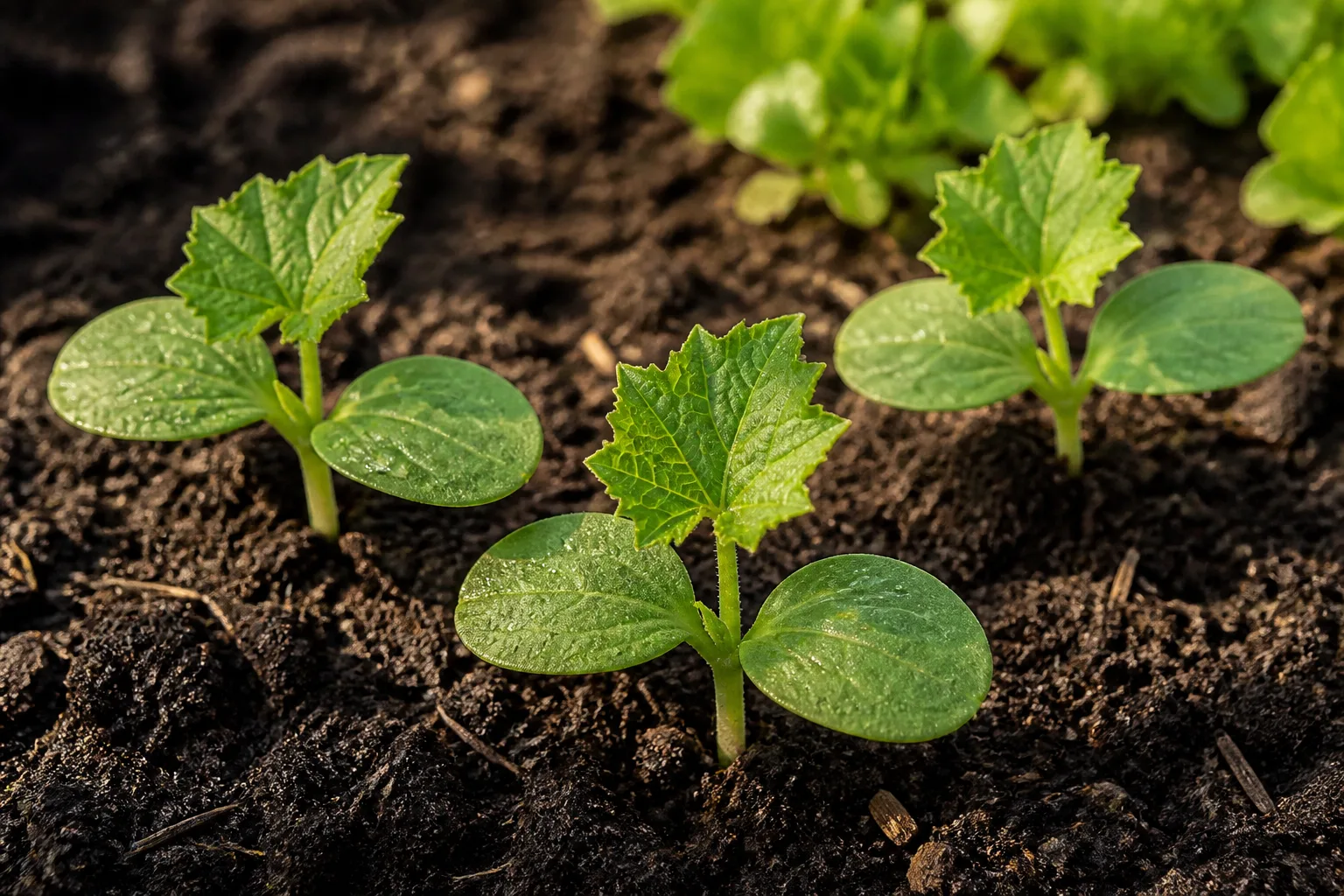
Direct sowing is simplest where the growing season is long. Put seeds about 1 inch deep after the soil is warm, and sow two or three at a planting station if germination is uncertain; thin to the strongest plant once seedlings are established rather than letting several compete. Follow your cultivar’s packet for spacing because compact forms and long-running vines need different distances.
In a short-season climate, start seeds indoors only a few weeks before the outdoor planting window. Use individual pots so roots are disturbed as little as possible, then harden plants gradually outdoors for about a week before transplanting. Squash seedlings grow quickly and dislike being held in cramped pots; a very early start can leave you with a root-bound, stressed transplant that gains little time over direct sowing.
Plant only one healthy transplant at each final position. Keep the root ball intact and water it in; avoid burying the stem deeply or pulling the roots apart.
If the weather turns cold after planting, protect young plants overnight and remove covers during the day as conditions warm. Row covers can also exclude early insect pests, but take them off once flowers need bee access unless you will hand-pollinate.
Prepare the soil and give vines room
Butternut squash grows best in fertile, loose soil that drains well. Before planting, mix in mature compost to improve structure and organic matter. If you have a soil test, use it to guide any lime or fertilizer decision; adding amendments by habit can push nutrients out of balance and is less useful than correcting a known shortage.
For vining plants, a practical home-garden layout is to leave several feet between planting stations and provide broad rows or open space between them. A full-size vine may cover nearby crops, so place it at the edge of the bed or train it outward. Compact varieties can be spaced closer, but still need room for leaves to dry and for you to inspect the underside of foliage.
A mound can be helpful in heavy soil because it drains and warms quickly, but it is not mandatory in a well-drained bed. Avoid piling rich manure directly against the young stem. Too much readily available nitrogen can produce a spectacular canopy while delaying flowering and fruiting, so start with soil preparation and feed only when growth or a soil test indicates a need.
Water and feed consistently as the plant fruits
A useful starting point is about 1 inch of water weekly from rainfall and irrigation combined. Water slowly at the base so moisture reaches the root zone, then check the soil rather than following a timer regardless of weather. During hot, windy weeks or on sandy ground the plant may need more; in cool or rainy weather, adding a scheduled soaking can keep the roots too wet.
Even moisture matters most while the vine establishes, flowers, and enlarges fruit. Repeated drying followed by a heavy soak can stress roots and contribute to small fruit failure or cracking. A layer of organic mulch helps smooth those swings, but wait until the soil is warm before applying a thick layer in a cool spring garden.
Butternut squash is vigorous, but that does not mean it needs liquid fertilizer every few weeks. Compost worked into the bed is often enough for fertile soil. If growth is pale or weak, first check sun, drainage, and moisture; then use a soil test or a modest vegetable fertilizer according to its label.
Avoid high-nitrogen feeding once vines are established, especially if leaves and runners are racing ahead while few female flowers appear. Grower guidance also cautions against excess nitrogen at this stage because it can favor leafy growth over fruit; see the practical discussion from DBS Farm Wilson.
Read wilting and yellow leaves before changing care
Large squash leaves often droop in the hottest part of an afternoon and recover by evening. If the plant perks up overnight and the soil is moist but not soggy, that temporary heat response alone is not a reason to flood the bed. Check again in the cool morning; persistent morning wilt calls for closer inspection of the root zone, stem base, and pests.
Yellowing also has several possible causes. Older leaves can fade late in the season, while waterlogged soil can yellow a plant more broadly and mildew may leave white patches before leaves decline.
Look at which leaves are affected, feel the soil several inches down, and examine the stem before changing water or fertilizer. A single symptom rarely identifies one cause by itself.
Get flowers pollinated so fruit can develop
Butternut squash bears separate male and female flowers on the same plant. Male blossoms sit on a slim stem; a female blossom has a small, immature squash-shaped ovary just behind it. Male flowers often appear first, so a flush of flowers without fruit at the beginning of bloom does not automatically mean there is a problem.
Bees transfer pollen between blossoms, and a female flower that is missed may close with its tiny ovary turning yellow, shriveling, and dropping. The Pacific Northwest Plant Disease Management Handbook describes squash pollination failure as inadequate or inactive pollen and notes that fruit may stop enlarging, fall, or develop unevenly. In a home garden, low bee activity, wet or unusually cool mornings, extreme heat, or flowers that open at different times can all reduce the chance of pollen transfer.
First protect pollinator access: avoid spraying insecticides on open flowers, leave some flowering habitat nearby, and uncover squash once blooming begins. A second butternut plant is not necessarily required because one plant usually bears both flower types, but having several plants can increase the number of blooms available at the same time. If flowers are consistently missed, hand-pollination is a practical backup.
Hand-pollinate a female flower in the morning
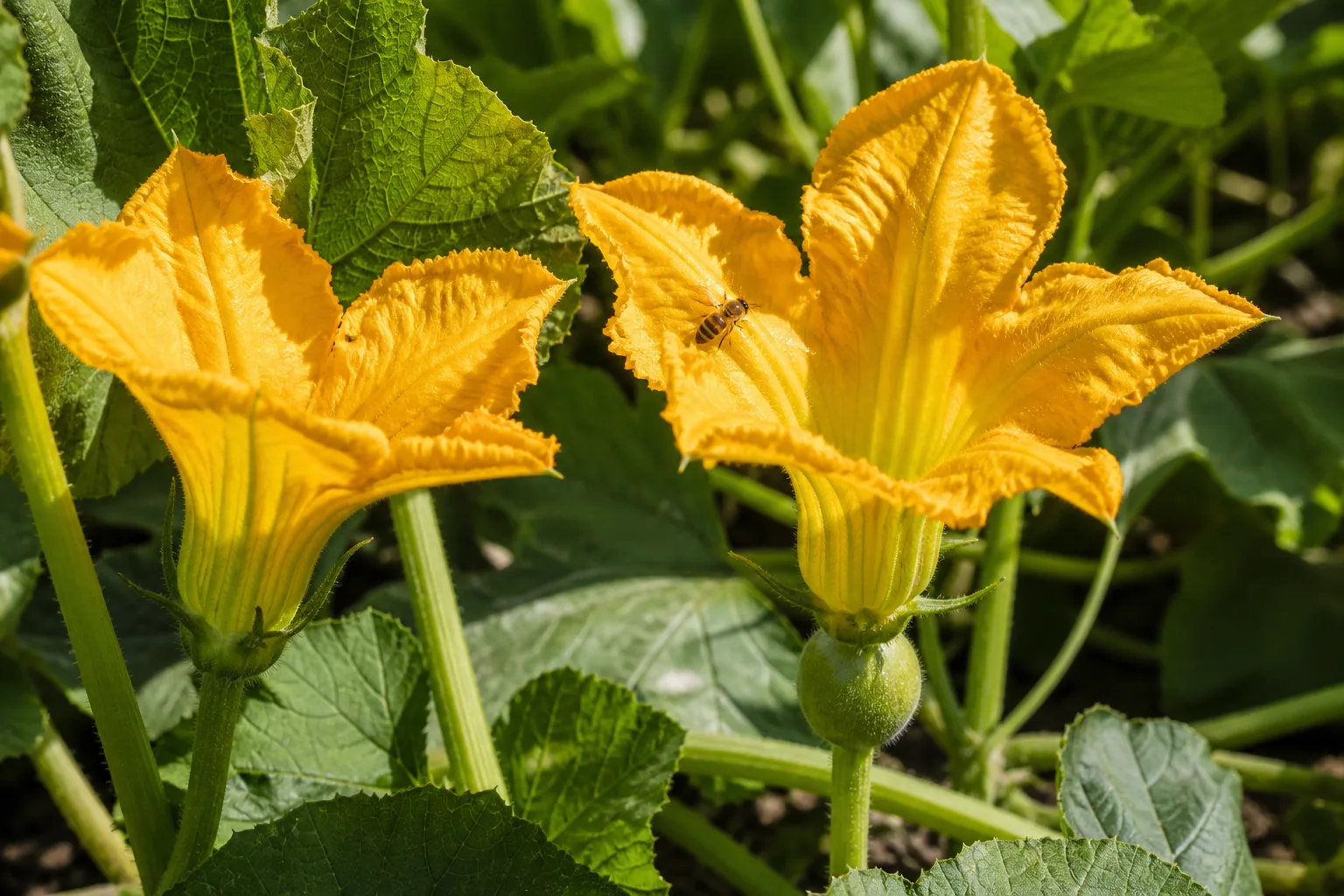
Squash flowers are open for a short part of the day, so pollinate in the morning while both flower types are fresh. Pick an open male flower, peel back its petals, and gently brush its pollen-bearing anther against the central stigma inside an open female flower. A small, clean artist’s brush can do the job too; use one flower’s pollen on one or more female flowers while the pollen is fresh.
Mark the female flower with a loose tie if you want to track whether its fruit enlarges over the next several days. A pollinated ovary should begin to grow rather than yellow and collapse, though heat or other plant stress can still interrupt development. Hand-pollination helps with a transfer problem; it cannot compensate for an unhealthy vine, waterlogged roots, or a season too short for fruit to mature.
Mulch and train vines without damaging them
Once the soil has warmed and plants are growing, mulch with straw, shredded leaves, or another clean organic material. Leave a small gap around each stem so the crown does not stay damp, and spread enough mulch to shade soil rather than bury the vine. Mulch suppresses weeds, reduces moisture swings, and keeps fruit from resting directly on wet ground.
Let vines trail naturally if space allows. If you need to guide a vine around a path, move it while it is young and flexible; older stems crack easily. Avoid routine pruning of healthy runners because removing a large portion of the canopy also removes leaves that supply energy to filling fruit, and cutting vines does not reliably solve a space problem once the plant has spread.
A strong trellis can save ground space and improve airflow, as demonstrated with a vigorous winter squash at UT Gardens. That display involved Tetsukabuto, a related interspecies squash rather than butternut, so do not assume every trellis or fruit will behave identically.
Use a sturdy panel or frame anchored securely, tie vines loosely, and cradle each developing fruit in a breathable sling if the support cannot safely bear its full weight. If the frame flexes or fruit is heavy, let the plant run on the ground instead.
Troubleshoot the problems most likely to cut a harvest
Inspect plants once or twice a week, especially the undersides of leaves, new growth, and stem bases. Early checks are more useful than applying a blanket pesticide or fertilizer after the plant begins to decline. Remove badly damaged plant material from the bed, but identify the problem first so you do not discard a vine that is simply reacting to heat.
Squash bugs and vine borers
Squash bugs cluster and lay bronze-brown egg masses on leaf undersides. Check stems and leaves often, remove egg masses and insects by hand, and keep weeds and debris from sheltering pests near the crop. Floating row cover can protect young plants, but it must be removed for bee pollination unless you hand-pollinate flowers.
Squash vine borer larvae enter stems and feed inside, so a vine may wilt suddenly even when the soil is wet enough. Butternut and other C. moschata varieties can be less susceptible than some squash types because their stems are tougher, yet the species is not immune; the UT Gardens trial of Tetsukabuto, a related squash, should not be treated as proof that every butternut cultivar resists borers. If a plant collapses, inspect the stem base for a hole and sawdust-like frass before assuming drought; rotate cucurbits to a different bed when possible and destroy infested crop residue after the season.
Powdery mildew and aging leaves
Powdery mildew appears as white, dusty-looking patches on leaf surfaces and often increases as the canopy becomes dense later in summer. Keep plants spaced for airflow, water the soil rather than routinely wetting foliage, and remove only severely affected leaves with clean pruners. Late-season mildew on older leaves does not always mean the crop is lost; if fruit is already mature and healthy, prioritize harvest before frost rather than trying to keep every leaf pristine.
A yellow or mottled leaf without powdery growth can also indicate water stress, nutrient imbalance, or a virus spread by insects. Compare several leaves and check whether new growth is distorted. A plant with widespread mosaic patterning or distorted leaves should not be treated as if it simply needs more fertilizer; remove a severely affected vine and clean tools before working among healthy plants.
Small fruit that shrivels, rots, or splits
A tiny squash that yellows, shrivels, and drops soon after flowering commonly failed to receive enough pollen. Confirm that female flowers are opening and that bees can reach them before you hand-pollinate. If the vine has plenty of pollen-bearing male flowers but no females yet, give it time; flowering order is not always simultaneous.
A dark, soft patch at the blossom end is different from a healthy fruit that is simply slow to enlarge. Keep soil moisture even and avoid guessing that extra calcium fertilizer is the cure; amendment will not fix incomplete pollination, damaged roots, or irregular watering. If a nearly mature squash cracks after heavy rain or a sudden irrigation change, use it promptly if the split is clean and the flesh remains sound; discard fruit with spreading softness, mold, or a fermented odor.
Harvest, cure, and store the squash
A butternut squash’s days-to-maturity figure is a planning estimate, not a harvest signal. Temperature, cultivar, transplant age, and summer stress change how quickly a fruit ripens. A large green squash can still be immature, while a smaller one may be ready if its rind and stem have hardened.
Harvest ahead of a hard frost. If a light frost threatens and the squash is not quite ready, protect the vine briefly with a breathable cover, but do not rely on covering against a damaging freeze. The mature fruit is more likely to store well when it finishes on the vine; a nearly ripe fruit picked to avoid frost should be used earlier rather than counted on for long storage.
Use rind, stem, and weather to judge harvest time
Look for a consistent tan or beige rind rather than green streaks, a skin that resists a gentle fingernail press, and a stem that has become firm and corky. Use the signs together: a drying vine alone may reflect disease or late-season stress, and fruit color alone can vary with cultivar. The Gardening Know How butternut guide likewise advises using a hard rind and deep tan color rather than choosing by size.
Cut the stem with sharp pruners, leaving a couple of inches attached. Carry the fruit from its body instead of the stem, which can snap and leave an opening for rot. Handle squash gently, sort out bruised or cut fruit, and cook those first; keep only firm, intact fruit for curing and storage.
Cure fruit and store it in a ventilated place

Curing gives an intact mature squash time in warm, dry, well-ventilated conditions for the rind and small surface wounds to harden. Spread fruit in a single layer so air reaches all sides and keep it out of direct sun, rain, and freezing temperatures. A week or two is a useful home-garden window, but curing cannot turn a very immature fruit into a fully mature one.
After curing, move squash to a dark or dim, dry place with good air circulation and stable cool temperatures. Published home-growing recommendations vary: the Gardening Know How guide suggests storage around 40–50°F, while DBS Farm Wilson’s Zone 5 grower guide recommends roughly 50–60°F.
If you cannot hold an exact temperature, choose a cool frost-free room, avoid a damp basement corner or sealed plastic bin, and inspect fruit regularly. Use any squash with a broken stem, bruise, or soft spot first; remove a rotting fruit so it does not contaminate its neighbors. Properly mature fruit can last for months, but storage life varies by cultivar and how well each squash was handled.
Conclusion
Grow butternut squash by matching the cultivar to your season and space, waiting for warm soil, and keeping water steady as flowers and fruit develop. Watch for pollination failure before reaching for fertilizer, inspect leaf undersides and stems for pests, and judge ripeness by the rind and stem rather than size alone. Harvest mature fruit before frost, cure only sound squash, and give it a dry, ventilated place to store.