Calathea vs Maranta: Prayer Plants With Different Demands
Calathea vs maranta compared by leaf movement, humidity, light, watering, and habit — choose the right prayer plant for your room.
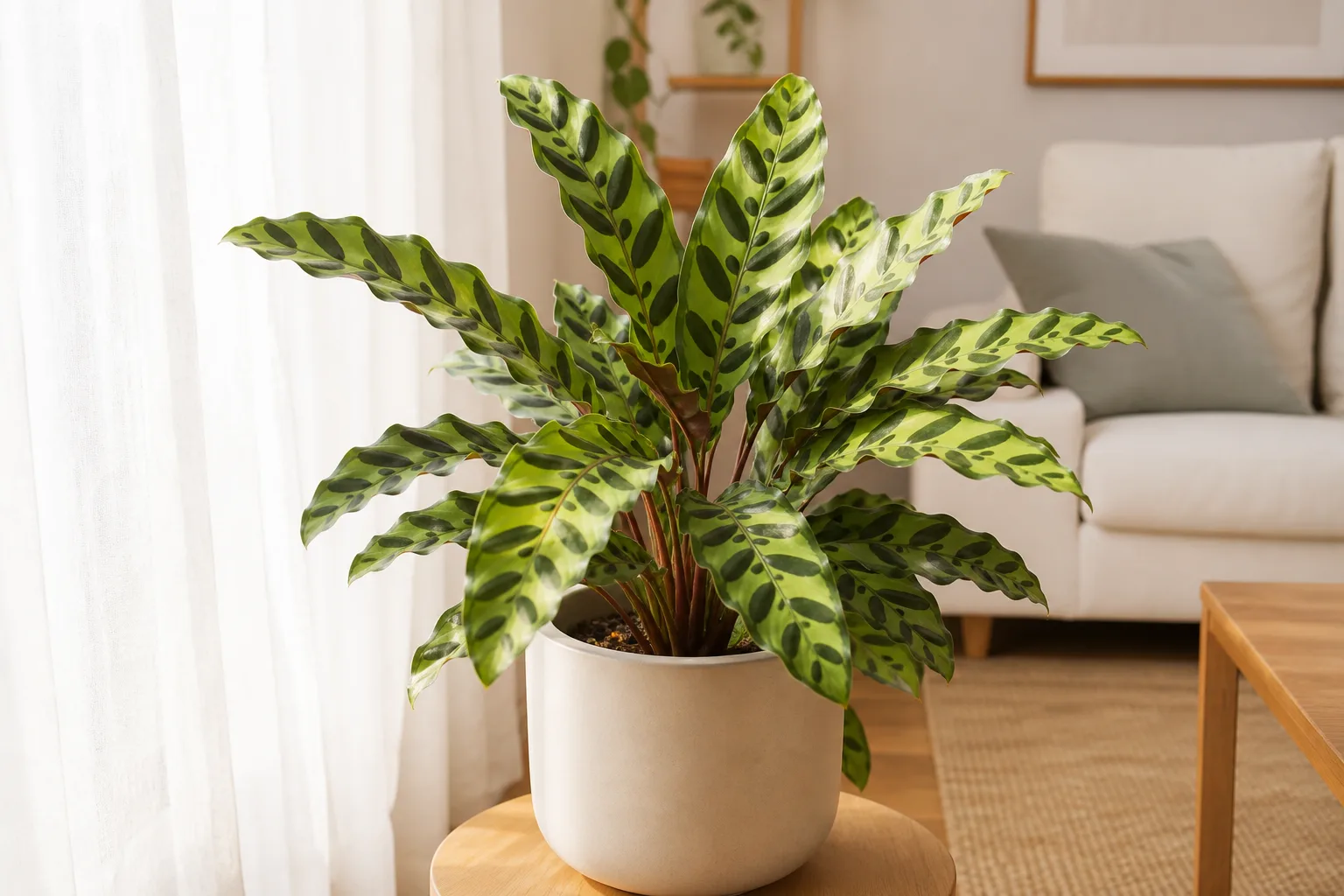
Calathea and maranta share the prayer plant nickname — patterned leaves that fold at night (nyctinasty) — but they are different genera with different fuss levels. Calathea brings bold upright foliage and sharper humidity demands. Maranta (M. leuconeura) is the classic red-veined trailer with the most dramatic evening fold.
We have watched maranta fold its leaves upright at 7 p.m. like clockwork — the motion that earned the prayer plant name. Calathea in the same room also moves, but the shift is subtle on stiff orbifolia-scale leaves unless you compare before-and-after photos. We have also crisped calathea edges in a heated bedroom while maranta on a pebble tray kept color — same family, different punishment thresholds.
Use the calathea hub and maranta leuconeura hub for species care. The broader prayer plant hub covers the cluster.
Same family, different silhouettes
Both belong to Marantaceae. NC State on Calathea emphasizes high humidity, indirect light, and sensitivity to dry air and minerals.
NC State on Maranta leuconeura describes prayer-like nightly folding, medium indirect light, and evenly moist soil in a trailing habit.
Missouri Botanical Garden on M. leuconeura details nyctinasty — leaves rise at night, lower by day.
Taxonomy note: many calatheas are sold under Goeppertia today — care matches calathea guidance regardless of label shuffle.
Bench ID: upright graphic vs red-veined trailer
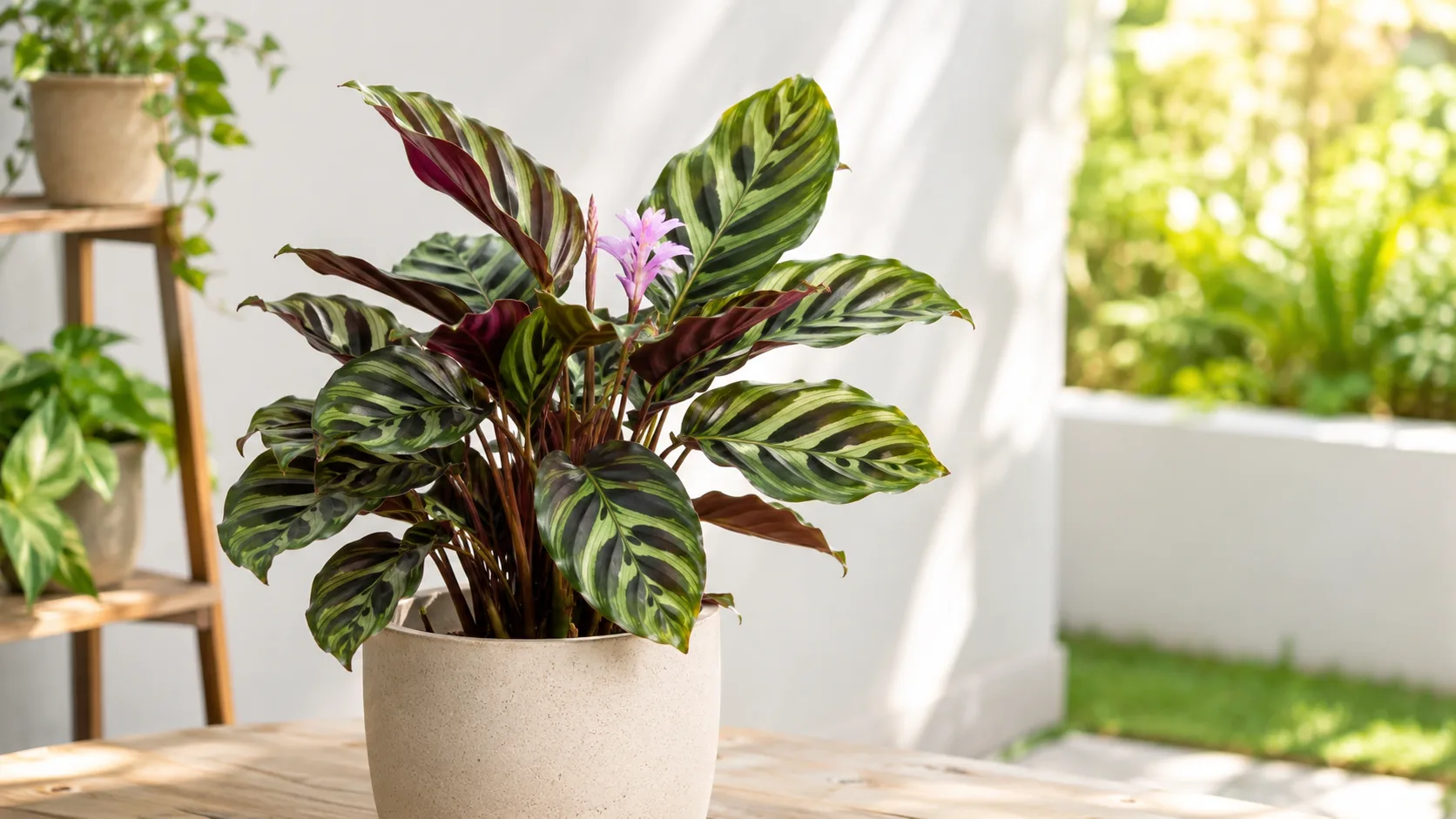
Calathea: upright clumping habit, large graphic leaves — orbifolia rounds, medallion patterns, rattlesnake stripes. Leaves are stiff, often 8–12 inches long. Grows from a central crown on the soil surface.
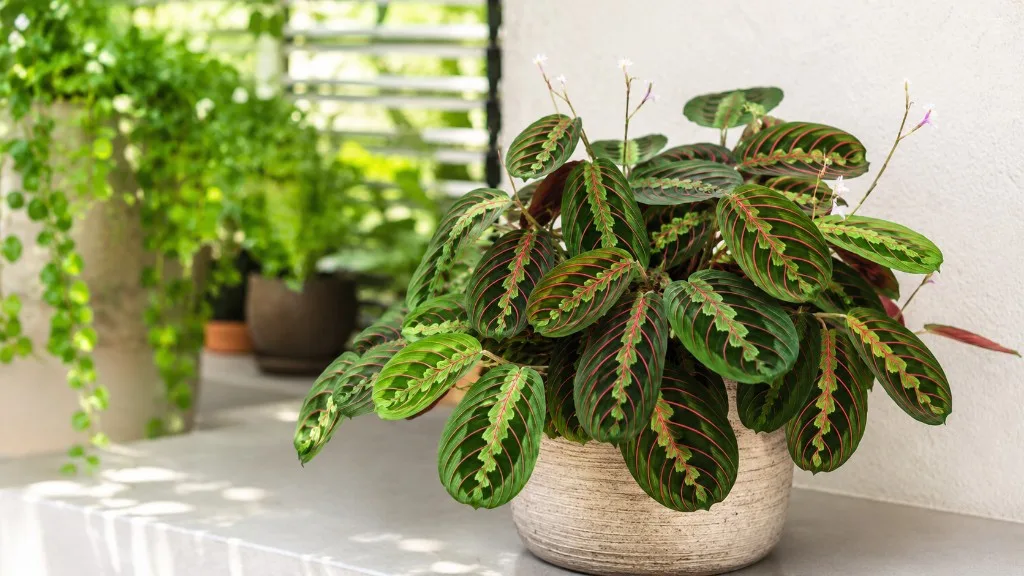
Maranta leuconeura: trailing stems, smaller herringbone or red-veined leaves that fold dramatically at night. Classic red prayer plant shows red veins on green. Spreads along soil surface or cascades from a basket.
If it trails and folds like hands at dusk, it is maranta. If it stands like a patterned fan, it is calathea.
Nyctinasty: maranta wins the evening show
Maranta leuconeura is the plant people buy when they want to watch leaves move. At night, leaf blades rise vertical; by morning they lay flat for light capture.
Calathea also exhibits nyctinasty — UW–Madison Extension on prayer plants covers the family trait — but on large stiff leaves the motion is subtle. For the TikTok-worthy fold, maranta is the default pick.
Humidity and leaf edge crisping
Calathea is the canary in the coal mine for dry winter air — brown leaf margins appear when humidity drops or tap water salts build up. RHS on Calathea recommends warm, humid, shaded conditions.
Maranta also wants humidity — RHS on Maranta lists warm humid conditions — but recovers from minor crisping more often when you add a humidifier or pebble tray.
UW–Madison Extension notes sensitivity to water quality — fluoride and minerals brown tips on both. Use filtered or rainwater if crisping persists despite correct watering.
See pebble tray vs humidifier when choosing humidity gear. For calathea, humidifier usually wins. For maranta, pebble tray plus grouping may suffice.
Light and water: similar rules, different failure signals
Neither tolerates harsh direct sun — patterns bleach and edges burn.
Both prefer evenly moist mix, not wet feet. Maranta droops visibly when dry — soft wilt you can fix with a soak. Calathea may hold firm leaves while edges brown — check soil depth, not leaf feel alone.
Compare calathea watering with maranta watering.
Winter in heated apartments: both need humidity help. Calathea shows damage first. Maranta gives you a few more weeks of grace.
Display style and space
Calathea suits floor pots and plant-stand statements — orbifolia-scale leaves need space and a humidifier nearby.
Maranta excels in hanging baskets where trailing stems and nightly folding show from eye level — the prayer motion is the feature.
Pet safety: both generally pet-safe
ASPCA lists prayer plant (Maranta leuconeura) as non-toxic to cats and dogs.
Calathea species are widely treated as pet-safe in the same Marantaceae family — no separate ASPCA listing for every species, but no toxicity listing either. Confirm genus on the tag before assuming safety.
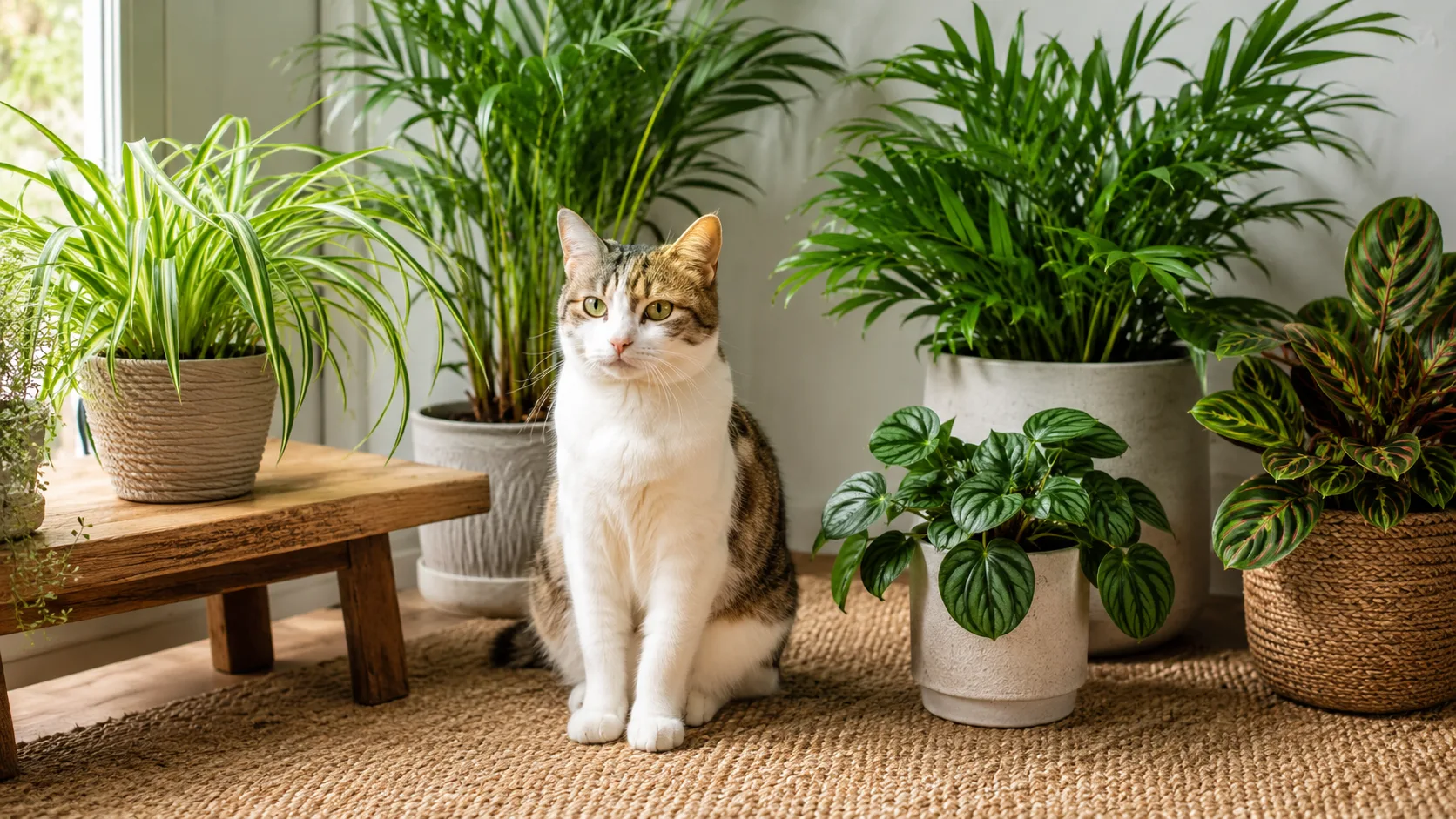
Non-toxic is not a salad invitation. Heavy chewing can still cause mild stomach upset. Low trailing maranta on a coffee table is safer than toxic aroids — but supervise nibblers.
Side-by-side comparison
| Factor | Calathea | Maranta (M. leuconeura) |
|---|---|---|
| Habit | Upright clump | Trailing / spreading |
| Leaf size | Larger, graphic patterns | Smaller, herringbone or red vein |
| Night movement | Subtle on stiff leaves | Dramatic fold |
| Humidity | High; crisp edges if dry | High preferred; slightly more forgiving |
| Light | Bright indirect; no direct sun | Medium to bright indirect |
| Water | Evenly moist; sensitive to minerals | Evenly moist; wilts when dry |
| Pet safety | Generally pet-safe | ASPCA non-toxic listing |
| Beginner fit | Challenging | Moderate |
Which plant to choose
Dramatic nightly motion on a shelf: maranta.
Bold patterned floor specimen + humidifier: calathea.
First prayer plant in a heated apartment: maranta usually fails slower.
Pet-safe pattern plant: either — confirm genus on tag.
Dry desert climate without humidity gear: neither is ideal; consider cast iron plant instead.
Water quality: the hidden prayer plant killer
Both genera react to fluoride and mineral salts in tap water — brown leaf tips and margins that look like underwatering but persist after you fix the schedule.
UW–Madison Extension on prayer plants recommends attention to water quality. Our fix: filtered, distilled, or rainwater for both — calathea first, maranta when tips persist.
Flush the pot every few months: water heavily until runoff runs clear, discarding all drainage. Salt buildup from tap water and fertilizer concentrates at the soil surface — scrape white crust if present.
Calathea shows tip burn within days of a bad water change. Maranta tolerates one or two tap-water cycles before crisping — another reason maranta is the gentler first prayer plant.
Temperature and draft sensitivity
Neither likes below 60°F (15°C) for long — AC set to 18°C all night stresses both. Keep away from cold window glass in winter and hot AC vents in summer.
Sudden cold draft from an open window can curl calathea leaves overnight. Maranta may fold early and stay folded — check room temperature before blaming disease.
Common mistakes we see in real homes
Misting calathea daily instead of running a humidifier — wet leaves without ambient RH rise invite fungal spots. Fix the room air, not just the leaf surface.
Placing maranta in direct south window because it is “tropical” — both bleach and crisp in harsh sun. Bright indirect only.
Assuming prayer plant nickname means any patterned plant — confirm Marantaceae genus on the tag. Ctenanthe and Stromanthe are cousins with similar care but different IDs.
Related: prayer plant hub, best indoor plants for beginners if prayer plants feel too fussy.
Conclusion
ID: upright graphic leaves → calathea. Red-veined trailer that folds at night → maranta.
Choose: humidity + statement leaves → calathea. Obvious prayer motion + basket → maranta.
Care: both need indirect light, even moisture, and humidity help — calathea punishes dry air faster.
Follow the calathea hub or maranta leuconeura hub — not a generic “prayer plant” schedule.