Can You Compost Diseased Plants? A Safer Guide
Can you compost diseased plants? Learn when a backyard pile is too risky, which diseases need extra caution, and safer ways to dispose of infected material.
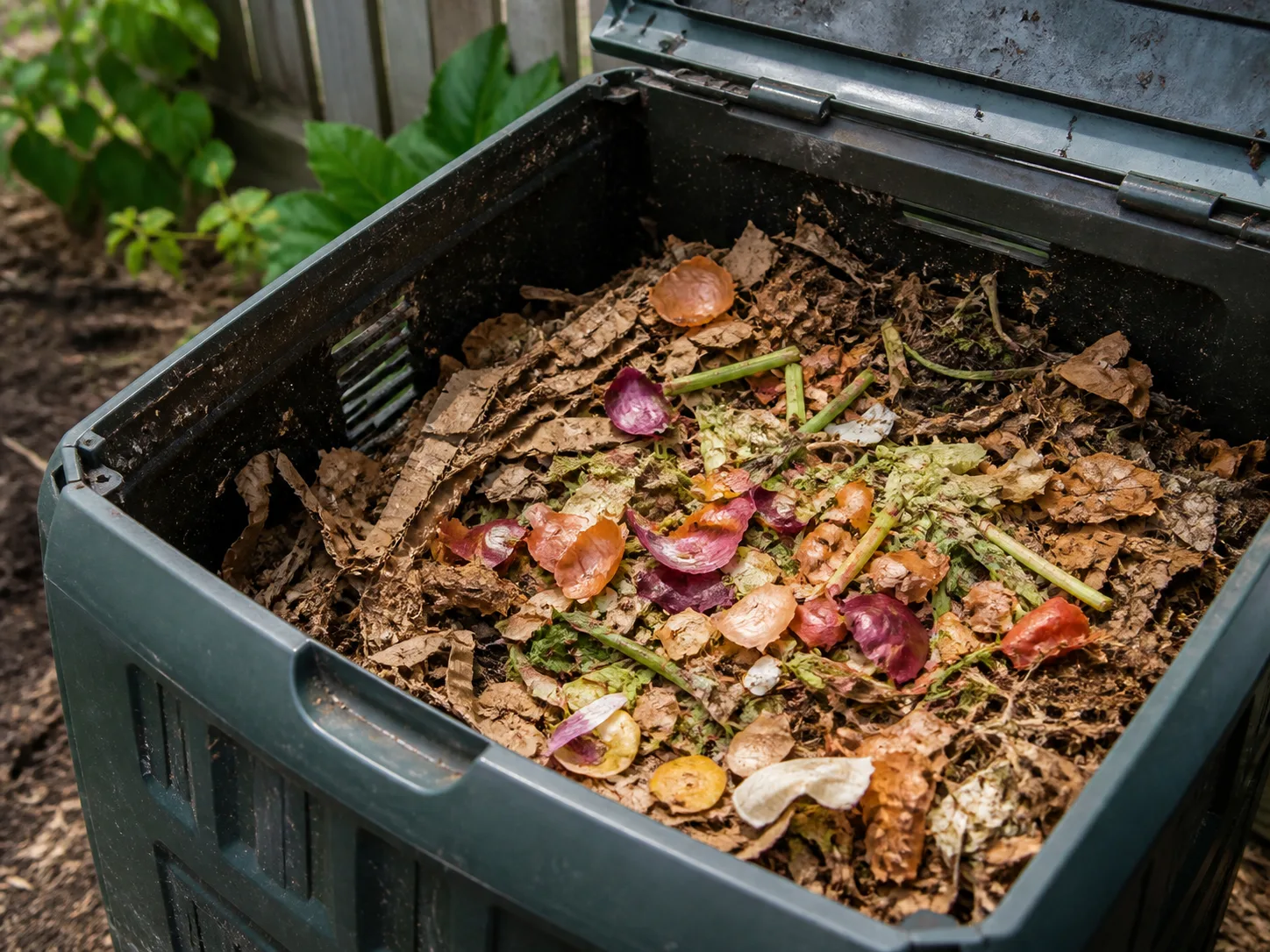
The safest default is no: do not put a diseased plant in an ordinary backyard compost pile, especially when you do not know what caused the symptoms. A cold heap, small tumbler, worm bin, or pile that only warms in the center may not expose every leaf, root, and clump of soil to enough heat for long enough. Finished compost can then carry surviving pathogens back to the beds where you spread it.
There is a narrower exception. Some gardeners and horticultural authorities consider certain early, less-persistent foliar diseases reasonable for a genuinely hot, actively managed compost process. That is not the same as saying that every diseased tomato, houseplant, shrub, rootball, or weed is safe to compost. Your decision should account for the disease, the plant part involved, your ability to measure and maintain the pile, and the disposal rules in your area.
The short answer: keep uncertain or persistent diseases out of ordinary compost
If you need one rule you can use today, bag diseased plant material and keep it out of home compost unless you can identify a low-persistence foliar problem and run a monitored hot pile that your local guidance permits. When the diagnosis is uncertain, choosing the conservative route is not wasteful; it prevents a small cleanup job from becoming a soil problem that follows you for several seasons.
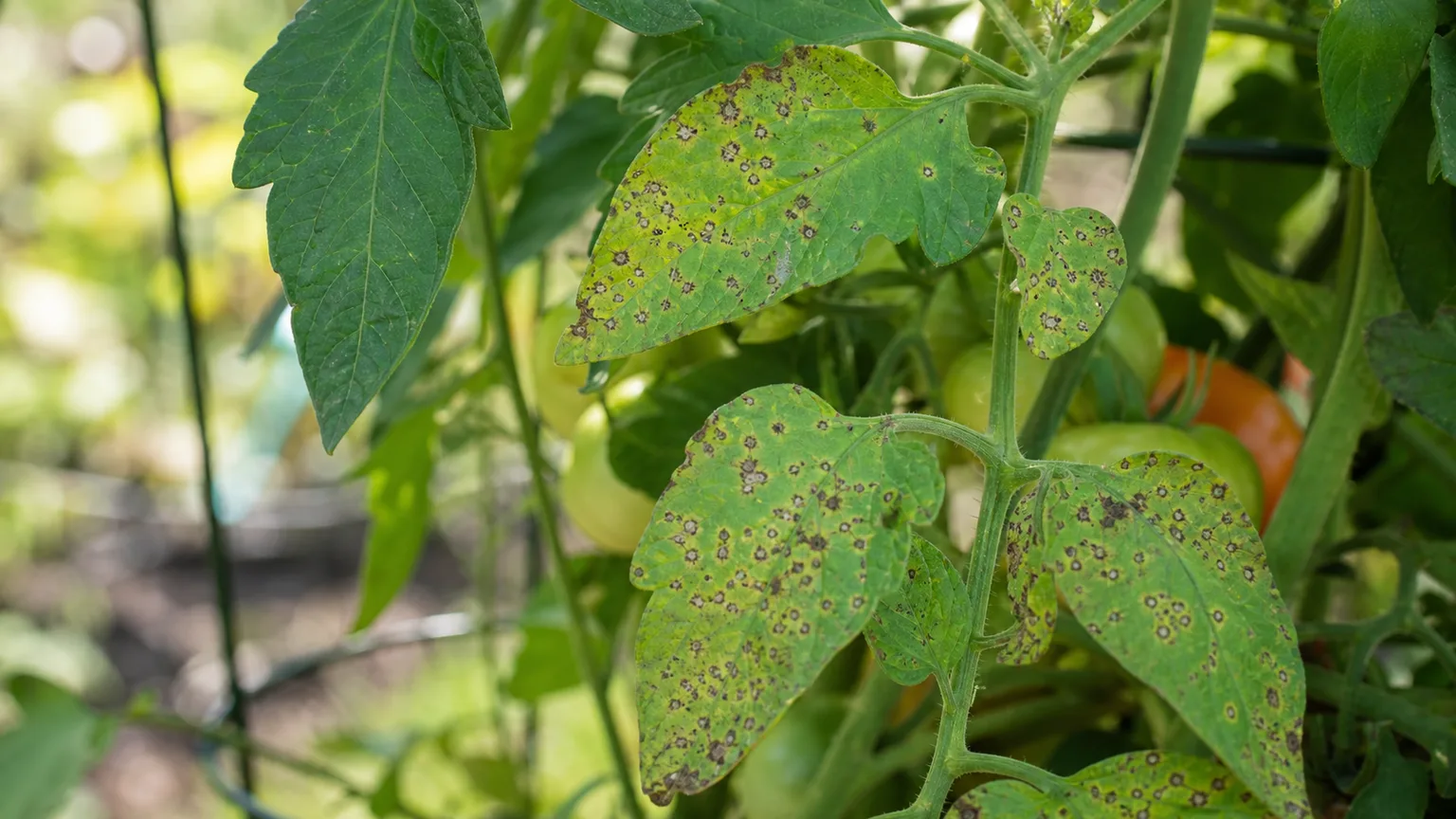
A spotted leaf is not automatically an infectious disease. Heat, sunscald, fertilizer injury, wind damage, insect feeding, and ordinary aging can all look alarming. But you should not use the compost pile as a diagnostic experiment. If the symptoms are spreading, appear on stems or roots, distort new growth, cause wilting, or involve a plant that died quickly, treat the material as potentially infectious until you have better information.
The right disposal route may be household trash, a municipal green-waste or yard-trimming facility, or burial in a carefully chosen location for a limited class of foliar debris. Local rules decide what your curbside service accepts, and a facility that uses a large, monitored composting system is not equivalent to the bin behind your shed.
Why diseased plant material can put your garden at risk
Plant diseases are caused by different kinds of pathogens, including fungi, bacteria, and viruses. The Royal Horticultural Society explains that these organisms can move through air, rain splash, soil, seeds, insects, animals, tools, and physical injury, and that many can survive on dead plant material or in soil and on surfaces RHS plant pathology guidance. Composting changes the environment, but it does not guarantee that every pathogen is gone.
The risk is practical rather than theoretical. Suppose a diseased tomato plant goes into a cool pile, roots and all. Months later, the plant tissue is no longer recognizable, so you spread the dark compost around tomatoes, peppers, or other susceptible crops. If a pathogen or resistant structure survived, you have distributed it widely at exactly the point where plants are most vulnerable.
Heat is a process to verify, not a feeling
Compost heat comes from microbial activity, and the hottest part of a well-built pile can reach temperatures that reduce many pathogens and weed seeds. The problem is uneven exposure. The outside may remain cool, a new layer may never heat, and a pile can cool before the material has spent enough time at a useful temperature.
A handful of steam or a warm surface proves very little. The temperature you care about is the temperature in the working mass, checked with a compost thermometer, followed over time, and paired with turning so the cooler outer material moves into the hot center. Penn State Extension lists material choice, particle size, pile volume, moisture, aeration, time, and temperature as factors that affect the result Penn State’s compost guidance.
Research on pathogen survival during composting also shows why “it got hot once” is an incomplete safety claim: temperature changes, carbon-to-nitrogen balance, and microbial competition all affect whether pathogens survive the PubMed review of compost pathogen survival. The more important the crop and the more persistent the suspected disease, the less sense it makes to gamble on a casual pile.
Use the disease decision rule before you choose a disposal method
Before you decide what to do with the plant, answer four questions:
- What is the symptom pattern? A few old powdery leaf surfaces are different from a plant that is collapsing from the crown upward.
- Which plant part is involved? Leaves are generally less concerning than roots, crowns, bulbs, tubers, rhizomes, woody cankers, or soil stuck to the rootball.
- Could the problem persist in soil? Soil-borne, vascular, and some viral or bacterial diseases deserve a stricter response than a superficial leaf disease.
- Can you control the compost process? If you cannot measure temperature, turn the pile, keep it evenly moist, and let it fully cure, you do not have a dependable pathogen-reduction process.
When any answer raises doubt, keep the material out of the home pile. This is especially important for a vegetable bed because the finished compost may touch edible crops, splash onto leaves, or be moved around with soil and tools.
A cautious exception for minor foliar disease
There is a meaningful difference between early, superficial foliar disease and a plant with a pathogen throughout its roots or vascular system. The RHS notes that home bins rarely reach pathogen-killing temperatures, but says they may be suitable for some less-persistent diseases; common powdery mildews and rusts usually do not survive long once infected material has fully degraded RHS disposal guidance. That is a qualified exception, not a universal clearance.
If you choose this route, limit it to leaves or soft shoots with a known, low-persistence foliar problem. Remove the material promptly, avoid carrying clumps of soil with it, chop it, mix it thoroughly with healthy browns and greens, and place it in a pile large enough to heat. Keep a record of the temperature and turn the pile so the outer material reaches the center. Do not use the finished compost until the material is unrecognizable, the pile has cooled, and it has had time to cure.
Even then, use extra caution around a bed where the same disease has caused repeated losses. A conservative gardener can reasonably choose municipal processing instead, particularly when the fee is small compared with replacing a crop or remediating a contaminated planting area.
Problems that are a firm no for a backyard pile
Keep the following out of an ordinary home compost system unless a local extension service gives you a specific, process-based instruction for that disease:
- Soil-borne diseases and contaminated roots: Clubroot, Phytophthora-type root problems, Fusarium or Verticillium wilts, and similar diseases can involve soil, roots, crowns, or persistent structures. Composting the rootball also spreads the soil you were trying to contain.
- Bacterial wilts, cankers, and suspected fire blight: These problems can move in sap, woody tissue, pruning tools, and splashed water. Do not chop infected branches into a pile where they can be mixed throughout the garden system.
- Viruses and unexplained distortion: Mosaic patterns, severe curling, unusual color breaks, stunting, or repeated distortion are not good candidates for a home compost experiment because the diagnosis is uncertain and plant viruses are not managed by a simple “wait until it looks gone” rule.
- Invasive weeds and weeds with mature seeds: A hot pile that fails to heat evenly can spread viable seeds or regrowth-capable pieces. Rhizomes and woody fragments are particularly poor candidates for a small pile.
- Rootballs, bulbs, tubers, and thick woody debris from a diseased plant: These parts break down slowly and may spend the least time at the pile’s hottest center.
The point is not that heat has no value. It is that a home pile should not be expected to sanitize material when the disease can persist in soil, thick tissue, roots, or reproductive structures.
Remove and dispose of diseased plants without spreading them
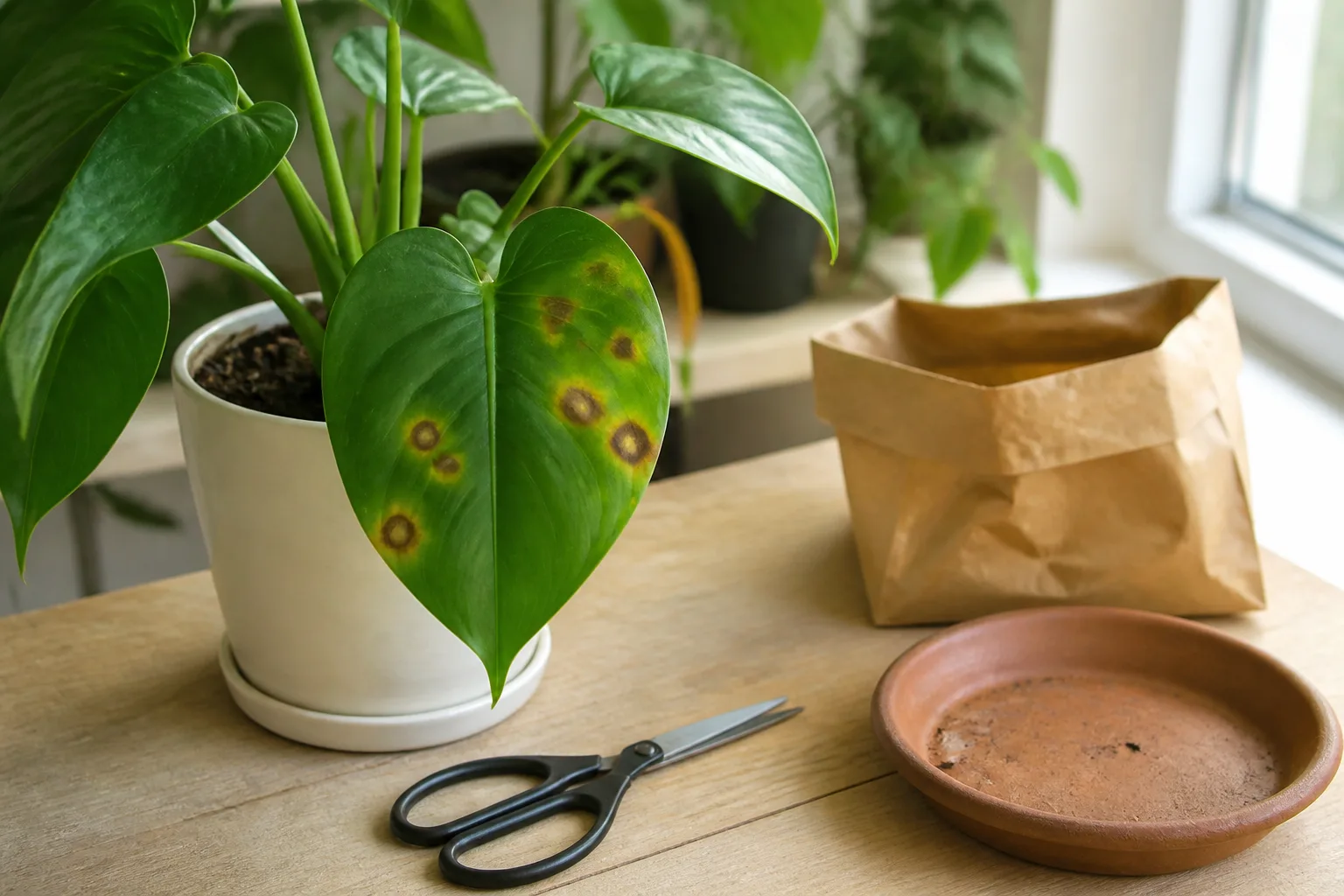
Your first goal is containment, not speed. Choose a dry, calm time if possible, and avoid shaking the plant, dragging it through healthy beds, or working when rain is likely to splash contaminated soil. If the plant is in a pot, move the pot away from other plants before you handle it.
Use a clean pair of pruners or a shovel, and cut or lift the plant with as little disturbance as possible. Put a bag beside the work area before you start, so you do not carry loose leaves across the yard. For a plant with a diseased root system, remove the surrounding soil with the plant rather than shaking the roots clean over the garden.
After removal, seal the bag before carrying it away. Wipe or wash soil from tools, then disinfect them according to the product label. Clean shoes, kneeling pads, pots, and trays when they contacted suspicious soil or sap. The RHS specifically recommends prompt removal, careful disposal, and cleaning tools and equipment to reduce disease spread RHS disposal guidance.
Choose the safest disposal route available locally
There is no single disposal method that fits every disease or every municipality. Use this order of preference:
- A monitored municipal green-waste facility: Ask whether the facility accepts diseased plants and whether it uses a high-temperature process. Do not assume that a curbside green-waste truck sends everything to a pathogen-controlled facility; check the program’s instructions.
- Household trash: For a small amount of diseased material, bagged trash may be the most contained option when local rules allow it. This is particularly sensible for an unknown disease, a contaminated rootball, or a plant treated with a product whose label does not allow composting.
- On-site burial only for appropriate foliar debris: Some guidance allows certain leaves or soft debris to be buried at least about 12 inches deep in a location that will not be cultivated or disturbed. Do not bury soil-borne disease, diseased roots, woody cankers, or material that animals can uncover; check local guidance first.
- Burning only where legal and safe: Never assume a backyard fire is allowed. Many areas restrict or prohibit burning yard waste, and smoke can harm people and property. Follow local fire and air-quality rules rather than improvising.
Do not put a diseased plant into a public collection stream just to make it someone else’s problem. Tell the service what the material is and follow its accepted-material list. A professional facility may have the volume, heat, turning, and monitoring that a home pile lacks, but the facility still needs to know what it is receiving.
When a monitored hot compost pile may be an exception
If you are an experienced composter, have a disease you can identify, and your local guidance permits it, a hot pile can reduce the risk from some soft, foliar plant material. Gardening Know How describes a target of at least 140°F (60°C) for diseased leaves, with turning and sustained exposure rather than a one-time temperature spike its guidance on composting diseased leaves. Treat that as a practical benchmark for a limited scenario, not a guarantee that every pathogen is destroyed.
The decision changes if you have a small pile that heats only after adding a lot of fresh grass, a tumbler that is opened every few days, a shaded heap that stays cool, or a pile you cannot monitor. Those systems may make excellent ordinary compost, but they are not automatically suitable for risky disease material.
Build for heat, airflow, moisture, and complete exposure
For a controlled hot-pile attempt, use a repeatable process:
- Start with enough volume. A small sprinkle of diseased leaves cannot heat by itself. Build a substantial batch of mixed material so microbial activity can raise the core temperature.
- Chop the material. Smaller pieces expose more surface area to microbes and reduce the chance that a thick stem or leaf clump stays cool inside.
- Balance the mix. Combine nitrogen-rich greens with carbon-rich browns rather than adding a dense layer of wet diseased tissue. Cornell identifies about 30 parts carbon to 1 part nitrogen by weight as an ideal starting point for yard-waste compost Cornell’s composting ingredients fact sheet.
- Keep the pile damp, not waterlogged. Cornell recommends roughly 40–60% moisture by weight; in a working pile, the material should feel like a wrung-out sponge. Too little moisture slows microbial activity, while excess water removes oxygen and creates foul anaerobic conditions Cornell’s moisture guidance.
- Measure and turn. Check the core with a thermometer and turn when the temperature begins to fall or when your management plan calls for it. Move the edges and top into the center so the entire batch receives comparable exposure.
- Cure before use. Heat is only one stage. Let the pile cool and mature until it is dark, crumbly, earthy-smelling, and no longer recognizable as the original material. Do not spread half-finished compost around susceptible plants.
Epic Gardening also emphasizes that pile size, moisture, the carbon-to-nitrogen balance, and turning determine whether a pile becomes genuinely hot rather than merely warm its explanation of hot composting. If your process cannot meet those conditions, choose disposal instead.
What to do if diseased material is already in the pile
Do not panic, and do not spread the compost to “get it out of the way.” Stop adding material and ask how long the diseased plant has been in the pile, whether the pile has reached a measured hot temperature, and whether the disease could be soil-borne or persistent.
If the material is still recognizable and easy to find, remove it with a tool, seal it in a bag, and clean the tool afterward. If the pile is already mixed, do not sift through it by hand and scatter fragments around the garden. Instead, keep the batch contained, add healthy browns and greens only if needed to correct the process, monitor its temperature, turn it thoroughly, and let it cure longer than usual.
That recovery approach is most defensible for an isolated leaf or soft shoot from a known, low-persistence foliar problem. If the pile contains a diseased rootball, soil, woody canker, invasive rhizome, or an uncertain pathogen, set the finished compost aside and ask a local extension service or waste facility for direction before using it. Penn State’s guidance is a useful reminder that compost quality depends on the entire process, not on a single ingredient or one warm reading Penn State’s compost guidance.
Do not use questionable compost in seed-starting mix, a greenhouse, a propagation tray, or a high-value vegetable bed. If you cannot verify the source of the risk or the process that treated it, the safest use is no use.
Other materials to keep out of a backyard compost pile
Disease is not the only reason an organic-looking item may belong somewhere else. Keep these materials out of an ordinary home pile:
- Pet waste from dogs and cats: It can contain pathogens and parasites that a casual home pile may not reliably destroy. Use a system designed and labeled for pet waste, or follow local waste guidance.
- Meat, fish, dairy, bones, grease, and oily cooked food: These can attract rodents and other animals, create odors, and overwhelm a small pile’s biology. Some commercial or tightly managed systems accept them, but that does not make them a default for a backyard bin.
- Weeds with mature seed heads: If the pile does not reach and hold a high temperature, you may distribute seeds with the finished compost.
- Invasive plants, rhizomes, and runners: Tiny pieces can survive and resprout. Keep aggressive weeds out unless a local facility explicitly accepts them and uses a process designed to neutralize them.
- Pesticide-treated plant material: Read the product label and consider where the finished compost will go. Do not assume that an organic or natural product disappears quickly enough for compost use.
- Treated, painted, or contaminated wood: It can introduce chemicals or persistent residues that do not belong in soil amendments.
The common thread is control. A backyard pile is a living ecosystem, not a sterilizer or a universal waste-disposal unit.
Build safer compost with healthy plant material
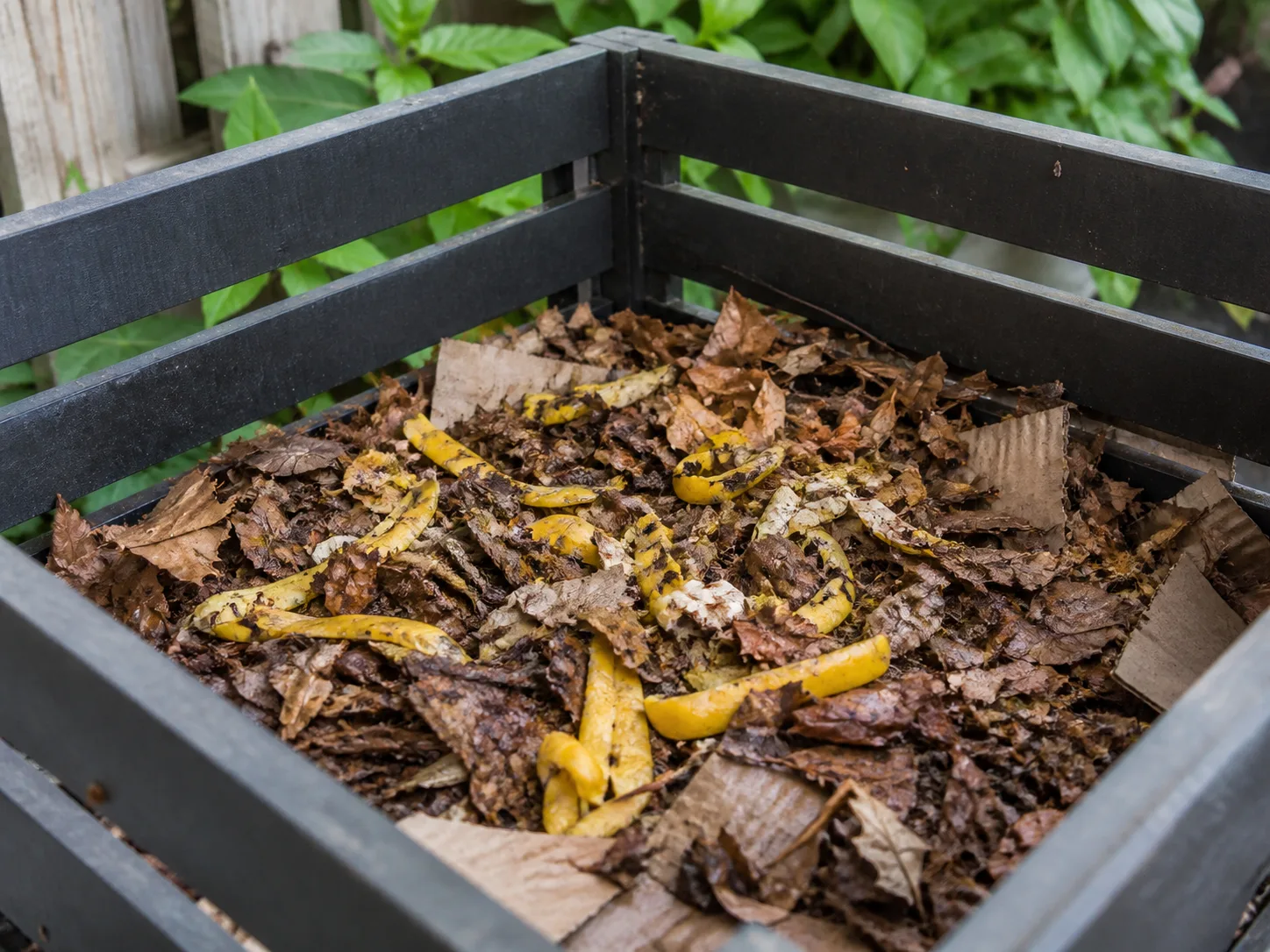
You do not need diseased material to make valuable compost. Healthy leaves, untreated grass clippings, non-seeded weeds, vegetable scraps, shredded uncoated cardboard, and small amounts of clean plant trimmings can provide the mix a backyard pile needs. Keep suspicious material in a separate bag while you decide what it is rather than tossing it into the pile automatically.
Balance browns and greens
Browns provide carbon and structure: dry leaves, shredded cardboard, small twigs, straw, and untreated paper. Greens provide nitrogen and moisture: fresh grass clippings, vegetable scraps, and healthy green trimmings. A pile made entirely of wet greens can smell and collapse, while a pile made entirely of dry leaves may take a long time to heat.
Cornell’s roughly 30:1 carbon-to-nitrogen ratio is a useful starting point, not a recipe that requires you to weigh every leaf. In everyday terms, mix wet, nitrogen-rich material with plenty of dry, carbon-rich material, keep air gaps in the pile, and adjust based on what you observe. A sour smell, slick texture, or standing liquid suggests too much moisture and too little oxygen; add dry bulking material and turn it.
Monitor moisture, air, temperature, and curing
A good routine is simple: check moisture when you add a dry batch, turn the pile when the core cools or the center becomes compacted, and use a thermometer if you are trying to run a hot process. Cornell warns that moisture above the useful range can fill the air spaces and push compost toward anaerobic, foul-smelling conditions Cornell moisture guidance.
Let finished compost rest before you apply it. Mature compost should smell earthy, feel crumbly, and contain few recognizable scraps. If it is still hot, sour, slimy, or full of identifiable leaves and stems, it is still working. Curing is not a cosmetic step; it gives the microbial community time to stabilize the material before it enters the root zone.
Prevent the same disease problem next season
Good compost decisions begin before a plant is sick. Give plants enough spacing for airflow, water the soil rather than repeatedly wetting foliage, remove fallen leaves when a disease is active, and avoid moving soil from a diseased bed to a clean bed. Clean pruners between plants when you are cutting suspicious tissue, and do not save seed or propagation material from a plant with an unexplained systemic problem.
When symptoms appear, photograph the whole plant and a close view of the damage before removing it. Note the weather, irrigation pattern, recent fertilizer or pesticide applications, and whether the problem is confined to old leaves or moving through new growth. That record can help an extension service or plant clinic identify the problem and tell you whether the material is appropriate for composting.
Rotate susceptible annual crops where practical, choose disease-resistant varieties when available, and keep compost out of direct contact with edible leaves if its history is uncertain. If the same disease returns in the same bed, stop treating every new symptom as a compost question; you may need a soil, drainage, sanitation, or crop-rotation solution instead.
Conclusion: protect the garden first, compost second
Can you compost diseased plants? Sometimes, but only in a narrow, controlled situation. For an unknown disease, a soil-borne or systemic problem, a contaminated rootball, an invasive weed, or a pile that never reaches and maintains measurable heat, the safer answer is no. Bag the material, clean the tools, and use the most contained disposal option your local rules allow.
If you know the problem is a minor foliar disease and can run a large, balanced, aerated, moist, monitored hot pile, composting may be reasonable for that limited material. Even then, turn the batch, verify exposure, and cure it fully before it returns to the garden. Healthy plant material is easy to compost; questionable material is not worth trading a few minutes of convenience for a disease problem that can last far longer.



