How to Grow and Care for Easter Lilies Indoors and Out
Learn how to care for Easter lilies indoors, plant them outside after flowering, encourage future summer blooms, and safely keep every part away from cats.
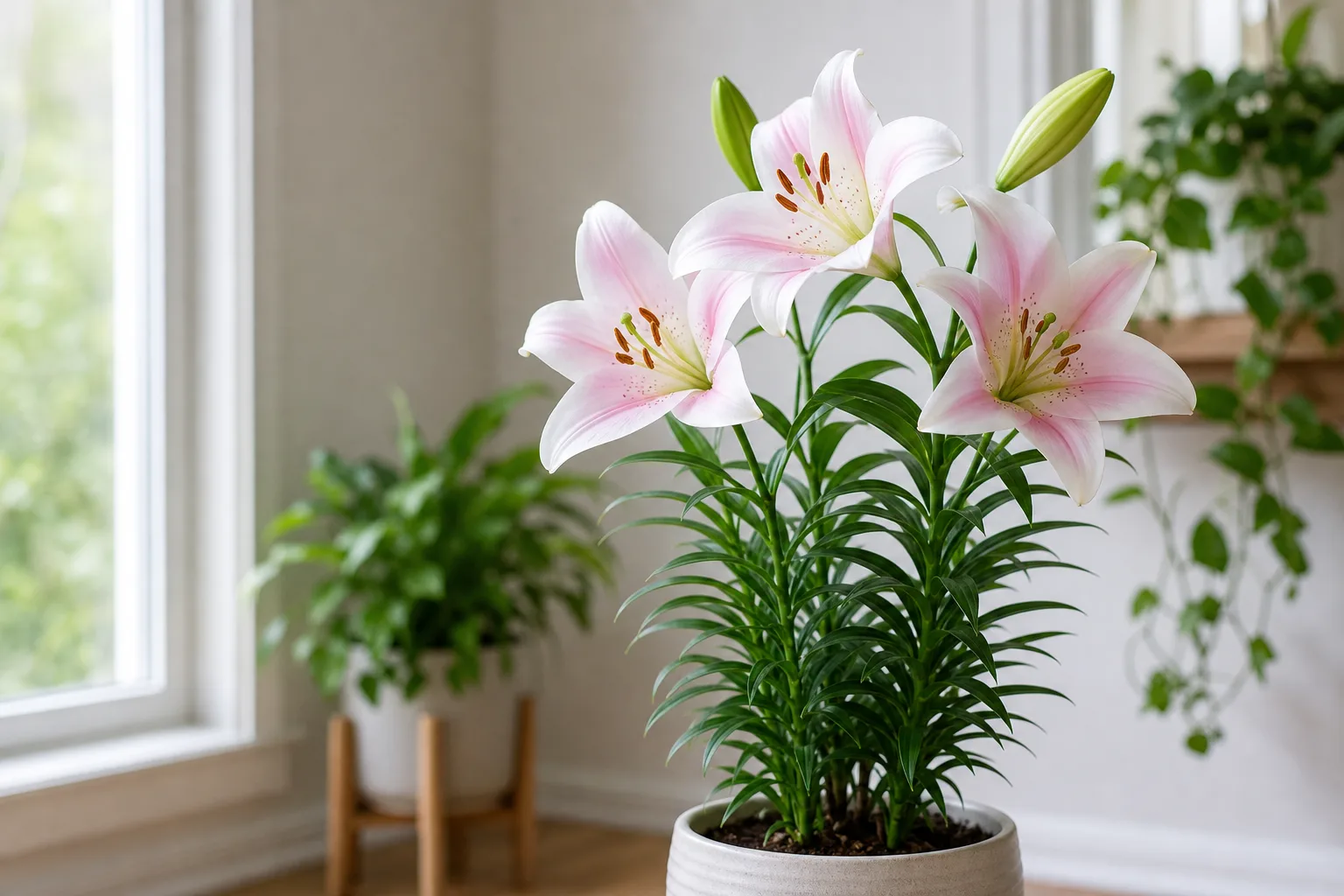
Important cat warning: Easter lily is a true lily, Lilium longiflorum. All parts—including leaves, flowers, stems, bulbs, pollen, and vase water—can cause severe kidney injury in cats after ingestion or pollen grooming. If a cat lives in or can enter your home, do not bring an Easter lily indoors or plant it in a garden a cat can access; a high shelf, closed room, or supervision is not a reliable safeguard.
If you suspect a cat has chewed any part, licked pollen, or drunk lily water, contact an emergency veterinarian and an animal poison-control service immediately. Do not wait for symptoms.
That safety decision comes before the watering schedule. Once the plant is in a genuinely cat-free setting, Easter lily care is manageable: keep the potted plant cool and bright, water it when the mix begins to dry, and let the leaves continue working after the flowers fade. If you want to keep the bulb, move it outdoors only after frost danger has passed and after a gradual transition to outdoor light.
Easter lily care at a glance
| Need | Practical starting point |
|---|---|
| Botanical identity | Easter lily, Lilium longiflorum; a true lily, not a peace lily |
| Indoors | Bright light, a cool room, and protection from drafts and heat vents |
| Water | Water when the surface begins to dry; let excess drain completely |
| After flowering | Remove faded flowers; retain every green leaf and stem |
| Outdoor site | Sunny, well-drained soil with mulch to keep the root zone cooler |
| Planting depth | Local Extension guidance commonly uses about 4–6 inches for bulbs; depth depends on bulb position and size |
| Natural bloom | Usually summer outdoors, not timed to Easter |
| Pet safety | Do not keep it where a cat can enter or plant it where cats roam; suspected exposure is an emergency |
An Easter lily in a decorative pot is a greenhouse-grown bulb forced for the holiday. Its immediate care differs from the decision to establish the bulb outdoors after flowering, so treat the potted display and garden phase separately.
Cat safety: keep every part away from cats
Easter lily is the common name for Lilium longiflorum, a member of the true-lily genus Lilium. The risk is not limited to chewing a large piece of foliage: leaves, petals, stems, bulbs, and pollen are all dangerous to cats, and the FDA also warns about water from a vase holding lilies.
Cats can be exposed by chewing any part, drinking vase water, or grooming pollen from their coats. The ASPCA advises avoiding lilies in homes with cats, noting that cats may slip into rooms owners try to keep off-limits and that aging flowers can drop leaves and pollen. Do not rely on a separate room or elevated shelf; if a cat can enter your home, skip this plant indoors, and do not plant it where an outdoor cat can reach it.
The ASPCA’s Easter lily listing identifies vomiting, loss of appetite, lethargy, kidney failure, and possible death in cats. It separately lists Easter lily as non-toxic to dogs and horses and says cats are the only species known to be affected by this plant.
Pet Poison Helpline’s species-specific guidance also identifies the leaves, stem, flower, pollen, and vase water as hazards for cats and stresses early treatment. That distinction matters: do not claim dogs face the same characteristic kidney injury from Easter lily. At the same time, do not generalize from one plant’s scientific name to every flower sold as a “lily”; peace lilies and calla lilies are different plants with different irritants, and other animals may have species-specific risks.
If a cat may have eaten, mouthed, or groomed pollen from an Easter lily, treat it as urgent even if the cat seems normal. Call a veterinarian or emergency clinic now and tell them the plant is Lilium longiflorum; the FDA’s guidance recommends contacting a veterinarian or pet poison-control center immediately and bringing a photo or sample to help identify the plant.
In the United States, the ASPCA Animal Poison Control Center lists 888-426-4435, and Pet Poison Helpline’s Easter-lily page lists 855-764-7661; fees may apply. Do not induce vomiting or try a home remedy unless a veterinary professional tells you to.
Removing anthers to reduce pollen stains is a flower-care step, not a way to make the plant cat-safe. Pollen can be missed, and every other part remains hazardous. If a cat can enter the room, patio, or garden where the plant is kept, choose another flower instead of relying on height, supervision, or a quick cleanup.
What an Easter lily is—and why it blooms out of season
The Easter lily is a bulbous perennial with fragrant, usually white, trumpet-shaped flowers. The plant sold around Easter is generally a forced crop: growers control temperature, light, and production timing so the plant flowers for a spring holiday even though a garden-grown bulb follows a different seasonal rhythm.
Iowa State University Extension explains that the familiar potted plant is prepared for the holiday market, while garden lilies flower on their natural schedule. The species profile from North Carolina State Extension identifies it as Lilium longiflorum and describes its preference for rich, well-drained soil.
That forcing explains two common surprises. First, a bulb planted in the garden is unlikely to flower by Easter next year; in regions suited to the plant, established Easter lilies typically bloom in summer, although cultivar, local weather, and bulb condition can shift the timing.
Second, a holiday plant may look compact in its pot but grow taller after planting outside. Depending on cultivar and growing conditions, garden-grown stems may reach roughly 2 to 3 feet rather than staying at the florist’s display height.
The common name can also cause confusion. Easter lily is not a peace lily (Spathiphyllum) or a daylily (Hemerocallis), and those plants do not share identical care or toxicity profiles. When asking an extension office or veterinarian for help, use the label or scientific name—Lilium longiflorum—rather than relying on “lily” alone.
Where to place a potted Easter lily indoors
Choose a bright location near a window, but avoid strong direct midday sun through hot glass. Bright indirect light keeps the plant growing without adding unnecessary heat to a pot that may already be warm and dry from indoor air. Rotate the container occasionally if growth leans toward the window, and keep it away from radiators, fireplaces, heating vents, and cold drafts.
Temperature matters more than many gift-plant owners expect. Iowa State University Extension’s Easter lily guide recommends daytime conditions around 65–70°F with somewhat cooler nights. A moderately cool room can help flowers last longer than a sunny spot beside a heat source. Do not try to force more blooms by moving the plant into intense sun; the unopened buds already on the stems are the ones most likely to extend the display.
If the pot is wrapped in decorative foil or set inside a watertight sleeve, remove it before watering. Put the nursery pot in a sink, water the mix thoroughly, let it drain, and only then return it to a decorative cover if you want to. The wrapper is for presentation, not a saucer that should hold runoff. AP gardening guidance likewise cautions that trapped drainage water can leave roots sitting wet.
How to water without leaving roots in standing water
Check the potting mix rather than watering on a fixed weekday. When the top layer begins to feel dry, water slowly until a little runs from the drainage holes.
Empty the saucer or outer pot afterward. The aim is evenly moist mix—not a swamp and not a bulb that dries completely while it is still carrying flowers.
Small pots can dry quickly in warm, bright rooms, while a cool room and a large nursery pot may stay moist for longer. Check with a fingertip near the surface and lift the pot if you are unsure; a noticeably light container often needs water, while a heavy, cool pot usually does not. If the soil is still wet, wait and check again instead of adding more water because the leaves look slightly soft.
Waterlogging is more concerning than a brief delay between waterings. A pot without drainage, a foil wrapper left full of water, or a container standing in a deep saucer can deprive roots of air and encourage bulb or root decay. If the mix smells sour or the base of the stems becomes soft, remove the outer cover, allow the pot to drain, and inspect the plant rather than applying fertilizer as a quick fix.
Keep the flowers fresh and handle pollen carefully
Easter lily flowers open in succession, so a plant with a mix of buds and open blooms can provide a longer display than one whose flowers are all fully open at purchase. Remove a bloom when it fades, using clean snips or pinching off the spent flower without cutting down the leafy stem. This keeps the plant tidy and prevents a developing seed capsule from becoming the next focus of growth.
The prominent yellow anthers can be removed after a flower opens if you want to reduce pollen stains on white petals, furniture, or clothing. Iowa State Extension notes that removing the anthers before pollen sheds can help protect the flowers and nearby fabrics.
Use a tissue or small scissors and avoid shaking pollen onto the flower. If pollen lands on fabric, lift it gently with tape or a dry brush; rubbing it with a wet cloth can spread the stain.
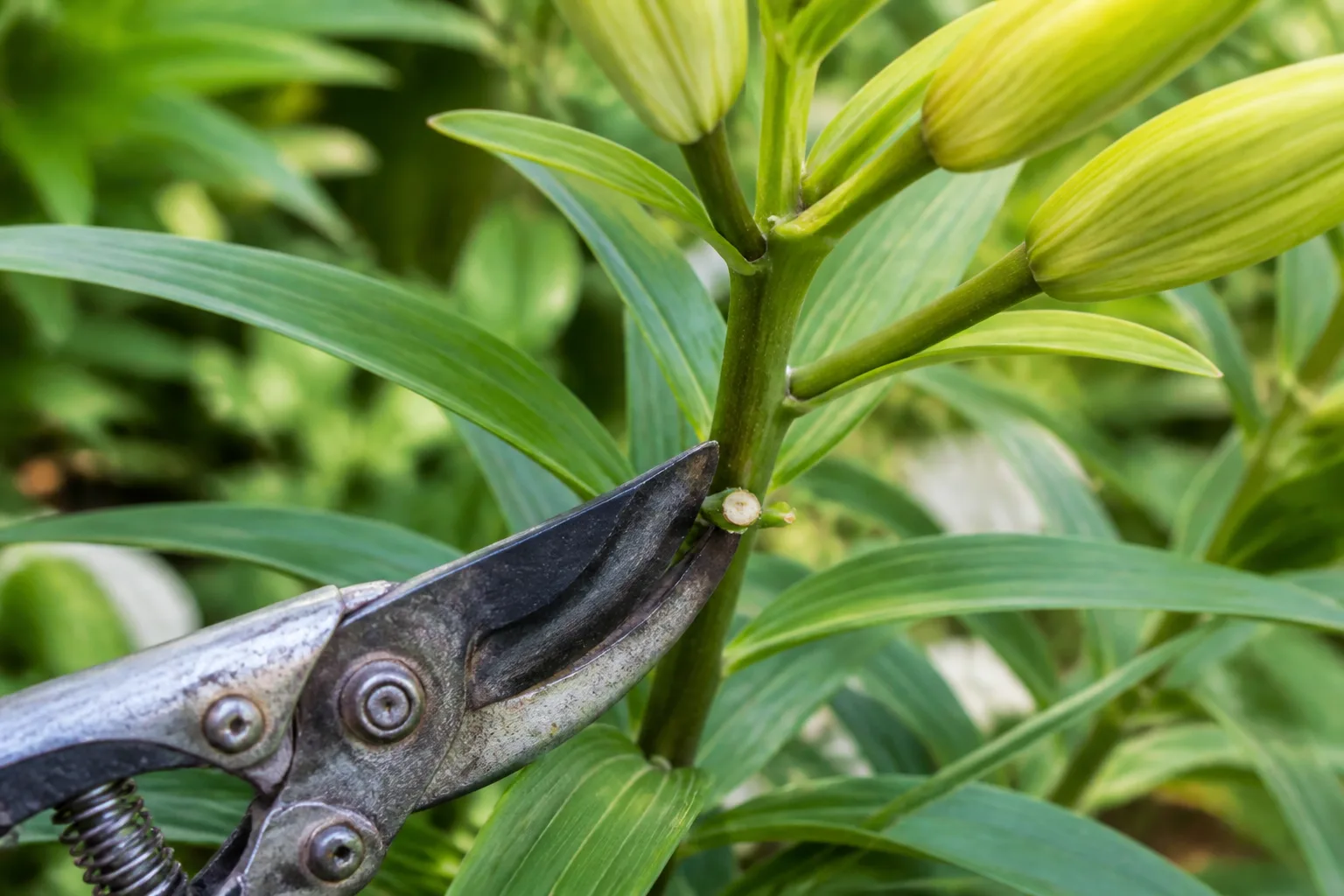
Trim only the spent bloom.
For a cat household, anther removal is not an adequate safety measure. It does not remove toxicity from petals, stems, leaves, bulbs, or vase water, and it cannot guarantee that pollen is gone. Do not keep an Easter lily in a home a cat can enter, even in a separate room; choose another flower instead.
After Easter: decide whether to keep the bulb
You can treat a forced Easter lily as a temporary flowering gift plant or try to establish its bulb outdoors. Keeping it is most realistic if you have a well-drained garden, a climate where lilies can overwinter with suitable protection, and a yard cats cannot access; if cats roam there, choose a different plant. If the only planting spot stays soggy or is exposed to severe winter cold, enjoying the flowers and composting the plant after it finishes may be more practical than promising yourself a rebloom.
While you decide, keep the plant in bright light and continue watering when the mix begins to dry. Do not throw away the pot as soon as the last flower falls: the green leaves still support the bulb.
At the same time, do not expect a store-bought plant to behave like a permanently flowering houseplant. A forced Easter lily is a seasonal bulb, not a tropical foliage plant that will keep producing new flowers indoors all year.
Remove faded flowers but keep green foliage
Cut off individual spent flowers and any swelling seed capsule behind them, but leave the green leaves and leafy stem in place. After flowering, the foliage continues photosynthesizing and helps replenish the bulb. Cutting all the stems to soil level while they are still green removes that energy supply; tying the leaves into a tight bundle or hiding them under mulch can also reduce light and airflow.
Wait until the leaves and stems turn yellow or brown naturally before cutting them back. The timing varies with the plant and weather, so use the color and condition of the foliage instead of a date on the calendar. Wisconsin Horticulture at UW–Madison notes that a forced lily may begin to brown after it is moved outside, while new growth can emerge from the bulb later. A brief dieback after transplanting is not automatically a sign that the bulb is dead.

Keep the leaves until they yellow.
Move the plant outdoors without shocking it
Wait until the risk of frost has passed in your location. A plant that has spent weeks indoors under filtered light is not ready for a sudden move into all-day sun and wind, even if the air feels mild.
Acclimate it over about one to two weeks: begin in a sheltered, bright-shade spot, then increase the time it receives outdoor light each day. Bring it back under cover if frost is forecast or the weather turns sharply cold.
This gradual transition—often called hardening off—lets leaves adjust to stronger light and moving air. Iowa State’s guidance describes starting in a protected shady area and increasing direct-sun exposure over several days; K-State Extension recommends a one- to two-week transition. These schedules are compatible: use the slower end if the plant is tender, the sun is intense, or the weather swings quickly.
If a garden bed is not available, a deep outdoor container with drainage holes can work, provided the bulb has room and the pot will not bake dry or freeze solid. Gardening Know How’s Easter lily planting guide also walks through moving a forced plant after its display fades; use your local Extension service for region-specific frost timing and winter advice.
Choose a large, stable container and a free-draining potting mix; check moisture more often than you would in the ground. Remember the cat warning outdoors too: do not plant an Easter lily in a garden a cat can enter.
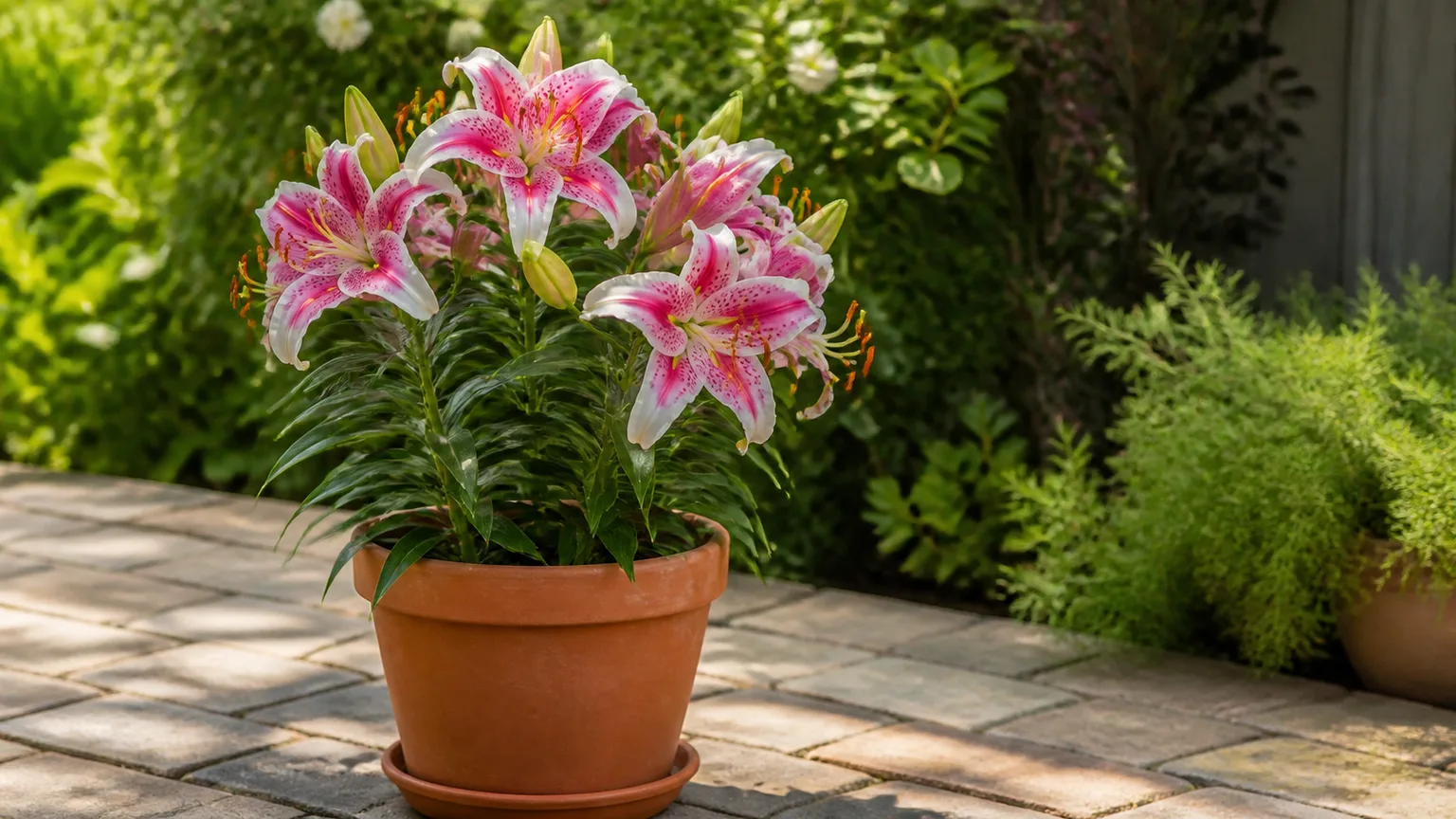
A different lily hybrid in a patio pot.
Plant an Easter lily in a garden bed
Prepare the site before lifting the plant from its pot. Easter lilies need moisture while they establish, but bulbs and roots suffer in waterlogged soil.
If water routinely stands after rain, choose a raised bed or another spot rather than trying to compensate with more frequent fertilizer or shallow surface watering. Work compost into the planting area when it improves the soil structure, but do not create a rich, soggy pocket around the bulb.
Slide the plant out gently and loosen only roots that are tightly circling the root ball. Keep the bulb and roots intact, spread the roots into the planting hole, backfill with soil, and water well to settle the mix. The stem and leaves may yellow after planting, especially when the forced plant’s original growth cycle ends; that does not mean the bulb should be dug up immediately.
Choose sun, drainage, and a cool root zone
Select a sunny site, or one with several hours of sun and light afternoon shade in a hot climate. North Carolina State Extension recommends full sun while keeping the roots shaded; mulch or shallow-rooted groundcover can shade the soil without blocking light from the upper stems.
Good drainage is non-negotiable. A sunny site that stays saturated after rain is not a better choice than a slightly less sunny bed that drains freely.
Leave enough room for air to move around mature stems. Kansas State University Extension’s 2026 care advice recommends a sunny, well-drained location and mulch to conserve moisture and keep roots cool. Avoid piling mulch against the stem; a loose layer around the planting zone is enough. Taller plants may need a discreet stake if wind or heavy rain causes them to lean.
Set the bulb at the right depth and spacing
For new dormant bulbs, local guidance commonly places Easter lilies about 4–6 inches deep, with roughly 12–18 inches between bulbs. Iowa State and K-State use about six inches, while North Carolina State Extension gives a 4–6-inch range.
The RHS guide to growing lilies notes that Lilium longiflorum is stem-rooting and gives a general lily rule of planting those bulbs at roughly two-and-a-half times their height. Bulb size, soil, and how a source measures depth explain why one universal number is less useful than the bulb label plus local advice.
Depth means where the bulb sits, not how much of the leafy shoot to bury. A forced plant’s bulb may be low in its nursery root ball; Iowa State notes that the base of that root ball may need to sit 6–8 inches below the surrounding grade to put the bulb at the right depth.
Keep green leaves above soil. For loose bulbs, orient the pointed growing end upward and spread any roots gently; for a pot-grown plant, preserve its root ball and avoid breaking the bulb apart during transplanting.
Plant a small group rather than a single bulb if you have room, spacing plants about a foot to a foot and a half apart. Groups of three or more create a fuller summer display and leave each stem enough space. If you are planting in a container, use a deep pot with drainage and size it for the mature plant, not just the compact greenhouse specimen.
Care through summer, fall, and winter
After planting, water thoroughly, then keep the soil lightly and consistently moist while roots re-establish. In established beds, water during extended dry spells rather than following a daily schedule.
Mulch helps even out moisture and temperature, but it does not fix poor drainage. If the planting site is wet for long periods, improve the bed or move future bulbs rather than adding more water-holding material.
Use fertilizer conservatively. A soil test is the best guide when a bed has an established feeding history or a plant repeatedly grows weakly.
K-State Extension recommends fertilizing after spring growth appears and before blooms begin, guided by soil-test results. Avoid strong doses meant to force a flower; excessive feeding cannot make a bulb bloom on the Easter calendar and may produce soft growth that needs more support.
Let the foliage finish its natural cycle. When stems and leaves are fully brown, cut them near ground level and remove diseased debris.
In colder or marginal climates, winter mulch can protect the dormant bulb, but the amount needed varies by local winter and soil drainage. Some university sources caution that Easter lilies are not reliably hardy in their region; Iowa and Kansas gardeners may succeed with substantial mulch, but that is not a guarantee for every yard. Winter survival also varies with cultivar and site microclimate, so consult local Extension advice and cultivar-specific bulb guidance rather than treating a generic hardiness zone as a promise.
The RHS guide to growing lilies recommends well-drained conditions and explains that stem-rooting lilies such as L. longiflorum need a deeper planting than basal-rooting types. For this species, follow local Extension advice if your winters are colder than the plant’s reliable range. In a container, roots are more exposed to freezing than they are in the ground; either grow the pot in a protected, cold-but-frost-free place during dormancy or treat it as an experiment rather than assuming a porch pot will overwinter safely.
Will an Easter lily bloom again next year?
It may, but the first goal is keeping the bulb alive and letting it rebuild. A forced plant has already spent energy making an out-of-season display.
After transplanting, its top growth may die back, it may send up leaves later in the summer, or it may remain dormant until the next spring. K-State Extension describes these as possible post-transplant patterns, not as a sign that every bulb will produce flowers immediately.
If it returns in a climate suited to its cultivar, expect its natural flowering season—often summer—rather than another Easter display; exact timing varies with local weather and bulb condition. Garden-grown stems may also be taller and less compact than the potted plant, depending on cultivar and growing conditions. Healthy foliage left in place, suitable sun, good drainage, and winter protection where needed all improve the conditions for return, but none can promise a specific bloom date or annual performance.
A forced Easter lily can also be enjoyed without being saved. If your site is unsuitable, you lack a safe cat-free location, or the bulb declines after its first season, that is not proof you failed at an easy perennial. The commercial plant was timed for a one-off holiday display; keeping it going is an optional gardening project with climate and bulb-quality limits.
Common problems and how to read them
The leaves yellow soon after planting. A forced lily’s original stems can decline after flowering and transplanting, while new shoots emerge from the bulb later. If the decline is gradual and the bulb feels firm, leave it in place and keep the soil from swinging between bone-dry and soggy. If the base is soft, the soil smells sour, or the bed remains waterlogged, suspect rot and correct the drainage problem.
The buds shrivel before opening. Check for a dry root ball, water standing in the outer pot, intense heat, or a cold draft. Correct the growing conditions, but do not keep adding water to a pot that is already wet. A bud damaged by stress may not recover, so focus on maintaining the remaining flowers and healthy foliage.
The plant grows leaves but no flowers. That can happen during recovery from forcing. In later seasons, check whether the plant receives enough sun, whether the bulb is crowded, whether leaves were cut while green, and whether drainage or winter cold damaged the bulb. Correct one likely cause at a time; extra fertilizer is not a reliable substitute for light, healthy foliage, or a viable bulb.
Leaves have holes or insects on them. Inspect both sides of leaves and the stems. Aphids can cluster on tender growth, and lily leaf beetles can be serious pests where they occur.
Hand-remove visible insects when practical and consult a local Extension office for the pest and control options in your area before applying a product. The correct treatment depends on identification and local rules; do not assume a generic insecticide is harmless to pollinators or pets.
Divide and propagate an established Easter lily
Do not dig up a newly transplanted holiday lily just to make more plants. Give the bulb time to establish and flower through at least one normal growing cycle.
Once a healthy clump has matured, it may form small offsets or bulblets around the main bulb. Dividing those offsets is usually the simplest home-garden method; bulb scales can also be used, but the pieces need time to grow to flowering size.
When the plant has finished its season and the foliage is dormant, lift the clump carefully with a garden fork, brush away loose soil, and separate only offsets that come away cleanly. Replant them promptly at the appropriate depth and spacing; lily bulbs can dry out while exposed. Wisconsin Horticulture at UW–Madison notes that scales and bulblets may need two to three years to reach blooming size, so propagation is a patient project rather than a quick way to multiply flowers for next spring.
If the bulb is small, damaged, or still recovering from greenhouse forcing, leave it undisturbed. Dividing too early can set it back further. Mark the planting spot so you do not accidentally dig into a dormant bulb, and keep any bulbs, scales, and cut foliage away from cats as carefully as you would the flowering plant.
Conclusion
For a potted Easter lily, the reliable routine is bright light, a cool room, water when the mix begins to dry, and complete drainage after each watering. After the flowers fade, keep the green foliage until it yellows naturally; if frost has passed and you have a sunny, well-drained garden cats cannot access, harden the plant off gradually before planting it outdoors. A garden-grown Easter lily follows a summer cycle, and its return is possible but never guaranteed.
Most important, this is a true Lilium: do not keep it in a home a cat can enter or plant it in a garden where cats roam. If a cat may have eaten or groomed any part of an Easter lily, call a veterinarian or animal poison-control service immediately rather than waiting to see whether symptoms develop.