Chamomile Lawn: Benefits, Limits & Spring Planting
See if a chamomile lawn suits your yard, choose the right Roman chamomile, and plant plugs in spring with realistic guidance on water, weeds, and foot traffic.
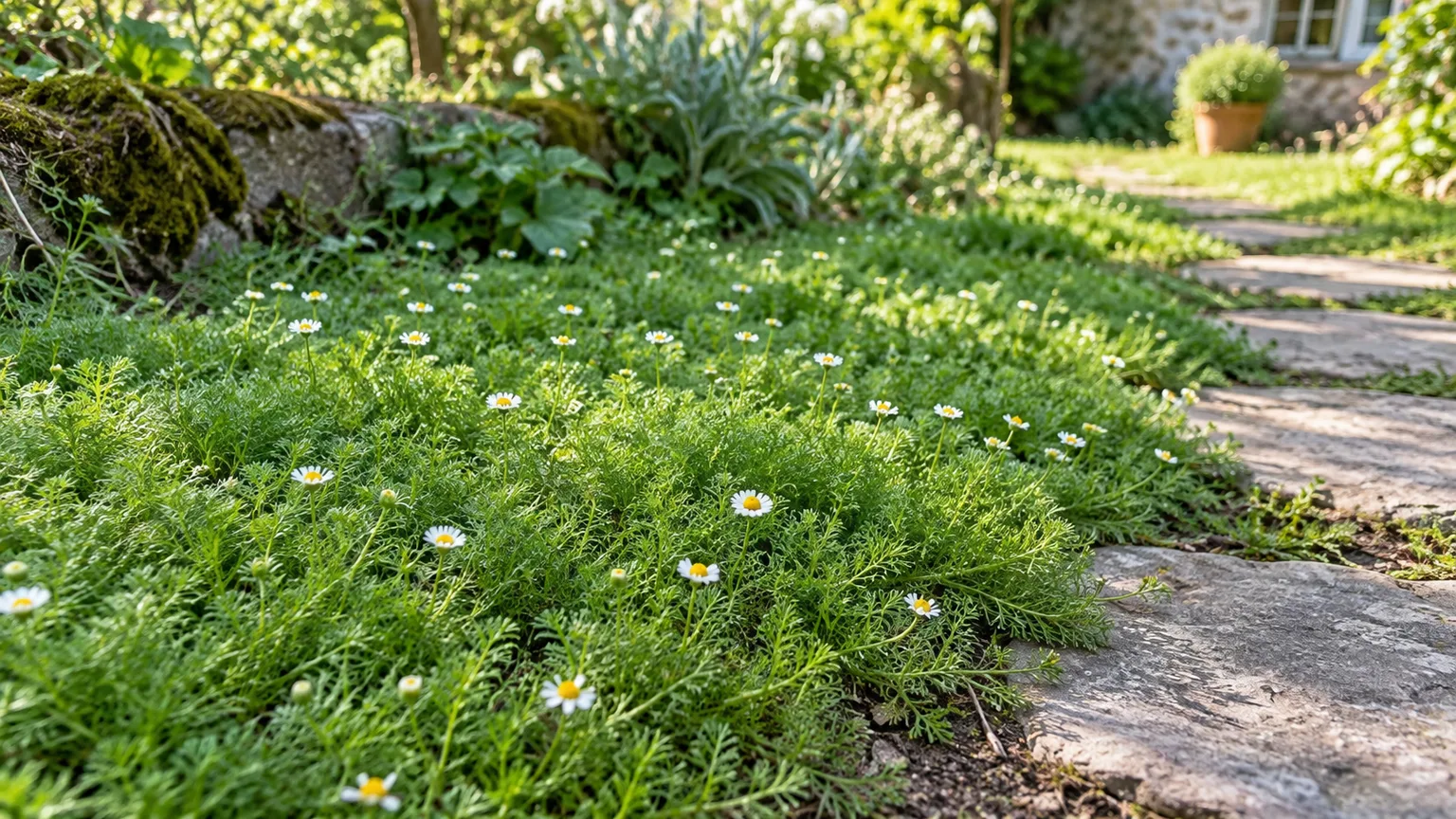
A chamomile lawn is a low-growing carpet of aromatic foliage that can replace turf in a sunny, lightly used part of the yard. It is appealing where mowing is awkward or a soft, scented surface matters more than a play-ready lawn. The important qualifier is “lightly used”: chamomile does not take repeated traffic the way established turf does, and the lawn-suited cultivar is not the same as any packet of chamomile seed.
If you have a sunny strip beside a path, a small seating nook, or a difficult-to-mow corner, spring can be a good time to start. First choose the right plant, then check whether your soil and routines suit it. The Royal Horticultural Society’s chamomile-lawn guidance describes it as an option for sunny places with light foot traffic, not a universal grass replacement.
Is a Chamomile Lawn a Good Fit for Your Yard?
Think of chamomile as a living ground cover with lawn-like uses, rather than turf that happens to flower. It can make a small area feel softer and more fragrant, but it is a poor choice for the route everyone takes to the garage, a dog’s running track, or a space where children play ball every afternoon. Repeated steps compress and break the low stems faster than the plants can fill back in.
It is most promising where people will look at it and occasionally brush or step across it, while a path or stepping stones carry regular traffic. If you want a durable surface for frequent walking, keep turf or choose a hard path. If you want a flowering ground cover, accept that flowers and low maintenance do not always come together in the same cultivar.
Choose the Right Chamomile Before You Buy
“Roman chamomile” names a species, Chamaemelum nobile; it does not guarantee the short, dense habit people picture in a lawn. The species can grow taller and flower, while selected lawn cultivars stay lower. Check the botanical name and cultivar on the nursery label, and ask whether the plants are sold specifically for lawn use.
| Plant material | What it offers | What to expect |
|---|---|---|
| C. nobile ‘Treneague’ | Very low, nonflowering foliage | Best for a tidy green mat; buy rooted plants or divisions, not seed |
| Flowering ‘Dwarf’ or another lawn selection | Low cover plus daisy-like flowers | More visual interest, with trimming or deadheading to prevent a ragged surface |
| Seed-grown Roman chamomile | An inexpensive way to grow the species | Variable, taller flowering plants; not a reliable way to reproduce a named lawn clone |
| German chamomile | A flowering annual herb | Better suited to an herb or flower bed than a perennial lawn |
‘Treneague,’ flowering chamomile, and seed-grown plants
Roman and German chamomile are different plants, even though both are sold under the same common name. Roman chamomile (Chamaemelum nobile) is perennial; German chamomile (Matricaria chamomilla) is an annual flowering herb. Epic Gardening’s growing guide makes the same species distinction, which matters when you are buying a long-lived lawn rather than a seasonal herb patch.
For a close, flower-free carpet, the RHS identifies C. nobile ‘Treneague’ as a low, nonflowering cultivar, around 5–10 cm (2–4 inches) tall. It is propagated by division and does not come true from seed. That last detail changes what you should buy: seed packets labeled Roman chamomile may produce the species, not a field of ‘Treneague’ clones. The RHS chamomile growing guide and lawn guide both distinguish the lawn cultivar from flowering chamomile.
If you want flowers, a short flowering cultivar can work, but expect more upkeep. Spent flower stems can make the surface look untidy and leave gaps unless you shear or deadhead them. A flowering mat can be more welcoming to insects than a flower-free ‘Treneague’ carpet; BBC Gardeners’ World’s lawn guide notes that chamomile flowers provide nectar and pollen. Decide which feature matters more before ordering: a uniformly green surface, or flowers and the extra trimming they bring.
What a Chamomile Lawn Gives You
The strongest reason to grow one is sensory, not a promise that it will outperform turf on every measure. Roman chamomile foliage releases a fresh, apple-like scent when brushed or lightly crushed. The effect suits a small seat, a path edge, or a spot near a patio where you will notice it without crossing it dozens of times a day. The feathery foliage also creates a softer look than a clipped grass rectangle.
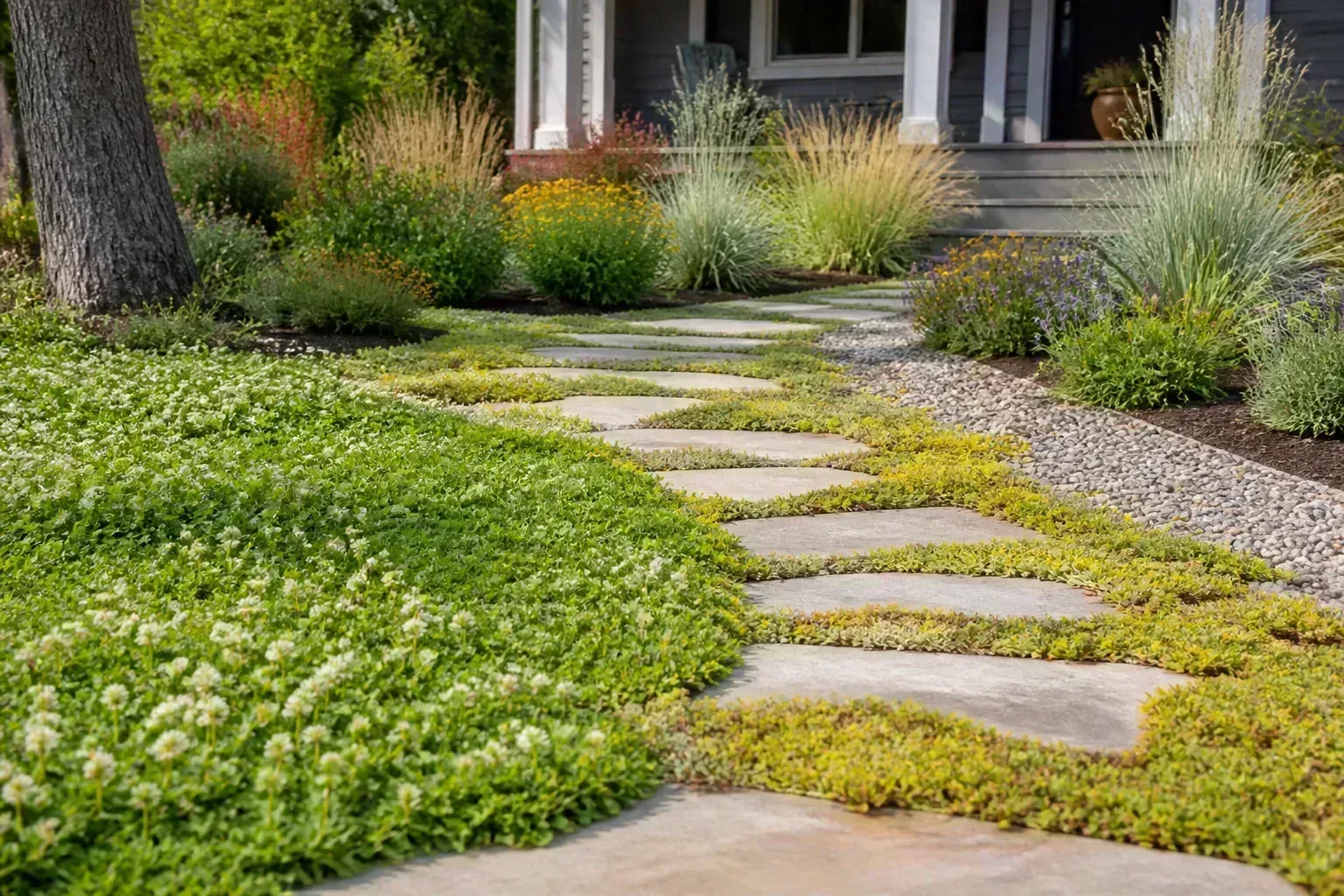
A low, nonflowering cultivar can cut out routine mowing and much of the feeding associated with conventional turf. ‘Treneague’ naturally stays close to the ground, so it generally needs no regular mowing; an occasional light trim is enough if growth becomes straggly. That does not mean no work. Weed removal before planting and during establishment, watering while roots settle, and occasional gap repair replace much of the time you might have spent mowing.
The flowers are a separate benefit of flowering forms, not of every chamomile lawn. If supporting pollinators is the priority, choose a flowering cultivar or keep a flowering border nearby rather than assuming a flower-free lawn will provide nectar. The result is a more honest design choice: fragrance and a green carpet from ‘Treneague,’ or a less uniform but flowering surface with extra maintenance.
The Trade-Offs: Traffic, Weeds, Cost, and Flowers
Chamomile is not resilient turf. The RHS lawn guide advises keeping people off a newly planted lawn for at least 12 weeks and keeping traffic very light through its first year. Even after establishment, frequent walking can thin the mat. Put stepping stones where trips repeat, and think about traffic patterns before you remove the grass; plants cannot compensate for a walkway that cuts through the middle of the patch.
The second trade-off is the cost and labor of getting a continuous cover. A lawn is usually planted with rooted plugs or divisions rather than broadcast seed, especially if you want the named ‘Treneague’ clone. More closely spaced plants cover the soil sooner but raise the number you must buy. A small trial area is often a better first purchase than enough plugs for an entire yard.
Weeds are another real maintenance item. Low-growing chamomile does not smother every weed from day one, and vigorous weeds can overtop young plants or occupy gaps. The RHS lawn guidance recommends thorough weed removal before planting and regular hand weeding afterward; it also warns that selective lawn weedkillers cannot be used on chamomile lawns. If you want a lawn that can be treated like standard turf, choose a different surface.
Finally, “drought tolerant” should not be read as “never water.” Established plants may cope with short dry periods, but RHS guidance says to water during prolonged dry spells and warns that very dry, stony ground is a poor fit. A chamomile lawn is low-mow, not maintenance-free or automatically water-saving in every climate.
Check the Site Before Preparing It
Chamomile’s site requirements are specific enough to test before ordering plants. The RHS cultivation notes recommend an open, sunny position; light, dappled shade can work, but more shade may leave the cover patchy. Chamomile prefers light soil that drains while retaining some moisture. Heavy clay can stay too wet in winter and bake hard in summer, while very dry sandy or stony ground can dry the plants out.
Walk the proposed area after a normal rain. If water stands there for hours or the ground stays slick and compacted, solve the drainage problem or choose another spot. If the soil becomes dusty and dries almost immediately, plan how you will water during establishment and long dry periods. A site that needs constant rescue watering is not a low-maintenance lawn site.
Sunlight, drainage, and moisture decide the outcome
Use this quick screen before committing:
- Good candidate: several hours of sun, soil that drains after rain, and a location people can mostly avoid.
- Possible with a design adjustment: light dappled shade or occasional crossing, if you use stepping stones and accept slower or less even cover.
- Poor candidate: deep shade, regularly waterlogged soil, very dry gravelly soil without irrigation, or a route used several times every day.
The NC State Extension Gardener Plant Toolbox describes Roman chamomile as a creeping perennial with fragrant foliage and notes that some people can develop contact dermatitis. If you are sensitive to plant contact, wear gloves when dividing or trimming it. Site suitability matters more than a generic hardiness-zone claim: the lawn cultivar, drainage, winter wet, and local summer heat all affect the result.
How to Plant Chamomile Plugs in Spring
For a named lawn cultivar, buy rooted plants or divisions from a nursery that identifies the cultivar. Spring planting lets plants establish during active growth, but the exact week depends on your local weather. Aim for workable soil and mild conditions, and do not plant just before a hot, dry stretch unless you can keep the root zone moist. If you start with young plants grown indoors, harden them off before planting outdoors.
Plan a compact shape with an edge that is easy to maintain. A small rectangle beside a patio or between stepping stones is easier to weed and water than an irregular island in the middle of a large lawn. Mark the area and estimate plant numbers before you order; the spacing decision has a substantial effect on the budget.
Clear turf and give weeds a chance to emerge
Remove the existing grass and its roots rather than scattering chamomile seed into turf. Grass competes strongly with a low-growing chamomile mat, so overseeding an intact lawn is unlikely to produce a clean replacement. Lift the turf, remove perennial weed roots, and rake the surface level without turning the whole bed deeply enough to bring up a fresh supply of dormant weed seeds.
After the first weed-removal pass, wait about one to two weeks if your schedule allows. This gives disturbed annual weeds time to sprout, so you can remove them before planting. The RHS lawn guidance recommends thorough weed removal before installation; a second pass is especially useful because pulling a large weed out of a dense, shallow mat can damage the chamomile around it.
Set plug spacing for your budget and patience
Set rooted plugs 10–20 cm (about 4–8 inches) apart, following the plant supplier’s size and instructions. The RHS planting guidance gives this range for a chamomile lawn. Closer spacing knits together sooner; wider spacing lowers the initial bill but leaves open soil exposed to weeds for longer. As a rough square-grid estimate, 4-inch spacing takes about nine plants per square foot, while 8-inch spacing takes about two to three. A 100-square-foot patch could therefore require roughly 225–900 plugs. These are planning estimates, not a guarantee of coverage; plant size and layout change the total.
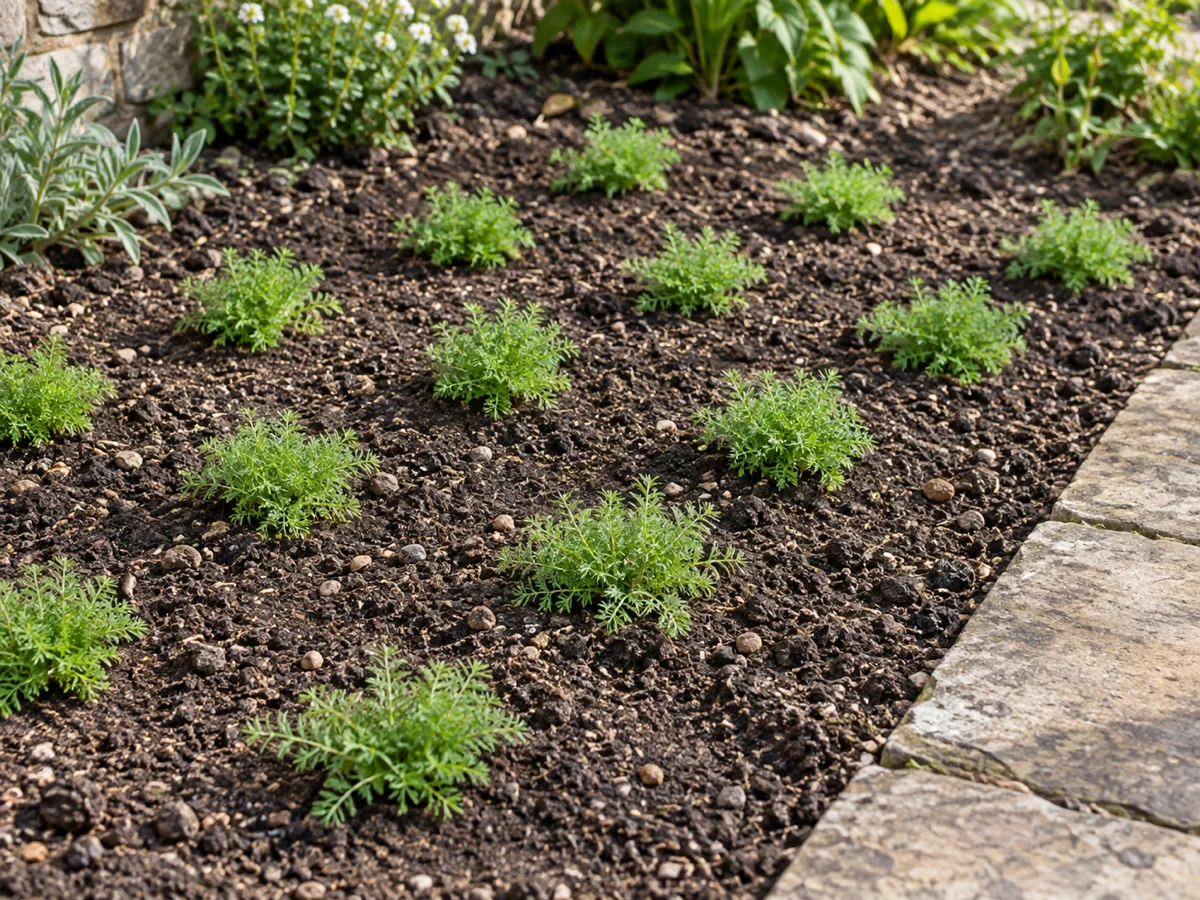
Dig a hole large enough for each root ball, set the plant at the same soil level it had in its pot, backfill, and firm gently. Water the bed thoroughly after planting. Do not bury the crown under soil or mulch; the low stems need room to spread and root into the open spaces. Put stepping stones in place now, before the new lawn becomes a tempting shortcut.
Seed is an option only if you are comfortable with a flowering, species-level patch rather than a uniform ‘Treneague’ lawn. The RHS chamomile growing guide says the seed needs light to germinate: sow it on the surface of warm soil from mid-spring, press it gently so it makes contact, and keep the seedbed evenly moist while it sprouts. Do not bury the seed or scatter it into existing grass and expect a finished lawn; competing turf and weeds can overwhelm small seedlings.
Establish the Lawn Without Losing It
The first few months determine whether plugs root and begin to knit together. Keep the soil evenly moist but not soggy while the plants establish, adjusting for rainfall, temperature, and soil texture rather than following a fixed calendar. Check the root zone by touch: water when it is beginning to dry, then let excess drain. Once plants are rooted, water during prolonged dry spells instead of trying to keep the bed constantly wet.
Keep the area weed-free while the chamomile is small. Pull weeds when the soil is slightly moist so roots release with less force, and refill any disturbed holes with soil and a replacement plug if needed. The RHS warns that selective lawn weedkillers cannot be used on chamomile lawns, so do not assume a product intended for turf is safe for this herbaceous cover. Hand removal is slower, but it avoids damaging the low-growing plants you are trying to establish.
Keep feet off the new patch for at least 12 weeks. After that, continue to treat it gently for the rest of the first year; “established” does not mean ready for regular play. If you cannot keep household traffic away, fence or mark the patch temporarily, or choose a site where footfall is naturally low. BBC Gardeners’ World and the RHS both recommend a long traffic-free establishment period, with the RHS advising very light use during the first year.
Keep the Mat Dense With Light, Cultivar-Specific Care
Once the chamomile has rooted and spread, the routine can be modest: hand-weed intruders, water through prolonged dry spells, and watch for gaps. Chamomile generally does not need routine fertilizer; the RHS says it grows well without feeding. Adding fertilizer will not solve poor drainage, shade, or foot traffic, so check those conditions first if the mat looks weak.
The word “lawn” can make people reach for the mower, but a low cultivar does not need a grass-style mowing schedule. If ‘Treneague’ becomes uneven or straggly, lightly shear it in late summer. Do not cut into bare soil or scalp the plants; the aim is to tidy the surface, not force a new flush of growth at the wrong time.
Trim flowering chamomile; let ‘Treneague’ stay low
Flowering chamomile needs more attention than the nonflowering form. Once blooms fade, spent stems can leave a messy surface and contribute to gaps, so shear them back in late summer or remove them as they finish. If the priority is a flower display, that extra pass may be worthwhile. If the priority is the fewest maintenance steps, ‘Treneague’ is the more straightforward choice.
Aphids can settle on tender new shoots, particularly when plants are putting on spring growth. Check the new tips before treating anything: a few insects do not necessarily threaten an established mat, and beneficial insects feed on aphids. If growth is distorted or the population is spreading, identify the problem and follow local pesticide labels before using a treatment; the RHS lawn guide and BBC Gardeners’ World guide both flag aphids as a possible chamomile-lawn pest.
Diagnose and Repair Bare Patches
Do not fill a gap until you know why it appeared. Chamomile lawns can thin after repeated foot traffic, competition from weeds, too much shade, soil that dries out, soil that stays wet, or a harsh winter. Older plants can also die back in the center. Look at the pattern: a worn line often points to a shortcut; isolated holes with weeds suggest competition; broad weak growth under a tree suggests light or root competition; winter loss in low spots suggests excess moisture.
Correct the cause first. Redirect traffic with stepping stones, remove weeds by hand, and adjust watering or drainage to match the soil. If the site is deeply shaded or waterlogged, replanting the same patch may repeat the failure. For a patch that is otherwise healthy, lift a rooted division from a vigorous area or buy matching plugs, replant at the original depth, water them in, and keep feet away while they re-establish.
Use divisions to extend a ‘Treneague’ lawn or fill gaps because divisions preserve the named clone. Seed will not reproduce ‘Treneague’ reliably. Keep the repaired soil clear of weeds until the new plants begin to spread; otherwise, the repair can turn into a second round of competition rather than a restored carpet. The RHS propagation advice describes division in spring or autumn as a way to extend a lawn and replace dead areas.
Chamomile vs. Clover, Thyme, and Turf
Choose by how you use the ground, not by which alternative sounds most sustainable. Chamomile works for a scented, low-growing accent where traffic is light. White clover provides a flowering, more lawn-like alternative in some settings, but it also flowers and may not suit every preference. Read our guide to clover lawns before deciding between the two.
Creeping thyme can be a better fit for a sunny, free-draining area where chamomile would struggle, although thyme has its own site limits and may not tolerate repeated traffic either. Compare our guide to creeping thyme lawns and the broader overview of grass alternatives. For children’s play, routine pathways, or a surface that must recover quickly from use, ordinary turf remains the more practical choice.
Start With a Trial Patch, Not the Whole Yard
If you are undecided, plant a small patch this spring and observe it through one full growing season. Choose the site where chamomile has its best chance: sunny, well drained, accessible for watering, and away from the daily route through the yard. Use the cultivar you actually intend to grow at full scale, since a flowering seed-grown patch will not tell you exactly how a nonflowering ‘Treneague’ lawn behaves.
Track three things: how often weeds need attention, whether summer watering is manageable, and whether people naturally avoid walking across it. If the patch stays dense and the upkeep feels acceptable, expand it with divisions or additional plugs. If it thins under normal use, the trial has saved you from buying hundreds of plants for the wrong part of the yard.
Conclusion
A chamomile lawn is worth growing when you want a fragrant, low-growing surface for a sunny, lightly used space and are comfortable establishing it with plugs, weeding it by hand, and protecting it from traffic. For the simplest green carpet, look for Roman chamomile ‘Treneague’ and buy rooted plants or divisions; choose a flowering cultivar only if you are willing to trim it. Check drainage and foot traffic first, start with a small patch, and let the plants prove they fit your yard before replacing more turf.