How to Grow and Care for Chinkapin Oak in Your Yard
Learn where Chinkapin oak fits, how to plant it without burying the root flare, and what to expect from watering, acorns, pruning, and growth.
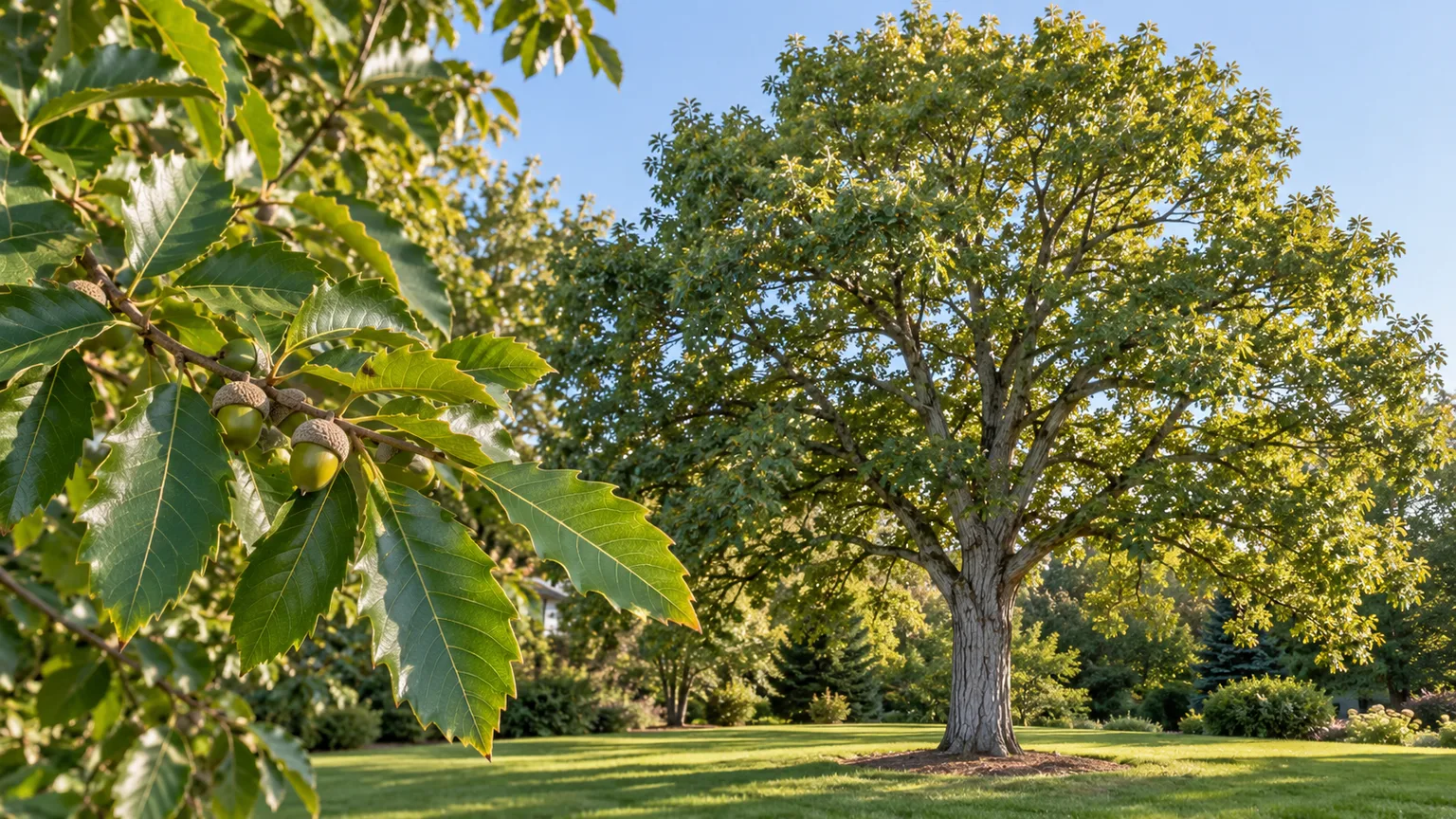
Chinkapin oak (Quercus muehlenbergii) is a strong choice for a sunny yard with room for a broad shade tree, especially where limestone, rocky ground, or alkaline soil narrows the list of trees that thrive. It is a poor fit for a small planting bed or a spot you may need to redesign: the tree can grow 40 to 60 feet tall with a spread of 50 to 70 feet, and its long taproot makes an established specimen difficult to move. NC State Extension’s profile is a useful starting point for matching the species to a site.
The low-maintenance reputation applies after establishment. A new tree needs careful planting and regular checks through its first growing seasons; once its roots extend into the surrounding soil, it tolerates dry spells better and rarely needs fertilizer. Pick the location first, buy a small healthy tree or sow an acorn there, and avoid trying to solve a poor site with pruning or frequent watering.
Is Chinkapin Oak Right for Your Yard?
This North American native grows across much of the eastern and central United States, with populations extending into southern Ontario and northeastern Mexico. In the wild it is often found on limestone outcrops and rocky uplands, settings that explain its useful tolerance for alkaline soil and occasional dryness. A sunny, open lawn, meadow edge, or large naturalized area is a better match than a shaded courtyard or a wet depression.
Think about the tree at its mature size rather than its nursery height. NC State Extension lists a 40- to 60-foot height and 50- to 70-foot width; a young specimen that looks compact today will eventually shade a substantial area. It can be rewarding where you want long-term shade, seasonal foliage, and acorns for wildlife, but it is not a practical way to get quick cover in a narrow strip beside a house.
Chinkapin oak is sometimes confused with dwarf chinkapin oak, Quercus prinoides. The latter is a separate species, not a compact cultivar of Q. muehlenbergii, so check the botanical name on a nursery label if you are shopping for a tree for a small property. If the available space cannot accommodate a large canopy, choose a genuinely smaller tree rather than planning to keep this oak small by repeated cutting.
How to Identify Chinkapin Oak
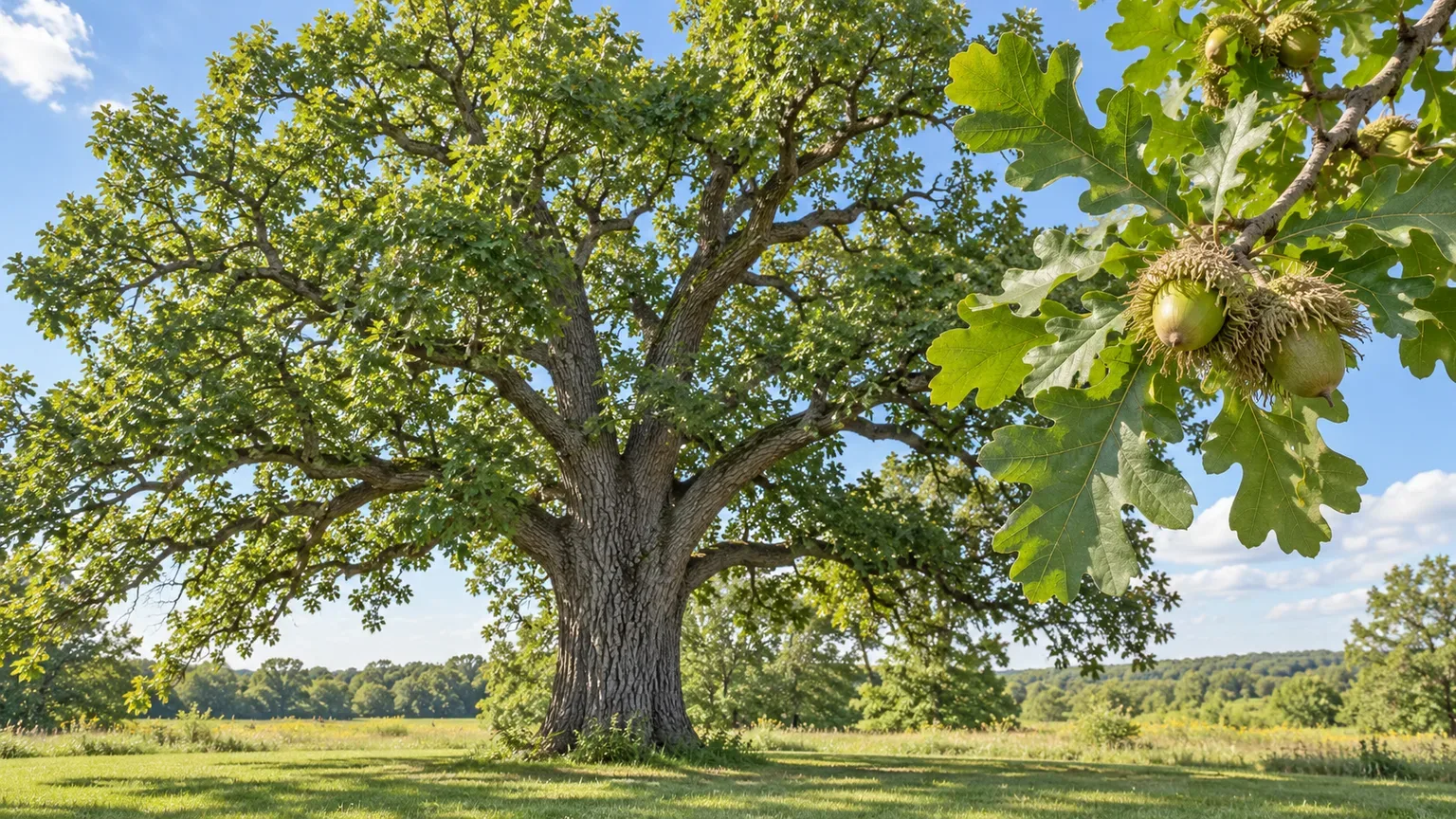
The leaves are the feature that often surprises people: instead of the deep lobes many gardeners expect from an oak, chinkapin oak has glossy, oblong leaves with coarse, rounded teeth or shallow undulations. The upper surface is green and the underside is paler; fall color varies from yellow to brown. The Washington University Arboretum’s Chinkapin Oak identification notes describe the toothed leaves, flaky gray bark, and small acorns together, a more reliable combination than leaf shape alone.
Mature bark is light gray and breaks into irregular fissures or flakes. The oval acorns are usually about half an inch to an inch long, with a shallow gray cap covering roughly one-quarter to one-half of the nut. Oklahoma State University Extension’s plant profile includes photographs of leaves, buds, and fruit that help distinguish this species from look-alikes.
The tree belongs to the white oak group, but “white oak” does not mean every member has rounded, deeply lobed leaves. If the exact species matters—for a property inventory, native-plant plan, or a suspected disease—compare the leaves, buds, acorns, bark, and location, or ask a local extension office to confirm it from clear photographs.
Choose a Site That Can Hold a Mature Oak
A chinkapin oak usually grows best in full sun, meaning at least six hours of direct light. More sun supports a fuller crown and better long-term shade, while a little young-tree shade is less important than avoiding a cramped site. Do not plant it where a roof, utility wire, or nearby tree will force you to remove major limbs as the canopy develops.
Sunlight, soil, and pH
Prioritize drainage over richness. The species grows in clay, loam, sand, and shallow rocky soil, but the site should drain rather than stay saturated after rain. NC State Extension gives a preferred soil pH of about 6.5 to 8; unlike many oaks, chinkapin oak can handle alkaline ground, including limestone-influenced soils.
That tolerance is not a reason to amend the soil. Do not add lime simply because an oak is being planted, and do not acidify an alkaline bed to meet generic oak advice. If a soil test shows an extreme pH or a nutrient deficiency, follow a local extension recommendation; otherwise, use the native soil and focus on drainage, sunlight, and root space.
Space, roots, and hardscape
Allow for a broad crown and the leaf, catkin, and acorn drop that come with a deciduous tree. Acorns feed birds and mammals, but they can be inconvenient over a driveway, frequently used path, or patio. The canopy also makes this a poor choice directly under overhead wires or close to a building where future crown reduction would be difficult.
The taproot is a major planning constraint. A tree that has been in the ground for years is not an easy transplant, and a large nursery specimen may have lost a meaningful portion of its root system during lifting. Ask how the nursery handled root pruning and favor a well-rooted smaller tree over a tall specimen that may struggle to reestablish.
Plant a Nursery Tree While It Is Dormant
In regions with cold winters, plant after the leaves drop and before the ground freezes; in milder climates, fall or early spring can reduce heat stress while roots begin to establish. Avoid planting into waterlogged soil or during a hot spell when you cannot keep the root ball moist. BBC Gardeners’ World’s tree-planting guide recommends preparing the site, setting the root ball at soil level, and watering well; use the season that fits your local climate.
Choose a healthy tree with a straight central leader, sound bark, and a root ball that has not dried out. Before buying, ask about the root system rather than judging quality by height alone. Because the species forms a long root, a young container-grown tree or small bare-root specimen is generally easier to establish in its permanent spot than a large, recently dug tree.
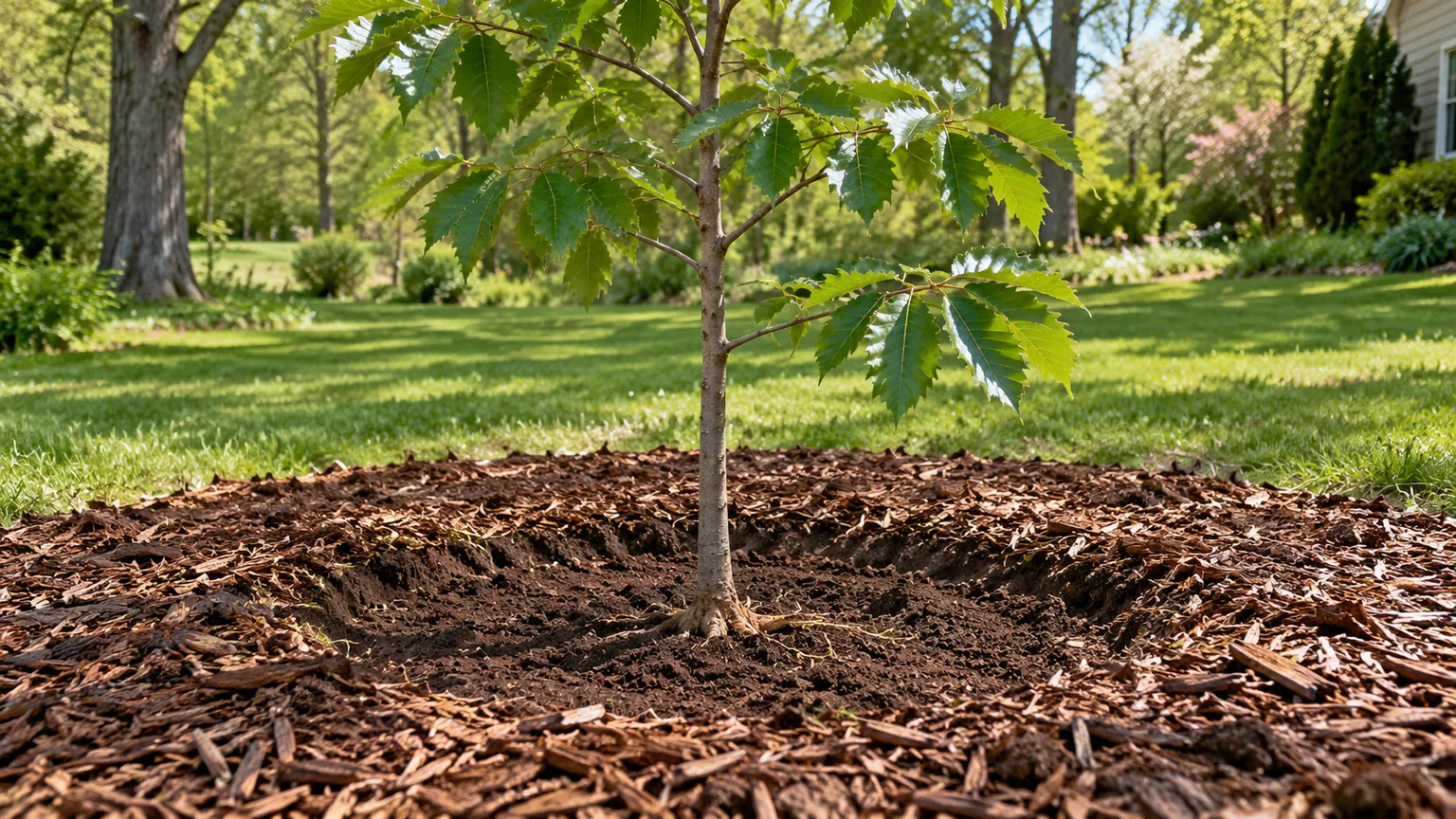
Set the root flare at grade
Dig a broad, saucer-shaped hole up to about three times the root ball’s width, especially where the surrounding soil is compacted, but no deeper than the root ball itself. Colorado State University Extension’s tree-planting guidance explains why a wide planting area helps roots grow outward while a shallow hole keeps the root ball from settling too deeply. Find the root flare—the point where the trunk widens into the upper roots—and keep it at or slightly above the surrounding soil level; burying it can leave the trunk persistently damp and make it harder for new roots to spread.
Remove the pot and loosen only roots that are circling tightly around the outside; cut off dead or broken roots with clean pruners. Set the tree upright, backfill with the excavated soil, and firm it gently so large air pockets collapse without packing the soil hard. Water slowly after planting to settle soil around the root ball.
Stake only when the site calls for it
A tree with a stable root ball in a sheltered yard often does not need a stake. On an exposed or windy site, a low flexible stake can limit root-ball movement while still letting the trunk flex; remove it after the first growing season if the tree stands securely. A rigid tie left in place too long can rub or girdle the trunk, so check it as the stem thickens.
Water and Mulch During Establishment
Water the planted root ball thoroughly, then check soil moisture before watering again. During the first growing season, water when the root ball and nearby soil begin to dry, giving the water time to soak into the root zone rather than running off the surface. Rainfall, soil texture, heat, and the size of the nursery tree all change how often that will be; a fixed weekly schedule can overwater a heavy clay site or underwater a sandy one.
Do not treat drooping leaves as proof that the tree needs more water. Check the soil several inches below the surface: dry soil points toward a water deficit, while persistently wet soil suggests poor drainage or overwatering. If the tree wilts despite damp soil, inspect for planting too deep, a damaged trunk, compacted ground, or root trouble before adding more water.
Spread a two- to three-inch layer of organic mulch over a broad ring to moderate soil temperature and reduce competition from lawn grass. Keep the mulch several inches away from the trunk so it does not hold moisture against the bark, and widen the ring as the tree grows. Horticulture magazine’s acorn-growing advice also emphasizes keeping young oaks watered, mulched, and free of competing grasses during their first few seasons.
Routine fertilizer is usually unnecessary. Chinkapin oak tolerates relatively poor soils, and a high-nitrogen feed will not fix a waterlogged site, poor root flare, or root damage. If growth remains weak after correcting those conditions, get a soil test before applying anything.
Grow Chinkapin Oak From Acorns
Starting from an acorn avoids moving a mature taproot and lets you place the tree where it will stay. It is slower than buying a nursery tree, and rodents and other wildlife may eat the seed before it sprouts, so sow more than one if you can protect them. Horticulture magazine recommends collecting acorns as soon as they fall and planting them promptly rather than allowing them to dry in storage.
Collect fresh, sound acorns
Gather firm acorns from beneath a healthy tree in autumn, once they have fallen naturally. Discard nuts with cracked shells, soft spots, visible holes, or mold; those signs point to damage or decay. Keep viable acorns cool and slightly moist while you prepare the site, and do not leave them exposed to sun or warm indoor air for days.
The acorn cap may come away during collection, which is not by itself a reason to discard a sound nut. A float test can be used as a rough screen, but it does not guarantee viability; inspect the acorn and plant promptly rather than relying on one quick test. If you collected the seed locally, label the location and date so you know what you planted.
Sow in the ground or a deep container
Sow an acorn on its side and cover it with roughly three-quarters to one inch of soil. Direct planting is simplest when you already know the permanent site: mark the spot, water it, and protect it from squirrels and other animals until the seedling is established. Choose a well-drained location in full sun, because moving the oak later becomes harder as its root grows.
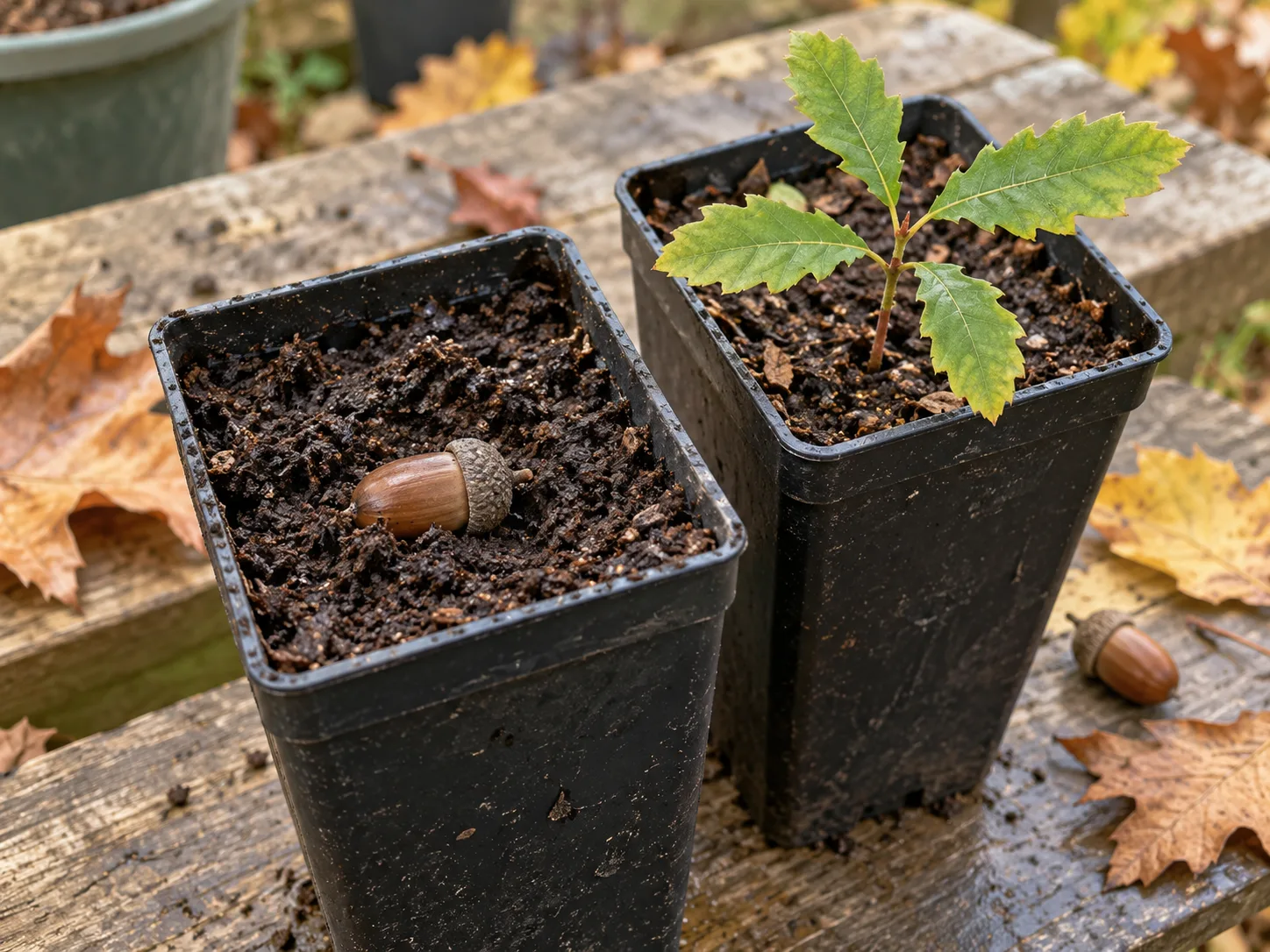
For a container start, use a deep pot with drainage holes, not a shallow seed tray; the developing taproot needs downward room. Keep the medium lightly moist, not saturated, and place the pot outdoors in a protected location so the seed experiences the local seasons. Check for the first root or shoot before disturbing the pot, and plant the seedling into its final place while it is still small enough to handle with its root system intact.
Prune With Oak Health in Mind
Let the young tree build a strong natural framework instead of trying to shape it into a formal hedge or a small ornamental. In the dormant season, remove only dead, broken, rubbing, or poorly attached branches that are small enough to reach safely; make cuts just outside the branch collar rather than flush to the trunk. Do not top the tree to control its height, because topping removes the structure that gives a mature oak its strength and natural crown.
Oak-wilt guidance makes pruning timing especially important. NC State Extension describes chinkapin oak as relatively resistant, but Penn State Extension notes that no oak species is immune and that white-oak-group infections can still occur, usually progressing more slowly than in red oaks. Fresh wounds can attract insect vectors, so Penn State advises pruning oaks during the dormant period; the safest dates depend on local vector activity, so follow your state extension’s regional window.
A storm-damaged limb that threatens people or property should not wait for an ideal calendar date. Keep people away from the hazard and call a qualified arborist for large limbs, work near wires, or a mature tree that needs structural correction. For routine cuts, avoid creating fresh wounds during the active growing season whenever local oak-wilt risk is present.
Diagnose Common Problems Before Treating
Most established chinkapin oaks need observation rather than scheduled sprays. Oklahoma State University Extension lists oak wilt, anthracnose, leaf miners, and acorn weevils among possible issues, but the presence of a few chewed leaves or a damaged acorn is not a reason to treat the entire canopy. Identify the pest or disease first, then ask a local extension office whether it threatens the tree or is mainly cosmetic.
A tree that declines soon after planting may have a site or root problem, especially if it was planted too deeply, received too little establishment water, or sits in compacted or saturated ground. Check the root flare, soil moisture, and drainage before adding fertilizer or pruning healthy branches. Because the tree is hard to transplant once established, it is better to correct the original planting setup early than to wait until the canopy has thinned.
Signs that deserve prompt attention
Yellow leaves in autumn are normal; fall color ranges from yellow to brown. A few blemishes, galls, or insect-chewed leaves can also occur on a native oak that supports wildlife. The pattern and timing matter more than one imperfect leaf.
Look more closely if leaves wilt, turn brown, or drop while nearby trees remain green, particularly if dieback begins in the upper crown during the growing season. Oak wilt is only one possible cause, but Penn State Extension’s oak-wilt guide describes crown wilt and browning that begins at leaf margins among warning signs; drought, root injury, and other diseases can look similar from the ground. Do not prune a suspected infected tree or move firewood from it before getting an arborist or extension diagnosis, since oak-wilt management can affect nearby oaks.
Chinkapin oak can also be a concern around grazing animals. NC State Extension flags low-severity poison characteristics for people who eat raw acorns or young leaves and identifies the plant as a problem for horses. If horses or other livestock have access to fallen acorns and foliage, ask a veterinarian or local extension service about safe access and forage management rather than assuming the wildlife value makes every part safe to eat.
Prepare Young Trees for Winter
An established tree in its suitable range generally needs little winter protection. For a recently planted tree, maintain a broad mulch ring through winter, keep the mulch off the trunk, and water during a prolonged dry autumn while the soil is still workable. The goal is to prevent the new root ball from drying out, not to keep the soil wet through cold weather.
A seedling in a pot is more exposed to freezing than one planted in the ground. Keep the container outdoors in a sheltered spot, group it with other pots or sink it into the soil for insulation, and make sure excess water can drain. Plant it in its permanent location while it is still young; do not let a vigorous taproot become tightly crowded in a container and then expect an easy transplant.
Conclusion
Chinkapin oak is a long-term shade tree for a sunny, spacious site with good drainage, and its tolerance of alkaline or rocky soil makes it useful where other oaks struggle. Its success depends most on selecting the permanent spot, setting the root flare correctly, and giving a young tree steady attention without keeping its roots soggy. If you want to grow one from seed, plant fresh acorns shallowly in fall and protect them; if you buy a tree, choose modest nursery stock and move it only once.