Should You Deadhead Coneflowers After They Bloom?
Should you cut dead coneflower blooms? Learn when deadheading brings more flowers, when to leave seed heads for birds, and how to spot real plant trouble.
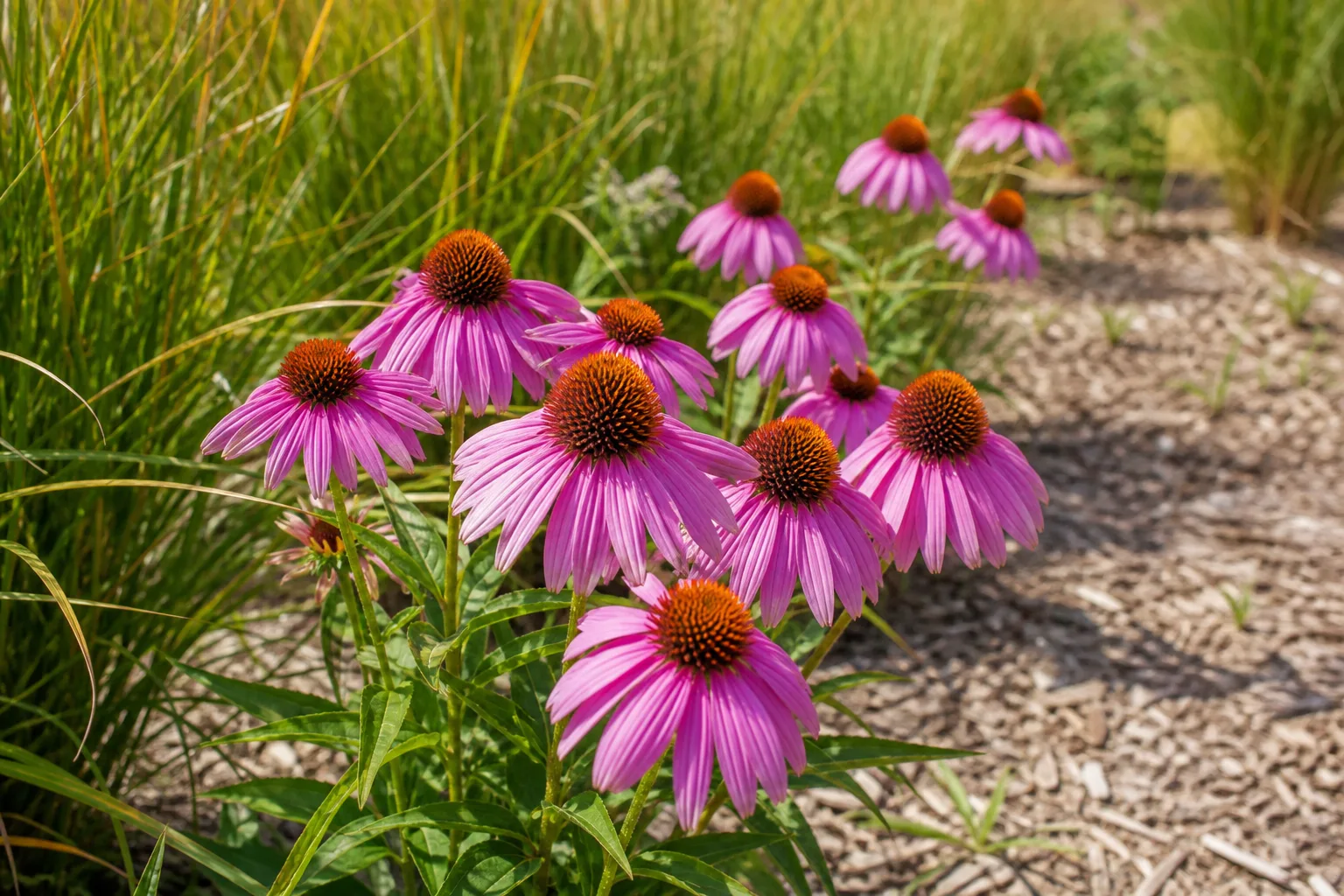
Quick answer: cut summer spent blooms, but do not cut every head
Yes, you can cut off dead coneflower flowers, but you do not have to. Deadheading is useful during the active blooming season when you want a tidier clump, fewer volunteer seedlings, and the best chance of encouraging another round of flowers. It is not a cure for a coneflower that is collapsing from wet soil, failing in deep shade, or showing disease symptoms.
The most balanced approach is to remove faded heads through the first part of summer, then leave the final flush of cones standing in late summer and fall. That gives you a longer display without giving up the dry seed heads that feed birds and add winter structure. Penn State Extension includes coneflowers among the perennials whose seed heads can provide winter food for birds, while NC State Extension notes that the old stems also offer nesting material and habitat for native bees Penn State Extension NC State Extension.
Think of the decision as a three-way choice:
| Your priority | What to do |
|---|---|
| More flowers and a neat bed | Deadhead individual spent flowers while the plant is actively producing new buds. |
| Goldfinches, seed, and winter structure | Leave at least some late-season cones standing. |
| A plant that is suddenly limp, blackened, or distorted | Inspect light, water, pests, and disease before reaching for pruners. |
The important distinction is between deadheading one finished flower and cutting the whole plant back. The first is a small summer adjustment. The second is seasonal cleanup, and doing it too early can remove wildlife food and make a healthy perennial look as if it has failed.
Dead flowers versus a plant in trouble
A coneflower has finished blooming when the ray petals have dried or fallen, the brown central cone feels firm, and the stem remains upright and green or lightly tan. The cone may look rough and dark as seeds mature. That is a spent flower, not a dead plant.
A new coneflower bud can be confusing because its petals may still be tightly folded around the cone. Before cutting, look for a fresh, symmetrical bud at the end of a stem or in a leaf axil. A finished head usually looks papery and uneven; a developing bud looks plump, firm, and connected to healthy green tissue. Penn State Extension recommends checking for hidden buds before cutting or shearing a plant Penn State Extension.
Treat a different set of signs as a diagnosis problem: a whole clump that wilts while the soil is wet, stems that blacken at the base, leaves that collapse after prolonged rain, or flowers that turn green and produce leafy tufts. Brown petals alone usually call for a clean cut. Brown leaves, mushy crowns, or bizarre new growth call for a closer look at the growing conditions.
What deadheading changes—and what it cannot change
After pollination, the flower’s job shifts from attracting visitors to making seed. Removing the spent head interrupts that particular seed-making effort and lets the plant continue directing resources into new buds, foliage, and roots. The result is often a cleaner plant and a longer flowering window, especially when the cultivar naturally produces side buds.
Deadheading does not manufacture flowers from an unhealthy crown. A coneflower in deepening shade will still struggle after you cut it. A newly planted division may need a season to establish. A drought-stressed plant may pause flowering until its roots have water again, and a root problem caused by standing water will get worse if you respond with repeated irrigation or fertilizer.
Variety matters too. Some coneflowers produce several flower heads on a stem and can rebloom with very little help; others make one dominant head and respond more visibly when it is removed. Gardening Know How observes that many coneflowers will rebloom without deadheading, so use the practice to support your garden goal rather than treating it as a rule every plant must obey Gardening Know How.
How to deadhead coneflowers without shortening the show
Use clean, sharp bypass pruners or garden scissors. Coneflower stems are coarse enough that pinching with your fingers can crush the tissue and leave a ragged wound. Make your cuts on a dry day when practical, and carry a small container so discarded heads do not fall back into a formal bed where they can shed seed.
- Find the finished head. Confirm that the petals are fading and that you are not looking at a tightly closed new bud.
- Trace the stem downward. Follow it past the first leaves and look for a side bud or a strong leaf joint.
- Cut just above healthy growth. Place the blade slightly above the leaf node or side bud so the remaining stem does not leave a long bare stub.
- Remove the whole head. Petals are not the only spent part; the cone contains the developing seed.
- Check the plant before moving on. Look for more buds, damaged foliage, and stems leaning because of shade or crowding.
Do not automatically cut every stem to the crown. Removing an entire flowering stem can be appropriate when it has no side buds and looks awkward, but a lower cut removes more leaves and potential flowering points. The smallest effective cut is usually the better cut during summer.
Follow the stem to a leaf node or side bud
The best cut point is not a measurement from the flower; it is a visible growth point. A node is where a leaf or branch joins the stem. A side bud at that joint can continue the display after the top flower is gone. Cut about a quarter inch above the node or bud, angled slightly so water does not sit on the cut surface.
If a stem has several faded flowers and several live buds, work from the top down and remove only the finished heads. If the entire stem is finished, cut it back to a healthy lower set of leaves. Leave enough foliage to keep the plant photosynthesizing, especially on a young or recently transplanted coneflower.
The exact cut is easier to understand by looking for the joint than by memorizing a height. A close-up of a spent flower stem and the next leaf junction shows the same principle used for other daisy-family flowers: the pruner belongs above live growth, not halfway along an empty stalk Garden Design.
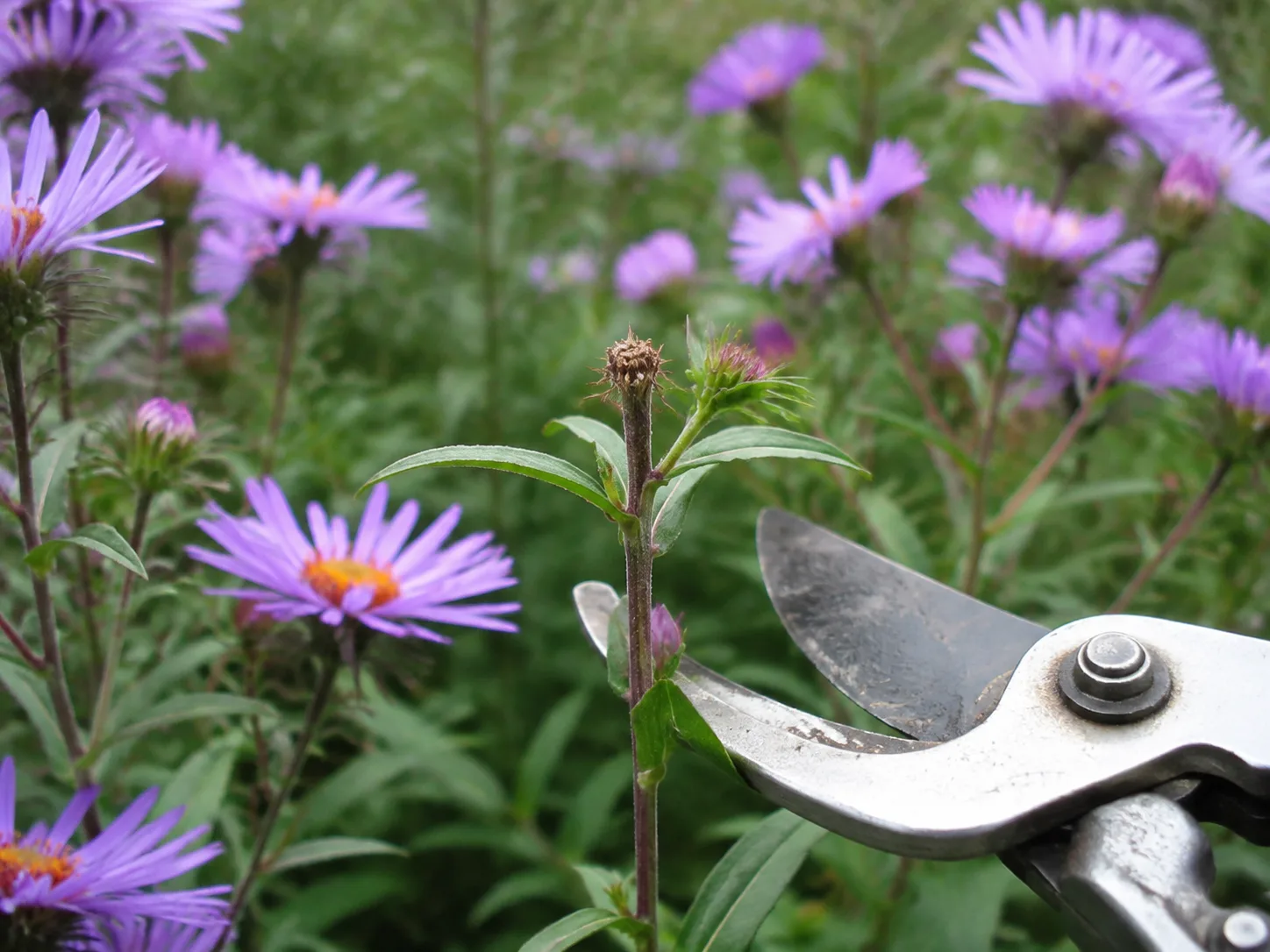
When to stop deadheading for seeds, birds, and winter interest
Stop removing every spent head when the plant reaches its final useful bloom flush. In many gardens that means late summer, but the weather and cultivar are better guides than a fixed calendar date. If fresh buds are still forming and you want more color, continue removing a few old heads. Once the season is winding down, leave the cones you want birds to use.
The trade-off is straightforward. Deadheading limits self-sowing and keeps the bed visually polished. Leaving cones allows seed to mature, supports seed-eating birds such as goldfinches, and gives the winter garden a strong architectural shape. Older, open-pollinated forms are more likely to produce viable seed than some modern hybrids, but the label or a previous season’s seedlings is the best clue for your particular plant Gardening Know How.
You do not need to choose one policy for the entire clump. Remove heads from the front edge beside a path, leave the tallest back stems, or deadhead two-thirds of a group and keep one-third for birds. A mixed approach is often more useful than either a completely bare bed or a completely unmanaged one.
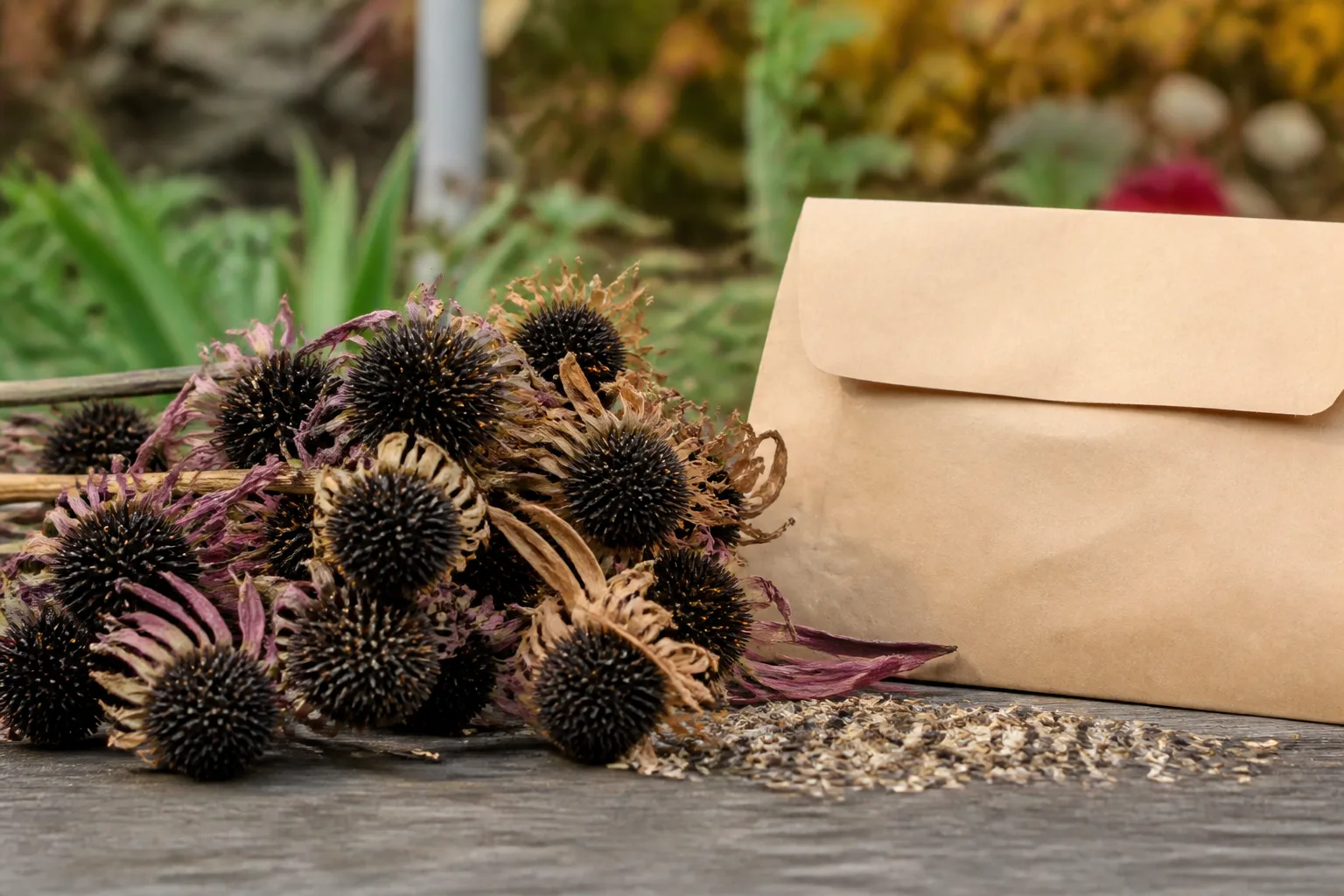
Why the late-season exception matters
Coneflower seed heads are not just brown leftovers. They create perches, texture, and a food source at the point in the year when many summer flowers have disappeared. NC State Extension also recommends leaving some hollow perennial stems standing rather than cleaning every stalk to the ground, because stem-nesting native bees may use them NC State Extension.
If you want a tidy appearance without removing all habitat, cut the most visible stems but leave a patch elsewhere in the bed. Avoid treating a wildlife garden as a failed version of a formal border; its value is partly in the plant material that looks finished to us.
Full fall cleanup or late-winter cutback?
There is no single correct cleanup date. In a formal garden, you can remove browned top growth after hard frost has finished the season. In a wildlife-friendly or cold-climate garden, leaving stems and cones through winter is often the better choice, then cutting them back in late winter or early spring before new shoots emerge.
If you leave stems, a partial cutback is a good compromise. NC State Extension suggests trimming dead perennial stems to about 12 to 24 inches in the first winter and allowing the remaining hollow sections to break down in place NC State Extension. That reduces flopping while preserving stem habitat. Make the cut above a node when possible, and avoid crushing the stem ends.
If you remove everything in fall, do not pile wet foliage over the crown. Coneflowers tolerate cold better than they tolerate a crown that stays saturated. Keep mulch light and pulled away from the crown, especially in heavy soil or a low spot that collects runoff.
Late-winter cleanup is often easiest: the old stems are dry, the garden’s wildlife value has already been available through the coldest months, and new growth makes the crown’s location visible. Use hand pruners for a small clump or hedge shears for a large, healthy planting, then clean up material that was diseased rather than adding it to home compost.
Diagnose fading early flowers in the right order
If the petals are dying earlier than expected, start with the site and the roots before blaming the flowers. Coneflowers are tough once established, but drought tolerance is not the same as indifference to every condition. NC State describes purple coneflower as adaptable and drought tolerant after establishment, while still preferring well-drained, moist loam and full sun to partial shade NC State Extension.
Sun, spacing, and stem strength
Full sun is the best starting point for abundant flowers and sturdy stems. Aim for at least six hours of direct light where possible; if a shrub or tree has grown over the bed, last year’s sunny site may now be too shaded. The usual clues are stretched stems, fewer buds, and flowers that lean toward the brightest opening rather than simply fading at the end of their normal life.
Crowding can make a different problem look like a light problem. Dense foliage dries slowly after rain, and tight spacing reduces air movement around leaves and stems. Thin out volunteers, move divisions, or support a leaning clump only after checking whether it is planted in shade or receiving too much nitrogen.
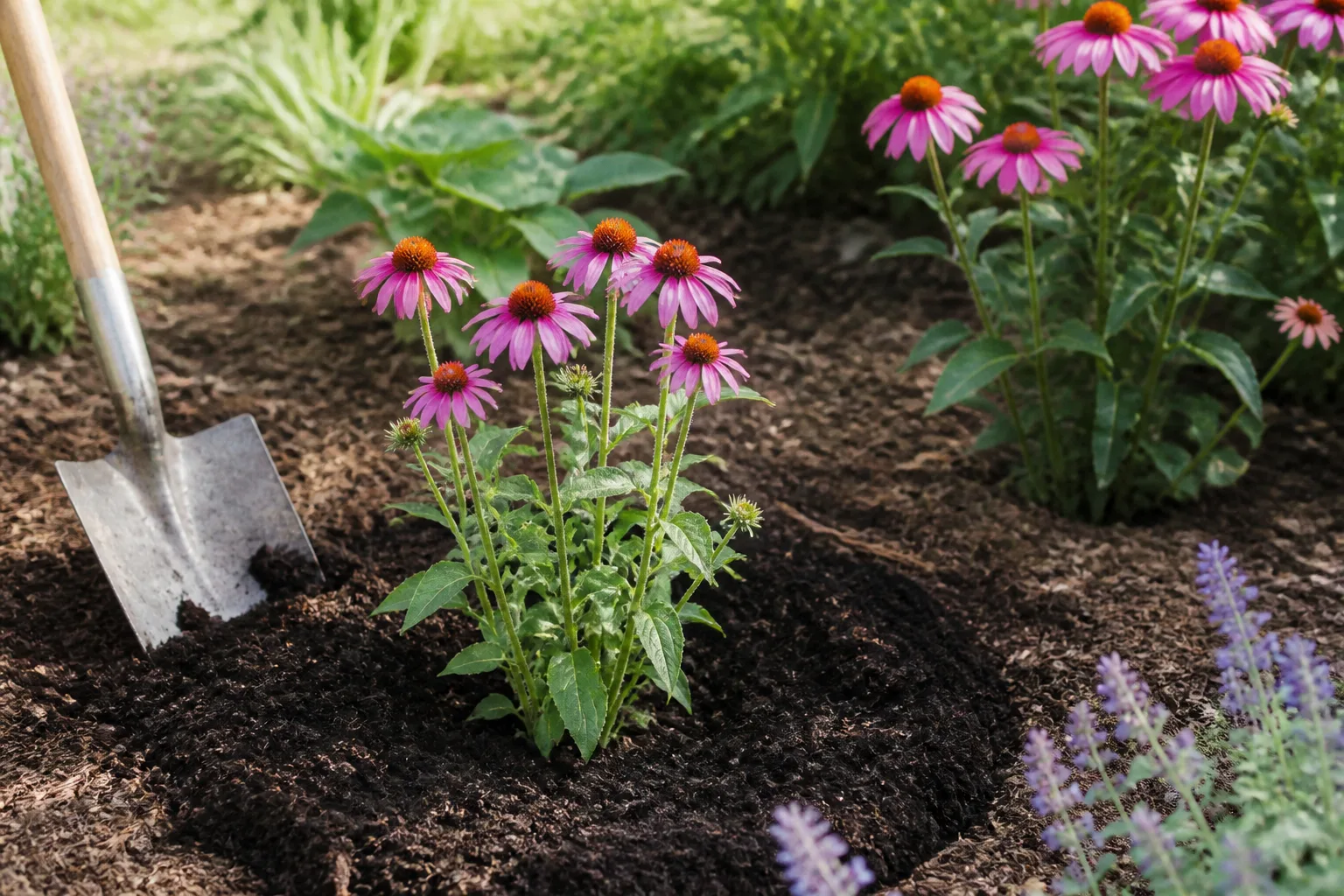
Water, drainage, and fertilizer
Check the soil several inches below the surface. A first-year plant needs regular moisture while it builds roots, but an established coneflower usually needs supplemental water only during a prolonged hot, dry spell. Water deeply at the base when the root zone is dry, then allow excess water to drain; daily shallow sprinkling encourages a weak surface-rooted plant and keeps foliage wet.
Wet soil is the opposite failure mode. If the crown stays soggy after rain, yellowing leaves, blackened stems, and sudden wilt can follow even though the garden looks well watered. Improve the site with a raised position, better drainage, or a move during a suitable transplanting window rather than adding more water.
Fertilizer is rarely the first answer. Too much nitrogen can produce tall, soft growth with fewer flowers and more flopping. If the bed is average garden soil, a thin spring layer of compost is usually a safer starting point than repeated high-nitrogen feeding. Plant Addicts likewise recommends full sun, drainage, restrained fertilizer, regular water for young plants, and much less water once established Plant Addicts.
Pests and leaf damage that look like decline
Japanese beetles may skeletonize leaves or chew flower petals, while aphids cluster on tender growth and can leave sticky honeydew. Light chewing on an established clump is mostly cosmetic. Inspect the undersides of leaves and the newest stems, hand-pick conspicuous beetles, and rinse small aphid colonies with a strong stream of water when the plant can dry afterward.
Do not spray a pollinator-rich bed by reflex. Coneflowers are visited by bees and butterflies, and a pesticide decision needs to account for the product label, timing, nearby blooms, and the actual pest pressure. If the damage is limited to a few petals, removing every flower defeats the purpose of growing a plant that supports visitors.
Leaf spot and powdery growth are more likely when foliage stays wet, plants are crowded, or air movement is poor. Remove badly damaged leaves, water at the soil line, thin congestion, and avoid handling wet plants. If an entire plant declines from the crown upward, inspect drainage and roots rather than assuming an insect caused it. NC State lists Japanese beetles, leaf spot, and aster yellows among coneflower problems NC State Extension.
Green, leafy, or distorted flowers need diagnosis
Green petals, leafy tufts growing from the cone, narrow curled leaves, or a strange cluster of shoots are not ordinary spent blooms. They can indicate aster yellows, a phytoplasma disease spread by sap-feeding leafhoppers, although eriophyid mites can create similar coneflower flower distortions. Missouri Botanical Garden emphasizes that diagnosis matters because several plants can show related-looking symptoms Missouri Botanical Garden.
Pruning off one distorted flower may improve the appearance temporarily, but it does not cure a systemic disease. Photograph the symptoms, contact a local extension service or qualified diagnostician, and isolate the question from normal deadheading. If aster yellows is confirmed, Missouri Botanical Garden recommends removing the affected plant promptly because the disease is incurable; do not compost infected material Missouri Botanical Garden.
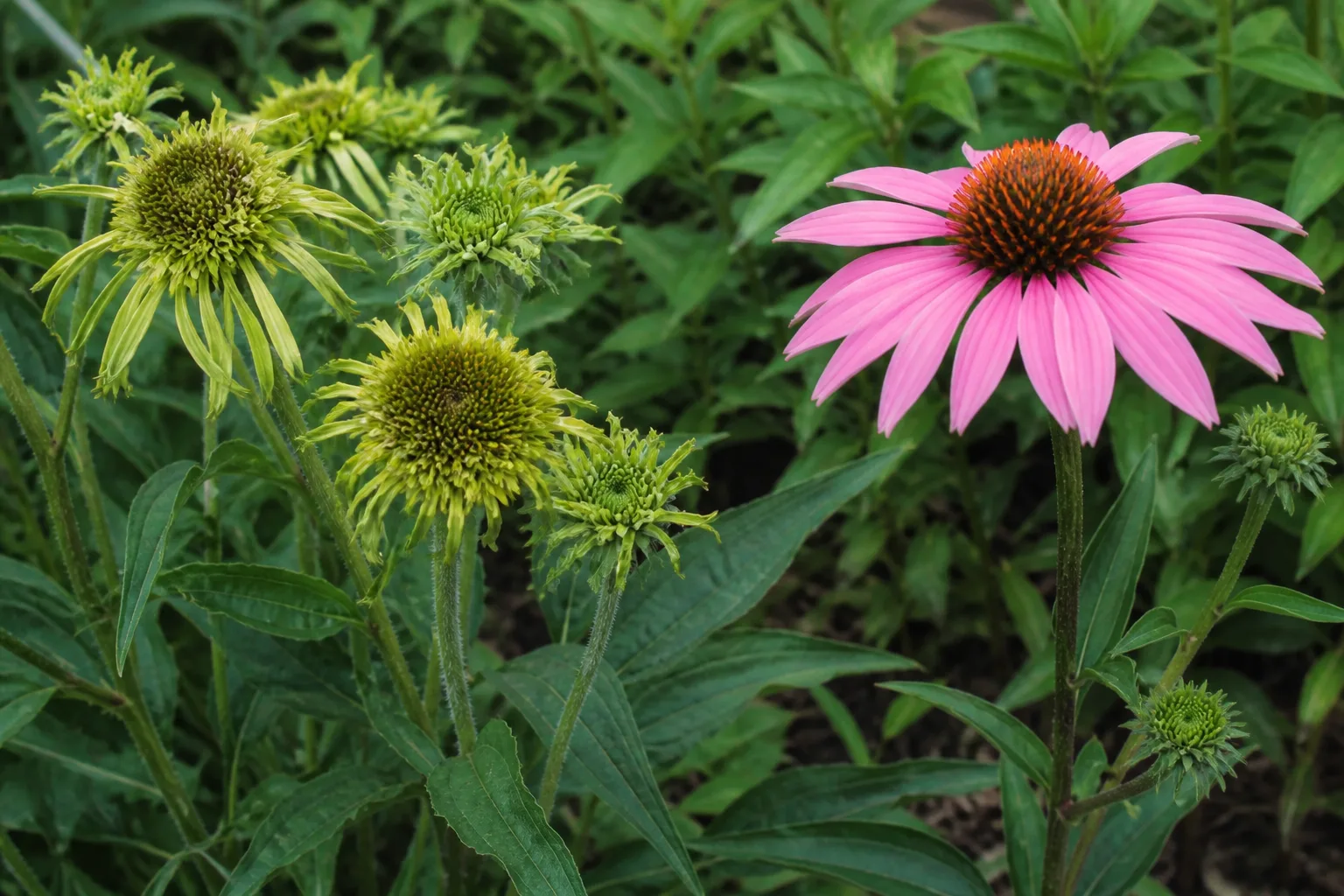
This is the point where more fertilizer, more water, or a harder cut can make the situation harder to read. Remove obvious weeds that can host disease or leafhoppers, keep tools clean, and do not replant a suspicious cutting elsewhere in the garden until you know what you are dealing with.
Sanitize tools and handle diseased debris carefully
For routine deadheading, wipe soil and sap from the blades and disinfect them between plants when you move through a bed with visible disease. A clean cut heals more predictably than a crushed one, and clean tools reduce the chance of carrying contaminated sap to another stem. Follow the disinfectant’s label and allow the blade to dry before cutting delicate new growth.
Separate healthy seed heads from suspicious foliage. Healthy, dry cones can be left, saved, or added to a compost system appropriate for your garden. Material from a plant with confirmed aster yellows or an active disease problem should be bagged and discarded according to local guidance, not spread through a compost pile that may later return to the bed.
Wash your hands after handling a diseased plant, especially before working on another coneflower or aster. A few minutes of cleanup is more useful than a dramatic whole-bed cutback that removes healthy habitat while leaving the actual source of decline untouched.
When an overcrowded clump needs division
A mature coneflower clump can lose vigor when its center becomes woody, crowded, or shaded by its own growth. Division is a structural fix; deadheading is not. If the plant has plenty of sun and drainage but flowering declines over several seasons, or if the center dies while the outer ring stays vigorous, plan to divide during a cool spring or early-fall window.
Dig wide enough to lift the crown with roots attached. Separate healthy outer sections with shoots and roots, discard dead or rotten center tissue, and replant divisions at the same depth with the crown level or slightly above surrounding soil. Water them consistently while they re-establish, then ease back once new growth is strong.
Do not divide a plant that is collapsing from wet soil or showing possible aster yellows and assume a new section will be healthy. Solve the diagnosis first. Division is for a healthy plant that has outgrown its space, not a way to multiply an unknown problem.
A simple coneflower cutting calendar
Use this seasonal sequence as a flexible guide rather than a set of dates:
- Early bloom: Leave fresh buds alone and remove only flowers whose petals are clearly fading. Cut above a leaf node or side bud.
- Peak summer: Walk the clump once or twice a week. Deadhead for additional color, but do not shear blindly through a plant that still has unopened buds.
- Late summer: Decide whether you want more flowers, more seed, more bird food, or a mix. Begin leaving the heads that serve your wildlife goal.
- Fall: Let healthy stems and cones stand if you want winter structure or habitat. Remove diseased foliage promptly, regardless of appearance goals.
- Late winter or early spring: Cut old stems back before new basal growth is damaged. Leave a patch of standing stems if you are supporting stem-nesting bees.
- Next growing season: If bloom is weak, check light, drainage, age, crowding, and fertilizer before increasing the frequency of deadheading.
The calendar changes with climate. A coneflower in a long, hot growing season may keep forming buds after one in a short northern season has already set seed. Watch the plant’s stage and your garden’s purpose instead of forcing every region into the same week.
Common deadheading mistakes to avoid
Cutting a new bud because it looks unfinished. A closed bud has a plump, regular shape and healthy tissue beneath it. Wait until petals are dry, discolored, or dropping before deciding it is spent.
Removing the entire clump in midsummer. A few finished stems do not mean the perennial is finished. Whole-plant shearing removes leaves, buds, and the photosynthetic surface that supports continued growth.
Cutting every head in a wildlife garden. If birds and winter habitat are part of the planting’s purpose, keep the final seed heads. A tidy compromise can be as simple as leaving one section standing.
Watering a wilted plant without checking the soil. Wilting with dry soil calls for a deep soak; wilting with saturated soil points toward root or crown trouble. The same symptom can require opposite actions.
Using fertilizer to force rebloom. Fertilizer cannot replace adequate light or repair a wet crown. Excess nitrogen can create soft, floppy foliage that hides the real problem.
Throwing diseased cuttings into compost. Healthy-looking brown cones and diseased foliage are not interchangeable. If a diagnosis indicates aster yellows, remove the plant and follow local disposal guidance.
What to do with cut heads and saved seed
Healthy, fully mature cones can be left on the plant, gathered for seed, or used in a dry arrangement. Wear gloves when handling them; the cone’s bristles are stiff. To save seed, wait until the head is dry and the seeds loosen readily, then rub them free over a clean container and store them cool and dry until you are ready to sow.
Seed-grown coneflowers may not match a named hybrid, and first blooms can take more than one season. That is a feature when you want genetic variety in a meadow and a limitation when you are trying to reproduce an exact cultivar. A vegetatively propagated division is the better route for preserving a particular clump’s flower color and form.
If you do not want seedlings, deadhead before the cones mature or remove a few heads after flowering. If you welcome volunteers, leave them and mark any seedlings you want to keep. The best answer is not to eliminate the plant’s natural cycle; it is to decide where that cycle fits your bed.
Conclusion
Cutting off dead coneflower flowers is optional, but it is useful when you want a cleaner summer display and more opportunity for repeat bloom. Make the smallest cut that reaches a healthy leaf node or side bud, keep unopened buds, and stop removing every head when seed, birds, and winter structure become more valuable than another flush of flowers.
If flowers fade early, inspect sun, soil moisture, drainage, crowding, fertilizer, and pests before pruning harder. Green or distorted flowers, blackened crowns, and whole-plant collapse are warning signs that deadheading cannot solve. With that distinction in mind, your coneflowers can offer both: fresh blooms when the garden is active and sturdy seed heads when the season turns quiet.



