What to Do When Your Corn Plant Is Flowering Indoors
Corn plant flowers need no emergency care. Learn what blooms look like, manage the evening scent, and safely remove a spent stalk without nicking the cane.
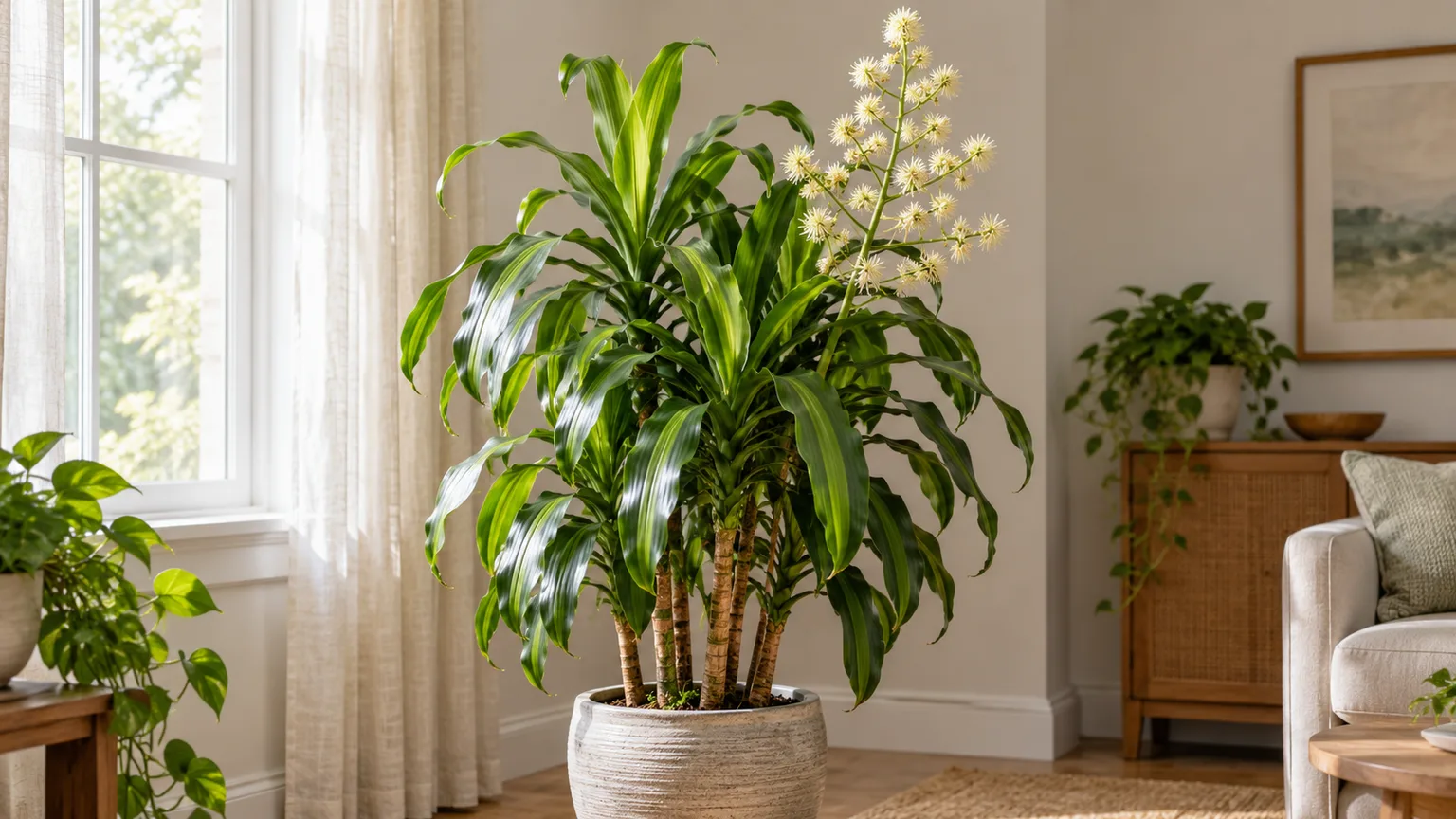
A corn plant that suddenly sends up a flower stalk can look like a different plant overnight. The short answer is that you usually do not need to do anything: the bloom is a normal, if uncommon, reproductive stage for Dracaena fragrans, the tropical houseplant also called cornstalk plant. You can enjoy it, remove it if the fragrance is too strong, or wait until the flowers fade and then prune the stalk.
The main reason owners take action is the scent. Corn plant flowers are known for a pronounced fragrance that is especially noticeable at night, so a bloom can be lovely in a large, ventilated room and overwhelming in a small bedroom. Flowering alone does not call for repotting, extra water, or a heavy dose of fertilizer. Make the choice that suits your household, keep routine care steady, and protect pets from chewing the plant.
The Short Answer: No Emergency Care Is Needed
An indoor corn plant flowering is unusual, but the flower stalk is not a sign that the plant is dying or that it needs immediate treatment. If the plant is stable and the flowers do not bother anyone, leave the stalk attached and let the bloom run its course. The individual flowers and clusters will eventually fade; the plant can continue growing afterward.
You can also remove the stalk as soon as you notice it if you do not want the scent or prefer the plant’s usual foliage-only look. Cutting the flower stalk is an aesthetic and household-comfort choice, not a rescue procedure. If you leave it on, do not compensate by changing your watering schedule or feeding more often; those changes can create problems that the bloom itself did not cause.
How to Recognize a Corn Plant Flower Stalk
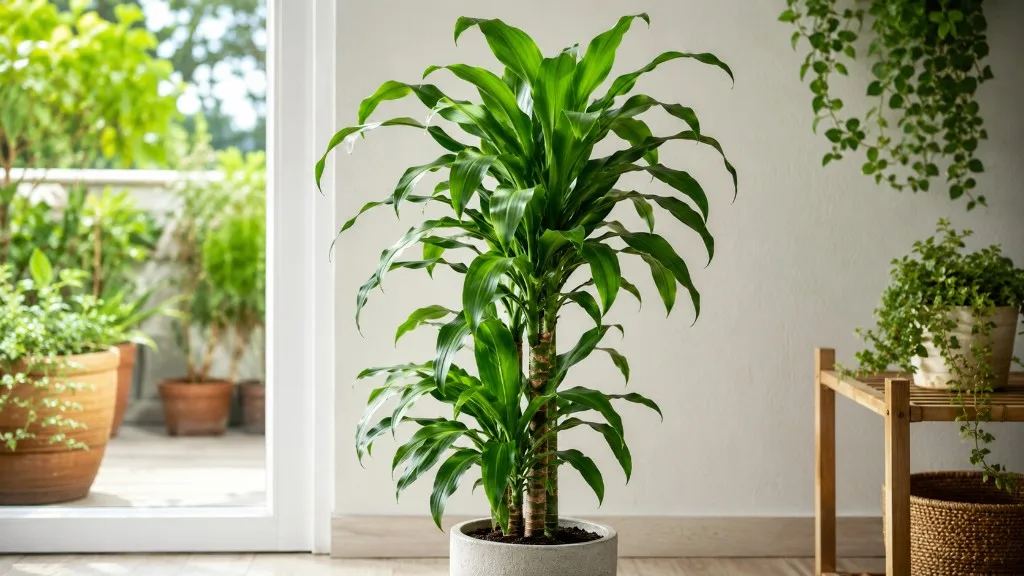
First make sure you are looking at a flower stalk rather than a new leafy crown. A typical corn plant has one or more woody canes topped with arching, strap-shaped leaves. A flowering stem rises from the foliage and carries branching clusters of rounded buds and small flowers. The buds begin pink and open pale, often white; the North Carolina Extension Gardener Plant Toolbox describes them as flowers in long panicles that are highly fragrant at night.
If you have never seen one, the structure may look unusual for a foliage houseplant: the flower-bearing stem projects beyond the leaf canopy rather than emerging as a tidy new leaf. The flowers are not maize tassels or ears. “Corn plant” is a common name for Dracaena fragrans, not sweet corn (Zea mays); the resemblance is in the leaves and cane, not in the plant family or its edible crop.
When in doubt, watch the shape for a few days before cutting. A new leaf usually stays folded or rolled as it rises from the center of a leafy crown, then gradually opens into a strap-shaped blade. A flower stem instead branches into visible buds; that branching pattern is the clearest clue that you are looking at an inflorescence. If a plant has multiple canes, inspect which cane the stalk belongs to so you can remove only the flowering growth you mean to remove.
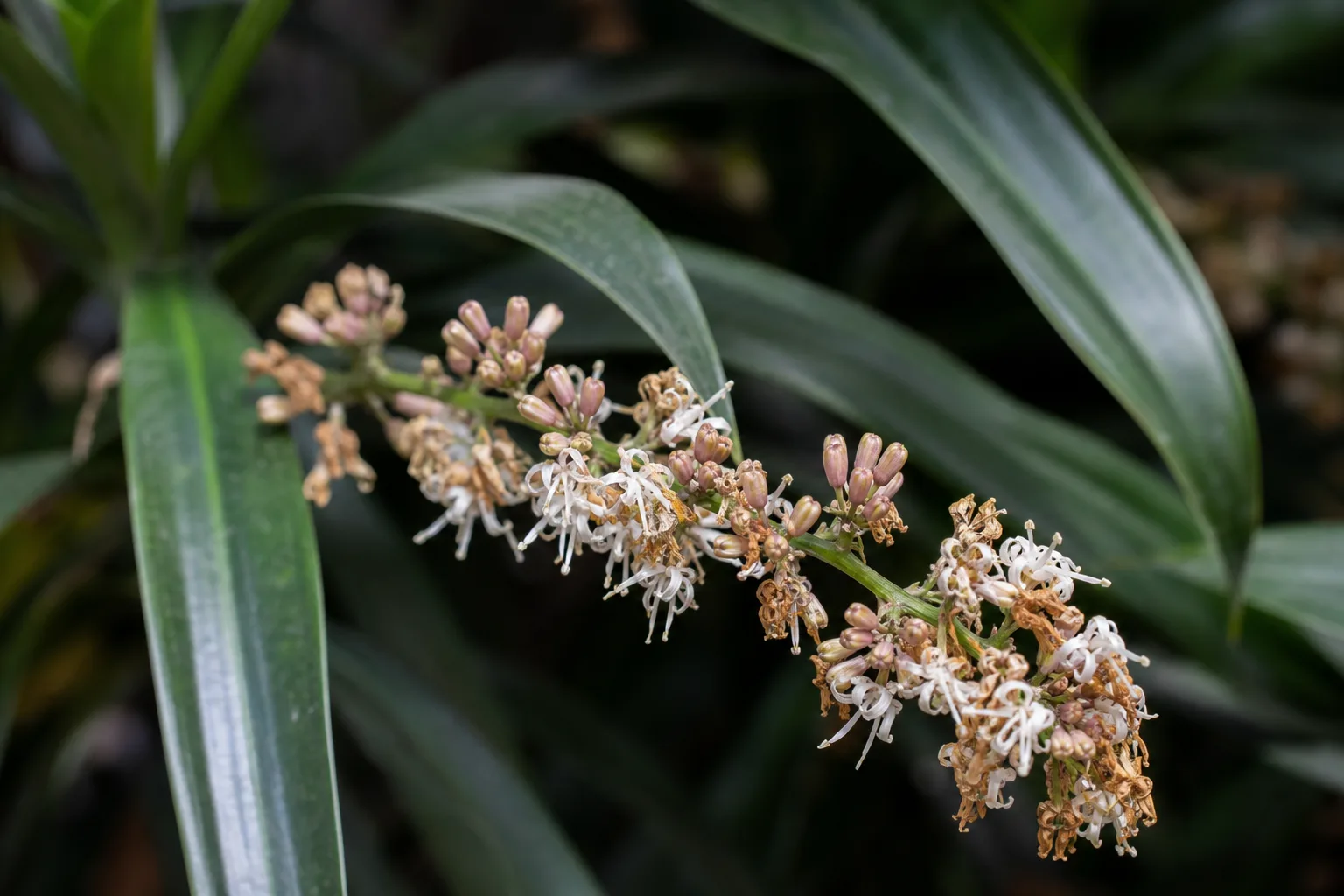
Once the flowers open, expect a cluster of small, delicate blooms rather than a single oversized flower. Gardening Know How describes dracaena as a foliage plant that can grow in lower indoor light, while NC State notes that corn plant flowering is infrequent indoors. Cafe Planta also describes the flowers as clustered and fragrant; the extension profile is the stronger reference for the species’ bloom details.
Why the fragrance is strongest after dark
The species name fragrans points to the plant’s sweet-smelling flowers, and their scent can become conspicuous when the blooms open in the evening or overnight. People describe the fragrance differently: it may read as sweet and floral to one person and heavy or cloying to another. In a room with the door closed, even a plant that seemed subtle during the day can make its presence known at night.
If the aroma is pleasant, place the plant where you can enjoy it without making the scent unavoidable for everyone who shares the home. If it is too intense, open a window when weather permits, improve ordinary room ventilation, or move the pot temporarily to a brighter, protected spot where the temperature remains suitable. You do not have to tolerate an uncomfortable room to preserve the bloom. If the smell triggers symptoms for someone in your household, remove the stalk or move the plant away from their usual space; do not assume that everyone will experience the fragrance the same way.
What Flowering Can—and Cannot—Tell You About Plant Health
A bloom is evidence that the plant has reached a stage where it can reproduce and that conditions have allowed it to form flowers. It can be a welcome sign that the plant has been established for a while. It is not a complete health test, and it does not prove that the roots, leaves, or growing conditions are all perfect. North Carolina Extension calls the flowers infrequent on houseplants; that rarity makes them notable, but it does not establish a single cause or guarantee that the plant is thriving in every respect.
Treat the flower as one observation, not a diagnosis. If the leaves are firm and normally colored, the cane is solid, and the potting mix dries at its usual pace, there is no special problem to correct. If you also see widespread yellowing, a soft or darkening cane, a sour smell from wet soil, or a sudden decline, investigate those symptoms on their own. Do not attribute them to flowering without evidence, and do not ignore them because the plant managed to bloom.
This distinction matters because a well-intended response can do more harm than the bloom. Extra water does not support a flower stalk if the root zone is already wet, and a stronger fertilizer dose is not a reliable way to “replace” energy used in flowering. Keep the plant’s ordinary care consistent and use the foliage and soil—not the flower alone—to decide whether it needs attention.
Why a Corn Plant May Bloom Indoors
There is no reliable calendar or single indoor trigger that lets you predict when a corn plant will flower. NC State Extension says it rarely blooms as a houseplant, while established plants in warm outdoor settings may flower more readily than plants kept in living rooms. Age, cultivar, accumulated growth, light, and the overall environment may all matter, but the presence of a flower does not let you identify which factor was decisive in your home.
That uncertainty is why “make it bloom” recipes deserve skepticism. Increasing light abruptly, exposing a tropical plant to cold, keeping the soil wet, or applying extra fertilizer is not a responsible flowering strategy. Such steps can scorch leaves, chill the plant, damage roots, or cause salt buildup without producing a bloom. Gardening Know How recommends bright, indirect light and warns that direct sun can harm dracaena foliage; that is sensible everyday care, not a promise of flowers.
If your plant blooms after years without doing so, you do not need to reconstruct every change in the room. Note the season, location, and plant condition if you are curious, but one bloom is not enough to establish a repeatable pattern. A plant that never flowers indoors can still be perfectly successful as a foliage plant.
Decide Whether to Keep or Remove the Flowers
There are three reasonable choices. Keep the stalk if you enjoy the scent and appearance; cut it now if the fragrance or size is inconvenient; or wait until the open flowers fade and remove only the spent stalk. None is automatically better for the plant, so let the room, the household, and your preferences guide the decision.
Leave the stalk in place
Keeping the bloom costs nothing and lets you observe a rare part of the plant’s life cycle. Check that the stem is not pressing against a ceiling, light fixture, curtain, or walkway. A heavy stalk may lean; if it needs support, place a stake in the pot carefully and use a loose tie around the flower stem rather than cinching the cane or leaf crown.
Do not force a curved stalk straight. Corn plants have stiff leaves and mature canes, but a flower stem can still bend or break if you twist it. If the plant is in a high-traffic area, rotating or moving it may reduce collisions, though avoid repeatedly relocating it just to chase the scent. A stable position with suitable light is more helpful than frequent changes.
Remove it while it is flowering
If the scent is too strong, you can cut the flower-bearing stem before the bloom finishes. Use clean, sharp pruning shears and make a deliberate cut where the flower stem joins its supporting branch or cane, taking care not to nick the main cane or strip away healthy leaves. If the flower stalk branches from a stem, remove the flowering stalk only; do not cut the entire top of the plant unless you also intend to prune its height.
The flowers may be used as cut stems in a vase if you want to keep them briefly, but indoor cut flowers can continue to scent the room. Keep the cut material away from pets and discard it in a closed bin if an animal is likely to investigate it. If you are uncertain where the inflorescence ends and the main cane begins, wait until there is better visibility or ask a local nursery or experienced houseplant grower to identify the junction before cutting.
Wait and prune after the flowers fade
Waiting is a good choice if the scent is manageable and you want to see the flowers open. As individual blooms wither and the clusters turn brown, the stalk can look untidy. You do not need to remove each spent flower. Once the flowering section is finished, cut the stalk at its base or at the point where it emerges from the plant, without cutting into the cane.
The flowers can fade unevenly, so you may see open blooms and spent clusters at the same time. There is no need to wait for every last petal to drop if the fragrance is bothersome. If you do wait, keep fallen flowers and any sticky debris swept up, especially where pets or young children may reach them.
How to Cut a Spent Flower Stalk
Use this simple sequence when the stalk has finished or you decide to remove it early:
- Find the base of the flowering stem. Follow the stalk back to the cane or branch from which it emerges so you do not mistake it for a leafy crown.
- Choose clean, sharp shears. Wipe the blades before cutting, especially if they have been used on another plant. A clean cut is easier for the plant to seal than a crushed or ragged one.
- Cut the flower stem at its attachment point. Keep the blades on the flower stalk and avoid gouging the cane, cutting into the trunk, or removing healthy leaves that do not belong to the inflorescence.
- Dispose of the flowers thoughtfully. Place cut material where pets cannot chew it, then wash your hands if sap contacted your skin. ASPCA lists corn plant as toxic to dogs, cats, and horses; if a pet may have eaten any part of the plant, contact a veterinarian or animal poison service rather than waiting for symptoms.
The exact cut depends on how the stalk branches, so do not follow a fixed distance from the soil line. Corn plants may have several canes at different heights, and the flower stalk can arise well above the pot. Cutting the whole cane back to soil would remove much more plant than the bloom requires. If you want to shorten a tall cane for shape, treat that as a separate pruning decision and make sure you understand how cane pruning affects the plant’s form.
Care for the Plant While It Blooms
Flowering does not require a special care schedule. Keep the plant in the same kind of bright to moderate, filtered light it has been receiving, and avoid moving it into harsh direct sun to “help” the flowers. NC State Extension recommends filtered light and a well-draining pot with drainage holes; the aim is steady foliage health, not forcing a second flush. If you want a fuller routine for light, soil, watering, or pruning, see our corn plant growing guide.
Keep light and watering steady
Check the potting mix before watering rather than responding to the flower stalk. If the upper layer is still damp and the pot feels heavy, wait; if the mix has dried to the point at which you normally water this plant, water thoroughly and let excess drain. The root zone should not sit in collected water. A flower stalk is not a reason to keep the soil constantly wet, and overwatering a slow-growing indoor plant can create root problems.
Keep the pot away from cold drafts, heating vents, and sudden temperature swings. Dracaena is tropical; a stable indoor location is generally easier on the plant than moving it outdoors during a bloom. If the flower stem leans, support the stem rather than changing the light exposure dramatically. Rotate the pot only as needed for even foliage growth, not repeatedly during the flowering period.
Skip corrective feeding and repotting
Do not fertilize heavily to replace the energy used in flowering. If you already feed the plant during its active growing season, continue only at the label’s conservative houseplant rate and do not add an extra dose just because buds appeared. Salt-sensitive dracaenas can develop leaf-tip damage from accumulated minerals; NC State Extension flags sensitivity to fluoride and salts, so extra fertilizer can create avoidable trouble.
Repot only when the plant has a real pot or root issue, such as roots escaping through drainage holes, a pot that is unstable, or a mix that no longer drains properly. Flowering by itself is not evidence that the plant is rootbound or that it needs fresh soil. Repotting during a bloom adds work and disturbance without solving a problem that the flower created.
What to Expect as the Bloom Ends
The display is temporary. Individual flowers open and fade, and the remaining stalk may dry or turn brown after the bloom has passed. That change is part of the flowering cycle; you can trim the spent stalk cleanly once it no longer adds anything to the room. Do not pull it off by hand, since tearing at the base can damage the cane or leave ragged tissue.
After you cut the stalk, return to the same light, watering, and seasonal feeding routine you used before. There is no special “recovery” treatment. If the leaves remain healthy, simply continue normal care. If a few old leaves yellow over time, judge them against the plant’s normal growth pattern; one aging leaf is different from rapid, widespread decline.
Some people expect the plant to branch or produce a new crown exactly where the flower stood. Do not count on a particular shape change: corn plant growth depends on its cane and growing point, and the flower stem is not a guarantee of a new leafy branch at that same spot. Keep the plant because you value its foliage, not because one bloom promises a predictable transformation.

Why the Plant May Not Flower Again Soon
Indoor flowering is too uncommon and variable to promise a repeat. NC State Extension notes that corn plant rarely blooms as a houseplant, and different plants can go years without a flower. A plant that has bloomed once is not on a dependable annual schedule, and a plant that has never bloomed is not necessarily underperforming.
Keep the plant healthy for the foliage rather than trying to reproduce a mystery set of conditions. Bright filtered light, drainage, sensible watering, and a stable warm room support the plant’s ordinary needs. If a mature plant flowers again, enjoy the surprise; if not, the absence of flowers does not mean that the care has failed.
Keep Pets Away From the Plant
The common name can make this houseplant sound like an edible crop, but corn plant is Dracaena fragrans, not sweet corn. ASPCA Animal Poison Control classifies the plant as toxic to dogs, cats, and horses and identifies saponins as the toxic principle. Keep the leaves, flowers, fallen petals, and cut stalk out of reach of animals that chew plants; the bloom is not a reason to assume the plant is safer or more dangerous than it was before.
If you suspect that a pet swallowed part of the plant, call your veterinarian or an animal poison service promptly and give them the plant’s scientific name. ASPCA lists signs including vomiting, depression, appetite loss, excess salivation, and dilated pupils in cats, but do not wait for signs to appear before seeking case-specific guidance. For children, prevent chewing or tasting the plant and wash sap from skin; the North Carolina Extension profile notes that the plant has low-severity poison characteristics for people and that sap may irritate skin.
Conclusion
When a corn plant flowers, there is no emergency and no required pruning. Identify the branching stalk, decide whether the evening fragrance is welcome, and either leave it in place or make a clean cut where the flowering stem joins the plant. Keep normal care steady, avoid trying to force another bloom, and remember that the flower is an interesting sign of reproductive maturity—not a guarantee that every part of the plant is flawless.
If you keep the plant, let the flowers open and fade on their own. If the scent is disruptive, remove the stalk and move it away from pets. Either choice is reasonable; the best one is the one that keeps both the plant and the people sharing the room comfortable.



