How to Grow and Care for Crown Imperials
Plant crown imperial bulbs for lasting spring flowers: choose a sunny, well-drained bed, protect the hollow bulb from rot, and keep foliage until it yellows.
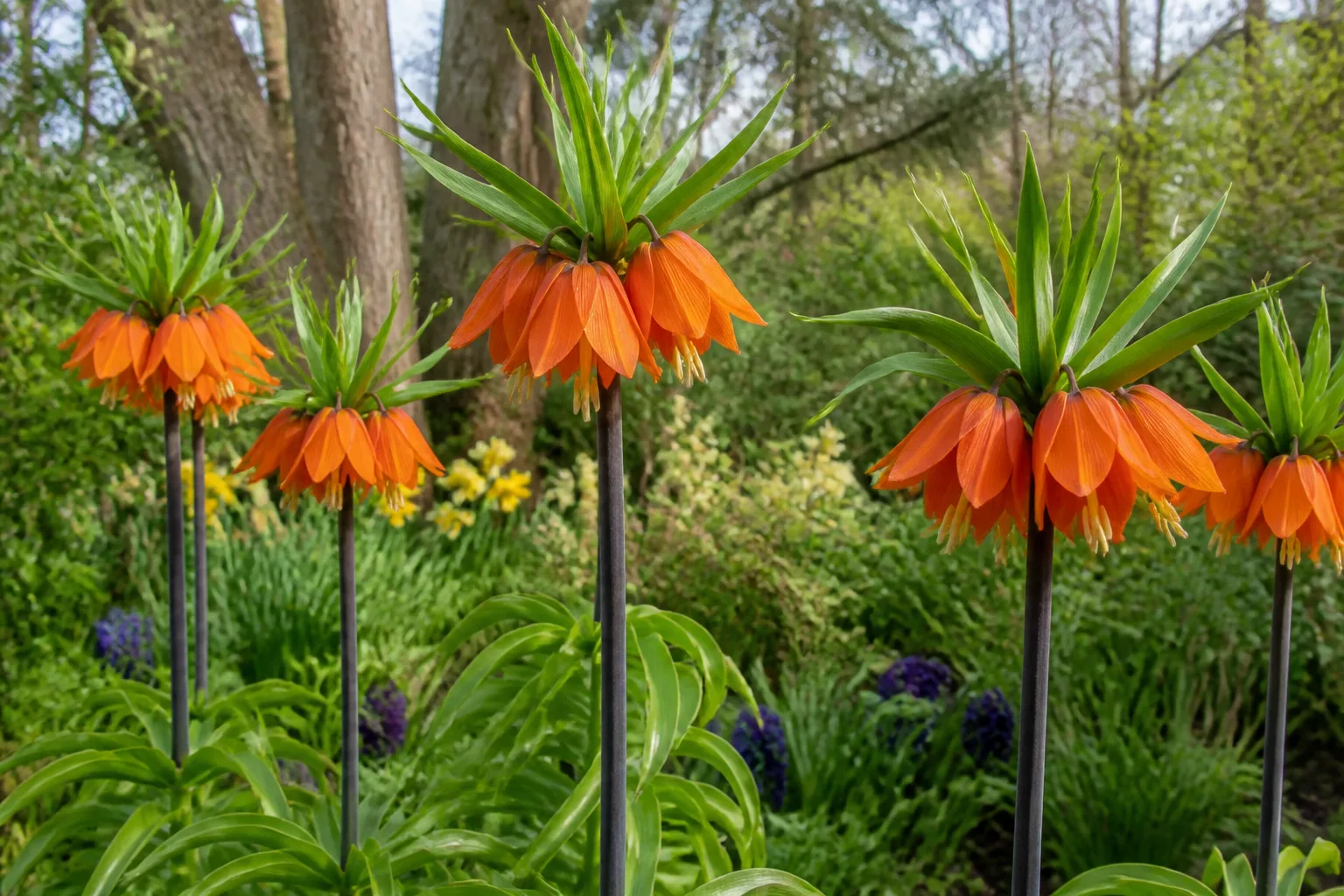
Crown imperial (Fritillaria imperialis) is a spring bulb with a silhouette that is hard to mistake: a tall, sturdy stem carries drooping bells, then a tuft of glossy bracts rises above them like a small green crown. The flowers are dramatic, but the bulb has one specific vulnerability that should shape the whole planting plan: water can collect in the old stem cavity and encourage rot.
Give the bulb deep, freely draining soil, plant it in fall, and leave it undisturbed while it settles in. In spring, water when growth is active and rain is scarce; after flowering, keep the foliage until it yellows. Most failures come from a wet site, shallow planting, or cutting leaves while they are still green—not from a complicated fertilizer problem.
What Makes Crown Imperial Different From Other Bulbs?
The crown imperial is a true bulbous perennial in the fritillary genus, not a small, low-growing spring bulb. Established plants typically reach about 3 to 4 feet tall and spread roughly 1 to 1.5 feet, with orange, red-orange, or yellow bell-shaped flowers opening in mid-spring. Each stem’s flower cluster hangs below a whorl of leaflike bracts, which is why the plant looks crowned rather than simply flowered. NC State Extension’s plant profile
The plant’s calendar also differs from a summer perennial. It makes most of its visible growth in spring, flowers, then turns yellow and disappears above ground as the bulb enters summer dormancy. That dieback is normal; it does not mean the bulb has died, and there may be no visible sign of it for months.
Its scent is another reason to decide where it belongs before planting. NC State Extension describes fragrant foliage and flowers, but gardeners compare the smell in different ways, from musky or garlic-like to unpleasantly strong. Set it where the spring display can be enjoyed without placing the blooms directly beside a frequently used path or open window. NC State Extension Horticulture magazine
Choose a Site With Sun and Fast Drainage
Crown imperials are easiest to keep when the location suits the bulb rather than when the gardener tries to compensate later. Choose a warm, sunny border that is not a low pocket where water lingers after a storm, and make sure you can leave the bulb in place for several years. Both the Royal Horticultural Society and NC State Extension emphasize sun and well-drained soil; NC State notes that established bulbs tolerate dry conditions better than they tolerate standing water. RHS growing guide NC State Extension
Light, warmth, and exposure
Full sun gives the most dependable stems and flower display. NC State lists full sun as six or more hours of direct light a day and partial shade as a possible exposure, while horticultural references generally favor a sunny position. In a very hot climate, a little afternoon shade can reduce stress, but too much shade can produce weaker stems and fewer blooms; treat partial shade as a compromise, not the ideal. NC State Extension Better Homes & Gardens
Think about the spring light, not only what the bed looks like in summer. A deciduous tree may leave the site sunny while crown imperial is growing, but avoid dense evergreen shade and narrow places where a 3- to 4-foot flowering stem will be crowded by neighboring plants. Give bulbs around 9 to 12 inches of space, or follow the supplier’s spacing if it differs for a named cultivar.
Soil, spacing, and raised beds
The most important soil feature is rapid drainage through the bulb’s rooting zone. A rich loam with organic matter is useful, but fertility cannot rescue a saturated hole; crown imperials may survive ordinary garden soil yet decline in heavy clay that stays wet through summer. If water routinely stands in the bed, move the planting to a raised bed or a deep container rather than adding a small amount of grit to the bottom of a single hole. RHS NC State Extension
Work compost through the bed before planting if the soil is compacted or poor, and loosen a broad area rather than creating an isolated pocket of potting mix. A sharply different, fluffy amendment inside heavy clay can act like a basin that collects water. The goal is an even, open soil profile that drains at depth, not a gravel layer that hides a wet subsoil.
Choose Firm Bulbs and Plant in Fall
Plant crown imperial bulbs in autumn, early enough for roots to establish before hard winter weather. Because the bulbs can dry out while waiting in storage, choose firm, full-sized specimens and plant them soon after purchase; discard bulbs that are soft, badly shriveled, or smell of decay. The RHS advises buying large bulbs, while Better Homes & Gardens specifically cautions that crown imperial bulbs dry quickly and should be planted promptly. RHS Better Homes & Gardens
A calm, cool fall day is easier on both the bulb and the gardener than planting during hot, wet weather. Mark the position with a stake or plant marker so you do not dig into the dormant bulb next summer, and mulch lightly after planting if winters are severe or the bed is exposed. Do not water a newly planted bulb as if it were a thirsty annual; if the soil is already moist and rain is expected, let the ground settle naturally.
How deep should a crown imperial bulb go?
Published depth recommendations differ substantially. NC State Extension recommends planting with the base of the bulb about 6 inches deep, Better Homes & Gardens gives a 6- to 7-inch depth, and Horticulture magazine says roughly 8 inches; the RHS recommends at least 30 centimeters, or about 12 inches, and warns that shallow planting may reduce flowering after the first year. These figures may not use the same reference point, so do not assume every number measures from the same part of the bulb. NC State Extension Better Homes & Gardens Horticulture magazine RHS
Use the bulb supplier’s instruction first, especially for a named cultivar or a bulb sold with planting directions. If the bulb has no label, choose a deep, well-drained bed and give the bulb generous soil cover rather than planting it near the surface; in a typical U.S. home garden, the 6- to 8-inch range is a practical starting point, measured to the base as NC State specifies. Gardeners following the RHS recommendation can plant deeper where the soil profile drains freely, but no depth makes a waterlogged clay pocket suitable.
Why the bulb is planted on its side
The large bulb has a shallow depression left by the previous stem. Planting it on its side, or tilting it so that this depression faces downward and to the side, helps keep rainwater from pooling in that spot; NC State Extension, Better Homes & Gardens, and Horticulture magazine all give this as a rot-prevention precaution. It is a low-effort way to reduce one avoidable risk, not a substitute for well-drained soil. NC State Extension Better Homes & Gardens Horticulture magazine
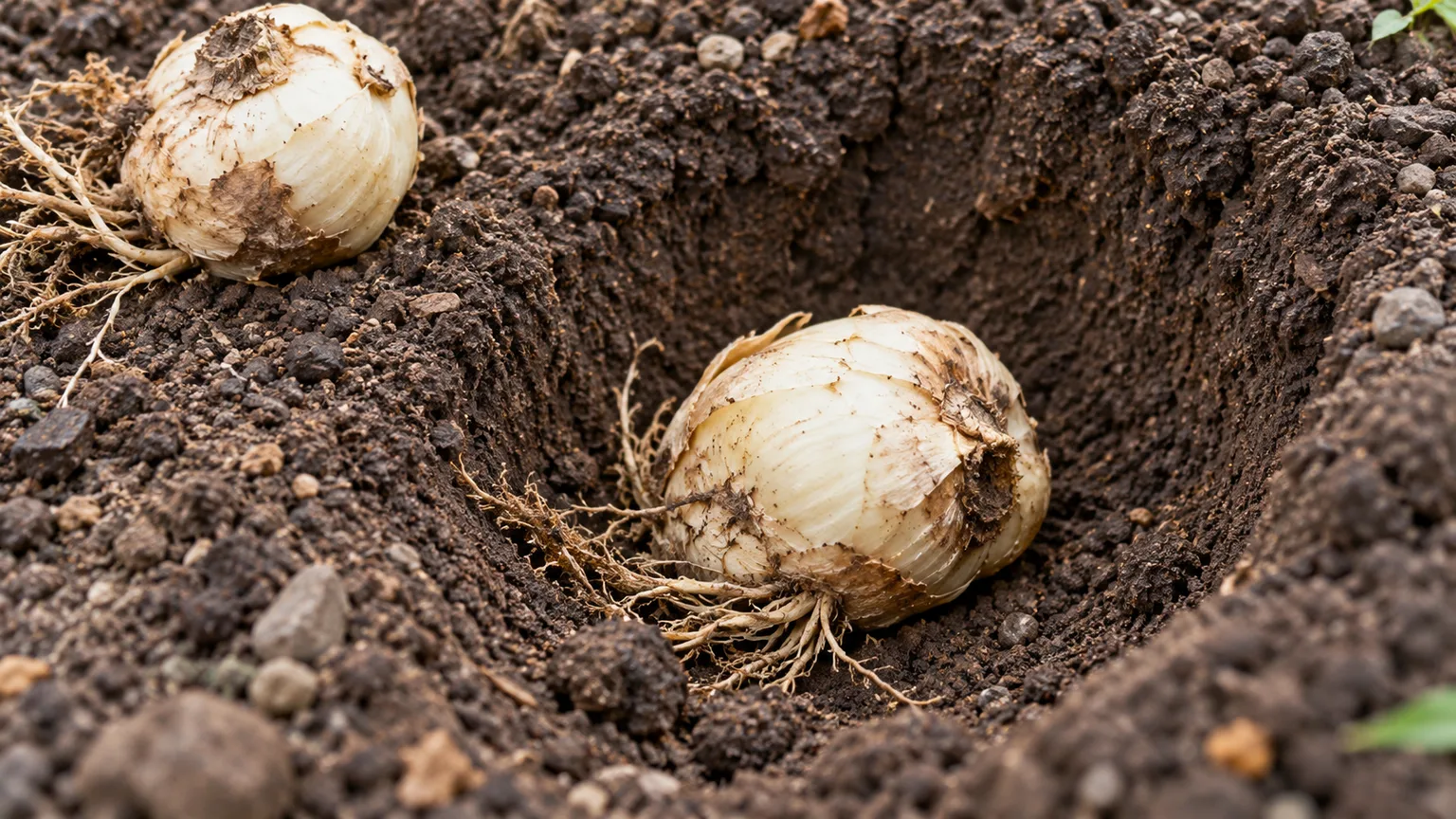
Handle the bulb gently because its fleshy scales can bruise. Make a broad, deep hole, settle the bulb sideways, backfill with the loosened native soil, and water only enough to settle dry soil around it; do not press it into a puddle or pack the soil tightly above it. The stem will orient upward as it grows, so precise positioning of the old cavity matters more than aiming the shoot end vertically.
Water by Growth Stage, Not by Calendar
During spring growth, keep the root zone from drying completely for long stretches, especially during the first year after planting. Rainfall may provide enough moisture in a cool spring; in a dry spell, water slowly at soil level and let excess drain away. Better Homes & Gardens offers about an inch of water a week during active growth as a general fritillaria guideline, but that is not a fixed crown-imperial prescription for every soil and climate. Better Homes & Gardens
Check the soil several inches below the surface before adding more water. If it feels damp and cool, wait; if it is dry at the root zone and the leaves are growing quickly, water deeply rather than sprinkling the surface every day. In a heavy soil bed, rain may already be enough, while a raised bed or pot may need attention sooner.
As foliage yellows and dies back, the plant’s demand for water falls sharply. Do not keep a dormant bulb wet through summer, and do not interpret the disappearance of leaves as a reason to irrigate the empty patch. In regions with dry summers, the bulb can rest without routine watering; in climates with summer rain, drainage is the protection you can control.
Feed Lightly During Active Growth
Start with reasonably fertile soil and avoid trying to force flowers with a heavy dose of high-phosphorus fertilizer. The bulb stores energy from its own foliage, so good planting depth, sunlight, drainage, and a complete growing season matter more than a late nutrient rescue. If you feed, use a bulb or balanced garden fertilizer at the label rate once shoots have emerged, or top-dress the bed with finished compost before the season’s growth begins. RHS Better Homes & Gardens
More fertilizer is not a substitute for correcting shade or wet soil. Avoid applying concentrated fertilizer directly against the bulb, and do not feed a plant whose leaves have already died back for summer. For container culture, use a low, label-directed amount and account for the potting medium’s existing fertilizer so salts do not build up in a small volume of soil.
After Bloom, Let the Leaves Finish
When the bells fade, you can remove the spent flower head if you do not want the plant to set seed. Keep the stem and leaves intact until they yellow naturally; they are still photosynthesizing and restoring the bulb for next spring. Cutting the entire plant to the ground right after flowering removes that energy source at the moment it matters most. Better Homes & Gardens
Once the foliage is yellow and dry, trim it near the soil line and leave the bulb in place. Mark the planting spot before it disappears so you do not accidentally slice into the bulb while weeding or adding another perennial. The RHS notes that crown imperials can form larger clumps in good conditions and may take a year or two to re-establish after being moved, which is a good reason to avoid routine lifting. RHS
Containers Need Drainage and Winter Protection
A pot can work when garden soil stays too wet, but only if the container is deep, stable, and has generous drainage holes. Use a free-draining potting mix with some grit, and keep the bulb at the planting depth specified for the bulb you buy; a shallow decorative pot is not enough room for this tall spring plant. Better Homes & Gardens recommends a deep, wide pot and warns that soggy container mix can cause bulb rot. Better Homes & Gardens
Containers dry faster than beds during spring growth, so check soil moisture more often, but do not let the pot sit in a saucer of water. After leaves die back, the bulb is dormant and should not be kept wet. In cold climates, a bulb in a pot is more exposed to freezing than one planted in the ground; sink the pot into the soil, group it against a sheltered wall, or move it to an unheated but protected place for winter. Better Homes & Gardens
Do not bring the pot into a warm living room to “protect” it through winter. Crown imperial needs its outdoor seasonal cycle, and warm indoor conditions can disrupt dormancy while low light encourages weak growth. If you cannot provide a deep pot, free drainage, and a cool winter rest, planting in the ground or a raised bed is usually simpler.
Choose a Cultivar for Color and Height
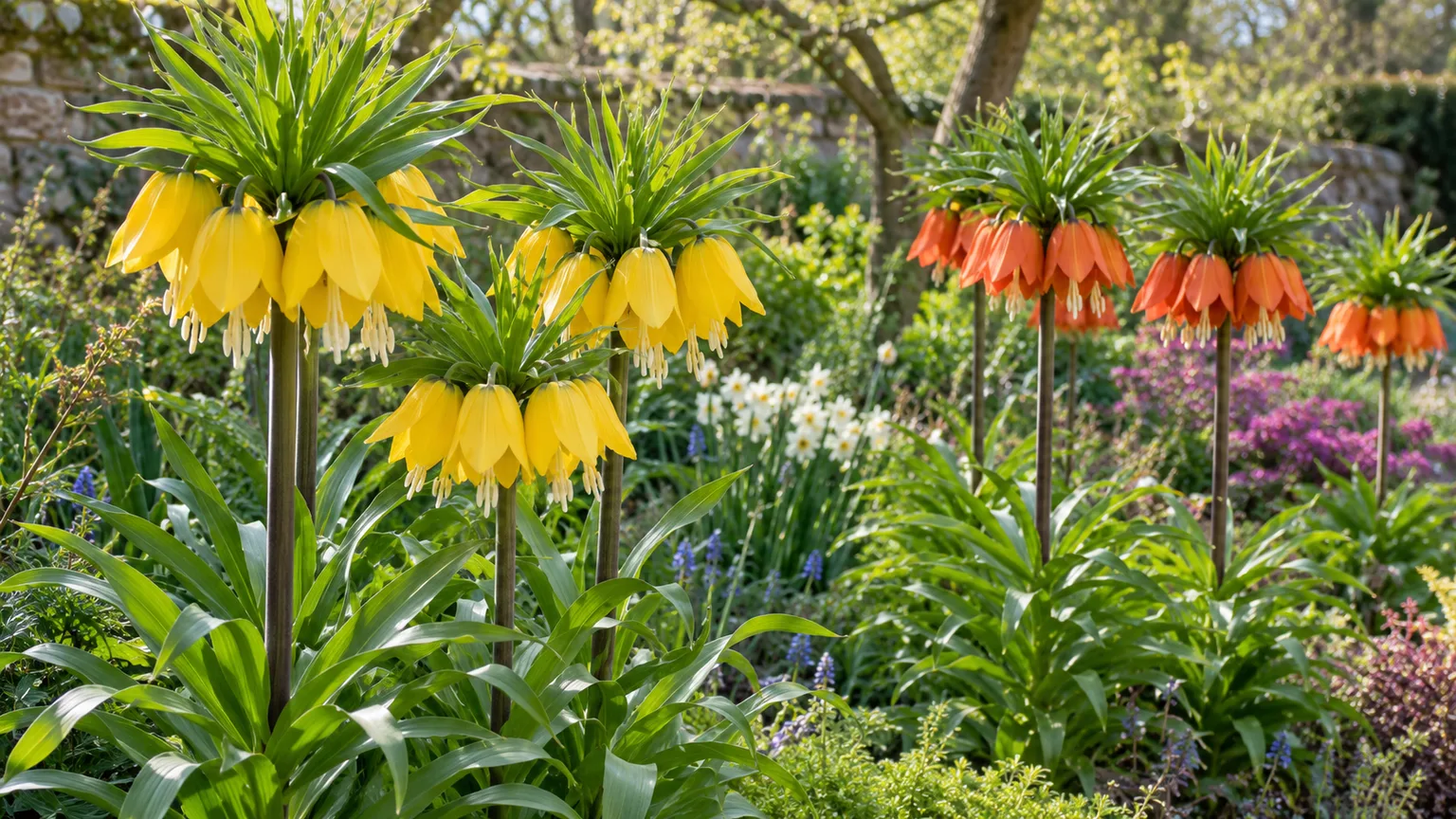
Most garden crown imperials are orange or red-orange, but cultivar choice can shift both color and final height. ‘Maxima Lutea’ carries bright yellow bells and can reach about 4 feet; ‘Aurora’ is a shorter orange form, around 2 feet in the RHS guide; ‘William Rex’ has reddish-orange flowers on stems near 3 feet. Labels can vary between suppliers, so check the listed mature height before placing a cultivar at the front of a border. RHS NC State Extension
Plant one bulb as a bold specimen or use a small group where the stems have room to stand without hiding each other. Their upright structure works behind lower spring bulbs and emerging perennials, but the leaves later vanish, leaving a gap for summer. Pairing the planting with a later-emerging perennial can disguise that dormancy without shading the bulb during its short spring growth period.
Before buying, consider the fragrance as well as the color. The smell is part of the plant’s character, but the claim that it keeps every deer or rodent away is too strong; wildlife pressure varies by place and hungry animals may still damage bulbs or foliage. Treat crown imperial as a possible less-attractive choice for browsing animals, not as a protective fence. NC State Extension Better Homes & Gardens
Propagate Offsets Only When a Clump Needs It
Crown imperials can be propagated by dividing offsets, but they prefer not to have their roots disturbed every year. Leave a plant that blooms well alone; consider lifting only when a mature clump becomes crowded or flowers decline despite adequate depth, sun, and drainage. The RHS lists division as a propagation method, while NC State says the bulbs should be left undisturbed once planted. RHS NC State Extension
Wait until the foliage has ripened and the bulb is dormant, then loosen a wide circle of soil with a fork rather than digging directly under the stem. Separate any naturally detached offsets without cutting into the main bulb, replant the mature bulb at the original depth, and plant the offsets promptly in a prepared bed. Small offsets may need several growing seasons to build enough size to flower, so do not expect every division to bloom the following spring.
If you need to store bulbs briefly, keep them in a cool, dry, ventilated place and replant as soon as practical. Avoid leaving fleshy bulbs uncovered in a warm shed or sunlit garage; they can dry before their next root-growth period. Label cultivars before lifting, since dormant bulbs are much harder to identify than the flowering plants.
Why Crown Imperials Fail to Bloom or Rot
A crown imperial that does not return is often responding to its site or to how it was handled, not asking for a stronger feed. Work through the likely causes in order: was the bulb firm and large enough, was it planted deeply enough, does the soil drain, does the bed get spring sun, and did the leaves remain until they yellowed? The RHS specifically links shallow planting and poor soil conditions with weak repeat flowering. RHS
Diagnose weak or missing flowers
If leaves appear but there is no flower, first check light and planting depth rather than adding a bloom booster. A bulb set too shallow may flower once, then fail to perform well in later years; a young or small bulb can also spend a season establishing. If you recently moved a clump or divided it, give it time—RHS notes that re-establishment can take a year or two. RHS
If no shoot appears, resist the urge to dig up the entire bed immediately. The bulb may be dormant below ground, damaged, or missing, and digging blindly can injure a healthy one; mark the spot and reassess during the normal spring emergence period. If the same area repeatedly fails, test drainage after rain, check for a deep root competitor, and consider lifting a bulb only once its normal growth window has passed.
Recognize bulb rot and recover the planting site
Rot becomes more likely when the bulb sits in persistently wet soil, particularly if the old stem cavity faces upward or the bulb was bruised. A soft, collapsing bulb or foul smell is a stronger warning than a single missed shoot. Remove a bulb that is clearly decomposing, discard it rather than composting diseased tissue, and do not replant in the same saturated hole without changing the drainage conditions.
Correct the bed before planting again: raise the soil level, widen the improved area, or choose a different spot that sheds water. A layer of gravel at the bottom of one small hole does not drain a clay bed; it can create a water-collecting pocket. If a bulb remains firm and the soil is merely damp, leave it undisturbed and review the site over the season instead of repeatedly lifting it.
Pests, Scent, and Wildlife Expectations
Crown imperial is not free of pests simply because it smells strong. Scarlet lily beetles can chew holes in the leaves, and NC State also lists leaf spot, rust, and mosaic virus among possible problems. Inspect the plant in spring when shoots are visible; remove beetles by hand when practical and consult local extension guidance if damage is extensive, rather than applying a pesticide without confirming the pest and checking the label. NC State Extension RHS
The fragrance may make crown imperial less appealing to some browsing animals, and NC State notes that its odor is said to repel wildlife. That observation is not a guarantee that deer, squirrels, voles, or other animals will leave the planting untouched. If animal browsing is a recurring problem, combine plant choice with a physical barrier appropriate to the pest; for a broader bulb plan, see bulbs gardeners often choose when rodents browse spring plantings.
Handle the Bulbs as Poisonous
NC State Extension marks crown imperial as having low-severity poison characteristics and specifically says fresh bulbs are poisonous and contain steroidal alkaloids. Do not eat the bulb or use it as a home remedy, even though the profile notes that it has been described as edible after cooking; ornamental bulbs are not sold or handled as food. Keep bulbs and plant debris away from children and pets that chew garden material, and wash your hands after planting. NC State Extension
“Lily” in a common name is not a reliable toxicity category: crown imperial is Fritillaria, not a true Lilium. If a person or animal may have swallowed any part, contact a local poison-control service, medical professional, or veterinarian promptly and share the botanical name and the part involved. A cautious planting location is easier than trying to identify a bulb after it has been chewed.
Conclusion
Crown imperial rewards a gardener who gets the site right and then resists unnecessary intervention. Plant a firm bulb in autumn, give it deep, well-drained soil and sunlight, angle the old stem cavity to shed water, and keep the leaves until they die back after bloom. That sequence matters more than aggressive feeding or frequent digging.
If flowers fade in later years, check depth, drainage, light, and leaf-cutting history before assuming the bulb is exhausted. A sunny raised bed, prompt planting, and a summer rest can give Fritillaria imperialis the conditions it needs to return as a tall, unmistakable spring focal point.



