Should You Rake Leaves From Garden Beds? A Practical Rule
Should you rake leaves from garden beds? Use this leave, thin, remove, or relocate rule for mulch depth, disease, seedlings, evergreens, and spring cleanup.
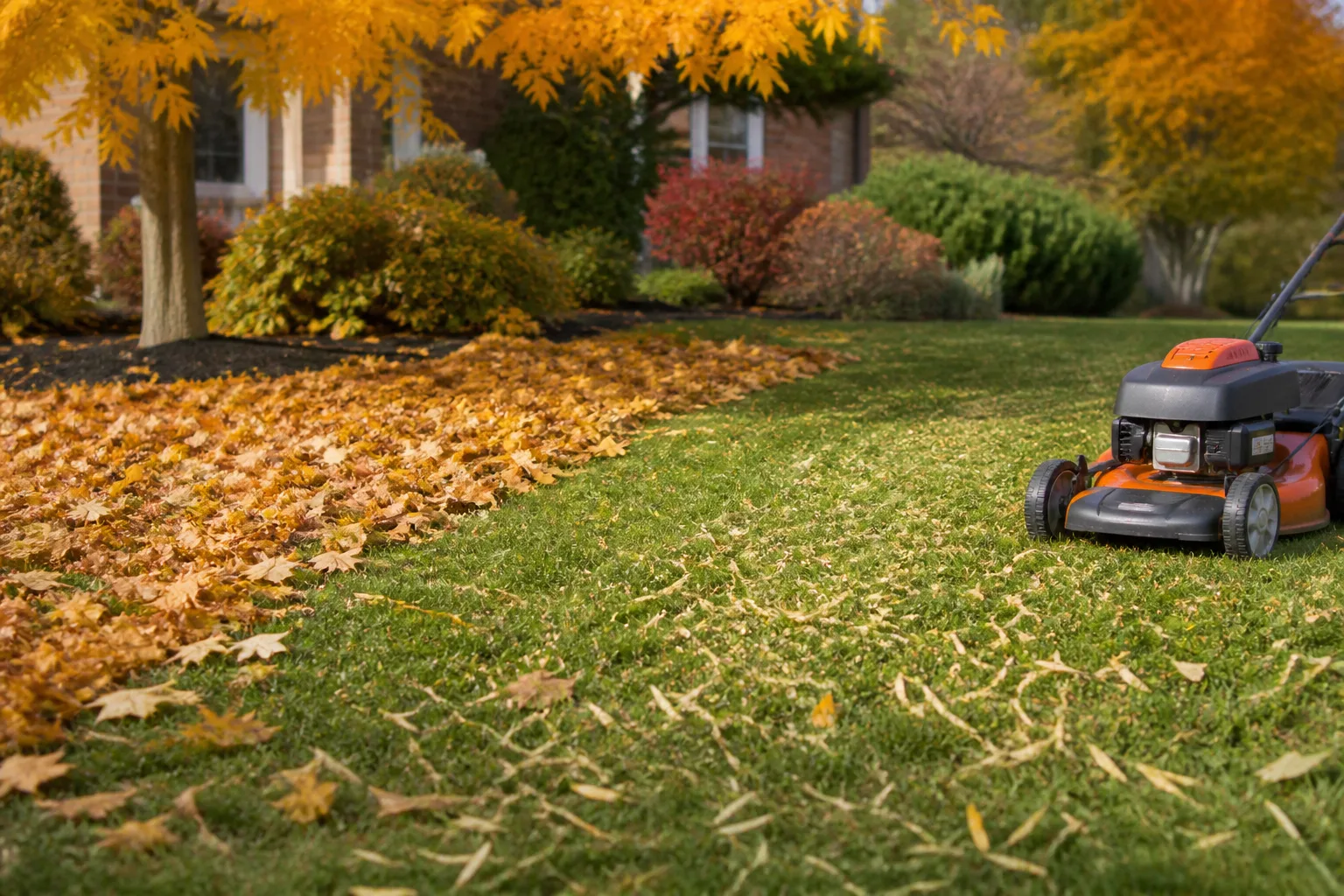
Most healthy leaves can stay in a garden bed. They soften the impact of winter weather, slow moisture loss, feed decomposers, and create shelter for insects that spend part of their lives in leaf litter. But “leave the leaves” is not a command to ignore a thick, wet blanket covering plant crowns or to spread diseased debris everywhere.
The useful answer is a four-way choice: leave a light, airy layer; thin a heavy layer; remove a risky layer; or relocate good leaves to a better spot. The right choice depends less on whether the leaves look untidy than on what is underneath them and what happens when rain turns them into a mat.
The short answer: leave, thin, remove, or relocate
If your bed contains established deciduous shrubs and perennials, and the leaves are dry enough to remain loose, you can usually leave them in place. Aim for coverage that protects the soil without burying crowns, flattening low plants, or forming a persistent wet sheet. A settled layer around 1 to 3 inches is a useful starting range for many beds, but the texture of the leaves and the drainage of the site matter as much as the ruler.
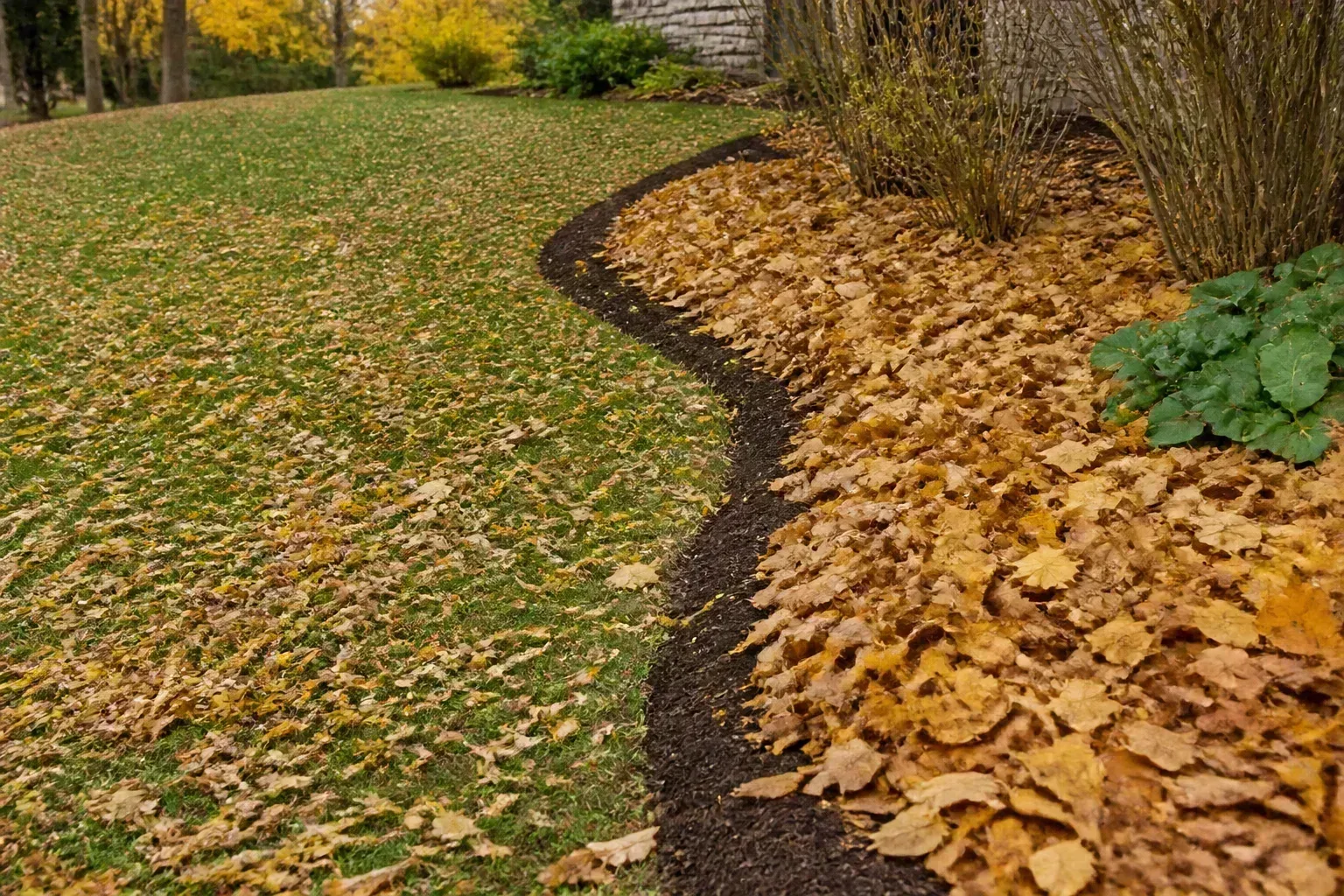
Thin the layer when it is deeper than the plants can tolerate, especially if whole leaves overlap like shingles and stay wet after the surrounding soil has drained. Remove leaves when they are known to carry a recurring disease, when they came from black walnut and are lying around sensitive plants, or when they are blocking a young plant, evergreen groundcover, or spring-emerging crown.
Relocate the leaves instead of discarding them when they are healthy but wrong for the bed. A shrub border, a bare vegetable bed, a designated leaf pile, or a compost area may be a better destination than a tight perennial clump. Rutgers New Jersey Agricultural Experiment Station explains the broader principle in its leaf-litter guidance: fallen leaves can improve moisture retention, soil structure, erosion control, and wildlife habitat, but too much material can smother roots and limit air exchange.
Start with the four questions that decide the job
Before you rake, walk the entire bed and answer four questions. This takes less time than removing everything and rebuilding the mulch layer later, and it prevents the common mistake of applying one rule to every part of the yard.
How deep and wet is the layer?
Depth is only a warning signal; matting is the real problem. A fluffy 3-inch layer of curled oak leaves can allow air and water to move through it, while a thinner layer of wet maple or beech leaves can press into a dense film. Lift a handful. If it separates easily and the soil below is not sour-smelling or waterlogged, the layer may be fine. If it comes up as a heavy, stuck-together blanket, thin it.
Look at the bed after rain rather than judging it on a dry afternoon. Leaves that stay saturated for days on a poorly drained edge deserve more attention than the same depth in a raised, free-draining bed. If runoff moves across a slope, a leaf layer can slow water and protect topsoil, so remove only the part that is blocking plants rather than exposing the entire bed.
What is growing underneath?
Tall, dormant herbaceous perennials can often push through loose leaves or remain protected beneath them until spring. Low rosettes, alpine plants, young seedlings, newly planted plugs, evergreen groundcovers, and plants with exposed crowns have less room for error. Their foliage can be flattened, their crowns can remain wet, or their emerging stems can be forced to push through a compacted layer.
Mark dormant perennials before the leaves arrive if you are likely to forget their locations. A simple stake, plant map, or visible standing stem makes spring cleanup precise. You can clear a small circle around the crown without dragging a rake across the entire bed and disturbing overwintering habitat.
Are the leaves healthy and chemically safe?
Healthy leaves from ordinary yard trees are generally useful mulch. Leaves mixed with plant debris showing a serious or recurring disease are a different category. If a lilac repeatedly drops leaves with a confirmed leaf-spot problem, or a vegetable bed contains diseased tomato or squash foliage, collect that material rather than distributing it as mulch. Keep it out of a cool backyard compost pile unless you know your compost process reaches and maintains the heat needed to destroy the pathogen.
Also identify the source tree when leaves are abundant under a black walnut. N.C. Cooperative Extension describes black walnut (Juglans nigra) as a special case because juglone is associated with the tree’s roots, leaves, and hulls and can inhibit some nearby plants; its extension discussion of gardening near black walnuts recommends clearing fallen leaves and hulls where sensitive plants are being grown. That does not mean every black walnut leaf poisons every garden, but it is a good reason to avoid using a thick, fresh walnut layer around plants that already struggle there.
Where will the leaves go if you move them?
Removal is not the same as waste. Healthy leaves can be moved under established shrubs, spread over a vegetable bed, added to a leaf-mold pile, or mixed gradually into a balanced compost pile. If your municipality collects yard waste, check whether the material is composted; that keeps the nutrients in circulation better than sending bagged leaves to a landfill.
Choose the destination before you rake. Otherwise, the leaves often end up in a driveway pile that gets blown into a drain, or in plastic bags that hide a valuable soil amendment. A discreet leaf pile at the back of the property can serve as a slow habitat and decomposition area, while a formal front bed can receive a thinner, more intentional layer.
Why leaves can be valuable garden-bed mulch
Leaf litter is not finished compost, and it is not a balanced fertilizer. Its value comes from the slow chain of events that starts when fungi, bacteria, earthworms, and other decomposers break down organic material and return it to the soil. Over time, the soil gains organic matter and a more active food web rather than receiving one sudden dose of nutrients.
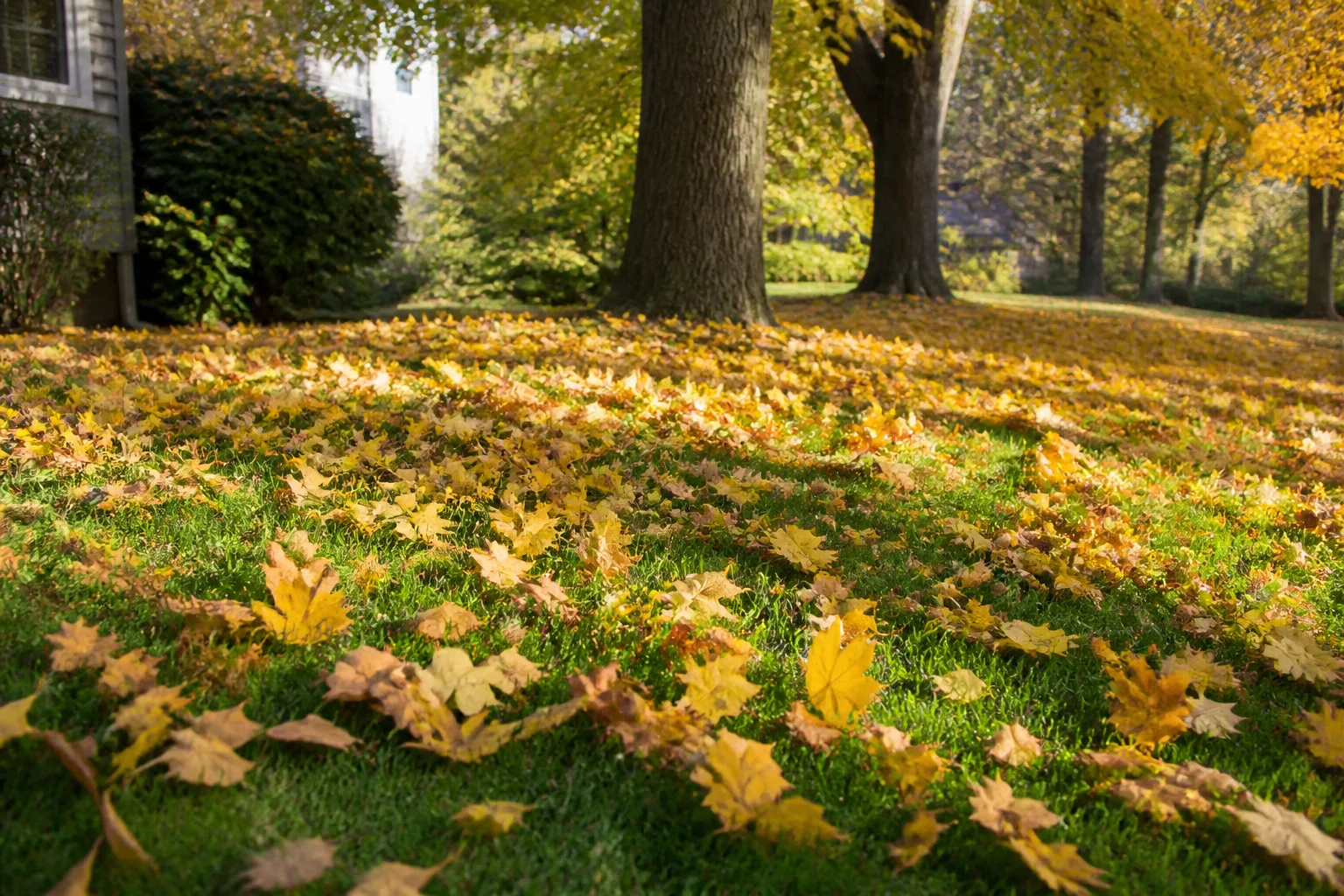
The Rutgers Cooperative Extension fact sheet identifies several practical benefits of letting leaves decompose in place. Leaf cover can reduce evaporation, buffer soil temperatures, slow erosion during rain, suppress some weed emergence, and improve pore space as organic matter breaks down. Those benefits are strongest when the cover stays loose and the soil is not compacted by repeated traffic.
Leaves also provide a winter microhabitat. Many insects use the litter for shelter or spend a life stage there, and birds can forage among it for insects and seeds. Penn State Extension’s fall-cleanup guidance recommends leaving suitable leaves and some perennial stems while directing diseased material away from the bed. This is a more useful goal than making every square inch bare: keep the material that supports the garden, and remove the material that creates a known problem.
There is a climate and labor benefit too. Keeping healthy material on site reduces hauling and avoids turning every seasonal leaf drop into a disposal project. You do not have to accept an untidy front yard to gain that benefit; edging the bed, removing leaves from paths, and keeping a clear ring around plant stems can make a leaf-mulched bed look deliberate.
When leaving leaves causes problems
The same layer that insulates soil can block light and air when it becomes wet and compacted. Watch the plants, not just the calendar. If foliage disappears beneath a mat, if water beads on the surface instead of soaking through, or if the layer is pressing against stems and crowns, the right response is to thin or move it.
Thick or matted cover
A thick leaf layer can smother small plants, delay spring growth, and keep the crown wet long enough to encourage decay. This is especially likely in a low pocket, beneath a downspout, or on the shaded side of a dense shrub where air movement is poor. The problem is not that leaves are inherently bad; it is that the layer has stopped behaving like a porous mulch.
Use your hand first. Pull off the top of a matted section and place it under a shrub, in a compost or leaf-mold pile, or on a less crowded area of the bed. If the remaining layer is still deep, repeat until you can see the bed’s shape and plant bases. Do not rake aggressively across dormant crowns, because a stiff tool can catch stems or pull shallow-rooted plants from damp soil.
Disease in the leaf litter or plant debris
Disease changes the destination, not just the depth. A clean layer of leaves around a healthy shrub can stay; leaves that show a disease the plant is likely to face again should leave the bed. Rake them when they are dry if possible, bag or contain them according to local yard-waste rules, and clean tools afterward if you moved visibly diseased material.
Do not diagnose every brown spot as a contagious fungal disease. Autumn color, drought injury, insect feeding, and normal leaf drop can look dramatic without creating a disease reservoir. If the problem is recurring, spreading, or hard to identify, use your local extension diagnostic service before treating the entire bed or adding unnecessary fungicide.
Vegetable gardens deserve a stricter cleanup standard because crop residue can carry problems into the next growing season. Remove diseased tomato, potato, squash, and similar plant debris, then use healthy fallen leaves as a separate soil-cover layer. Mother Earth Living’s end-of-season garden guidance makes the same distinction between removing diseased material and leaving healthy foliage or stems for winter protection and wildlife.
Seedlings, crowns, evergreens, and low plants
Young seedlings cannot push through the same cover that a mature coneflower can. If you rely on annuals to reseed, a dense leaf blanket may also prevent desired seeds from reaching light and soil. Rake a small window open around emerging plants, or move the leaves to a nearby spot rather than stripping the whole bed.
Evergreen groundcovers need a different treatment because their foliage is alive through winter. Leaves sitting on top of a low evergreen can block light and hold moisture against the canopy. During autumn, gently lift or blow leaves off the green foliage and leave them on the soil around the plant’s roots. This keeps the insulation benefit while removing the smothering layer.
The crown is the point where stems meet roots, and it needs air more than the surrounding soil does. Keep a modest open ring around crowns and woody stems—roughly 1 to 2 inches is a useful visual guide—without exposing a wide circle of bare soil. You are creating breathing room, not building a moat that lets roots dry or invites erosion.
The special cases: lawns, vegetables, black walnut, and slugs
Garden beds and lawns should not be managed the same way. Grass needs enough light and air to keep growing, so a heavy leaf mat can damage turf and increase the chance of winter disease. Rake leaves from the lawn, mulch-mow a light layer into fine pieces, or move them to beds and compost; do not use a lawn rule to justify stripping healthy leaves from every perennial border.
Vegetable beds can benefit from a clean layer of leaves between seasons. Spread roughly 2 to 3 inches over bare soil after removing spent plants that carried disease, and keep the material out of the planting furrows if you plan to direct-sow soon. In spring, pull the layer back where you will seed, or move it to the path and around established transplants once the soil is workable.
Black walnut is a source-specific exception. The issue is not that all walnut leaves must be treated like hazardous waste; it is that juglone sensitivity varies by plant and fresh leaves or hulls can be an unhelpful choice near vulnerable plants. If plants under the tree are stunted or repeatedly wilt despite good light and water, remove the walnut litter from the root zone, avoid disturbing major tree roots, and choose tolerant plants or a container/raised-bed strategy rather than assuming more fertilizer will solve the problem.
Slugs and other moisture-loving pests can use leaf cover too. That is not a reason to destroy habitat across the entire yard, but a hosta bed that already has severe slug damage may need a thinner, drier surface around plant crowns. Combine that adjustment with watering at the soil level, removing boards and other hiding places, and monitoring at night; leaf removal alone rarely solves a population problem.
How to use leaves without smothering plants
Once you decide to keep the leaves, treat them as mulch that needs placement. Do not dump a wheelbarrow-load onto the center of a perennial and assume rain will distribute it evenly. Spread the material so the soil is covered, plant bases remain visible, and the bed can still be inspected.
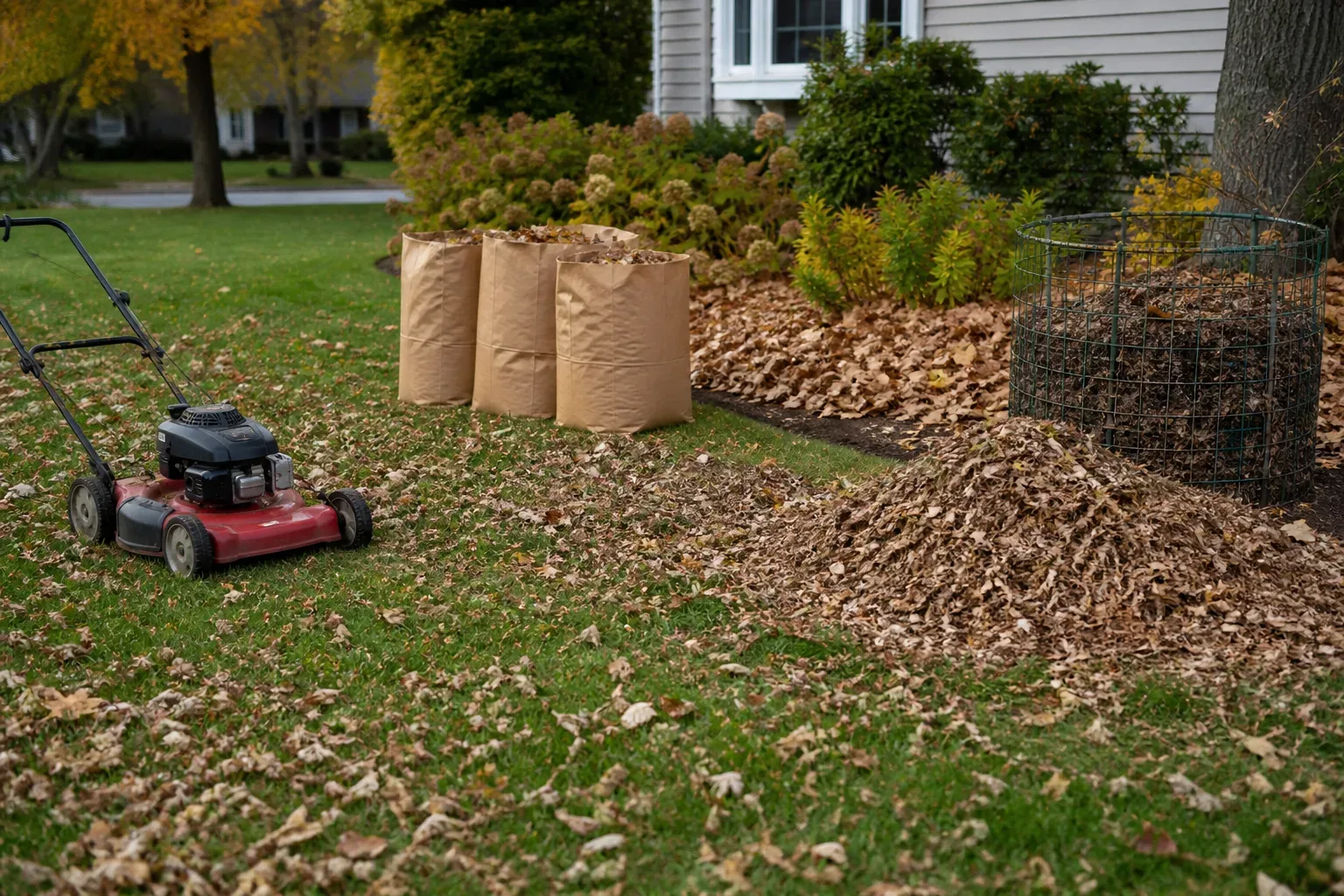
Keep leaves off crowns and stems
Use a flexible fan rake, gloved hands, or a small scoop to move leaves around established plants. Pull sideways and lift rather than scraping down into the soil. If you use a blower, keep the air stream low and gentle; the goal is to move leaves, not strip soil, break stems, or blast insects out of every hiding place.
Create a thin, even layer under shrubs and between perennials. Let the material taper naturally near stems instead of piling it into a volcano. The University of Wisconsin Extension account of leaving leaves describes using fluffy, curled leaves as mulch while cautioning against deep drifts and dense mats, particularly from large, flat leaves.
If wind is the reason the leaves will not stay put, leave some perennial stems standing as a natural framework. A few twigs can also hold the layer in place and gradually decompose. A light layer of natural wood mulch over the leaves may improve appearance, but do not use it to hide an excessively thick or wet pile; the underlying problem will remain.
Choose whole leaves, shredded leaves, or leaf mold
Whole leaves are best when your priority is habitat and winter cover, provided they do not mat. They break down more slowly, which can be useful under shrubs and in a native-style bed. The trade-off is that large, flat leaves may need occasional thinning after wet weather.
Shredded leaves break down faster and are easier to spread in a vegetable bed or around small plants. They are a practical rescue for an excess pile, but shredding destroys or displaces the insects using that litter. Penn State recommends keeping leaves intact when habitat is the priority and using shredding selectively when necessary. If you shred, do it before the material becomes a settled winter habitat and use the pieces as a thin layer rather than burying crowns.
Leaf mold is a separate product: leaves decomposed slowly into a dark, crumbly soil conditioner, usually with more fungal activity than a hot, nitrogen-balanced compost. It is useful when you want to improve texture and moisture handling later, but you do not have to wait for leaf mold before using healthy leaves as surface mulch. A pile that is left alone can also shelter organisms, so turn it only when your goal and timing justify the disturbance. Epic Gardening’s perennial-bed guide makes the same practical distinction: leave useful cover, then uncover crowns and evergreen foliage when active spring growth needs space and light.
A fall-to-spring leaf-management routine
An efficient routine has four passes rather than one exhausting cleanup day. It lets you preserve the useful material, catch problems while they are easy to see, and avoid exposing soil long before plants need it.
First, clear hard surfaces and lawn. Remove leaves from steps, drains, walkways, and turf where a wet layer will become slippery or block grass light. Move healthy leaves into beds, under shrubs, or a designated pile instead of automatically bagging them.
Second, inspect each bed by plant type. Leave loose cover around dormant perennials and shrubs. Pull it off evergreen foliage, young seedlings, crowns, and plants that are already showing rot. If one section stays wet, use less material there and relocate the excess to a higher, better-drained spot.
Third, separate the exceptions. Keep diseased leaves and crop debris out of ordinary mulch piles. Separate black walnut leaves and hulls when sensitive plants are nearby. In a slug-prone bed, thin the layer around susceptible plants while leaving habitat in less vulnerable areas.
Fourth, revisit in spring. Do not strip every bed on the first warm day. Check whether the leaves have settled, whether new growth is emerging, and whether wildlife timing in your area argues for leaving the material a little longer. If a crown is blocked, a seed row needs light, or an evergreen remains covered, remove only the obstruction and place the leaves at the edge of the property or in a composting area.
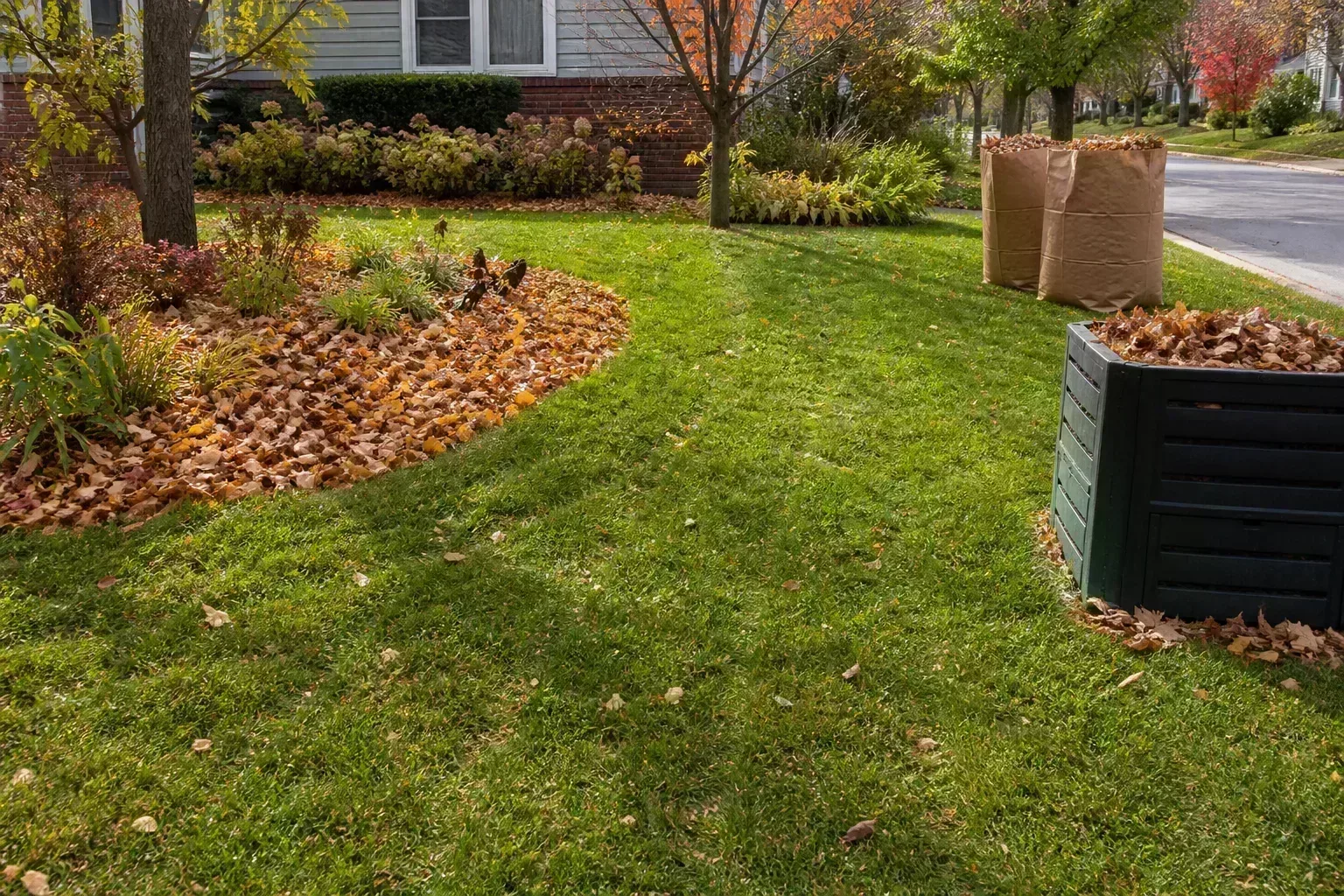
The spring endpoint is not necessarily bare soil. A successful cleanup leaves the bed protected, the crowns visible, the plants growing freely, and the healthy organic matter somewhere it can continue decomposing. If you need a formal appearance, define the edge, remove leaves from paths, and keep the mulch layer even; neatness and habitat do not have to be opposites.
Conclusion
So, should you rake leaves from garden beds? Usually not all of them. Leave healthy, loose leaves where they can act as seasonal mulch and habitat; thin them when they become deep or wet; remove them when disease, black walnut material, seedlings, evergreen foliage, crowns, or severe slug pressure changes the risk; and relocate the good material instead of treating it as trash.
The best fall garden is not the one with the cleanest surface. It is the one where every layer has a job and every exception has been handled deliberately. Spend your effort on the places where leaves are smothering plants or carrying a known problem, then let the rest protect the soil until the garden tells you it is time to move them.



