Does Cornmeal Kill Ants? What Actually Works
Cornmeal alone will not eliminate an ant colony. Get a safer control plan: identify the ant, clean trails, place labeled bait, and seal entry points.
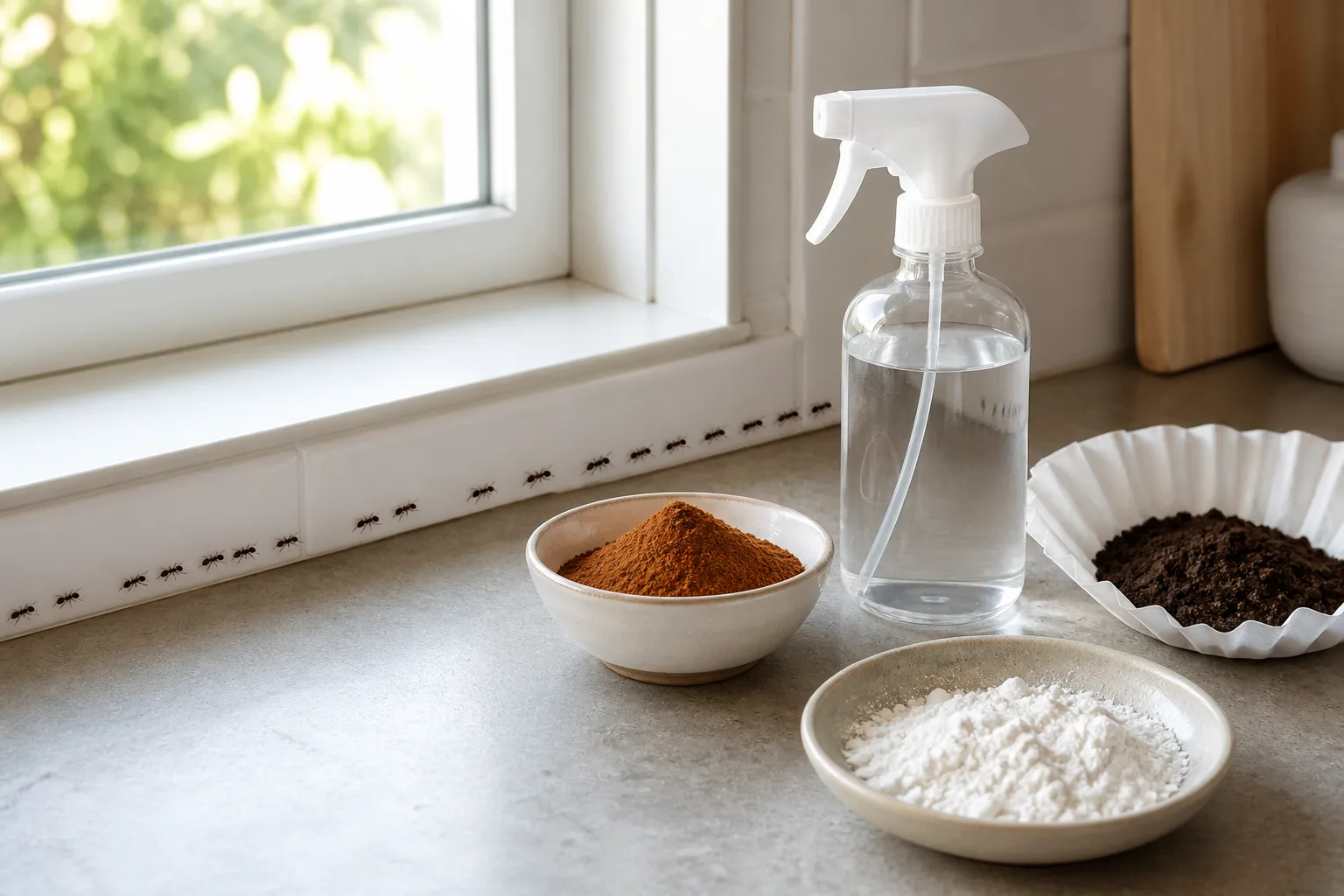
If you are wondering does cornmeal kill ants, the practical answer is no: plain cornmeal is food, not a proven ant insecticide. It will not reliably poison workers, sterilize a nest, or make an ant colony “explode” after the ants eat it.
That does not mean every story about cornmeal is completely random. Ants can investigate and carry food particles, so a pile may attract activity or make a trail look busier. But attraction is not eradication. To reduce the colony, you need a method that workers can take back to the nest and that acts slowly enough to reach queens and developing ants.
The short answer: cornmeal is not an ant killer
The common claim says that cornmeal expands inside an ant and kills it. Ants do not have the digestive process needed for that dramatic effect. They can chew, process, and transport many kinds of solid food; dry meal does not turn into a reliable stomach bomb.
The more important problem is that “killing ants” can mean two different jobs. A contact spray or soapy water can kill some workers you can see, while colony control means reducing the nest that keeps replacing those workers. Cornmeal accomplishes neither job consistently enough to recommend it as an ant treatment.
Why the “expands in the stomach” story fails
Dry cornmeal can absorb moisture when it is cooked, but that kitchen observation does not translate into a lethal reaction in an ant’s body. An ant that encounters cornmeal may treat it as a carbohydrate source, ignore it, or carry it away; the outcome depends on the species and what else is available.
The broader myth problem is useful to recognize: a household ingredient can sound scientific because it has a visible property in water or cooking. That does not make it a pesticide. A product intended to control ants has an active ingredient, directions, use sites, and safety instructions that plain cornmeal does not have.
What cornmeal can do—and why that still is not control
Cornmeal may serve as an incidental food source or carrier in a homemade mixture, but it contributes no special ant-killing action by itself. The important distinction is between an ingredient that ants may carry and a pesticide product whose active ingredient, use site, concentration, and safety directions have been evaluated and labeled.
It can also make a situation worse in two practical ways. First, a food pile beside a wall or counter may keep ants returning to the same location. Second, a bowl of meal creates a child- and pet-accessible food contaminant without solving the nest, especially if it is placed near a pantry, sink, or plant pot.
Do not use a bigger pile to compensate for a weak method. If the ants are indoors, spend the first few minutes finding what they want—crumbs, syrup, pet food, a damp sink cabinet, a leaking pipe, or honeydew on a houseplant—then choose control based on the trail and the ant’s behavior.
How colony-killing ant bait works
Effective ant bait combines an attractive food base with an insecticide that acts slowly. Workers feed at the bait, carry some of it back, and share it with nestmates. UC Integrated Pest Management explains that bait must be slow enough for workers to return to the nest; killing the visible foragers before they make that trip does little to reduce the colony. See its household ant management guidance for the colony-control principle and placement advice.
Why slow action matters
Fast is not always better. The ant you see on the counter is usually a worker, not the queen, and a nest can keep sending replacements. A quick spray can provide satisfying immediate results while leaving the reproductive center untouched.
That is why you should generally choose one lane at a time: either use a labeled bait and let workers forage, or use a targeted contact treatment when immediate knockdown is the only goal. Spraying directly around a fresh bait station can repel or kill the very workers you need to carry the bait home.
Ant bait is not magic or instant. Depending on species, colony size, temperature, bait acceptance, and nest location, activity may continue for several days. Fewer ants, less replenishment at the bait, and no new trails are better signs than a completely empty station after one night.
Identify the ant before choosing a treatment
A photo can help, but ant identification is often difficult and treatment can differ by species. University of Minnesota Extension’s ant identification guide cautions that ants should be correctly identified before control because some types nest indoors, some mainly nest outside, some prefer sugar, and others prefer protein or grease.
Small indoor ants and pavement ants
Tiny ants around a sink, pantry, windowsill, or baseboard are often looking for food or water rather than damaging the structure. Pavement ants frequently nest under slabs, stones, and foundation edges. For these common nuisance ants, sanitation, exclusion, and a labeled bait placed near the active route are usually more useful than scattering cornmeal.
Watch what the workers accept. If a sweet bait disappears but a greasy bait is ignored, that observation is more useful than an internet recipe. Preferences can change with colony needs, so test a small amount in a contained station and adjust only with a product labeled for ants and the intended site.
Carpenter ants and stinging ants
Large black ants, piles of sawdust-like frass, winged ants emerging indoors, or activity around damp, soft, or previously leaking wood deserves more attention. Carpenter ants do not eat wood like termites, but they can excavate galleries in damaged wood; the ant treatment will not fix the moisture or structural cause.
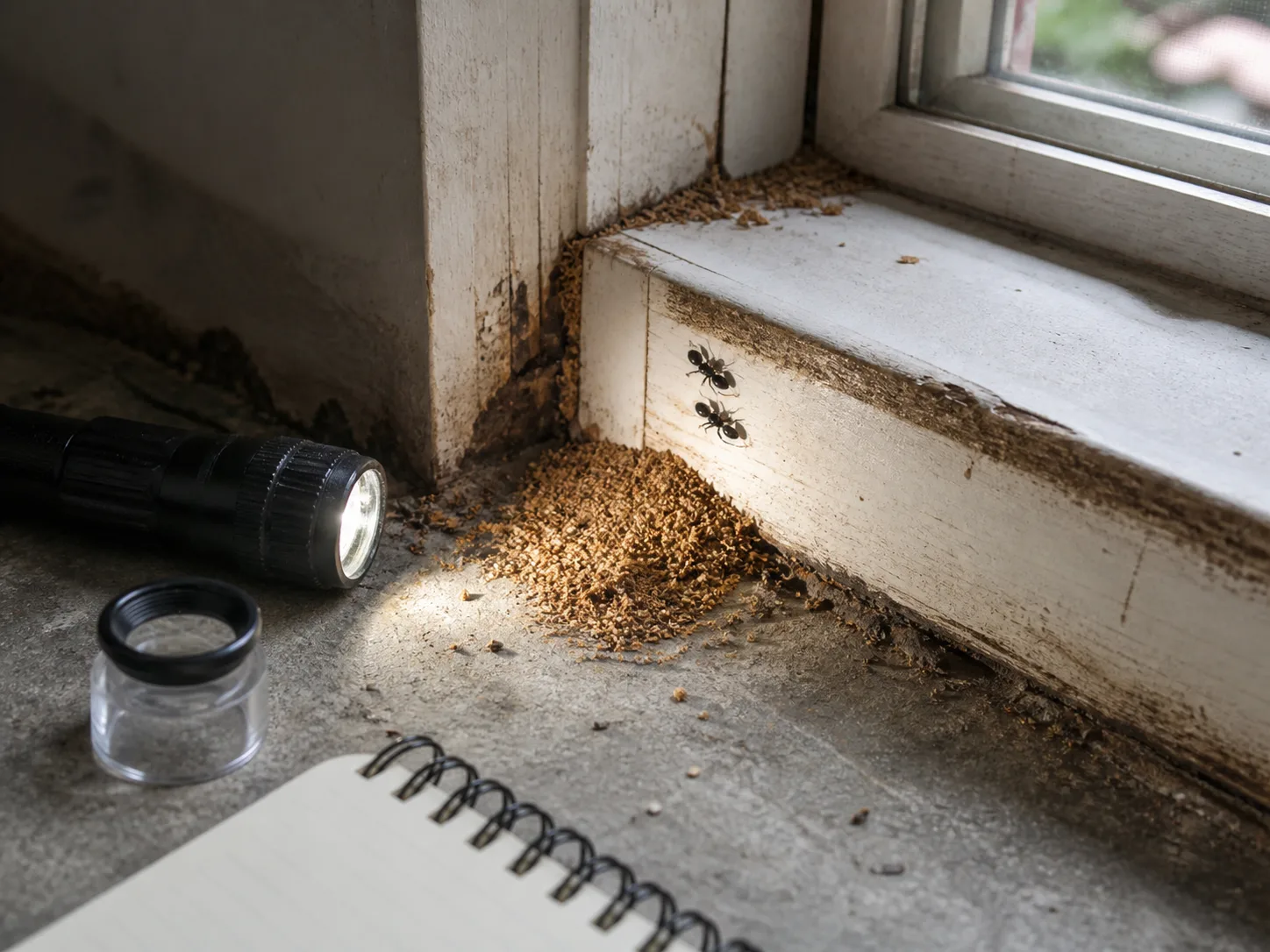
Stinging ants, including fire ants in regions where they occur, should not be handled like a kitchen trail. Do not disturb a mound with bare hands or pour untested household mixtures into it. If you cannot confidently identify the ant, or if anyone in the household has a serious sting allergy, use a licensed professional or local extension identification service.
The safest first response for ants indoors
Start with observation rather than wiping every ant away. Follow one trail for a few minutes to see whether it ends at a crack, pipe opening, window gap, food source, plant pot, or damp cabinet. Take a clear close-up photo if you need help identifying the ant, and note whether the workers move quickly, carry food, or cluster around moisture.
Remove food and water without scattering the colony
Put open food into sealed containers, clean syrup and grease from counters, rinse recyclables, empty food waste, and pick up pet food between meals. Dry the sink and repair leaks, but do not flood a wall void or pour liquid into an electrical or structural opening.
This is not a substitute for bait. Cleaning removes competition so the bait is more attractive and prevents the next wave from finding the same reward. UC IPM also recommends sealing entry points and using soap and water to clean invading ants and their scent trails.
Wipe the trail after baiting, not before
If you are going to use bait, let ants find it first. Wiping a route before you place bait may force the colony to lay a new trail, which makes it harder to tell whether the station is accepted. Once workers have had time to feed and activity begins to decline, clean the remaining route with soapy water and dry the surface.
Avoid bleach, gasoline, harsh solvent, or a strong homemade spray on food-contact surfaces. The goal is to remove the trail and food residue without creating a new exposure problem or damaging a countertop, finish, plant, or sealant.
How to place commercial ant bait effectively
Choose a ready-to-use bait station or a product whose label specifically lists ants and the place you intend to treat. A label is not optional packaging advice: it tells you where the product may be used, how much to place, what exposure precautions apply, and how to store or dispose of it.
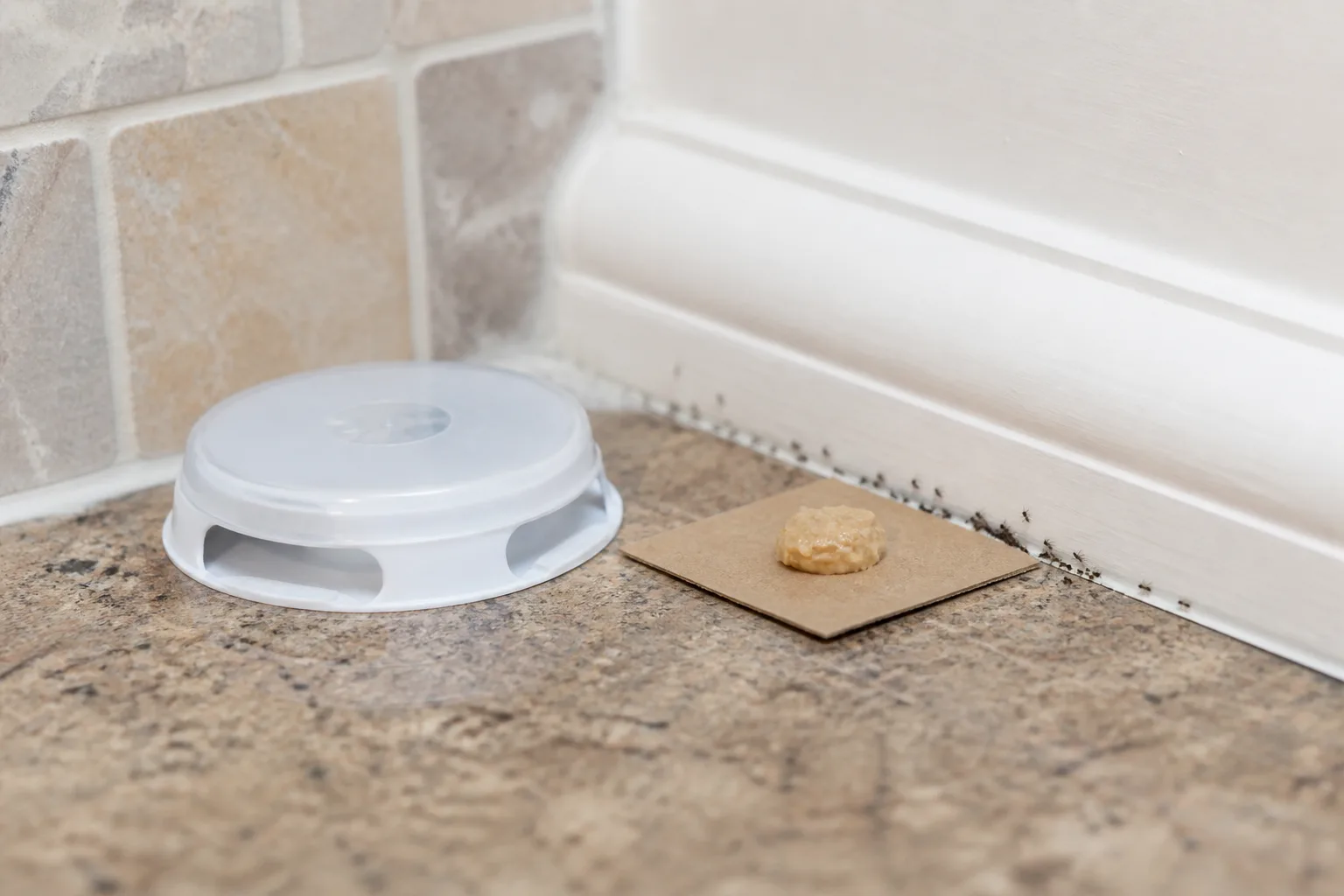
Place the station beside an active trail or near an entry point, not randomly across every room. Use enough stations to cover the route without creating a line of pesticide through the home. Do not put bait directly on a food-preparation surface, inside a child’s reach, in a pet’s feeding area, or where it can be washed into a drain.
Choose the bait ants are actually accepting
Some ants prefer sweets, while others seek protein or grease at a particular stage of the colony cycle. If workers walk around a bait station, do not assume the colony is impossible to control. Check that the station is fresh, accessible, correctly placed, and labeled for the species or site; then try a different labeled bait formulation if permitted.
UC IPM’s pavement-ant guidance recommends offering small portions to see what is preferred, placing bait near trails, and replacing it when empty. It also warns that indoor baiting can sometimes draw more ants into a building, so outdoor placement near the route may be better when the nest is outside. Read the pavement-ant bait recommendations before treating a recurring outdoor trail.
Keep bait away from food, children, and pets
Never call a pesticide “food-safe” just because the bait uses sugar, cornmeal, jelly, or peanut butter as an attractant. The active ingredient is what changes the risk, and a bait station still needs to be kept out of reach and used only as directed.
Do not put loose homemade borax mixtures in a pantry, on a floor where a crawling child can reach them, or beside a pet’s bowl. If a person or animal may have swallowed a pesticide, keep the container and label and contact the appropriate poison or veterinary poison service for immediate guidance rather than guessing from a recipe.
Should you mix cornmeal with borax?
Cornmeal and borax are not equivalent ingredients. Cornmeal is an attractant or carrier at most; borate compounds can be insecticidal at the right concentration. But a homemade mixture has no reliable guarantee that ants will accept it, that the concentration is appropriate, or that the use is covered by a pesticide label.
For a home with children, pets, food surfaces, or uncertain ant identification, a labeled commercial bait station is the more defensible choice. It gives you a known formulation, containment, directions, and disposal instructions. Do not copy a ratio from a blog, substitute boric acid for borax, or add cornmeal to a commercial bait unless the label specifically permits it.
There is also a biological trade-off: too much active ingredient may kill workers before they reach the nest, while too little may not control the colony. That is exactly why professional bait products are formulated and labeled rather than improvised from pantry ingredients.
Why spraying ants can sabotage baiting
Spraying the visible line can be useful for immediate cleanup, but it is a poor companion to colony baiting when applied along the same route. A repellent spray may make workers avoid the station, split the trail, or establish a new entry path.
If you need immediate relief in a food area, remove the food source, contain the bait nearby, and clean the surface after the baiting window. If you use a contact product, keep it targeted, follow the label, ventilate as directed, and do not spray over bait or into cracks where children, pets, or food-contact surfaces can be exposed.
UC IPM specifically emphasizes that spraying ants does not prevent more ants from entering and recommends combining sanitation, caulking, and baiting when needed. It also cautions against unnecessary broad perimeter spraying on hard surfaces because some pesticide residues can pollute waterways.
Outdoor ant control: treat the route and the reason
A few ants in a garden are not automatically a pest emergency. Ants can be part of the outdoor food web, and a trail may be associated with fallen fruit, spilled drinks, another insect, or honeydew from aphids or scale on a shrub.
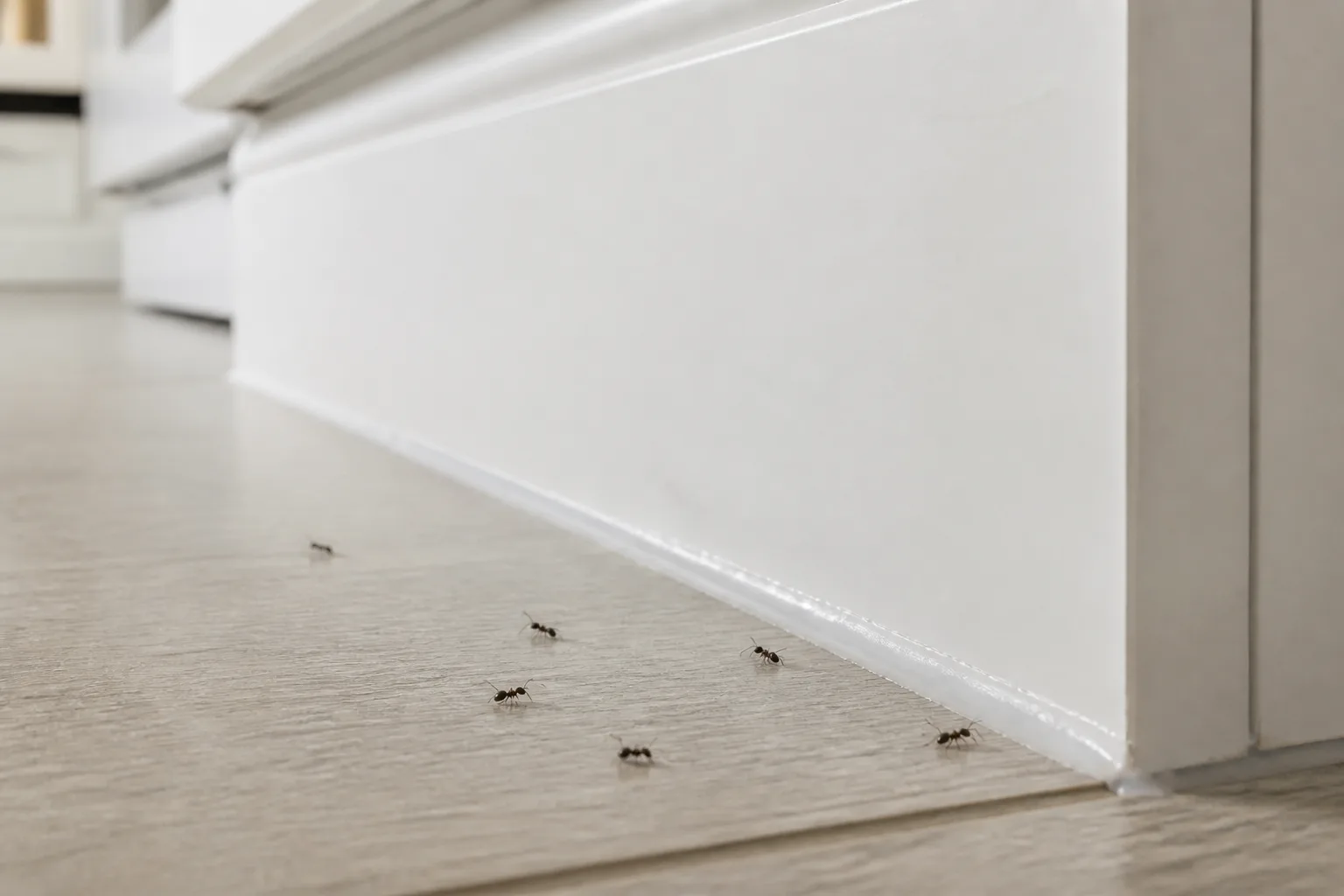
Inspect the route from the house to the nest. Remove fallen fruit and sweet spills, keep trash lids closed, trim vegetation away from siding, and correct leaking outdoor faucets. UC IPM and University of Minnesota guidance both emphasize correcting food, water, entry, and nesting conditions rather than relying on a single home remedy. In a lawn, do not pour boiling water, bleach, gasoline, salt, or a strong soap mixture onto a mound; these can injure turf, soil organisms, roots, or nearby waterways.
When outdoor bait is the better choice
Outdoor bait is most useful when ants repeatedly travel from a visible nest or foundation edge and the product label permits that site. Place it close to active trails or nest openings, protect it from rain as directed, and keep it away from drains, children, pets, pollinators, and edible crops unless the label expressly covers the location.
UC IPM notes that bait stations or stakes are generally easier and safer to use than loose applications. If bait is not accepted, reposition it or change the formulation according to the label instead of broadcasting more product across the yard. Outdoor control can take several days, and new colonies may move in if the underlying shelter or food source remains.
Ants in houseplant soil or on foliage
Ants in a plant pot are often a clue, not the root problem. They may be nesting in an unusually dry container, using the saucer as a water source, or collecting honeydew from aphids, scale, mealybugs, or whiteflies on the plant.
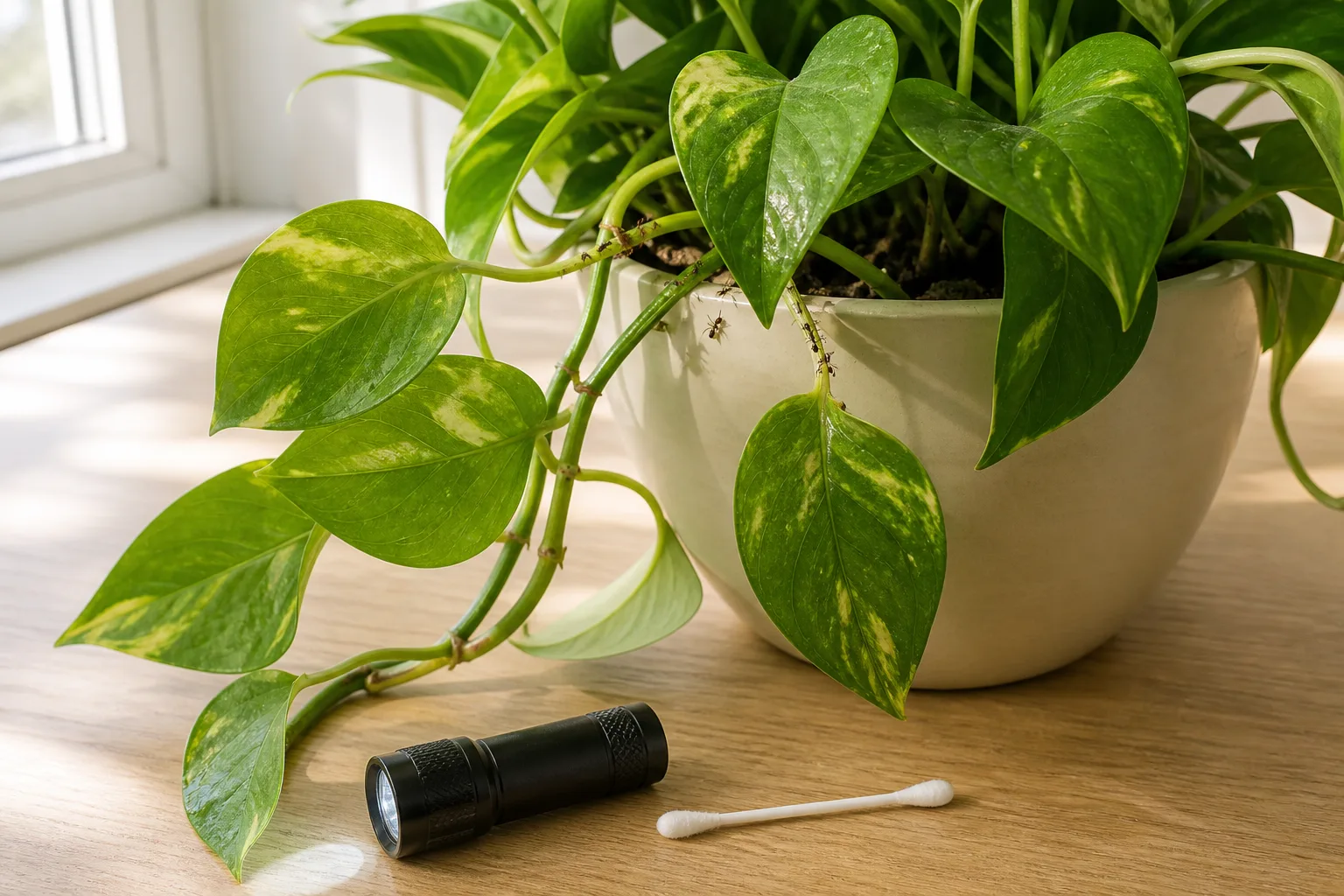
Move the plant away from the collection, inspect leaf undersides and stems, and look for sticky residue, curled leaves, or clusters of small insects. Treat the plant pest with a method appropriate for that plant, and avoid sprinkling cornmeal, borax, or outdoor pesticide granules into potting mix. A food ingredient will not address a honeydew-producing pest, and an unapproved pesticide can injure roots or contaminate indoor growing media.
If ants are nesting in the pot, isolate it and inspect the drainage holes and saucer. Repotting may be appropriate for a severe, persistent infestation, but do not waterlog the plant as an improvised ant treatment. Solve the ant access and plant-pest cause together.
Prevention that reduces repeat trails
Ant prevention works best as a sequence, not as a smell-based barrier. Strong scents such as peppermint, citrus, or vinegar may disrupt a route temporarily, but they do not remove the nest or prevent a new trail from forming elsewhere.
Use these durable controls:
- Store sugar, cereal, pet food, and ripe fruit in sealed containers.
- Wipe crumbs, grease, syrup, and sticky residue as soon as they appear.
- Empty food waste and rinse recycling regularly.
- Fix leaks under sinks and reduce persistent dampness around foundations.
- Caulk cracks at baseboards, windows, doors, pipe penetrations, and foundation joints.
- Trim branches and stems touching the house and check plants for aphids or scale.
- Remove fallen fruit and food scraps from patios and outdoor seating areas.
- Keep bait and pesticides in their original containers, locked away from children and pets.
A 24-hour plan for a kitchen ant trail
For a small indoor trail, start by following the ants and photographing one or two workers. Then seal food, remove pet dishes temporarily, dry the sink, and wipe obvious spills without disturbing the active route more than necessary.
Next, place a labeled bait station beside the trail where people and animals cannot reach it. Leave the route quiet long enough for workers to feed. Do not spray over the station, squash every ant around it, or move it every hour because activity is still visible.
After the bait has been accepted and activity starts to taper, clean the remaining scent trail and caulk the entry point. Recheck the area the next day and again over the following week. If ants shift to another room, follow the new route rather than scattering cornmeal or bait in every corner.
Troubleshooting: bait is ignored or ants keep returning
If ants ignore bait, check the simple causes first: the station may be old, too far from the trail, blocked, wet, or placed beside a better food source. Some species or colony stages prefer a different food type. Try a fresh, labeled formulation in a safe location, and keep competing food and water sources under control.
If ants disappear and return, the bait may have reduced one foraging group while another nest remains. A trail can also be seasonal or triggered by rain, heat, dry soil, or a new food source. Inspect the exterior route and nearby plants instead of assuming that the first nest was the only one.
If the problem gets worse after bait placement, do not automatically add more. Confirm that the bait is labeled for the site, that the station is not attracting ants deeper into the home, and that the colony is outside. Outdoor placement or a professional inspection may be more appropriate.
When to call a pest professional
Get help when ants are emerging from walls or ceilings, large numbers of winged ants appear indoors, damp or damaged wood is involved, a stinging species may be present, or several bait attempts fail. Professional identification is particularly worthwhile when the ants are tiny and widespread, because pharaoh ants and other difficult species can be worsened by the wrong treatment.
Call sooner when anyone in the household has a serious sting allergy, when children or pets could reach treatment areas, or when pesticide use near food, drains, ponds, vegetable beds, or pollinator habitat feels hard to control. Penn State Extension’s IPM guidance supports using identification, sanitation, exclusion, and targeted treatment together. Ask the professional to explain the ant’s identity, likely nesting site, bait strategy, and moisture or exclusion repairs—not just which spray will kill the workers today.
Conclusion: skip the cornmeal and match the method to the colony
Plain cornmeal does not reliably kill ants or repel an established colony. It may attract or feed workers, but that is not the same as colony control and can add another food source inside the home.
The dependable sequence is simple: identify the ant, remove competing food and water, use a labeled slow-acting bait where workers can safely reach it, avoid sabotaging the bait with repellent spray, and seal the route once activity declines. Treat plant pots, carpenter-ant clues, stinging ants, and persistent infestations as different problems rather than forcing one kitchen remedy to handle all of them.



