How to Grow and Care for Japanese Forest Grass
Learn how to grow Japanese forest grass in cool, moist shade, choose a cultivar, water without waterlogging, divide mature clumps, and protect it through winter.
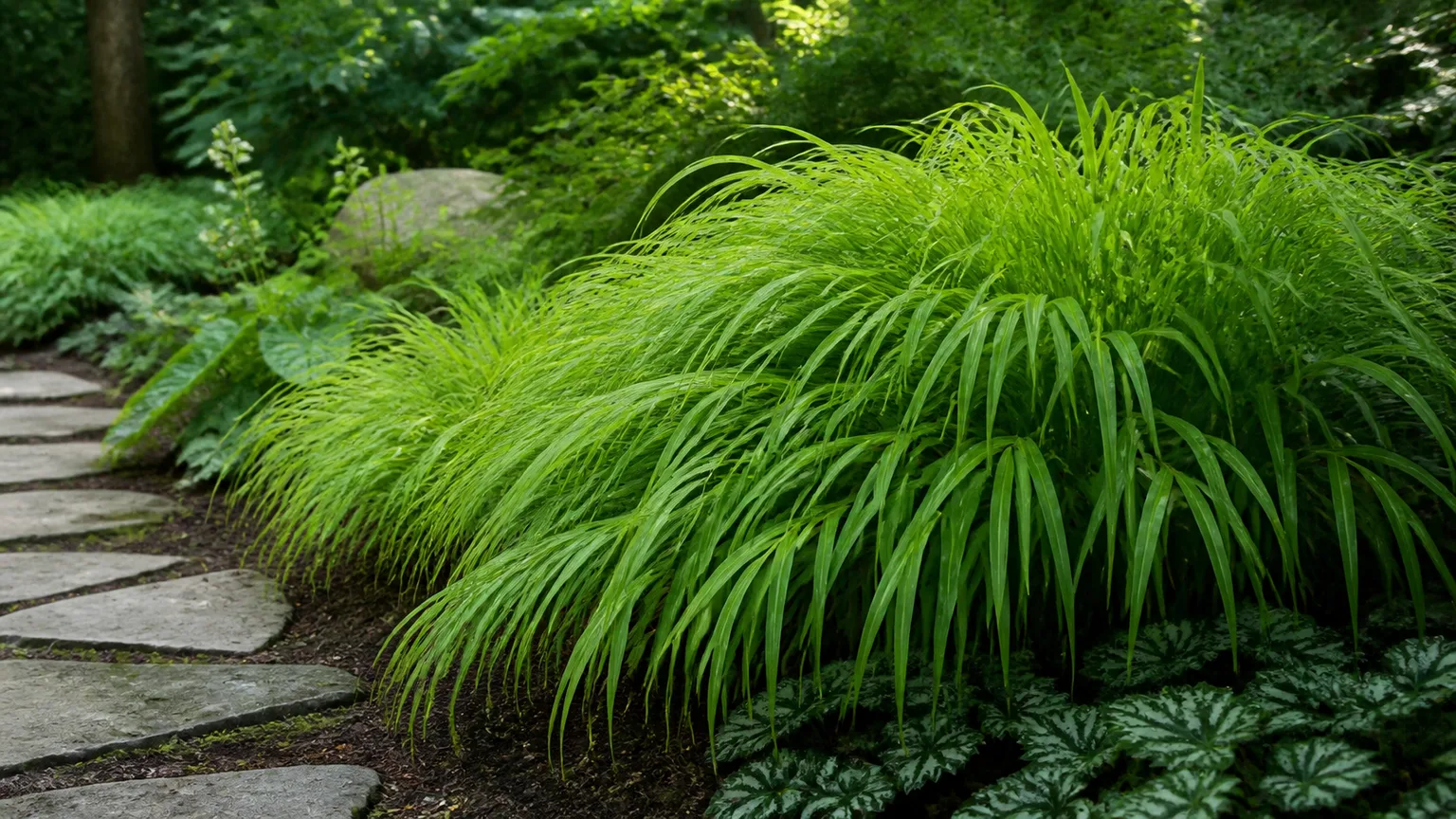
Japanese forest grass (Hakonechloa macra) is a deciduous ornamental grass grown for its low, arching mounds of fine leaves, not for showy flowers. It is one of the few grasses that looks at home in shade, where its blades spill over a path, soften a rock edge, or brighten the front of a woodland border. Give it cool or dappled light, soil that stays evenly moist in summer but drains, and time: this is a slow-growing perennial, not an instant ground cover. (NC State Extension; Fine Gardening)
The most useful decision happens before planting. If your shady bed dries to dust beneath trees, or holds cold water for days in winter, the location may be a poor fit even if the light looks right. Start by checking both conditions, then choose a cultivar whose foliage color and mature size suit the space.
What Japanese forest grass looks like and how it grows
The species has slender green leaves that arch outward from a compact crown, creating a flowing, layered shape rather than a stiff upright tuft. In midsummer it may produce airy greenish-yellow flower sprays, but the blooms are small and often hidden; foliage provides most of the garden interest. The plant dies back in winter, so leave room for its seasonal cycle instead of expecting evergreen coverage. (NC State Extension)
Japanese forest grass spreads slowly by rhizomes and stolons, gradually widening into a mound. That measured habit makes it useful near a walkway or among other perennials, but it also means a new planting can take several seasons to form a broad sweep. For a fuller look sooner, buy several plants and space them according to the cultivar’s mature width rather than expecting one small division to fill a large bed.
Plant labels commonly list USDA zones 5 through 9, but hardiness is not a promise that every cultivar will thrive in every zone. Summer heat, humidity, winter drainage, wind exposure, and the warmth of a pot can shift the result. Treat the supplier’s cultivar rating as a starting point and favor a sheltered, moisture-retentive site if your summers are hot or your winters fluctuate between freezing and thawing. (Garden Design; NC State Extension)
Choose a site by summer light and winter drainage
Japanese forest grass tolerates partial to full shade, but a little dappled or morning light usually gives gold and striped cultivars clearer color. In deep shade, those leaves often read greener; in long, hot afternoon sun, especially when the soil dries, foliage may bleach or scorch. Aim for a bright woodland edge, the east side of a building, or a spot beneath a high-canopied tree rather than a hot west-facing wall. (NC State Extension; Fine Gardening)
Before choosing a location, watch it at different times of day and during a dry spell. “Shade” can mean anything from cool filtered light to a warm strip that gets several hours of reflected afternoon heat, and those sites behave differently. If the only available bed receives more sun than the cultivar prefers, morning sun with afternoon protection is a safer compromise than trying to compensate with constant emergency watering.
Also observe what happens after rain. Moist ground is useful; a planting pocket that remains saturated through cold weather is not. NC State Extension notes that the grass can suffer in poorly drained soil and that frost heaving may occur, so avoid a winter puddle zone and a low spot where freeze-thaw cycles lift the crown. (NC State Extension)
Prepare moisture-retentive, well-drained soil
The ideal soil holds enough water to keep roots from drying in summer while allowing excess rain to move away. A loam rich in organic matter usually does both better than compacted clay or a thin layer of dry sand. Fine Gardening describes Hakonechloa as suited to fertile, moist but well-drained soil; NC State likewise emphasizes rich, consistently moist soil and warns against very dry or poorly drained conditions. (Fine Gardening; NC State Extension)
If the bed is low in organic matter, spread mature compost over a broad planting area and blend it into the upper soil rather than filling one isolated hole with a very different mix. A single amended pocket in dense clay can collect water like a basin and leave roots sitting wet. Where drainage is poor across the whole bed, plant on a modest raised area or use a container with open drainage instead of trying to make this grass tolerate waterlogged ground.
A light organic mulch helps the root zone stay cooler and slows moisture loss, particularly under trees. Keep it a little away from the crown so the base does not remain constantly damp. Do not add lime, sulfur, or strong fertilizer by guesswork; the plant’s main need is a suitable moisture-and-drainage balance, and a soil test is the sensible basis for changing pH or nutrients.
Plant Japanese forest grass for steady establishment
Spring is a dependable planting window because the grass has a full growing season to establish roots before winter. Plant when the soil is workable and hard freezes have passed in your area; mild autumn planting can also work if roots have time to settle before the ground freezes. Avoid planting into midsummer heat unless you can keep the root ball evenly moist and provide protection from harsh afternoon sun. (Garden Design)
Water the nursery pot before planting, then dig a hole about twice as wide as the root ball and no deeper. Set the crown at the same level it grew in the container, backfill with the prepared soil, and water slowly so soil settles around the roots without leaving an air gap. Planting too deep can bury the crown; planting high can expose the roots and dry the clump before it establishes.
Space plants by their expected mature width and the visual effect you want. A single clump can act as a specimen beside a stone or at the edge of a path, while repeated clumps make a softer ground-cover effect. Garden Design suggests spacing ground-cover plantings about 18 to 24 inches apart; check the nursery label because cultivars vary, and remember that close spacing speeds visual coverage but raises the cost and can make the bed feel crowded later. (Garden Design)
After planting, water the entire root zone and check it frequently during the first growing season. A newly planted clump has not yet explored the surrounding soil, so rainfall that wets only the surface may not reach its roots. Once it is established, you can reduce the frequency of checks, but keep monitoring during heat waves and dry spells.
Water by checking the root zone, not the calendar
Keep the soil evenly moist while leaves are actively growing, especially through the first summer. Water deeply enough to wet the root zone, then let excess drain; a quick sprinkle that dampens only the surface encourages shallow roots and can leave the center of the clump dry. In a garden bed, a soaker hose or drip line is useful under foliage because it directs water to the soil and reduces repeated wetting of the leaves. (Garden Design)
Instead of following a fixed weekly schedule, check the soil a short distance from the crown. If the upper couple of inches feel dry and the weather has been warm, water thoroughly; if the soil is still cool and moist, wait and check again later. Heavy shade, rainfall, wind, soil texture, and root competition all affect how quickly a site dries, so the same calendar rule will not fit every garden.
Watch the combination of heat and moisture. A hot spell can make a plant wilt or develop brown tips even in partial shade when water supply becomes inconsistent; adding more shade may help, but restoring steady root-zone moisture is the first fix. At the other extreme, limp growth with persistently wet soil calls for better drainage, not more irrigation or a thicker mulch layer.
Choose a cultivar for color, shape, and climate
The species form is green, while named cultivars offer gold, cream striping, and fall color. Mature sizes vary, and nursery labels may use trade names or slightly different descriptions, so compare the botanical name, mature dimensions, and local hardiness guidance before buying. Japanese forest grass is the species Hakonechloa macra; verify that name on the tag if you want this plant rather than another ornamental grass with “Japanese” in its common name.
Golden and variegated cultivars for shade
‘Aureola’ is a widely grown choice with yellow to chartreuse leaves striped green. It gives a strong color accent in partial or dappled shade, while deep shade tends to soften the gold and full hot sun can scorch the leaf edges. NC State Extension describes the cultivar’s golden leaves and seasonal pink-to-red tones; choose it when you want a bright foliage mound rather than a grass that stays uniformly green. (NC State Extension: ‘Aureola’)
‘All Gold’ has brighter, more solid golden foliage and a comparatively compact, upright look. ‘Albostriata’ has green leaves with cream or white stripes and can grow taller than several golden selections, making it useful where a pale stripe should show against a dark background. If the bed is deeply shaded, consider that variegation may be less vivid; if the bed is exposed to a hot afternoon, prioritize shade protection over maximum brightness. (NC State Extension; Garden Design)
Green cultivars for fall color and stronger contrast
The green-leaved species is a good choice where you want a softer, less conspicuous mound among hostas, ferns, or dark stone. Green foliage can tolerate somewhat brighter conditions than the gold forms, but the plant still needs consistent moisture and relief from punishing heat. Its leaves can pick up pink or reddish tones as temperatures cool before the clump goes dormant. (NC State Extension)
‘Nicolas’ is valued for warm red, orange, and yellow fall color, while ‘Benikaze’ (also sold as ‘Beni-kaze’) develops red tones as the weather cools. These are useful if your garden needs late-season foliage interest, but fall color depends on local conditions and should not be treated as a guaranteed uniform display. Fine Gardening’s plant guide also distinguishes the green species and golden ‘Aureola’ as foliage selections suited to woodland, rock, border, waterside, and container settings. (NC State Extension; Fine Gardening)
Use the cascading clumps along paths, slopes, and woodland edges
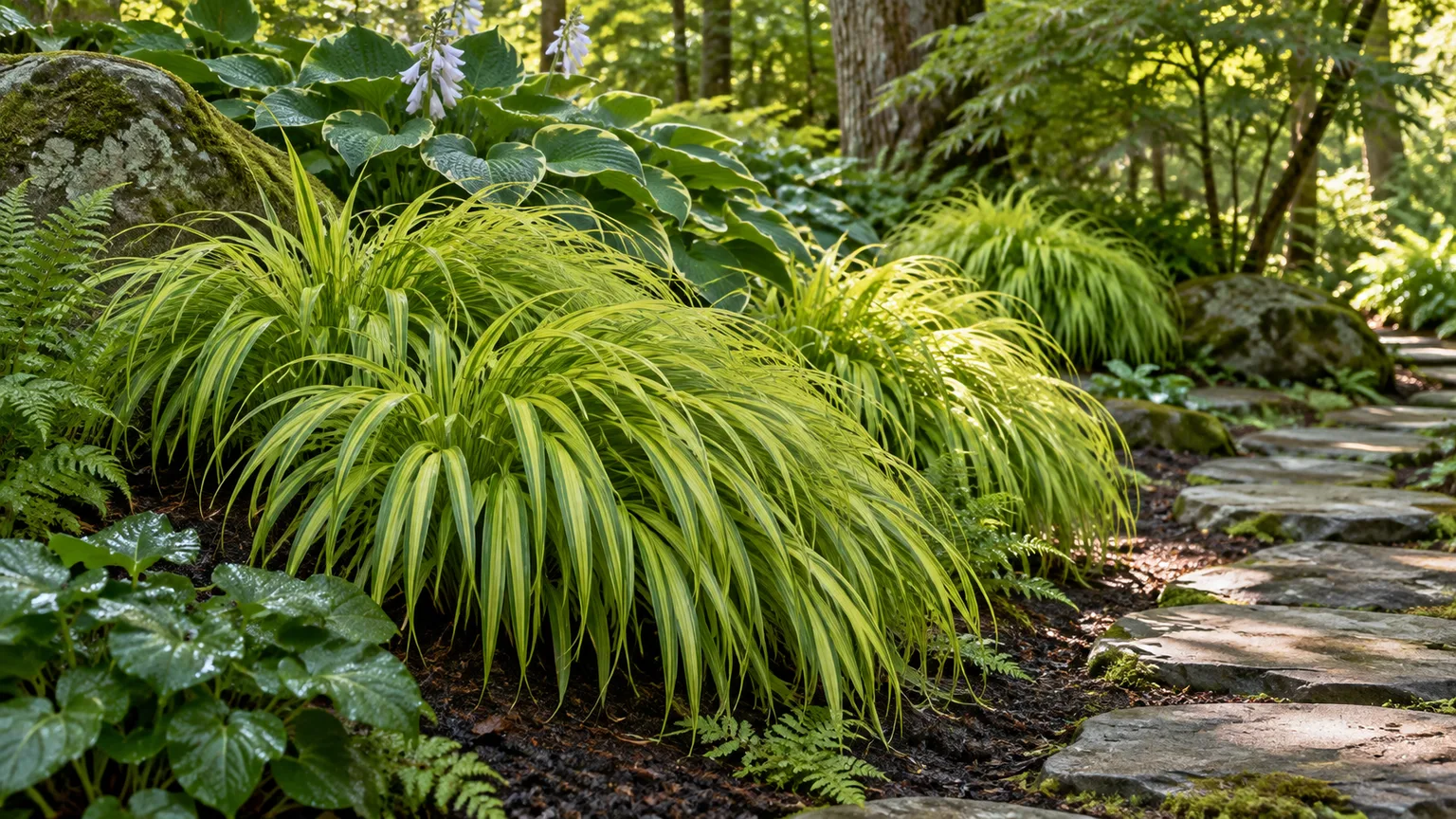
The plant’s low, arching shape works especially well where a rigid edge needs softening. Set a clump beside a stepping stone, at the top of a low retaining wall, or near a rock where leaves can drape without being crushed by foot traffic. Along a path, leave enough room for mature foliage so it does not become a constant obstacle or get flattened by shoes and garden carts.
For a larger sweep, repeat small groups rather than arranging isolated dots at equal distances. Repetition creates a flowing visual rhythm, while companion plants with broad leaves give the fine blades a contrasting texture. Hostas and ferns can share its shade setting if the soil is moist and drains; use the grass toward the front of the planting, where its cascading mound remains visible rather than disappearing behind taller shrubs. (Garden Design)
Under trees, check moisture before assuming the location is suitable. Tree roots compete for water, and dry shade is one of the easiest ways to stress a new clump. If you cannot irrigate reliably beneath a mature tree, plant nearer the outer canopy or choose a more drought-tolerant shade perennial rather than expecting mulch alone to keep the soil moist.
Grow Hakonechloa successfully in a container
A pot is useful when garden soil drains poorly, the bed is too exposed, or you want to move a plant to shelter during severe winter weather. Choose a broad, stable container with several unobstructed drainage holes and enough room for the clump to widen. A larger soil volume dries more slowly than a small pot, which gives you a wider margin for watering mistakes during summer.
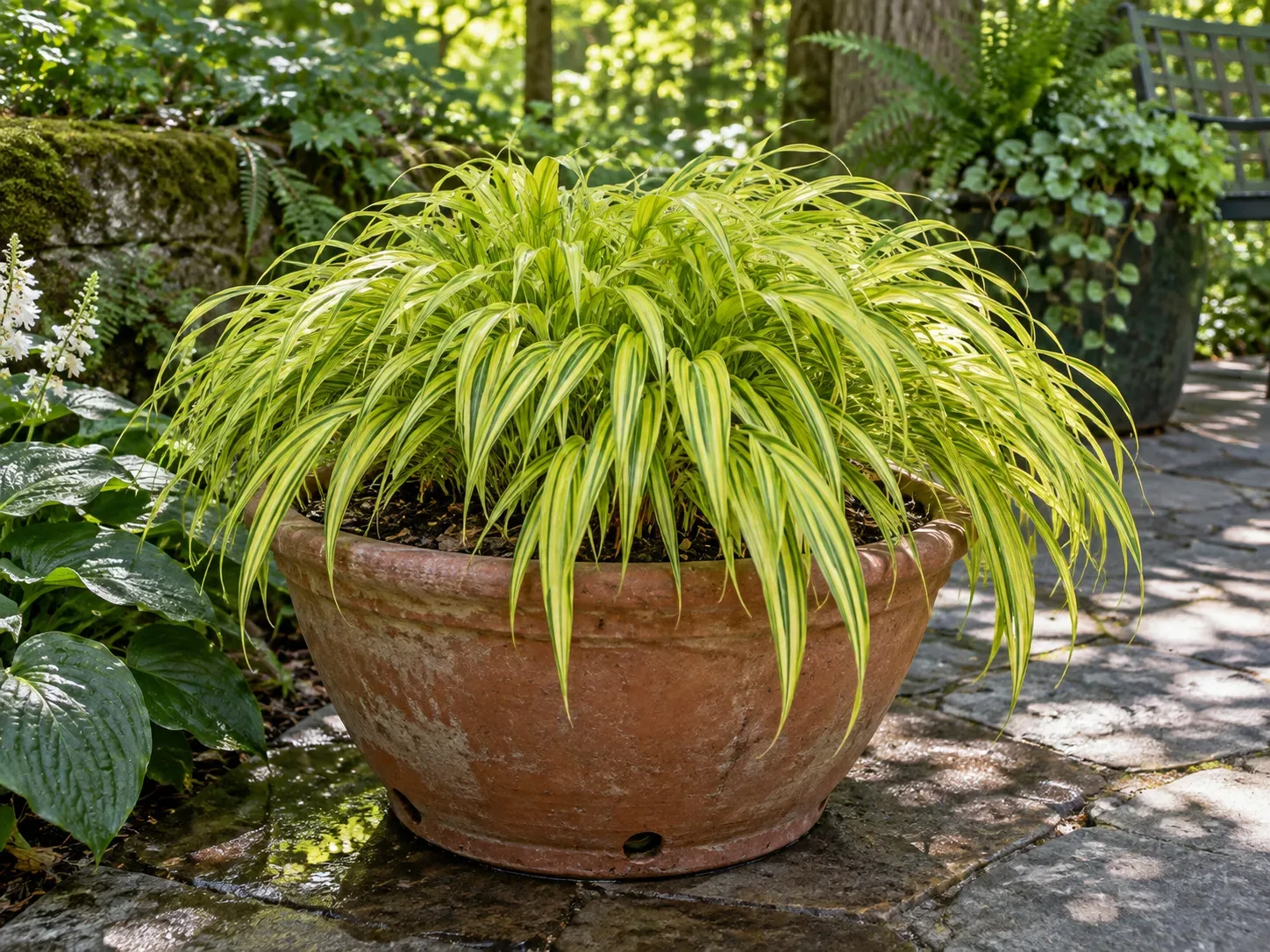
Use a quality container mix that holds moisture but does not stay sodden, and keep the crown at the same depth as it sat in the nursery pot. Place the container in bright shade or morning sun with protection from hot afternoon rays. The graceful foliage can spill over the rim, but avoid crowding it with thirsty companions that make the pot harder to water evenly.
Containers need closer moisture checks than in-ground plants because wind and warm paving can dry the root ball quickly. Water when the surface begins to dry, then let excess drain completely; do not leave the pot standing in a full saucer. During winter dormancy, reduce watering, but do not let the root ball dry to dust or remain waterlogged.
A pot also exposes roots to colder temperatures than the ground. In regions near the cultivar’s hardiness limit, group containers against a sheltered wall, wrap or insulate the pot, or sink it into the ground for winter. These steps protect the root mass from repeated freeze-thaw cycles; they do not turn a tender cultivar into a reliably hardy one, so confirm the plant’s rating and local winter pattern before relying on a container outdoors. For more container-specific design ideas, see our guide to ornamental grasses for containers.
Care for Japanese forest grass through the seasons
This is a low-maintenance plant once its site is right. Most of the year’s work consists of maintaining summer moisture, checking winter drainage, removing old foliage at the correct time, and dividing only when the clump needs it. Regular heavy feeding or frequent trimming is not a substitute for a suitable site.
Spring cleanup and feeding
In late winter or early spring, cut old foliage close to the ground before fresh shoots get tall enough to damage. Use clean hand shears and gather the dry leaves so they do not mat over new growth. If new blades are already emerging, trim carefully around them instead of shearing the whole crown at once. (NC State Extension; Garden Design)
Feed sparingly. A plant growing in compost-enriched soil with healthy, steady leaves may not need fertilizer at all, and excess nutrients will not correct shade, drought, root competition, or poor drainage. If growth is weak and the soil test indicates a nutrient need, use a modest dose of a balanced fertilizer labeled for ornamental plants in spring, following its directions and keeping granules away from the crown.
Fall color, winter dormancy, and frost protection
As days shorten and temperatures cool, leaves may take on red or bronze tones, then fade and collapse. That seasonal dieback is normal for a deciduous grass; do not mistake a brown winter clump for a dead plant if the crown remains firm. Leaving the foliage in place until spring can add modest insulation around the crown and makes it easier to see where the plant is when new shoots emerge. (NC State Extension)
In cold or exposed gardens, apply a loose layer of leaves or similar organic mulch after the soil cools, especially where frost heave is common. Keep heavy, wet mulch from sealing the crown. If you see the crown pushed upward after a freeze-thaw cycle, press it gently back into firm soil as conditions allow and improve the site’s drainage before the next winter rather than piling more water-retaining material on top.
Divide established clumps only when needed
Japanese forest grass grows slowly, so division is usually a propagation choice rather than an annual chore. Divide when a mature clump has expanded beyond its space, when the center is thinning while the outer edge remains vigorous, or when you want additional plants. Fine Gardening and NC State Extension both list spring division as the recommended propagation method. (Fine Gardening; NC State Extension)
Work in early spring as new growth begins and the soil is moist but not muddy. Water the clump first if the ground is dry, then lift it with a spade, keeping as much root mass intact as practical. Use a sharp spade or knife to separate it into sections that each have roots and several live shoots; tiny fragments with little root attached may take longer to recover.
Replant each section promptly at the same depth it grew before, firm the soil gently, and water it in. Keep the divisions evenly moist through establishment, and give them shade from hot afternoon sun while roots recover. Do not divide simply because a calendar says to; a healthy, slow-growing mound can remain in place for years without needing to be split.
Before dividing a named cultivar, check its nursery tag and follow any cultivar-specific propagation restrictions that apply where you live. Some selections may be protected, and a plant’s marketing name alone does not tell you its propagation status. When uncertain, ask the seller or choose a nursery-grown replacement rather than assuming every named plant can be propagated freely.
Troubleshoot brown tips, weak growth, and empty centers
Start diagnosis with season and soil moisture rather than immediately reaching for fertilizer. Japanese forest grass naturally browns and collapses as winter approaches, while summer brown tips usually point to heat, dry roots, or too much direct sun. Look at several leaves, inspect moisture below the surface, and check whether the problem affects the sunny side or the whole crown.
Separate sun scorch from drought stress
Brown or bleached tips concentrated on the sun-exposed side suggest leaf scorch, especially after a heat wave. Move a container into afternoon shade or add temporary protection while the plant recovers; in the ground, consider transplanting to a cooler site during mild weather if the same damage returns every summer. Do not cut off every browned tip in midsummer, because trimming can leave the plant ragged without changing the cause.
If foliage wilts across the clump and the root zone feels dry, water deeply and reassess after the soil has had time to absorb it. A brief daily sprinkle may not reach the roots, while excessive irrigation in poorly drained soil can cause a different problem. Check for both heat exposure and moisture at root depth; scorch and drought can occur together, so fixing only one may not stop new damage. (NC State Extension)
Check drainage before treating a declining clump
Yellowing or collapse during active growth can follow prolonged wet soil, root damage, or severe drought. If the ground stays saturated, stop supplemental watering and examine how water drains after rain; if the crown is soft or the plant pulls loose, remove damaged material and relocate healthy divisions to a better-drained bed. Do not pile more compost or fertilizer onto a plant until you know whether its roots are too wet or too dry.
A thin center does not automatically mean the plant is diseased. It can be a sign that an old clump is ready for division, but slow growth may also make a young planting look sparse for several seasons. Compare the center with the outer shoots, confirm that the location is not too dry or deeply shaded, and divide only when the clump is established enough to tolerate lifting.
Pests and diseases are usually minor
Japanese forest grass is generally described as having few serious insect or disease problems. If leaves develop isolated holes, inspect them at night and look beneath the foliage before treating the whole bed; a few chewed blades rarely justify a broad pesticide application. Keep the area free of weeds and fallen debris, but avoid aggressive cleanup that damages the shallow crown. (NC State Extension; Garden Design)
Persistent decline is more likely to trace back to site conditions than to a recurring pest outbreak. Verify summer moisture, winter drainage, light exposure, and planting depth in that order, then adjust one factor at a time. This plant is not considered invasive in the cited extension profile, but it still spreads gradually; give it room to mature and lift unwanted edge divisions while they are easy to reach. (NC State Extension)
Conclusion
Japanese forest grass rewards a gardener who can provide cool shade, dependable summer moisture, and soil that drains before winter. Choose a green or variegated cultivar for the light you actually have, give the clump space to expand, and let its slow, arching habit do the design work along paths, rocks, or woodland borders.
Once established, its routine is simple: check moisture during dry weather, avoid overfeeding, leave winter foliage until spring, and divide only when the mound needs room or you want another plant. If a site is both hot and dry or stays waterlogged through winter, adjust the location or grow the grass in a movable container before asking it to thrive there.