How to Grow and Care for Chocolate Vine
Learn how to grow chocolate vine responsibly, choose a strong support, water it while it establishes, prune after flowering, and check local invasive-plant guidance first.
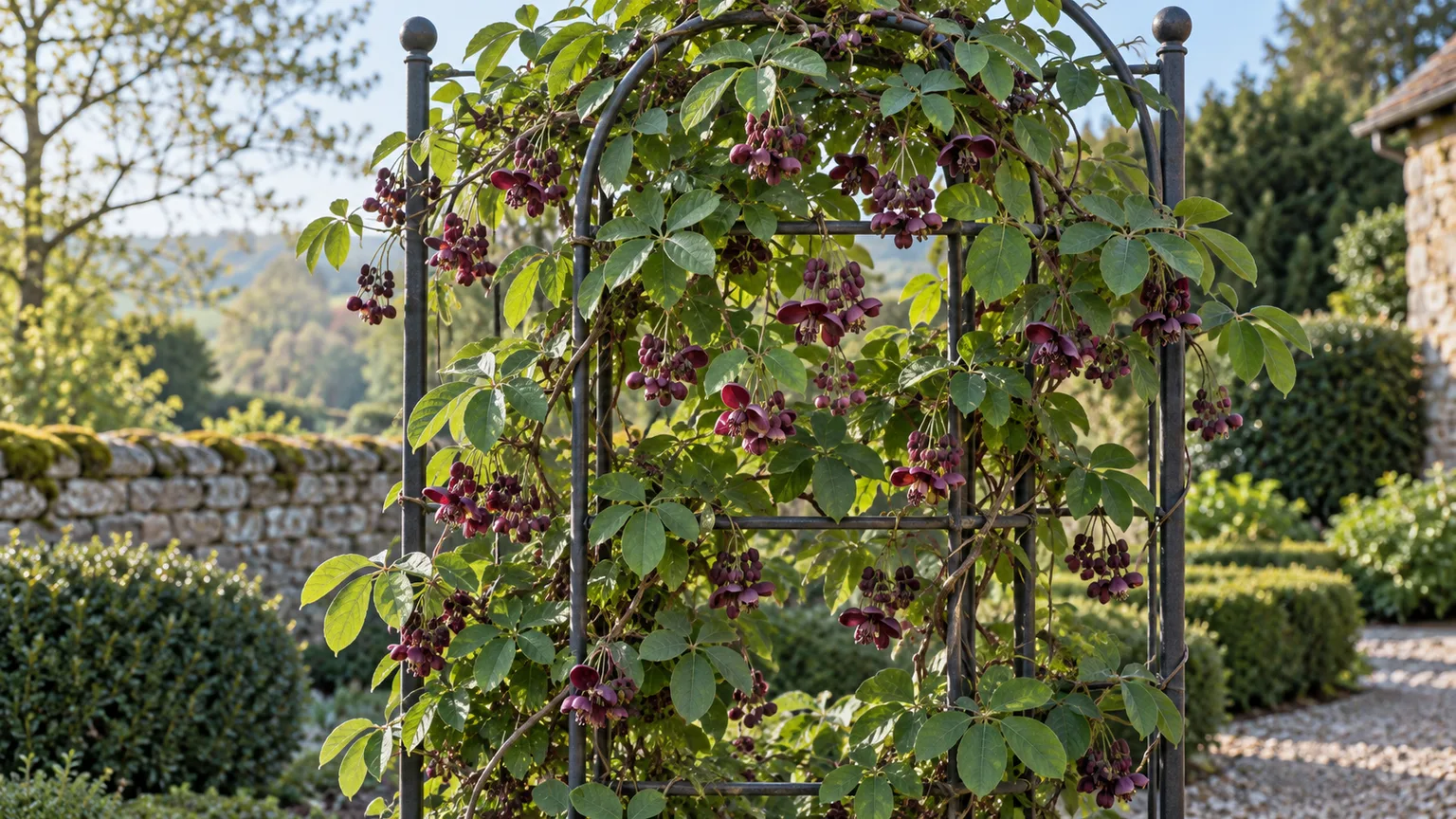
Chocolate vine (Akebia quinata), also called five-leaf akebia, is a fast-growing, woody climber with unusual five-part leaves and small, fragrant maroon-purple flowers in spring. It can make a dense screen on a fence or pergola, but it is not a carefree choice: the stems can run far beyond their support, pruning at the wrong time removes next spring’s flowers, and the plant is invasive in some regions.
Before you buy one, check your state extension service or local invasive-plant authority. If planting is appropriate where you live, give the vine a strong, separate support, water it through establishment, and prune it soon after bloom. A local recommendation against planting outweighs any garden-care tip in this guide.
Check local invasive-plant guidance before you plant
Chocolate vine is native to parts of China, Japan, and Korea, but it has naturalized in some areas where it was introduced. North Carolina State Extension identifies it as invasive in North Carolina. Its profile warns that the vine grows rapidly, can overtake nearby vegetation, and can spread when birds eat its fruit and carry seeds elsewhere. It also notes that the plant is listed by the North Carolina Invasive Plant Council and that status differs among states (North Carolina State Extension plant profile).
That is a reason to check the place where you garden, not to assume the same legal or ecological status everywhere. Search your state’s invasive plant list and extension guidance; if the plant is prohibited, discouraged, or a known escape risk in your county or watershed, skip it. Do not rely on a nursery label, a hardiness-zone map, or a claim that one cultivar is “less vigorous” to override local guidance.
If local experts say it is acceptable, site it where you can see and reach the whole plant. Keep it away from woodland edges, natural areas, stream corridors, unmanaged hedges, and neighboring trees. A location at the center of a maintained garden is easier to inspect than one behind a shed or above a roofline. If you cannot commit to regular pruning and seedling checks, choose a native or non-invasive climber instead.
What chocolate vine looks like and how it grows
The name refers to its flower color and scent, not chocolate-colored foliage. The leaves are palmately compound, usually with five oval leaflets that emerge with a purplish tint and mature to blue-green. In mild climates they may stay on the vine through winter; colder conditions can make the plant deciduous. University of Connecticut describes it as a twining vine that may grow upright on a support or along the ground, often reaching 20 to 40 feet, with fragrant purple-brown flowers in spring (University of Connecticut Plant Database).
The flowers are not large showy trumpets. They hang in small clusters among the foliage, with larger female flowers and smaller male flowers on the same plant. Their fragrance is often described as chocolate-like or vanilla-like, but scent strength and how noticeable the blooms are vary with weather and where the vine is planted. Virginia Tech notes that the flowers appear with or shortly after the leaves (Virginia Tech Dendrology fact sheet).
Plan for a vigorous twiner, not a compact flowering shrub. Oregon State University lists the vine at about 20 to 40 feet and notes that it tolerates sun to part shade and responds to annual pruning (Oregon State University Landscape Plants). The actual pace and size depend on climate, soil, water, and how often you remove new growth. The key practical point is that the plant needs a structure and a maintenance plan before it reaches that size.
Is chocolate vine suitable for your garden?
Think about the plant’s spread before its flowers. A good site has a strong support, enough room for a mature vine, and a gardener who can inspect it at least several times during the growing season. A poor site is an out-of-reach wall, a tree canopy, or a boundary where dropped fruit and seedlings would be difficult to notice.
You can also ask what you want the vine to do. If the goal is a quick privacy screen, remember that the same growth rate that fills a trellis can shade or cover plants beyond it. If the goal is spring fragrance, place the vine where you can stand near the flowers and smell them, while still keeping the whole structure accessible for pruning. If the goal is a native wildlife planting, select a locally native vine instead: a nonnative plant that feeds birds can still pose an ecological risk when birds distribute its seeds.
Match the light, soil, and microclimate to the vine
Chocolate vine grows in full sun to partial shade, and some references report that it tolerates heavier shade. For the best flowering and a dense but manageable framework, choose a spot with bright light for part of the day rather than the darkest corner of the yard. Deep shade can favor long leafy growth with fewer visible flowers. In a hot, dry climate, afternoon shade may reduce stress, while a cooler or short-season site may benefit from more sun and shelter from cold winds.
Use soil that holds some moisture but drains freely. The vine tolerates a range of soil textures, but persistently saturated ground can deprive roots of oxygen. Before planting, notice where water pools after rain and avoid that low spot. If the site is dry or compacted, improve the planting area broadly with organic matter rather than filling a small planting hole with a rich pocket of compost.
Climate matters beyond the hardiness number on a plant label. Extension and university records differ by region: North Carolina State lists a broad zone range, while the University of Connecticut describes the plant as hardy farther north. That does not make any single range a guarantee for every cultivar or garden. Cold winters can kill back stems; late frost can damage spring flowers; and a sunny wall can create a warmer microclimate than an exposed fence. Ask a local extension office about winter survival and flowering in your area.
Choose a sturdy support before planting
Chocolate vine twines around a support; it does not attach itself to a wall with adhesive pads. Give it a trellis, fence, arbor, or pergola with horizontal and vertical members that young stems can wrap around. Build for the mature plant, not the small nursery pot. A thin decorative panel can bow or loosen as the woody stems thicken and the canopy catches wind.
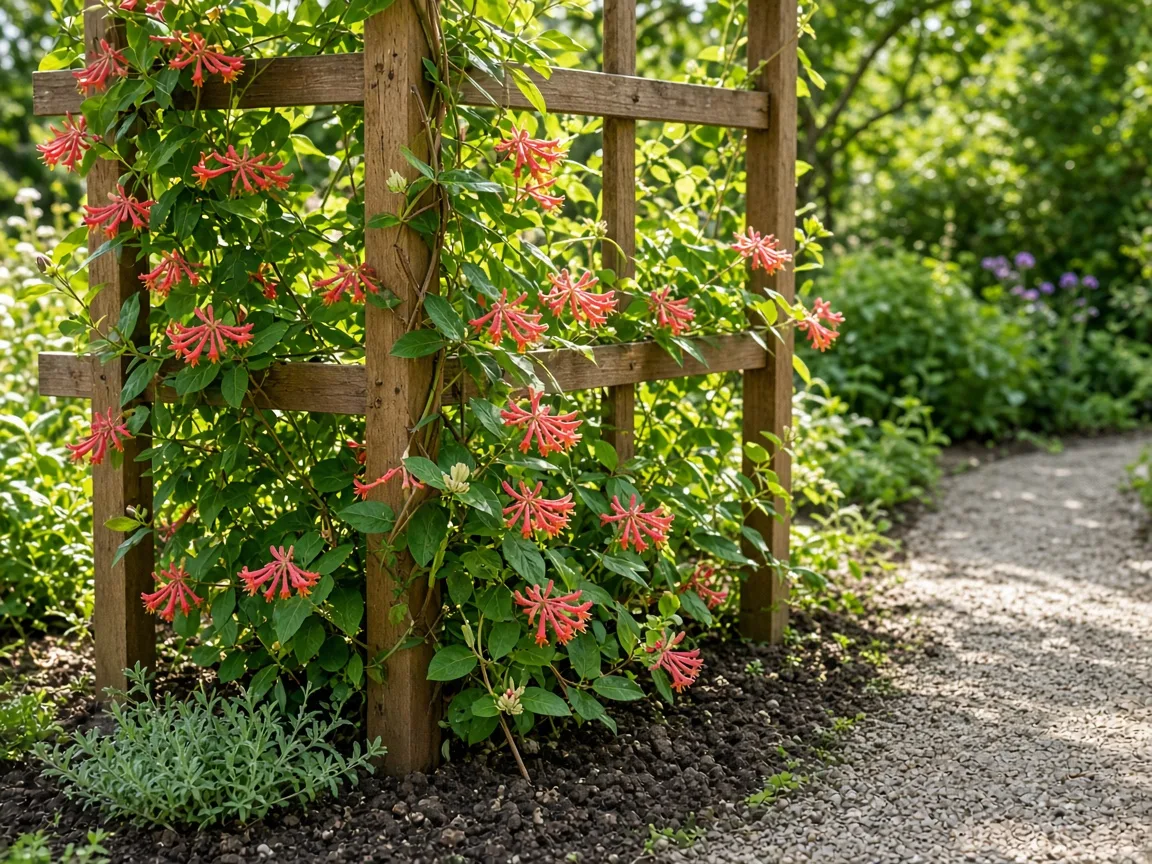
Inspect the support for sound posts, secure fasteners, and access to both sides. A wall-mounted trellis should sit far enough from the wall to let you reach behind it, remove tangled stems, and keep air moving. Jackson’s Nurseries recommends leaving a gap between a climber and a wall to avoid the drier soil right beside foundations, then watering thoroughly after planting (Jackson’s Nurseries Akebia quinata guide).
Keep the vine off a living tree. It can climb into branches where pruning becomes difficult, and dense foliage can compete for light and make inspection harder. Do not let stems creep beneath roofing, into gutters, through fence gaps, or into neighboring shrubs. Use soft ties to direct young growth; do not cinch them tightly around stems that will thicken.
How to plant chocolate vine
Plant only after the local check is clear. In a cold-winter climate, spring gives the roots a full growing season to establish before frost; in a mild climate, early fall can also work if the soil is warm and the plant has time to root. Avoid planting into frozen, waterlogged, or baked-dry ground. These are practical windows, not universal calendar dates: use local soil and weather conditions.
Water the nursery pot first. Dig a hole about as deep as the root ball and wider than it, then loosen circling roots gently if needed. Set the root crown at the same level it grew in its container; planting too deep can keep the base wet. Place the vine roughly 12 to 20 inches from a wall or support so the root zone has soil and rainfall available, adjusting for your trellis design. Backfill with the soil you removed and water slowly until the root zone is moist.
Spread a thin layer of mulch to moderate soil temperature and moisture, keeping it a few inches away from the stems. Attach only the longest young shoots loosely to the lower part of the support. Let the vine establish before asking it to cover the full structure. If you already have multiple stems, spread them across the trellis rather than wrapping all of them around one post; an open framework is easier to prune and inspect.
Watering and feeding during establishment
For the first growing season, check the soil near the root ball during dry weather and water thoroughly when it begins to dry. Do not water only the leaves or give frequent shallow sprinkles that wet the surface but leave the roots dry. A layer of mulch helps, but it does not replace checking soil moisture—especially beside a sunny wall or under an eave where rain may not reach.
Once established, chocolate vine can tolerate some dry periods. Oklahoma State Extension classifies five-leaf akebia as drought tolerant, but a new root ball still needs consistent moisture while roots spread into surrounding soil (Oklahoma State University Extension plant profile). Water during a prolonged drought if the soil is dry several inches down or the foliage is wilting in the morning. If leaves droop only during the hottest part of a summer afternoon and recover by evening, check again before watering. Yellowing with persistently wet soil can point to poor drainage, while crisp leaf edges and dry soil suggest drought stress. Adjust based on the root zone, not a fixed weekly schedule.
Skip routine fertilizer if the vine is growing well. The species is vigorous, and rich nitrogen-heavy feeding can encourage more stems and leaves without improving flowers. If growth is poor, first examine sun, soil drainage, root competition, and watering. Use a soil test before adding nutrients; follow its recommendation rather than guessing. Keep mulch and fertilizer away from the woody base to reduce rot risk.
When and how to prune chocolate vine
The safest routine for flowers is a light shape-up soon after spring bloom. Chocolate vine flowers on older growth, so cutting it back hard in late winter or early spring can remove the buds that would have opened that year. Oregon State University notes that the plant benefits from annual pruning, and North Carolina State Extension describes the fragrant flowers on old wood (Oregon State University; North Carolina State Extension). For broader woody-plant timing, see our guide to when to prune shrubs; the timing here is tied to this vine’s spring flowering habit.
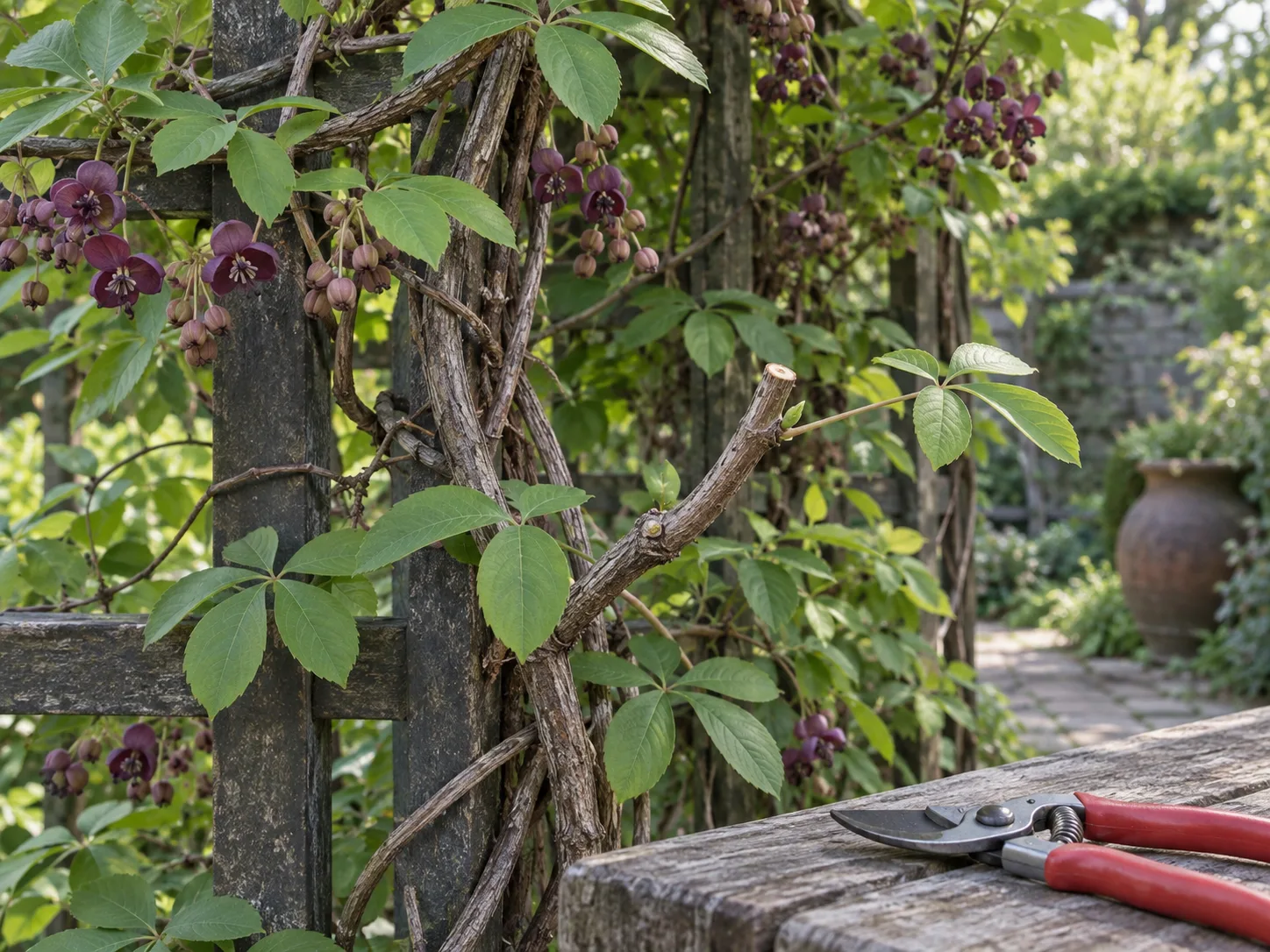
Use clean, sharp bypass pruners for small stems and loppers for thicker ones. Remove dead, damaged, or crossing stems first. Then cut back the longest shoots to a side branch or to the point where you want the framework to stop. Keep a few well-spaced main stems tied to the support, and remove thin tangles that shade the center. Step back often so you do not accidentally turn the whole plant into a bare stump.
Shape lightly after the spring flowers fade
Once most flowers have faded, shorten stems that extend beyond the structure and thin congested growth. Make each cut just above a healthy bud or side shoot, angled so water does not sit on the cut surface. Remove a small number of older stems at their base if the center is crowded, rather than clipping every shoot to the same height. This leaves a layered framework and gives new growth time to mature before the next flowering season.
If the vine is near an entrance, window, or path, trim those wandering shoots as soon as they interfere with access. A small safety or clearance trim can happen when needed; it is the broad hard pruning before bloom that risks removing the spring display. Bag any fruit or seed material that you remove, and dispose of it according to local invasive-plant guidance rather than tossing it where seeds can spread.
Bring an overgrown vine back in stages
If the plant is tangled or too large, decide first whether it should remain at all. If local guidance says not to grow it, consult that authority or a qualified landscape professional about removal and disposal. Repeatedly cutting the canopy while leaving a seed-producing vine in place may not address the risk.
Where it is appropriate to keep, renovate it over two or three post-bloom seasons. Each year, remove a portion of the oldest or most poorly placed stems at the base, untangle the remaining framework, and tie a few young shoots where you want future coverage. A severe cut to the ground can make the vine resprout vigorously and will sacrifice flowers for at least one season; it is a reset option, not a quick way to make the plant small permanently. If you must reduce it sharply for safety or structure reasons, do so even if flowering is lost, then monitor new growth closely.
Flowers, pollination, and fruit
The small spring flowers are maroon to purple-brown and fragrant, but they can be hidden in foliage. Flowering usually occurs in mid-spring or earlier depending on climate; the local season, winter injury, and cultivar all shift the date. University references describe separate male and female flowers on the same plant, yet fruit is not dependable in a garden. The University of Connecticut, Virginia Tech, and University of Illinois Extension all note that fruit is seldom produced under cultivation (UConn Plant Database; Virginia Tech Dendrology; University of Illinois Extension plant profile).
When fruit does develop, it is an elongated purple pod that can split open to reveal pale, edible pulp and dark seeds. Do not plant the vine for a reliable edible harvest; fruit set varies and the seeds can spread. North Carolina State Extension reports that birds eat the fruit and disperse the seeds. If you notice pods forming, remove them before they split, using gloves if you prefer, and contain them for disposal according to local guidance.
If the vine is not flowering, check pruning history first. A late-winter haircut can remove old-wood flower buds. Too much shade, a young or recently transplanted vine, hard winter injury, or a spring frost can also reduce bloom. A plant that puts on lush growth but few flowers may be receiving excess fertilizer or too little light. Change one factor at a time and keep notes across seasons; moving a mature vine is difficult, and changing every condition at once makes the cause harder to identify.
Keep the vine within its boundaries
Containment starts with choosing a visible site, but maintenance needs to continue. During the active growing season, follow stems along the whole support every few weeks. Cut back shoots that cross the top, reach toward trees, or move behind gutters. Inspect both sides of fences and the ground around the base for seedlings. Remove unwanted seedlings while small, before their roots and stems become harder to manage.
Do not let stems root into adjacent beds or pile up into an impenetrable mat. Tie selected stems to the support and remove surplus shoots at their origin. Keep a clear strip around the base so you can see new growth. If the plant is producing fruit, check for developing pods after bloom and again later in summer; not every year will bring fruit, but one ripe pod can release many seeds.
Never assume a “compact” cultivar solves the spread problem. North Carolina State lists a less aggressive selection, ‘Compacta,’ but also advises choosing native or less problematic plants where chocolate vine is invasive. Cultivar growth descriptions do not establish that a plant is sterile or safe in every region. Ask local extension specialists about alternatives that provide the same screening, shade tolerance, or spring fragrance.
If you must remove a locally invasive vine, do not just cut it and leave the debris where seeds can mature. Identify the plant accurately, use local guidance for disposal, and return to the site for follow-up seedlings or regrowth. For a large vine on a building or mature tree, a professional can help avoid damaging the structure or host plant while managing the material.
Propagation and cultivar choices
University of Connecticut lists softwood cuttings as one propagation method, but propagating the vine is appropriate only where local guidance allows it. A cutting makes a new plant with the same capacity to spread. If you are legally permitted to grow it and want to preserve a named selection, ask a local nursery or extension service for the best cutting stage and sanitation practice in your climate; do not distribute rooted cuttings without first checking local rules.
Named forms include white-flowered ‘Alba’ and ‘Shirobara,’ pale-pink ‘Rosea,’ variegated ‘Variegata,’ and the more compact ‘Compacta.’ Cultivar descriptions vary among sources, and a different flower color does not mean a different ecological risk. Check the cultivar by name on the same local invasive plant resources you used for the species. If the species is discouraged in your area, choose a locally native alternative instead of searching for a supposedly safe form.
Troubleshoot weak growth and missing flowers
- Long stems but few blooms: Check whether you pruned before the spring flowers opened. Wait until after flowering for major shaping next year, and check whether the plant receives enough light.
- Leaves brown after a cold snap: Some leaf drop or stem dieback can occur in colder climates. Wait until new growth begins before deciding which stems are dead, then prune damaged wood back to healthy tissue after the flowering window if possible.
- Wilting or crispy edges: Feel the soil several inches down. If it is dry, water deeply and add mulch; if it is wet, improve drainage and reduce irrigation.
- Yellow leaves with soggy soil: Persistent saturation can stress roots. Correct drainage rather than applying fertilizer as a quick fix.
- Dense foliage with a congested center: Thin a few older stems after bloom and spread the remaining stems over the support. Avoid clipping only the outer surface, which leaves a dense shell over tangled growth.
- No fruit: This is common under cultivation. The plant may not be pollinated effectively, and weather or flower timing can affect fruit set. If you do not want seed, lack of fruit is a benefit rather than a problem.
- Seedlings away from the trellis: Remove them promptly and recheck the area. If the vine is invasive in your region, seek local advice on removal and long-term monitoring.
Chocolate vine is generally noted for few serious pest or disease problems, but a stressed plant can still show damage. Diagnose the growing condition before reaching for a spray. More water does not fix poorly drained soil, and fertilizer does not solve shade or pruning at the wrong time.
Can you grow chocolate vine in a container?
A large, stable container can limit the root zone and keep the plant near a support, but it does not make an invasive species appropriate where local guidance advises against it. Nor does a pot guarantee compact top growth: the vine can still send long shoots over a balcony rail, onto a fence, or toward a nearby tree. Never discard potting mix, rooted pieces, or fruiting stems in a natural area.
If container culture is permitted and you choose to try it, use a broad, heavy pot with drainage holes and a sturdy trellis fixed independently of a light railing. Check soil moisture more often than in the ground because containers dry quickly, especially in sun and wind. Keep growth pruned after bloom, prevent stems from escaping the support, and replace or refresh potting mix only with a plan to contain every root and seed. For most small patios, a naturally compact, non-invasive vine is easier to maintain.
A simple seasonal care routine
Use plant stages and local weather rather than a fixed month. In late winter, inspect the support and tie points without cutting broadly into old growth. When the vine flowers in spring, enjoy the scent and note when bloom ends; this is the cue for its main shaping trim. In a cold region, wait until frost damage is clear before removing stems, but preserve flowering wood whenever possible.
After bloom, cut back wayward shoots, thin congestion, and remove any developing fruit if seed spread is a concern. During summer, water new plants and established vines in extended dry spells, check growth along the whole support, and pull small seedlings. In fall, clear dropped fruit or pods before they split, remove loose ties, and check that the trellis remains secure. If winter weather is severe in your area, ask local extension staff how much dieback to expect and when to assess damaged stems.
Keep a short note of bloom timing, pruning date, frost events, and fruit set. That record helps you adapt the care routine to your climate without assuming a national calendar fits every garden.
Conclusion
Chocolate vine is attractive when its five-leaf foliage and fragrant spring flowers are given a sturdy, reachable support, but its vigor and invasive status deserve equal attention. Check local guidance before buying; if it is suitable to grow, water it while it establishes, avoid heavy feeding, prune after bloom, and inspect it for boundary-crossing shoots and fruit. The best care plan is the one that fits both your local ecology and the amount of maintenance you can realistically provide.