How to Grow and Care for Ixora: Light, Soil & Blooms
Learn how to grow ixora in warm climates or pots, from acidic soil and watering to pruning, winter protection, and fixes for yellow leaves or missing blooms.
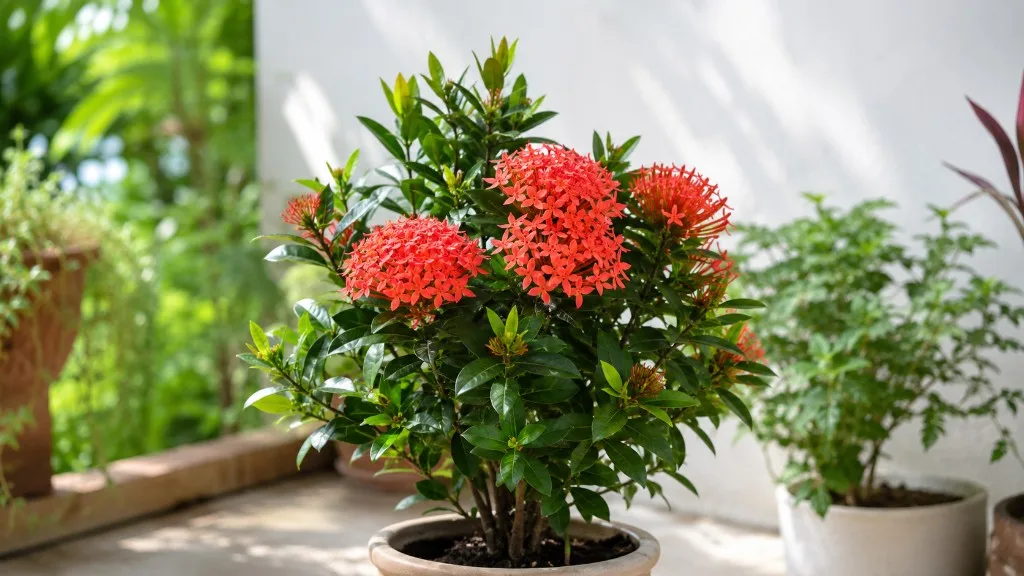
Ixora is a tropical evergreen shrub valued for rounded clusters of small red, orange, pink, yellow, or white flowers. It can bloom for long stretches in a warm, bright garden, but it is less forgiving when the roots sit in alkaline soil, the plant is repeatedly clipped, or winter temperatures drop too low. The best results come from treating ixora as a warm-climate shrub first and a houseplant only when you can provide the light and warmth it needs.
For common landscape ixora, aim for strong light, acidic soil that drains freely, and even moisture while roots establish. Before changing fertilizer or pruning, check what the plant is telling you: new leaves turning pale, old leaves developing spots, a saturated root zone, and clipped stem tips point to different problems.
Is Ixora a Good Fit for Your Climate and Space?
Ixora belongs to the coffee family, Rubiaceae, and the commonly grown Ixora coccinea is a broadleaf evergreen shrub from tropical Asia. It can work as a specimen plant, a low screen, or a flowering hedge where winters are mild. In colder regions, growing ixora in a movable container is usually more practical than planting it in the ground and hoping a cover will carry it through a freeze.
Hardiness descriptions vary because the genus contains many species and cultivars, and even the same shrub can fare differently in a sheltered courtyard than in an exposed yard. The University of Florida lists I. coccinea for USDA zones 10 through 11, while its regional landscape guidance describes zone 9B as roughly the northern edge for ixora in South and Central Florida; frost or a freeze can injure it there. Use the local record of freezes and your site’s exposure, not a zone number alone, to make the decision. (UF/IFAS plant profile; UF/IFAS Gardening Solutions)
Indoors, ixora needs a bright, warm spot, and flowering is less dependable than it is outdoors in a tropical or subtropical climate. A sunny window can help a container plant hold its foliage through winter, but a dim room is not a realistic place to expect continuous bloom. If the only available indoor space is cool or shaded, choose another plant rather than relying on daily misting to compensate for poor light.
Choose a cultivar for the space you have
Check the plant label for its mature size before buying. Some ixora can reach roughly 10 to 15 feet tall and 4 to 10 feet wide without pruning, while smaller and dwarf forms suit borders, patios, and pots. A dwarf cultivar is usually a better choice for a compact bed than buying a vigorous shrub and repeatedly shearing it down to fit. (UF/IFAS Gardening Solutions)
Flower color and growth habit also vary. ‘Nora Grant’ is valued for pinkish-red flowers, ‘Maui’ for orange blooms and somewhat greater cold tolerance than many ixoras, and ‘Herrera’s White’ for white flowers. “More cold-tolerant” is relative, not a promise of frost hardiness; move or protect even a Maui ixora when cold threatens. Ask the nursery how large its particular cultivar becomes in your region, since names and size descriptions are not always used consistently.
Give Ixora Sun, Acidic Soil, and Room to Drain
Choose a site that receives at least six hours of direct sun if flowers are the priority. Ixora can grow in partial shade, but it generally produces fewer flower clusters there. In very hot locations, a little shade during the harshest afternoon sun may help a container avoid rapid drying or leaf scorch; keep the overall site bright rather than tucking the shrub into deep shade.
Soil acidity is the detail that often separates a thriving ixora from a shrub that stays pale and underwhelming. UF/IFAS extension guidance places the preferred pH near 5, and practical growing guidance commonly gives a range around 5.0 to 5.5. At higher pH, iron and manganese can be present in the soil yet unavailable to roots, so adding a general-purpose fertilizer may not solve chlorosis. (UF/IFAS Extension Charlotte County; Gardener’s Path)
Ixora wants moisture, not a permanently saturated root zone. Pick a spot where rainwater does not collect and avoid planting directly against concrete walks or foundations. Concrete, mortar, and masonry can push nearby soil toward alkaline conditions over time; rock mulch can also be a poor match around this acid-loving shrub. If the soil is heavy or drains slowly, solve the drainage problem before planting, or grow ixora in a raised bed or pot instead.
Test soil before trying to change its pH
If you suspect alkaline ground, use a reliable soil test before applying sulfur, acidifier, or a micronutrient product. A test gives you a baseline and helps distinguish a pH problem from a nutrient shortage or a wet root zone. In some calcareous soils, pH is continually buffered by the underlying material, so trying to force a permanently low reading can become an expensive cycle. A container with an acidic potting medium may be the simpler choice.
For an in-ground planting, work with the soil conditions recommended by your local extension service. UF/IFAS guidance for difficult Florida fill soils suggests incorporating organic matter and keeping ixora away from alkaline concrete, but the right amendment depends on the soil you actually have. Do not pour acidifier into the planting hole or spread repeated doses based on leaf color alone. The shrub’s symptoms can be similar across pH, drainage, and root problems, so diagnose first.
Plant Ixora in a Bed or a Container
Plant outdoors when the soil is warm and the shrub has time to establish before cold weather. Dig a hole about twice as wide as the root ball and no deeper than the root ball itself. Loosen circling roots gently, set the shrub with its crown at or just above the surrounding grade, then backfill and water thoroughly. Planting too deep can keep the crown wet; burying the trunk base under mulch can cause similar trouble.
Allow enough room for the cultivar’s mature width. Close spacing can make a hedge fill in sooner, but crowded shrubs compete for light and airflow and become harder to prune without sacrificing flowers. If you want a formal, tightly clipped hedge, accept that the dense outline comes at the cost of some blooms. For a more flower-forward planting, leave room for the plant’s natural rounded form.
Set the root ball at the right depth
For a container, choose a pot with several drainage holes that is only modestly wider than the root ball. A vessel about 2 to 4 inches wider and deeper gives roots room without leaving a large volume of wet mix around a small plant. Fill it with an acidic, moisture-retentive potting mix that still drains freely; do not use garden soil in a pot, and do not block drainage holes with a gravel layer. (Gardener’s Path container guidance)
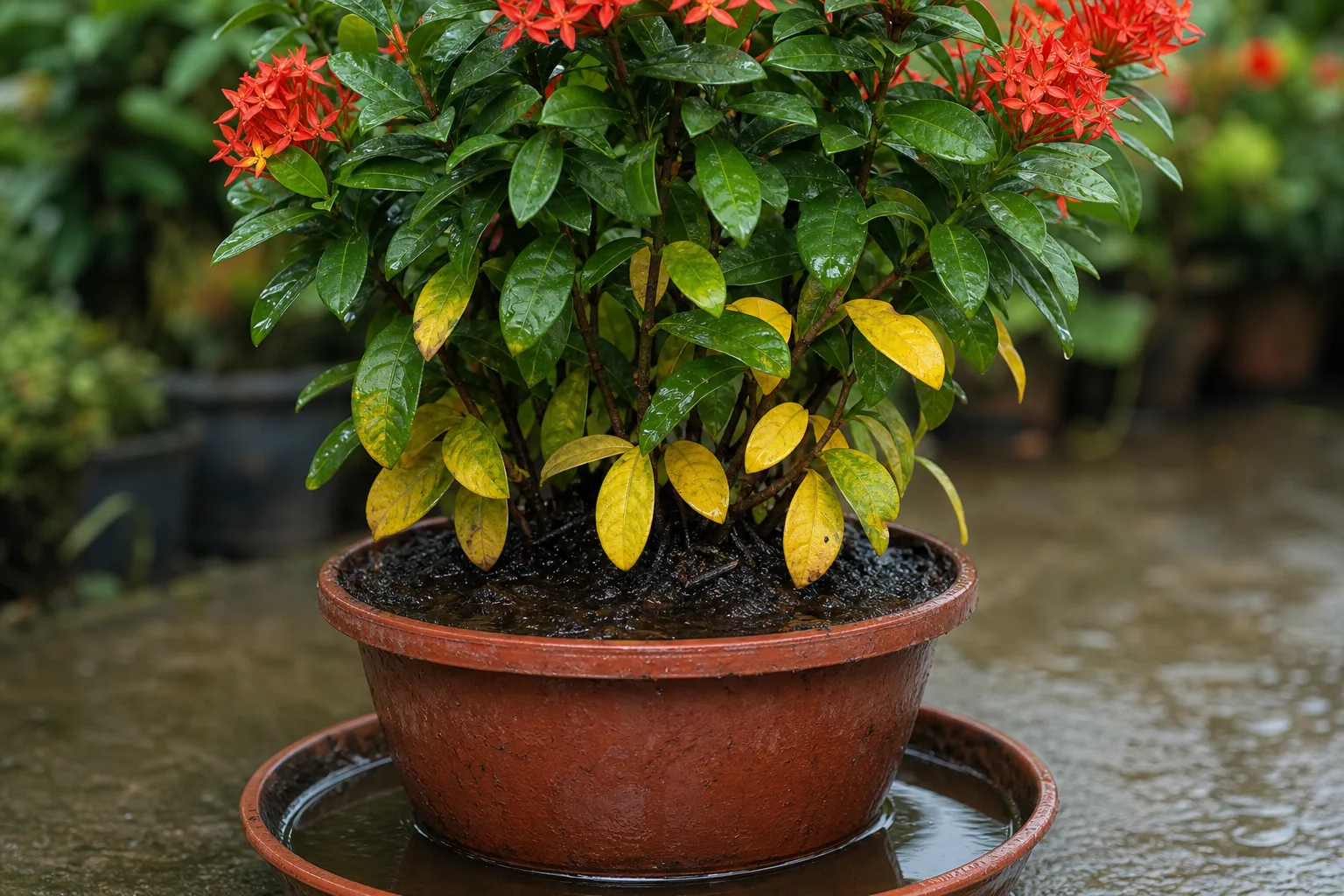
Set the shrub at the same depth it grew in its nursery pot and water until excess flows from the holes. Empty the saucer after drainage rather than letting the pot stand in runoff. Repot only when roots fill the container or water runs through too quickly to moisten the mix evenly; a dramatic jump to a much larger pot can leave unused soil wet for too long. Dwarf ixora is often easier to manage in a pot, but any container-grown shrub needs bright outdoor light in warm months and a plan for winter shelter.
Water by Soil Moisture, Not by a Fixed Schedule
Water new plantings deeply, then keep the root zone evenly moist while the shrub establishes. In a hot, dry spell, that may mean more frequent watering than during a rainy week. Once ixora is established, it can tolerate some dry weather, but repeated wilting can reduce growth and flowering. Check the soil at the root zone before turning on irrigation; the surface can look dry while deeper soil is still wet.
For a potted ixora, press a finger into the upper couple of inches of mix. Water thoroughly when that layer has begun to dry, and let excess drain away. The pot, plant size, wind, sun, and weather all affect how quickly it dries, so a fixed “every two days” rule is more likely to overwater in a cool room or underwater in a windy patio. Use the weight of the pot and the moisture below the surface as extra cues.
Aim water at the soil rather than repeatedly wetting the foliage. This keeps roots supplied without leaving leaves damp for long periods, which can encourage leaf-spot problems in humid weather. If the shrub wilts while its soil is wet, do not add more water automatically: check drainage, remove standing water, and inspect the root zone. (NParks GardeningSG ixora guidance)
Fertilize Carefully During Active Growth
A healthy ixora in suitable soil does not need to be fed every week. During active growth, use a slow-release fertilizer labeled for ixora or other acid-loving shrubs, and follow its rate and timing. A product formulated for azaleas or gardenias may be suitable if its label covers the use, but fertilizer is not a substitute for the right soil pH or drainage.
Avoid fertilizing a newly planted shrub just to push it into bloom. Give the roots time to settle, keep moisture steady, and wait for new growth before resuming a feeding routine. In cool weather, when growth slows, reduce or stop feeding; nutrients a plant cannot use may build up around container roots. Keep granular fertilizer off the stems, apply it to moist soil, and water as the label directs.
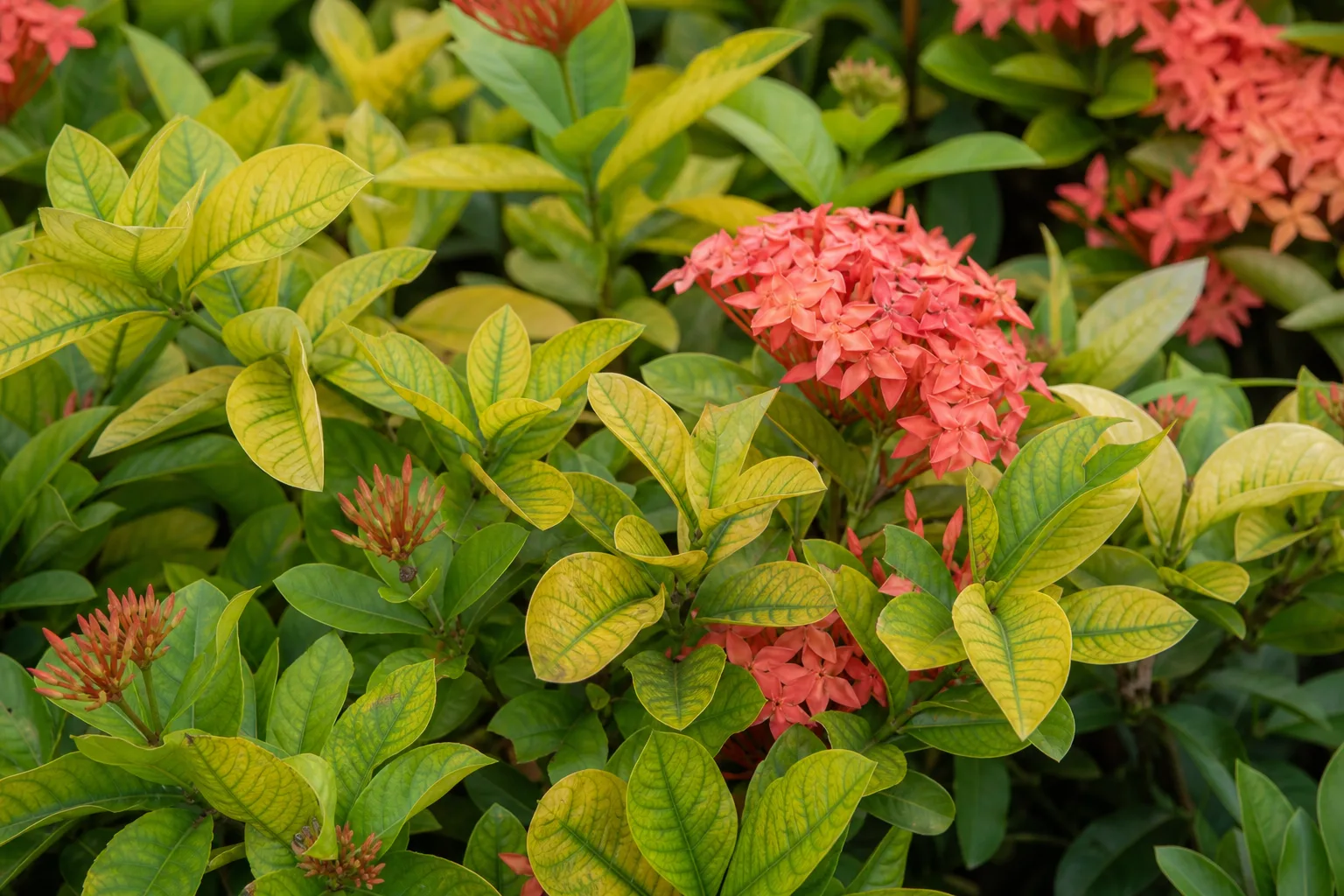
When new leaves turn yellow but their veins remain greener, iron or manganese availability may be the issue. That pattern is common in alkaline soil, especially near masonry. Test the soil and check drainage first. A chelated micronutrient product can help when a deficiency is confirmed, but the improvement may be temporary if the root zone remains too alkaline. UF/IFAS notes that micronutrients can correct chlorosis while the underlying alkaline condition continues to make ixora a higher-maintenance plant. (UF/IFAS ixora profile)
Prune for Shape Without Removing Every Bud
Ixora does not need constant shaping to stay healthy. Its flower clusters form at the ends of shoots, so frequent clipping can remove the very growth that would have bloomed. If flowers matter more than a perfectly flat hedge, leave the shrub’s natural outline in place and remove only dead, damaged, or misplaced branches.
After a flowering flush fades, lightly shorten a few long shoots or pinch spent clusters if you want a tidier, more branched plant. Use clean, sharp pruners and cut just above a leaf node. For a larger size correction, prune selectively before strong spring growth begins and avoid taking off more than about one-third of the plant at once. A heavy late-season cut can delay the next display, especially if it removes fresh tips with developing buds. (UF/IFAS Extension Charlotte County; Gardening Know How)
Repeated hard shearing also creates a practical mismatch: the shrub may become denser on the outside while its interior is shaded and its flower display thins. If the plant is outgrowing its space every year, replace it with a smaller cultivar or move it to a place where its mature dimensions fit. Pruning can manage shape; it cannot turn a large cultivar into a naturally compact one without ongoing trade-offs.
Troubleshoot Ixora That Will Not Bloom
Ixora can flower for long periods in favorable tropical conditions, but no calendar guarantees year-round blooms. Light, temperature, cultivar, soil chemistry, root health, and pruning all affect flowering. Work through those causes in order rather than responding to every quiet month with another dose of fertilizer.
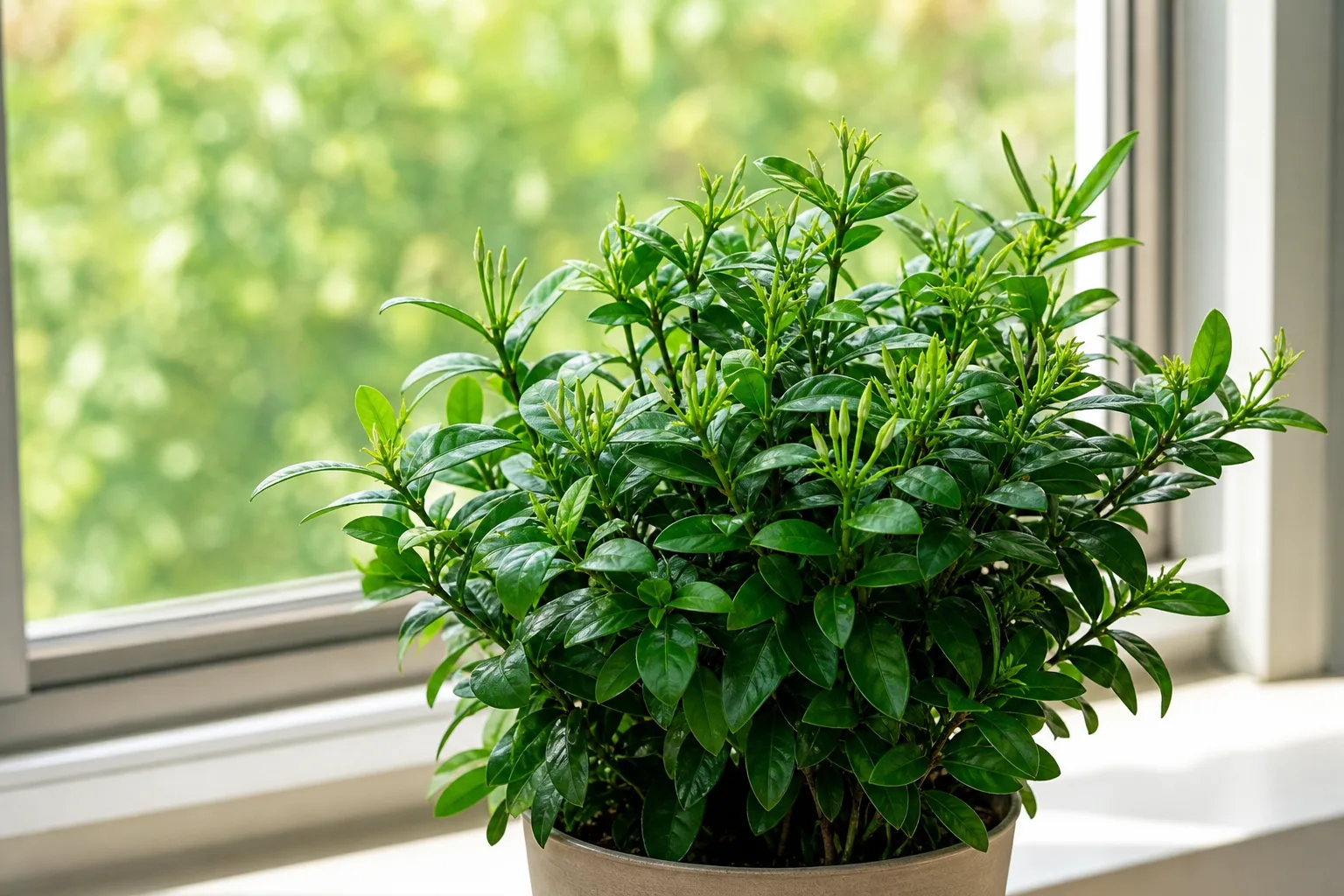
Check light, pruning, soil, roots, then fertilizer
First, count the hours of direct sun. If the shrub receives less than about six hours, move a container to a brighter position or consider whether nearby trees and structures are blocking light. Do not compensate by feeding a plant that is simply too shaded; extra nutrients cannot replace sun.
Next, look at the shoot tips. Have they been clipped repeatedly, or was the shrub sheared after new growth began? Flower buds develop at the ends of stems, so a hedge trimmed every few weeks can stay green while repeatedly losing potential blooms. Let the next flush grow without trimming and wait for the plant’s natural flowering cycle.
Then check soil pH and moisture. Yellow new growth alongside missing blooms suggests the roots may be struggling to take up nutrients, especially in alkaline ground. A pot that stays soggy or a bed that receives runoff can also weaken roots; waterlogged roots are not improved by more fertilizer. Correct the site or container before applying a measured treatment.
Only after those checks should you consider whether nutrition is limiting. Use an acid-loving fertilizer within the label directions during active growth, not an improvised high dose. A recently moved or heavily pruned shrub may need time to rebuild roots and shoot tips before it flowers well again. If light, pH, drainage, and pruning are all suitable but the shrub still fails to bloom, ask a local extension office to review soil-test results and cultivar suitability.
Read Yellow Leaves, Spots, and Wilting Correctly
Ixora symptoms overlap, so use leaf age, pattern, soil condition, and recent care to narrow the cause. One yellow leaf is not enough evidence to diagnose a nutrient deficiency. Check several leaves and compare new growth with older foliage before changing a feeding routine.
| What you see | What to check first | Sensible first response |
|---|---|---|
| New leaves pale or yellow, veins greener | Soil pH, concrete nearby, wet roots | Test soil and improve drainage; use micronutrients only when appropriate |
| Older leaves with reddish-purple spots | Whether spots are spreading or leaves are wet often | Compare with nutrient-test results and possible leaf spot; do not guess at a deficiency |
| Whole plant wilts and the mix is dry | Root-zone moisture and recent heat or wind | Water deeply, then adjust checks to the weather |
| Whole plant wilts while the mix is saturated | Drainage, standing water, root condition | Stop routine watering and restore drainage before feeding |
| Leaves drop after moving or a cold night | Temperature, draft, and abrupt light change | Stabilize warmth and light; avoid extra water unless soil is dry |
Alkaline soil can make iron and manganese unavailable, while reddish-purple spotting on older foliage can point to a different nutrient problem. UF/IFAS lists both patterns for ixora, but a similar spot can also be caused by leaf disease. A soil test and a look at whether lesions spread after wet weather are more reliable than treating every spot as a fertilizer deficiency. (UF/IFAS Gardening Solutions)
Wilting needs the same care with diagnosis. If the root zone is dry, water thoroughly and recheck how quickly the soil dries. If it is wet, improving drainage is more important than adding water; persistent saturation can contribute to root disease. A container that has been sitting in a full saucer should be drained, and a shrub in a poorly drained bed may need to be moved to a better site rather than repeatedly treated from above.
Manage Aphids, Scale, Mealybugs, and Sooty Mold
Inspect tender growth, leaf undersides, and branch joints when leaves look dull, sticky, or distorted. Aphids gather on new shoots, scale can look like small fixed bumps on stems or leaves, and mealybugs may appear as white cottony clusters. Ixora can also be affected by other pests, but the first response is the same: identify the insect and check whether heat stress, drought, poor light, or excess moisture is weakening the shrub.
For a small infestation, prune off the worst-affected tips or rinse pests from the plant with a firm stream of water. Check again after several days because eggs or hidden insects may remain. If a labeled insecticidal soap or horticultural product is needed, follow the product directions for ixora and the target pest, test a small area, and avoid applying it in hot direct sun or when pollinators are visiting flowers. UF/IFAS notes that beneficial predators often help with aphids and scale, with insecticidal soap as a possible next step when needed. (UF/IFAS Gardening Solutions; Gardener’s Path pest overview)
Black, powdery growth on leaves may be sooty mold growing on honeydew left by sap-feeding insects. Washing the surface can make foliage look better, but it does not remove the insects producing the sticky residue. Control the pest, then rinse the leaf surface if needed and improve airflow. Do not use a strong household detergent mixture on foliage; leaf coatings can be damaged by products that are not formulated for plants.
Protect Ixora From Cold and Overwinter It Safely
In a frost-free landscape, ixora can stay outdoors year-round. Where cold snaps occur, a container is easier to protect than an established in-ground shrub. Move a potted plant to a bright, warm location before temperatures approach 50°F, especially if the forecast includes a sudden cold front. This is a conservative move-in cue, not a precise temperature at which every cultivar will fail; frost and freeze exposure can injure ixora. (Gardener’s Path overwintering guidance)
Indoors, place the plant near the brightest available window, away from cold glass, heating vents, and repeated drafts. Reduce watering as light and growth slow, but do not let the root ball dry out completely. Avoid heavy pruning or feeding while the plant is resting in lower light. When spring warmth returns, transition it outdoors gradually over several days so tender leaves are not suddenly exposed to intense sun and wind.
If an in-ground shrub is caught by a brief cold spell, a breathable cover may reduce exposure, but it cannot reliably protect ixora through a hard or prolonged freeze. Wait until the danger of cold has passed before deciding which branches are dead. Scrape a small area of bark: green tissue beneath indicates living wood, while dry brown tissue may be dead. Prune damaged growth back to live tissue after spring growth begins rather than cutting the entire shrub immediately.
Propagate Ixora From Cuttings or Seed
Stem cuttings are the most dependable home method when you want a new plant like the parent. In late spring or early summer, take a 4- to 6-inch healthy, nonflowering shoot. Remove the lower leaves, dip the cut end in rooting hormone if available, and place the stem in a clean pot of lightly moist, acidic, free-draining mix. Keep the cutting warm in bright indirect light and cover it loosely with a clear bag to slow moisture loss, opening the cover regularly for fresh air.
Keep the medium slightly moist, never waterlogged. New leaves can indicate that roots are developing, but resist tugging the stem every day; gentle resistance after several weeks is a better signal that it is ready to pot up. Rooting can be slow or uneven, so take more than one cutting if you need a backup. UF/IFAS lists propagation by cuttings, and Gardener’s Path gives a practical softwood-cutting method for home growers. (UF/IFAS plant profile; Gardener’s Path propagation guide)
Seed is possible if the flowers produce ripe, berry-like fruit, but seedlings may not match the parent cultivar in flower color or habit. Let fruit mature, clean away the pulp, and sow fresh seed in a warm, lightly moist medium. For a named selection whose color and size you want to preserve, use cuttings or buy a plant propagated from that cultivar instead.
Conclusion
Ixora is easiest to enjoy where the climate stays warm, the shrub gets substantial sun, and the root zone remains acidic, moist, and well drained. In colder regions, grow it in a pot that can move indoors; in a small garden, choose a compact cultivar instead of trying to control a large one with constant shearing.
When blooms fade or leaves yellow, check light, pruning, soil pH, drainage, and pests before reaching for fertilizer. Those simple checks address the causes that most often limit ixora, and they help you decide whether your site can support this tropical shrub over the long term.



