Cardboard Palm Care Guide: Grow It Indoors and Out
Cardboard palm care indoors and out: learn the right light, gritty soil, watering rhythm, cold protection, propagation, troubleshooting, and pet safety.
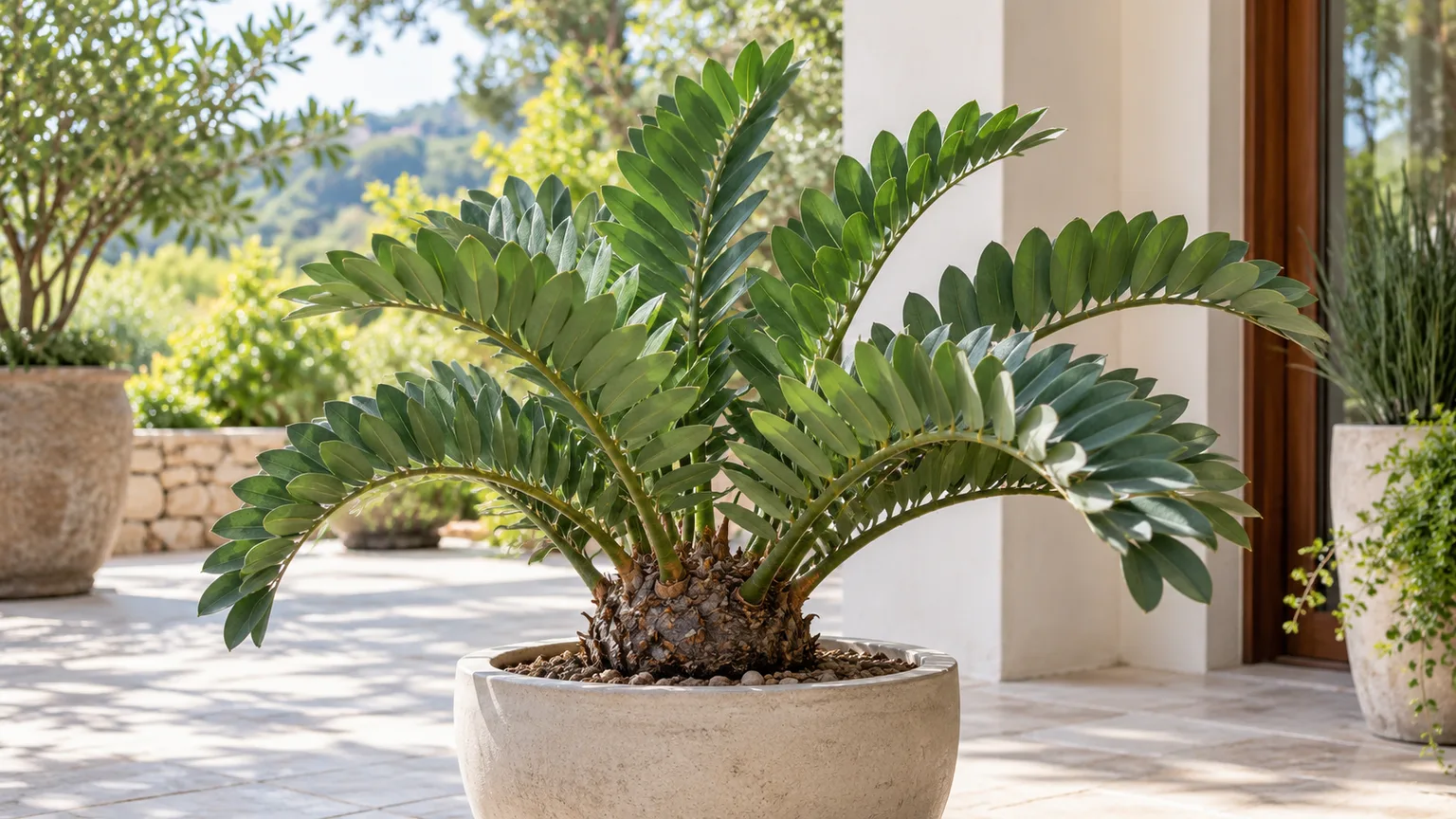
A cardboard palm is a slow-growing, architectural plant with stiff, leathery leaflets arranged along arching fronds. It can live for years in a container indoors, and in frost-free gardens it can become a broad, low accent plant. The two care decisions that matter most are giving it enough bright light and letting excess water drain away from its thick, moisture-storing base.
Despite the common name, this is not a palm tree. It is a cycad, a much older group of cone-bearing plants with a different growth habit from true palms. Once you understand its caudex, slow growth, and sensitivity to waterlogged soil and frost, cardboard palm care becomes less about a rigid schedule and more about choosing the right site and reading the plant.
What a Cardboard Palm Is (and What It Is Not)
The botanical name is Zamia furfuracea. Cardboard palm, cardboard plant, and cardboard cycad refer to the same species; the name describes the stiff, somewhat fuzzy texture of the leaflets. Each frond is made of paired, oval leaflets that emerge in a circular rosette from a short, stout base, rather than from a tall trunk like a typical palm.
A cycad is a gymnosperm, so it does not make true flowers or fruit. Mature plants form cones, with male and female reproductive structures on separate plants; a pollinated female can develop bright red seeds. NC State Extension describes the plant as a slow-growing, Mexico-native cycad and notes that the seeds are toxic. The Missouri Botanical Garden Plant Finder describes the species as endemic to the coastal mountains and sandy, limestone cliffs of Veracruz.
That structure is useful to understand before you buy or move one. The broad, shallow-looking crown can eventually spread several feet even when the plant stays relatively low: the Missouri Botanical Garden lists a mature height of about 3 to 4 feet and spread of 4 to 7 feet. Growth is slow, so a young nursery plant will not reach that size quickly, but it still needs enough room for its fronds and a stable container that will not tip.
There is also a sourcing reason to buy nursery-propagated plants. A 2022 population study summarized by the USDA Agricultural Research Service describes fragmented wild populations and pressure from illegal seedling and seed collection; avoid collecting plants or seeds in the wild and ask sellers about propagation when you can.
Decide Whether to Grow It Indoors or Outdoors
Cardboard palm can be grown as a houseplant in any climate if you have a bright location, a container with drainage, and room for a spreading crown. Outdoors, use it as a warm-climate landscape or patio plant only where winter conditions are mild; botanical sources place it in USDA zones 9 through 11, but a zone number is not a promise that leaves will escape damage in every cold snap.
The indoor choice is more flexible because a potted specimen can be moved, but a dim corner is not a good compromise. Outdoors, it can handle full sun to partial shade once established, and it tolerates dry conditions better than a plant that needs constantly moist soil. The RHS plant profile lists Mexico as its range, while the Missouri Botanical Garden recommends sandy, coarse, well-drained soil and warns that hard frost is not tolerated.
A quick placement test
Choose a spot where the plant gets strong natural light for much of the day and where water cannot pool around the base. If you garden in a colder zone, keep it in a movable pot and plan its transition indoors before frost threatens, rather than trying to wrap or rescue a large, established in-ground specimen after a freeze warning.
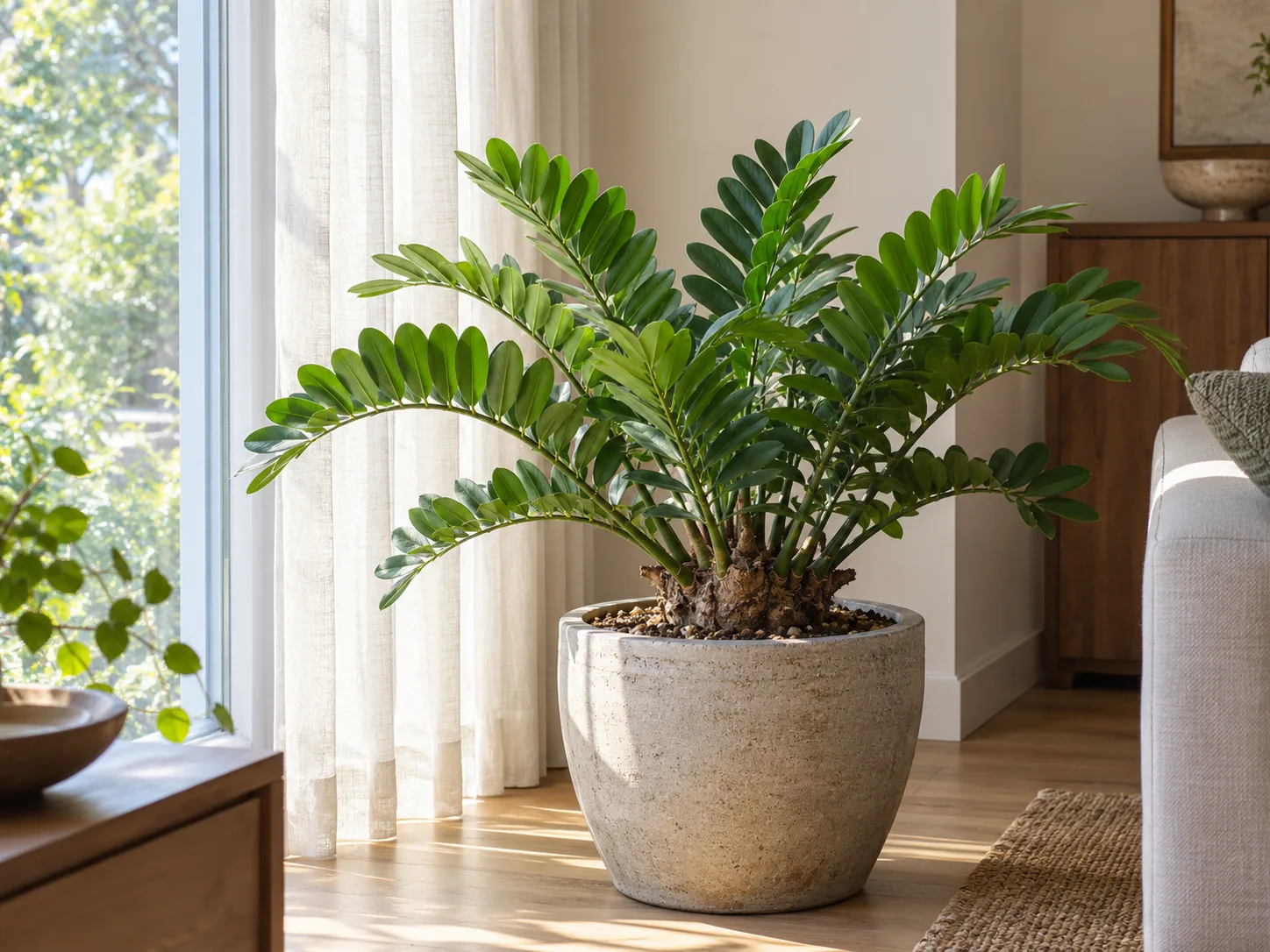
A container plant also needs floor space: the leaves may extend beyond a narrow tabletop and can crowd a passage as the rosette expands. When a sunny window is your only good spot, allow room for the leaves to spread and rotate the pot occasionally so the crown does not lean toward the light.
Give It Bright Light and Acclimate It Gradually
Indoors, place the plant near your brightest window. An east- or west-facing window often gives useful direct sun without the long, intense exposure of a hot south- or west-facing pane; in a dim home, a bright grow light can help, but the plant should still be close enough to receive strong light rather than ambient room glow. NC State lists cardboard palm for full sun or partial shade, and the Missouri Botanical Garden gives the same broad range for outdoor culture.
If you are moving it from a greenhouse or indoor room to a sunny patio, do not put it straight into all-day direct sun. Start it in bright shade for several days, then expose it to gentle morning sun and gradually increase the time over a week or two. This transition lets the older foliage adjust; abrupt exposure can bleach or scorch the sun-facing side even though an established plant can handle a sunny garden position.
Rotate an indoor pot a quarter-turn every week or two if fronds consistently lean toward one direction. Do not expect the plant to grow quickly in response: cycads often push foliage in flushes, then remain unchanged for a long stretch. A stationary plant with firm green fronds and no new flush is not necessarily failing.
Use Fast-Draining Soil and a Stable Container
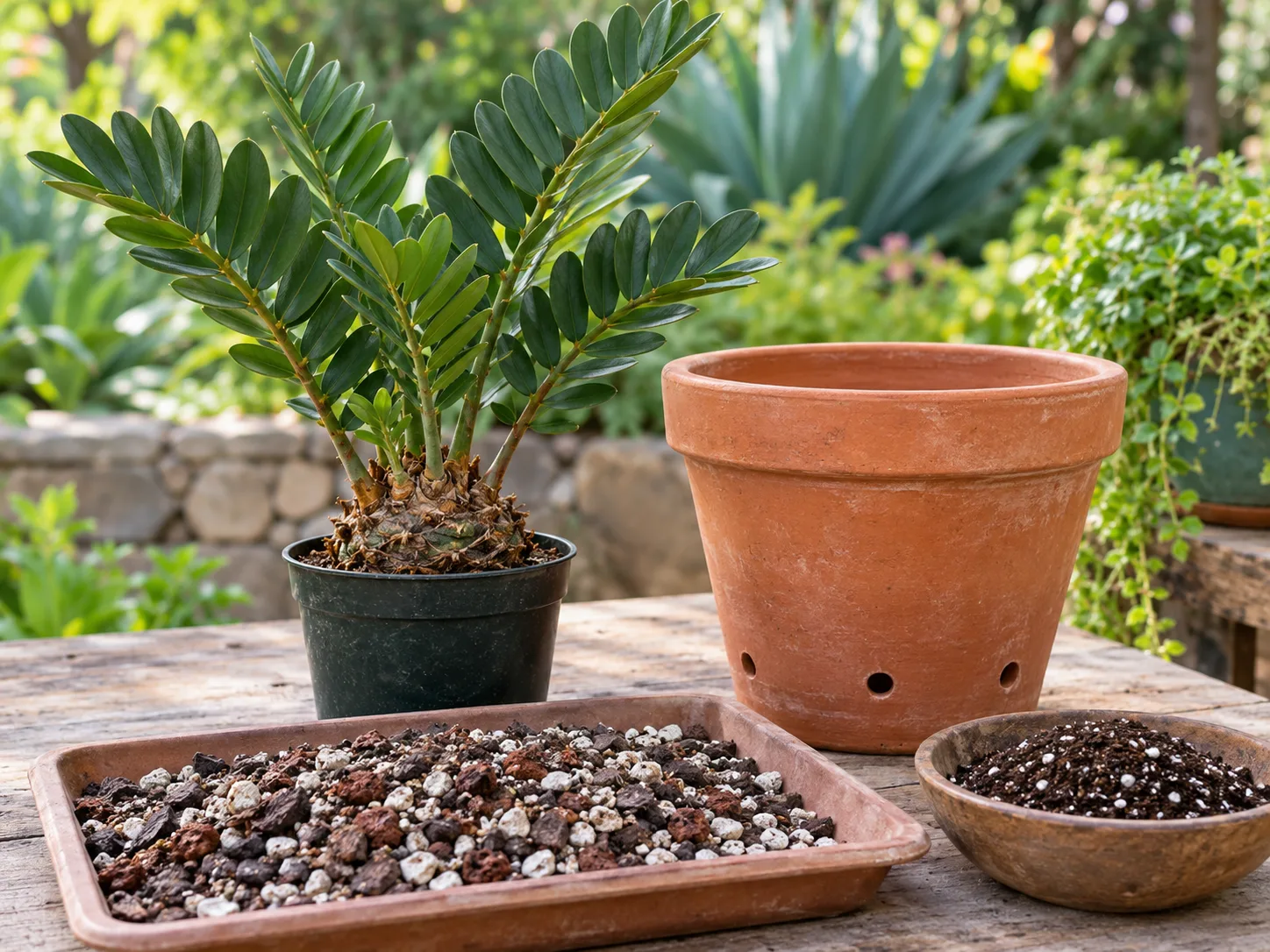
The soil should hold the plant upright while allowing water to move through quickly. A cactus or palm potting mix can be a useful starting point, but a dense mix that stays wet for days is risky; amend it with coarse mineral material such as pumice or perlite if it needs more air space, or use a well-draining sandy mix. NC State Extension recommends sandy loam with good drainage, and the Missouri Botanical Garden specifies coarse, sandy soil.
Choose a pot with several open drainage holes. A decorative cachepot can hide the nursery pot, but remove the inner pot to water, allow it to drain fully, and empty standing water instead of leaving the base submerged. Gravel layered at the bottom does not fix a poorly draining mix; the entire root zone needs a route for excess water to leave.
Keep the caudex at its original depth
The plant’s swollen stem, or caudex, may sit partly below the soil line in a nursery pot. When planting or repotting, keep it at about the same depth rather than burying more of the crown to make the plant look secure; deep planting leaves the base in damp soil and can increase the chance of rot.
Do not use a dramatically oversized pot. A large volume of unused mix dries slowly around a small root system, which makes it harder to judge when to water. Select a sturdy pot only modestly wider than the root ball, with a little room for growth and enough weight to support the fronds.
Water by Soil Condition, Not by the Calendar
Water thoroughly when the mix has dried partway through the root zone, then let all excess drain. For a small indoor plant, check the upper couple of inches first; for a larger pot, use a wooden skewer or finger to assess deeper mix, because the surface can feel dry while the middle remains damp. The NC State Extension plant profile advises letting soil dry between waterings and using a pot with drainage holes.
A fixed weekly schedule is unreliable because the same plant can use water at very different rates in a hot patio, a cool room, or a shaded corner. Use pot weight as a second clue: lift it after watering and again as it dries, then water when it feels distinctly lighter and the root zone is no longer wet. When you do water, soak the whole root ball rather than adding frequent small sips that wet only the top layer.
The caudex stores moisture, and cardboard palm is drought tolerant once established, so a short dry interval is generally safer than leaving the roots saturated. Still, do not deliberately withhold water until the base shrivels; severe dehydration can stress the plant and slow the next flush. The goal is a cycle of thorough watering followed by partial drying, not permanent dryness or constantly damp soil.
Change the watering rhythm with the season
During warm, bright weather, the plant may dry faster and need water more often. In winter, growth and water use usually slow, especially indoors away from a bright window, so check less frequently and water only when the mix has dried further; the Missouri Botanical Garden notes a relatively dry winter dormancy for outdoor-grown plants.
After watering, empty saucers and cachepots. If the pot is still heavy several days later, do not add more water just because the top looks pale; improve light or airflow, check drainage holes, and wait for the deeper mix to dry. In a garden bed, the same principle applies: watering frequency depends on rainfall and soil, not the number of days since the last watering.
Keep It Warm and Protect It From Frost
This is a warm-climate cycad, not a cold-hardy landscape plant. The zone 9–11 ratings from plant references are useful for broad site selection, but they do not identify a guaranteed minimum temperature for every specimen, exposure, soil, or container. Missouri Botanical Garden specifically cautions that hard frosts are not tolerated, and NC State recommends bringing container-grown plants indoors for winter in North Carolina.
If you grow it outdoors in a borderline climate, keep it in a pot you can move before a freeze. Move it to a bright protected space before cold arrives, not after leaves have been damaged; an indoor location should stay warm and away from cold window glass, drafty doors, and heating vents that blast dry air. If you leave one in the ground where winter freezes are routine, it is a poor match for the site.
Average indoor humidity is generally workable. You do not need to mist it daily or place it over a pebble tray, and wetting the crown repeatedly does not compensate for poor drainage. If the indoor air is very dry, focus first on adequate light and a steady watering rhythm; do not increase watering just to address dry air.
Fertilize Lightly While It Is Growing
A cardboard palm does not need frequent feeding to make fast growth; it is naturally slow. During active growth in spring and summer, apply a balanced fertilizer at the label rate or slightly weaker if the plant is in a container, and water the soil beforehand if the mix is very dry. Do not feed a cold, stressed, newly repotted, or dormant plant.
Avoid doubling up on a palm fertilizer and a general houseplant fertilizer. Excess salts can accumulate in a container and damage roots, while extra fertilizer will not make the plant push new fronds out of season. If growth is slow but the foliage remains firm and green, check light, temperature, and the plant’s normal growth cycle before assuming it needs more nutrients.
Repot Only When the Root Ball Needs More Room
Repot when roots fill the container, circle densely, or emerge from drainage holes, or when the potting mix has broken down and no longer drains well. A young plant may need a larger pot after a few years, but do not repot annually just because the surface looks crowded; disturbing the root ball can set back a slow-growing cycad.
Move it one pot size up, keep the caudex at the same depth, and use fresh fast-draining mix. Handle the root ball gently and avoid cutting large healthy roots to force it into a smaller pot. After repotting, water once to settle the mix, let excess drain, and wait to fertilize until the plant resumes active growth.
For a large specimen, have another person steady the container and choose a pot that can be moved safely before filling it. If the plant has several crowns or offsets, decide before repotting whether you actually need to divide it; splitting it adds stress and is unnecessary for routine care.
Prune Damaged Fronds and Keep the Crown Clean
Routine shaping is not needed. Remove a frond only when it is fully brown, dead, or clearly diseased, cutting it cleanly near the base with a sharp, sanitized tool; do not strip away partly green leaves simply because they lean or look older. Those leaves still contribute energy while the plant is growing slowly.
One outer frond yellowing as newer foliage remains firm can be ordinary aging. If several fronds change color at once, inspect the root zone and caudex before pruning: cutting leaves does not solve waterlogged soil, cold injury, or an active pest problem. Dispose of fallen seeds and pruned material safely, especially where pets or children may reach it.
Propagate From Rooted Offsets or Fresh Seed
Home propagation is possible but slow. It is not a matter of rooting a cut leaf or stem; a detached leaflet has no growing point and will not become a new plant. Established plants sometimes produce offsets around the base, while seed requires a mature female plant and pollen from a male plant because cardboard palms are dioecious.
The easier method is to grow a rooted offset when one is available. Seed is an option for patient growers who can obtain fresh, correctly identified seed, but viability can decline, germination is unpredictable, and seedlings take time to develop the familiar adult form. Gardening Know How discusses the separate male and female cones and the challenges of seed propagation.
Separate offsets only when they can survive on their own
Wait until an offset has its own roots or can be removed with a substantial piece of attached root tissue. At repotting time, ease the plant from its pot, brush away enough mix to see where the offset joins the parent, then use a clean sharp knife only if it will separate without tearing the caudex. If it is firmly fused or has no roots, leave it attached; forcing a division can damage both plants.
Pot a viable offset into a small container with fast-draining mix, keeping the growing point at the original soil level. Water enough to settle the mix, then let it begin to dry before watering again. Keep the new plant warm in bright indirect light while it establishes, and do not judge success by immediate leaf production: root growth may come first, and the plant may sit without visible change for a while.
Seed-grown plants require a pollinated female cone and ripe seed. Use fresh seed from a lawful, nursery-grown source, handle it as toxic, and follow a reputable cycad propagation protocol; avoid collecting from wild plants. Seedlings are a long-term project, not a quick way to fill a patio bed.
Prevent Rot and Check for Common Pests
Rot is the main preventable problem because the plant’s thick base can disguise an overly wet root zone. If the soil stays wet, the pot lacks drainage, or the caudex is planted too deeply, roots and the crown can decay; once the central growing point is soft or rotten, recovery may be difficult. Gardening Know How also flags rot as a major risk and identifies spider mites among possible pests, while the Missouri Botanical Garden reports few major pest or disease problems in typical landscape culture.
Inspect leaf undersides and the crown when you water, especially after bringing the plant indoors or moving it outside. Fine webbing and stippled leaflets can point to spider mites; small fixed bumps on leaves or stems may be scale. Isolate an affected container, rinse or wipe visible pests away, and recheck weekly; if you use a pesticide or horticultural product, choose one labeled for the plant and pest, and follow its directions exactly.
Do not spray a plant in hot direct sun or apply an untested home remedy to the stiff leaflets. First verify that the problem is a pest rather than dried leaf tissue or mineral residue. Better airflow, clean foliage, and occasional inspection are more useful than routine preventive spraying.
Diagnose Yellow, Brown, or Drooping Leaves
Start by noting which leaves are affected and checking the soil before making a change. One older outer frond turning yellow while the rest of the crown remains firm is different from several fronds yellowing at once, and a dry pot calls for a different response from a heavy pot with wet mix.
- Several yellowing fronds and wet soil: stop watering, empty the saucer, confirm the drainage holes are clear, and let the root zone dry. If the caudex or crown feels soft, inspect promptly for rot rather than adding fertilizer.
- Dry mix and limp or dull foliage: water the root ball slowly and thoroughly, then drain it. Resume checking the mix instead of keeping it constantly wet to prevent a repeat.
- Bleached or papery patches on one side: think sudden sun exposure or cold damage. Move the plant to bright filtered light while it recovers and acclimate it gradually if you return it to full sun.
- Slow or no new leaves: check light, season, and temperature first. A healthy cardboard palm may go a long time between flushes; lack of weekly growth is not a reason to repot or feed it.
- Speckling, webbing, or visible bumps: inspect for mites or scale and isolate the plant while you treat the infestation.
Brown tips alone do not identify one cause. They may follow drought, abrupt exposure, or root stress, so compare the symptom with recent changes in watering, placement, and temperature before trimming. Remove only tissue that is fully dead; browned sections do not turn green again, but leaving partly green fronds intact avoids needless loss of foliage.
Keep It Away From Pets and Children
Cardboard palm is not a pet-safe plant. The ASPCA lists cardboard palm as toxic to dogs, cats, and horses, and NC State Extension notes toxic seeds and poison characteristics. The risks are serious enough that a pot should be placed where animals and young children cannot chew the leaves, disturb the crown, or reach fallen seeds.
The ASPCA identifies cycasin and related toxic principles and describes potentially severe signs of poisoning. If a pet chews any part of the plant or may have swallowed a seed, contact a veterinarian or animal poison-control service promptly rather than waiting for symptoms or trying a home remedy. In a household where the plant cannot be kept out of reach, choose a different ornamental.
Conclusion
Cardboard palm thrives when its conditions match its actual biology: bright light, warm temperatures, a fast-draining root zone, and patient care through long pauses between growth flushes. Treat it as a cycad with a moisture-storing caudex, not as a thirsty tropical palm, and you will avoid the most common mistake of keeping its roots constantly wet.
Indoors, give it your brightest practical window and a pot that drains freely; outdoors, grow it only in a warm, frost-protected setting and acclimate it before stronger sun. Repot sparingly, divide only established rooted offsets, and keep the plant away from pets and children because its seeds are toxic. Those choices matter more than a rigid watering calendar or repeated doses of fertilizer.



