How to Grow Hebe Shrubs: Planting, Pruning & Care Guide
Hebe shrubs thrive in the right site. Choose a suitable cultivar, prevent root rot, time pruning after flowers, and learn container, winter, and cutting care.
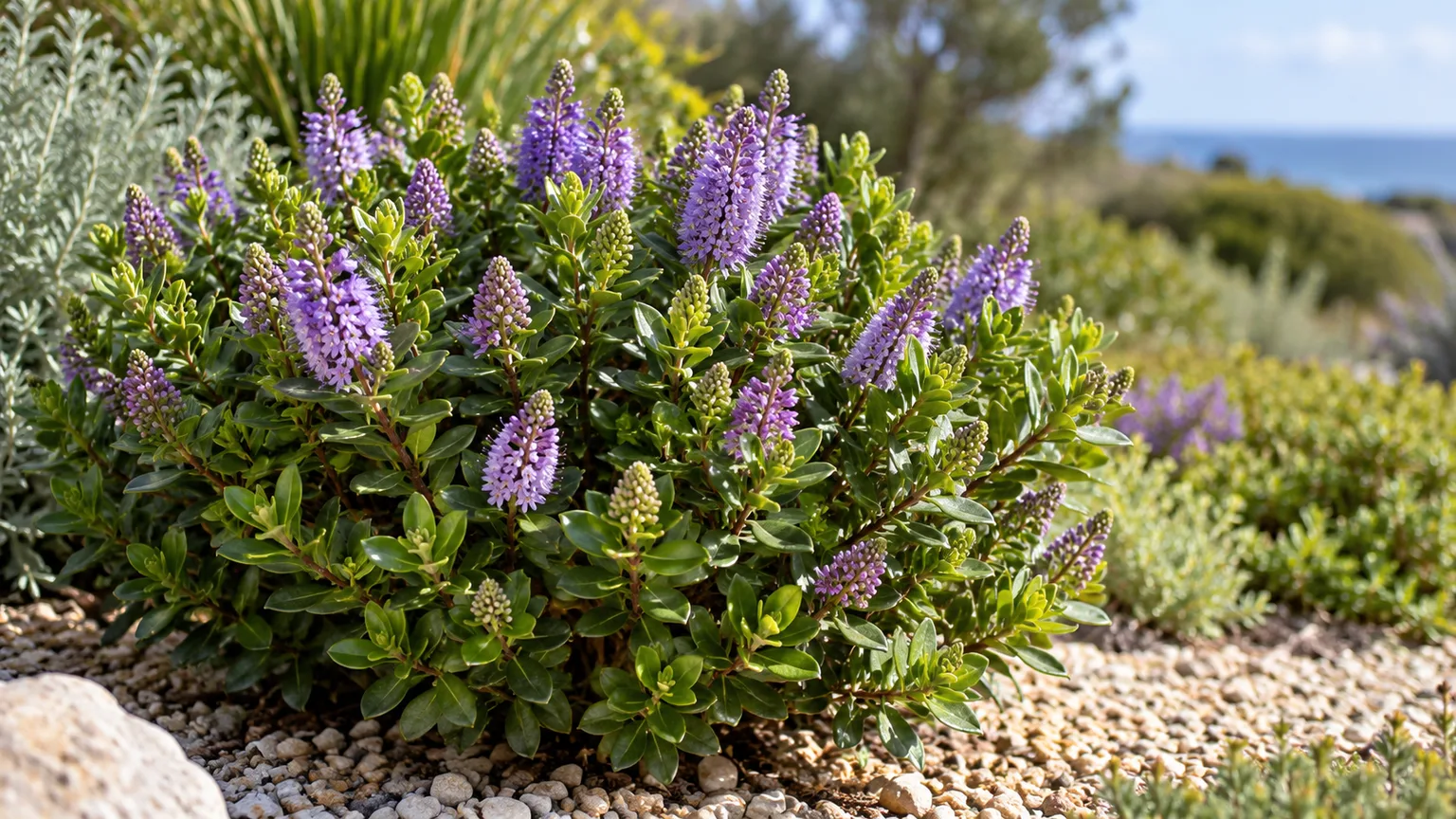
Hebe shrubs earn their place in a garden with evergreen foliage and summer flower spikes that draw bees and other pollinators. They range from low, spreading plants to larger shrubs, and their leaves may be green, silvery, purple-tinged, or variegated. That variety is also why a care rule that works for one Hebe can disappoint with another.
The most reliable starting point is to choose a cultivar suited to your climate and garden space, then give it sun and soil that drains freely. Water new plants while their roots establish, avoid keeping mature plants wet, and prune only while you can see healthy leafy growth. The genus is still commonly sold as Hebe, although the Royal Horticultural Society now groups it under Veronica; nursery labels may use either name (RHS Hebe growing guide).
Start by Matching the Hebe to Your Garden
A Hebe is a woody evergreen shrub, not a single standardized plant. More than a broad “sun or part shade” description matters: the species or cultivar determines the eventual size, flower timing, foliage, and tolerance for winter cold and summer heat. Before choosing a planting spot, identify the plant on its label and look up that specific name. If a label gives only “Hebe,” ask the nursery for the cultivar or select another plant with clearer growing information.
Read the cultivar label before you trust a zone number
There is no dependable hardiness zone for every Hebe. Some selections tolerate colder winters than others, while many prefer cool summers and mild winters. Oregon State University Extension’s Pacific Northwest guide says large-leaved types are more cold-sensitive and may be injured below 25°F, while small-leaved types tend to be hardier; treat that as a useful tendency for cultivar research, not a guarantee for every garden (OSU Extension’s Hebe guide). UC IPM notes that Hebes tend not to live as long where summers are dry and hot or winters bring frost; it also recommends partial shade in warmer areas (UC IPM’s Hebe guidance). Treat a zone rating as a starting point, not a promise: exposure to wind, winter wet, summer heat, drainage, and whether roots are in a pot can change the outcome.
Ask three questions before buying: What is the named cultivar’s mature size? What is its cold tolerance in your area? Does it need a sheltered position? If the seller cannot answer the second question, plant the shrub in a container you can move or choose a more proven local selection. That is more useful than assuming all plants sold as Hebe are hardy to the same USDA zone.
Choose by mature size, foliage, and garden role
Use the plant’s mature dimensions to decide whether it belongs at a border edge, in a container, or farther back in a bed. A compact mound can edge a path without repeated shearing; a spreading type needs room to reach its full width; a larger shrub works as a soft evergreen screen only if it will fit the site years from now. The Oregon State University Landscape Plants record for Hebe pinguifolia ‘Pagei,’ for example, describes a plant under a foot tall but with a spread of about five feet. Its silver-blue foliage and low habit make it a very different choice from an upright, larger-leaved cultivar (Oregon State University’s ‘Pagei’ record).
Foliage color and flowers are useful selection criteria, but check winter ratings carefully for variegated or unusually colorful forms. Hebes can be grown for leaf texture even when they are not flowering, and a sunny position usually brings better bloom than deep shade. If you want a pollinator plant, choose a flower color and size that suit the bed, then leave enough space around it for light and airflow. Resist buying a variety for its label photo alone; the mature shrub can be much wider or less cold tolerant than that image suggests.
Give Hebe Sun, Shelter, and Fast Drainage
Most Hebes flower best in full sun, but a location with light afternoon shade can be kinder in hot-summer climates. The useful distinction is between shade that protects a shrub from baking heat and shade that leaves it chronically dim. A plant stretching toward light, producing sparse foliage, or flowering poorly may be too shaded; a shrub with scorched leaves or midday wilt in hot weather may need protection from the strongest afternoon sun. Move a container to test the change before transplanting an established shrub.
Prioritize drainage over soil richness. Hebes can grow in moderately fertile soil across a range of soil types, but standing water deprives roots of air and encourages rot. Avoid the lowest wet part of a yard and do not plant into compacted clay simply because the surface looks dry. If water lingers after rain, choose a raised bed or a container instead of trying to make a poorly drained spot work. In a border, mix organic matter into the wider planting area only when it improves structure; do not create a small, rich “bathtub” around the root ball that holds water.
A sheltered position helps reduce wind exposure and winter stress, particularly for tender cultivars and young plants. In coastal gardens, many Hebes tolerate exposed conditions well, but that does not mean every variety is suited to a freezing, wet site. The RHS recommends a sunny, freely draining position and warns that cold, damp conditions can shorten a Hebe’s life (RHS Hebe growing guide).
Plant During Mild Weather and Keep It at the Same Depth
Plant in spring after the soil begins warming, or in early fall where the shrub will have time to root before the ground freezes. Avoid planting into cold, saturated winter soil or during a hot spell that will make a newly disturbed root ball dry rapidly. Mild weather reduces the stress of transplanting and gives you time to keep moisture even during establishment. In a very cold climate, spring is usually the safer choice; in a mild climate, early fall can also work (Epic Gardening’s Hebe guide; RHS Hebe growing guide).
Before digging, water the nursery pot so the root ball holds together. Make the planting hole wider than the root ball but no deeper than its height, loosen circling roots gently, and set the shrub so the top of the root ball sits level with the surrounding soil. Backfill with the soil removed from the hole, firm lightly, and water thoroughly to settle it. Do not bury the stems or pile mulch against the base. If you are planting a row, use the cultivar’s mature width as a spacing guide rather than packing plants together for instant coverage.
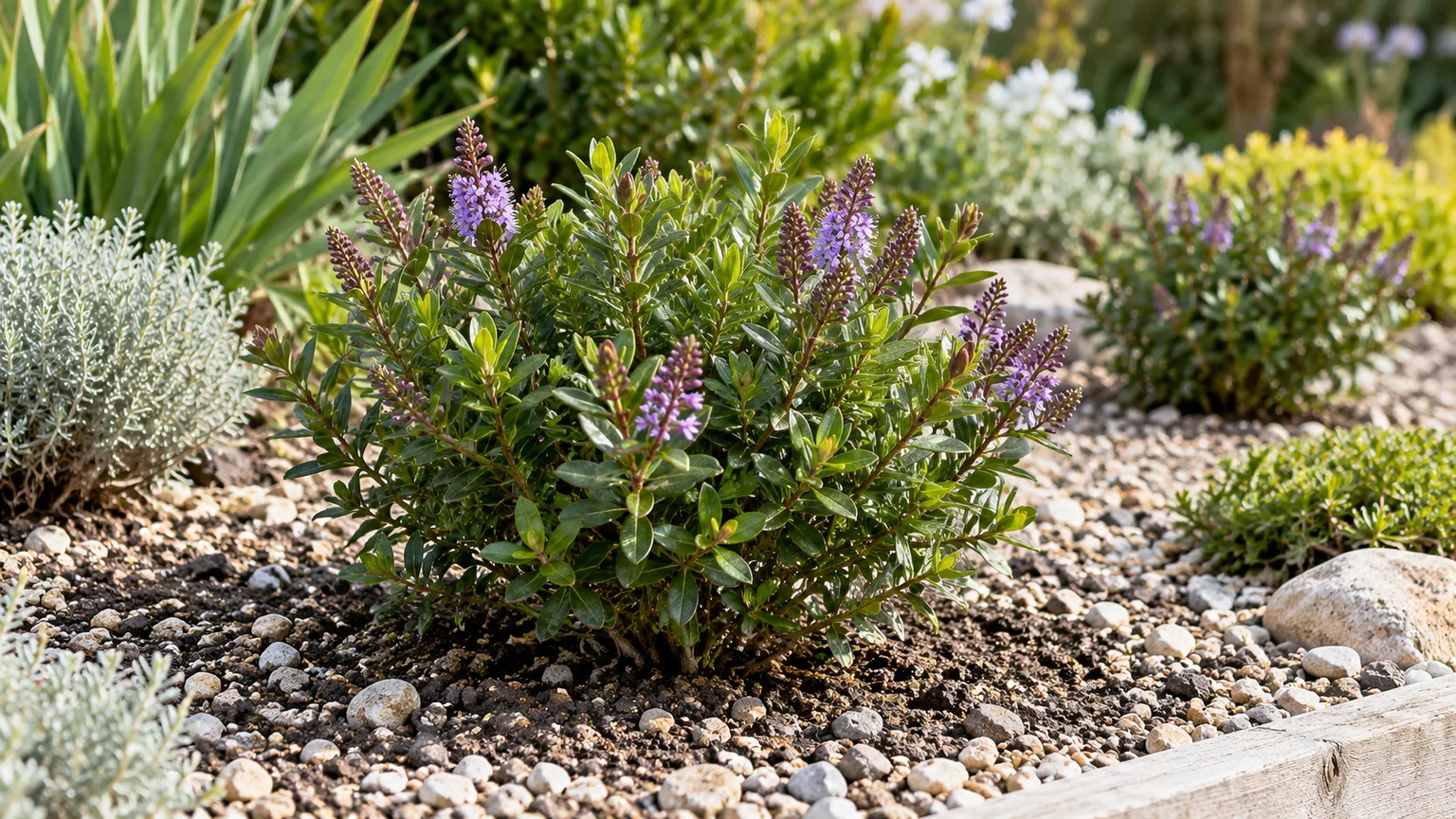
Keep the soil consistently but not constantly moist during the first growing season, checking it after rain and during warm, windy stretches. A newly planted shrub can wilt while its roots are still limited, but watering more is not always the fix; check whether the root zone is actually dry. A thin mulch layer helps reduce swings in moisture, as long as it remains clear of the stems and the soil surface still drains freely.
Water to Root-Zone Conditions
Watering depends on how long the shrub has been in place, recent weather, soil texture, and exposure. Newly planted Hebes need regular checks through their first growing season because their roots have not yet explored the surrounding soil. Water slowly at the base when the root zone is beginning to dry, then let excess water drain away. Short, frequent sprinkles wet the surface without encouraging deeper roots, while repeated watering of already damp soil can cause the very decline gardeners mistake for drought.
Once established, an in-ground Hebe usually needs supplemental water during prolonged dry spells rather than an automatic weekly schedule. Check beneath the mulch and near the edge of the original root ball; if the soil still feels damp, wait. If it is dry several inches down, water thoroughly and reassess after the next few days. Hot, windy weather and fast-draining sandy soil shorten the interval; cool weather and heavy soil lengthen it. The RHS says established plants may manage with weekly watering but need more during dry spells, while Epic Gardening advises checking soil moisture before watering (RHS Hebe growing guide; Epic Gardening’s Hebe guide).
A wilted plant in dry soil likely needs water; a wilted plant sitting in cold, wet soil needs better drainage and an inspection for damaged roots. Those symptoms overlap, so diagnose moisture first rather than pouring on water automatically. If the shrub is in a pot, lift it or check through the drainage holes: a saturated, heavy container points to a drainage problem, while a very light pot with dry mix points to water shortage.
Grow Container Hebe with a Free-Draining Mix
Compact Hebes can grow well in pots, but the root zone needs room and reliable drainage. Choose a container with several open drainage holes and enough volume to hold the shrub’s mature roots; a pot around 12 to 16 inches wide is a practical starting size for many compact nursery plants, but the cultivar and root ball should guide the final choice. Do not put gravel in the bottom to “improve” drainage: it reduces usable root space and does not fix a blocked hole or dense mix.
Use a quality potting mix that drains freely, with added coarse material if the mix stays wet too long. Set the plant at the same depth it grew in its nursery pot, water until excess drains, and empty any saucer. Container Hebes dry faster in sun and wind than plants in the ground, so check the mix more often in summer; they still should not sit in water. The RHS recommends a large pot with drainage holes and a free-draining compost for Hebes, and Gardening Know How also emphasizes pot size and drainage when growing them in containers (RHS Hebe growing guide; Gardening Know How’s Hebe guide).
Pots expose roots to colder air than garden soil does. Move the container beside a sheltered wall before severe winter weather, raise it slightly so the holes remain open, and keep it out of prolonged winter rain. In places with hard freezes, a tender Hebe may be safer in an unheated greenhouse or another cool, bright, frost-free location than in a warm living room. Repot when roots fill the container or water runs straight through the root ball, moving up one pot size rather than shifting a small plant into a huge volume of damp compost.
Feed Sparingly
A Hebe planted in ordinary garden soil usually needs little or no fertilizer. If it is producing normal foliage and flowering, feeding is unlikely to improve its health and can push soft growth that is more vulnerable to cold or drought. Start with the growing conditions: poor light, waterlogged roots, a too-small pot, or an unsuitable cultivar are more likely explanations for a struggling shrub than a lack of fertilizer.
If a container plant has been in the same compost for a long time, a balanced slow-release fertilizer applied in spring can replace nutrients lost through frequent watering. Follow the product label and avoid repeated applications through the season. The RHS recommends no routine feed for border plants, with an optional spring feed, and notes that container compost can run short of nutrients; Epic Gardening similarly treats fertilizer as optional for ground-grown Hebes and useful for pots (RHS Hebe growing guide; Epic Gardening’s Hebe guide).
Prune After Flowering, While Growth Is Still Leafy
Most Hebes need only light shaping. If the shrub has finished flowering and looks untidy, shorten flowered stems just above a pair of healthy leaves or a leafy side shoot. That keeps the plant compact without leaving blunt stubs and preserves growth points from which it can branch. If the cultivar flowers in more than one flush, wait until the final flush is fading before shaping; pruning earlier may remove developing buds.
Do not shear on a calendar simply because the plant is evergreen. Some hebes remain naturally rounded, and unnecessary clipping removes flowers and gradually pushes the outline into a woody shell with foliage only at the surface. A selective cut also lets you remove a few damaged or crossing stems while keeping a natural form. The RHS says hebes rarely need pruning, warns that hard pruning into woody stems can fail, and recommends clipping only to restore shape after flowering (RHS Hebe growing guide).
Deadhead for tidiness, not as a requirement
Spent spikes can be snipped off once they fade if you want a tidier plant or hope to encourage further flowers. Use small pruners and remove only the flower spike and a short length of stem above healthy leaves. Deadheading is optional: it will not repair a poorly sited Hebe, and it is not a substitute for proper pruning. Leave some flowers if you want seed heads or if pollinators are still visiting.
Treat hard rejuvenation pruning as a risk
Advice about cutting an old Hebe back hard varies. UC IPM says severe pruning may rejuvenate a ragged plant, while the RHS cautions that hebes often fail to resprout when cuts enter bare woody stems (UC IPM’s Hebe guidance; RHS Hebe growing guide). The difference matters because cultivars do not all recover in the same way. Do not assume that a hedge-style cutback is safe for every shrub.
If the plant is badly overgrown, first identify the cultivar and look for live leafy shoots low on the stems. Remove dead wood and reduce the plant gradually over two or three seasons, cutting only to a leafy side shoot or live bud. The Hebe Society likewise recommends spreading heavy shaping over time and cutting back to a lower bud rather than removing all growth in one pass (Hebe Society pruning guidance). If the lower stems are bare and there is no sign of live growth, a replacement may be more reliable than a drastic cut. On a valuable specimen, test a small section before repeating the cut across the whole shrub.
Propagate with Nonflowering Stem Cuttings
Cuttings are the dependable way to make another Hebe like the parent plant. Seedlings from named cultivars may differ in leaf color, habit, or flower traits, while a vegetative cutting preserves the parent’s characteristics. Take a few cuttings rather than relying on one; not every stem will root, and you will avoid damaging the parent shrub if you select only healthy, nonflowering shoots.
Take and prepare cuttings
Choose a healthy, nonflowering shoot from the current season. Softwood cuttings are taken while new growth is still flexible; semi-ripe cuttings are firmer at the base but still have a soft tip. Timing varies with climate, but late spring through summer is a useful window when the plant is actively growing; in the UK, a late-summer semi-ripe cutting window is often used. The RHS recommends softwood or semi-ripe shoots and notes that smaller-leaved types often root best from semi-ripe cuttings. Horticulture.co.uk’s practical sequence also calls for nonflowering new growth, a free-draining mix, and compost that stays moist but not wet (RHS Hebe growing guide; Horticulture.co.uk’s Hebe propagation guide; Epic Gardening’s Hebe guide).
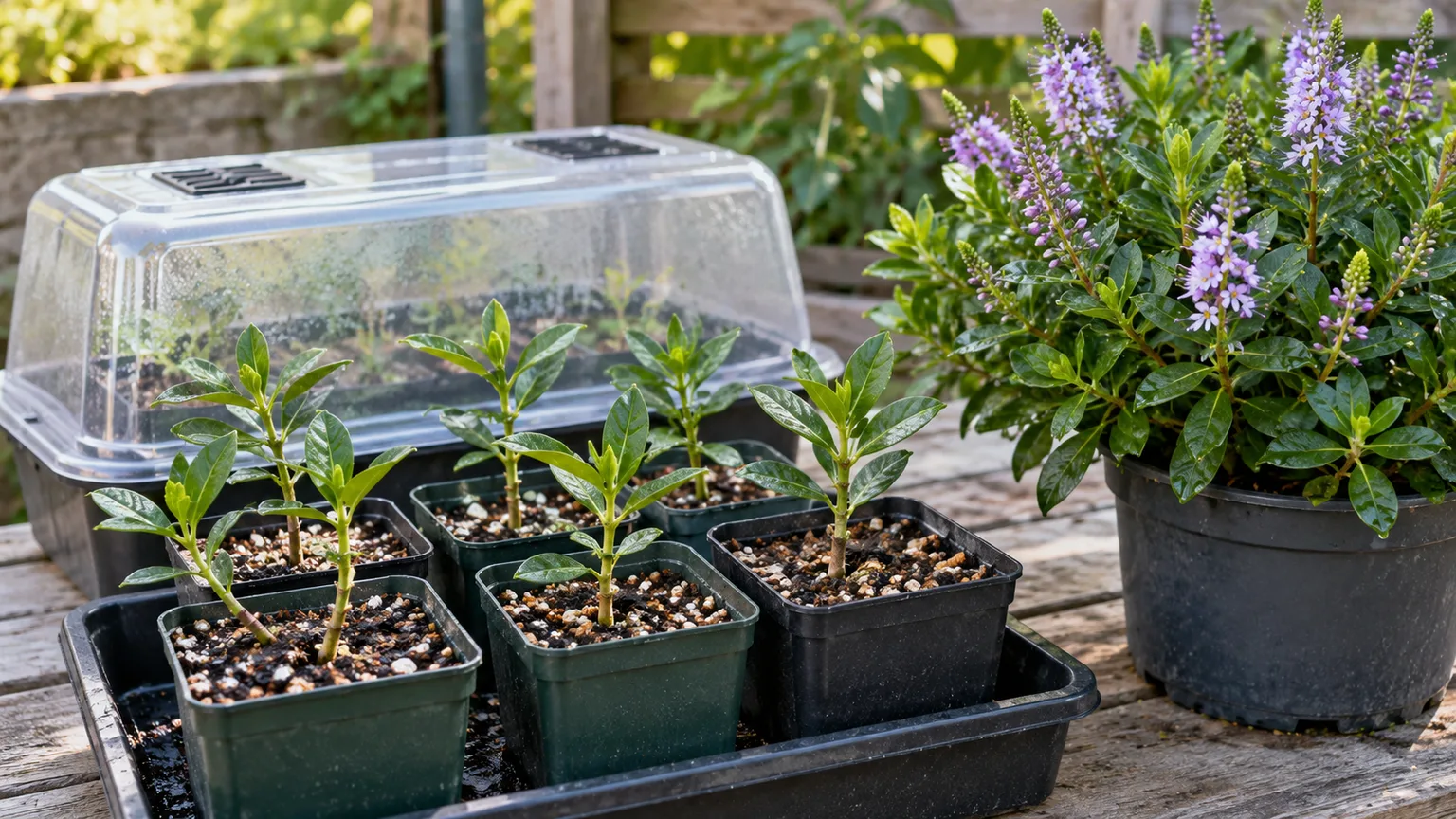
With clean pruners, take a 4- to 6-inch cutting, remove the lower leaves, and keep a few leaves near the tip. If a flower spike is present, remove it so the cutting can focus on rooting. Insert the bare lower stem into a small pot of fresh, airy propagation mix, firming the medium just enough to hold it upright. Rooting hormone is optional; clean tools, a healthy shoot, and a well-drained medium matter more than coating the stem with extra product.
Root with humidity and airflow
Water the pot so the mix is evenly moist, then allow excess to drain. Place the cutting in bright shade or indirect light, away from hot sun and drying wind. A clear cover or loose plastic bag can reduce moisture loss, but keep it from touching the leaves and open it regularly for fresh air. Hebe cuttings can rot when kept too wet, so the goal is humid air above a moist medium—not a waterlogged pot (RHS Hebe growing guide).
Check the mix before adding water and remove any cutting that becomes black or mushy. New leaves alone do not prove roots have formed; wait until the plant resists a gentle tug or roots appear at the drainage holes. Pot rooted cuttings individually and grow them on in a sheltered, frost-free place through their first winter. Plant them outdoors the following spring once they have a stable root ball and the local weather is mild.
Troubleshoot Decline by Checking Roots and Leaves
A Hebe that yellows or wilts is telling you something is wrong, but the symptom alone does not identify the cause. First check whether the root zone is dry, evenly moist, or saturated. Dry soil after a hot week points toward water stress; wet, heavy soil around a wilted plant points toward root damage or poor drainage. If the shrub is in a pot, inspect the drainage holes and smell the mix; persistently sour, soggy compost is a warning to act on the root environment rather than water more.
Look for patterns on the foliage. Distinct leaf spots or fuzzy growth are more likely when foliage stays wet or air movement is poor, especially under cover. Improve spacing and ventilation, water at soil level, and remove badly affected leaves. UC IPM lists pit scales, Fusarium wilt, Septoria leaf spot, and Verticillium wilt among problems associated with Hebes; the RHS notes occasional aphids and downy mildew, while emphasizing that plants in suitable conditions are usually robust (UC IPM’s Hebe guidance; RHS Hebe growing guide).
Check new shoots and leaf undersides for aphids or scale if growth is distorted, sticky, or speckled. A light aphid infestation may settle as beneficial insects arrive; a firm spray of water can dislodge aphids from a small plant. If symptoms continue to spread, identify the pest or disease before choosing a treatment and follow any pesticide label exactly. Avoid applying a broad treatment simply because a shrub is declining: the cause may be drainage or climate, and an unnecessary spray can affect pollinators.
Plan for Winter Cold and Summer Heat
For winter survival, match the plant to the coldest and wettest conditions it will actually face, not just the average minimum temperature on a zone map. A sheltered site, free-draining soil, and a hardy cultivar matter more than wrapping every plant automatically. Young shrubs are more exposed than established ones; protect them from cold winds and prolonged winter wet, and keep mulch away from the crown. Container Hebes deserve extra attention because their roots are less insulated, so move them to shelter before a severe freeze and keep their compost from staying sodden.
Summer can be the opposite problem. Hebes that struggle in hot, dry climates may benefit from afternoon shade, a mulch layer that does not touch the stems, and deep watering when the root zone dries. Partial shade helps moderate heat, but a dark corner will reduce flowering and make the plant leggy. If heat stress recurs despite thoughtful watering, consider replacing the plant with a shrub adapted to your local climate rather than repeatedly fighting the same mismatch. UC IPM’s regional guidance specifically highlights the limits of dry summer heat and winter frost for Hebes (UC IPM’s Hebe guidance).
Conclusion
Hebe care comes down to selecting a cultivar that suits your climate and giving it a bright, sheltered site where water drains away. Keep a new plant moist while it establishes, then water established shrubs when the root zone begins to dry; containers need more frequent checks and winter shelter. Prune lightly after flowering, keep cuts in leafy growth, and treat hard rejuvenation pruning as cultivar-dependent rather than a routine fix.
If you remember one diagnostic rule, let it be this: check the soil before watering a wilted Hebe. Dry roots need water; soggy roots need drainage and possibly a different site. With the right plant in the right place, these evergreen shrubs offer years of foliage and seasonal flowers with little routine intervention.



