How to Grow and Care for Cherry Tree Bonsai
Learn how to grow cherry tree bonsai outdoors, water and feed them, prune without losing next year’s buds, repot safely, and protect winter dormancy all year.
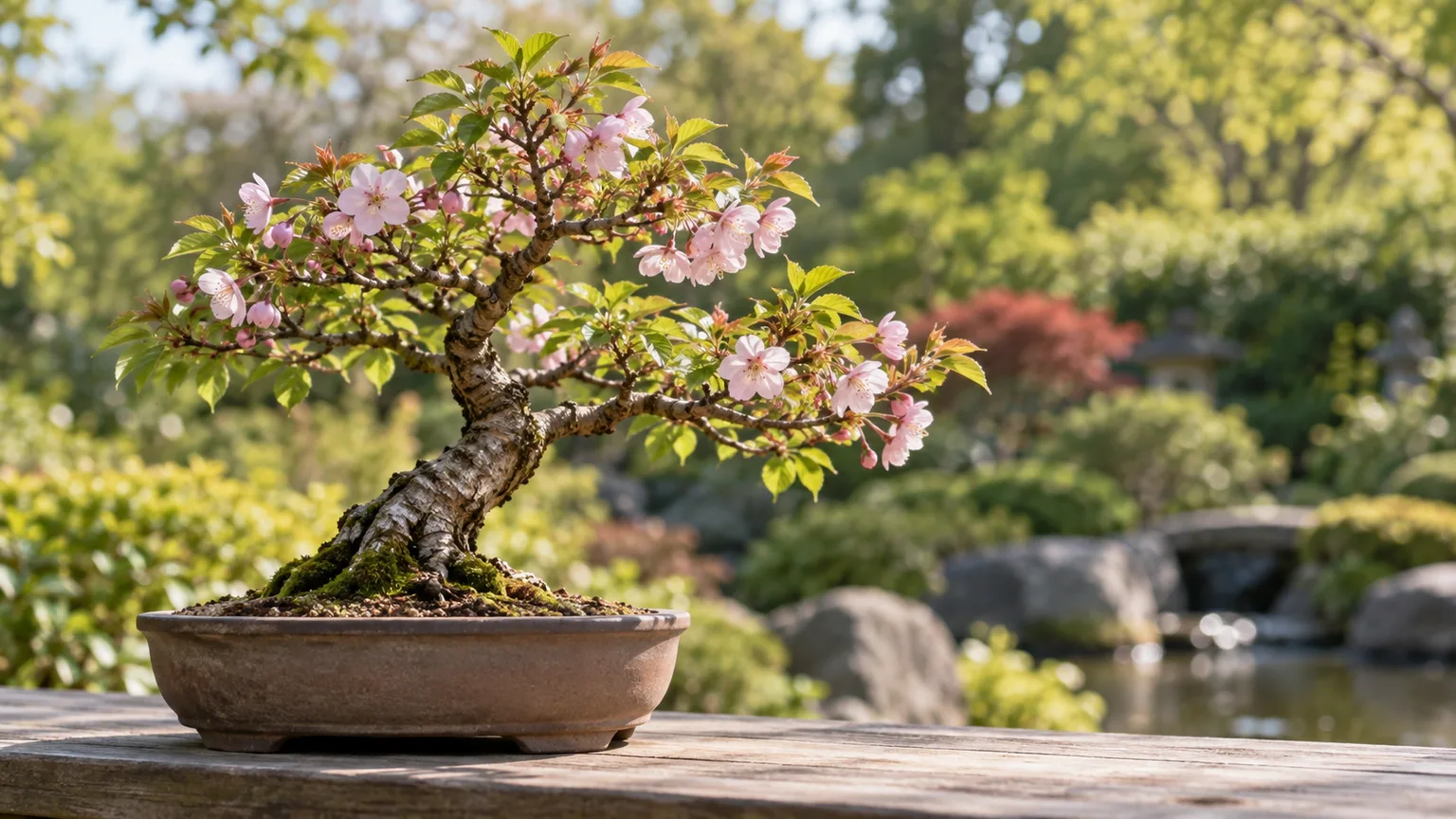
A cherry bonsai is an outdoor, deciduous tree trained to flower and branch in miniature. It needs a real seasonal cycle: strong light and regular water while it grows, gentle shaping that preserves flower buds, and a cool winter rest. The best first step is to confirm the tree is a temperate Prunus and give it an outdoor home; no fertilizer or grow light can replace the winter dormancy it expects.
Is a Cherry Bonsai Right for Your Space?
Choose a cherry if you can keep it outside through the year and check a small pot frequently during warm, dry weather. It is less forgiving than a tropical bonsai kept indoors because the shallow container dries quickly, while missed watering can stress both leaves and developing flowers. It also asks for restraint: severe pruning, repeated root work, or forcing it into a heated room can cost you health or next spring’s bloom.
A balcony, patio, courtyard, or garden bench can work if it gets bright light, moving air, and protection from the worst wind and temperature extremes. A window ledge inside a heated home is not a suitable permanent location. The RHS Japanese cherry profile classifies it as a deciduous tree for full sun, and Bonsai Empire’s cherry guide calls for a cool dormancy; that seasonal biology is why a cherry is an outdoor bonsai.
Choose a Cherry Species and Starting Tree
“Cherry bonsai” can refer to several species in the Prunus genus, not one standardized plant. Japanese flowering cherry (Prunus serrulata) is popular for spring blossoms; Bonsai Empire’s species guide also lists Fuji cherry (P. incisa), Kurile cherry (P. kurilensis), and Higan cherry (P. subhirtella), while fruiting cherries suit a different goal. The North Carolina State Extension profile notes that P. serrulata cultivars vary in flower color and form, and many ornamental cultivars do not bear fruit.
Buy by botanical name when possible. A tag that only says “cherry bonsai” cannot tell you its mature vigor, flower type, fruiting habit, or cold tolerance. Ask the nursery whether the tree is grafted, which cultivar it is, and what winter conditions it has already experienced; a tree kept warm for sale may need gradual acclimation to outdoor temperatures rather than an abrupt move into a hard freeze. If the tree is grafted, inspect the union near the trunk base before buying. A vigorous shoot below that join belongs to the rootstock, not the flowering cultivar; remove it only after confirming where it begins, and do so while it is small. Bonsai Empire notes that rootstock can outgrow a cherry scion and create a swelling, so choose a tree whose graft is already discreet rather than expecting later pruning to disguise a poor union.
Flowering cultivars and fruiting cherries
For a spring display, select a flowering cherry with flowers and leaves scaled to the size you want. Kanzan’s abundant double-pink flowers can be spectacular, but large blooms and vigorous growth may dominate a very small design; North Carolina State Extension describes the cultivar’s clusters of double flowers. Yoshino cherry has single blush-white flowers, while Fuji cherry is often chosen for bonsai because of its smaller habit and more dependable budding; cultivar behavior still varies, so inspect the actual tree rather than relying on a label alone (RHS Yoshino profile; Bonsai Empire).
If fruit is the priority, choose a fruiting cherry species and accept that flowers may be less showy, pollination may matter, and a heavy fruit set can drain a small tree. Remove some developing fruit if the branches bend or the tree is weak. The word “bonsai” describes the training method, not a dwarf cultivar: ordinary cherries can be trained small, but they still have species-specific growth and seasonal needs.
Seed, cutting, nursery tree, or pre-bonsai?
A nursery-grown young tree or pre-bonsai is usually the most practical start because you can see the trunk and branch structure before committing years to development. A seed-grown cherry can be rewarding, but seedlings are genetically variable and may not repeat the parent’s flower color or habit. A tree from seed also needs time in a larger training container to thicken its trunk before it belongs in a shallow display pot.
Cuttings and air layers can preserve a selected cultivar more closely than seed, but success depends on species, timing, and technique. Grafting is another common way to propagate named ornamental cultivars, though a fast-growing rootstock can create an obvious swelling below the graft. Bonsai Empire describes seed, cuttings, air-layering, and grafting as options for Prunus; none is a shortcut to a finished tree.
Give Cherry Bonsai an Outdoor Season
Keep the tree outdoors through the growing season and winter. A sheltered spot beside a house can reduce desiccating wind, but avoid a corner that traps stagnant, damp air around the foliage. Air movement helps foliage dry after rain and makes it easier to spot pests before colonies spread.
Do not keep it in a living room for winter or move it in and out every night. Warm indoor conditions can interrupt dormancy and lead to premature growth that is vulnerable when returned outdoors. If a tree arrives from a greenhouse or shop, acclimate it gradually to direct sun and outdoor temperatures over several days; sudden exposure can scorch tender leaves even on a species that ultimately prefers sun.
Light, airflow, and acclimation
Aim for full sun for most of the day once the tree is acclimated. North Carolina State Extension says Japanese flowering cherry flowers best in full sun, and Bonsai Empire likewise recommends a sunny position. In a very hot climate, a small pot can heat rapidly; use morning sun and light afternoon shade during heat waves rather than treating “partial sun” as a year-round rule.
Shelter the tree from strong, drying wind and protect open blossoms from harsh weather where practical. A shaded site may keep leaves from scorching but can also weaken growth and reduce flower-bud formation. If the plant is stretching toward light or flowering sparsely over several seasons, move it toward brighter exposure gradually, then assess watering needs because brighter conditions dry the substrate faster.
Water a Shallow Pot by Checking the Soil
Check the soil surface and the pot’s weight every day during active growth; water when the upper substrate begins to dry, not by a fixed weekday schedule. Wind, sun, pot size, soil particle size, and canopy growth change how quickly a bonsai dries. During hot or windy spells, check again later in the day because a shallow root zone can dry between morning and evening.
When watering, soak the whole root ball until water runs freely from the drainage holes. If the mix has pulled away from the pot or water races down one side, water in two passes a few minutes apart so the center can rewet. Empty a tray under the pot and never leave the roots standing in runoff; cherry roots need moisture and oxygen, not stagnant water.
Rainwater is useful where tap water is very hard, but consistent watering and drainage matter more than chasing a particular water source. Bonsai Empire notes that cherries can develop chlorosis with repeated calcareous watering. If leaves yellow while the veins stay green, check water quality and root-zone condition, but also rule out poor drainage, damaged roots, and pest pressure before assuming a nutrient problem.
Choose a Free-Draining Soil, Pot, and Feeding Plan
Use a stable, granular bonsai mix that holds some water while leaving air spaces after irrigation. A common starting blend uses akadama or another fired clay component with pumice and lava rock; particle size should suit the tree and your climate. Fine, compacted garden soil or ordinary dense potting mix can remain waterlogged in a shallow pot, while an overly coarse mix in a hot, exposed location may dry too quickly for a cherry.
The pot must have open drainage holes and be large enough to support the current root system. A young tree being trained for trunk thickness generally does better in a roomier training pot than in a tiny show pot; reducing the root volume too early slows development and makes watering harder to manage. A finished display pot can be chosen for proportion and style once the trunk and primary branches are established.
Feed only while the tree is actively growing and healthy. Follow the product label for a balanced bonsai fertilizer, using a moderate program rather than a strong, frequent dose; growth-stage and climate matter more than a universal “every two weeks” rule. Avoid high-nitrogen feeding when you are trying to maintain a compact flowering tree, and pause while the tree is dormant, immediately after stressful root work, or when it is declining until you understand the cause.
Prune for Structure Without Sacrificing Flowers
Start with the tree’s natural shape and decide what must improve before making a cut. Remove dead, broken, crossing, or inward-growing twigs first, then step back and reassess. On a flowering bonsai, every cut has a second cost: it can remove a flower spur, reduce leaf area that fuels next year’s buds, or leave a wound that a cherry struggles to close.
Flower buds commonly form on short shoots and older wood, so preserve those compact spurs if spring flowers are the main goal. The bonsai specialist guide in Bonsai Today recommends shaping after flowering and leaving flower-bearing short branches, while the RHS advises summer pruning for Japanese flowering cherry to reduce silver-leaf infection risk. These recommendations both favor caution around the dormant season, but bonsai sources sometimes schedule structural work differently from landscape guidance.
Separate shoot trimming from structural pruning
Treat light shoot maintenance and large branch removal as different jobs. After bloom, you can shorten an overly long shoot to a useful leaf bud or side branch, leaving enough foliage for recovery and enough extension growth for the tree to mature. Do not shear every new shoot as soon as it appears: early repeated trimming can cause dieback and leaves the tree with little energy to form next season’s buds.
Large cuts are the risky exception. Bonsai Empire describes larger branch pruning before new growth, while the RHS recommends summer pruning on Japanese cherry to lower disease risk; Bonsai Today also cautions that older cherries can die back after large cuts. For an established tree, avoid elective trunk chops or thick-branch removal unless a skilled local bonsai grower can assess the species, season, and wound. If a branch is diseased or broken, remove only what is necessary with a clean tool, and disinfect between suspect cuts.
Wire Flexible Branches Carefully
Wire is best used to set a branch’s direction gradually, not to force an old branch into a dramatic bend. Young cherry twigs are more flexible; older wood can be brittle, and thin cherry bark bruises easily. When a branch is too stiff, use a guy wire anchored to the pot or trunk and adjust tension in small increments rather than wrapping wire tightly around the branch.
Apply wire when the branch is easy to see and handle, then inspect it at least weekly during active growth. Remove it as soon as it starts pressing into the bark; swelling can make a safe-looking wrap bite in quickly. Do not assume a fixed six-month window is safe for every tree. A scar on smooth bark can remain visible, and wiring a weak or recently repotted tree adds stress without solving an urgent problem.
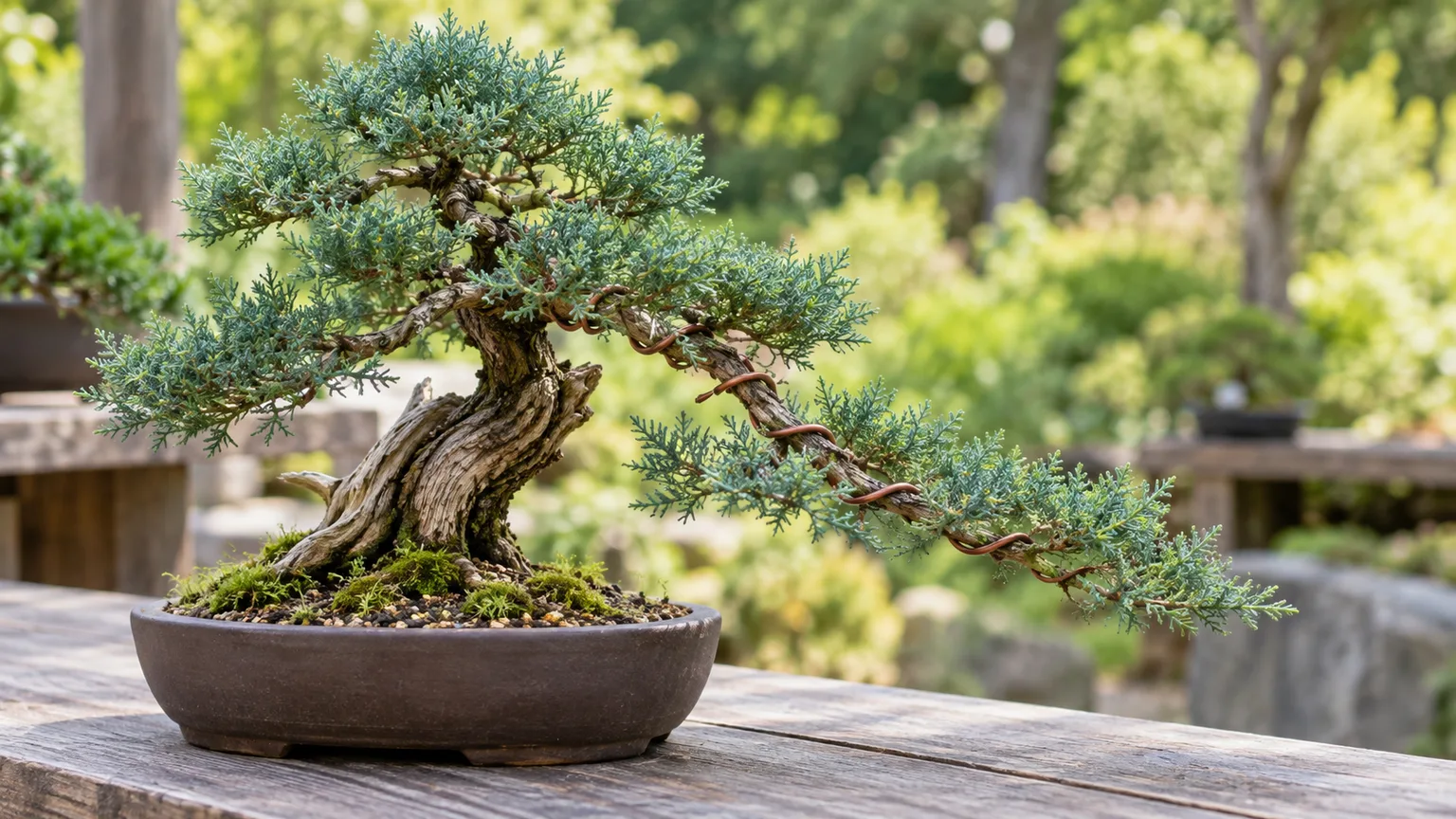
The pictured tree is a juniper; the image illustrates wire placement, not cherry species anatomy.
Repot Before Bud Break and Protect Mature Roots
Repot when the buds begin to swell but before flowers or leaves open, adjusting the timing to your local season. Bonsai Empire gives an early-spring, pre-flowering window and suggests about every two or three years for younger cherries, with older trees less often. Use the root ball and drainage as your cues: roots circling densely, water draining poorly despite an open hole, or little fresh substrate may indicate it is time, but a calendar alone does not.
Prepare the pot, screens, tie-down wire, and fresh mix before lifting the tree so roots do not dry out while you work. Comb the outside of the root mass gently, remove only roots needed to fit the pot, and retain fine feeder roots. Young, vigorous trees can tolerate more root reduction than established specimens; thick old roots are not disposable, and removing too much at once can set a cherry back or cause decline.
After repotting, secure the trunk so the new roots do not rock, water thoroughly, and keep the tree in bright shade and out of drying wind while it recovers. Keep the mix evenly moist without leaving it saturated. Do not combine major root pruning, a hard canopy reduction, and aggressive wiring in one session; spreading stress across seasons gives a mature tree a better chance to recover.
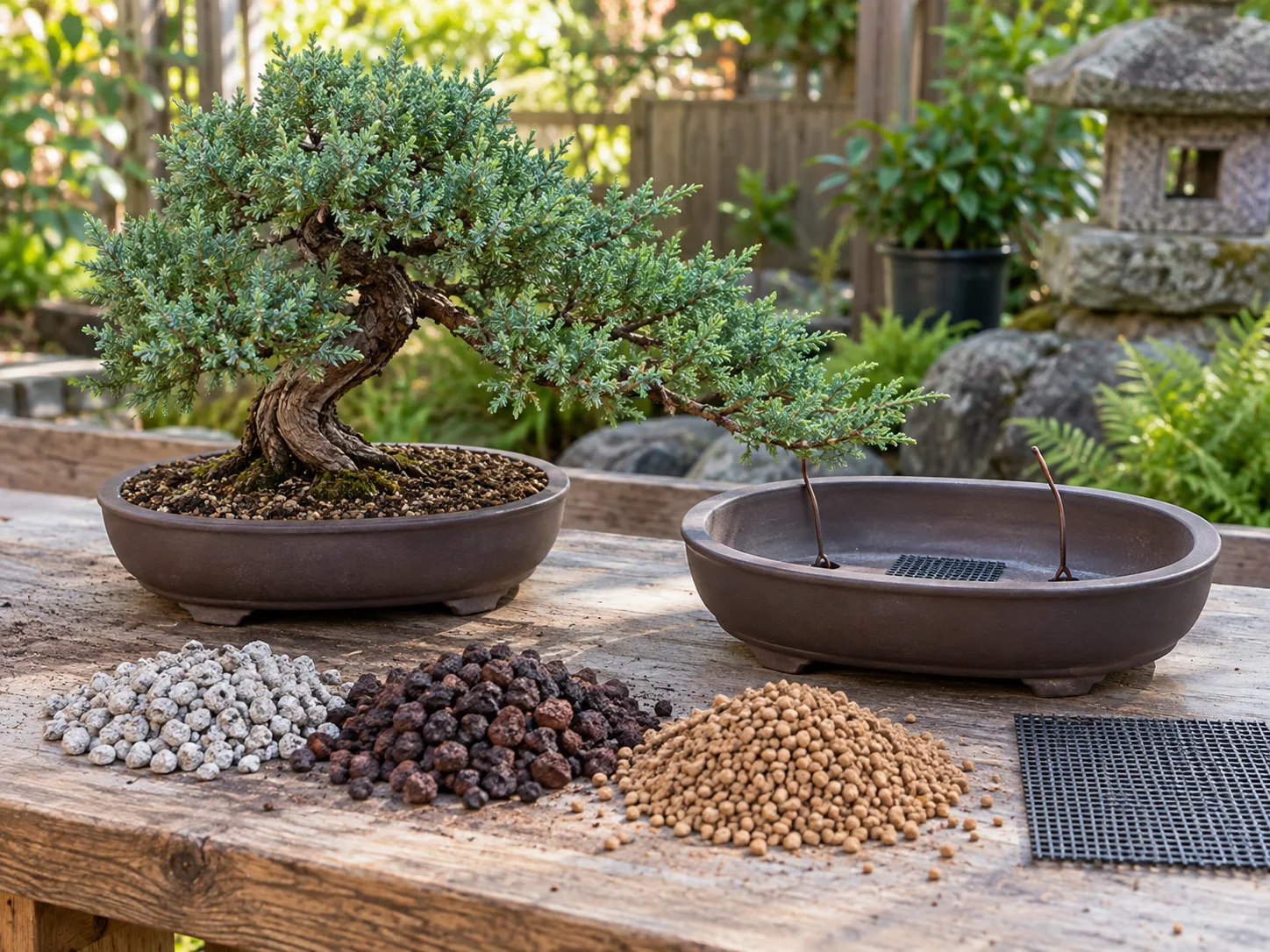
This general bonsai repotting image shows a juniper; use the same prepared setup while pruning cherry roots more conservatively.
Provide Winter Dormancy and Guard the Pot
Let a cherry bonsai experience a cool winter rest outdoors. Bonsai Empire recommends at least three months of cool dormancy for cherries, though exact cold tolerance and chill needs differ by species, cultivar, and climate. Do not bring it into a heated room to keep it green; leaf drop is normal for a deciduous cherry and does not mean it is dying.
A tree in the ground may be hardy in a region where its bonsai pot is not. Small exposed roots freeze and thaw faster than roots in garden soil, so move the pot to an unheated sheltered spot, cold frame, or protected area when severe cold is forecast. Insulate around the pot or set it into the ground up to its rim, keeping drainage clear and the trunk exposed to airflow; protection should buffer extremes without warming the tree into early growth.
Water less often after leaf fall because the tree uses less, but do not let the root ball become bone dry. Check it during thaw periods and water when the substrate is not frozen and begins to dry. Avoid placing dormant trees beside a heater, under a roof that keeps all winter moisture away, or in a warm greenhouse that triggers buds too early.
Understand Flowering and Troubleshoot a Missed Bloom
Flowering time depends on species, cultivar, winter chill, and local spring temperatures. Bonsai Empire gives March or April as a typical bloom period in its setting, but that is not a global calendar; a Southern Hemisphere or high-elevation grower will see a different season. Individual cherry flowers may last only days, with the tree’s display extending over a longer period as buds open.
If a healthy tree produces leaves but few flowers, first review last year’s pruning. Late or heavy cuts can remove the short, older shoots that carry buds, and trimming new growth repeatedly can prevent it from maturing. Next check whether the site is bright enough, whether the tree received a cool winter, and whether a late frost damaged swollen flower buds; correct one likely cause at a time and wait for the next flowering cycle.
Keep expectations realistic for a young seedling or newly trained specimen. A tree may need years to mature and build flowering wood, and a nursery tree that bloomed under commercial conditions may skip a season after a move or repot. Protect open flowers from hard rain and late frost when possible, but do not move the tree indoors for weeks; that can create more problems than the weather event.
Propagate Only When You Can Manage the Long Game
Seed is the easiest way to start many trees but the least predictable route to a specific named cultivar. Seeds from an ornamental cherry may not produce the same flower form as the parent, and seedling growth is slow at bonsai scale. If you try it, use fresh seed, follow species-appropriate cold stratification guidance, and raise the young tree in a larger training container before beginning detailed bonsai styling.
Cuttings or air layers can preserve traits more faithfully, but not every cherry roots readily, and young cuttings need stable moisture and protection while roots form. Spring hardwood cuttings before bud break and summer semi-hardwood cuttings are cited as options in specialist bonsai care guidance; regional timing and cultivar affect success. Grafting is often how named ornamental cherries are reproduced, but it is a more technical project and the rootstock can outgrow the desired scion.
Watch for Pests, Disease, and Pet Hazards
Inspect the undersides of leaves and new shoots for aphids, scale, spider mites, and caterpillars. Curled tips, sticky residue, fine webbing, stippled foliage, or chewed edges point to different problems, so look closely before treating. A small bonsai is easy to inspect, but a dense canopy can hide pests; open it enough for airflow and remove a few heavily affected leaves if the tree can spare them.
Japanese flowering cherries can be susceptible to leaf spot, silver leaf, bacterial canker, blossom wilt, and root rot, among other problems (North Carolina State Extension; RHS). Avoid letting the pot stay waterlogged, give the foliage room to dry, and use clean tools. If you see dieback, gum-like ooze, expanding cankers, or repeated branch collapse, isolate the tree from other bonsai and ask a local extension office or experienced bonsai professional for identification before using a pesticide or fungicide; treatment depends on the actual cause and product labels vary.
Keep fallen leaves, stems, and seeds away from pets. The ASPCA lists cherry (Prunus spp.) as toxic to dogs, cats, and horses because stems, leaves, and seeds contain cyanogenic glycosides, with wilting plant material particularly hazardous. If a pet chews a cherry part, contact a veterinarian or animal poison service promptly rather than waiting for symptoms.
Conclusion
A cherry bonsai is most likely to thrive when you treat it as a small outdoor tree with a full seasonal cycle. Give it bright sun with heat protection when needed, check the shallow pot often and water through, preserve flower-bearing wood, and keep major pruning and root work conservative. Its spring display is the result of choices made across the previous growing season and winter, so focus on steady health first; the blooms follow from that rhythm.



