How to Grow and Care for Ramps in a Woodland Garden
Learn how to grow ramps from seed or bulbs, recreate a moist deciduous woodland bed, and harvest carefully so your perennial patch can keep returning.
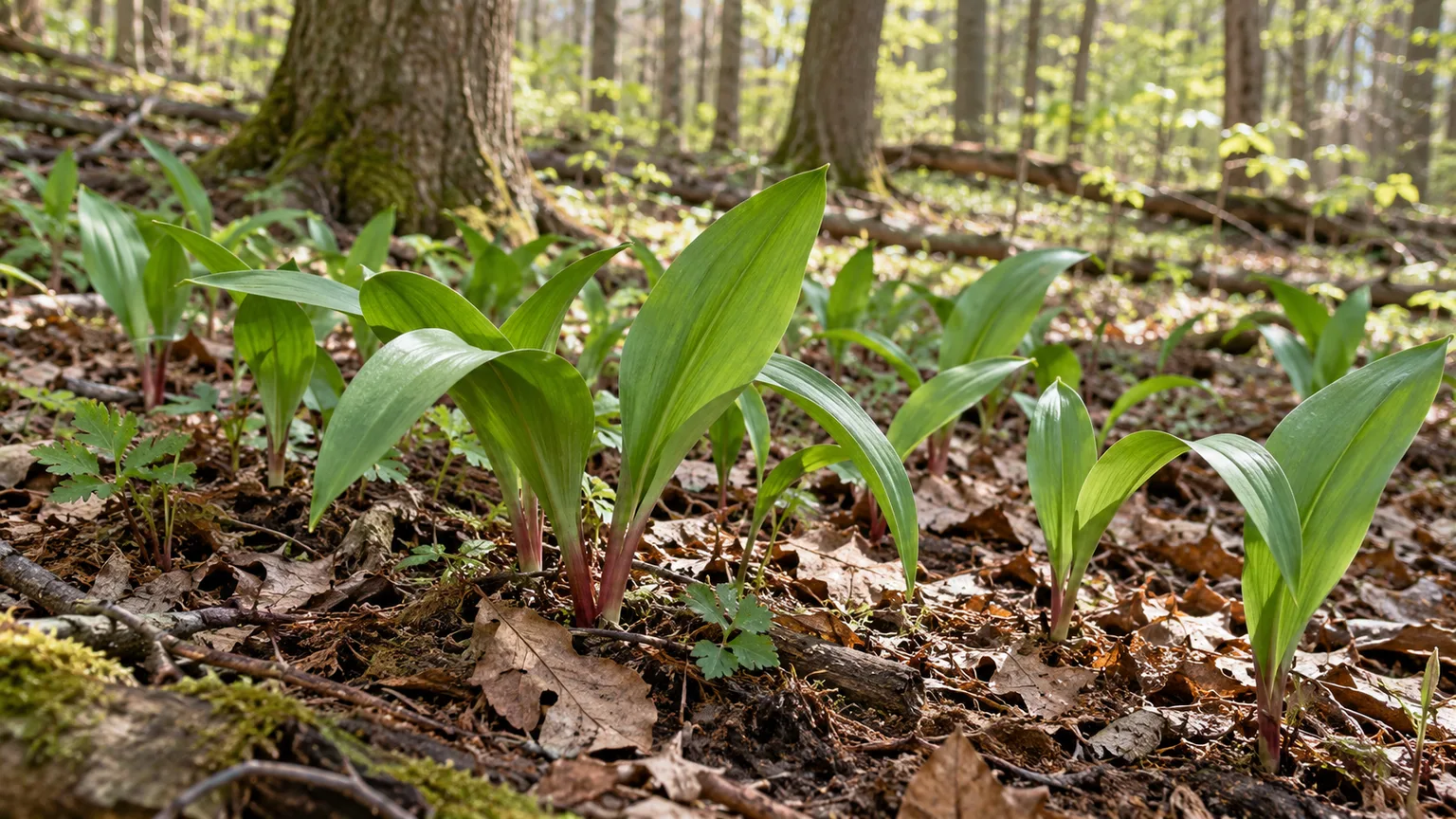
Ramps (Allium tricoccum), sometimes called wild leeks, are spring-emerging woodland onions that return from bulbs year after year. They are not a quick crop: seeds may take more than a year to sprout, and a new patch needs several seasons to become large enough to harvest. The best first step is to decide whether your garden can offer their basic habitat—cool soil that stays evenly moist, a layer of decomposing hardwood leaves, and light that reaches the ground before deciduous trees fill out.
Ramps reward patience because they use a short spring growing window to store energy underground, then disappear from view for much of the year. Treat the bed as a small native woodland planting rather than a conventional vegetable row, and plan harvest around the colony’s ability to recover. The guidance below is for cultivated plants; local rules for collecting wild ramps vary, and wild plants should never be dug without permission and a clear check of local protections.
Ramps at a glance: growth cycle and timeline
Ramps are North American spring ephemerals: they emerge in cool weather, grow leaves before the forest canopy closes, and then die back aboveground as temperatures rise. The underground bulb remains alive while the bed looks empty. In much of the eastern United States, leaves appear in early spring, fade by late spring or early summer, flowers rise on leafless stalks afterward, and black seeds mature later in summer or fall. Local timing shifts with elevation, latitude, and spring weather, as described by Penn State Extension’s seasonal profile.
| What to expect | Practical guide |
|---|---|
| Plant type | Long-lived native bulb; the leaves are seasonal, not a sign that the plant is annual |
| Best setting | Cool, moist, well-drained soil under deciduous trees or a carefully managed shade structure |
| Leaf season | Usually early spring; foliage fades as the canopy closes and temperatures rise |
| Seed timeline | Warm, moist conditions followed by cold; germination can take 6–18 months or longer |
| Harvest timeline | Several years; extension production guidance estimates about 4 years to leaf harvest and 5–7 years to bulb harvest from seed |
Those time estimates are planning ranges, not a guarantee for every garden. Ramp size, seed freshness, weather, drainage, and the planting stock’s history all affect establishment. Some references give hardiness zones of 3–7 and others 3–8, so a zone number alone does not tell you whether your summer soil will stay cool or moist enough; compare the local microclimate and habitat first. Wisconsin Extension and Gardener’s Path provide different zone ranges, illustrating why a range is only a starting filter.
The name can also cause confusion at nurseries. The common eastern North American ramp is Allium tricoccum; narrow-leaved ramps are treated as either a close relative or a variety in different references. European ramson, Allium ursinum, is a related but different species. Check the botanical name on seed and bulb listings so you know what you are buying and whether it is appropriate for your region.
Choose a site by canopy, moisture, and drainage
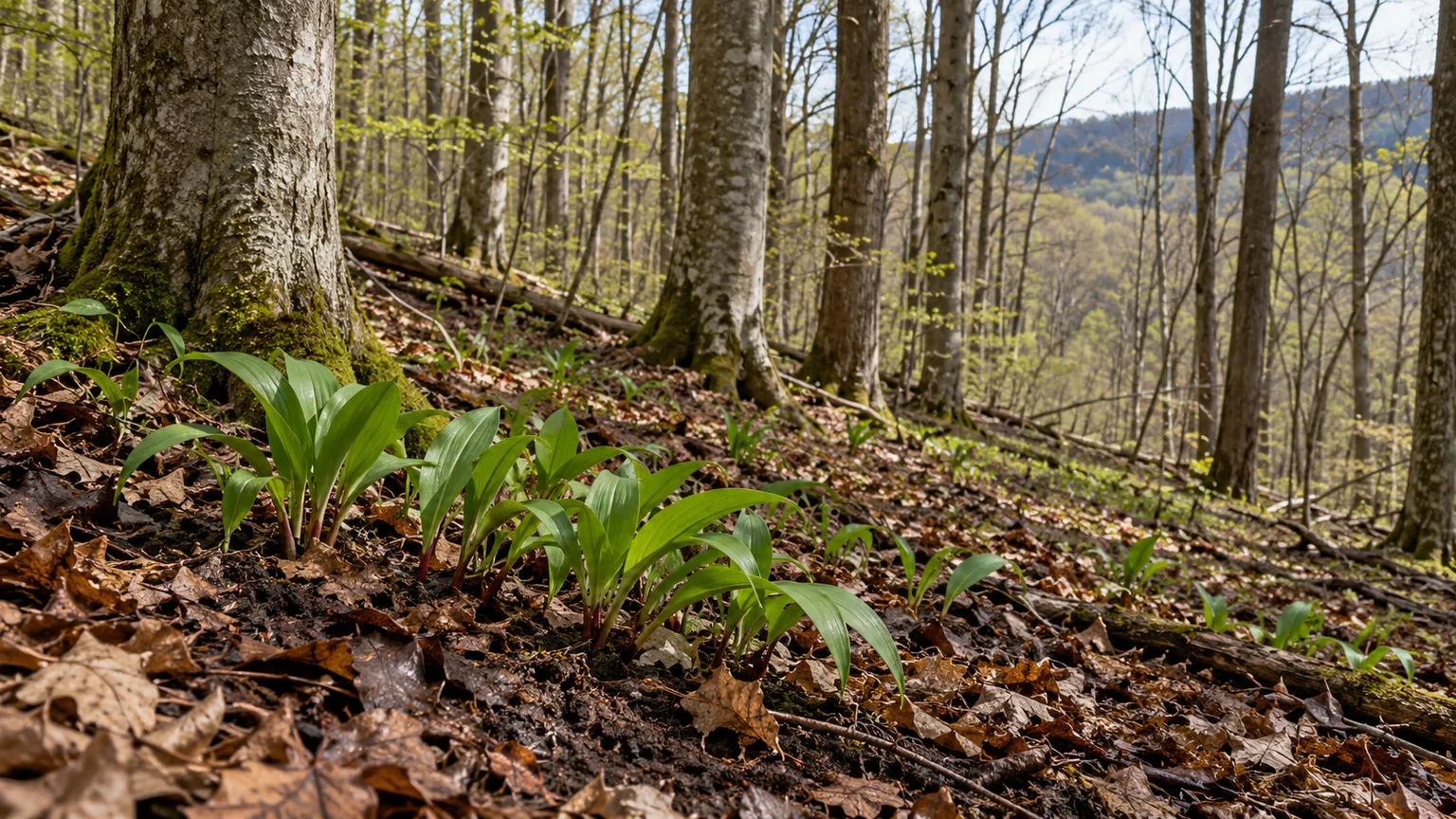
Ramps grow naturally in rich deciduous woods and damp woodland bottoms, often under maple, beech, birch, poplar, basswood, hickory, or oak. A north- or east-facing slope can stay cooler than a hot south-facing bed, but it is not a strict requirement if the soil remains moist and plants receive adequate spring light. Look for a site with leaf litter and steady moisture, not a low pocket that stays flooded after rain. NC State Extension’s cultivation research and Penn State Extension’s habitat notes describe this combination of deciduous cover, organic soil, and persistent moisture.
Before ordering seeds, check the site after a dry week and after a heavy rain. Scratch aside the leaf layer and feel the soil a few inches down; it should be cool and damp, not powdery, sour-smelling, or slick with standing water. If a tree canopy shades the site all summer but it dries hard by July, add a way to irrigate gently or choose another bed. If the soil stays saturated, fix drainage or plant elsewhere rather than trying to compensate with gravel in the planting hole.
Light: use the early-spring window
“Shade plant” can be misleading here. Ramps grow their leaves while deciduous branches are still open, so filtered early-spring sunlight reaches the forest floor and supports photosynthesis. As trees leaf out, the ramps naturally fade. A bed under dense evergreen cover can remain too dark year-round, while a sunny open bed can heat and dry too quickly after the leaves emerge.
A deciduous woodland edge is often a better home-garden choice than the deepest shade. If your only option is open ground, a shade structure can help, but it should reduce summer heat without blocking all light during the cool active season. Avoid digging large roots around mature trees to make a bed; use an undisturbed edge or a raised bed nearby if building soil would damage the tree’s root zone.
Soil: leaf-rich, damp, never waterlogged
Ramps do best in soil with plenty of decomposed leaf matter and consistent moisture, but the bulbs can rot in persistently soggy ground. A naturally humusy woodland soil may need only a refreshed layer of leaf mold each fall. In a garden bed, mix in mature leaf compost if the soil is compacted or low in organic matter; do not bury the bulbs in a deep pocket of rich compost that stays wet.
Published pH observations vary by region. NC State reports naturally occurring populations in western North Carolina in soils around pH 4.7–6.7, while Penn State describes slightly acidic conditions around 5.5–7.0. That difference is a reason to test before amending, not to chase a single “perfect” number. Ramps may respond to calcium in some soils, but NC State notes that this point is not settled; do not apply lime or gypsum by habit. Use a soil test and local extension recommendation if growth is poor and an amendment seems necessary.
Choose seeds or bulbs for your starting point
The main trade-off is patience versus cost and availability. Seeds are usually the less expensive way to start a larger planting, but they pass through a complex dormancy and take years to produce harvestable plants. Bulbs or young transplants skip the seedling stage and establish faster, but buy only from a reputable nursery or a grower who can confirm cultivated stock. Digging plants from public land or from someone else’s property without permission can damage slow-recovering colonies and may violate local rules.
| Starting material | What it is good for | What to expect |
|---|---|---|
| Fresh seed | Starting many plants at lower cost and building a long-term colony | Unpredictable sprouting; several years before harvest |
| Nursery bulbs | A quicker path to visible plants | Correctly sized bulbs may need 2–3 years before bulb harvest, with leaves available sooner if the plants establish well |
| Young transplants or a small division | Filling a prepared bed with established plants | Keep the roots intact and avoid taking more than the source patch can spare |
Starting ramps from seed
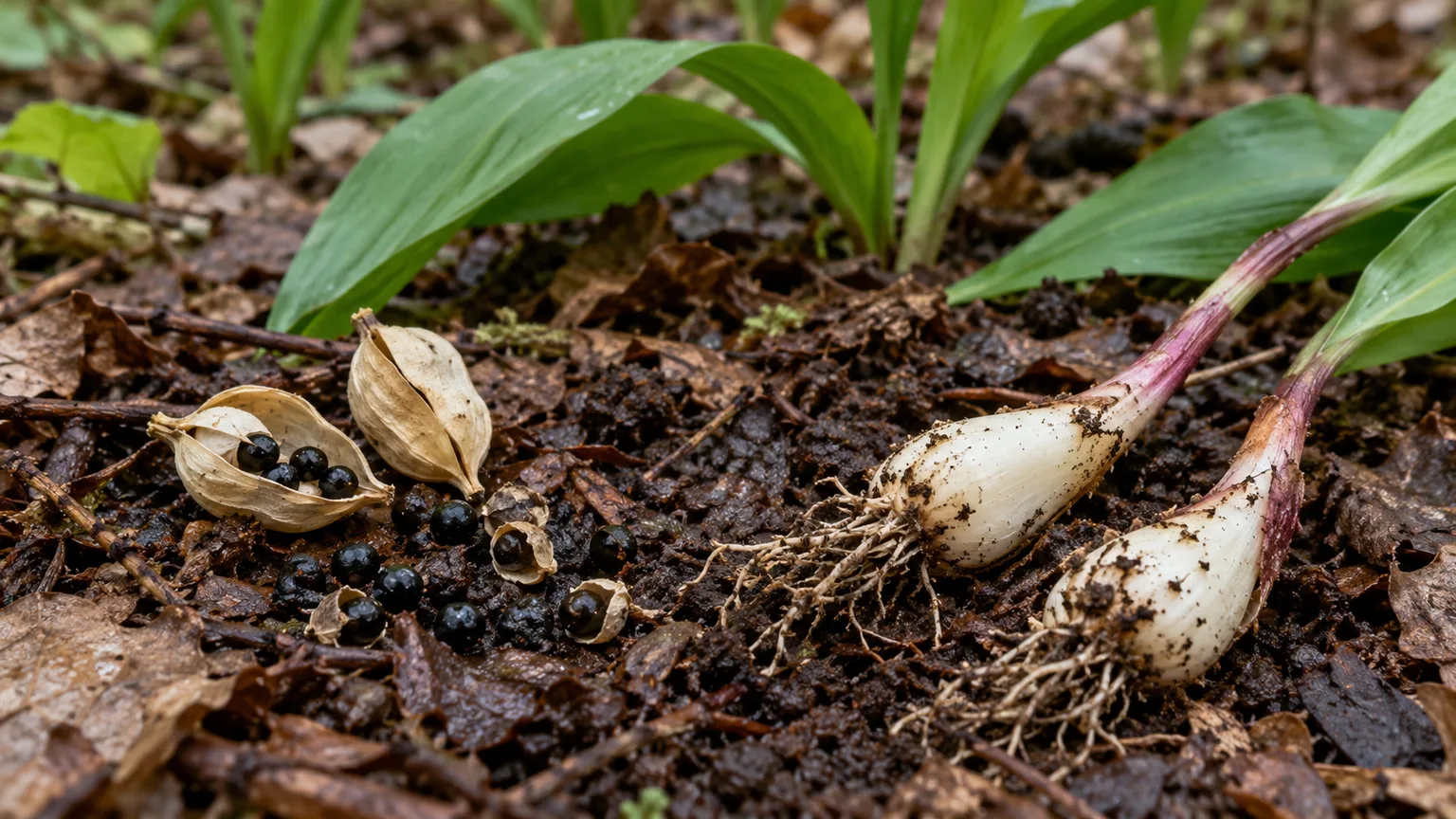
Ramp seeds have an underdeveloped embryo and a two-part dormancy: a warm, moist period helps root dormancy break, then winter cold helps the shoot emerge. Sow outdoors in late summer or early fall so the natural seasons do this work. Freshly sown seed may emerge the following spring, but if the first warm period is too short, germination may wait until a second spring. NC State’s cultivation guide gives a 6–18-month germination range and estimates roughly four years from sowing to leaf harvest and five to seven years to bulb harvest.
Prepare a shallow seed bed without turning the soil deeply. Rake back the leaf layer, remove weeds carefully, press seed into the surface, and cover the bed with a loose layer of damp hardwood leaves. Mark the area so it is not weeded, raked, or planted over while no seedlings are visible. Keep it evenly moist through fall and winter; a dry spell during the seed’s warm phase can delay or prevent establishment. If squirrels or other animals disturb the seed, a temporary mesh cover can protect the bed until the seedlings are established.
Spring sowing is possible, but it is less forgiving because you must recreate the warm-then-cold sequence. Some growers use warm, moist stratification followed by cold storage before planting, but treatment length depends on seed condition and the supplier’s guidance. If you are new to ramps, fall sowing outside is simpler and better reflects the plant’s natural cycle. Gardener’s Path’s propagation overview also describes warm and cold stratification and why emergence can be delayed.
Planting bulbs or transplants
Plant bulbs while they are dormant, usually in fall or late winter to early spring when soil is workable; NC State favors February to mid-March for transplanting in its region. The exact calendar varies with climate. The goal is to place dormant bulbs before active leaf growth is well underway, without planting into frozen or waterlogged soil. Keep purchased bulbs cool and moist, and plant promptly rather than leaving them to dry in a warm room.
Set bulbs about 3 inches deep and 4–6 inches apart, with roots pointing down and the growing tip near the surface. The upper tip may show slightly above the soil; bury the roots and firm soil around them without compacting the bed. Set a leafy transplant at the depth it was growing before. Water it in, then replace 2–3 inches of loose hardwood leaf litter. NC State Extension recommends this depth and spacing for bulbs and transplants; Wisconsin Extension’s ramp profile also describes the leaf-litter mulch that mirrors woodland conditions.
Prepare and plant a woodland-style bed
Set up the bed before the seed or bulbs arrive. Rake aside leaves, remove aggressive weeds, and loosen only the upper few inches if the soil is compacted. Keep existing tree roots in place. Add mature leaf mold or composted hardwood leaves where organic matter is scarce, and avoid heavy fertilizer or fresh manure that can create a nutrient-rich, soggy pocket around a small bulb.
If you are planting under a canopy, work in small sections so you do not leave the soil exposed to sun or erosion. Space bulbs 4–6 inches apart; this gives them room to form offsets over time without pretending a new bed will be full immediately. Press seed onto the surface rather than burying it deeply, cover with damp leaves, and label the bed with the planting date and source. For a small number of seeds, direct sow them where they will grow rather than starting them in tiny pots that can dry out or be disturbed during transplanting.
After planting, water slowly until the soil and leaf cover are evenly damp. Check again a day later to see whether water drained or pooled. If a shallow bed holds standing water for hours after ordinary rain, move the bulbs or improve the whole bed’s drainage before adding more plants. Correcting a saturated site is more reliable than layering gravel beneath individual bulbs.
Care for ramps through the year
Ramps need little routine feeding once they grow in an organic-rich bed, but they do depend on a stable moisture and leaf-litter cycle. The most helpful maintenance is to keep competing weeds down while the colony is young, replenish a thin hardwood leaf layer, and avoid disturbing dormant bulbs. A ramp bed may look inactive for more than half the year, so mark its boundaries and tell anyone who gardens nearby that it is not an empty patch.
Spring: protect the leaves and let the canopy close
As shoots emerge, remove small weeds by hand rather than hoeing through the bed. Do not cut the ramps back because they look untidy; their leaves are the brief energy source that replenishes the bulbs underground. If you want to harvest, wait until the patch has grown for several years and take only a small amount from vigorous plants.
The foliage will naturally yellow and die back as the woodland canopy fills in. That is expected, not a signal to fertilize or dig the bulbs. Flower stalks often appear after the leaves have faded, and their small white flower clusters are part of the plant’s seed cycle. Leave at least some stalks to flower and set seed if you want the patch to regenerate naturally.
Summer through winter: keep the bed intact
When no leaves are visible, keep the bed from becoming bone-dry. Check moisture below the leaf layer during long dry spells, especially in a raised bed or beneath shallow-rooted trees that compete for water. Water at soil level when the bed is dry a few inches down, then let excess drain; constant saturation is as damaging as a drought-prone site.
In late summer or fall, let seed heads mature if you want to collect or spread seed. Add a light layer of shredded hardwood leaves if the soil is exposed, but do not smother the planting under a dense mat of wet leaves. Avoid tilling, digging, or heavy foot traffic over the patch while bulbs are dormant. No special winter wrapping is normally needed for an in-ground planting in a suitable climate; natural leaf cover is the useful protection.
Grow ramps in a raised bed or container
A raised bed can work where the native soil is too compacted, provided you can keep it cool, moist, and well drained. Use a site with deciduous shade or a shade structure that still allows early-season light. Fill the bed with a loamy, organic-rich mix rather than a sterile, fast-drying potting mix, and mulch with hardwood leaves. Raised beds dry faster than woodland soil, so build irrigation into your plan before the first summer.
A container is possible but less forgiving. A small pot warms and dries quickly, and its soil can freeze harder than the ground in winter. Choose a broad, generously sized pot with drainage holes and enough depth to buffer moisture and temperature—about 12 inches or more is a practical starting point—then keep it outdoors through the natural seasonal cycle. Insulate the container in severe winter climates and monitor it more often than an in-ground bed. If the container is mainly decorative and you cannot keep soil evenly moist while the leaves are absent, grow a different plant there.
Expect the pot or bed to look empty after the leaves die back. That is the plant’s normal life cycle, so do not replace it with a summer annual that needs digging or frequent cultivation. If you share a ramp bed with later-emerging woodland plants, choose species that will not crowd or dry out the shallow bulbs, and keep the ramp area accessible for spring observation.
Expand a patch by seed or division
Ramps expand slowly by seed and by daughter bulbs that form beside mature bulbs. To collect seed, wait for the seed capsules to mature and dry, then sow them promptly or follow the supplier’s storage instructions. A few scattered seeds will not fill a bed quickly; natural seedling recruitment is a long process. If your goal is a larger planting, sow into prepared adjacent ground every fall and record where each cohort was planted.
Division is faster but should be used sparingly. Lift only a small section from a vigorous, established patch during dormancy, keeping roots and bulbs together as much as possible. Replant any offsets at the original depth and spacing, then restore the leaf cover. Do not divide a young planting just because individual bulbs look crowded; ramps naturally grow in clumps, and repeated digging can damage the very colony you are trying to expand. Penn State Extension describes bulbs splitting over time as one reason mature plants form patches.
Harvest leaves and bulbs without shrinking the patch
Do not harvest the first spring after planting, and do not treat a few emerging leaves as proof that a ramp colony is established. Let plants grow for several years; a conservative signal that the patch is ready is that it has expanded, contains vigorous mature plants, and has flowered. This gives the bulbs time to store energy and the colony a chance to reproduce. For plants grown from seed, the wait can be especially long.
Leaf-only harvest is the lower-impact option, but it is not impact-free. The plant needs its leaves to make and store energy, so never strip every leaf from a plant or cut foliage early just to collect tender greens. As a cautious home-garden rule, take at most one leaf from a vigorous plant with several leaves and leave the rest intact; leave one- and two-leaf plants alone. If you cannot distinguish individual plants without trampling the colony, skip the harvest that year.
Bulb harvest removes the whole plant and is harder for the patch to replace. NC State’s cultivation publication advises waiting until a planting has filled in, plants have large bulbs and have flowered, and limiting harvest in a plot to about 5–10% of plants; it describes a 5–7-year rotation for growers who harvest separate plots. Apply the same conservative logic at home: mark small sections, take only a fraction from a mature area, and leave most bulbs undisturbed. Replant any healthy offsets, refill holes with soil, and restore the leaf mulch.
If you are harvesting from land you do not own, check state conservation status, site regulations, and landowner permission first. Rules differ by place; some populations are protected, and public lands may prohibit digging. For food safety, do not eat a plant based on leaf shape or habitat alone. Penn State Extension’s identification guide notes that poisonous lily-of-the-valley and false hellebore can occur in the same habitat; learn the plant’s full identifying features and get help from a qualified local expert if there is any doubt.
Troubleshoot slow, weak, or damaged ramps
A missing seedling is not necessarily a failed seed. Ramp seed may stay dormant through a second spring, so keep the bed labeled and undisturbed for at least two years before assuming nothing will emerge. If several cohorts fail, inspect the bed’s moisture history and the seed source first; repeated drying, waterlogging, deep burial, and premature disturbance are more likely causes than a need for fertilizer.
Sparse, stunted leaves usually point to a site mismatch or competition. Check whether summer soil dries below the leaf layer, whether a dense evergreen canopy blocks spring light, and whether weeds or nearby roots are taking available moisture. Move bulbs only while dormant and only if the site is persistently unsuitable. Avoid applying lime, gypsum, or high-nitrogen fertilizer without a soil test; a correction that suits one woodland soil can make another bed less suitable.
Check moisture, rot, leaf spots, and look-alikes
Bulb rot is most likely where water sits in the soil. If bulbs are soft or collapse, stop frequent watering and correct drainage across the bed rather than adding coarse material to each planting hole. Brown spots may be Septoria leaf spot; NC State reports it in cultivated and wild ramps, while its long-term effect is not fully known. Keep leaves dry when watering is needed and remove badly affected material after the foliage has naturally begun to die back, not while healthy green leaves are still feeding the bulb.
Allium leaf miner has been reported on ramps in the Northeast, but its importance varies by region. Look for distorted or damaged leaves and ask a local extension office to confirm the pest before choosing a treatment. Avoid spraying edible plants without a product label that explicitly permits that use and crop; for a small garden patch, protecting new plantings with suitable insect netting and removing badly affected material may be more appropriate than routine pesticide use.
If leaves look like ramps but do not have the characteristic onion-garlic scent when bruised, stop before eating them. That scent is a useful identification feature, but never use one clue to identify a plant you are not sure about. A cultivated, labeled bed is much safer to manage than a mixed wild patch, especially where poisonous look-alikes grow.
Conclusion: build the habitat before expecting a harvest
Ramps grow best when you give them a cool deciduous site, spring light, moist but well-drained soil, and a layer of hardwood leaves that stays in place through the year. Choose seed for a patient, low-cost planting or nursery-grown bulbs for a faster start, then mark the bed and let the plants complete their seasonal cycle without disturbance.
The harvest comes after the colony has had time to expand, not after a single good spring. Keep most leaves and bulbs in the ground, leave some flowers and seeds, and check local rules before collecting anywhere outside your garden. A well-managed ramp bed is both a perennial food patch and a small woodland planting that can keep returning long after its first leaves disappear.



