How to Grow Rhubarb at Home: Planting, Care and Harvest
Grow rhubarb with a clear planting plan, season-by-season care, container advice, and harvest limits that keep a productive crown healthy through summer.
Rhubarb is a long-lived perennial grown for its thick leaf stalks, which are used like fruit in pies, sauces, and preserves. The plant is most rewarding when you treat it as a permanent bed crop rather than a quick annual: choose a cool-enough, well-drained site, establish the crown before harvesting, and leave enough foliage to recharge the roots after picking.
The first harvest is the hardest one to delay. Give a new crown its first growing season to build roots, take only a small amount the following year, and let it reach full production after it is established. That restraint, plus a site that does not stay soggy in winter, does more for a long-term crop than frequent fertilizer or cutting every stalk as soon as it appears.
Is Rhubarb a Good Fit for Your Garden?
Rhubarb (Rheum × hybridum, also sold as Rheum rhabarbarum) forms a wide clump of leaves from a thick underground crown. The part you cook is the leaf stalk, or petiole; the broad leaf blade is not edible. Because the crown can occupy several square feet and remain in one place for a decade or longer, it deserves a planting spot that will not be dug up for next season’s vegetables.
This is a good choice if you have cold winters, mild springs, and space for a perennial vegetable bed. It is less dependable where summer heat is prolonged, soil remains saturated in winter, or the only available bed is already crowded with plants that will need frequent digging. It can be grown in a large pot, but a container adds watering work and usually produces less than a well-sited garden clump.
Climate: summer heat matters as much as winter cold
Rhubarb is strongly associated with cool-season gardens because winter dormancy and a cool spring support the plant’s natural cycle. The Royal Horticultural Society (RHS) describes it as hardy and long-lived, while practical guidance from Harvest to Table cautions that hot summers can produce thin, spindly stalks. That is a useful distinction: surviving winter does not guarantee a strong harvest if the plant is stressed by heat through summer.
In a warm region, give rhubarb morning sun and protection from intense afternoon heat, keep the root zone evenly moist, and use a light mulch to reduce moisture swings. Shade should be partial rather than deep; too little light can also leave stalks weak. If your summers are consistently hot and the plant declines despite good drainage and watering, treat it as a marginal crop for your site instead of trying to force a heavy harvest.
Choose a Crown, Division, or Seed
For a predictable harvest, start with a named crown from a nursery or a healthy division from a productive plant. A dormant crown is a section of the rootstock with one or more visible buds. It establishes faster than a seedling and lets you choose a cultivar for flavor, color, season, or size. A division is also a practical way to renew an old clump, provided the parent plant is vigorous and free of rot.
Seed is the least expensive way to grow several plants, but it is the slowest route and the seedlings may not match the parent cultivar. Harvest to Table notes that seed-grown plants can take roughly three to four years to reach a first harvest, whereas the age and size of a purchased crown affect how soon it is ready. If you want the exact traits on a cultivar label, buy a crown rather than seed. If you are experimenting or want extra plants to fill a long-term bed, seed is reasonable as long as you are willing to wait.
A practical establishment calendar looks like this:
| Stage | What to do |
|---|---|
| First growing season | Let leaves grow; do not harvest. Keep weeds down and water through dry spells. |
| Second growing season | If the crown is healthy and growing strongly, take only a few stalks. Skip harvesting if growth is weak. |
| Third season onward | Harvest normally but leave most of the canopy and stop before the plant is exhausted. |
The calendar is a conservative guide, not a promise tied to a date. A small division or a seedling may need more time than a large, healthy crown. Judge the plant by its vigor and leave it alone for another season if it has only a few thin stalks.
Pick a Permanent Planting Site
Choose an open bed where the plant can remain undisturbed. Full sun supports sturdy growth in cool climates; light afternoon shade can help where summers are hot. Leave enough room for the clump to expand and for you to walk around it without stepping on the crown. A common spacing range is about 3 to 4 feet (0.9 to 1.2 meters) between plants, with extra room for vigorous varieties.
Avoid planting under a tree that will cast deeper shade as it matures, beside a hedge with thirsty roots, or in a low spot that collects winter water. The RHS growing guide recommends an open, sunny site and cautions against waterlogged ground. Rhubarb leaves may look large enough to shade weeds, but that does not make early weed control optional. Perennial weeds compete with a young crown for water and nutrients, and pulling them later can disturb the rhubarb roots.
Soil should hold moisture but drain freely
Rhubarb does best in fertile, organic-rich soil that stays evenly moist without becoming waterlogged. Incorporate well-rotted compost into the bed before planting, and correct compaction or drainage problems before the crown goes in. The RHS recommends improving the site with organic matter and advises raised beds or large containers for heavy, poorly drained soil. That drainage advice matters because a cold, saturated crown is more likely to rot than one in a bed that drains after rain.
If your soil is clay-heavy, build a raised bed or plant on a broad mound rather than digging a small pocket and filling it with loose potting mix. A sharply different mix inside a clay hole can hold water where the roots sit. If you are uncertain about pH or nutrients, use a soil test before adding lime or fertilizer; a test can prevent an unnecessary correction. In general, a slightly acidic to near-neutral garden soil is suitable, but structure and drainage are the first priorities.
Plant Rhubarb Crowns Without Burying the Growing Point
Plant bare-root crowns while they are dormant, usually in early spring once the soil can be worked, or in autumn where the ground will not freeze immediately and the site does not remain wet. Potted plants are more flexible, but avoid planting into frozen soil, severe drought, or waterlogged ground. The exact calendar depends on local weather; plant when the crown can settle into cool, workable soil rather than following a date from a different climate.
Set the crown with its buds facing upward and spread the roots naturally. Crown-depth instructions vary among reputable guides: the RHS places the growing point at or just below the soil surface, while Harvest to Table sets the division somewhat deeper. Crown size, local rainfall, and drainage all affect how that advice works. Follow the supplier’s instructions for the crown you bought; if your soil is wet or heavy, err on the shallow side or raise the planting area so the buds do not sit in cold, saturated soil. Do not bury the crown several inches under a dense layer of soil or mulch.
Firm soil around the roots, water thoroughly to settle the bed, and label the cultivar. Keep mulch around the plant to limit weeds, but leave the crown itself uncovered. A newly planted crown may produce small leaves quickly; that is not a signal to harvest. The leaves are the plant’s solar panels while the root system re-establishes.
Water, Mulch, and Feed for Steady Growth
During the first year, check moisture near the crown whenever rainfall is scarce. Water deeply when the soil is beginning to dry several inches down, then let excess water drain. The goal is steady moisture, not constant wetness. A light organic mulch helps hold water and suppress weeds, but avoid piling it against the buds or covering the crown; trapped moisture at the center is an invitation to rot.
Established plants tolerate brief dry periods better than seedlings, but drought during active growth can shorten stalks and reduce leaf size. Container plants need more frequent checks because potting mix dries faster than garden soil, especially in sun and wind. Do not assume a wilted plant needs more water: hot afternoons can cause temporary droop, while a crown in saturated soil can also wilt because damaged roots cannot take up water. Check soil moisture before watering again.
Feed the bed with a surface dressing of finished compost or well-rotted organic matter in spring, keeping it away from the crown. A modest, soil-test-guided balanced fertilizer can be used if growth or soil results call for it, but rhubarb does not need a heavy dose every time it produces leaves. Excess nitrogen can encourage lush leaf growth at the expense of sturdy stalks and may contribute to flowering. Avoid fresh manure against the plant, and follow the product label if you use any fertilizer around an edible crop.
Match Care to the Seasons
Spring: Remove winter debris, top-dress around the plant with compost, and check for flower stalks. If a thick, upright flower stem emerges from the center, cut it at the base while it is still small. Flowering does not mean the plant is ruined, but removing the stalk prevents it from taking energy and keeps the clump focused on foliage and crown growth.
Summer: Water during extended dry weather, keep weeds from establishing, and stop heavy harvesting as the season advances. In hot-summer regions, afternoon shade and mulch can reduce heat and moisture stress. Let the remaining leaves keep working after the harvest window; cutting them off early removes the energy the crown needs for next spring.
Autumn and winter: Allow the leaves to die back naturally after frost, then remove dead foliage and clear it away from the crown. In most cold-winter gardens, established rhubarb is hardy and needs no elaborate covering. A loose mulch around the plant can moderate freeze-thaw swings, but keep the crown visible and avoid a wet, compacted pile over the growing point. Winter cold is part of the plant’s seasonal rhythm, so moving a pot indoors to a warm room is usually counterproductive.
Choose a Variety for Taste, Timing, and Space
Rhubarb varieties differ in stalk color, thickness, vigor, flavor, and the timing of their crop. Green or pink-green stalks can be just as good in the kitchen as deep red ones. Color alone is not a reliable measure of sweetness or readiness; the cultivar and growing conditions matter. If red stalks are important to you, choose a cultivar described as red rather than expecting every seedling to turn crimson.
‘Victoria’ is a widely grown, reliable classic with green stalks flushed red. ‘Timperley Early’ is an early variety often chosen for forcing, while ‘Fulton’s Strawberry Surprise’ and ‘Raspberry Red’ are among the red-stalked cultivars listed by the RHS. For containers, look for a more compact cultivar and confirm the mature size with the seller. Regional availability varies, so locally recommended varieties may perform better than a name that is popular in a different climate.
For a first plant, prioritize a healthy, correctly named crown over a long variety list. Ask whether the plant is a seedling, a division, or a named cultivar, and check that the crown is firm rather than soft or decayed. This simple purchase check matters more than chasing a particular shade of red.
When and How to Harvest Rhubarb
Let a new crown establish before you harvest. The RHS advises taking no stalks in the first season, only a few in the second, and a normal harvest once the plant is well established. That rule protects the roots while they build reserves. A small crown, a seed-grown plant, or one that had a stressful first summer may need an extra season before it can spare stalks.
Harvest when stalks are firm and have reached a useful size for their cultivar, often around 12 inches (30 centimeters) or longer. Do not wait for every stalk to turn red: some good varieties stay green or blush pink. A leaf that has opened and a stalk that feels substantial are better cues than color. The RHS uses a roughly 30-centimeter stalk as a practical harvest size, but cultivar and growing conditions make a rigid length less useful than overall vigor.
Pull stalks cleanly and leave a working canopy
Grasp a stalk near its base, pull it gently outward, and twist to release it from the crown. Avoid yanking upward or tearing neighboring buds. Pulling cleanly removes the stalk without leaving a cut stub that can decay; if a stalk will not release easily, use a clean sharp knife at the base rather than wrenching the crown.
After picking, cut off the leaf blade and discard it where children and pets cannot reach it. The leaf is not a kitchen green. Keep several healthy central stalks and leaves on the plant so it can continue photosynthesizing. Harvest a few stalks from different sides of a mature clump rather than stripping one section bare.
Know When to Stop Harvesting
A generous harvest can weaken the next year’s growth. Take no more than about one-third of the stalks at a time and stop when the remaining stems are mostly short, thin, or slow to regrow. That visible change is a better stop signal than a calendar alone. In many cool-summer gardens, the main crop is in spring and early summer; stop heavy picking by early summer so the leaves can replenish the crown before winter.
Weather shifts the season. In a warm spring, the plant may start and finish earlier; in a cool region, useful stalks may continue later. The same plant can also have a shorter harvest after drought, heat, flowering, or a weak previous year. If you are unsure, stop early. Rhubarb is a perennial investment, and a few extra stalks this year are not worth a smaller crown next season.
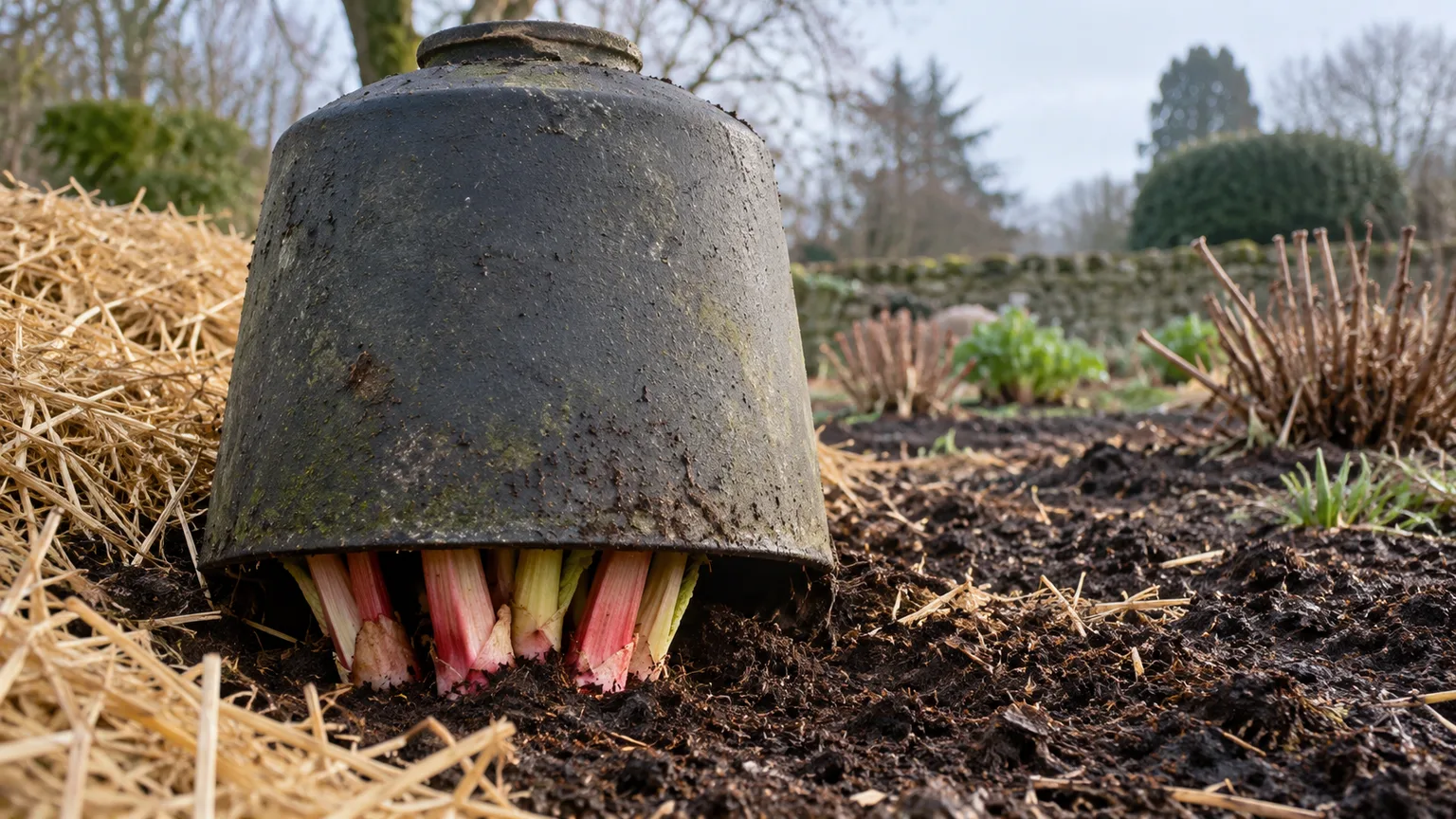
Forcing is an optional way to bring forward a small, tender crop from an established plant. Cover a strong crown with a tall opaque pot or forcing jar in late winter and check it regularly as the pale stalks develop. The RHS advises harvesting forced stems after roughly four to eight weeks and not forcing the same plant in consecutive years because forcing weakens it. Do not force a new crown or a plant that already looks thin; treat forcing as an occasional extra, not the standard harvest method.
Grow Rhubarb in a Container
Rhubarb can grow in a pot, but a small decorative planter is not a long-term home for a large perennial crown. Thompson & Morgan recommends a container of at least 40 liters, and Harvest to Table gives a similar 10-gallon minimum. More soil volume gives the roots a better buffer against drying and heat, so a 20-gallon pot is a more comfortable target when space allows. Use a fertile, free-draining potting mix amended with compost, not dense garden soil that can compact in the container.
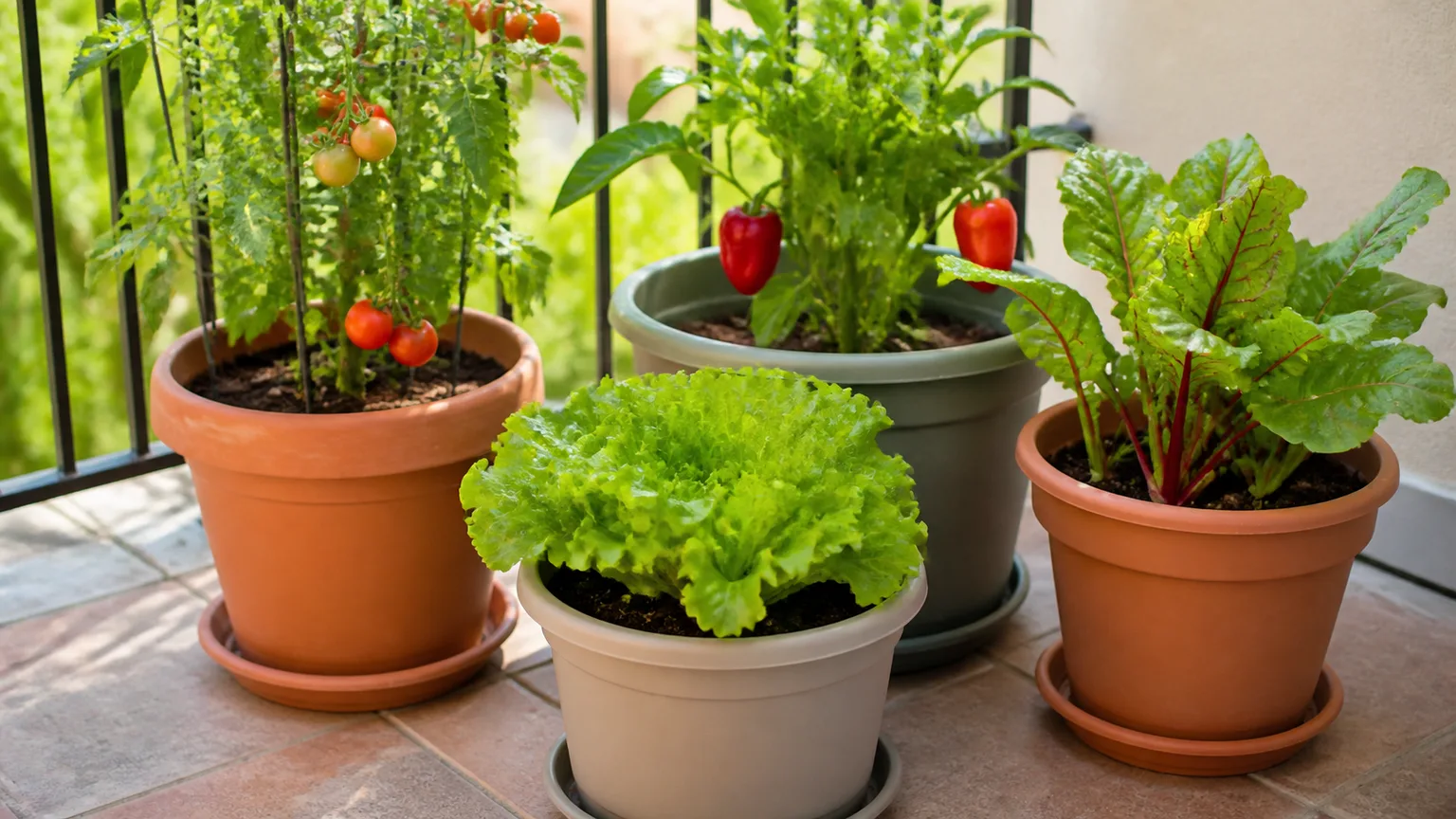
Set the crown at the depth recommended for that crown type, water it in, and place the pot where it receives generous light without baking against a hot wall. Containers need moisture checks more often than beds, but the pot must never sit in a saucer of standing water. In winter, the root ball is more exposed to freeze-thaw than a garden bed, so move the pot to a sheltered, unheated spot or insulate the outside if severe freezes are expected. Do not bring it into a heated room; the plant needs its dormant season.
A container crop is usually smaller and may need division or fresh compost sooner than an in-ground plant. If the crown fills the pot, growth slows, or roots circle densely, divide the plant or move it into a larger container while dormant. A pot is best for a patio or a garden with poor native soil, not as a way to get a full-sized crown into a tiny space.
Divide an Older Clump to Restore Vigor
Divide a mature rhubarb plant when the center becomes crowded, the stalks stay thin despite good conditions, or the clump has been in place for roughly five years. The RHS recommends dividing large clumps about every five years, especially when growth weakens. Division renews a plant and gives you extra crowns, but it is also a major disturbance. Do it while the plant is dormant in late autumn or early spring, not while it is producing a heavy crop.
Lift the clump with a spade or garden fork, keeping as much root intact as possible. Use a clean, sharp spade or knife to cut the crown into pieces, each with a healthy portion of root and at least one sound bud. Discard soft, dark, or rotten sections rather than trying to rescue them. Replant the divisions promptly at the recommended depth, water them in, and treat them as newly planted: no harvest the first growing season.
If the old plant is infected, badly decayed, or has a history of weak, distorted growth, do not automatically propagate it. Choose a healthy division from the outer part of the clump or buy a disease-free crown. Dividing is a reset, not a cure for a poor site; improve drainage or reduce heat stress before replanting.
Solve the Problems That Weaken Rhubarb
Thin stalks have several possible causes. A young crown may simply need another year; an older one may be crowded and ready for division. Also check whether the plant is shaded by a newly grown tree, was harvested too hard, dried out in summer, or received excess nitrogen. Correct the condition you can see instead of applying more fertilizer by default.
A soft or declining crown points first to drainage. If the center is mushy, dark, or collapsing and the soil stays wet, crown rot is a serious possibility. Remove decayed tissue, improve the site drainage, and do not replant into the same waterlogged pocket. If most of the crown has rotted, replacing it after correcting the site is more reliable than trying to preserve a few damaged pieces. The RHS identifies rotting in damp conditions as a key rhubarb problem.
Leaf spots or holes do not always mean the edible stalks are unsafe, but they do indicate a plant-health issue worth checking. Remove badly affected leaves, keep debris from collecting around the crown, and water at soil level where practical so foliage dries quickly. Slugs and snails may chew young leaves; inspect after damp evenings and reduce hiding places around the plant. If damage spreads, identify the pest or disease before choosing a control. Do not apply a pesticide unless its label specifically permits use on edible crops and on the pest you have identified.
Flowering is not an emergency. Cut the flower stalk near its base, then reassess conditions. Older crowded clumps, excess nitrogen, and seasonal stress can increase flowering. One flower stalk does not prove the plant is failing, but repeated flowering combined with thin stalks is a prompt to review feeding, moisture, and whether the crown needs dividing.
Keep Leaves and Roots Away from People and Pets
Rhubarb stalks are the part used as food; the leaves and roots should not be eaten. NC State Extension’s Plant Toolbox identifies the leaves and roots as poisonous parts and lists soluble oxalates among the toxic principles. The leaves are large and may look like edible greens, so remove them at harvest and keep discarded foliage away from children, dogs, cats, and grazing animals.
Do not use the leaves in a salad, smoothie, or cooked dish, and do not feed them to pets or livestock. Keep cut foliage out of animal-accessible compost if pets or grazing animals can reach the pile. If a person or animal eats a substantial amount, contact a poison-control service or veterinarian promptly and provide the plant name; do not wait for symptoms to appear. The edible stalk does not make every part of the plant safe.
Conclusion
Rhubarb is easiest to grow when you choose a permanent, fertile, well-drained spot and let the crown establish before taking a crop. Plant a sound crown with its buds oriented correctly, keep moisture steady without letting the soil stay saturated, and leave a substantial leaf canopy after every harvest.
Think of the plant in stages: establish it in year one, harvest lightly only when growth supports it, and divide an older crowded clump when stalks thin despite good care. In hot summers or a small garden, shade and a large pot can help, but they do not remove the plant’s need for space, seasonal dormancy, and restraint. Harvest the stalks, discard the leaves and roots, and a healthy crown can return with a useful crop for many years.



