White Feather Hosta Care: Planting, Water & Shade
Learn White Feather hosta care: choose deep shade, keep soil moist but draining, understand seasonal color changes, and manage pests, pots, and winter dormancy.
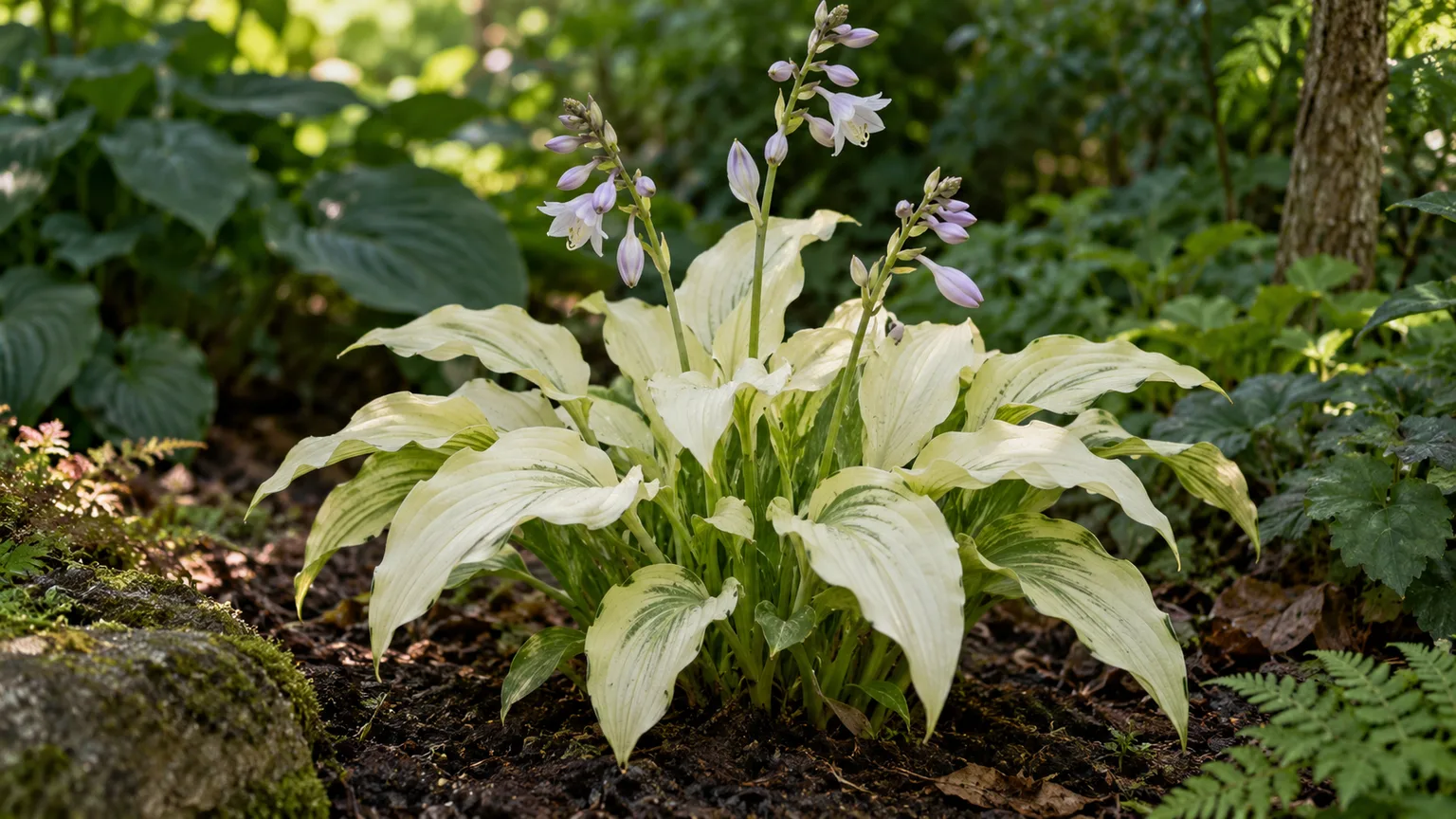
White Feather hosta is grown for a brief, luminous flush of cream-white spring leaves, not for foliage that stays white all summer. Give it a sheltered, shady site with soil that holds moisture but drains freely, and expect green veins and streaks to appear as the leaves mature. That color shift is normal; direct sun, dry roots, and waterlogged soil are the problems to prevent.
This cultivar rewards a little more attention than a tough green hosta because its new leaves are thin and pale. The practical goal is to protect the early foliage, let the plant build enough green tissue through summer, and keep the crown healthy enough to return next spring.
White Feather Hosta Care at a Glance
| Need | Good starting point | What to expect |
|---|---|---|
| Light | Full or bright shade; avoid hot direct sun | White leaves are easily scorched |
| Soil | Fertile, humus-rich, moist but well-drained | The crown must not sit in winter-wet soil |
| Water | Check the root zone and water when it begins to dry | Pots and new plants need closer checks |
| Size | Usually a small hosta, roughly 6–10 inches tall and about 2 feet wide | Published estimates vary by source and growing conditions |
| Flowers | Lavender to lavender-purple flowers on upright stalks in summer | Bloom timing varies with climate |
| Habit | Deciduous, clump-forming perennial | Foliage dies back for winter dormancy |
Missouri Botanical Garden lists Hosta ‘White Feather’ for zones 3–8, with a 6–9-inch foliage height and a 2–2.5-foot spread; the RHS describes a clump-forming plant up to about 30 cm tall and gives a broader size range. Treat the label as a planning estimate, not a guarantee, and leave space for the mature clump. The Missouri Botanical Garden Plant Finder is especially useful for cultivar-specific shade and size details, while the RHS plant profile confirms the foliage and flowering cycle.
Some editorial profiles list zones 3–9, while Missouri Botanical Garden lists 3–8. Because published ratings differ, check the plant label and local experience rather than assuming every garden at the edge of a range will perform alike. A hardiness rating estimates winter survival; it does not promise vigorous growth in summer heat, dry shade, or a pot exposed to freezing winds. The HGTV profile and Home for the Harvest’s White Feather guide both show the broader range.
What Makes White Feather Hosta Different
The cultivar is a small, clump-forming perennial hosta with narrow, tapered leaves and gently wavy edges. Its dramatic spring color makes it a good foreground plant beside a path or in a container that can be kept in shade, but the leaves are more delicate than those of many mature green or blue hostas. It is not a true lily: “plantain lily” is a common name for hostas, whose botanical family is Asparagaceae.
White Feather is also a slower, less forgiving choice than a broad-leaved green hosta. Its initial pale growth has less chlorophyll available for photosynthesis, so it benefits from rich soil, steady moisture, and protection while leaves unfold. Do not judge the plant by how quickly it fills a bed in its first year; establish the crown first and let its seasonal pattern become familiar.
Why Its White Leaves Turn Green
New leaves emerge creamy white, then develop green veins and streaks as they open and mature. That greening is part of the plant’s normal cycle: chlorophyll helps the leaf capture light and make sugars that support the plant and replenish its underground crown. HGTV’s cultivar profile explains this trade-off, and the RHS White Feather record describes the same white-to-green progression.
The white phase usually lasts longest early in the growing season, but the calendar depends on spring temperatures and the plant’s growing conditions. Do not try to hold leaves white by withholding water, starving the plant, or moving it into deeper and deeper darkness. Those tactics reduce the plant’s ability to grow; they do not reset its seasonal color. A cultivar-specific growing profile from HGTV also notes that the changing veins and pale-green cast are expected.
Color is not a reliable stand-alone health test. A leaf that develops green veins evenly and remains firm is likely following its normal pattern. A bleached patch with crisp edges on the sun-facing side suggests scorch; limp leaves with dry soil point toward water stress. Compare new growth over several weeks rather than treating ordinary greening as a nutrient deficiency.
Where to Plant White Feather Hosta
Choose the site before you buy or plant. The best place is sheltered from afternoon sun and drying wind, with soil that stays evenly moist after rain but does not puddle. A north- or east-facing bed, the north side of a building, or a bright spot beneath a high tree canopy may work, provided tree roots are not taking most of the available water.
Observe the spot at different times of day. Morning light can be gentle in a cool climate, but the same exposure can become harsh when reflected from pale walls, paving, or a south-facing fence. If you cannot tell how much direct sun reaches the ground, check it on a clear day before planting; moving a hosta after its leaves scorch does not repair the damaged foliage.
The cultivar-specific advice is more conservative than general hosta guidance. Many hostas tolerate morning sun, but Missouri Botanical Garden advises full shade for ‘White Feather’ because its thin white leaves scorch readily. The RHS guide to hostas explains why light needs vary among cultivars; for this one, start with a protected site and only test brighter light if your local climate is cool and the leaves remain unmarked.
How Much Shade Is Enough?
“Full shade” does not have to mean a dark, dry tunnel under dense tree roots. Bright open shade or shifting, dappled light can give the plant useful ambient light without baking the foliage. Avoid sustained direct midday and afternoon sun, particularly during hot weather or after a heat-reflecting surface warms the bed.
Deep shade can still be a poor site if it is dry. Large tree roots may intercept rain before it reaches the hosta, and the soil under eaves can remain dry even when nearby beds are moist. If the root zone cannot stay damp with sensible watering, use a container where you can control the growing mix or select a different perennial better suited to that site.
Planting in the Ground: Step by Step
Plant in spring or early fall when temperatures are moderate and the soil is workable. Spring planting lets you watch the first leaf cycle closely; early fall gives roots time to settle before the ground freezes. Avoid planting into summer heat unless you can water reliably and provide temporary shade, and do not work frozen or waterlogged soil.
Before planting, water a potted hosta so the root ball is evenly moist. Loosen the soil across a broad area and remove perennial weeds. If the spot floods or remains sticky and saturated after rain, improve the site first or plant on a raised bed; filling a single hole with loose compost will not fix a poorly drained planting zone.
Set the plant with its crown—the point where leaves emerge from the roots—at the same level it sat in its nursery pot. Dig a hole about twice as wide as the root ball, loosen circling roots gently, spread them outward, backfill, and water to settle the soil. Keep the growing points visible rather than burying the crown under extra soil or a thick mulch blanket. University of Georgia Cooperative Extension’s hosta guide recommends a wide planting hole, good drainage, and dividing only when a clump has enough growth to support the separated plants.
Space this small cultivar for its mature spread rather than the size of the nursery pot. Leave about 2 feet between plants as a reasonable starting point, adjusting for the label and how quickly nearby companions fill in. Give each clump air and access for watering; crowding makes it harder to spot slug feeding and encourages you to pour water onto leaves instead of the soil.
Soil, Mulch, and Drainage
White Feather wants fertile soil rich in organic matter, with moisture that is available to roots but excess water able to drain away. Loam is convenient, but clay or sandy ground can also work if it is improved and does not remain waterlogged or dry out too fast. The cultivar’s pH tolerance is broad enough that most gardeners do not need to chase a precise number before planting.
For compacted or sandy soil, work compost or well-rotted organic matter into the top layer across the planting area. If clay stays saturated, improve drainage with a raised bed or a better location instead of relying on a small planting-hole amendment. Hosta roots and crowns tolerate regular moisture better than stagnant water, especially through a cold winter; Georgia Extension notes that soggy conditions can be damaging.
A thin organic mulch helps slow evaporation and reduces competition from weeds. Keep it a couple of inches away from the crown so air can reach the base and the emerging shoots are not trapped under a wet mat. Replenish only when the layer has thinned; piling mulch against the plant does not make it more drought-proof and can keep the crown too wet.
Watering Without Causing Rot
Water according to the soil, not a weekly schedule. During the first growing season, check every few days in warm or dry weather and water thoroughly when the root zone is beginning to dry. For an established garden clump, feel the soil several inches below the surface; if it is cool and slightly damp, wait, but if it is dry at root depth, water slowly at the base.
A deep soak is more useful than frequent splashes that wet only the surface. Apply water under the leaves so it reaches the roots, then let excess drain. The RHS suggests keeping soil slightly damp to about 6 inches in dry spells; container plants need more frequent checks because a limited volume of mix dries faster than a garden bed.
Do not assume every wilt means thirst. If the soil is dry and the leaves are limp, water and reassess after the root ball has had time to absorb it. If the soil is already wet, stop watering and check for drainage, a blocked pot hole, or a crown sitting too low. Persistent wilt in saturated soil can mean root or crown damage, and more water will make that problem worse.
Brown leaf margins can follow drought, wind, or excess sun, so inspect the plant’s exposure as well as the soil. A hot afternoon may wilt leaves temporarily even when the soil is moist; if the plant perks up as temperatures fall, improve shade and airflow before increasing irrigation. A general hosta growing guide from BBC Gardeners’ World Magazine also emphasizes free drainage in pots and warns against leaving hosta compost waterlogged.
Fertilizer: Feed the Soil, Not the Hype
Start with healthy soil, not a strong fertilizer dose. A light annual top-dressing of compost is enough for many garden hostas, while a soil test can tell you whether the bed actually needs additional nutrients. Georgia Extension describes hostas as responsive to light feeding and recommends using soil-test information rather than assuming every planting needs the same fertilizer.
If growth is weak, check light, moisture, planting depth, root competition, and the age of the clump before adding fertilizer. The pale spring leaves are not a sign that the plant needs extra nitrogen, and fertilizer cannot prevent the normal shift toward green. For a container, use a balanced product only according to its label during active growth; stop feeding as the plant enters dormancy.
Avoid adding manure or concentrated fertilizer directly against the crown. Fresh or excessive inputs can injure roots, while lush tender growth may draw more feeding damage. A modest, repeatable routine is easier to evaluate than changing soil pH, fertilizer, and watering all at once.
Seasonal Growth, Flowers, and Dormancy
In spring, pointed shoots emerge from the crown and unfurl into the plant’s palest foliage. Watch for slug feeding during this vulnerable stage and keep the soil moist as new leaves expand. The green veins generally appear gradually rather than all at once, so a uniform transition is usually not a reason to intervene.
By summer, the leaves are greener and the plant may send up narrow flower stalks with lavender or lavender-purple tubular blooms. Missouri Botanical Garden records bloom in June and July in its local conditions; timing shifts with climate. Leave the flowers if you enjoy them or want to observe the plant’s full cycle. Remove a fading stalk for neatness, but cutting flower stems is not required to keep the hosta healthy.
As fall temperatures cool, the foliage yellows, collapses, and dies back. This is normal dormancy, not a sign that the plant has failed. After a hard frost or once the leaves have completely withered, cut the dead foliage at soil level and remove it from around the crown; do not cut healthy green leaves early, because they are still supporting the plant.
The plant returns from its rhizome in spring. In areas with late frosts, cover newly unfurled shoots overnight when a hard freeze is forecast, then uncover them during the day. Established in-ground plants need no warm indoor winter period; containers require more protection because the root ball is exposed to colder, wetter conditions than soil in a bed.
Growing White Feather Hosta in a Pot
A pot is useful when your garden has no suitable shade, when slugs and rabbits make a bed difficult to protect, or when you want to move the plant away from summer sun. Choose a stable container at least 12–18 inches wide with several open drainage holes; a wider pot will stay evenly moist longer and leave room for the clump to grow. The RHS recommends large containers for hostas, and BBC Gardeners’ World Magazine advises avoiding metal pots that heat the roots.
Use a quality, moisture-retentive potting mix that still drains freely. Set the crown at the same height it grew in the nursery pot, water thoroughly, and empty any saucer that holds standing water. Place the container in bright shade, not against a hot wall or on paving that bakes in the afternoon. A wheeled pot can make seasonal adjustments easier, but do not use it to shuttle the hosta into sun once the leaves have opened.
Container soil dries faster than garden soil, so check it frequently in warm, windy weather. Feel below the surface or lift the pot to learn its normal weight after watering; water when it becomes noticeably lighter and the root zone is drying, then allow it to drain. If leaves wilt repeatedly by midday, move the pot to a cooler position and consider whether the container is too small before increasing fertilizer.
In cold-winter climates, protect the root ball rather than bringing the plant into a heated room. Move the pot to an unheated sheltered location, or sink the container into the ground and mulch around it after the soil cools. Keep the mix from becoming waterlogged; it should not dry into dust, but a dormant plant uses much less water than one in active growth. A garage that stays warm enough to keep the leaves growing is not a substitute for an outdoor winter dormancy.
Propagating White Feather Hosta
Division is the dependable way to make another plant that keeps the named cultivar’s traits. Do it only when a clump is large enough to handle and has several healthy growing points; frequent division is not necessary for a young, slow-growing plant. Spring as shoots begin to emerge is the easiest time to see where the eyes are, though early fall can also work if roots have time to settle before hard frost.
RHS guidance says divisions should retain healthy buds and roots, then be replanted at their original depth and watered. BBC Gardeners’ World Magazine also recommends preserving healthy shoots on each division. A tiny sliver without a substantial eye or roots may survive, but it will establish slowly and is a poor shortcut when your goal is a reliable second plant.
How to Divide an Established Clump
Water the plant the day before dividing if the soil is dry. Loosen the clump with a garden fork, lifting from outside the crown so you keep as many roots as possible. Shake or rinse away enough soil to see the growing points, then use a clean, sharp spade or knife to cut through the crown between them.
Keep at least one firm eye and a generous bundle of roots on each division; larger sections establish faster. Replant divisions immediately at their original depth, firm the soil around the roots, and water them in. If you cannot replant right away, keep the roots shaded and damp rather than leaving them exposed to wind.
Do not divide a stressed plant just because its leaves look small or pale. First confirm the plant is not suffering from scorch, drought, waterlogging, or slug damage. Division adds root disturbance, so wait until the clump is healthy and established enough to recover.
Why Seed Isn’t the Best Way to Preserve the Cultivar
Hostas can be grown from seed, but seedlings are not a dependable way to reproduce a named cultivar. They may differ in leaf color, shape, and vigor from the parent, especially in variegated types. The RHS notes that seed from variegated hostas generally does not come true, while divisions produce plants identical to the parent.
If your goal is specifically another White Feather, buy a correctly labeled plant or divide a healthy clump. Seed is an option for experimentation, not for maintaining the cultivar’s characteristic spring-white foliage. A seedling that looks different is not necessarily a sign that you cared for it incorrectly; it may simply have inherited a different combination of traits.
Diagnosing Leaf Damage and Growth Problems
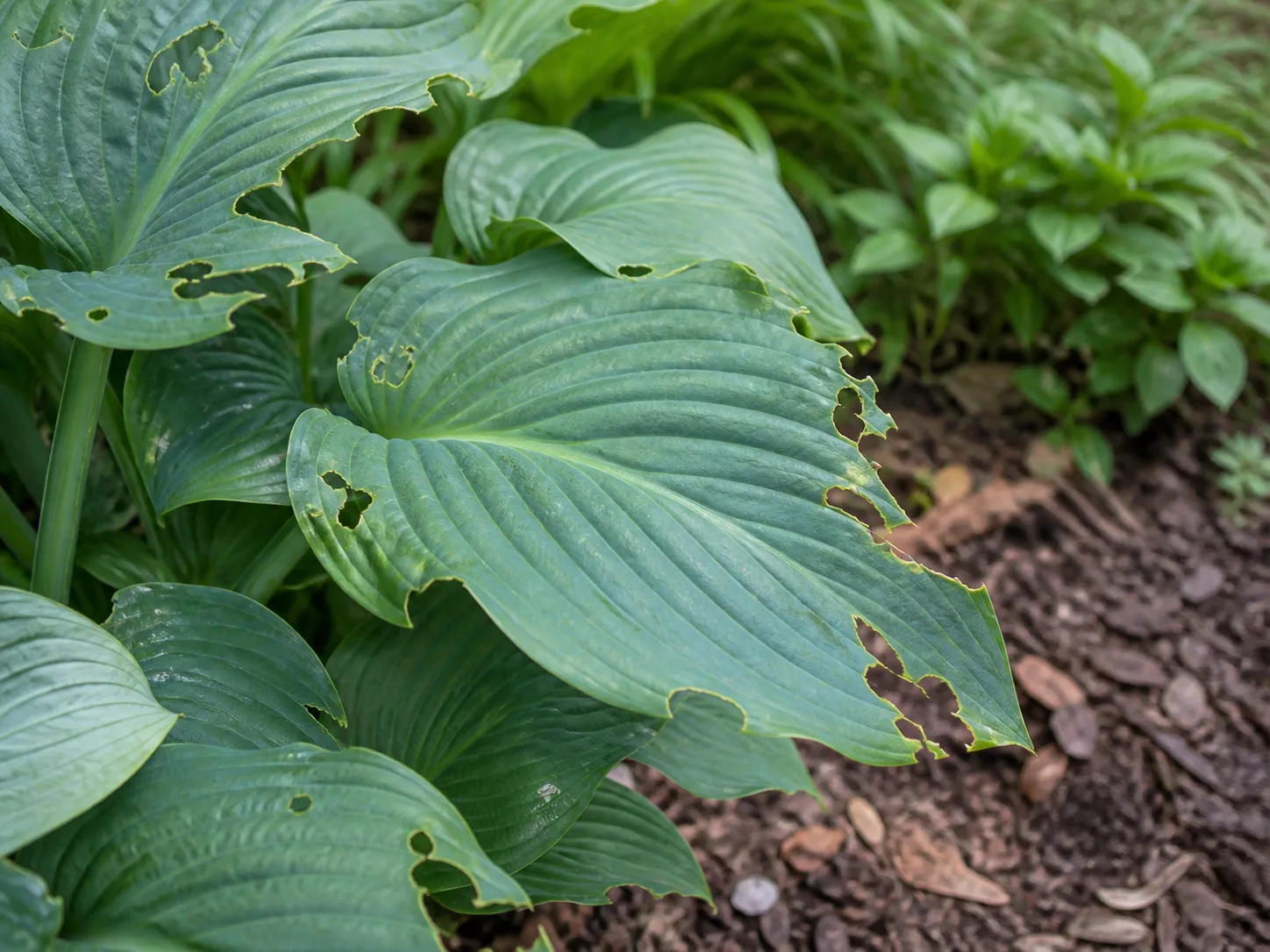
Use the pattern, texture, and timing of damage together. A few uniformly green veins in spring point to normal development; crisp, pale patches on the side exposed to sun point toward scorch. Ragged holes, shredded leaf edges, and missing sections suggest feeding damage, while limp foliage with dry soil is more consistent with drought.
If a plant looks wrong, check the root zone before changing its routine. Confirm how many hours of direct sun it receives, feel the soil several inches down, and inspect the crown for softness or a foul smell. Make one change at a time, then judge the next leaves: damaged hosta foliage will not heal or turn green again after conditions improve.
Sunburn, Wilting, and Soggy Roots
Sunburn usually appears as bleached, tan, or brown tissue on the side facing afternoon light. Move a potted plant to shade immediately; for an in-ground specimen, use temporary shade while you plan a better permanent site. Cut off only leaves that are mostly dead or torn, because partially green foliage still contributes energy.
Drought stress often shows as limp leaves and dry soil, followed by brown margins if it continues. Water deeply at the base, then add a light mulch layer around—but not over—the crown. If the soil dries unusually fast, look for tree-root competition, a small container, or wind exposure rather than assuming the cultivar simply needs more fertilizer.
Waterlogging or crown trouble is more likely when the plant wilts even though the soil stays wet, the crown feels soft, or leaves collapse from the center outward. Stop watering, clear a blocked drainage hole, and let the soil drain; in a poorly drained bed, lift the plant during a suitable season and move it to a raised or better-drained position. Persistent collapse, unusual streaking, or repeat symptoms on new leaves deserves an extension or plant-diagnostic service assessment instead of an automatic pesticide treatment.
Slugs, Deer, and Pet Safety
Slugs and snails can damage the tender spring leaves before a young hosta has time to fill out. Look for irregular holes and shiny slime trails, then inspect under pots, boards, dense mulch, and the lower leaf surfaces in the evening or after rain. Hand-picking, reducing wet hiding places, and using a physical barrier around a container can lower pressure; no single tactic works in every garden.
If you use a slug bait, read the current product label and follow it exactly, including pet and wildlife precautions. Do not spread more than directed or assume that an ingredient makes every product harmless. RHS guidance identifies slugs and snails as common hosta pests, and Missouri Botanical Garden notes that severe feeding can happen quickly on exposed plants.
Deer and rabbits may also eat the foliage. A barrier around the bed or a protective cage over a young plant is more reliable than hoping the leaves are unappealing; repellents can require reapplication and may fail after rain. Container placement can reduce access only if the pot is truly beyond the animal’s reach.
Keep the plant where curious pets cannot chew it. The ASPCA lists hosta as toxic to cats, dogs, and horses because it contains saponins; reported signs include vomiting, diarrhea, and depression. If an animal eats any part of the plant, contact a veterinarian or the ASPCA Animal Poison Control Center promptly rather than waiting for symptoms.
Conclusion
White Feather hosta is a seasonal foliage accent for a cool, sheltered shade garden. Plant it where direct sun cannot scorch its thin spring leaves, give it rich soil that stays moist without staying soggy, and let its green veins develop as the foliage matures. Its size and growth rate are modest, so patience and a good site matter more than repeated feeding or aggressive dividing.
Check the soil before watering, keep the crown clear of wet mulch, protect new leaves from slugs and browsing animals, and give container roots a plan for winter. When its leaves fade in fall, let the plant rest; a healthy crown is what brings the pale spring display back.



