8 Houseplants to Grow With Snake Plants for a Lush Home
Build a lusher indoor garden with eight plants that pair visually with snake plants. Learn which can share a planter and which need separate pots.
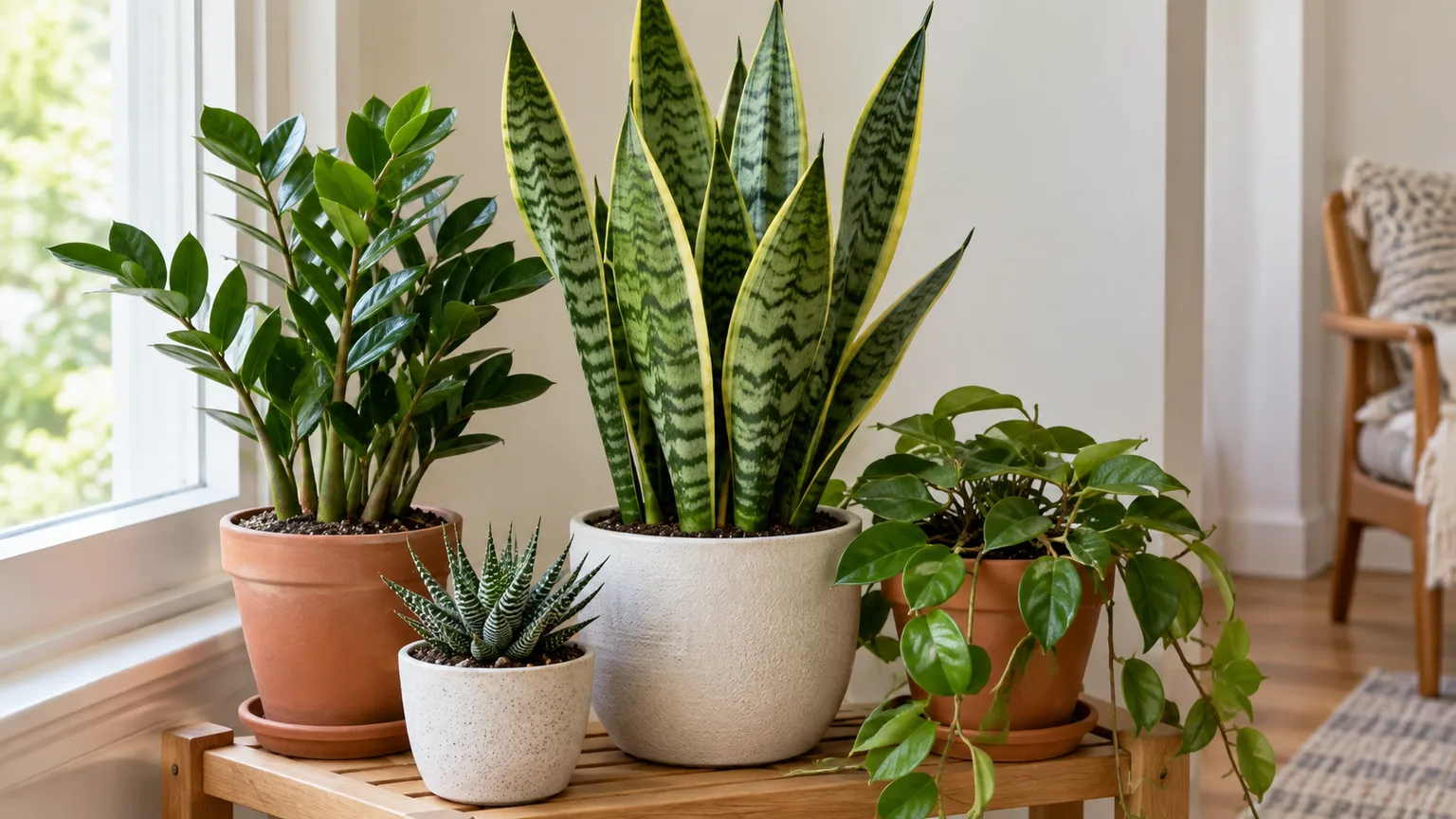
Snake plants bring a strong vertical shape to an indoor garden, but their best companions are not automatically the plants that look good beside them. The useful test is whether each plant can thrive in the light you have and whether you can water it without keeping the snake plant’s soil wet for too long.
You can still make a lush arrangement without forcing several root systems into one pot. In most homes, grouped individual pots are the more reliable choice: they let you combine upright leaves, compact rosettes, and trailing vines while watering each plant on its own terms.
The snake plant, now commonly classified as Dracaena trifasciata, prefers a fast-draining mix and tolerates low light, though it generally grows better in bright, indirect light. Penn State Extension advises watering when the soil is dry and using a well-drained medium; Colorado State University Extension notes that deep shade can mute leaf markings. NC State Extension also records overwatering as a cause of root rot. Those needs are the baseline for judging every pairing (Penn State Extension, Colorado State University Extension, NC State Extension Plant Toolbox).
Can you plant other houseplants in the same pot as a snake plant?
Yes, but only when the plants share a workable range of light, moisture, and soil conditions. A single container creates one root zone and one drainage pattern, so you cannot give one plant a thorough drink while keeping the soil around another plant dry. That is the main reason “companion” should not always mean “planted together.”
For a mixed display, ZZ plants and compact Haworthia are the closest matches on this list. Aloe, jade, and Echeveria are attractive low-water neighbors but usually need a brighter position than a snake plant can tolerate in a dim room. Dracaena and Hoya can sit nearby in their own pots; neon pothos is easiest to manage separately because its mix should not be treated like a succulent’s.
| Plant | Best visual role | Shared soil with snake plant? |
|---|---|---|
| ZZ plant | Glossy, upright foliage | Most practical match; still monitor soil |
| Haworthia | Compact striped rosette | Possible in bright indirect light and a quick-draining mix |
| Dracaena | Taller, tree-like accent | Better in its own pot as it grows |
| Jade plant | Sculptural branches | Same sunny display, separate pot |
| Aloe vera | Spiky rosette | Same bright window, separate pot |
| Hoya carnosa | Trailing leaves | Usually easier to water separately |
| Echeveria | Colored low rosette | Bright spot, separate pot |
| Neon pothos | Lime trailing vine | Separate pot; do not use the snake plant’s dry-soil cue |
Same planter or same room?
A cachepot, plant stand, or shelf can hold several plants without making them share soil. This gives you the full “thriller, filler, spiller” effect—an upright snake plant, a shorter plant in front, and a vine over the rim—while each plant stays in its own draining grow pot. The display looks unified, but watering remains individual.
Plant directly into one container only if you can meet four conditions: the plants tolerate the same light, the mix dries at a useful pace for both, the pot has open drainage, and you can check moisture near each root zone. If the combination depends on you remembering which half of one pot should stay wetter, separate pots are the safer design.
Check light before combining roots
“Low-light tolerant” means a plant may persist in a less-bright room; it does not mean that every companion thrives in the darkest corner. A snake plant can survive low light, but growth slows, and variegated leaves may lose contrast. A jade or Echeveria placed beside it in that same corner may stretch toward the window or lose its compact form.
Start by choosing the spot for the most light-demanding plant, then decide whether the snake plant can live there too. If the room is dim, build the group around the snake plant, ZZ, and a shade-tolerant Hoya in separate pots. If you have a bright window, add the sun-loving succulents, but keep them where the light is strongest rather than hiding them behind the snake plant.
Eight houseplants to grow with snake plants
The plants below offer different shapes and colors, but they are not interchangeable in care. “Good pairing” means the plant can share the snake plant’s room or display; the notes identify where sharing one soil-filled pot is realistic and where individual grow pots are better.
1. ZZ plant: the closest low-water match
The ZZ plant (Zamioculcas zamiifolia) makes a strong partner when you want a second upright form without adding a thirsty tropical plant. Its arching stems and glossy oval leaflets soften the snake plant’s stiff, sword-shaped leaves, and it remains presentable in the same bright-indirect-to-lower-light range.
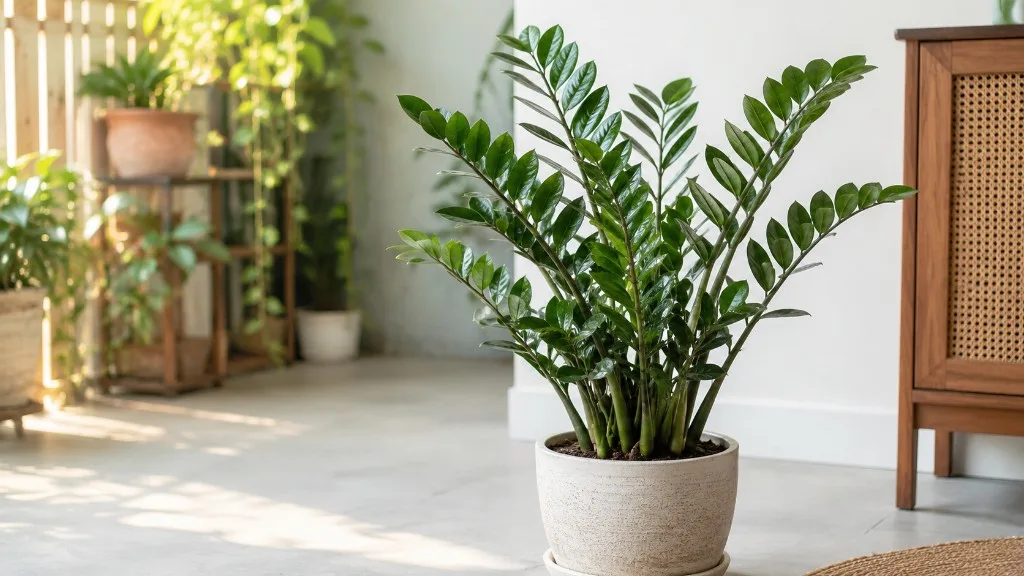
This is one of the most practical same-pot candidates because the ZZ stores water in thick underground rhizomes and does not benefit from constantly wet soil. Still, use a free-draining mix and a container with drainage holes; don’t water just because one stem looks slightly less firm. A small ZZ can work with a compact snake plant, but as both expand, root competition and limited airflow make separate pots easier.
For a balanced arrangement, place the ZZ beside or slightly behind a shorter snake-plant cultivar. Avoid pairing two large upright plants in a narrow cachepot: the ZZ’s mature width can crowd the snake plant and hide its outline. If your goal is a single large floor display, keep both in their own grow pots inside a shared decorative planter.
2. Haworthia: a compact succulent partner
Haworthia adds a low rosette beneath the snake plant’s upright leaves. Many varieties have firm, striped or speckled foliage and stay small enough to occupy the front edge of a mixed display without competing for height.
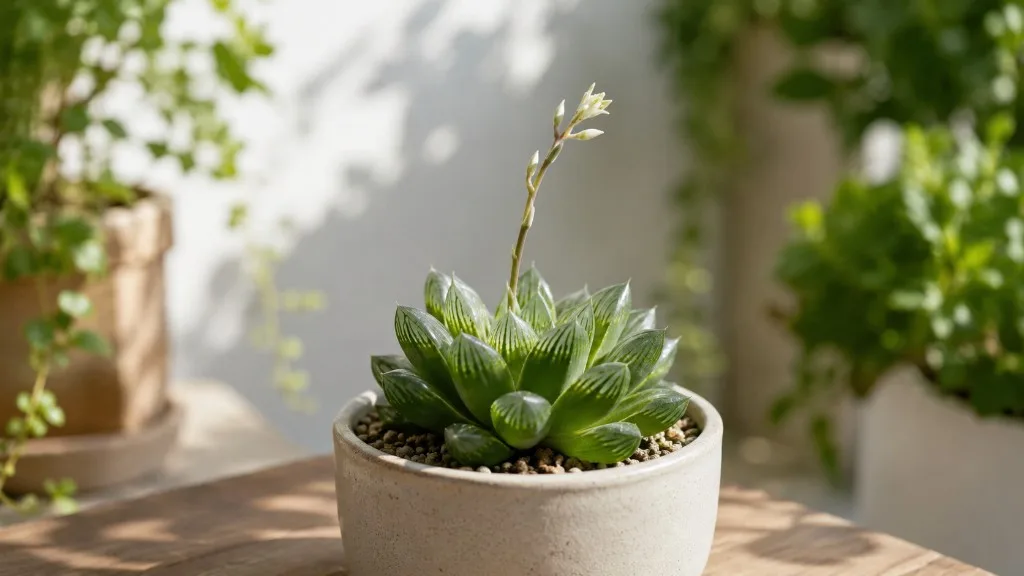
Its low-water habit makes Haworthia a closer match than a moisture-loving foliage plant, but it still needs enough light to keep a compact shape. Give it bright, filtered light and a gritty mix that does not remain damp. The exact requirements vary by species and cultivar, so check the plant label rather than assuming every plant sold as Haworthia handles the same exposure.
A compact Haworthia and a small bird’s-nest snake plant are the most plausible same-container pairing here, provided the pot drains freely and the mix dries between waterings. For an easier first try, keep both in separate nursery pots and nest them together. If the Haworthia begins to stretch, move it toward the brighter side of the window instead of increasing water.
3. Dracaena: a taller architectural neighbor
Corn plant and other Dracaena forms bring a cane-like or leafy vertical accent that echoes the snake plant without repeating its exact silhouette. A young Dracaena fragrans can fit on a stand beside a mature snake plant, while a taller specimen works as a separate floor plant in a larger room.
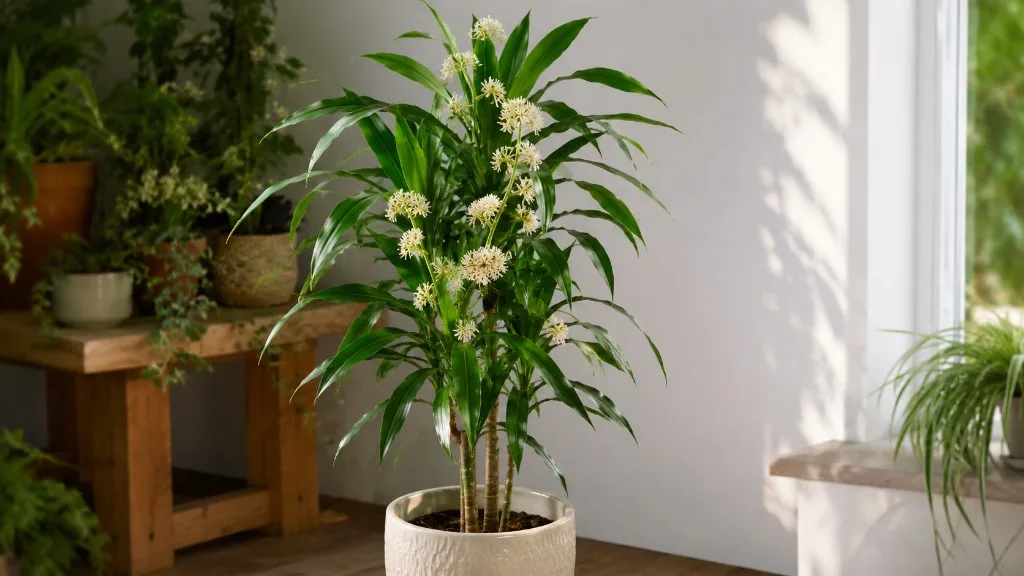
Snake plants themselves were reclassified from Sansevieria into Dracaena, but that relationship does not mean every Dracaena has identical care requirements. Penn State Extension names corn plant among the familiar members of the genus, while its snake-plant guidance still emphasizes dry soil and drainage. Treat the family resemblance as a visual link, not proof that they belong in one pot.
Keep a Dracaena in its own container so you can respond to its size and watering needs independently. It may need more regular moisture than a snake plant, and a large cane can quickly dominate a small arrangement. Put the two in similar indirect light, leave room between their leaves, and rotate the containers if one side grows toward the window.
4. Jade plant: a bright-window accent
Jade (Crassula ovata) contributes branching stems and thick oval leaves, making a useful contrast to a snake plant’s narrow vertical blades. A young jade looks especially effective in a low, heavy pot at the front of a sunny plant grouping.
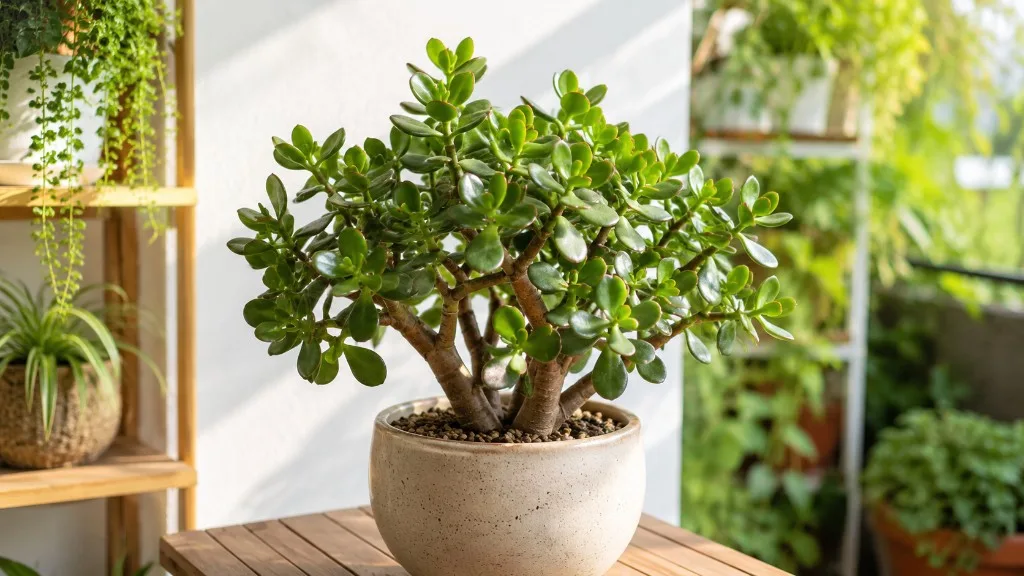
Jade is a better match for a bright sill than for a dim corner. It can tolerate a dry-down between waterings, but it needs ample light to maintain sturdy, compact growth. If the snake plant is in a deep interior spot, do not move the jade there simply to make the grouping symmetrical; let the jade occupy the brighter edge and keep both plants in separate pots.
A mature jade can branch widely and become top-heavy, so leave clearance from the snake plant and choose a stable container. If the stems lean or the spaces between leaves lengthen, improve the light gradually. Do not respond by watering more often; extra water will not correct insufficient light and can leave the roots sitting in a mix that stays damp.
5. Aloe vera: a sun-loving rosette
Aloe vera gives an indoor garden a fleshy, spiked rosette that sits low in front of a tall snake plant. Its form is neat and architectural, and its green leaves can look at home beside the snake plant even when the two are not planted together.
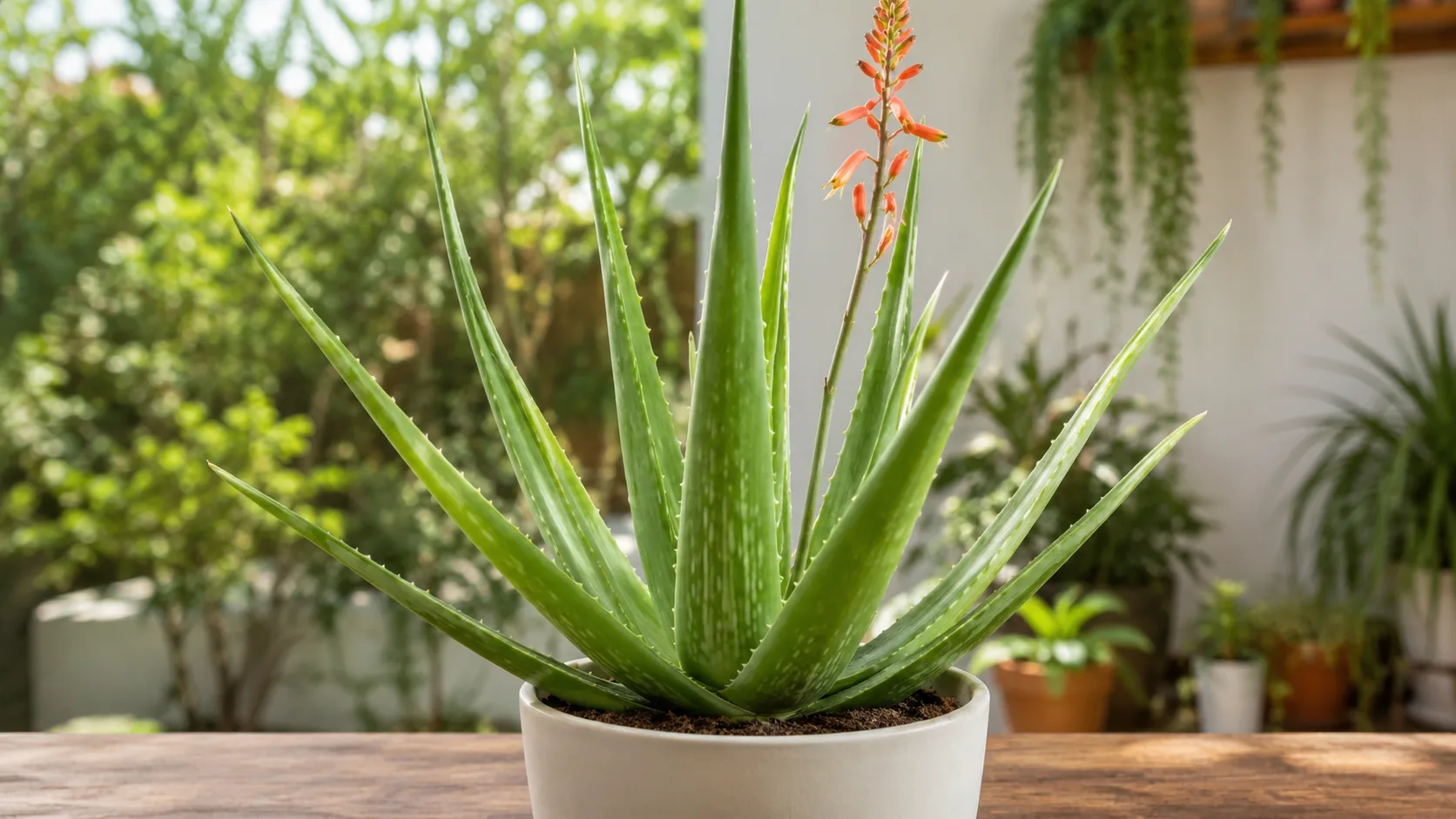
Aloe needs brighter conditions than many snake plants tolerate in low light. A sunny window can suit both if the snake plant is introduced to stronger light gradually and does not scorch; in a shaded room, the aloe may stretch or become pale. Keep aloe in a separate pot with drainage and a succulent-oriented mix, then place it where it receives the best available light.
Avoid burying aloe’s crown or leaving its pot in runoff inside a decorative container. Water the soil, not the center of the rosette, and let excess drain away. This pairing works well as a small sunny-window vignette, but the aloe’s position should be chosen for the aloe—not dictated by the snake plant’s tolerance of dimmer rooms.
6. Hoya carnosa: a trailing, dry-down companion
Hoya carnosa adds a trailing line and thick, waxy leaves that contrast with the snake plant’s upright form. Let a short vine spill from a shelf or stand beside the snake plant, or train it around a small hoop if you want a contained shape.
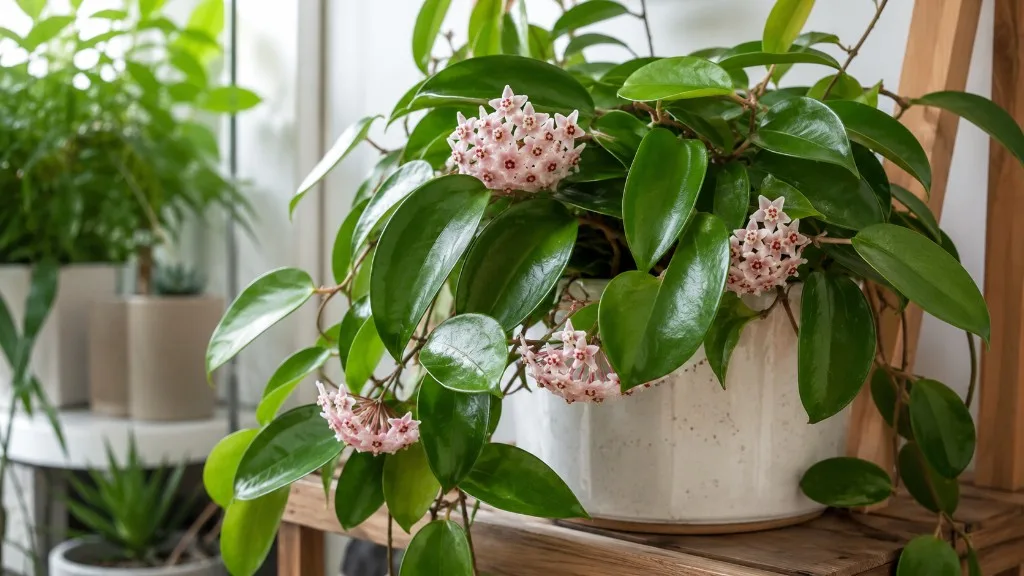
Hoya prefers bright, indirect light for steady growth and flowering, although it can grow without blooming in a less-bright spot. Its soil should not be kept continually wet, which gives it some overlap with a snake plant, but the two still differ in container shape, root space, and how quickly their mixes dry. A small, airy Hoya mix can dry much faster than a deep snake-plant pot.
Use individual pots unless you have experience monitoring both root zones in one container. Keep the Hoya near the snake plant rather than directly under its taller leaves, where it may receive too little light. A Hoya is also a better visual “spiller” than a plant to tuck tightly around the snake plant’s base; leave the soil surface accessible so you can check moisture and inspect for pests.
7. Echeveria: color for a sunny display
Echeveria forms a symmetrical rosette and often brings blue, pink, purple, or silvery tones into an otherwise green arrangement. Set one in a small pot in front of a taller snake plant to create a clear height change without letting the lower leaves disappear.
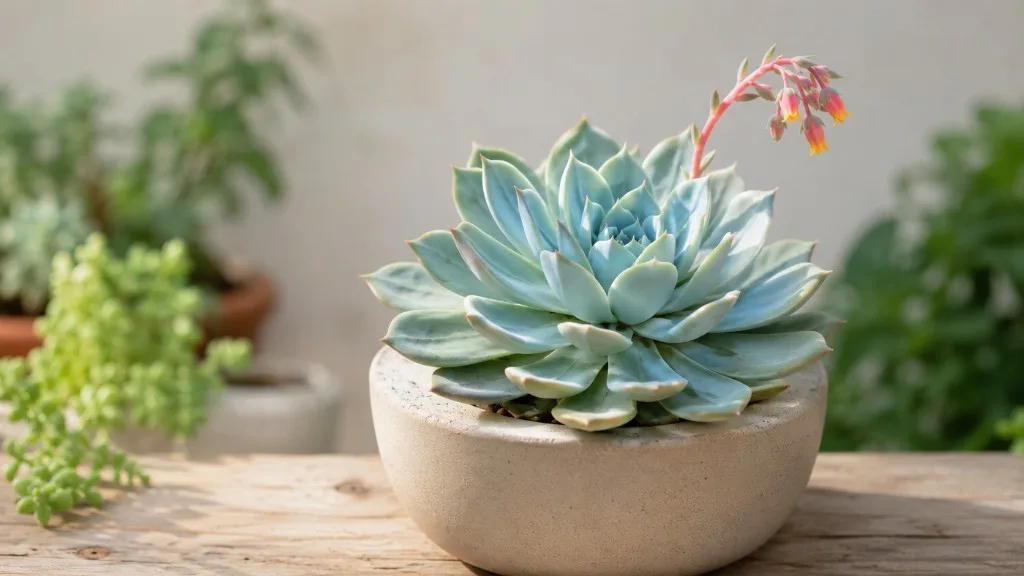
The main constraint is light. Echeveria generally needs a brighter, sunnier position than a snake plant in a low-light room, so treat the two as neighbors on a bright sill rather than automatic roommates in the same soil. Keep the Echeveria in its own small, draining pot; its shallow root ball and fast-drying mix are easier to manage separately.
If the rosette opens up, leans, or becomes leggy, move it toward brighter light gradually. A flapjack or paddle kalanchoe can play a similar sculptural role, but it is also a bright-light plant and its broad leaves may shade a smaller neighbor. Either one can add color to the display; neither should be chosen for a dim corner just because the snake plant tolerates it.
8. Neon pothos: a trailing plant for a separate pot
Neon pothos (Epipremnum aureum) supplies the vivid chartreuse color and trailing movement that a snake plant cannot. Set its pot on a nearby shelf or at the edge of a stand so the vine can drape without crossing the snake plant’s leaves.
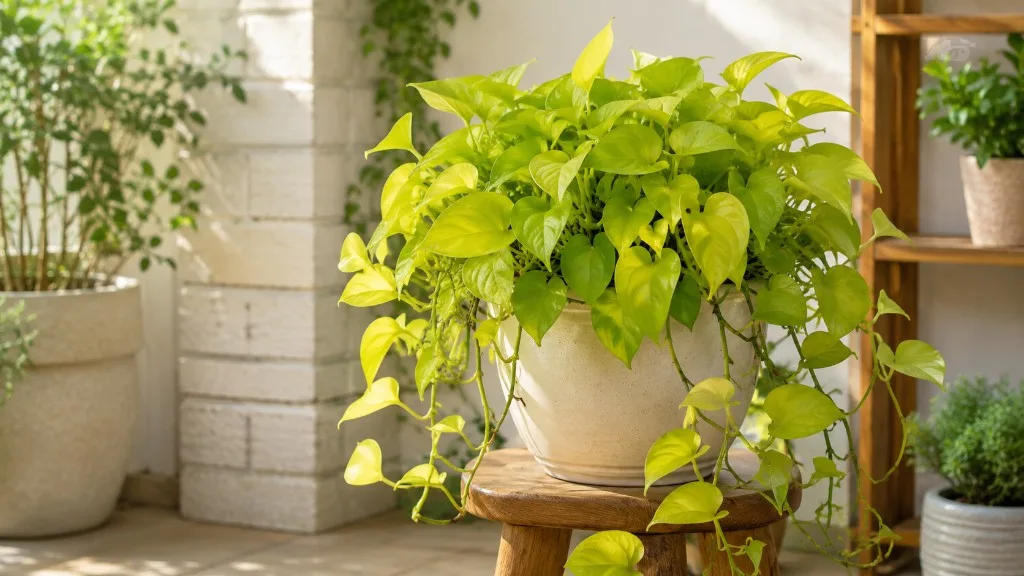
Pothos is adaptable and can grow in less-bright rooms, but its watering cues are not the same as a snake plant’s. Let the upper layer of its mix dry before watering, then check the plant and pot again; do not wait for the entire root ball to stay bone dry just because the snake plant’s soil is drying. In one shared pot, that compromise can leave the pothos thirsty or the snake plant too wet.
Keep pothos in its own grow pot and use a cachepot to bring it into the display. This gives you the color contrast without tying its watering to the snake plant’s longer dry-down. Trim long vines before they tangle around the snake plant or trail across a walking path, and check the undersides of leaves when you bring a new pothos home.
How to arrange the plants without compromising care
Think of the arrangement as a small group of plants with separate root environments. The snake plant supplies height; a ZZ or Dracaena can add a second vertical line; Haworthia, jade, aloe, or Echeveria can fill the lower foreground; and Hoya or pothos can spill over an edge. Choose only the shapes that fit the spot—eight options do not mean eight pots belong in one corner.
Use individual grow pots inside one planter
Choose a wide decorative planter or tray that can hold the plants’ own pots with a little space between them. Each grow pot should have drainage holes and sit above any collected water; after watering, lift it out, let it finish draining, and empty the cover pot. A cachepot hides mismatched nursery containers while letting you move the aloe toward the window or take the pothos to the sink.
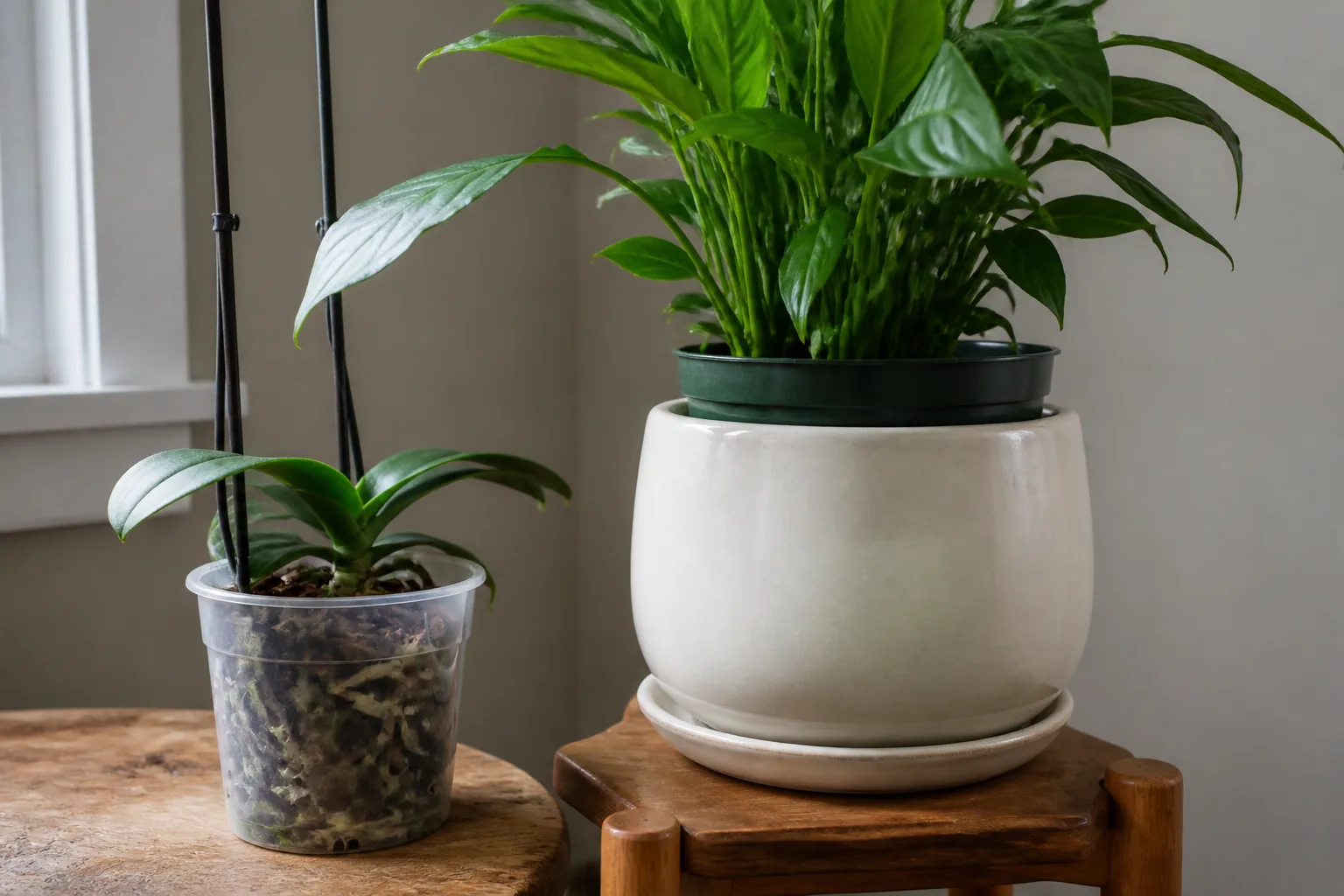
If you want to plant directly into one container, use a pot with drainage holes and a mix that dries predictably. Leave enough room between crowns for air and future growth, and do not fill the container with excess soil just to make it look full. A tight planting may look lush on day one but makes it harder to inspect roots, remove a declining plant, or adjust the arrangement when one species grows faster.
Layer height, leaf shape, and light
Put the tallest plant toward the back or center, with lower rosettes in front and trailing vines at the outside edge. That classic thriller-filler-spiller pattern works best when each plant remains visible and receives the light its leaves need. Avoid placing a broad Dracaena or a large snake plant directly in front of a small Haworthia or Echeveria.
Use the window as a lighting map. Place light-hungry succulents closest to the bright exposure, and move the snake plant slightly farther back if the direct sun is intense. A ZZ or Hoya can fill the middle layer, while pothos can occupy a lower shelf. Rotate the display occasionally for even growth, but do not rotate plants into a location whose light is unsuitable just to keep the composition symmetrical.
Water and maintain the display by pot
Do not water a mixed plant group on a fixed weekly schedule. The drying rate changes with season, light, room temperature, pot size, pot material, and soil texture. Savvy Gardening recommends checking the snake plant’s soil rather than relying on a calendar, and Gardening Know How explains that dense, moisture-retentive mixes can stay damp longer than a snake plant prefers (Savvy Gardening, Gardening Know How).
Check each pot separately before watering. For a snake plant, feel the mix below the surface and wait until it has dried substantially; when it is time, water thoroughly and let the container drain. For pothos, check its own mix and water sooner if its root zone is drying faster. A small pot of Echeveria may be ready well before a large snake plant, while a broad cachepot can conceal runoff if you do not lift the grow pots to look.
Feed each plant according to its own growth and label directions during active growth. Avoid adding extra fertilizer to compensate for low light or weak growth, and do not assume every succulent or foliage plant needs the same dose. Wipe dust from leaves, rotate pots when appropriate, and inspect new plants before placing them close to the rest of the collection.
Troubleshoot a pairing that starts to struggle
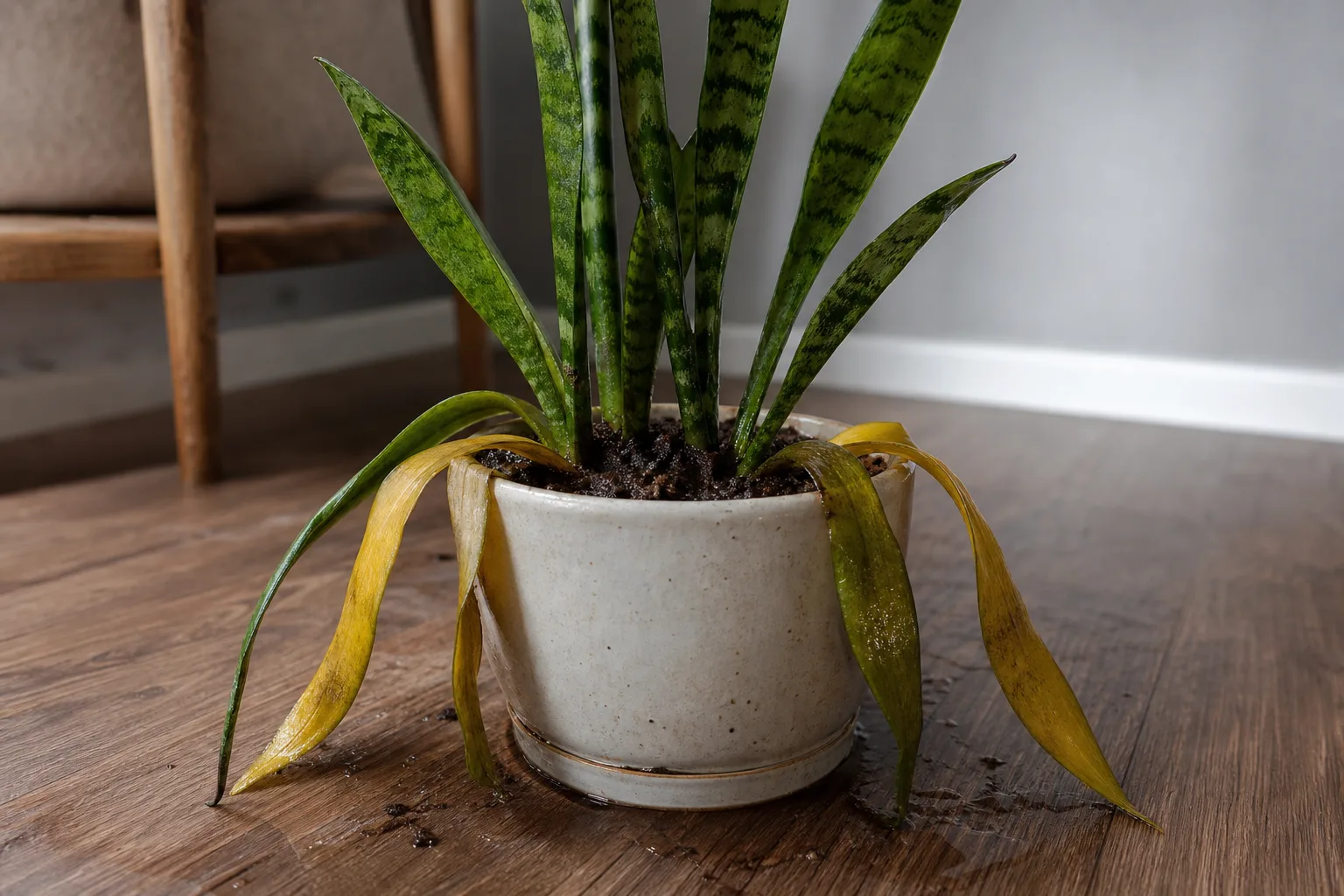
If the snake plant’s lower leaves yellow, soften, or collapse while the mix remains wet, check drainage and soil moisture before adding water or fertilizer. Persistent wetness is a stronger warning than a leaf’s color by itself. Lift the pot, empty standing water, and inspect the base; if roots are soft or dark, remove the plant from the shared arrangement and address the root problem separately.
If one plant wilts while another looks fine, do not change the whole display’s watering routine. Test that plant’s pot, then adjust its position or watering separately. A leggy succulent points toward insufficient light more often than a need for more water; a pothos with dry mix and drooping leaves may need water even while the snake plant next to it is still moist.
When growth declines after combining plants, consider crowding, light blockage, and roots competing for space. Separate the plants before the issue spreads: remove the one that is struggling, check its roots, and repot it in a container and mix suited to that species. If you find pests, isolate the affected pot and examine the remaining plants before returning it to the display.
Keep pets away from unsafe foliage
A mixed display is not automatically safer for pets because the plants look different or sit in separate pots. The ASPCA lists snake plant as toxic to cats and dogs and identifies saponins as its toxic principle; reported signs include nausea, vomiting, and diarrhea. Put the plant where pets cannot chew it, and check each companion by its exact botanical name before bringing it home (ASPCA: Snake Plant).
If a pet chews or swallows a plant, identify the species and contact a veterinarian or the ASPCA Animal Poison Control Center promptly. Do not wait for symptoms to become severe, and do not assume a plant is harmless because a small amount was eaten. If you need a pet-safe display, choose plants from a current veterinary or poison-control list and verify every species in the arrangement.
Conclusion
The best houseplants to grow with snake plants are the ones that suit the actual light and watering routine in your home. ZZ plants and compact Haworthia are the closest low-water partners for a shared container; Dracaena, jade, aloe, Hoya, Echeveria, and neon pothos can add height, texture, or color more reliably when they stay in their own pots.
Start with two or three plants, group them by light, and let each pot dry on its own schedule. A shared cachepot gives you the lush layered look without making every root live by the same watering rule.