When and How to Plant Anemone Bulbs
Find the right time to plant anemone bulbs by type and climate, then learn how to soak, space, and set corms so wet soil and winter damage do not undo the work.
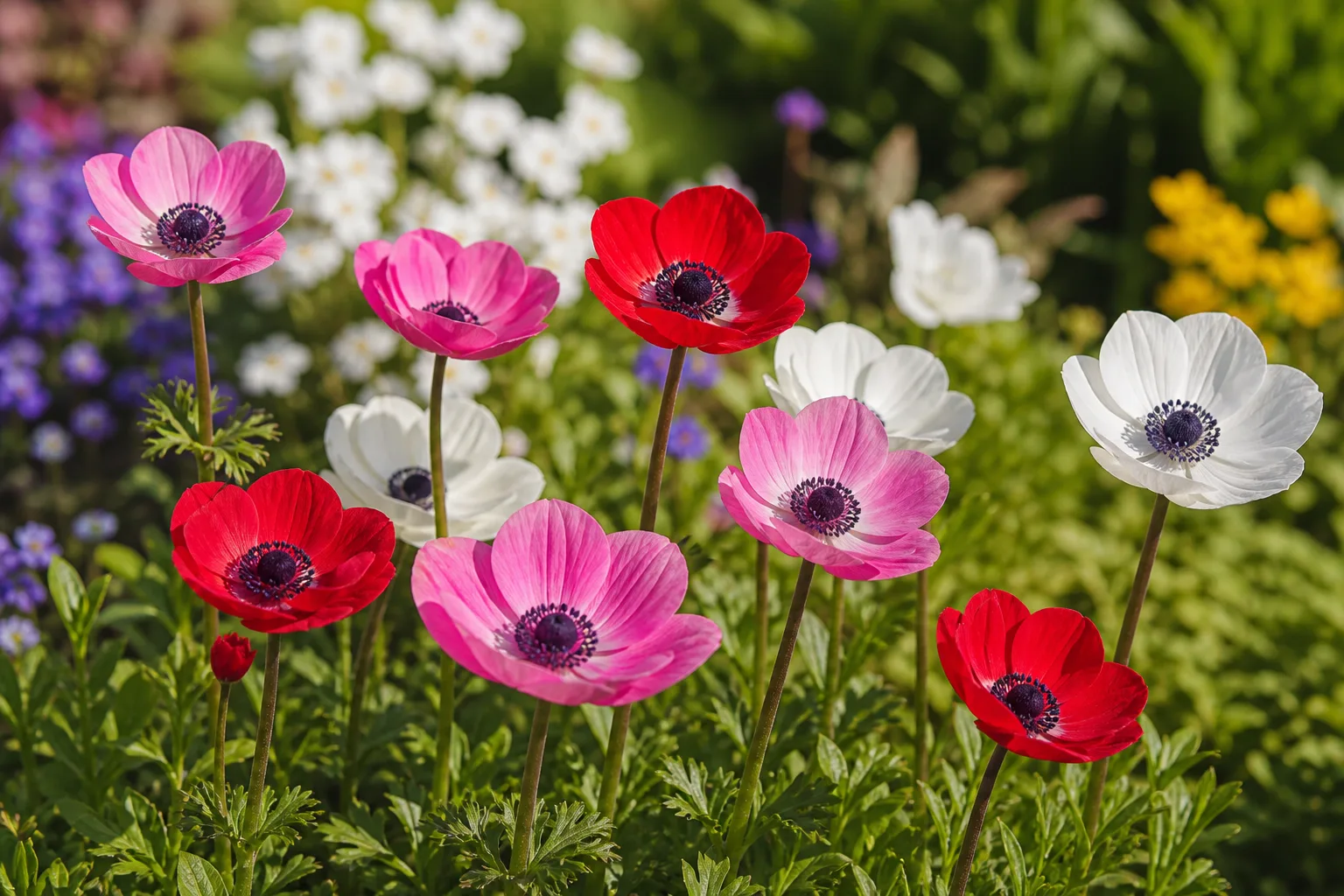
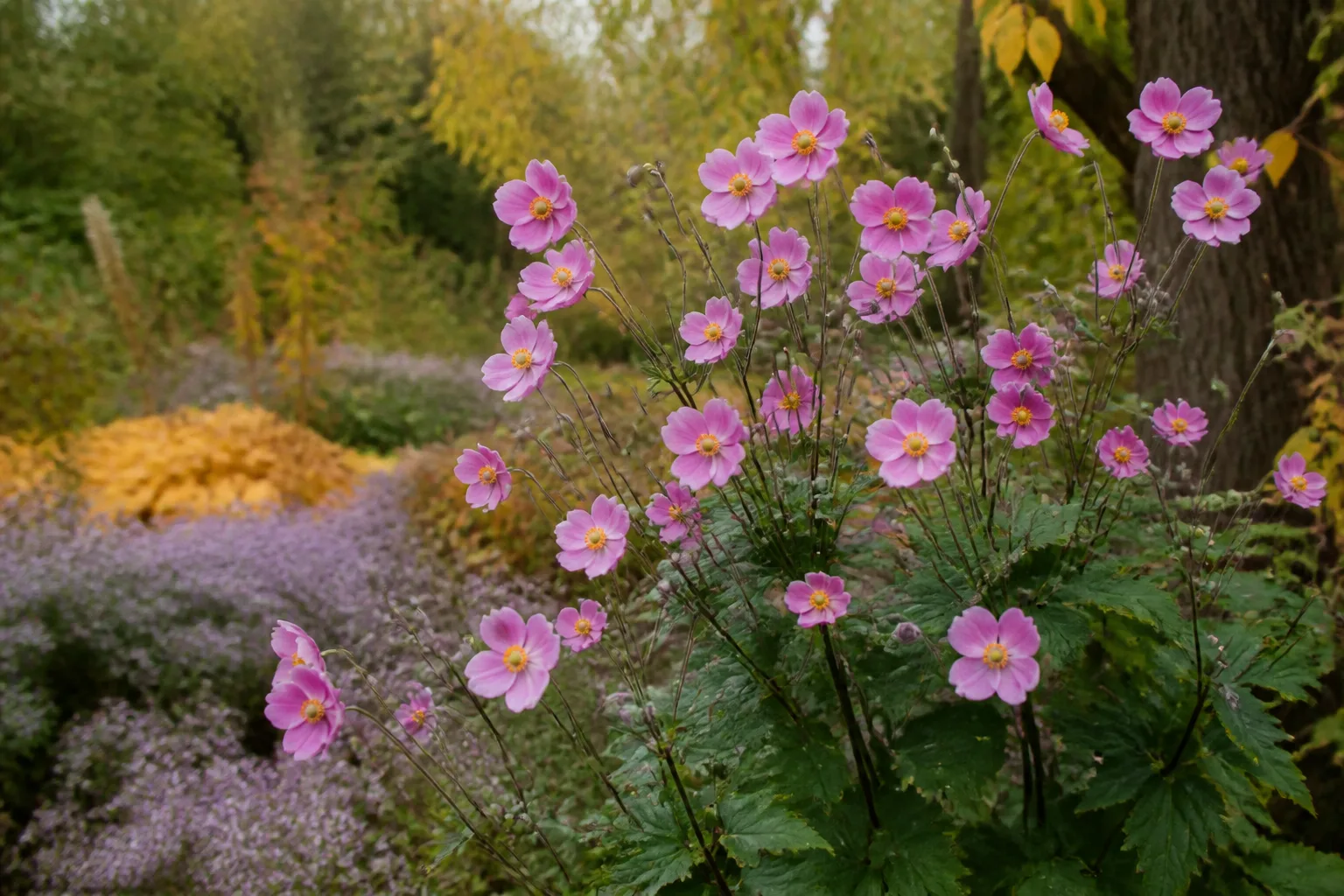
A bag labeled “anemone bulbs” is often a bag of dry corms—small, rough, sometimes claw-shaped storage organs that swell after planting. But Anemone is a large genus, and not every anemone sold for a garden is a dry corm. The spring-flowering poppy anemone, Anemone coronaria, and Grecian windflower, Anemone blanda, are commonly planted from dormant corm-like stock; wood anemone, Anemone nemorosa, grows from a rhizome. A potted Japanese anemone is a different purchase again.
That difference changes the calendar. Fall works well for some species and climates, while spring planting is the safer route for tender corms facing prolonged winter freeze or waterlogged soil. Identify the plant on the package first, then use local winter conditions and the bloom season you want to choose the planting window.
Start with the plant, not the calendar
“Anemone” describes many perennials with different growth habits, flowering seasons, and cold tolerance. A broad instruction such as “plant all anemones in fall” can send a gardener in a cold, wet climate toward corms that are more likely to rot or freeze before growth begins. Read the botanical name, the plant form, and the supplier’s directions; if the label says only “anemone,” ask which species it is.
The name “bulb” is convenient garden shorthand, not a reliable description of the underground part. Extension and horticulture references variously call the dry planting pieces corms or tubers, while rhizomatous anemones spread by horizontal underground stems. What matters for planting is not winning a terminology debate: it is knowing whether you have dormant, dry pieces to set in the soil or a living plant with roots to protect.
| Plant | Common planting stock | Usual planning cue |
|---|---|---|
| Anemone coronaria | Dry corms, often sold as poppy anemones | Plant for spring or early-summer flowers; fall in suitable mild-winter gardens, spring where winter wet or deep freezes are a risk |
| Anemone blanda | Small dormant corm-like or tuberous pieces | Plant in fall for early spring flowers in a well-drained, partly shaded spot |
| Anemone nemorosa | Rhizomes, not the typical “bulb” sold for corm planting | Plant dormant rhizomes in fall; choose a cool, leafy woodland-style site |
 |
Anemone coronaria: florist-style poppy anemones
This is the colorful anemone most often grown for cut flowers and bold spring beds. Its papery corms produce foliage and stems with poppy-shaped blooms, and it needs brighter light than woodland species. North Carolina State Extension recommends fall planting in amended, well-drained soil, about 2 to 3 inches deep and 4 to 6 inches apart; the same profile warns that soggy conditions can lead to root rot and notes that corms may need storage in colder regions. NC State Extension’s profile of Anemone coronaria gives a useful baseline, but your supplier’s cultivar-specific depth and local climate still matter.
The same corm can be planted for different bloom periods. Sarah Raven’s growing guide describes spring planting for early-summer flowers and autumn planting in mild areas for earlier spring blooms, reflecting a different climate and production schedule from a single universal month. Sarah Raven’s anemone guide is useful for timing by bloom goal; in a home garden, use that logic only when your winter soil and frost pattern suit it.
Anemone blanda and woodland anemones
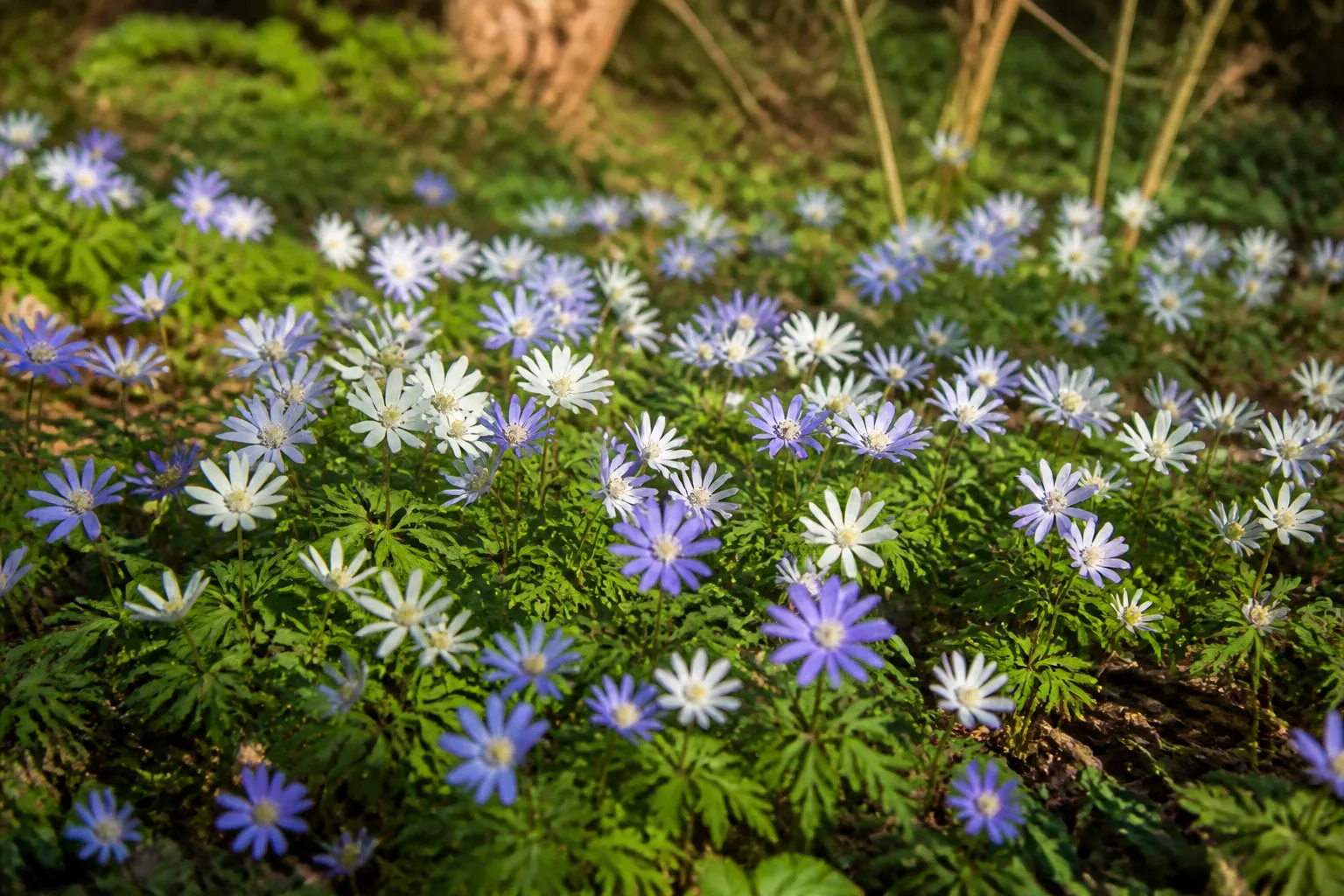
Grecian windflower is shorter and often more at home in light shade beneath deciduous trees, where it can grow during the cool, bright season and retreat as summer heat arrives. NC State describes it as a tuberous perennial that should be planted in autumn in moist but well-drained soil; it spreads into clumps and naturally dies back by early summer. The extension profile also notes that excessively wet soil can cause root rot. NC State Extension’s profile of Anemone blanda supports a different placement plan from the sunny poppy anemone.
Wood anemone is another useful contrast, but it is not the same planting stock. Anemone nemorosa grows from rhizomes and suits a shaded, organic-rich setting; do not assume that corm size, depth, or soaking advice for A. coronaria applies to it. Gardening Know How likewise cautions that anemone species differ in their underground structures and planting season, so use the species name to identify the method rather than relying on a generic bag label. Gardening Know How’s overview of anemone growth habits is a helpful cross-check.
When to plant: let winter conditions set the window
Use the fall-versus-spring decision to balance two needs: corms need cool conditions to establish, but they should not sit for months in saturated ground or endure more cold than the variety can tolerate. Start by checking whether the soil drains freely after rain and whether your local winter usually means a mild, damp season or repeated hard freezes. If you do not know the species or its hardiness, planting spring corms in a pot or treating them as a seasonal display is more predictable than gambling on an exposed bed.
Think in terms of soil and weather events, not a fixed date. “Fall” means after the summer heat has eased while the ground is still workable; “spring” means once the soil has thawed, is no longer waterlogged, and can be prepared without smearing into clods. For a container, you can control drainage and shelter more easily, but the pot itself freezes faster than surrounding ground.
Fall planting in mild, well-drained gardens
Planting in fall gives suitable corms time to establish roots before the next bloom period. It is a sensible choice where winters are relatively mild, the bed drains well, and the selected species or cultivar is known to tolerate that local winter. NC State’s fall recommendation for A. coronaria and A. blanda reflects conditions that can support autumn establishment, while Sarah Raven’s guidance similarly distinguishes autumn planting in mild areas from spring planting for later flowers.
Do not plant simply because a calendar says “bulb season.” In heavy clay, a low spot, or a region with wet freeze-thaw winters, a dormant corm can remain cold and waterlogged for too long. Improve the bed’s drainage or choose spring planting, a raised bed, or a container that can be moved under cover.
Spring planting in cold or winter-wet gardens
In a colder climate, spring planting can keep vulnerable corms out of the wettest and coldest part of the year. Wait until the soil has thawed and drains after rain; if it is still sticky or waterlogged, delay or use a raised bed or pot. Set the corms as soon as the bed is workable rather than leaving them to dry out in a warm room.
Spring planting may shift flowering later or shorten the display, especially if warm weather arrives quickly. That is a reasonable trade-off when the alternative is losing corms to winter conditions. Specialist growers use late-winter or early-spring planting as one way to time blooms; the exact result depends on the variety, start date, soil temperature, light, and growing season. Sarah Raven’s schedules for A. coronaria show why planting time is tied to the intended bloom window as well as the weather.
Choose a site that drains quickly
Most corm-forming anemones do best where water does not sit around the underground storage organ. Choose a spot that receives the light required by the named species: A. coronaria generally wants full sun for strong stems and flowers, while A. blanda can suit light or partial shade. A deciduous tree can be a useful neighbor for a spring ephemeral: it allows early-season light through before leaf-out, then gives some shade as the plant naturally dies back.
Test the bed after a soaking rain before you commit to a large planting. If a puddle remains for hours or the soil smells sour, do not try to fix the problem by digging a deeper hole filled with loose compost; a hole in dense clay can act like a sump and hold water against the corm. Instead, plant on a raised ridge or in a raised bed, mix organic matter through a broad area, or choose a container with open drainage.
Anemones appreciate soil that holds some moisture while excess water escapes. Work finished compost or leaf mold into the planting area if the soil is poor, but avoid turning the bed into a rich, soggy pocket. If the only sunny site is exposed to drying wind, a light mulch after planting can even out moisture and temperature; keep it loose and do not bury the shoots under a dense, wet layer.
Prepare dormant corms and decide whether to soak
Open the package before planting and inspect the corms. Firm, dry, irregular pieces are normal; discard any that are mushy, badly cracked, moldy throughout, or smell rotten. Keep sound corms cool, dry, and out of direct sun until planting, and do not store them wet in a sealed plastic bag.
Soaking is a preparation option, not a cure for poor corms or an essential rule for every anemone. Sarah Raven recommends soaking A. blanda for a few hours and gives longer soaking directions for A. coronaria, while other horticulture guides vary. Follow the supplier’s instructions first; if the label recommends soaking dry corms, use room-temperature water and the stated duration, then plant promptly. A cautious short soak can help rehydrate shriveled stock, but leaving a corm submerged much longer than directed adds no clear benefit and creates an avoidable wet-storage step.
Do not soak a plant that arrives in a pot or as a fresh division with roots attached. That is live planting material, not a dormant dry corm. Keep the roots from drying while you prepare the planting hole and water the plant in after setting it at the same depth it was growing.
Plant corms at the right depth and spacing
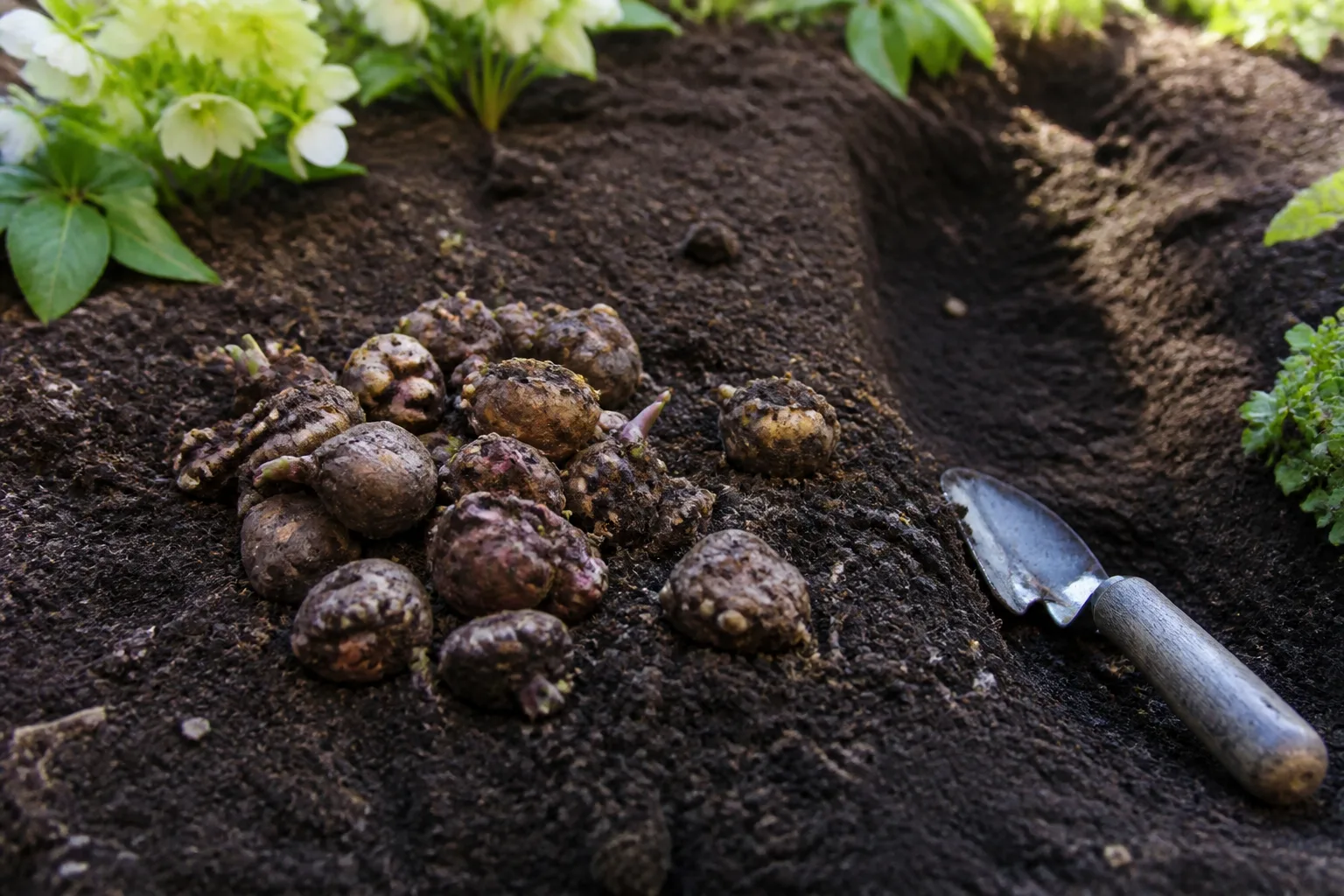
For A. coronaria, a practical starting point is the extension recommendation of 2 to 3 inches deep and 4 to 6 inches apart. Some suppliers recommend different spacing or depth for particular cultivars, and A. blanda may be sold with its own directions; its smaller scale and spreading habit make the package especially useful. Keep a label with the botanical name and planting date so you can interpret the first season’s results instead of guessing later.
Anemone corms can be lumpy and difficult to orient. If the piece has a clearly pointed or claw-like end and the package specifies an orientation, follow that instruction; if you cannot identify a top, do not cut or force it into a shape. Place it on its side and cover it at the correct depth. The emerging shoot can find its way upward, so a doubtful orientation is less damaging than planting too deeply or leaving the corm exposed.
A simple planting sequence
- Clear weeds and stones, and loosen the soil across the bed rather than making isolated narrow holes.
- Confirm the plant name and use its label to set depth and spacing. Keep different species or bloom schedules in separate marked groups.
- Make a shallow hole or trench. Place the corm according to its label, or on its side if the top is unclear.
- Cover with loose soil, firm it gently so there are no large air gaps, and water once to settle the soil.
- Add a thin, loose mulch if your climate needs it, then note where the dormant planting is so you do not disturb it during winter or early spring.
For a natural-looking drift, plant several corms in a loose cluster rather than a rigid row. Respect the recommended spacing within the group, and leave enough room for foliage to expand and for air to move around it. Crowding can make it harder to see which corms failed, and it can keep a damp bed from drying after rain.
Planting anemones in containers
A pot is useful when garden soil stays wet, when you want a movable cut-flower display, or when the corms are less hardy than your winter climate. Choose a container with several unobstructed drainage holes and enough depth to cover the corms at their recommended planting depth while leaving room for roots. Use a free-draining, quality potting mix; garden soil in a pot can compact and hold water.
Place corms at the same depth and roughly the same spacing recommended for their type. A cluster can look full without pressing the corms together. After watering, empty any saucer beneath the pot so water does not remain around the drainage holes, and lift the container onto pot feet if it sits on a wet patio.
Containers need more observation than an in-ground bed. Check the mix with a finger rather than watering on a fixed weekly schedule: it should not stay saturated, but an actively growing plant should not be left to dry out completely. In cold climates, remember that a container’s roots and corms experience colder temperatures than those in the ground; move it to a sheltered, unheated space if the variety needs winter protection.
Water and feed without creating rot
Water after planting to settle the soil around the corm, then let rainfall and the season guide the next watering. If you plant in autumn during a rainy period, the bed may need no additional water for a while. During active spring growth, water when the soil is drying rather than on an automatic schedule; containers and sandy beds dry faster than a shaded clay bed.
The balance is even moisture with air around the corm, not constant wetness. If the soil remains wet several days after rain, improve the drainage or stop irrigating; do not add water just because the foliage has not emerged yet. NC State lists root rot as a risk in overly wet soil for both A. coronaria and A. blanda.
Mix a modest amount of mature compost into poor soil before planting. Routine heavy feeding is not a substitute for light, correct timing, or drainage, and concentrated fertilizer placed against a corm can injure new roots. If a container-grown plant needs feeding during active growth, use a balanced fertilizer at the label rate; stop once the foliage naturally yellows and the plant enters dormancy.
Protect plants through frost and dormancy
Do not assume that every species sold under the anemone name has the same winter tolerance. A. blanda is a hardy spring perennial in many settings; A. coronaria is more vulnerable to severe or prolonged cold, particularly in a wet bed or an exposed container. Check the cultivar’s label and compare it with your local winter pattern, not just a broad hardiness-zone number.
Where fall-planted corms are appropriate, a light mulch can buffer temperature swings after the ground begins to cool. In a damp climate, keep the mulch airy and avoid a thick blanket that traps moisture over the bed. For containers, move tender stock out of freezing wind and standing rain; a bright, sheltered, frost-protected location can be safer than a warm indoor room that triggers premature growth.
A late frost after shoots appear can damage foliage or flowers without necessarily killing a sound corm. Cover emerging plants temporarily with breathable frost cloth when a cold snap is forecast, then uncover them once temperatures rise. Avoid plastic touching leaves, and do not keep a cover in place during mild weather where it can trap heat and humidity.
After flowering, let the foliage finish
When flowers fade, remove spent blooms if you want a tidier display or to reduce seed formation. Leave healthy leaves in place while they are green: foliage continues to photosynthesize and replenish the underground storage organ for the next cycle. Cutting it to the ground immediately after flowering can weaken next season’s growth.
Many spring anemones naturally disappear as warmer weather arrives. That dieback is not automatically a sign that the corm has failed. Mark the planting while foliage is visible, reduce watering as growth slows, and avoid digging into the bed until you know whether your type should remain in the ground or be lifted for storage.
Troubleshooting rot, missing shoots, and weak blooms
Use the condition of both the planting site and the corm to diagnose failure. A bed that stays cold and wet points to drainage or timing; a firm corm with no visible shoot may simply need more time, especially if it was planted late or the soil is still cool. Do not dig up every planting after a few weeks, because disturbing a live corm can cause more damage than waiting.
Soft or rotting corms
Softness, a sour smell, and dark mushy tissue suggest decay. Remove affected corms and the surrounding debris, let the bed drain, and avoid replanting into the same wet pocket until you correct the site. If sound corms are nearby, reduce irrigation and improve airflow rather than flooding the bed with a supposed rescue treatment.
Prevention is more effective: buy firm stock, plant at the right season for the species, and avoid deep holes in compacted soil. In pots, confirm that drainage holes are open and that the pot is not sitting in runoff. If rot recurs in a garden bed, switch to a raised planting area or choose a better-drained location.
No shoots or poor flowering
A corm may fail to emerge because it was damaged, planted too late for the season, stored until it dried out, or left in ground that stayed wet and cold. First check the package’s expected timing and the soil condition. If the planting is well past the normal emergence period for that species and the corm has decayed, replace it after changing the conditions that caused the loss.
Sparse flowers can reflect weak corms, deep planting, too much shade for A. coronaria, overcrowding, or foliage cut before it finished feeding the corm. Give poppy anemones the brighter site they need, keep spacing consistent, and allow leaves to yellow naturally. For A. blanda, choose a cooler light-shade setting and do not expect it to behave like a tall cut-flower variety.
Store corms only when your climate calls for it
Some anemones can remain in a suitable garden bed, while more tender A. coronaria may need lifting where winter freezes are severe or the soil stays wet. Let the foliage turn yellow and dry before lifting; that is the cue that the plant has had time to recharge. Dig carefully so you do not slice the corms, brush off loose soil, and let them dry in a shaded, airy place.
Store only sound, fully dry dormant corms in a labeled paper bag or breathable container in a cool, dry place. Avoid sealed plastic, damp packing, or a hot shelf. Check them occasionally and discard any that soften or mold. Replant when the next locally appropriate window opens, and do not store anemone corms in the same way as a potted perennial with live roots.
If your species is a hardy woodland anemone or a corm that reliably overwinters in your region, lifting it every year can cause needless disturbance. Follow the species and cultivar label, and consider leaving a small marked test group in the ground if you are unsure how it performs locally. Keep the rest in a container or store it only when the plant’s cold tolerance makes that the safer choice.
Conclusion
Planting anemones well starts with identifying the plant: a dry corm, a tuberous Grecian windflower, and a rhizomatous woodland perennial do not share one calendar or one planting method. Use fall when your species, drainage, and winter conditions support it; use spring or a protected container when wet soil and hard freezes make fall risky.
For the common poppy anemone, set sound corms in free-draining soil at the label’s depth, water them in, and leave foliage until it fades. Let species-specific directions settle questions about soaking, spacing, and overwintering. That small check before planting is more useful than guessing at a universal month.



