How Long Do Sunflowers Take to Grow? Bloom Timeline
Most sunflowers bloom in about 60–120 days. See the stages, planting math, growing conditions, and harvest signs that make the timing clearer.
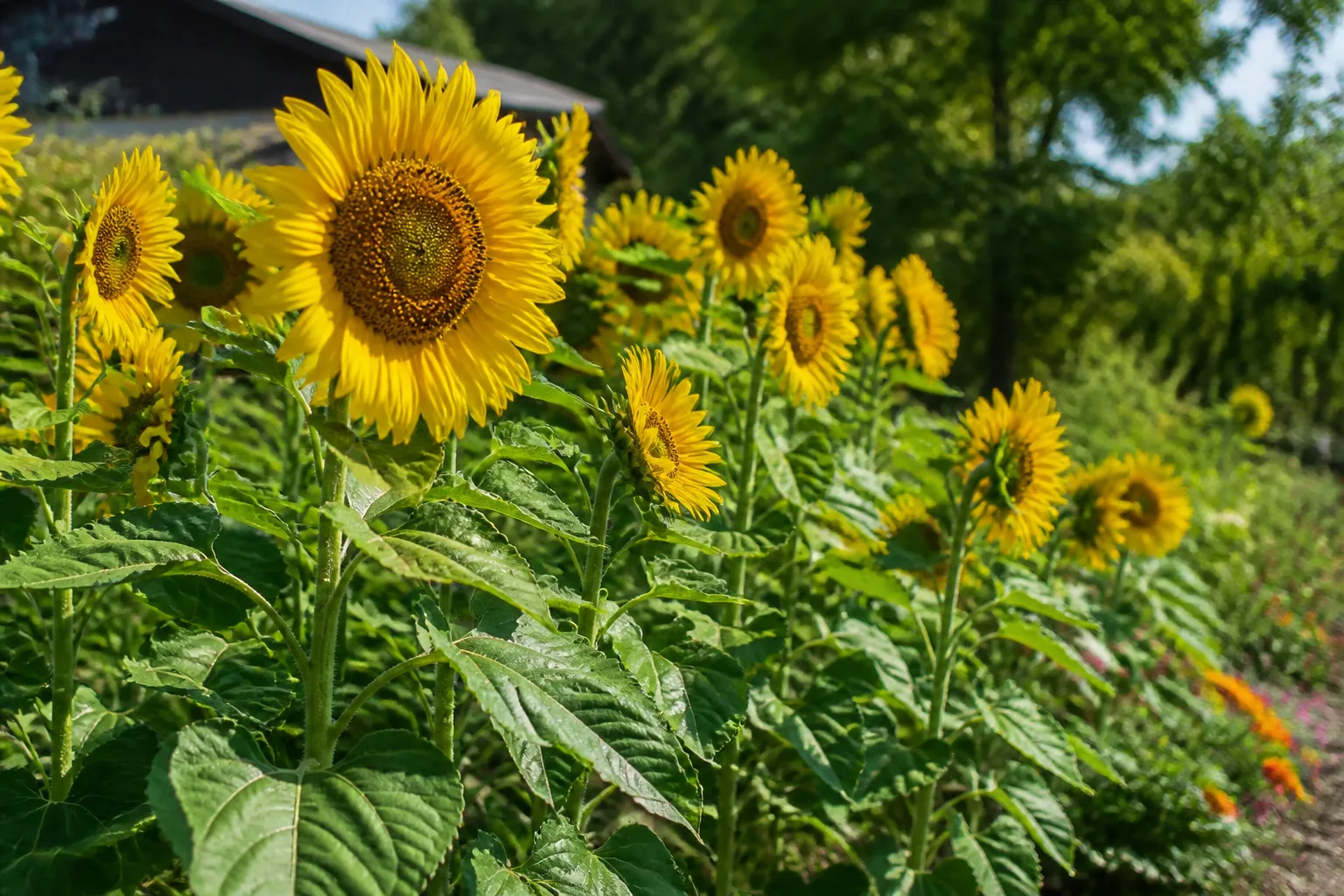
Most annual sunflowers take about 60 to 120 days from sowing to a mature flower, with many ordinary garden varieties landing around 70 to 90 days. That range is wide because a one-foot dwarf sunflower, a branching cut-flower type, and a giant single-stem cultivar are not working to the same biological schedule. A packet labeled “days to maturity” is more useful than a generic internet average, but it is still an estimate made for particular growing conditions.
The clock also depends on what you mean by “grown.” You may be counting the first petal opening, the stage when a cut flower should be picked, or the later point when the back of the head dries and the seeds are plump. Those are different dates. Use the timeline below to see what should be happening now, then adjust your expectations for variety, weather, light, water, and planting method.
The Short Answer: Plan on 60 to 120 Days From Seed
For a practical answer, plan for roughly two to four months from planting sunflower seed to a fully developed bloom. Fast dwarf and cut-flower types can open in about 55 to 70 days when sown into warm soil and grown in strong light. Many medium garden cultivars take about 70 to 90 days, while giant types may need 90 to 120 days or more to build their tall stems and large heads.
BBC Gardeners’ World Magazine gives annual sunflowers a broad estimate of 11 to 18 weeks from seed to flower, while EOSDA’s agronomy overview places average growth at roughly 80 to 120 days and notes that cultivar maturity varies substantially. Those ranges overlap with the familiar 70-to-100-day estimate, but the important point is not choosing one “correct” number. It is matching the number on your packet to the type you planted and the conditions in your garden.
If you sowed a seed on May 15 and the packet says 75 days, look for a first bloom around July 29 under favorable conditions. Treat that as a center point, not a guarantee. Add one to two weeks when the seedling faced cold soil, transplant shock, cloudier-than-usual weather, dry soil, or crowding. Subtracting days because the plant is tall is not reliable: a sunflower can gain height quickly while the flower bud is still weeks away.
Sunflowers are generally fast-growing warm-season annuals, but “fast” does not mean they can ignore temperature or light. A seedling that emerges in cool, wet ground may simply pause. A plant in partial shade may stretch upward and still produce a flower, but it often takes longer and makes a weaker stem than the same cultivar in an open, sunny bed.
What the Seed Packet’s Days-to-Maturity Number Really Means
The packet’s number is the best starting point because it belongs to the cultivar you actually bought. It usually estimates the time from direct sowing, or from transplanting, to the stage the seed company considers mature. Read the small print or variety description when available: some packets mean first bloom, some mean harvest maturity, and branching types do not always behave like single-stem types.
Think of the number as a planning baseline with three built-in questions:
| Question | What to check | Why it changes the answer |
|---|---|---|
| What did I plant? | Dwarf, giant, branching, single-stem, pollenless, or perennial | Plant architecture and breeding set the approximate pace and flower size |
| How did I plant it? | Direct sowing, indoor start, or nursery transplant | Transplant shock can delay a plant even when it looks leafy |
| What counts as finished? | First open bloom, cut-flower stage, or dry seedhead | Flowering and seed maturity are separate milestones |
The number is not a countdown that overrides weather. A packet may have been tested in a warm trial bed with ideal moisture and spacing. If your spring stays cool or your container dries out every afternoon, the same plant can take longer. The good news is that the plant tells you more than the calendar does: look for the next stage rather than declaring it late before it has had a chance to reach that stage.
Also separate annual and perennial sunflowers. The common garden sunflower, Helianthus annuus, is an annual: it flowers, makes seed, and finishes its life in one season. Perennial Helianthus types return from established crowns and often flower later, so an answer meant for a packet of annual sunflower seed does not predict a mature perennial clump.
A Sunflower Growth Timeline From Sowing to Seedhead
The timeline below is a useful working model for annual sunflowers. The boundaries overlap, especially after a plant begins making a bud. A warm, well-lit dwarf may move through the stages quickly; a giant in a cool or crowded bed may spend much longer building leaves and height.
Germination and Emergence: Days 0–10
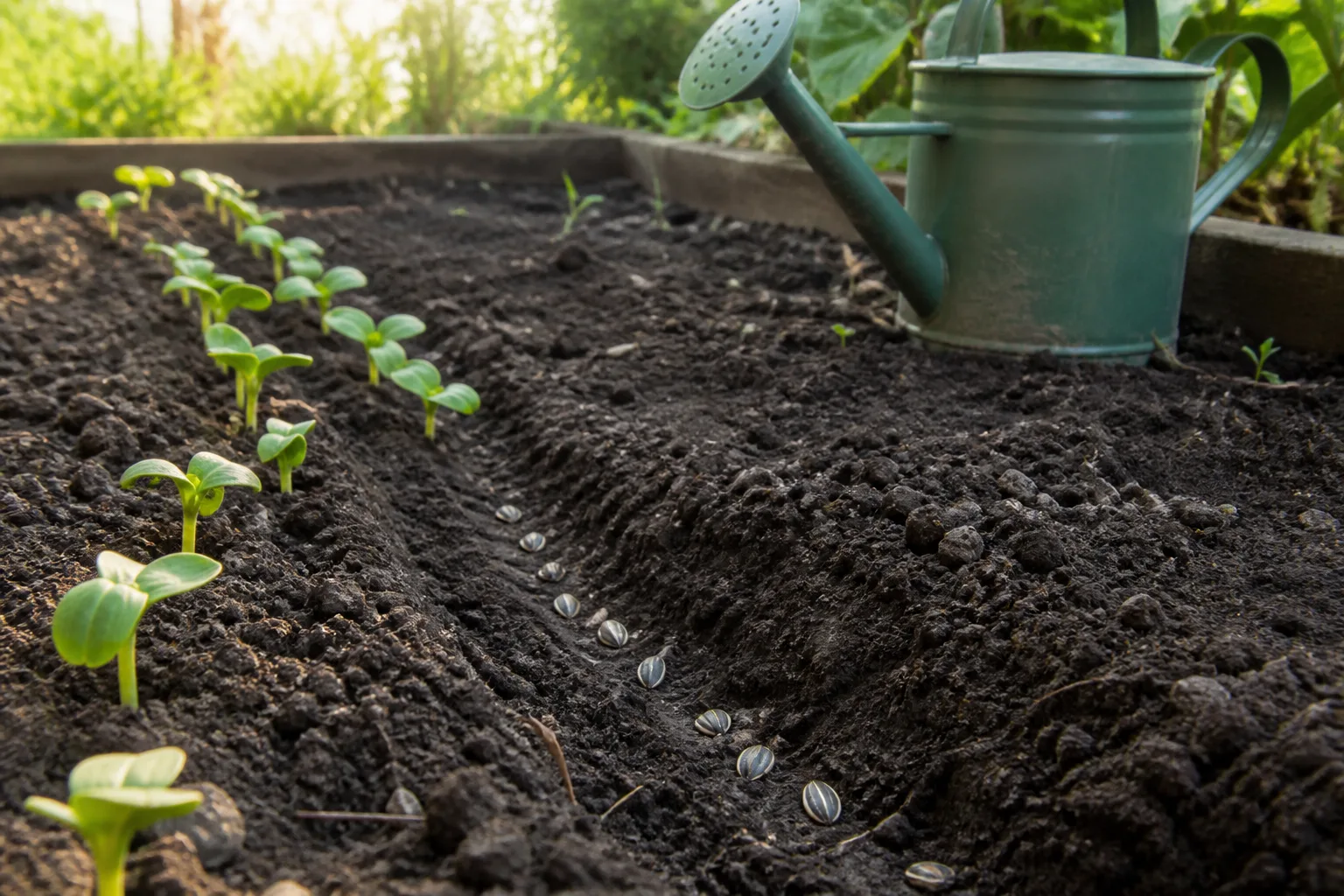
After sowing, the seed absorbs water and sends out a root before the green shoot appears. In warm, evenly moist soil, sunflower seeds often emerge in about a week. Epic Gardening’s seed-starting guide describes direct-sown seedlings appearing in roughly that window, while deeper planting, cold soil, crusted ground, or uneven moisture can stretch the wait.
At this stage, the most useful job is keeping the seed zone moist but not saturated. Water gently enough that the seed does not wash away, and check the row after rain. If seeds disappear, suspect birds, mice, chipmunks, or squirrels before assuming they failed to germinate. A temporary row cover or a light protective mesh can buy time, but remove or adjust it as the seedlings emerge so the young stems have room and light.
The seed leaves, or cotyledons, are smooth and simple. Do not expect a tall stem yet. If ten days have passed with no emergence, dig carefully in one spot to check whether the seed is swollen, rotted, missing, or still dry. Resowing the whole row without checking can create a later crowding problem if the first batch is merely slow.
Leaf and Stem Growth: Days 10–35
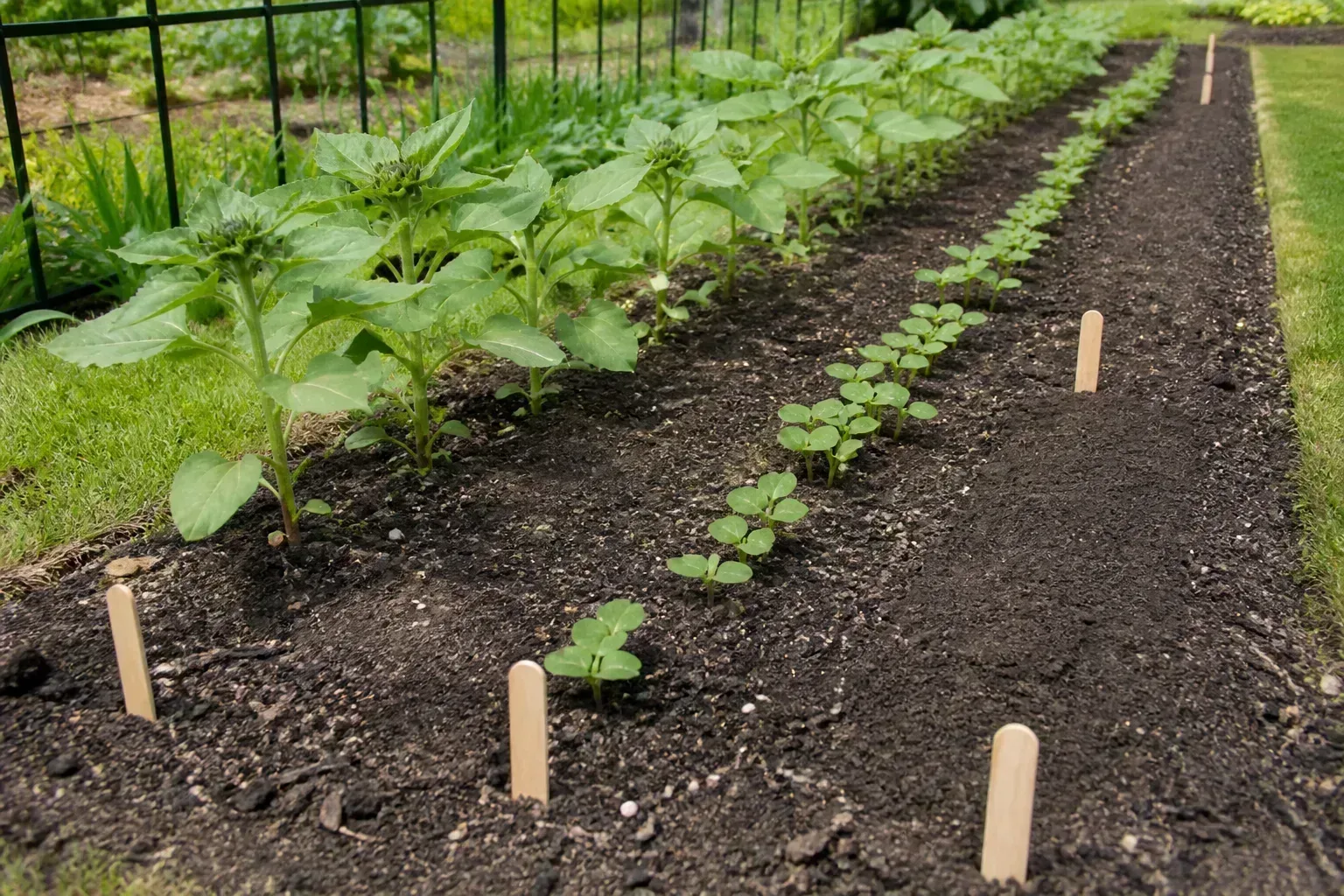
Once true leaves appear, the plant shifts from simply getting established to building the leaf area that will power flowering. The stem thickens, the root system explores the soil, and the plant’s height can change noticeably from one week to the next. This is the stage when a sunflower may look as if it is racing upward even though a visible flower bud has not formed.
Thin crowded seedlings while they are small. Leaving three plants in one spot may feel like insurance, but the survivors compete for light, water, and root space throughout the season. The packet’s spacing is the final authority, yet a useful rule is to give dwarf and single-stem cut types less room than broad branching cultivars, and to give giant types enough soil volume to anchor their eventual height.
The common mistake here is moving an indoor seedling too late. Sunflowers make a strong taproot and do not reward repeated teasing apart or a tight, circling root ball. A plant that was started indoors can be healthy and still lose time after planting out because it must recover from root disturbance, wind, full sun, and a different watering pattern.
Bud Formation and Bloom: Days 35–90
The plant is approaching its flowering stage when the growing tip becomes a firm, compact bud rather than a loose cluster of new leaves. The stem may continue to stretch, but energy is now moving toward the head. This is when a short cultivar can surprise you with a flower while a giant nearby is still adding height.
Flowering is not one instant. The outer ray florets open first and create the familiar ring of petals, while the tiny disc florets in the center open progressively and provide the surface where pollination occurs. A bloom that looks fully open may still be developing seed in its center. The Royal Horticultural Society’s Helianthus growing guide explains that sunflowers support pollinating insects and seed-eating birds, which is one reason it can be useful to leave at least some heads beyond the cut-flower stage.
If a plant is very tall with no bud, check the cultivar before adding fertilizer. A giant or late-maturing type may simply be following its normal schedule. If the packet promised a much earlier bloom, then inspect the site for inadequate direct sun, severe crowding, cold weather, drought, or repeated damage to the growing tip. More nitrogen is not a universal answer; it can encourage leaves without solving a light or maturity mismatch.
Seed Filling: After the Flower Opens
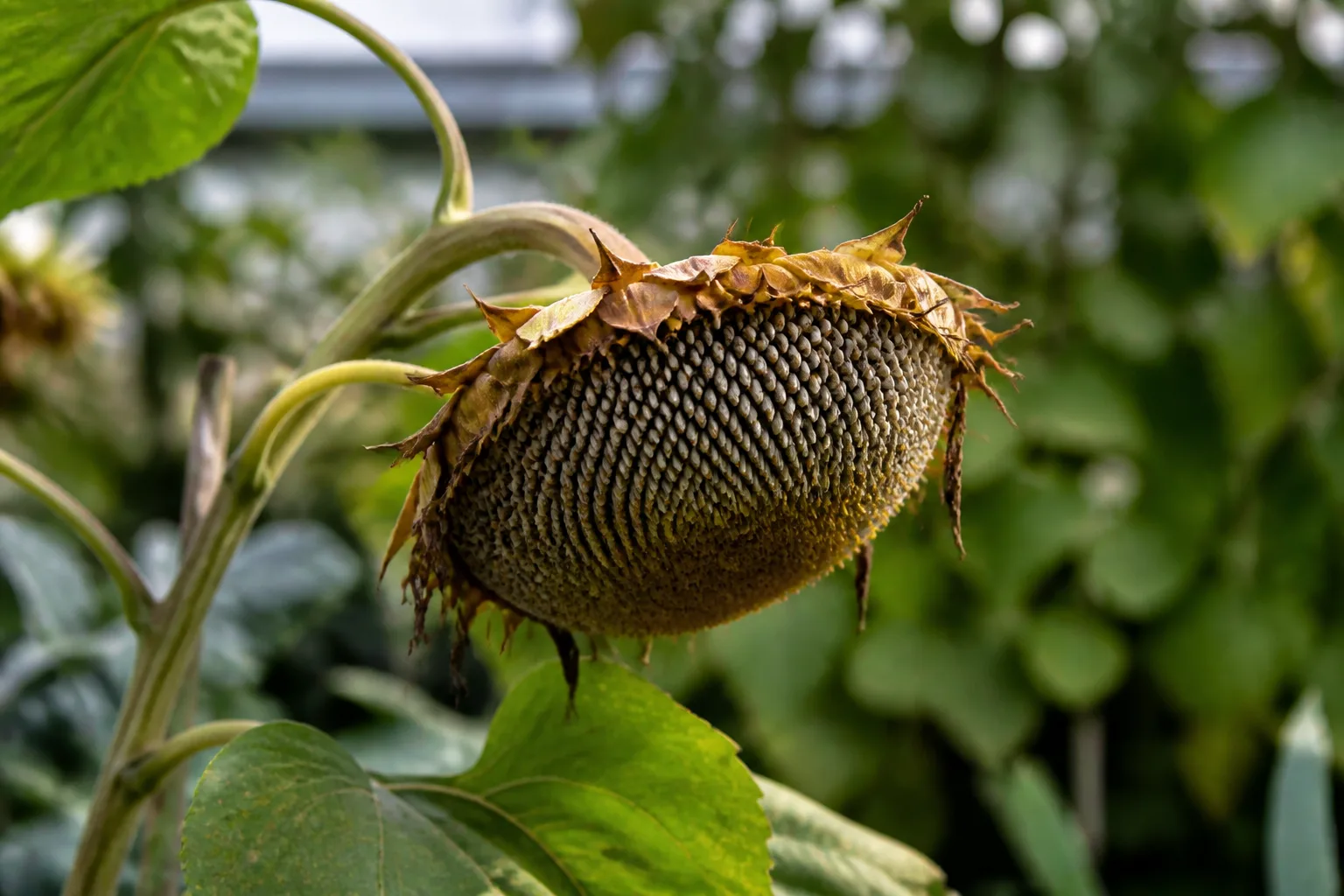
After petals fade, the back of the head changes from green toward yellow and brown as the seeds develop. The head becomes heavier, the stem may bend, and the surface of the seeds fills out. This later stage can take several weeks after the first bloom, so a sunflower that flowered on schedule may still not be ready for edible seed or long-term storage.
Seed fill is especially sensitive to moisture stress. EOSDA identifies the period between flowering and seed filling as a critical time for avoiding drought stress in commercial sunflowers. Home gardeners do not need a field irrigation system, but they should not let a large flowering plant repeatedly wilt in hot, dry weather if they want well-filled seed.
Why Variety Changes the Wait
“Sunflower” describes a large group of garden forms, not one uniform timetable. The RHS growing guide lists annual cultivars ranging from compact plants around a foot tall to giants over 10 feet, with flower sizes, colors, and branching habits that vary just as much. Height alone does not determine bloom date, but it often hints at the plant’s intended growth pattern and the amount of time it needs.
Dwarf, Giant, Single-Stem, and Branching Differences
Dwarf and container sunflowers are often the quickest route to a flower in a small garden. Their shorter stems and smaller root systems can reach bloom in roughly 55 to 75 days, depending on cultivar and conditions. They still need direct sun, a drainage hole, and enough container depth to avoid becoming top-heavy. A small pot may limit height, but it does not turn a shade-grown plant into a fast-blooming one.
Giant sunflowers need more time and more support. They may put on dramatic height before a large terminal bud becomes obvious, and rich soil or ample water can lengthen the vegetative growth phase rather than producing an immediate flower. Choose a sheltered spot and plan a support before the stem becomes difficult to handle. The RHS recommends strong, sturdy support for tall and giant annual sunflowers; a short bamboo cane can fail simply because it cannot reach or anchor the finished plant.
Single-stem types are often bred for one principal flower and a relatively predictable harvest window. They are useful when you want a row of similar stems for cutting. Branching types produce several side shoots and can extend the display over a longer period because different buds open at different times. They may not give one uniform “bloom day,” but they can provide more flowers from each plant.
If your goal is pollinators, open-centered forms make more sense than choosing only heavily doubled flowers. If your goal is a bouquet, select the branching or pollenless cut-flower type described on the packet. If your goal is birdseed, select a large-headed type and give it enough time after flowering for the seeds to fill. The fastest variety is not automatically the best variety; it is the one whose schedule and habit match the job.
Work Backward From Your Target Bloom Date
Instead of asking whether a sunflower will bloom by a vague month, choose the date or season you want and count backward. Start with the packet’s days-to-maturity number, then add a buffer for weather and planting method. A simple formula is:
Target sowing date = desired bloom date − packet maturity days − 7 to 14 weather-buffer days.
For example, if you want a cut-flower row opening around August 10 and the packet says 65 days, sow around June 1 after the soil is warm, then allow the extra week or two for cool nights, pests, or uneven emergence. Do not use this formula to justify sowing into cold mud. If the soil and forecast are not ready, the date must move, or you should choose a faster cultivar that still fits the remaining season.
For a late-season sowing, count backward from the first expected fall frost instead. A fast dwarf may flower with time to spare, while a giant sown late may produce leaves and a bud but fail to open before freezing weather. In a long, warm season, you have more flexibility; in a short season, direct sowing after the last frost is often more reliable than starting a tall seedling weeks too early and transplanting it repeatedly.
For a more detailed date rule based on frost and soil temperature, see the LeafyPixels guide to when to plant sunflowers. The key is to combine the calendar with actual conditions. A last-frost date is a probability estimate, not a force field, and soil that is warm at the surface in the afternoon may still be cold at seed depth in the morning.
Direct Sowing or Starting Sunflowers Indoors?
Direct sowing is usually the best default. Planting in the final bed avoids transplant shock and lets the taproot grow downward without interruption. It is also simpler: no grow lights, hardening off, or crowded windowsill. The downside is that seed and young seedlings are exposed to birds, rodents, slugs, drought, and late cold snaps.
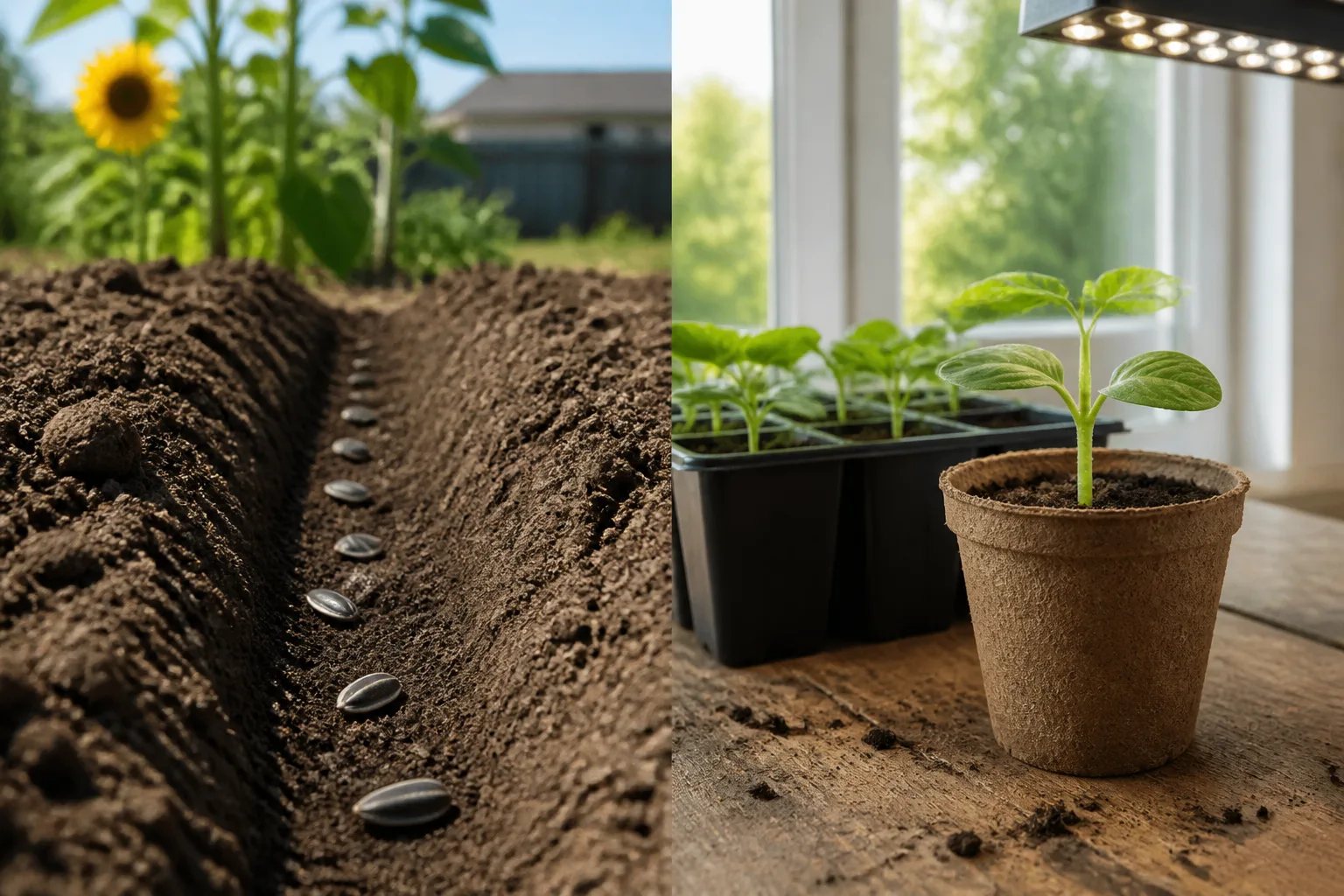
Starting indoors can make sense when your outdoor season is short, wildlife pressure is intense, or you need a controlled early start for a special cultivar. Sow only a few weeks before the outdoor planting window, use a deep individual pot, and move the seedling before it becomes root-bound. Epic Gardening recommends careful handling because sunflower roots do not like disturbance, and Savvy Gardening describes indoor sowing as a protected but more labor-intensive option.
Harden seedlings off gradually before planting outside. Give them several days of increasing outdoor exposure, beginning in a sheltered location and avoiding a sudden jump from still indoor air to strong sun and wind. Plant at the same depth as the container, water the root zone, and protect the young stem. An indoor start is not automatically earlier if the plant spends two weeks recovering from a damaged taproot.
Keep a Sunflower on Schedule
Fast growth depends more on a stable growing environment than on a single “bloom booster.” Give the plant the basics consistently, and it will usually spend its energy on a sturdy stem and a timely bud rather than recovering from preventable stress.
Light, Spacing, and Soil
Choose a site with at least six to eight hours of direct sun. More usable light generally means a sturdier plant and better flowering, especially for tall types. A plant that receives only a few hours of direct sun can become leggy, lean toward the brightest side, and take longer to produce a worthwhile head.
Prepare soil that drains after rain but holds enough moisture for the root zone. Finished compost can improve structure and fertility, but a deep pocket of rich material in compacted soil is not a substitute for drainage. The RHS recommends rich soil and organic matter for vigorous growth, while Gardeners’ World emphasizes a sunny, sheltered site with regular water and feeding when appropriate.
Spacing is a timing issue as well as a size issue. Crowded plants shade one another and compete just as the stem and bud are expanding. Follow the packet first; when the packet is vague, use narrower spacing for compact single-stem flowers and wider spacing for branching or giant types. If you want long, smaller stems for cutting, closer spacing may be intentional, but expect less room for each plant’s head and root system.
Moisture and Support
Keep newly sown seed and small seedlings evenly moist. Once established, sunflowers can tolerate short dry periods better than they can tolerate constantly saturated soil, but tall plants still need water during rapid growth, flowering, and seed fill. Water deeply at the root zone when the soil is drying rather than wetting the leaves lightly every day.
Container plants need closer attention because a pot has little reserve on a hot, windy day. Check the mix with your finger and water thoroughly when it is beginning to dry, allowing excess to drain. Do not leave a container sitting in a saucer of water; the goal is a moist root zone with air spaces, not a waterlogged one.
Install a stake or other support while the plant is still manageable. Tie the stem loosely in several places as it grows, leaving room for expansion. Gardeners’ World and the RHS both emphasize staking taller varieties, especially in exposed positions. A support will not fix a plant grown in deep shade, but it can prevent a healthy, top-heavy sunflower from losing weeks of progress to a snapped stem.
If Growth Is Slower Than Expected
Start by identifying which stage is slow. No emergence points to seed age, depth, temperature, moisture, or wildlife. A short seedling with pale, stretched growth points toward insufficient light. A leafy plant with no visible bud may be normal for a giant or late cultivar, or it may be dealing with crowding, cold, drought, or a damaged growing tip.
Use this troubleshooting order:
- Check the packet. Confirm the cultivar, maturity estimate, annual or perennial habit, and expected height.
- Check light. Watch the bed for a full day; a site that looks sunny at breakfast may be shaded by a building in the afternoon.
- Check soil moisture and drainage. Feel below the surface and look for standing water, crusting, or a dry pocket around the roots.
- Check spacing. Remove weak extras while the remaining plants are small rather than waiting until roots are intertwined.
- Check damage. Look for a clipped growing tip, slug feeding, stem injury, wind breakage, or animal browsing.
- Check temperature history. A run of cool nights can add days without causing a visible disease.
Avoid escalating straight to fertilizer. A nutrient deficiency is possible, especially in a container or exhausted bed, but yellowing, stunting, and delayed flowering can also come from waterlogged roots or insufficient light. If a soil test or the plant’s overall pattern points to nutrition, use a labeled product at the recommended rate; excess feeding can create lush, weak growth and will not change the cultivar’s genetic maturity window.
Read the Plant for Signs Bloom Is Close
The clearest sign is a tight bud at the growing tip. The stem may still gain height, but the new growth becomes more concentrated and the bud feels firm rather than looking like another loose set of leaves. The final days vary by variety and weather, so do not peel the bracts open to check; that damages the developing head.
As the bloom opens, the outer petals spread and the central disc develops progressively. A branching plant may show several buds at different stages, which is normal and useful for a longer cutting window. A single-stem plant often gives you one obvious terminal head, making its harvest timing easier to coordinate.
Watch the plant’s posture as well as its color. A mature head becomes heavier and may begin to face downward after the flowering period. The back of the head changes from green toward yellow or brown, the petals dry and loosen, and the seeds become plump. These are signs of later maturity, not signs that the first bloom is about to open.
Harvest by Purpose
There is no single “right” harvest day. Cut flowers, edible seeds, and wildlife food each call for a different point on the sunflower’s life cycle.
For cut flowers, harvest when the outer petals are beginning to lift or when the flower is just opening, before the center has fully matured. Cut in the cool part of the day with clean shears, leaving enough stem for the vase. Branching varieties give you more opportunities because you can take individual side blooms while leaving later buds to develop. If you wait until a head is fully open and pollen is shedding heavily, its vase life is usually shorter.
For edible or saved seed, leave the head on the plant longer. The back should be turning yellow or brown, the bracts should be drying, and the seeds should feel filled rather than flat. Birds are a useful but imperfect indicator: pecking tells you the seeds are attractive, not that every seed is fully dry. If birds are taking the crop before you can harvest it, cover the head with breathable mesh or a paper bag that allows air movement; do not trap a wet head in plastic.
The RHS school-gardening guidance recommends leaving a head on the stem for at least two weeks after the petals fade, then cutting and drying it in a warm, sunny, dry place before rubbing the seeds free. For home seed saving, keep only mature, clean seed and store it fully dry in a labeled paper envelope in a cool, dark place. If you are feeding birds, leave several heads standing rather than stripping every plant.
Get a Longer Season With Succession Sowing
If you want flowers for more than one week, do not plant the entire packet on one day. Sow a small group every two to three weeks during the safe part of the growing season, using cultivars whose maturity fits the remaining days before fall. Gardeners’ World recommends repeated sowing because annual sunflowers flower for a seasonal window rather than forever, and Savvy Gardening describes staggered sowing as a practical way to spread out the display.
Succession sowing works best when each batch has a clear deadline. The first sowing can be a taller statement crop; later sowings may be faster dwarf or branching types that can bloom before cool weather. Stop when the calendar no longer leaves enough time for the packet’s maturity days plus a buffer. A late sowing that cannot flower is not a failure of care; it is a mismatch between cultivar and remaining season.
Conclusion
Most annual sunflowers need about 60 to 120 days from seed to bloom, with the seed packet, cultivar habit, soil warmth, sunlight, and planting method determining where your plant falls in that range. Count from sowing, not from the day a seedling is transplanted, and remember that the first open flower comes weeks before a mature seedhead.
The most reliable plan is simple: choose the variety for your goal, sow after frost danger has passed in warm, drainable soil, protect the seedling, thin early, keep the root zone evenly watered, and count backward from the bloom date you want. When the plant has a firm terminal bud, you are close; when the back of the head dries and the seeds fill, you have reached the later harvest stage.