How to Remove Clover Without Killing Grass
Get rid of clover without wrecking your lawn. This guide explains when to pull it, when to spray, why vinegar fails, and how to rebuild dense grass.
The safest way to remove clover depends on the size of the patch
If you have a few clover islands in otherwise healthy turf, do not begin with a broadcast herbicide. Water the area, loosen the soil, lift the clover with as much of its rooted stem network as you can, fill the holes with matching soil, and reseed when your grass is in its appropriate growing window. That sequence removes the immediate plants while protecting the grass that is already doing well.
For a lawn covered in clover, the order changes. First identify why the turf is thin—often low fertility, compaction, drought stress, shade, or heavy traffic—then choose either a cultural repair plan or a selective broadleaf herbicide labeled for both clover and your exact grass. A product may remove the leaves and still leave you with the same open soil where the next clover seed can establish.
The most important distinction is selective versus non-selective control. A selective lawn herbicide is formulated to target certain broadleaf weeds while tolerating listed turf species when used as directed. Vinegar, boiling water, and many homemade sprays are non-selective contact treatments; they cannot tell clover from the grass around it.
Confirm that the three-leaf plant is actually clover
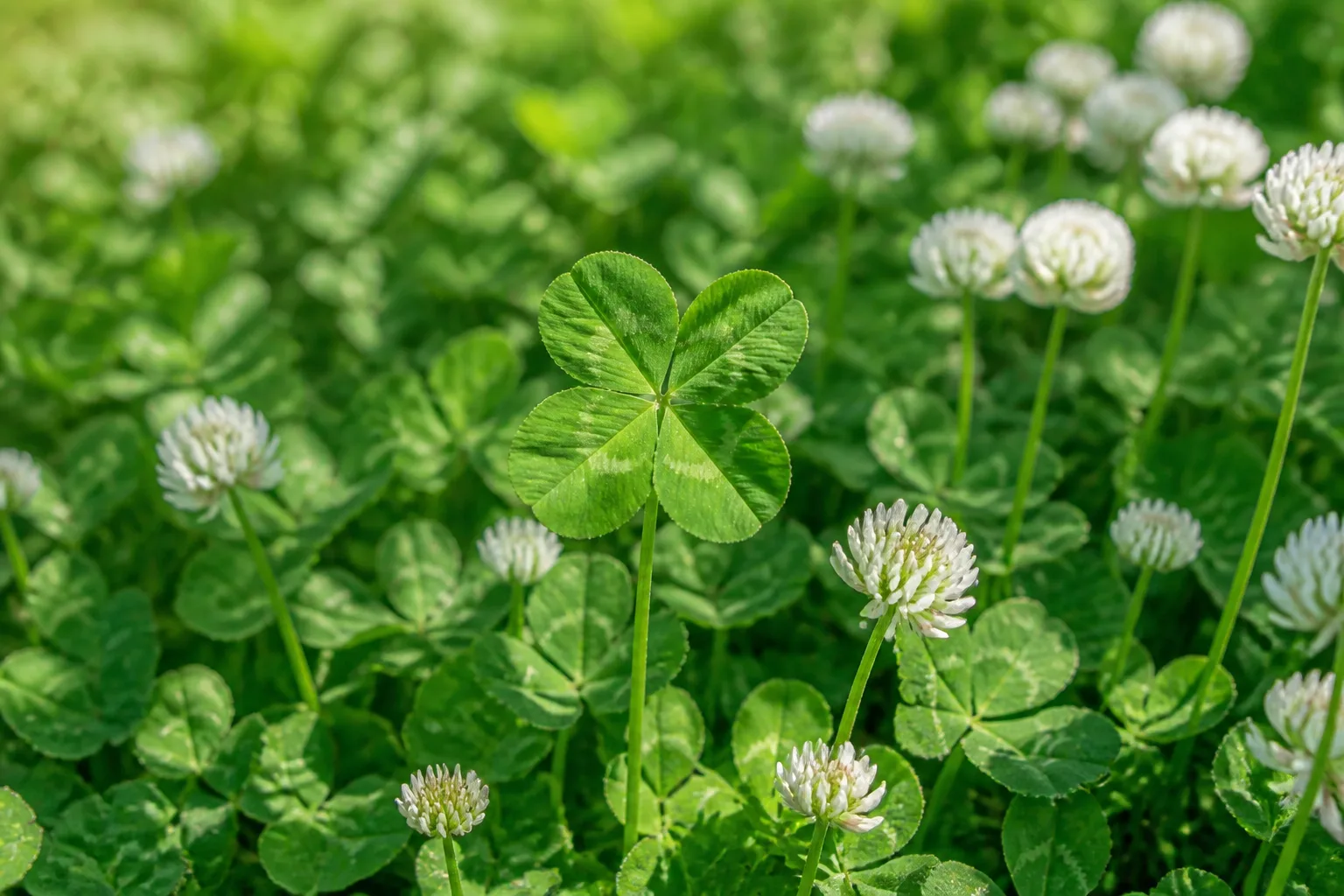
White clover (Trifolium repens) usually has three rounded leaflets, often with a pale crescent or V-shaped mark, and low white flower heads held above the foliage. Its stems creep along the soil surface and can root at nodes, so a patch may expand sideways even when you never see a tall plant.
Before treating, inspect a few plants rather than identifying the entire lawn from a distance. Look for the three rounded leaflets, the low creeping stems, and the small white or pink-tinged flower heads. Penn State Extension’s white clover turf guide is useful for comparing the plant with other broadleaf lawn weeds.
Wood sorrel or oxalis can also show three leaflets, but its leaves are usually heart-shaped and its flowers are often yellow. Creeping charlie has rounded leaves but does not present the same three-leaflet pattern. A lawn product selected for “clover” may not be the right choice for either look-alike, and a misidentified plant can lead you to treat the wrong season or use the wrong active ingredient.
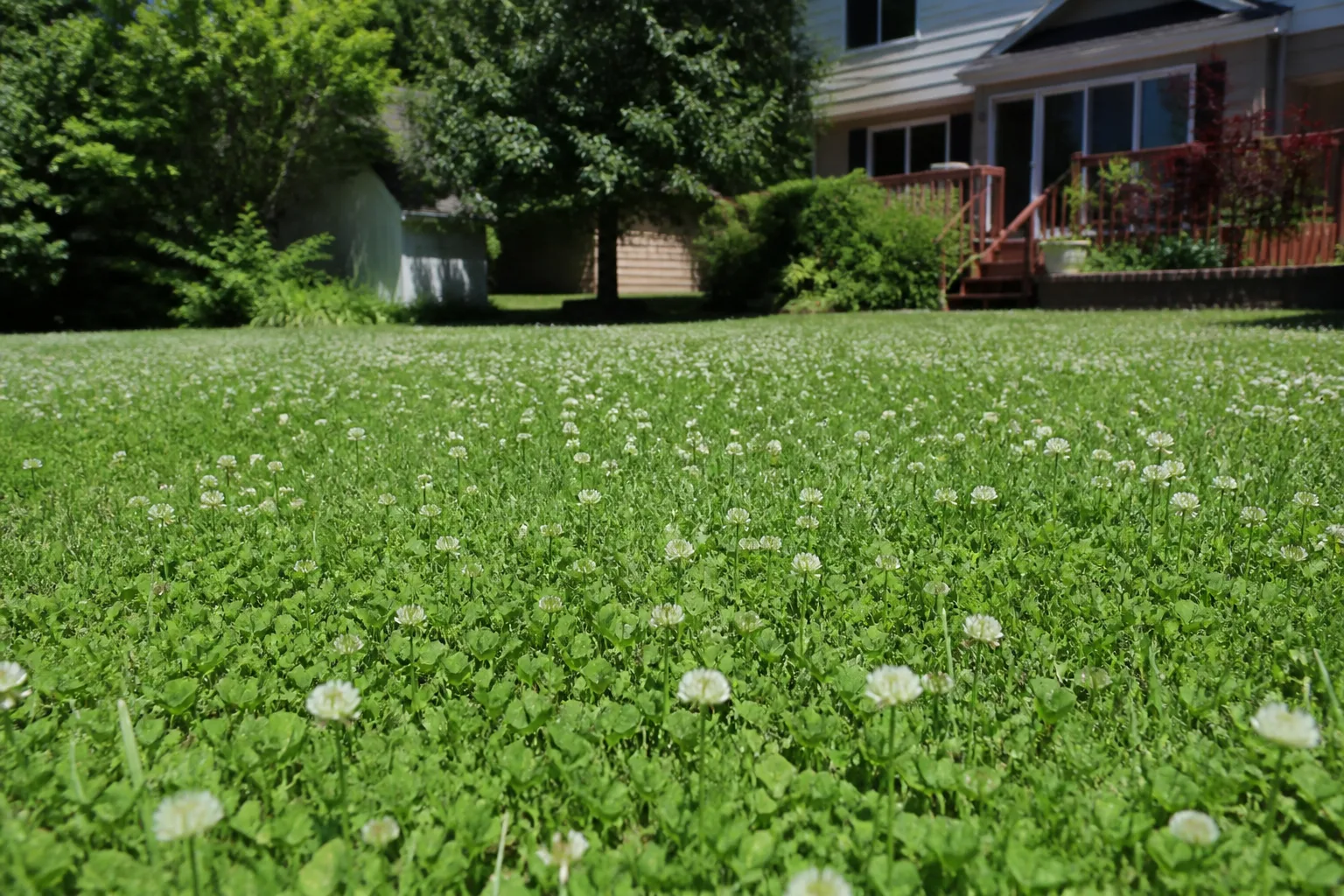
The lawn’s pattern is another clue. Clover scattered through thin turf points toward a competition problem; a dense patch beside a sidewalk may also reflect compaction and heat; plants clustered in a damp, shaded corner may be taking advantage of a site where your grass is poorly adapted. Photograph the patch, note whether it is sunny or shaded, and record the grass type if you know it before selecting a treatment.
Why clover appears when a lawn is struggling
Clover is not proof that your soil is ruined. It is a capable competitor that can stay green through dry periods, tolerate traffic, and make its own nitrogen through a relationship with soil bacteria. Those traits give it an advantage when turf is thin or stressed, but they also mean the clover is often showing you where the lawn’s management does not match the site.
Low available nitrogen can favor clover over grass, yet “add lots of nitrogen” is not a safe diagnosis. Excess fertilizer can burn turf, create lush weak growth, run off, or push you past the nutrient level the lawn actually needs. Use a soil test and the recommendations for your grass rather than trying to kill clover with an arbitrary bag of high-nitrogen fertilizer; NC State’s lawn and garden soil-testing guidance explains why a test is a better starting point.
Compaction is another frequent cause. Foot traffic, parking, mowing wet ground, construction, and repeated play can squeeze out air-filled pore space, leaving grass roots short of oxygen while clover continues to occupy the surface. Drought, irrigation gaps, excessive shade, low mowing, and bare spots create the same opening from different directions.
Choose the smallest treatment that fits the infestation
Walk the lawn and estimate the problem before buying anything. A few isolated rosettes in dense turf call for a different response from a lawn where clover forms a continuous mat and the grass is barely visible.
Small patches are a hand-removal and repair job
Hand-pulling is the lowest-risk method around desirable grass, but only if you remove the plant rather than snap off its leaves. Work after rain or water the patch deeply the day before. Use a narrow weeder or hand fork to follow the creeping stems, lift the crown, and remove as much rooted material as practical.
Do not excavate a dinner-plate-sized crater for every two-inch patch. Pull carefully, shake loose soil back into the hole, firm it lightly, and brush in a small amount of soil or compost before seeding. If clover has already flowered, collect the removed material rather than leaving flower heads on the lawn where they can contribute seed.
Hand removal is not a failure if a few stems return. Check the same area every week or two during active growth and pull new shoots while the patch is small. That follow-up is what makes manual control useful; one dramatic pulling session followed by months of neglect usually is not enough.
Widespread clover may justify selective control
When clover covers much of the lawn, digging every runner can disturb more soil and grass roots than it saves. A selective broadleaf treatment can be more precise in that situation, provided the product label lists the weed, the grass species, the application site, and the conditions in your area.
Do not choose a product simply because its front label says “weed killer.” Some products target grassy weeds, some target broadleaf weeds, and some are intended only for non-turf areas. If your lawn contains a mix of grass species and you cannot identify it, ask a local extension office or qualified lawn professional before treating the whole area.
Mow correctly while you rebuild the turf
Mowing does not kill established clover by itself, but it changes the competition around it. A mower set too low removes leaf area from the grass, warms the soil, and leaves open space where low-growing clover can keep receiving light. A mower set appropriately for the grass lets the turf shade the soil and recover from ordinary stress.
Use the one-third rule: remove no more than one-third of the grass blade in a single cut. There is no universal “three-inch” height that fits every lawn. Cool-season tall fescue, Kentucky bluegrass, perennial ryegrass, bermudagrass, zoysia, and fine turf each have different useful ranges, and the upper part of a grass’s range is often safer during heat, drought, shade, or recovery. The RHS mowing guide and Purdue’s mowing guidance both emphasize matching the cut to the lawn and conditions rather than scalping on a fixed schedule.
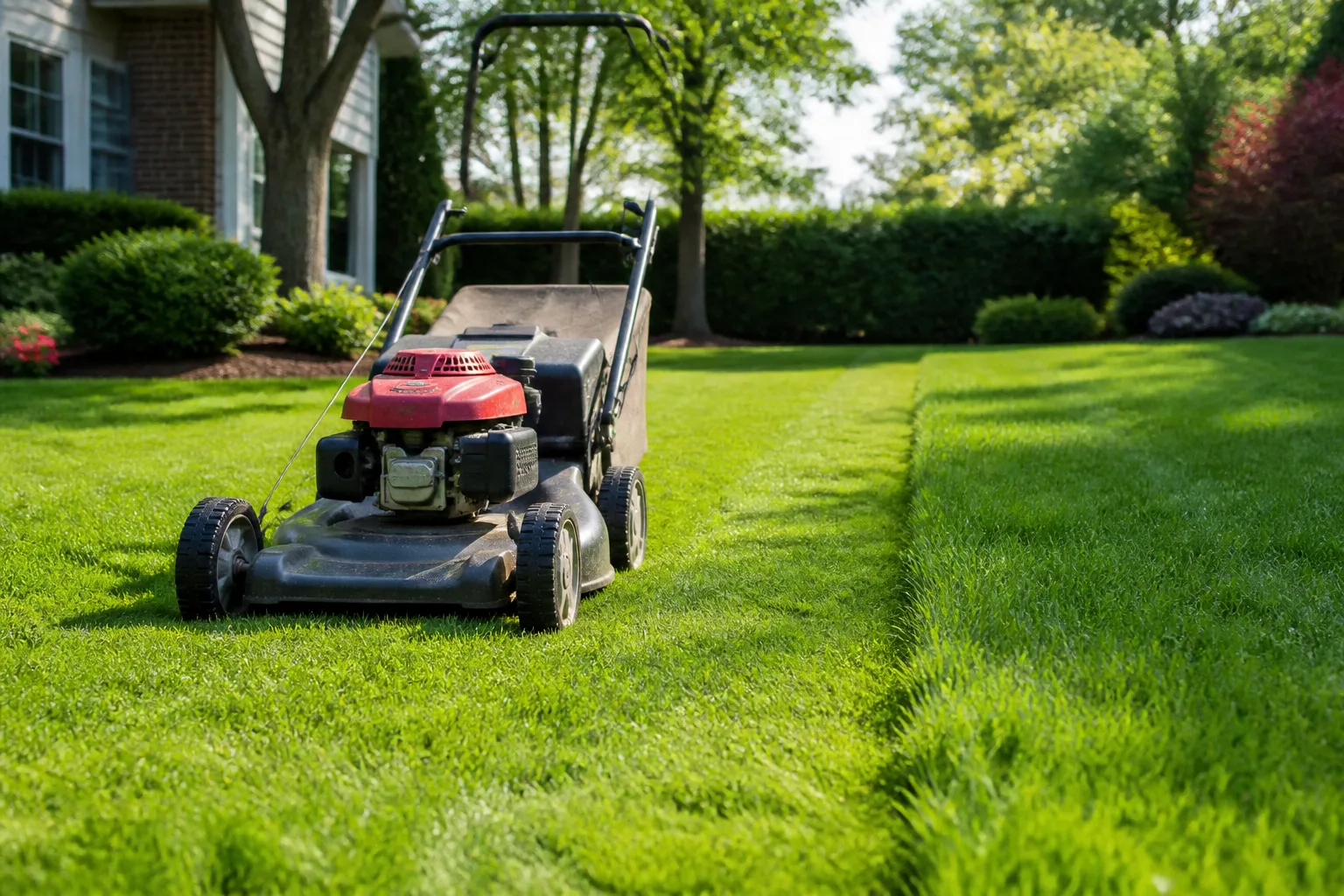
Mow when the foliage is dry and the soil is firm enough that the wheels will not leave ruts. Keep the blade sharp, vary your direction, and avoid mowing so infrequently that the next cut removes a large fraction of the leaf. Those habits do not eradicate clover, but they stop the grass from being weakened by the repair process.
Water, feed, and reseed according to the grass you have
Once clover is reduced, grass needs a chance to occupy the space. Water established turf deeply enough to wet its root zone, then allow the surface to dry between irrigations as local weather, soil, and grass type require. A catch-can test is more useful than a timer guess; UF/IFAS lawn irrigation guidance recommends watching for real moisture stress and calibrating irrigation rather than running a fixed schedule blindly.
Fertilize only when the grass needs it and the timing fits the species. A soil test can reveal whether nitrogen is actually limiting, whether pH is outside the grass’s preferred range, and whether a phosphorus or potassium application is unwarranted. For many cool-season lawns, the best repair opportunity is early fall, when the grass can build roots and fill thin areas without the extreme heat that made the clover patch visible; warm-season lawns follow a different seasonal rhythm.
Reseed bare soil with a grass seed blend suited to the site’s sun, moisture, and climate. Seed will not solve a drainage or shade problem by itself. If the same patch becomes clover again after every reseeding, fix the site constraint or choose a groundcover that is genuinely adapted to it instead of repeating the same treatment.
Relieve compaction instead of fertilizing around it
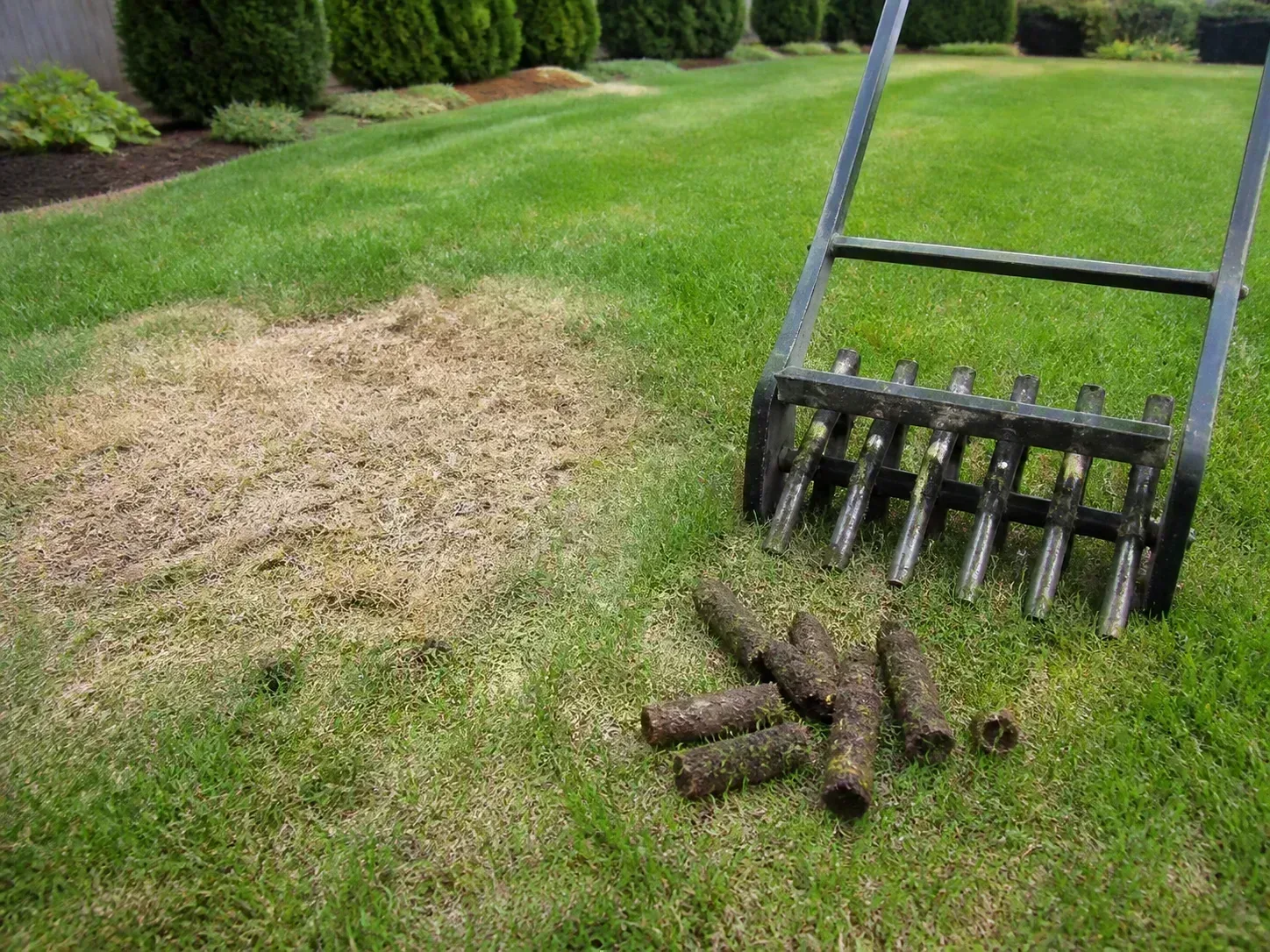
If a screwdriver will barely enter the soil in a clover-heavy strip while it slides easily into nearby turf, compaction deserves attention. Keep people, pets, and mower wheels off the area when it is saturated, redirect regular foot traffic with a path, and use core aeration when the grass and soil conditions make it appropriate.
Core aeration removes plugs; it does not magically cure every hard soil. It works best when followed by the repair your grass needs, such as overseeding, and it can spread weed seed or disturb a lawn if done at the wrong time. Do not aerate a waterlogged surface simply because it is hard, and do not use a spike tool as a universal substitute for removing actual soil cores.
Use a selective herbicide only when the label fits
For clover mixed through otherwise desirable turf, a labeled selective broadleaf herbicide is the chemical category designed for this job. Common active ingredients used in products for broadleaf lawn weeds include 2,4-D, dicamba, MCPP or mecoprop, and triclopyr, but the ingredient list alone is not a recommendation. Formulations, turf tolerances, restrictions, and legal uses differ by product and location.
Read the active ingredient, turf, and timing directions
The label is the controlling document. The EPA’s explanation of pesticide labels notes that labels are legally enforceable instructions, so check the listed clover species or weed group, your grass species, the application rate, re-entry language, weather limits, protective equipment, and any restrictions around water or newly seeded turf.
Treat when clover is actively growing and the label says conditions are suitable, not during drought, heat stress, frost, or a period when the grass is barely growing. Late summer into fall is often a useful window for broadleaf control in cool-season lawns because clover is still active while turf can recover, but local climate and the product label control the decision. A second application is never automatic; use the label’s interval and reassess whether the first treatment worked.
Do not add dish soap, vinegar, fertilizer, or another herbicide to “boost” a labeled product. Unapproved tank mixes can change how the spray moves, increase leaf injury, violate the label, or make the applicator responsible for a result the manufacturer never tested.
Apply with a plan for avoiding off-target injury
Choose a calm day with no rain in the label’s forecast window, and keep children and pets away according to the label. Check the wind before opening the sprayer. Broadleaf herbicides can injure nearby ornamentals, vegetables, clover you intended to keep, and trees with exposed roots if spray drifts or a spreader is overfilled.
Spot-treat the patch when practical rather than broadcasting a product over healthy turf. Use a clean, calibrated sprayer or spreader, avoid overlapping passes, and never spray a lawn that is already wilted or heat-stressed. If liquid reaches a sidewalk or driveway, follow the label’s cleanup directions rather than hosing it toward a storm drain.
Expect the clover to fade gradually, not disappear in an hour. Once the leaves die back, rake out heavy residue only if necessary, correct the cause of thin turf, and reseed at the appropriate time. A bare tan patch after a successful treatment is not the same as a repaired lawn; the second job is getting grass back into that space.
Organic and DIY methods have narrow uses
“Natural” describes an origin, not a guarantee of selectivity or safety. The question that matters is whether the method can distinguish clover from the grass you want to keep.
Corn gluten is not a rescue treatment for rooted clover
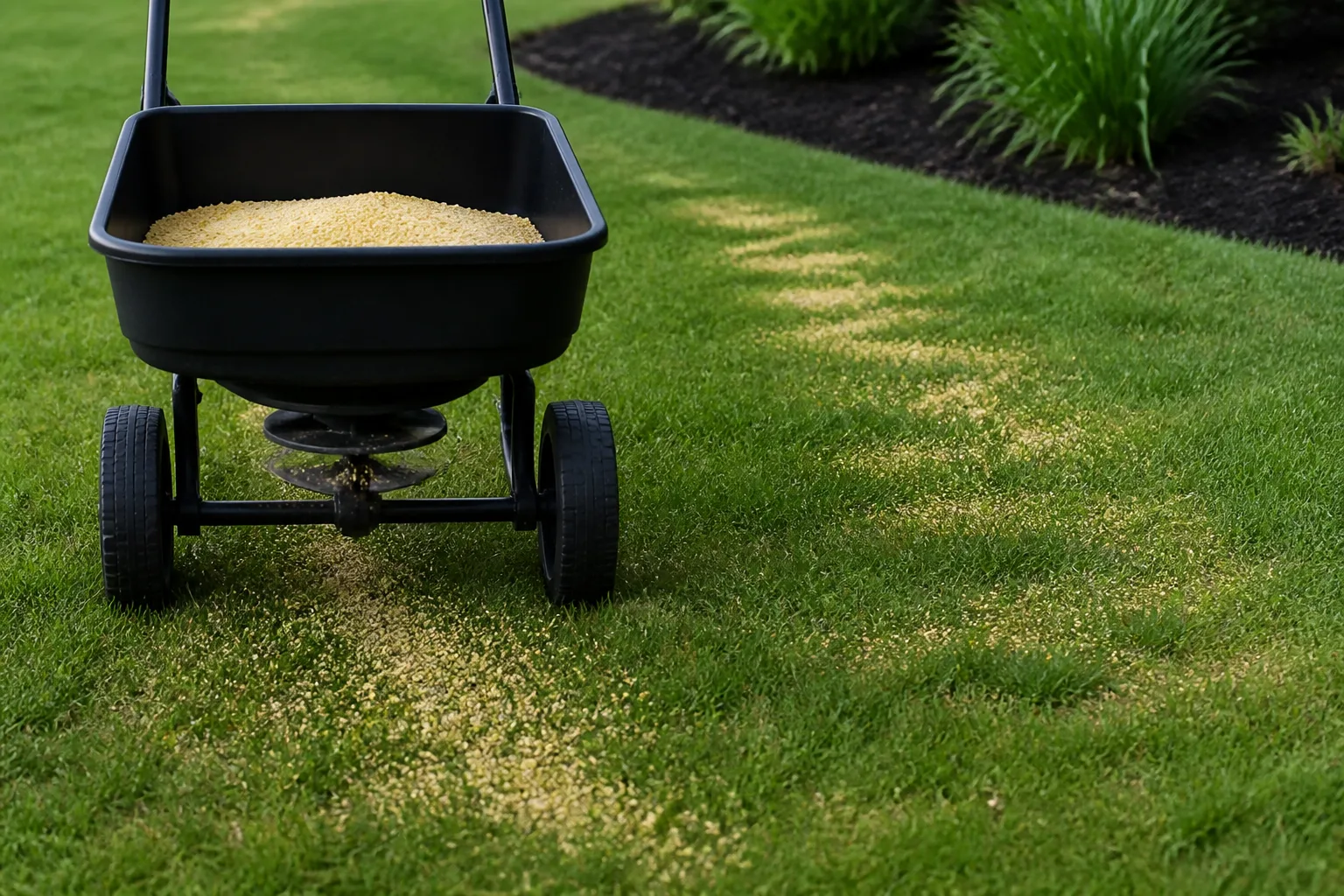
Corn gluten meal is discussed as a pre-emergent material because it may interfere with root formation in some germinating seeds. That makes timing critical. It does not kill the established clover plants already rooted in your lawn, and it can add nutrients whether or not your soil needs them.
University extension summaries describe mixed field results and emphasize that corn gluten must be used before the target seeds germinate to have a chance of helping. University of Maryland’s corn-gluten guidance and Oregon State’s review are useful reminders that a pre-emergent is not a post-emergent weed killer. If your clover is visible now, focus on hand removal, turf repair, or a correctly labeled selective treatment instead.
Vinegar is a poor choice inside a lawn
Vinegar and horticultural acetic-acid products are non-selective contact herbicides. They burn the foliage they touch, which includes grass blades, and a brief top-growth injury does not guarantee that clover’s rooted crowns or creeping stems are gone. Stronger acetic-acid products can also injure skin, eyes, and nearby plants, so “household” and “natural” should not be treated as synonyms for harmless.
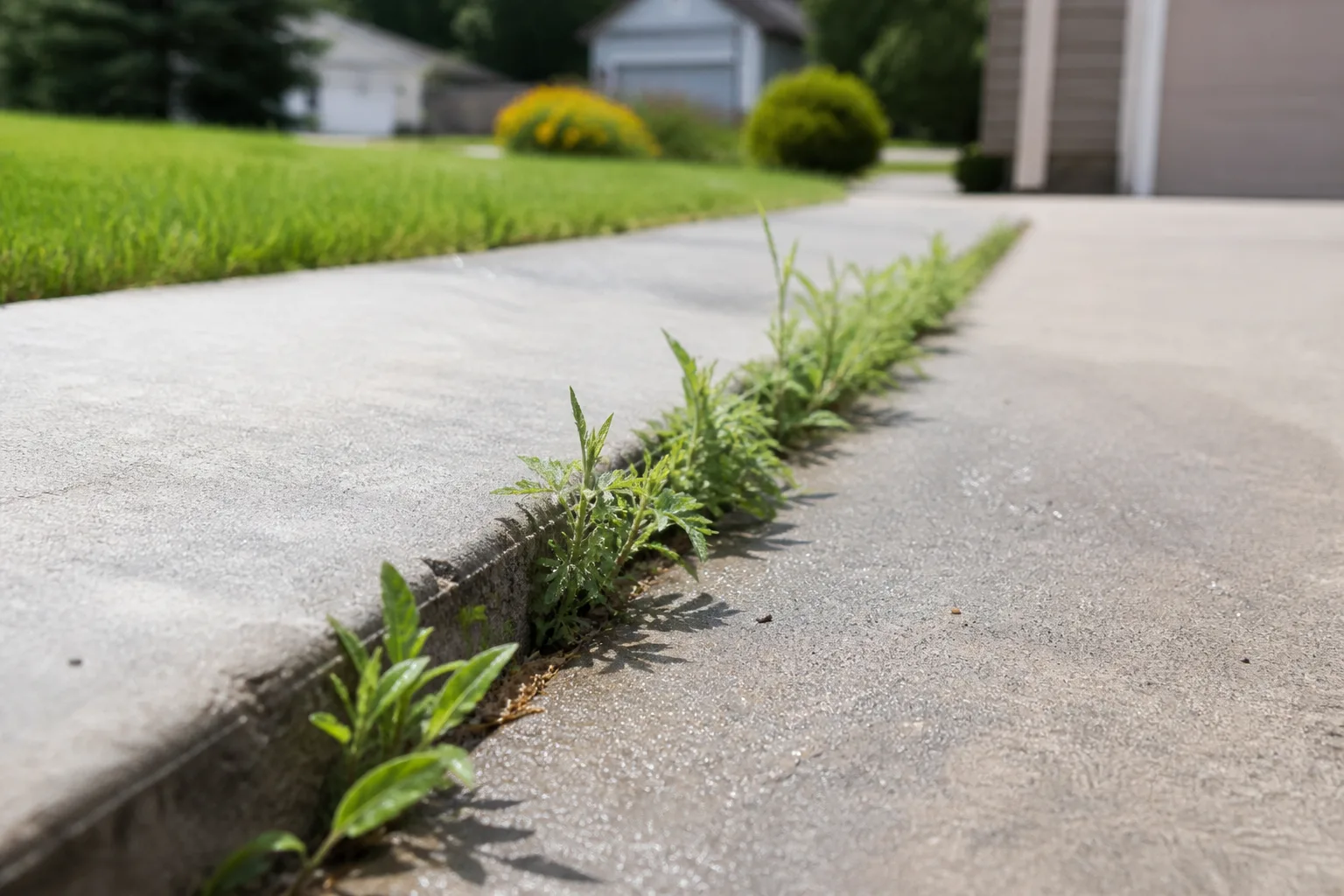
If you have weeds growing in a crack, gravel strip, or other place where no desirable plant is present, a labeled non-selective treatment may have a role. That is a different job from spraying a clover patch in turf. Keep homemade vinegar mixtures off lawns, planting beds, and tree-root zones, and do not assume that adding salt or dish soap makes the treatment more selective.
Prevent the next flush of clover
The prevention plan is not “spray every time you see a leaf.” It is a short audit followed by a season of consistent turf care.
- Map the patches. Mark whether each one is in shade, beside a path, on a slope, under a leaking sprinkler, or in a place that receives repeated traffic.
- Test before feeding. Use a soil test for fertility and pH; do not use nitrogen as a substitute for information.
- Set the mower higher within the grass’s safe range. Keep using the one-third rule and avoid scalping during heat or drought.
- Repair the opening. Water correctly, relieve compaction when appropriate, improve drainage where possible, and reseed at the grass’s best establishment time.
- Stop new seed production. If you are not treating the clover, mow before flower heads mature and collect conspicuous clippings from a flowering patch. This reduces seed input but does not remove established runners.
- Monitor the same spots. Recheck in two weeks, then after the next major heat, rain, or traffic event. A returning patch tells you which condition remains unresolved.
Pre-emergent products are not a universal answer for clover. They are intended for specific germination windows and target weeds, and they may interfere with grass seed if used before overseeding. Do not borrow a crabgrass schedule and assume it controls clover; read the product label and match the treatment to the weed’s biology.
When keeping some clover is the smarter lawn decision
You do not have to remove clover just because it appears. A mixed lawn can stay green through dry stretches, tolerate traffic, and provide flowers for bees; replacing every clover plant with fertilizer, irrigation, and repeated herbicide applications may have a larger environmental and maintenance cost than accepting a few patches.
Keeping it is especially reasonable when the patch is in a low-use part of the yard, the grass is poorly adapted to the site, or your goal is a lower-input lawn rather than a uniform one. You can mow before flowering if you need a shorter, less bloom-heavy surface, but mowing changes flower availability without eliminating clover.
Removal makes more sense when the area must be uniform for design or play, when flowering bees create a specific access concern, or when clover is revealing a turf problem you plan to repair anyway. If someone in the household has a serious insect-sting allergy, mowing alone is not a medical safety plan; follow the person’s clinician-provided precautions and consider professional advice about the yard.
Troubleshoot the common reasons clover returns
It came back after hand-pulling. You probably left rooted nodes or missed a second flush of seedlings. Pull smaller patches more frequently, remove the crown and runners you can reach, and reseed the disturbed soil so new turf—not open soil—occupies the gap.
It came back after spraying. Check whether the product was selective and labeled for your grass, whether the clover was actively growing, and whether you mowed or had rain during the label’s protection window. If the clover faded but bare ground remains, the herbicide may have worked; the unresolved problem is turf density.
The grass was damaged after treatment. Look for spray drift, overlap, a miscalibrated spreader, heat or drought at application, mowing too soon, or a product not labeled for that turf. Photograph the damage, keep the product container and application details, and ask a local extension service or qualified professional before treating again.
The patch is beside the sidewalk or play area. Compaction and traffic are likely contributors. Move the traffic route, improve the surface or edge, aerate when appropriate for the soil and grass, and reseed during the correct window instead of repeatedly treating the symptom.
Fertilizer did not help. That is useful information, not a reason to apply more. The lawn may have adequate nitrogen, a pH or drainage issue, insufficient light, a grass species mismatch, or a root-zone problem. Return to the soil, water, mowing, and site checks before the next application.
Conclusion
To get rid of clover without damaging the grass around it, start with identification and scale. Hand-pull small patches from moist soil, use mowing and irrigation to protect the turf, test soil before fertilizing, and repair compacted or bare areas so the grass can close the opening.
For widespread clover, a selective broadleaf herbicide can be the most practical option—but only when its label lists the weed, the grass, the site, and the application conditions. Skip vinegar on turf, treat corn gluten as a limited pre-emergent rather than a rescue cure, and monitor the same patches after treatment. A lawn that stays dense, correctly mowed, appropriately fed, and well matched to its site has a much better chance of keeping clover as a small visitor instead of a takeover.



