How to Get Rid of Gophers in Your Yard Fast
Fan-shaped soil piles and wilting plants? Learn to ID pocket gophers, probe main tunnels, trap effectively, bait safely, and exclude them from beds.
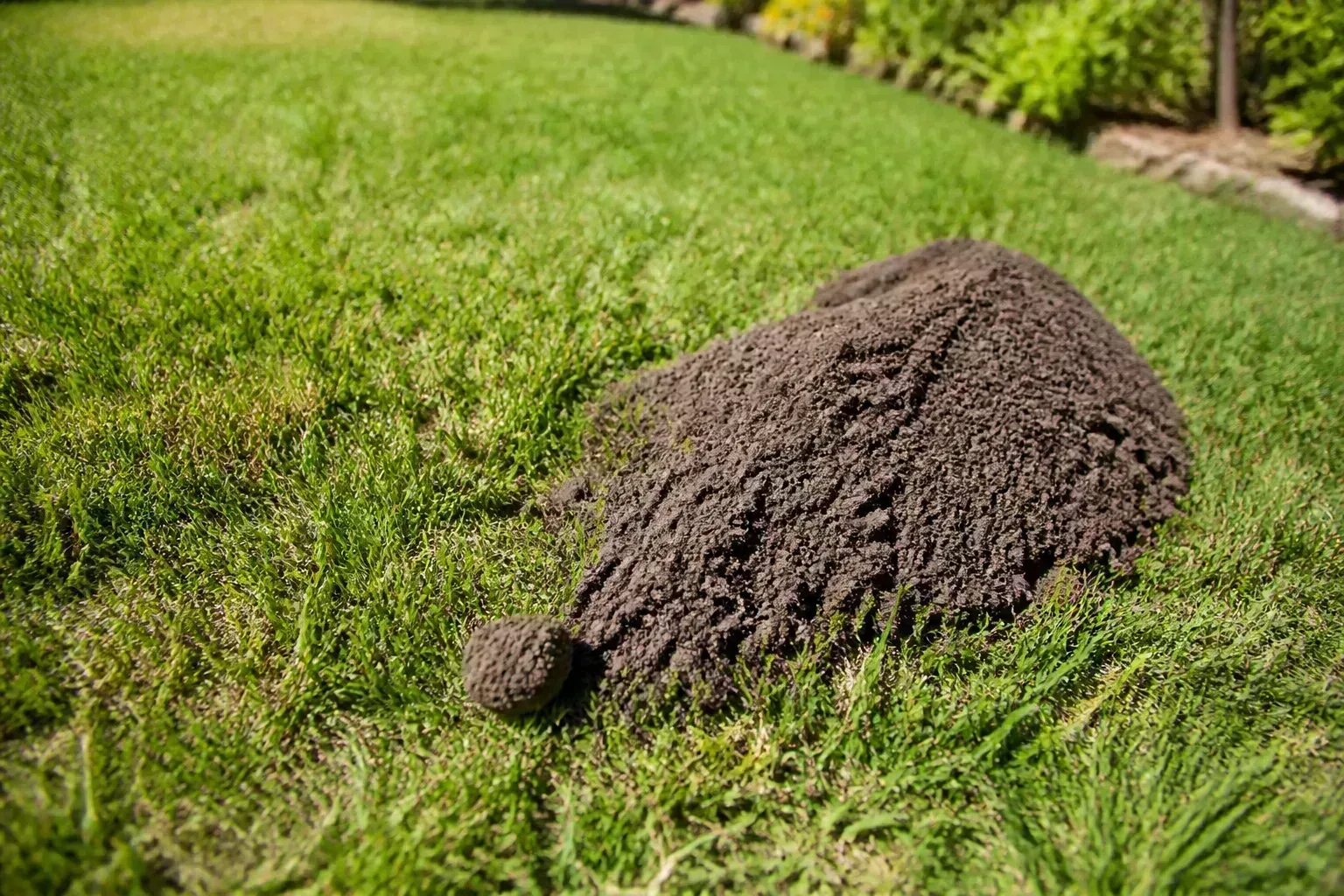
Fresh fan-shaped soil piles, a row of vegetables vanishing underground, and spongy turf that collapses under your foot usually mean pocket gophers—not moles, not voles, and not something a surface spray will fix. Gophers are herbivorous burrowing rodents that eat roots, bulbs, and bark while you sleep. One animal can open several mounds in a single day and pull an entire tomato plant down a tunnel before breakfast.
Speed matters because gophers work underground where you cannot see them. The control sequence that extension services recommend is simple: confirm the species, locate the main burrow, then trap or bait inside the tunnel system—or exclude them from beds you are rebuilding. Repellents, noise gadgets, and lawn treatments marketed for “rodents” generally waste money against pocket gophers specifically.
Confirm Gophers Before You Spend a Dollar on Control
Misidentification is the most expensive mistake in yard pest control. Mole traps do not catch gophers. Vole bait placements miss gopher main tunnels. Ground-squirrel holes look different again. Spend ten minutes reading mound shape and plant damage before you buy anything.
Walk the yard after rain or irrigation, when new digging shows up as dark, moist soil. Photograph the newest mounds from above and from the side, and note whether you also see clipped vegetation, missing bulbs, or wilting shrubs with no aboveground chew marks.
Gopher Mounds vs. Molehills and Vole Runways
Pocket gopher mounds are crescent- or horseshoe-shaped when viewed from above, with a plugged hole offset to one side of the fan—not centered on top. The soil is pushed up at an angle from a short lateral tunnel connecting to the main burrow. Mounds on irrigated lawns can appear any time of year; in drier regions, activity often spikes in winter and spring when soil is easier to dig (UC IPM).
Mole mounds are more circular and volcano-shaped, often with a plug in the center. Moles also leave raised surface ridges along shallow feeding tunnels. Moles hunt earthworms and grubs—they rarely eat your plants directly. Voles leave shallow runways through grass and small open holes near cover; their damage is clipped stems and gnawed bark at ground level, not tall soil fans.
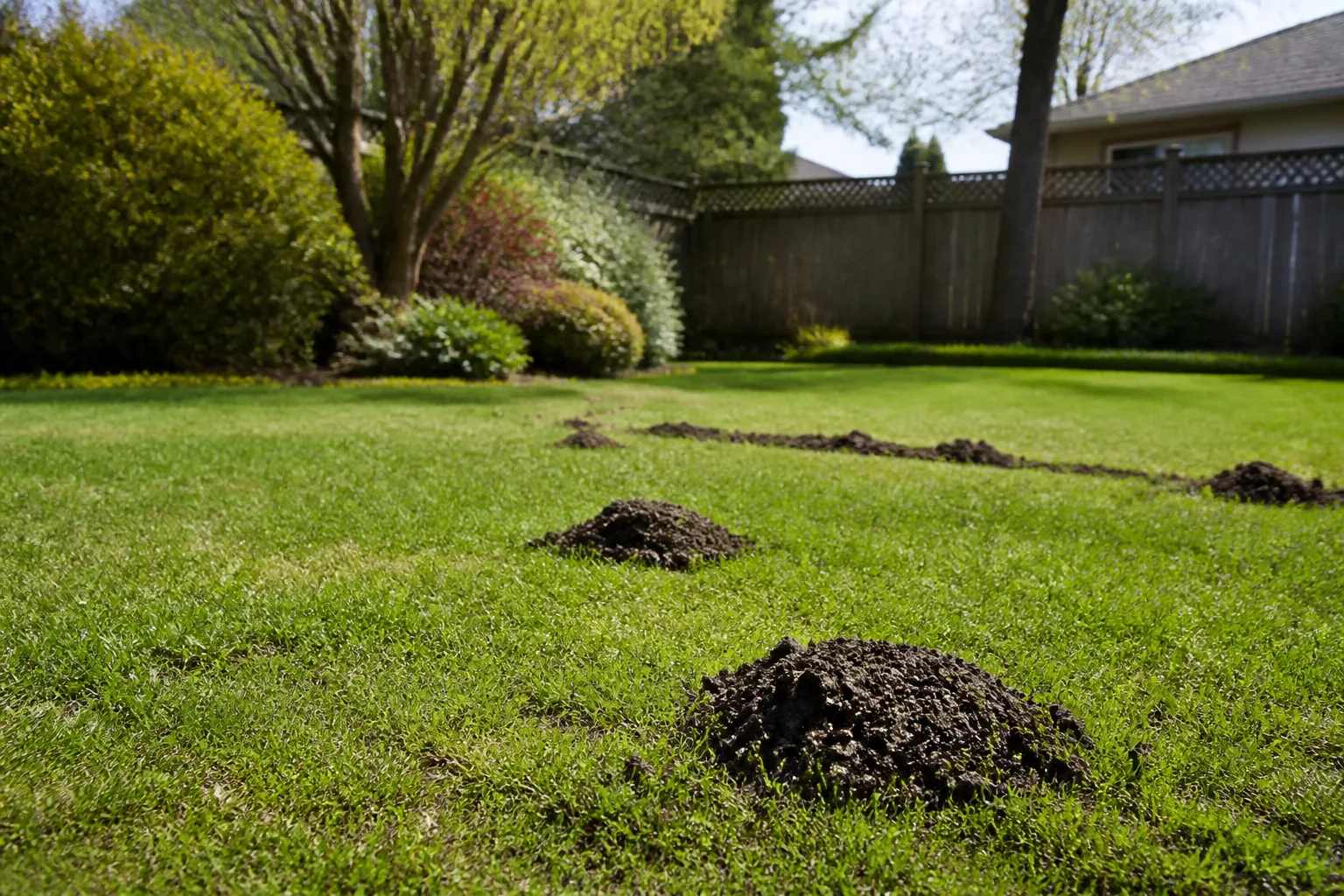
| Sign | Pocket gopher | Mole | Vole |
|---|---|---|---|
| Mound shape | Crescent or fan; plug off to one side | Round volcano; plug often centered | Usually no large fan mound |
| Surface ridges | Rare | Common | Shallow runways, not ridges |
| Plant damage | Roots pulled underground; wilting; missing bulbs | Tunnel disruption only | Clipped grass; bark gnawing |
| Best control | Trap/bait main tunnel; exclusion mesh | Trap active surface run | Snap traps on runways; exclusion |
If you are still unsure, see our dirt mound identification guide and mole vs. vole comparison before you treat.
Plant Damage That Points to Gophers
Gophers locate food by smell while digging. They feed on roots, tubers, bulbs, and the fleshy bases of herbaceous plants—often pulling entire plants into the tunnel from below. You may find a feed hole: a small opening with a circular band of clipped vegetation around it and no soil mound, where the gopher fed at the surface without pushing up a fan (UC IPM).
In snowy regions, gophers can girdle tree bark through snow tunnels, killing branches or young trees before you notice aboveground sign. They also chew flexible drip-irrigation lines and plastic sprinkler components, which moles and voles typically ignore. If your irrigation suddenly loses pressure and fresh mounds appear along the line, suspect gophers first.
Why One Gopher Can Destroy a Lawn Faster Than You Expect
A single pocket gopher maintains a burrow system that can span 200 to 2,000 square feet, with tunnels roughly 2½ to 3½ inches wide and feeding tunnels often 6 to 12 inches deep (UC IPM). Nests and food chambers may sit much deeper depending on soil type. Gophers do not hibernate; they stay active year-round, though you may see fewer fresh mounds in dry summer soils away from irrigation.
Each gopher usually lives alone except during breeding or while raising young, but densities can exceed 60 per acre in irrigated fields—far more than a suburban lawn needs to look destroyed. Litters average five to six young, and irrigated sites may produce up to three litters per year. Waiting until “the whole yard is ruined” means you are trapping or baiting multiple animals across a large tunnel network instead of one.
Mounds are not just cosmetic. They break mower blades, twist ankles, and divert irrigation water into erosion channels. Grass dies when roots are clipped; bare patches spread along tunnel paths. Early action—within days of the first fresh fan—is cheaper than resodding a quarter of the lawn.
Start With Fresh Mounds: Finding the Main Tunnel
Trapping and baiting fail when they go into the wrong hole. Gophers build lateral tunnels to push soil to the surface; those laterals are often abandoned after use. The main burrow runs deeper and is where the animal travels repeatedly. Your job is to probe from a fresh mound to that main tunnel before you set anything.
Choose mounds with dark, moist soil—that means digging happened recently. Flatten old mounds so tomorrow’s activity is obvious. Work outward from the plug side of the fan, not the center of the lawn at random.
How to Probe a Gopher Burrow Correctly
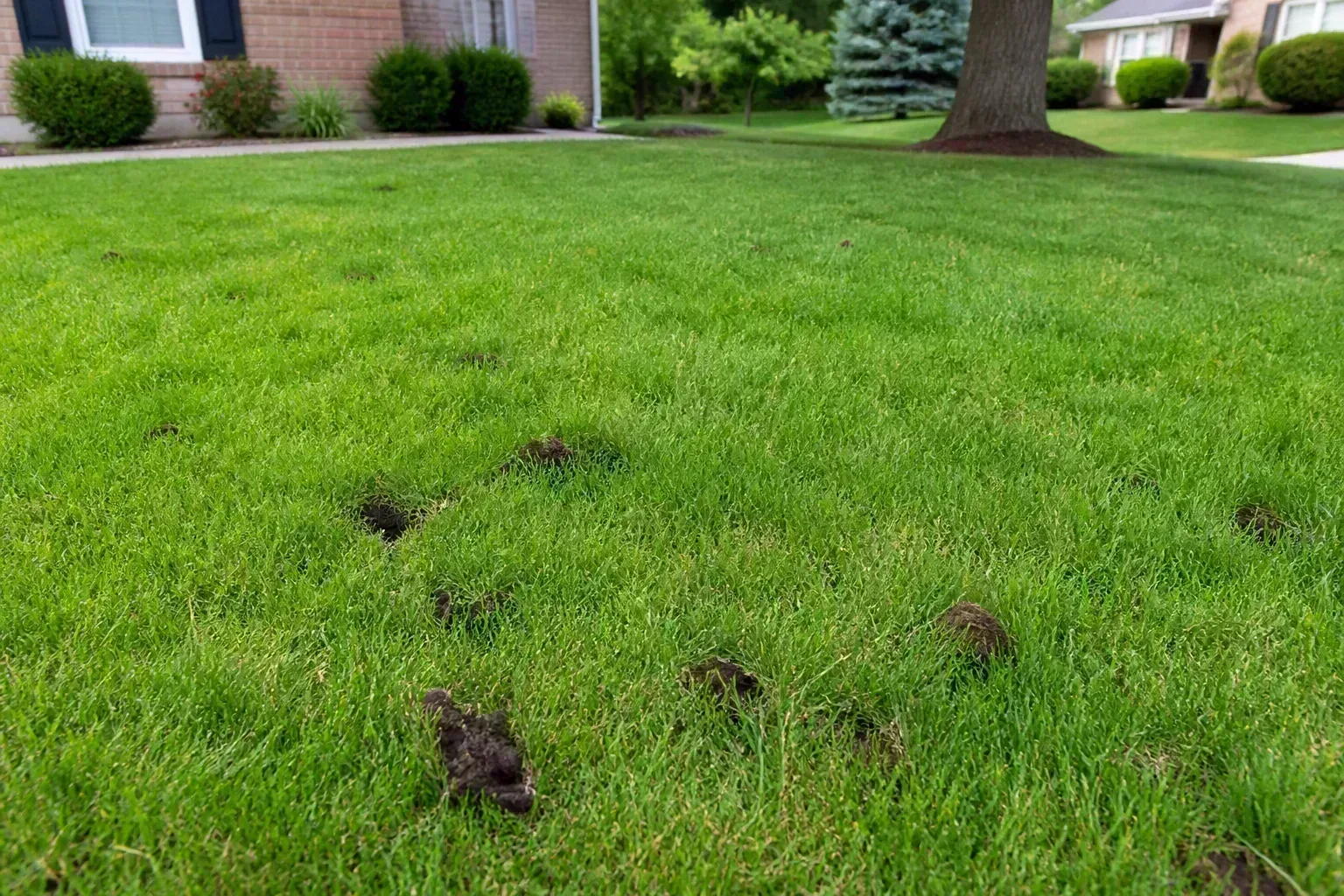
Use a long probe: a commercial gopher probe, a stout screwdriver, or a blunt-tipped length of pipe (Oklahoma State Extension). Starting 4 to 12 inches from the plug side of the mound, push the probe into the soil at a shallow angle. When the tip drops suddenly about 2 inches, you have pierced the tunnel roof.
You may need several attempts. Skill improves fast once you have confirmed one tunnel by digging down with a trowel. Do not bait or trap in a backfilled, plugged tunnel that feels “soft” but is actually loose dirt—the gopher may not return there (UC IPM). If you are unsure, excavate once to verify an open runway before you commit bait.
Mark successful probe spots with a flag or stake. On a busy lawn, probe two or three of the freshest mounds; gophers use multiple laterals from one system.
Trapping: The Most Reliable DIY Fix for a Home Lawn
For most homeowners with a few fresh mounds, lethal trapping inside the main tunnel is the safest effective default. It avoids spreading toxic grain where pets and wildlife can reach it, and it gives you confirmation when the animal is caught. UC IPM lists trapping as a primary control method alongside baiting for lawns, gardens, and small orchards (UC IPM).
Gopher traps do not require food bait. Gophers encounter the trap while patrolling open tunnel—they push against a pan or wire trigger while trying to plug the breach. Research cited by UC IPM found no benefit from bait behind traps; human scent also does not reduce success.
Pincer Traps vs. Box Traps
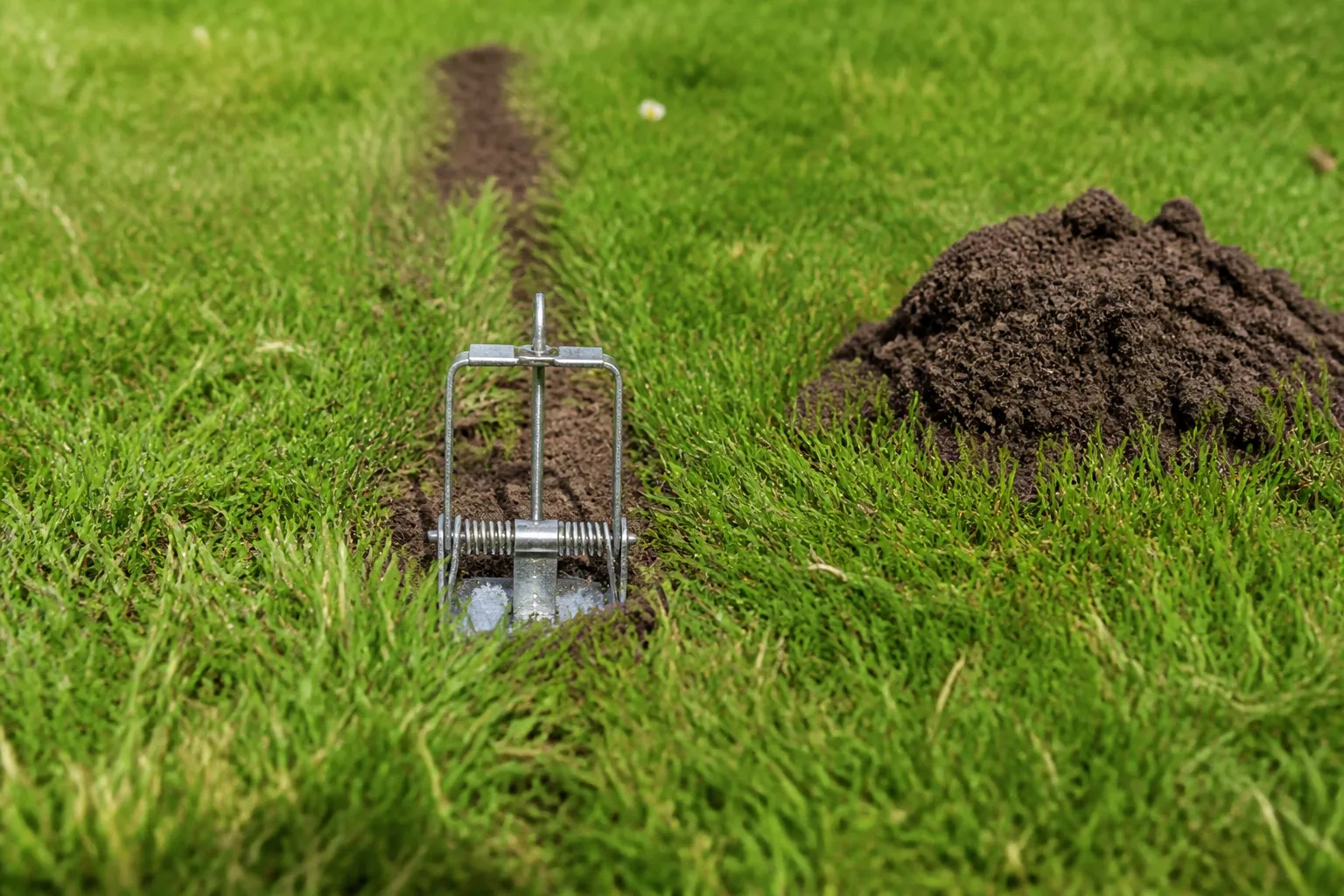
Two-pronged pincer traps (Macabee, Cinch, Gophinator) insert with less surface digging than box styles and are preferred by many experienced trappers on lawns. The Gophinator often outperforms the Macabee on large adults. Box or choker traps (Victor Black Box and similar) can be easier for beginners but require a wider excavation in the main tunnel; cover the opening so light does not spook the animal before it hits the trigger.
Set two traps per tunnel, facing opposite directions, so you catch the gopher whichever way it approaches. Wire each trap to a stake for retrieval and to stop scavengers from dragging it away. Open the tunnel with a hori-hori or trowel, seat the traps firmly, then cover the hole with sod, cardboard, or landscape cloth sealed with fine soil for a light-tight fit—or leave sets open in low-traffic areas if local guidance allows, since some gophers investigate openings to plug them.
Check traps daily. If nothing fires within 24 to 48 hours, move sets to a different probe location. Keep trapping until no new mounds appear for several days, then level old fans and monitor weekly.
Toxic Baits: When They Work—and When They Do Not
Poison baits can work when tunnel placement is accurate and populations are high, but they carry nontarget risk for pets, raptors, and scavengers that eat poisoned carcasses. Treat bait as a secondary tool for homeowners—after you have mastered probing—or for large areas where trapping every tunnel is impractical.
Strychnine-treated grain (often 0.5%) and zinc phosphide (2.0%) baits are lethal in a single feeding when placed correctly (UC IPM). Hand-held bait applicators combine probing and measured delivery for faster treatment across many mounds. Level existing mounds before baiting; if new mounds appear more than two days after strychnine or zinc phosphide treatment, re-bait or switch to trapping.
Never scatter bait on the surface. Gophers will not eat it there, and every kernel on top of the soil is a hazard to birds and pets. Oklahoma State Extension is explicit: toxic baits left aboveground endanger wildlife and domestic animals without reaching gophers underground (Oklahoma State Extension).
Legal Placement and Pet Safety Rules
Bait application is legal only inside burrow systems—not broadcast on turf, not in vegetable rows where roots contact pellets, and not in gardens where edible roots could absorb poison (UC IPM). Read the product label for your state; some active ingredients are restricted-use or no longer legal for residential gophers in certain states (California has phased out some anticoagulant products for this use).
Store baits locked away from children and pets. Use a dedicated spoon or applicator, not kitchen tools. Clean up any spill on the surface immediately. If a pet may have eaten bait or a poisoned carcass, contact a veterinarian or pet poison hotline at once—do not wait for symptoms.
Wear gloves, follow label rates exactly, and never mix homemade baits from unlabeled chemicals. When in doubt, trap instead.
Exclude Gophers From Beds, Trees, and New Lawns
Exclusion is preventive or rebuild-stage work—it does not remove a gopher already tunneling under established turf. It shines when you are installing a new lawn, building raised beds, or protecting high-value shrubs and fruit trees.
Gopher Mesh for Renovated Lawns and Raised Beds
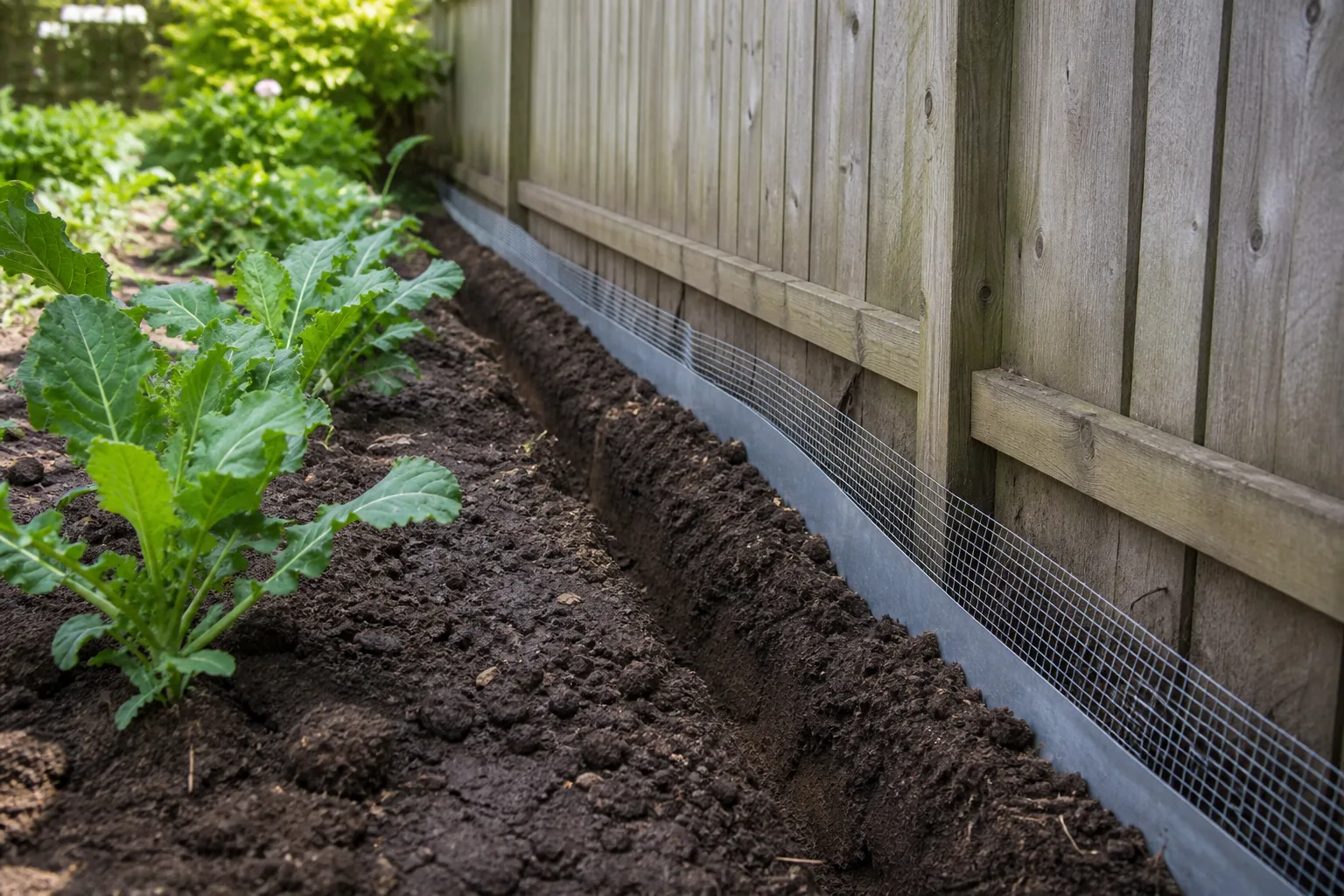
For ornamental trees and shrubs, bury ½- to ¾-inch hardware cloth or poultry wire at least 2 feet deep, with an additional 6-inch lip bent 90 degrees outward away from the planting. Extend mesh at least 12 inches above ground so gophers cannot walk over the top (UC IPM). Use galvanized or stainless steel for longevity; persistent gophers can sometimes go deeper, and roots may eventually crowd the barrier.
For raised vegetable or flower beds, line the bottom and sides with mesh before filling soil. Wire root baskets at planting time protect individual trees while young; use ¾-inch non-galvanized steel if you want the cage to rust away before roots girdle—size baskets for several years of growth.
If you are stripping an old lawn killed by gophers, excavate several inches of soil, level, lay gopher mesh or ¾-inch hardware cloth, then backfill with topsoil before sod or seed. This is labor-heavy and practical mainly for small lawns and planting islands, not multi-acre turf—but it is one of the few methods that stops reinvasion from below on a rebuilt surface.
Habitat Changes That Lower Attraction
Gophers are herbivores; less food at the edges means less invitation. Keep weedy strips along fences and vacant lots trimmed so gophers are not dining on weed roots on their way to your grass (Oklahoma State Extension). In agricultural settings, grain buffer strips around hay fields block immigration; in yards, a mowed buffer and cleared garden debris achieve a similar effect.
You cannot starve gophers out of a healthy irrigated lawn—they eat turf roots directly. Habitat modification supports trapping and exclusion; it rarely replaces them on its own. After control, remove piled weeds and leftover mulch near beds so fresh mounds are easy to spot when a new gopher arrives from a neighbor’s yard or open space.
What Usually Fails Against Pocket Gophers
Save your money and skip these unless you enjoy experimenting:
- Ultrasonic stakes, vibrating devices, and pinwheels — UC IPM notes gophers tolerate repeated noise and vibration from sprinklers, mowers, and traffic; research trials show frightening devices are ineffective.
- Castor bean, gopher purge, garlic, and other “repellent” plants — No research supports reliable area-wide repellency.
- Smoke or gas cartridges — Gophers plug tunnels within minutes when they detect smoke.
- Chewing gum, laxatives, and household oddities in burrows — Urban myths with no efficacy data.
- Owl boxes alone — Barn owls eat gophers but hunt wide areas; they will not clear one invading gopher from your lettuce before it is gone.
- Flooding and propane ignition devices — Unreliable, potentially dangerous, and often impractical in neighborhoods; UC IPM reports removal rates far below trapping for most homeowners.
- Surface repellent sprays — Cannot reach animals that live almost entirely underground.
Predators help at the ecosystem scale; they do not replace immediate trapping when you see today’s fresh mound next to your irrigation valve.
Protect Irrigation Lines and Seedlings
Gophers gnaw plastic drip tubing and small-diameter sprinkler laterals. Run vulnerable lines deeper where possible, and surround underground flexible lines with 6 to 8 inches of coarse gravel (1 inch or larger)—gophers avoid digging through large aggregate (UC IPM). Inspect lines after mound activity; a sudden dry zone in a drip zone often traces to a chewed emitter fed by a gopher tunnel.
New transplants and bulbs are easiest to protect with individual wire baskets than with yard-wide mesh. Combine baskets with prompt trapping when mounds appear within a few feet of a new tree—girdling below the root flare kills faster than aboveground deer browse.
When to Call a Professional
DIY trapping works for one or a few gophers on a manageable lawn. Call a licensed operator when:
- New mounds keep appearing after two weeks of diligent trapping and rebaiting.
- Damage threatens utilities, main irrigation headers, or hardscape.
- You need aluminum phosphide fumigation on qualifying sites—restricted near occupied buildings; residential use is tightly limited (UC IPM).
- Pressurized exhaust machines (BurrowRx, PERC, similar) make sense on large properties where purchase cost is justified—reported removal rates exceed 70% in some studies but machines are expensive for a single suburban lot.
- You cannot safely bait because of pets, wildlife, or vegetable gardens with root contact.
- Mounds might involve protected species or you are unsure of identification—verify locally before lethal control.
Get quotes that specify trap monitoring vs. fumigation, follow-up visits, and whether reinfestation from adjacent wildland is addressed with exclusion.
Conclusion
Getting rid of gophers quickly is a burrow problem, not a surface pest problem. Confirm fan-shaped mounds with offset plugs, probe 4 to 12 inches from the plug side to find the main tunnel, then set paired traps or place label-legal bait only inside that tunnel. Rebuild beds and small lawns with buried hardware cloth if you need long-term protection, trim weedy edges to reduce immigration, and skip ultrasonic stakes and smoke bombs that extension trials already debunked.
Level old mounds after success and check weekly—pocket gophers reinfest from neighboring turf and open ground fast. The cheapest control window is the first fresh fan, not the fourth bare patch in your sod. Act on identification, trap with patience for 48-hour cycles, and escalate to a pro when tunnel networks, utilities, or pesticide risk exceed what DIY can handle safely.