How to Get Rid of Mole Crickets in Your Lawn
Mole crickets tunnel through turf and feed on roots. Use this practical plan to identify them, reduce the population, protect grass, and know when to call a pro.
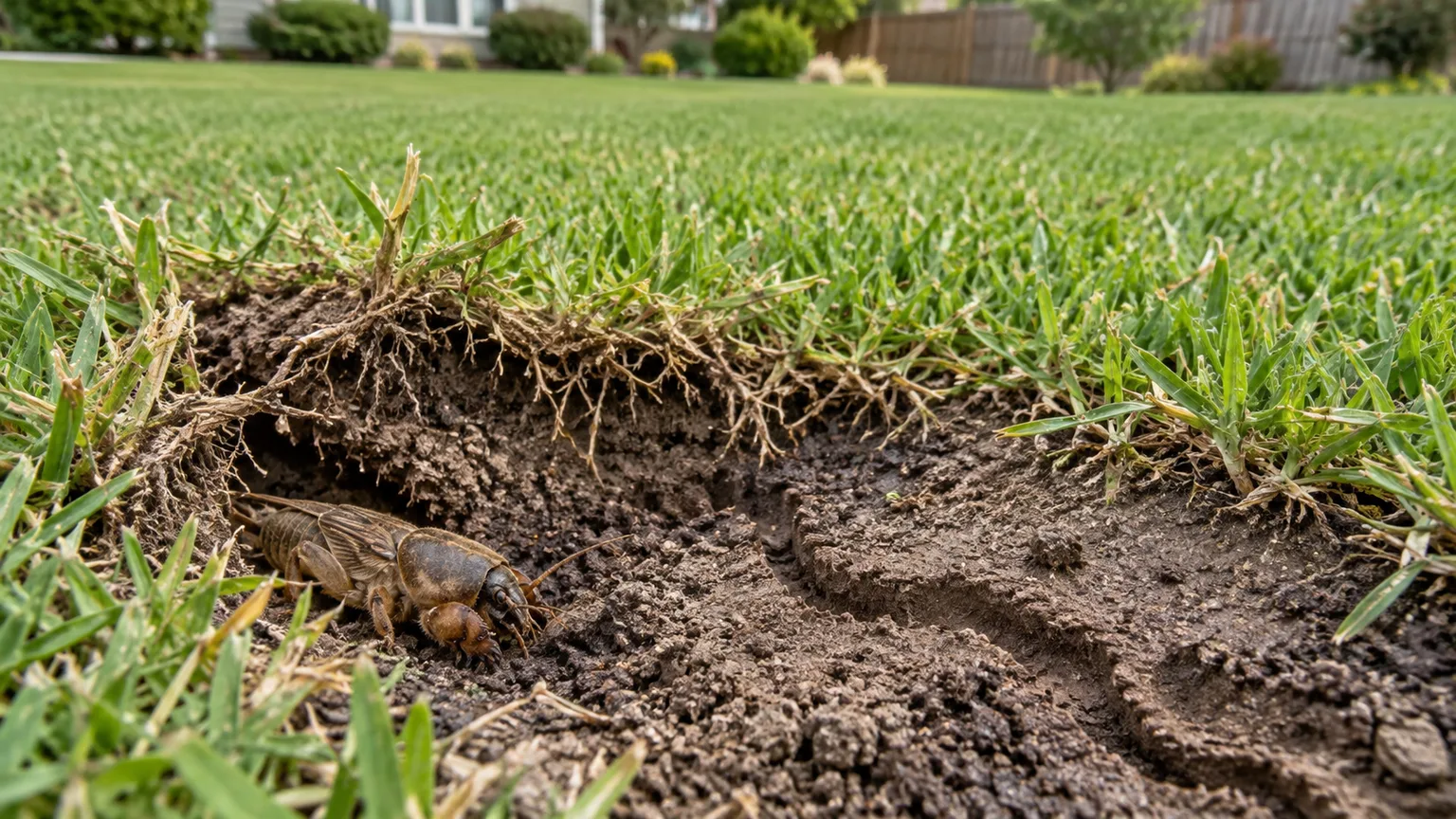
Mole crickets can make a healthy-looking lawn feel as if it has been undermined overnight. Their front legs are shaped for digging, and their tunneling loosens soil around grass roots. Some species also feed directly on roots and shoots, so the visible problem may be a thin, wilted, or bare patch rather than an insect you can easily find.
The most reliable way to get rid of mole crickets is not to spray the whole yard at the first sign of damage. Confirm that mole crickets are active, identify the life stage, and time control for the small nymphs that are closer to the soil surface. Then combine targeted treatment with lawn care that helps turf close gaps before the next generation arrives.
Start with a 10-minute test before treating
Mole cricket damage is easy to confuse with drought stress, compacted soil, fungal disease, chinch bugs, white grubs, or damage from actual moles and voles. A pesticide cannot correct the wrong diagnosis, and treating a lawn that is simply thirsty can add stress without reducing the bare patch.
Choose a suspicious two-square-foot area at the edge of the damage, where living grass meets thin turf. Mix about two tablespoons of a mild liquid dish soap into a gallon of water and slowly pour it over the patch. Watch for several minutes. Mole crickets, especially young ones, may come to the surface when the solution irritates them.
This is a detection method, not a complete control program. A single insect does not prove that it caused the lawn problem, while several nymphs in a small test area justify closer inspection and a planned response. Repeat the flush in two or three nearby spots because activity can be uneven across the yard.
What mole cricket damage looks like
Fresh injury often appears as raised, shallow runs in the soil, small loose mounds, or turf that lifts easily because the soil beneath it has been disturbed. Root-feeding species can leave grass thin and yellow even when rainfall and irrigation seem adequate. Damage may be most obvious in late summer, although the insects may have been feeding for weeks before the lawn shows its full decline.
Look at the boundary, not just the center of a dead patch. If the turf is dry and brittle all the way through the root zone, correct irrigation first. If grass crowns are intact but the soil is loose and riddled with short tunnels, mole crickets become more plausible. If the damage forms large surface ridges with no insects in a soap flush, investigate moles, voles, irrigation problems, or soil compaction instead.
How to distinguish mole crickets from look-alikes
Mole crickets are brownish insects with enlarged, shovel-like front legs, long antennae, and strong hind legs. Their shape is distinctive when seen up close, but a quick glimpse at dusk is not enough for confident identification. Photograph a specimen beside a coin or ask a local extension office to confirm it before a broad treatment.
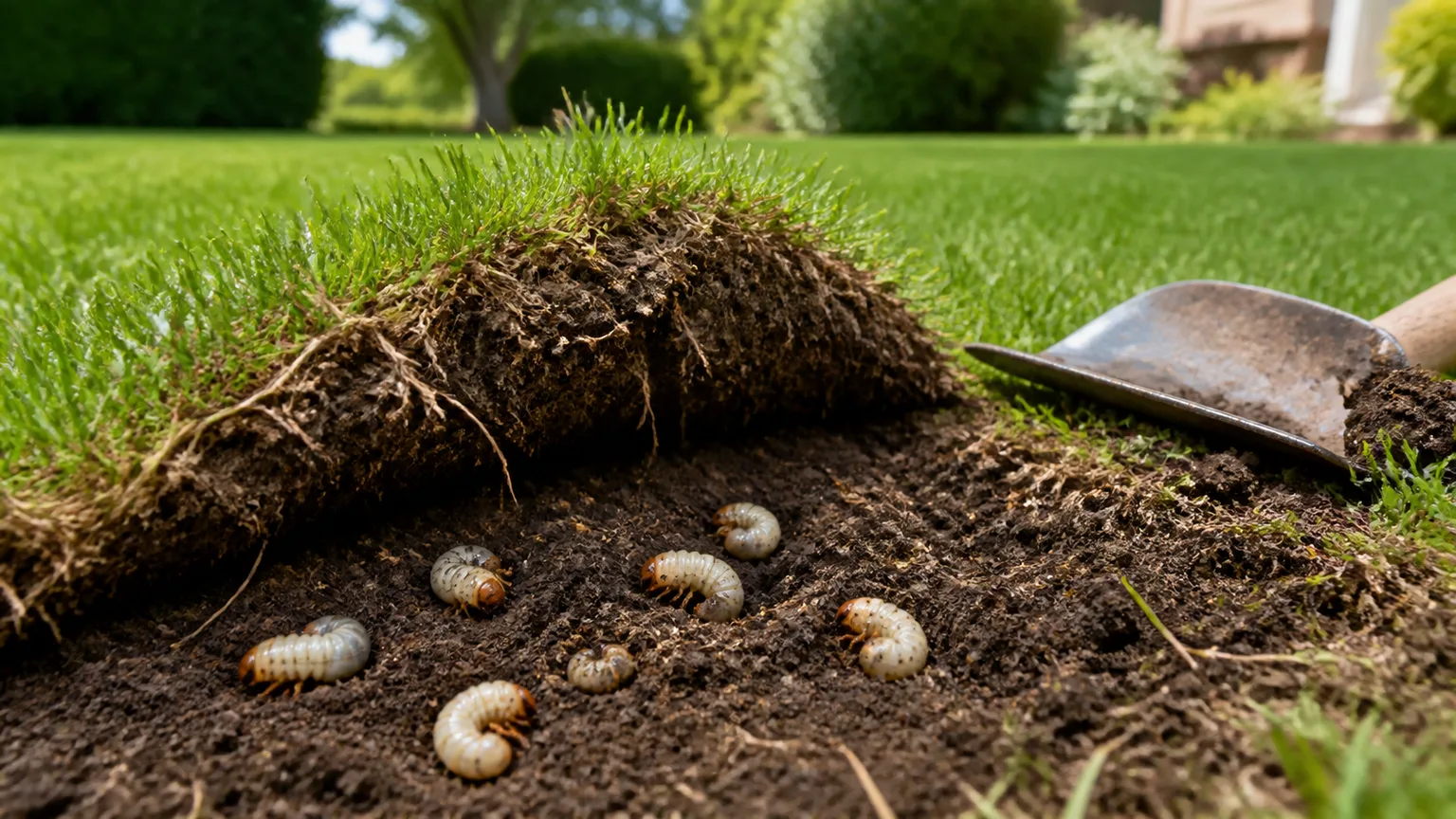
Actual moles push higher ridges and often leave more substantial raised runways. White grubs feed below the surface but do not create the same shallow, finger-width tunnels; you may find C-shaped larvae when you lift a square of sod. Chinch bug injury tends to look like expanding irregular yellow or brown areas in hot, sunny turf, especially where grass is drought-stressed.
Know which mole cricket you are dealing with
Not every mole cricket deserves the same response. Tawny and southern mole crickets are the important lawn pests in warm regions because they tunnel aggressively and can feed on turf. The native northern mole cricket occurs across much of the eastern United States and is generally not treated as a major turf pest.
You do not need to identify a species with laboratory precision before you take a soap-flush sample, but the distinction prevents unnecessary eradication. A native insect in a non-damaged area is not a reason to blanket-spray the property. Focus on confirmed injury, and use a clear photograph or extension identification service when the species is uncertain.
Turf type and climate also matter. Bermudagrass, bahiagrass, centipedegrass, St. Augustinegrass, and zoysiagrass do not all recover at the same rate after root disturbance. A thin warm-season lawn may look worse after a short dry spell because mole cricket injury and drought amplify each other. The Clemson University turfgrass guidance is a useful regional reference for treatment timing and species context, while UF/IFAS Extension’s mole cricket overview explains the life cycle and biological-control options.
Why timing matters more than a stronger product
Mole cricket management is usually most effective when young nymphs have hatched and remain near the upper soil layers. They are smaller, more exposed, and generally easier to reach than large adults that have tunneled deeper. Treating only when the lawn looks worst can mean treating after the most convenient window has passed.
Target the young nymphs
Adult activity, mating, and egg laying can occur before the most obvious turf injury. In many warm climates, eggs hatch in early summer, producing small nymphs that feed and tunnel near the surface. That is the point at which monitoring and a carefully selected treatment can have the greatest leverage.
The exact calendar depends on region, rainfall, turf, and species, so use the soap flush and local extension timing rather than a fixed date copied from another climate. If nymphs are present in several test areas, act while they are small. If only large adults appear, lower expectations: one application may reduce activity without eliminating the population.
Work with soil moisture and weather
Read the pesticide label before watering or treating. Some products need irrigation to move into the root zone; others are baits that should remain dry for a specified period. Applying on hard, dry soil can leave the active ingredient where the insects are not feeding, while heavy rain can move it away from the target area.
Mow at the normal height for your grass before treatment if the label permits, and avoid scalping the lawn to expose insects. Do not fertilize aggressively to force green growth over active root damage. A dark green flush of weak, stressed grass can hide the problem while the root zone continues to deteriorate.
Choose a control plan by infestation size
The right plan depends on how many areas test positive, whether the lawn is recovering, and how close the treatment area is to children, pets, vegetable beds, ponds, or pollinator habitat. Think in zones. A few active patches call for spot management; widespread positive tests may justify a licensed professional and a broader integrated plan.
Low-impact cultural and biological controls
Start by reducing the conditions that make thin turf easy to colonize. Correct irrigation so water reaches the root zone without leaving the soil constantly saturated, improve drainage where water pools, and maintain the mowing height recommended for the grass. Dense, actively growing turf is not immune to mole crickets, but it can tolerate minor disturbance and close small gaps faster.
Predators such as birds, frogs, spiders, ground beetles, and other insect-eating animals can contribute to pressure reduction. Habitat support is not an instant cure, and raccoons, skunks, or armadillos may dig while searching for the same insects. Choose habitat changes that fit your yard rather than inviting a second, more disruptive problem.
Two biological options deserve careful consideration. The parasitic wasp Larra bicolor attacks mole crickets without being a stinging threat to people in the same way social wasps are, and certain flowering host plants can support its activity. The parasitic nematode Steinernema scapterisci is another specialized option sold through some suppliers. These approaches are living organisms, not universal lawn products: establishment, storage, soil moisture, species match, and local availability all affect results.
Biocontrols work best as part of a long-term program and are poorly suited to a homeowner who needs a heavily damaged playing surface corrected immediately. They also should not be treated as permission to release organisms without checking local recommendations or application instructions. The extension references above reinforce that control depends on species, timing, and site conditions rather than a single universal remedy.
Targeted pesticide treatment
If a soap flush confirms a damaging population, choose a product labeled for mole crickets and your specific turf site. Labels differ by active ingredient, formulation, irrigation requirement, re-entry interval, protective equipment, and restrictions around water. Follow the current label exactly; do not combine products because a forum or neighbor suggested that a stronger mixture works faster.
Spot-treat confirmed areas whenever practical. This reduces unnecessary exposure, protects beneficial insects outside the problem zone, and makes it easier to judge whether the treatment worked. Apply at the label-specified time and rate, then monitor rather than automatically repeating the same chemistry.
Repeated use of one mode of action can select for less-sensitive insects, while a rushed second application can injure grass or move product beyond the intended area. If the first treatment fails, ask whether the problem was misidentified, the life stage was too large, the soil was too dry or wet, or rain and irrigation changed the result before reaching for another application.
Common control mistakes that make damage worse
The first mistake is treating visible brown grass instead of active insects. Brown turf may remain brown after a successful treatment because dead roots and crowns do not turn green again. Use a soap flush and inspect living crowns before judging control by color alone.
The second mistake is using household vinegar, essential oils, or undiluted soap as if they were selective mole-cricket insecticides. These substances can burn grass, disrupt soil surfaces, repel insects into another area, or create a false sense of control. A mild soap flush is useful for detection; it is not a substitute for a labeled treatment when the infestation is severe.
The third mistake is overwatering. Moist soil can make a flush easier and may be required by a product label, but keeping the lawn wet between treatments encourages shallow roots and other lawn problems. Water deeply enough to wet the root zone, then allow the surface to dry according to the needs of your turf and weather.
The fourth mistake is mowing too short to “expose” the insects. Scalping removes leaf area the lawn needs for recovery and increases heat stress. Maintain the correct height, collect clippings only when disease or seed heads make that advisable, and keep traffic off freshly damaged patches.
Repair a lawn after mole cricket injury
Control and recovery are separate jobs. Once monitoring shows that active mole crickets have declined, lift a small section of turf to check whether crowns and roots remain. Living crowns with damaged roots may recover with steady moisture and reduced traffic; completely dead areas will need renovation.
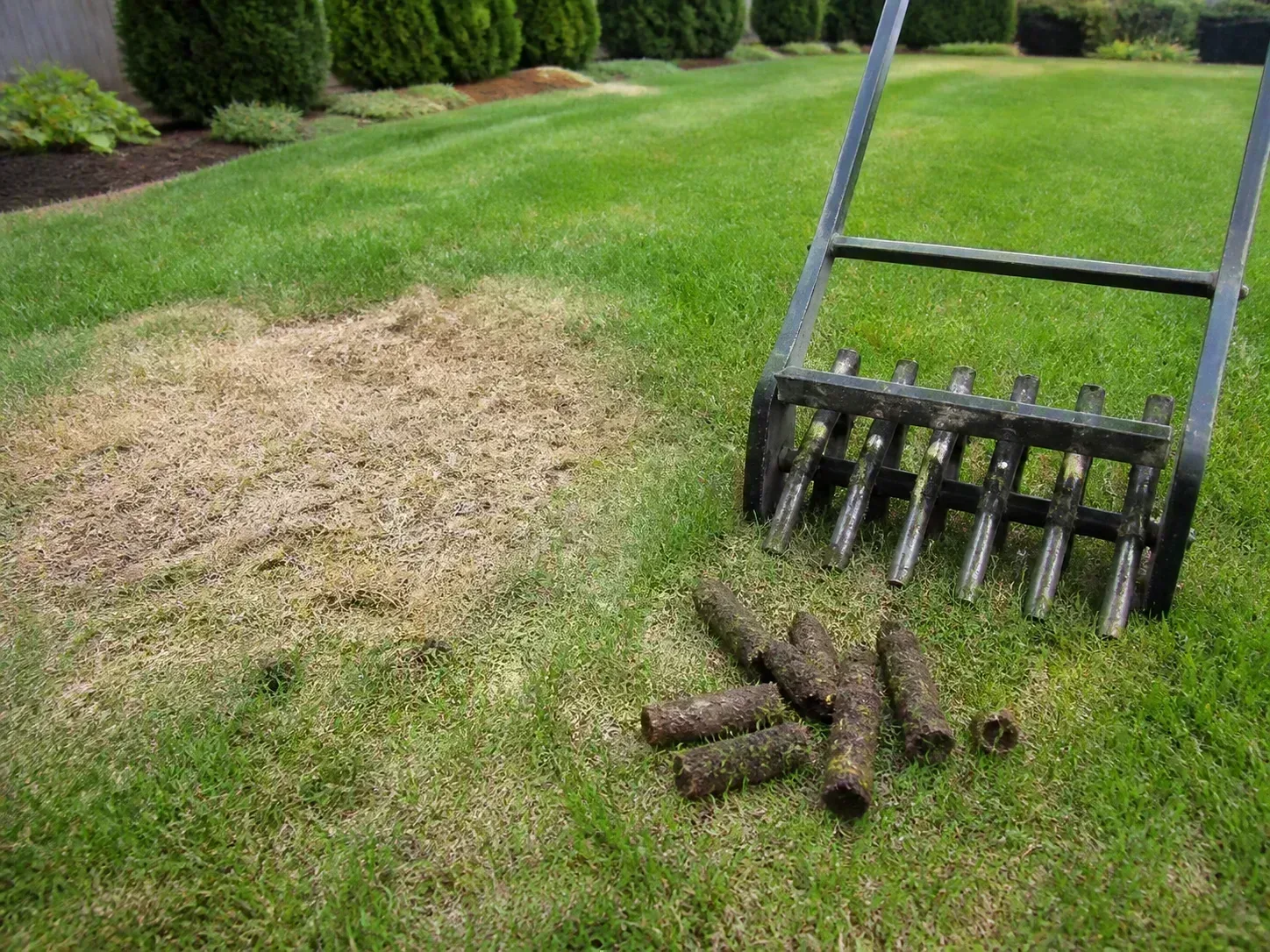
For a recoverable patch, restore even irrigation, correct compaction only when the soil is workable, and avoid heavy fertilizer until roots can use it. A light compost topdressing can improve the surface in some lawns, but do not bury crowns or cover a struggling turf with a thick layer of material.
For bare soil, reseed or re-sod in the appropriate growing window for the grass type. Seed needs reliable surface moisture during establishment, while sod needs close contact between roots and soil. Protect the repaired area from foot traffic and keep watching the edges, where surviving insects can move into fresh growth.
Do not reseed simply to hide an ongoing infestation. New seedlings are a poor investment if the same root-feeding pressure is still present. Confirm the pest trend first, then match the repair method to the season and the turf’s growth cycle.
Monitor for a second generation
Put the affected zones on a simple inspection schedule. Flush one or two spots every week during the active season, especially after rain or irrigation makes the soil workable. Record the date, number and approximate size of insects, weather, treatment, and turf response; a short log is more useful than relying on memory.
Walk the lawn at dusk and look for fresh surface runs, newly loosened soil, and thinning at the margins of repaired areas. If the soap test is negative but grass continues to decline, stop assuming mole crickets are the cause. Recheck irrigation uniformity, soil compaction, root health, disease, grubs, and other turf pests.
The goal is not to find zero insects anywhere on the property. The goal is to keep pest activity below the level at which it causes unacceptable turf injury. That distinction prevents repeated, unnecessary applications and leaves room for beneficial organisms that help keep the lawn’s wider insect community balanced.
When to call a professional
Call a licensed lawn or pest professional when multiple zones test positive, damage is expanding faster than the turf can recover, or the affected lawn is a sports surface, rental property, or heavily used play area. Professional help is also sensible when you cannot identify the insect, when the property borders a pond or sensitive habitat, or when label restrictions make DIY application unsafe.
Ask what evidence supports the diagnosis, which life stage is being targeted, what product and rate are proposed, how irrigation should be handled, and what re-entry interval applies. A good service should explain monitoring and recovery, not promise that one visit will permanently eliminate every mole cricket.
If the lawn has repeated annual injury, ask for an integrated plan that includes timing, turf health, treatment rotation, and follow-up checks. The most expensive outcome is often a cycle of broad treatments followed by reseeding, only to discover that the original problem was drought or a different insect.
Conclusion
To get rid of mole crickets without sacrificing the rest of your lawn, begin with confirmation. A soap-and-water flush, a close look at the tunnels, and a check for look-alike causes tell you whether treatment is justified.
When pest activity is real, target young nymphs near the surface, follow the product label, and spot-treat rather than spraying by habit. Biological controls and predator habitat can support a longer-term program, while correct mowing, irrigation, and timely lawn repair help the grass close the openings mole crickets exploit.
Keep monitoring after the lawn greens up. A patch that looks better is encouraging, but it is not proof that the population is gone; a short weekly inspection is what turns one successful treatment into lasting control.