Aluminum Plant Care: How to Grow Pilea cadierei
Learn aluminum plant care for Pilea cadierei: the right light, watering rhythm, soil, pruning, propagation, and fixes for yellow or leggy growth.
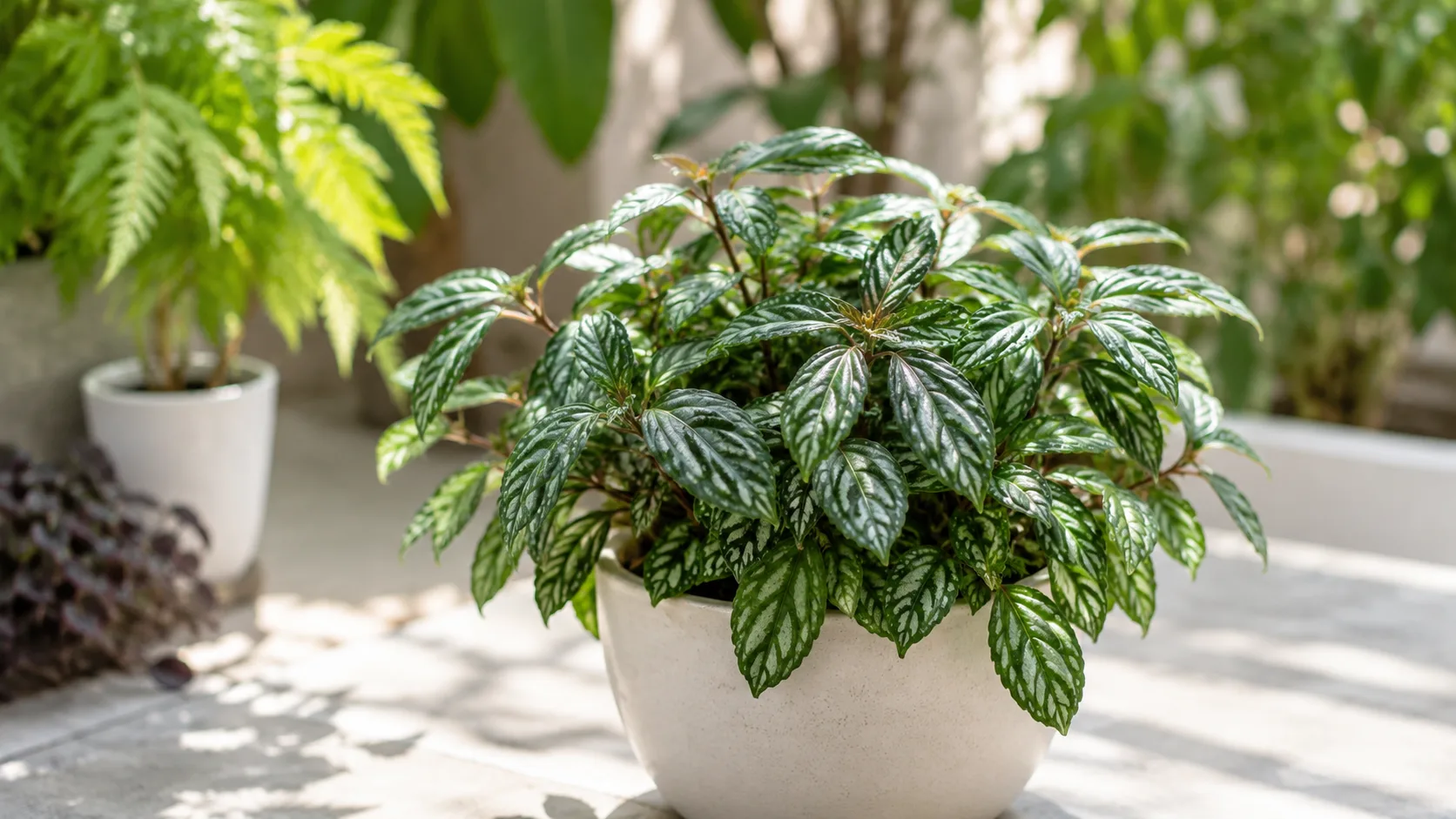
The aluminum plant (Pilea cadierei), also called Watermelon Pilea or Aluminium Plant, earns its name from raised silver patches that flash between the dark green veins. It is a compact, tropical foliage plant rather than a sun-loving succulent: give it filtered light, steady moisture, warmth, and occasional pinching, and it can make a small shelf or desk look full without taking over the room.
The most useful way to care for it is to stop looking for a fixed watering schedule. Watch how quickly the pot dries, how firm the stems feel, and whether new leaves are arriving close together. Those observations tell you more than a calendar does, especially when the same plant may dry in four days on a bright summer windowsill and take two weeks in a cool winter room.
| Care point | Practical target |
|---|---|
| Light | Bright, indirect light; filtered morning sun can work |
| Water | Water when the top 1/2 inch of mix is dry, then drain fully |
| Soil | Light, airy, moisture-retentive houseplant mix |
| Temperature | About 60–75°F (16–24°C); protect from extremes and drafts |
| Humidity | Average to moderately humid air with good circulation |
| Feeding | Diluted balanced fertilizer while actively growing |
| Shape | Pinch growing tips and root useful trimmings |
| Mature size | Usually about 6–12 inches tall and 6–9 inches wide |
Know the Plant Before You Place It
NC State Extension lists Pilea cadierei as a tropical, evergreen herbaceous perennial in the nettle family, Urticaceae. Its native range includes China and Vietnam, where it grows in warm, shaded conditions. That background explains the care puzzle: the plant wants moisture and humidity, but its roots still need air; it tolerates shade, but weak light quickly produces thin, stretched stems. NC State Extension’s plant profile also records the upright, clumping habit, four rows of raised silver patches, and the compact dimensions that make it useful indoors.
Identify healthy aluminum plant growth
A healthy plant has firm green stems, leaves held mostly flat or slightly angled toward the light, and new growth forming at the tips or leaf axils. The silver pattern should be easy to see, although its intensity changes with light and viewing angle. Tiny greenish flowers may appear in warm conditions, but flowers are not the reason to grow this plant and are uncommon indoors.
The cultivars ‘Ellen’ and ‘Minima’ are worth knowing if you are buying a plant for a small space. ‘Minima’ is a dwarf form, while ‘Ellen’ is noted for a bushier habit. Names can vary in shops, so judge the actual plant as well: compact new growth and clean leaf undersides matter more than a promising label.
If an older specimen has bare lower stems but healthy roots, that does not necessarily mean you have failed. Aluminum plants can become less attractive as the oldest stems lengthen. A renewal cycle—pinch the parent plant, root the best cuttings, and grow several young stems together—often creates a better-looking container than trying to make one old stem look young again.
Choose Bright Indirect Light
Place the aluminum plant close enough to a bright window to cast a soft shadow, but shield it from strong midday rays. A sheer curtain, a spot beside an east-facing window, or a position set back from a bright south- or west-facing window can work. A darker north-facing room may keep the plant alive, but it often produces slower growth and longer gaps between leaves.
Direct sun through glass can bleach the silver-green contrast and leave tan, papery scorch patches. The solution is not to put the plant in a dark corner; move it a little farther from the glass, filter the light, and give it a week or two to respond. If your home is consistently dim, a grow light on a timer can provide a steadier substitute than repeatedly moving the pot around.
Judge a window by the plant’s response
Use the growth pattern as your light meter. Long spaces between leaves, stems leaning hard toward one direction, and small new leaves point to insufficient light. Faded foliage, crispy patches on the window-facing side, or a sudden washed-out appearance point to too much direct intensity. A plant that looks good but stops producing new growth may be limited by light, temperature, roots, or feeding; check those in that order rather than fertilizing immediately.
Turn the pot a quarter turn every week or two if one side is becoming noticeably fuller. Rotate only when the plant is otherwise stable. Moving it between a dark room and a hot window every few days creates swings that are harder on the leaves than a consistent, slightly imperfect position.
Balance Temperature, Humidity, and Airflow
Aim for normal warm indoor temperatures, roughly 60–75°F (16–24°C). The plant may tolerate a brief cooler spell, but cold windows, unheated rooms, and blasts from an air-conditioner can cause leaf drop or stalled growth. Keep it away from radiators, fireplaces, hot appliances, and vents where the leaves experience repeated bursts of dry or hot air.
Humidity helps the thin leaves stay attractive, especially when indoor air is dry. A humidifier is the most controllable option; grouping plants together can create a slightly more humid pocket. A pebble tray can add a little local moisture when the pot sits above the waterline, but it cannot compensate for a waterlogged pot or a very dry, moving air stream.
Misting is not a substitute for humidity control. Droplets evaporate quickly, and leaves that stay wet in still air are more likely to develop spotting. If you mist at all, do it early in the day and only when air can move around the foliage; for routine care, water the soil and keep the leaves reasonably dry. Practical indoor guidance from Gardening Know How likewise emphasizes warm conditions, even moisture, daily observation, and keeping the plant away from hot and cold drafts.
Build a Root-Friendly Pot and Soil Mix
The best aluminum plant soil holds enough water for the roots to stay evenly supplied, then releases excess water quickly. Use a quality indoor potting mix amended with perlite, fine bark, or another airy component. The finished mix should feel springy and moist after watering, not dense like garden soil and not so coarse that water races down the sides of the pot.
There is no prize for chasing an exact pH number in an otherwise healthy container. The plant is adaptable, and a slightly acidic to near-neutral houseplant mix is a sensible target. If growth is poor despite good light and a sound watering rhythm, then a soil test or a fresh commercial mix is more useful than adding random kitchen amendments.
Make drainage non-negotiable
Use a nursery pot or planter with an open drainage hole. Set it inside a decorative cachepot if you like the look, but empty the outer pot after watering so the root ball is not left in runoff. Do not put a layer of stones in the bottom of a pot to “create drainage”; it reduces the usable root zone and does not fix a compact mix.
Choose a pot only slightly larger than the root ball. An oversized container stays wet longer, which is a poor match for a small aluminum plant in a dim room. When you water, the mix should accept the water across its surface and allow some to drain; if it repels water or stays saturated for many days, fix the mix or pot before adjusting fertilizer.
Water by Root-Zone Moisture, Not a Calendar
Aluminum plants prefer consistent moisture, not a cycle of bone-dry soil followed by a flood. Let the surface dry slightly, then water thoroughly enough to moisten the entire root ball. Stop when water begins to run from the drainage hole, wait a few minutes, and discard the runoff from the saucer.
Use the two-minute moisture check
Before watering, push a clean finger about half an inch into the surface near the edge of the pot. If it feels dry at that depth and the pot feels lighter than it did after watering, water. If the surface is dry but the mix below is cool and moist, wait and check again tomorrow; a dry crust does not always mean a dry root zone.
The interval may be every four to seven days in a warm, bright room, or closer to seven to fourteen days in winter or low light. Those are observations to start with, not instructions to follow blindly. A small clay pot, a large leafy plant, dry air, and bright filtered light shorten the interval; a plastic pot, cool room, dense mix, or low light lengthen it.
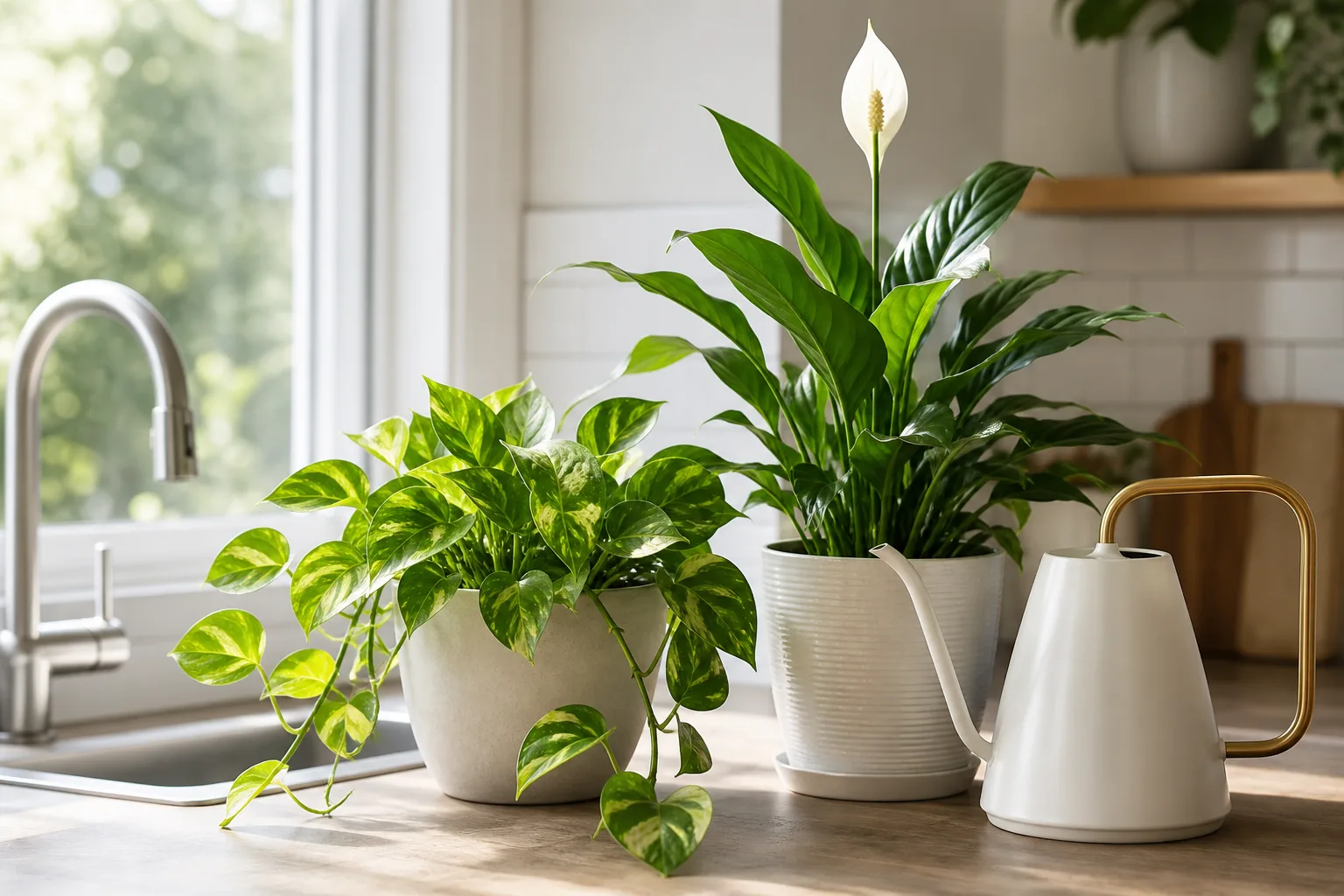
Water the mix rather than routinely wetting the foliage. If water runs straight down the sides, the mix may have pulled away from the pot or become hydrophobic; soak it slowly in several passes, let it drain, and consider repotting if the problem repeats. If the plant droops while the soil is wet, do not add more water. Check the roots, light, temperature, and drainage instead.
Feed and Prune for Better Foliage
Feed during active growth in spring and summer with a balanced liquid houseplant fertilizer diluted according to the label, or weaker if your plant is small and the mix is already rich. Apply fertilizer to damp soil, never to a dry, stressed root ball. Stop feeding when growth slows in fall and winter, after repotting until the plant settles, or whenever a pest or root problem is still unresolved.
More fertilizer does not make silver markings brighter. It can leave soluble salts at the soil surface and damage leaf edges. If you see a white crust, repeated brown tips, or a pot that has been fertilized frequently, flush the mix with plain water only if the pot drains freely; otherwise repot into fresh mix rather than forcing more water through a blocked container.
Pruning is the simplest way to maintain a compact aluminum plant. During active growth, pinch or cut just above a pair of leaves. That removes the dominant tip and gives lower buds a reason to branch. Sterilize pruners before and after cutting, remove dead or diseased leaves, and save firm healthy trimmings for propagation.
Do not strip every leaf from a plant that is already weak. First improve light and confirm the roots are functioning, then prune gradually. A few strategic cuts can make a plant fuller; a severe haircut combined with repotting, fertilizer, and a new location can overwhelm it.
Propagate Aluminum Plant From Stem Cuttings
Stem cuttings are the most reliable way to renew an aluminum plant and create a fuller pot. Spring and summer are easiest because warmth and active growth shorten the rooting period, but a cutting can work at other times if the plant has strong growth and the indoor conditions are stable.
Root cuttings in water
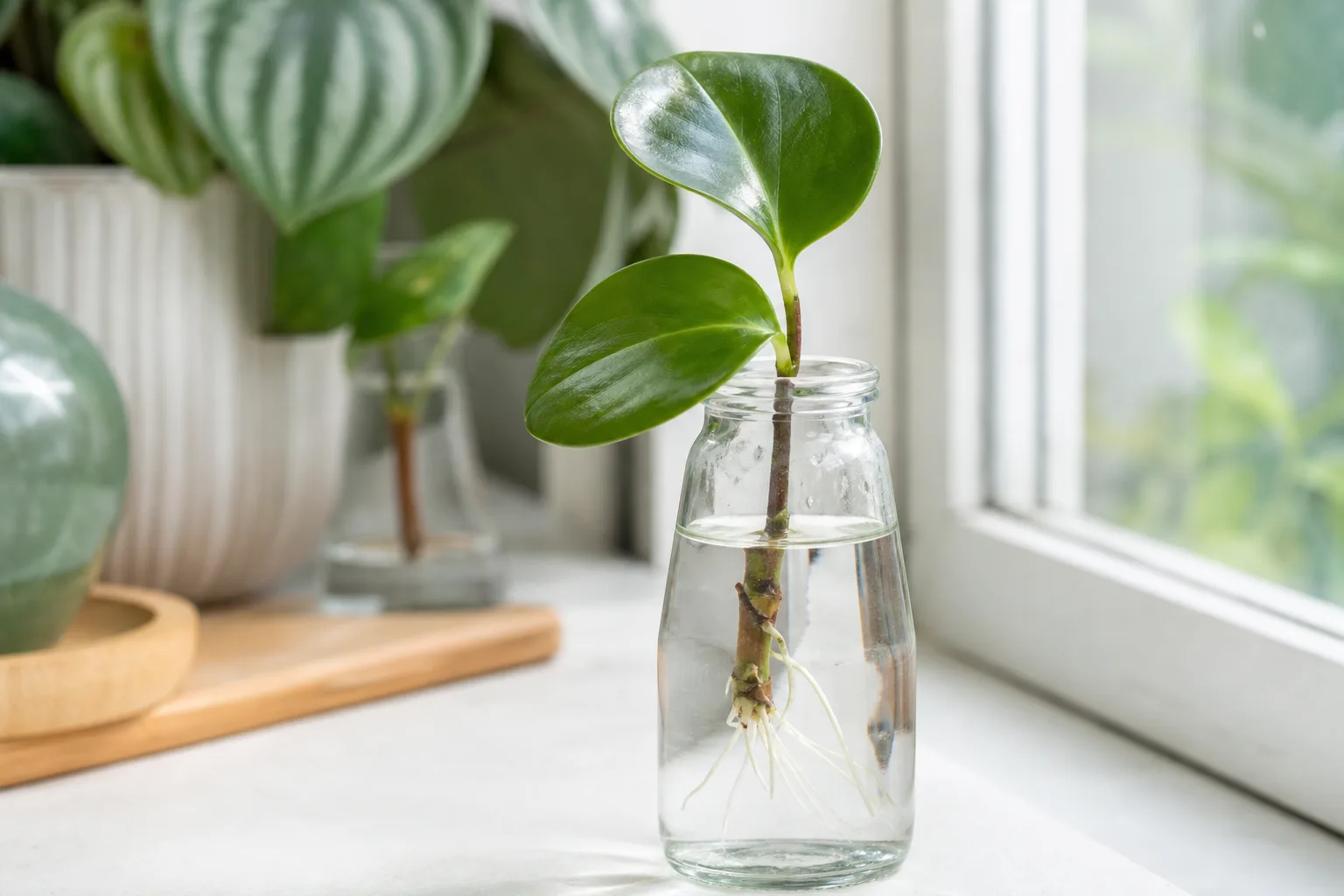
Choose a healthy, non-flowering tip about 3–4 inches long with at least two nodes. Make a clean cut just below a node, remove the lowest leaves, and leave one or two pairs of leaves at the top. The node is the point that needs contact with water; leaves submerged below the waterline will decay and foul the cutting.
Place the cutting in a clean, narrow glass with enough water to cover the lowest node. Keep it in bright indirect light and a warm room. Change the water when it becomes cloudy or every few days as a simple hygiene habit. Fine white roots may appear within a few weeks; wait until there are several roots long enough to hold the cutting before moving it.
Transition new roots into soil
Move a rooted cutting into a small pot of moist, airy mix rather than a large container. Make a hole first, lower the rooted node and roots into it, then firm the mix gently so the stem is supported without being buried deeply. Water once to settle the mix and return the pot to bright indirect light.
For the first couple of weeks, keep the mix evenly but lightly moist while soil roots replace the water-root system. Do not feed immediately. New leaf growth and a cutting that resists a gentle tug are better evidence of establishment than a fixed number of days.
You can also root a cutting directly in moist mix. This avoids the transition from water to soil, but it gives you less visual confirmation. If you use this method, keep the mix damp rather than wet, provide warmth and filtered light, and use a loose humidity cover only with ventilation so condensation does not remain on the leaves.
Decide Whether to Repot or Restart
Repot in spring or when the root system has clearly outgrown the container. Look for roots circling densely at the drainage hole, a plant that dries unusually fast despite reasonable light, roots lifting the root ball, or water rushing through a narrow gap without soaking the mix. These signs are more useful than repotting on an automatic annual date.
Choose a container about 1–2 inches wider than the current one, refresh the mix, and keep the plant at the same depth. Loosen only tightly circling outer roots; do not tear apart a small root ball for the sake of making it look tidy. Water thoroughly after repotting and keep conditions steady while it adjusts. Martha Stewart’s aluminum plant guide also recommends a drainage hole and a modest 1–2-inch increase in pot diameter.
Restart from cuttings when the plant is tall and bare, the lower stems no longer produce attractive foliage, or the root system is compromised and only a few tips remain healthy. Do not bury a long leafless stem deep in a new pot to hide it; that creates a larger wet zone and may invite rot. Root several cuttings together in one small pot for a naturally full reset.
Troubleshoot Yellow Leaves, Brown Tips, and Leggy Stems
One symptom rarely identifies one cause. Before changing care, note which leaves are affected, whether the soil is wet or dry, how long the pot takes to dry, and whether the newest growth looks better or worse than the oldest leaves.
Read the symptom alongside the soil
Yellow leaves with wet soil suggest overwatering, poor drainage, low light, or roots that are no longer functioning. Pause watering, check the drainage hole, and inspect the roots if the soil remains saturated. Healthy roots are generally firm; mushy, dark, or sour-smelling roots call for removal of the damaged parts and a fresh, airy mix. Do not treat a wet-root problem with fertilizer.
A few yellow lower leaves can be normal aging, especially when new growth is healthy. Remove them once they release easily. If yellowing moves upward or the whole plant looks pale, reassess light and root-zone moisture before assuming a nutrient deficiency.
Brown, crispy tips or edges usually point to a dry root ball, inconsistent watering, very dry air, salt accumulation, or hot direct sun. Correct the underlying pattern and trim only the damaged tissue for appearance; brown tissue will not turn green again. If the mix dries completely and pulls from the pot, rehydrate it slowly instead of pouring a large amount of water onto a water-repellent surface.
Faded silver markings or tan patches call for a light check. Move the plant out of direct rays, especially afternoon sun through glass, while preserving a bright position. New leaves will show whether the placement is improving; old scorch marks will remain.
Long, thin stems with large gaps between leaves mean the plant needs more usable light or a renewal prune. Move it gradually to brighter filtered light, then pinch above a leaf pair once growth is active. Root the best cuttings so the correction improves both the current shape and the next generation.
Wilted leaves with dry soil need a thorough drink and a check for hydrophobic mix or roots that have dried away from the pot. Wilted leaves with wet soil need diagnosis, not more water: inspect drainage, roots, temperature, and pests.
Prevent Pests and Leaf Disease
Inspect new plants before they join your collection, and look at leaf undersides, stem joints, and the dense center of the plant. NC State Extension lists mealybugs, scale, aphids, and spider mites among the common insect problems for Pilea cadierei; Gardeners’ Path also notes that hot, dry indoor conditions can make sap-feeding pests more likely.
If you find a few pests, isolate the plant. Rinse the foliage and stems with a gentle stream of water, wipe visible insects away, and repeat inspections every few days because one treatment rarely reaches eggs or hidden insects. For a persistent infestation, use a product labeled for the pest and the plant, follow the label exactly, and test a small area first. Avoid combining several treatments while the leaves are stressed.
Root rot is usually a root-zone problem before it becomes a disease-label problem: too much water, a blocked hole, compacted mix, or too little light can keep the roots wet for too long. Powdery mildew and leaf spots are more likely when air is stagnant and leaves remain wet. Water the soil, give the plant space around its foliage, remove badly affected leaves with clean tools, and improve conditions before reaching for a treatment.
The ASPCA lists aluminum plant as non-toxic to cats, dogs, and horses in its toxic and non-toxic plant database. That is useful information for a pet-aware home, but non-toxic does not mean a plant is meant to be eaten. Keep it out of reach if a pet repeatedly chews leaves or digs in the soil, and seek veterinary advice for an animal that becomes ill after ingesting plant material.
Adjust Care for Seasons and Outdoor Weather
In spring and summer, brighter light and warmer temperatures usually increase water use and growth. Check the soil more often, feed only while new growth is active, and pinch tips before stems become long and bare. This is also the best period to take cuttings and repot plants that are genuinely root-bound.
In fall and winter, the plant may use much less water. Keep it bright, but move it away from cold glass and heating blasts. Allow the same shallow surface dry-down before watering, then make sure the pot drains fully; reducing frequency is safer than reducing each watering to a few sips that wet only the surface.
Outdoors, grow aluminum plant only where winters are frost-free and the plant can stay in bright shade or filtered light. NC State Extension places its outdoor hardiness range around USDA Zones 11–12, so it is an indoor plant for most homes. If you set it outside for warm weather, acclimate it gradually under cover, protect it from strong sun and wind, and bring it in before nights approach the plant’s cold limit. Check for pests before bringing it back near other houseplants.
For a small apartment or a hot climate, the best spot is usually a bright room with a sheer-curtained window, steady airflow, and no direct blast from an air conditioner. A humidifier may help during dry periods, but it should support—not replace—sound potting mix, drainage, and moisture checks.
Conclusion: Keep the Routine Simple
Good aluminum plant care comes down to a repeatable sequence: bright filtered light, a light mix in a draining pot, water when the top half inch dries, warmth without drafts, and enough humidity to keep the leaves comfortable. Pinch the tips while the plant is growing, feed lightly rather than aggressively, and treat the newest growth as your progress report.
When the plant looks tired, diagnose the root zone and placement before adding products. If the stems have aged past their best, take healthy cuttings and start a compact group in fresh mix. That renewal habit is what makes Pilea cadierei such a rewarding houseplant: the care is simple, and the plant gives you a practical way to begin again.