How to Grow and Care for a Moon Cactus
Keep a ruby ball cactus healthy by understanding its colorful scion and green rootstock, then adjust light, water, and care to each part.
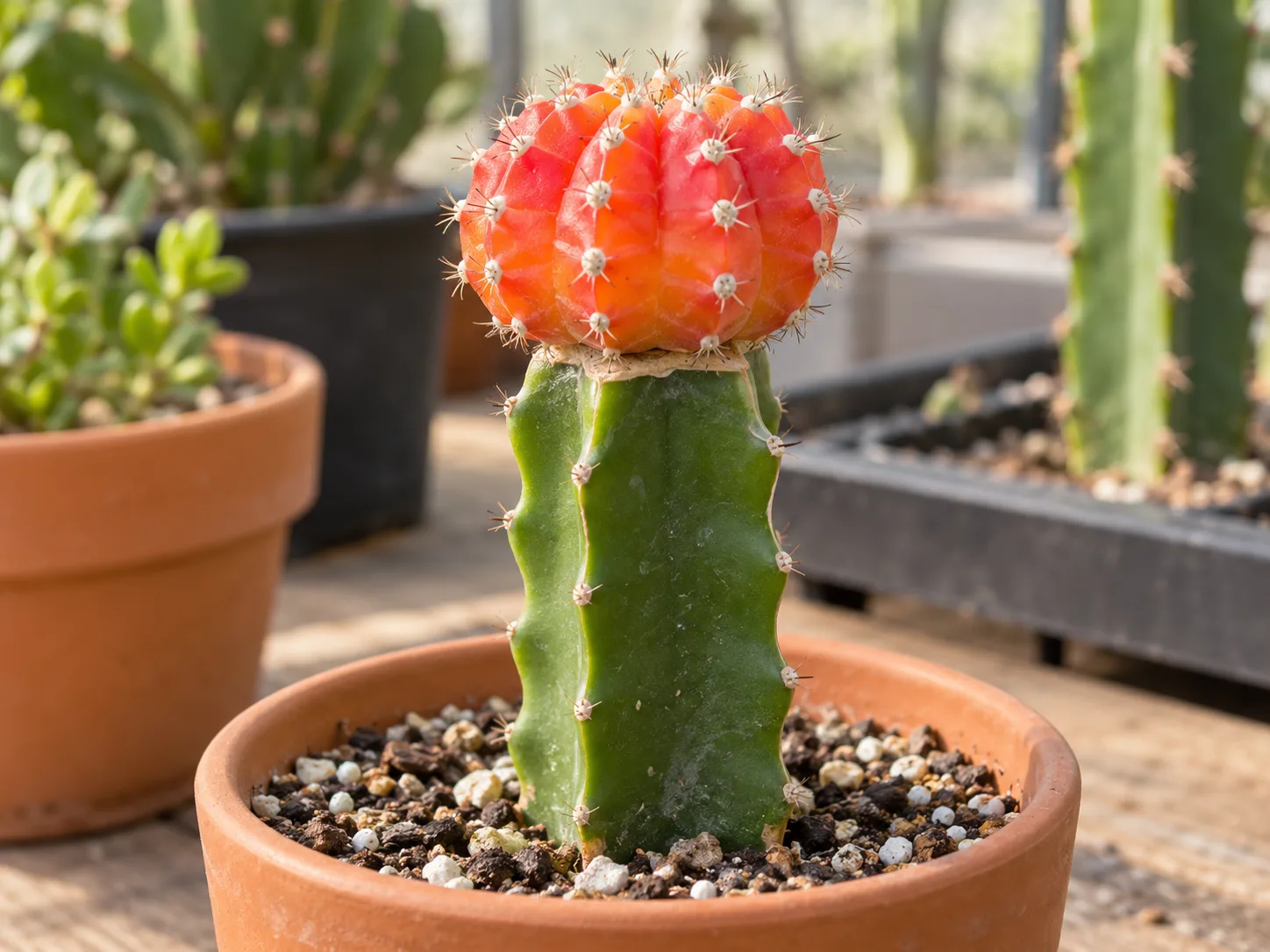
A moon cactus is a grafted pair: a colorful, usually chlorophyll-poor Gymnocalycium mihanovichii top sits on a green cactus rootstock. The green base supplies the photosynthetic support the vivid top may lack, so care needs to keep both parts and their graft union healthy. Give it bright light with shelter from harsh afternoon sun, water only after the mix dries through, and use a pot that drains freely.
The plant’s structure also explains why a moon cactus can look fine for a while and then suddenly loosen or decline at the join. The top and base are different plants with different growth rates, and a grafted specimen is not a permanent, self-contained cactus. Before changing care, identify which part is showing the problem: a faded top, a wrinkled top, a soft base, and a loose graft point to different causes.
What a moon cactus is and why it is grafted
The name “moon cactus” or “ruby ball cactus” usually refers to a bright-colored top grafted onto a separate green cactus. The top is a scion, the piece selected for its color; the bottom is the rootstock, which has roots and green tissue that can photosynthesize. NC State Extension identifies the upper plant as a mutant seedling of Gymnocalycium mihanovichii and notes that it is commonly grafted onto a host such as Hylocereus undatus.
That is different from a single cactus that happens to have unusual colors. A moon cactus in a gift pot is usually an intentionally joined pair, although exact scion and rootstock selections can vary among growers. It is normally grown in a small container indoors; cold sensitivity makes it a poor choice for an unprotected outdoor planting in most climates.
The colorful scion and green rootstock have different jobs
The scion provides the red, orange, yellow, or pink crown that makes the plant distinctive. In many intensely colored forms, the tissue has too little chlorophyll to sustain itself through photosynthesis, so it depends on the lower cactus for water and the products of photosynthesis. The rootstock, meanwhile, carries the roots and green stem that do most of the energy-making work.
The graft union is the healed connection between those two cacti. Waterlogged soil, decay at the base, movement, or an unsuccessful graft can weaken that junction. When you buy a plant, look for a firm green rootstock, a securely attached top, and a dry, intact join without black, wet-looking tissue. A color change alone is not enough to diagnose a failing graft; compare the top, base, roots, and growing conditions.
Choose bright light without scorching the colored top
Place a moon cactus near a bright window where it receives strong ambient light but is protected from prolonged, hot direct sun. NC State Extension describes bright, indirect light as a good fit for G. mihanovichii. The Royal Horticultural Society’s general cactus guidance favors bright conditions for most cacti, but the grafted top can be more sensitive to intense rays than a green desert cactus, so a little filtering is useful on a hot south- or west-facing sill.
An east-facing window is often an easy starting point. In a brighter exposure, move the plant several inches back from the glass or use a light curtain during the strongest afternoon sun. If it has been in a shop or dim room, increase light gradually over a week or two; a sudden move into direct sun can scorch a top that had adapted to lower light.
Fading or bleaching on the sun-facing side may indicate too much direct exposure, especially if the area becomes pale, yellowed, or dry. A naturally pale yellow or pink cultivar is not automatically sunburned, however. Look for a pattern of damage, check whether the colored tissue is firm, and move the plant to bright filtered light before assuming the scion is dying. A stretched or leaning green base can instead suggest that light is too weak.
Use a gritty mix and a pot with drainage
The main soil requirement is fast drainage, not a special brand name. Use a cactus or succulent mix that dries readily, or amend a general mix with coarse pumice, perlite, or grit to open it up. The RHS guide to growing cacti and succulents recommends free-draining, gritty compost; NC State Extension’s moon cactus profile also calls for well-drained cactus or succulent mix.
Choose a small pot with one or more unobstructed drainage holes. A container only slightly larger than the root ball dries more predictably than a large pot full of wet mix around a tiny root system. Unglazed terracotta can help a mix dry faster; plastic or glazed ceramic holds moisture longer, so use it only if you are careful about the dry-down interval. A decorative outer pot is fine if you remove the nursery pot for watering and pour away the runoff.
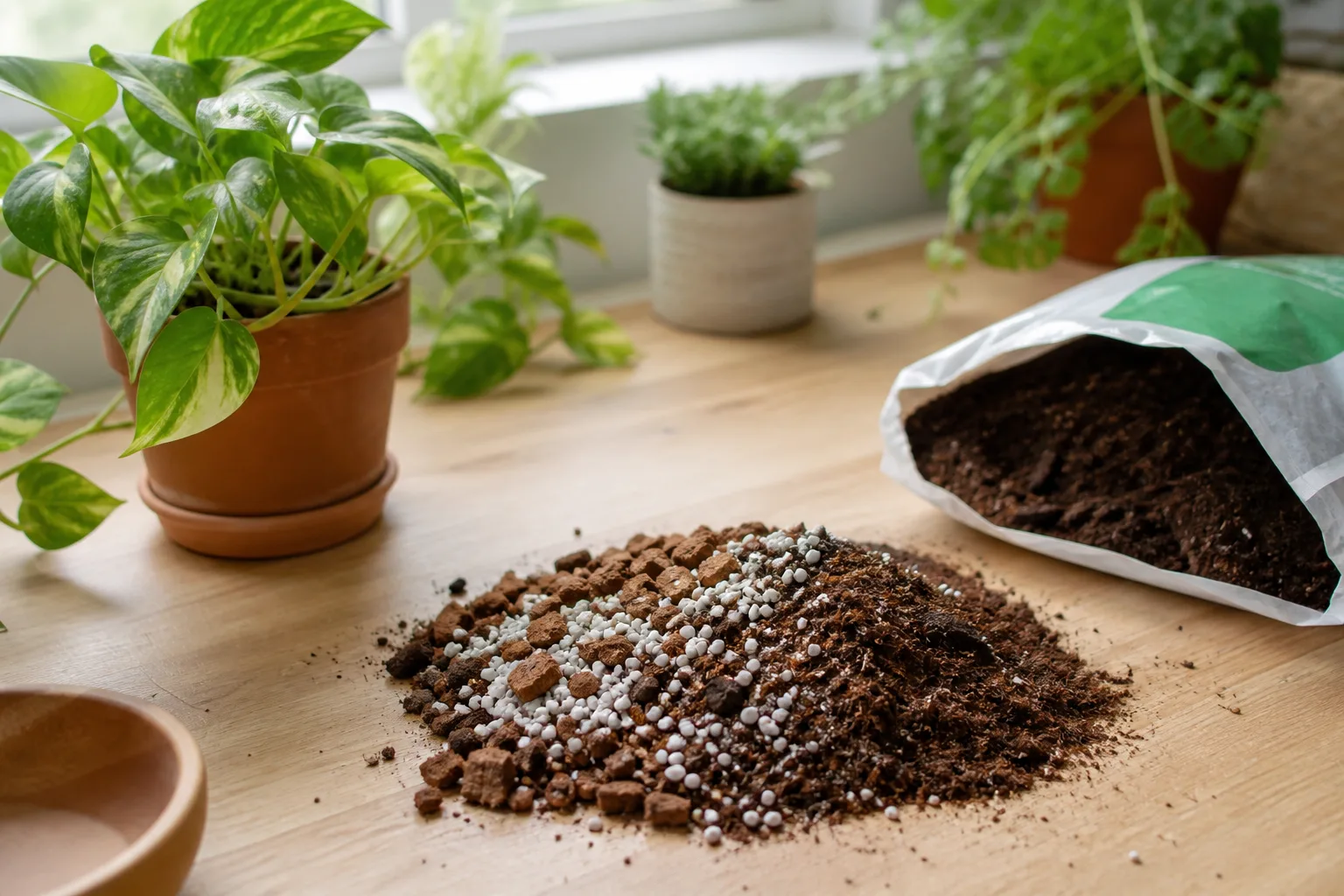
Do not put gravel at the bottom of a pot to compensate for a blocked or absent drainage hole. That does not fix poor drainage in the root zone. If the mix remains wet for days, replace it with a more porous substrate and check whether the pot is too large, the room is cool, or the plant receives too little light. For more on choosing a substrate, see our guide to cactus soil.
Water thoroughly, then let the mix dry
Water when the potting mix has dried through, not because a weekly reminder says it is time. Test the mix below the surface with a wooden skewer or lift the pot to learn how heavy it feels when wet and dry. When the root zone is dry, water slowly until liquid runs out of the drainage holes, then empty the saucer or cachepot. The thorough soak moistens the roots evenly; the dry period limits the prolonged dampness that encourages rot.
How quickly the pot dries depends on the container, mix, room temperature, season, airflow, and rootstock. A small clay pot in warm, bright conditions may dry much faster than a larger glazed pot in a cool room. Better Homes & Gardens’ cactus-watering guide likewise recommends watering according to dry soil and seasonal growth rather than applying a fixed schedule. Use the plant’s actual mix and conditions to decide when to water again.
Do not mist the top as a substitute for watering the roots. A brief spray does not wet the root ball evenly, and repeated moisture around a graft seam can leave tissue damp without providing a full watering cycle. If water lands on the top, let the plant dry in moving air; the key is not to keep the union wet or leave the pot standing in runoff.
Reduce watering when growth slows in winter
In winter, shorter days and cooler temperatures usually slow growth and evaporation. Let the mix dry fully and wait longer between waterings; some plants in cool, dim rooms need very little water. Do not automatically stop watering for every moon cactus, because a warm, bright indoor plant may continue using some moisture. Instead, check the mix and the plant’s firmness before watering.
If the top begins to wrinkle while the mix is dry, a thorough drink may help it plump up over the next few days. If it wrinkles while the soil is still wet, do not add more water. Inspect the green base and roots for softness or discoloration, since damaged roots cannot take up water even when the pot is saturated. This wet-versus-dry check prevents the common mistake of responding to root rot with more irrigation.
Keep it warm and protect it from drafts
Moon cactus is a warm-growing houseplant, not a frost-tolerant landscape cactus. NC State lists a preferred range of about 68 to 86 degrees Fahrenheit and notes that the plant is not frost tolerant; bring an outdoor pot inside before nighttime temperatures drop below about 50 degrees. Keep it away from cold windows, exterior doors, air-conditioner blasts, and radiators that create rapid temperature swings.
You can move it outdoors for warm weather, but acclimate it over several days in bright shade before exposing it to stronger light. Place it under an eave or other cover where rain will not repeatedly soak the pot. Bring it back in before cold weather, and inspect for insects before setting it near other houseplants. Low indoor humidity is generally suitable; a humidity tray or frequent misting is unnecessary and may keep the graft joint damp.
Fertilize lightly during active growth
A moon cactus grows slowly, and regular heavy feeding is not needed. During spring and summer growth, use a cactus fertilizer only if the mix is old or growth has slowed despite adequate light, warmth, and healthy roots. Dilute and apply it according to the product label, and skip feeding when the soil is dry, the plant is stressed, or growth has paused.
Fresh potting mix supplies some nutrients, while a rootstock in a small pot can exhaust them over time. That does not mean more fertilizer will solve a fading scion or a weak graft. Check light, drainage, and root health first. Stop feeding during the low-light winter period unless your plant is actively growing in warm, bright conditions and the label supports that use.
Repot only when the plant or mix needs it
A moon cactus does not need a larger container every year. Repot when roots crowd the pot, the mix has broken down and stays wet, water runs straight through a hydrophobic old mix, or the plant has become unstable. The RHS recommends repotting cacti when they outgrow the pot, usually in spring; Gardening Know How’s moon-cactus repotting guide similarly treats spring as a useful time and notes that moon cacti can stay somewhat snug.
Move up by only a small pot size and keep the graft at its original height. Burying the lower stem or the graft seam exposes tissue to damp mix and can invite rot. If the roots look healthy and the old soil still drains well, you may be able to refresh the mix in the same pot rather than placing a small root system in a much larger volume.
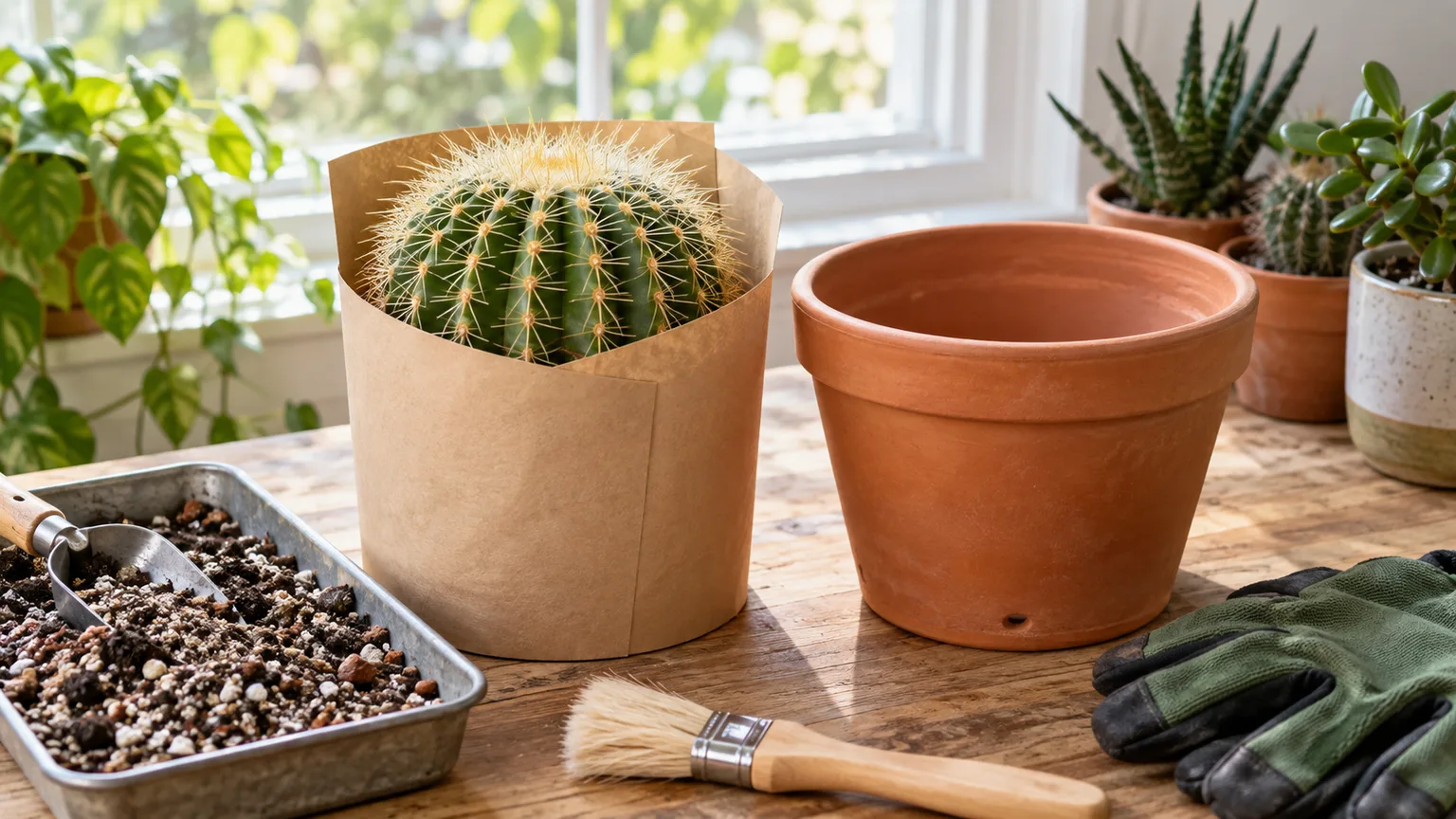
Handle spines safely and keep the graft union dry
Wear sturdy gloves or use folded cardboard or newspaper as a sling around the green base. Do not squeeze the colorful top or grip the graft seam; it can shift or tear. Tip the pot, loosen the root ball gently, and remove loose old mix without aggressively washing healthy roots. Trim only roots that are clearly dead, hollow, or mushy with a clean tool.
Set the plant at its former depth in fresh, dry, gritty mix. Wait several days before the first light watering so any root scratches can dry, then return to the soak-and-dry routine. Avoid pouring water over the graft union during early recovery. For a general repotting sequence, see our guide to repotting cacti; the main moon-cactus difference is the extra care needed to keep the joined parts stable.
Diagnose fading color, soft tissue, and a leaning top
Use a short triage instead of treating every change as the same problem. First feel the green base and inspect the graft seam without pulling on it. Next test the soil for wetness, note the plant’s last watering, and look for sun exposure, cold drafts, and insects. These observations can distinguish a temporary care issue from root or graft failure.
| What you see | First thing to check | Sensible next step |
|---|---|---|
| Pale or bleached patch on the sunny side | Recent move into direct sun; dryness and texture of the patch | Move to bright filtered light and observe new growth |
| Wrinkled top with dry mix and firm green base | How long the root zone has been dry | Water thoroughly, drain, and watch for gradual recovery |
| Wrinkled top while mix is wet | Root health and base firmness | Stop watering; inspect for rot and improve drainage |
| Soft, dark, or collapsing rootstock | Persistent moisture, cold, or damaged roots | Isolate the pot; discard a rotted base or regraft only a firm, healthy scion |
| Top leaning or separating at the seam | Loose union, uneven growth, or recent handling | Stabilize the pot and decide whether a regraft is practical |
| Long, thin growth from the green base | Insufficient light | Increase light gradually rather than moving straight into hot sun |
Tell scion stress from rootstock or graft failure
A sun-stressed scion often has one pale or dry side that faces the window, while the green base remains firm. Root problems more often show at the lower stem or in the mix: a soft, dark base, sour smell, or mushy roots suggests rot. A wrinkled scion can be underwatered, but the same appearance over wet soil may mean the roots cannot function. The moisture check comes before another drink.
If the top is firm but has shifted slightly, it may be a mechanical problem rather than a dead plant. Keep the pot stable and avoid pressing it back into place with force. A split, black, wet seam or collapsing rootstock is more serious; healthy watering cannot repair dead tissue. If the scion remains firm and clean, a grower may be able to graft it onto a fresh compatible rootstock, but a fully rotted or shriveled top is unlikely to recover.
Remove offsets without mistaking them for a new moon cactus
A green shoot growing from the rootstock is a rootstock offset, not a second colorful scion. It can shade the top or divert growth, so remove it near its origin with a clean blade if you want to maintain the plant’s usual shape. Avoid cutting into the main stem or graft union. If you want to propagate the green base, root the offset separately; it will grow as its own rootstock species, not as a ruby ball cactus.
Some scions produce small colorful offsets along the upper crown. Those offsets still lack enough chlorophyll to live independently in many commercial forms, so removing one from the top does not automatically create a self-sufficient plant. Keep any scion offset attached until you are prepared to graft it onto a compatible rootstock. The distinction matters because a detached pink or red ball can stay colorful briefly while slowly running out of stored resources.
How long a moon cactus can live
There is no exact expiration date for a moon cactus. Many remain attractive for several years, but the two grafted partners can grow at different rates, and the rootstock may eventually become too weak, too large, or damaged for the scion. Strong care can reduce avoidable stress, but it cannot make an incompatible or failing graft permanent. Think of this plant as a small novelty that may need replacement or regrafting rather than a cactus that will grow indefinitely in the same form.
If the top declines while the base remains vigorous, regrafting may preserve the scion. If the rootstock is healthy but produces unwanted shoots, remove the offsets and correct the light rather than discarding the plant. If both parts are soft, blackened, or rotting, replacing the plant is usually more practical and safer than trying to salvage infected tissue. Gardening Know How also describes moon cacti as relatively short-lived and notes that a new graft can extend the scion’s life.
Can you graft or regraft a moon cactus?
Yes, if the top is still firm and the rootstock is healthy, but grafting takes clean tools, a compatible base, and a steady hand. It is reasonable to buy a replacement if you are not comfortable handling a sharp blade or if the scion is already rotting. A scion that has no functional chlorophyll cannot simply be planted in soil and expected to become an ordinary rooted cactus.
For a basic regraft, use a clean, sharp knife and prepare a healthy, actively growing rootstock. Make a fresh level cut on the rootstock and a matching cut on the scion, then place the surfaces together so their vascular rings overlap at least on one side. Secure the top with gentle pressure and leave the graft warm, stable, and out of harsh sun while the tissues join. Gardening Know How’s cactus-grafting guide emphasizes clean tools and alignment of vascular tissues; NC State also lists grafting as a propagation method for this species.
Do not improvise with a dull or unclean blade, and do not force the scion into an unstable fit. Keep the union dry while it heals, check for movement or rot, and remove the support only when the connection is secure. For a more complete grafting explanation, see our cactus propagation guide, which explains grafting alongside other cactus propagation methods.
Prevent pests and rot before treating
Check the base, rootstock ribs, and underside of the top for mealybugs, scale, or spider mites. Mealybugs may look like small white cottony clusters; scale can appear as fixed bumps, while mites often leave fine stippling or webbing. Isolate an infested plant, remove visible pests with a cotton swab or gentle wash where practical, and repeat inspections. Choose a control product only if needed and follow its label for indoor plants and cacti; do not apply household cleaners or a strong pesticide mix by guesswork.
Most serious decline starts with roots or the graft staying wet, not a need for stronger treatment. Keep the pot draining, empty saucers, allow the mix to dry, and provide airflow. If you find rot, remove the plant from its pot and inspect the base. A small healthy scion may be saved by regrafting, but a mushy, discolored graft or rootstock should be discarded rather than kept beside healthy plants.
Do moon cacti flower?
A moon cactus can flower, but flowering is not the main reason most people buy it, and blooms are not guaranteed. NC State describes pale green to brownish-yellow flowers on G. mihanovichii; other cultivars and graft combinations can differ. If a plant does bloom, the flowers may appear from the top scion or, depending on the rootstock, from the lower cactus. Do not mistake the vivid, permanent-looking colored ball for a flower: it is living stem tissue.
Consistent bright light, active-season growth, good roots, and a suitable temperature make flowering more plausible, but do not force it with extra fertilizer or continuous watering. A moon cactus can be healthy without blooming. If flowers matter more than color, choose a naturally green cactus species known for flowering rather than buying a grafted novelty for a bloom promise.
Conclusion
A moon cactus is a small grafted system, so successful care means protecting both the colorful scion and its green rootstock. Keep it in bright filtered light, use a gritty mix and a draining pot, water only after the root zone dries, and reduce moisture when winter growth slows. Warmth, a stable graft seam, and gradual light changes prevent many common problems.
When the plant fades or wrinkles, inspect the location of the damage and test the mix before you water, fertilize, or treat it. A pale sun-facing patch, a dry wrinkled top, a soggy rootstock, and a separating graft need different responses. If the scion is still firm, a skilled grower may regraft it; if the base and union have rotted, replacing the plant is often the more practical option.