How to Grow Cactus Plants in Winter
Learn how to grow cactus plants in winter with the right species, dry soil, winter watering cutoff, rain protection, and freeze-damage recovery steps.
Winter cactus care starts with one decision: is the plant a genuinely cold-hardy outdoor cactus, a tender desert cactus that needs shelter, or a holiday cactus with a completely different seasonal rhythm? “Cactus” describes a large family of plants, not one temperature tolerance. A prickly pear adapted to a dry continental winter cannot be treated like a tropical holiday cactus, and neither should be managed like a warm-climate barrel cactus in a small pot.
The reliable winter formula is simple but easy to get backward: match the species to the lowest temperatures it will actually experience, give it as much winter sun as possible, keep the root zone fast-draining, and reduce water as growth slows. Cold is often survivable when a hardy cactus is dry; cold combined with wet soil, a frozen container, or repeated thawing is the more serious threat.
Start by identifying the cactus and the winter risk
Before moving or covering a plant, identify which winter situation you have. Cold-hardy landscape cacti include members of Opuntia, Echinocereus, Pediocactus, Escobaria, Coryphantha, and Neobesseya. They are the candidates for year-round outdoor growing when the species and site are a good match. Colorado State University Extension’s PlantTalk notes that some winter-hardy cacti can tolerate extremely low temperatures in the dry Colorado landscape, but that regional observation should not be treated as a guarantee for every plant in every garden (Colorado State University Extension PlantTalk).
Tender desert cacti are the familiar houseplants sold for bright windows: many Mammillaria, Echinopsis, Gymnocalycium, and columnar types fall into this broad group, although species and cultivars vary. If the nursery label does not give a credible hardiness range, or if the cactus has spent its life in a warm greenhouse, assume it needs an indoor or frost-free winter until you confirm otherwise.
Holiday cacti such as Thanksgiving and Christmas cactus are forest cacti, not dry-desert plants. They prefer bright indirect light, a more organic but still draining mix, and a cool room rather than freezing air. Their winter care is outside the scope of a dry outdoor cactus plan; never use “no water all winter” as a blanket rule for a holiday cactus that is actively budding or flowering.
Choose a species that matches your true minimum temperature
Use the plant’s botanical name and its hardiness information, not the word “cactus” on the label. Compare the plant’s listed minimum with the lowest temperature in your garden, then add a margin for exposure, wind, wet soil, and the fact that a container is colder at the roots than the ground. A USDA hardiness zone is a useful starting point, but it describes average annual extreme minimum temperatures—not how long a freeze lasts, how wet the soil stays, or whether a plant was hardened outdoors.
The safest choice is usually a species already proven in your region by a reputable nursery, botanical garden, or local extension office. University of Nevada, Reno Extension lists Escobaria vivipara, Opuntia erinacea, Pediocactus simpsonii, and Echinocereus triglochidiatus among cold-hardy options for its high-desert region, while also stressing full sun and well-drained soil (University of Nevada, Reno Extension). Those examples are useful signposts, not a shopping list for every climate.
Cold-hardy cactus groups worth considering
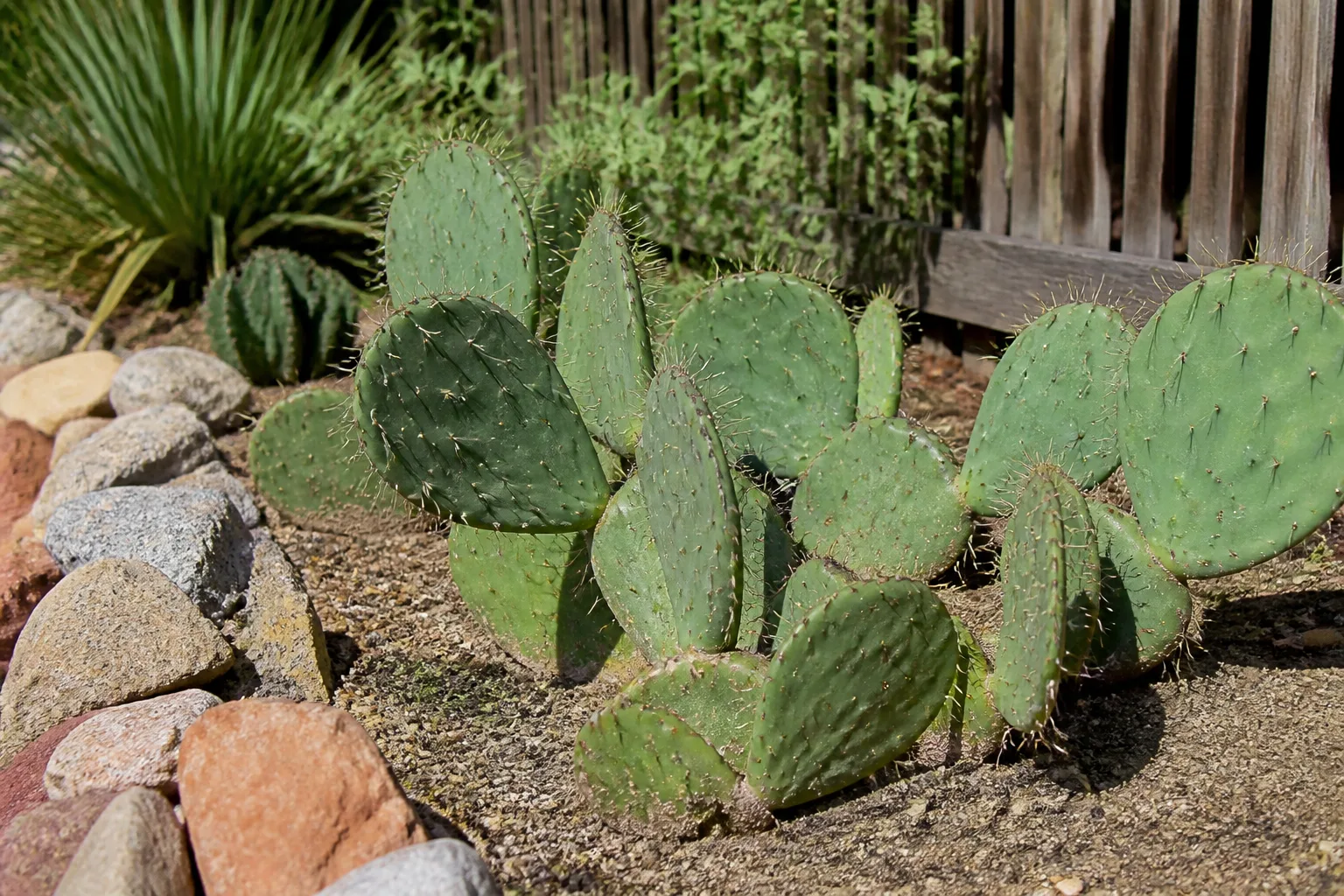
Prickly pears (Opuntia) are often the most forgiving starting point because several species come from continental grasslands and cold deserts. They can look wrinkled or flattened during winter and then produce new pads and flowers after spring warmth returns. Remember that glochids—the tiny, barbed hairs on some pads—can be harder to remove than the obvious spines, so choose a location away from paths, pets, and children.
Hedgehog cacti (Echinocereus), pincushion relatives such as Escobaria and Coryphantha, and high-elevation Pediocactus can also be good choices where their specific minimums and moisture needs fit. The label should tell you more than a genus name: look for the species, a hardiness range, and whether the recommendation assumes a dry western climate. If your winter is rainy, coastal, or dominated by freeze-thaw cycles, drainage may narrow your options more than temperature does.
Give outdoor cacti sun and a dry microclimate
Winter light is weaker and arrives from a lower angle, so a spot that receives full sun in July may be shaded by a house, fence, or evergreen in December. Walk the site in winter or use a sun-tracking app to find the brightest practical position. A south- or west-facing wall can reflect warmth and block some wind, while a sunny slope or raised bed lets water leave the crown quickly.
Avoid low pockets, downspout outlets, snow-storage areas, and beds that stay dark after a storm. The best microclimate is not simply the warmest one; it is the place that warms in the sun and dries quickly afterward. Do not place a cactus under a roof edge where a small drip keeps the same section of soil wet for weeks.
In a wet climate, you may be trying to solve the wrong problem by searching for a more cold-hardy species. A cactus that can tolerate a very low dry temperature can still rot in a mild, rainy winter. If you cannot create a dry, sunny bed, a movable pot under a roof overhang may be the more realistic setup.
Build drainage before winter
Drainage is the foundation of winter survival. Cactus roots need air as well as water, and cold, saturated soil stays physiologically hostile for much longer than a warm, wet summer mix. High Country Gardens recommends fast drainage, lean mineral soil, full sun, and raised or bermed beds where native soil holds water; its guidance also warns that heavy clay and rich, moisture-retentive soil can lead to root problems in winter (High Country Gardens).
For an in-ground planting, mound the bed or build a broad berm rather than digging a narrow hole and filling it with a pocket of radically different soil. A pocket that drains differently from the surrounding ground can collect water around the roots. Use coarse mineral material such as gravel, pumice, expanded shale, or coarse sand as part of a site-specific mix, and keep compost and peat modest or out of the cactus root zone when winter wetness is a recurring issue.
Ground versus container: choose the setup you can keep dry
The ground offers more stable root temperatures and, in a well-drained bed, can be safer than a small pot. A container is easier to move away from rain and hard freezes, but its roots are surrounded by a smaller volume of soil that can chill rapidly. A pot on a cold concrete slab can experience more severe root stress than the same cactus planted in a dry raised bed.
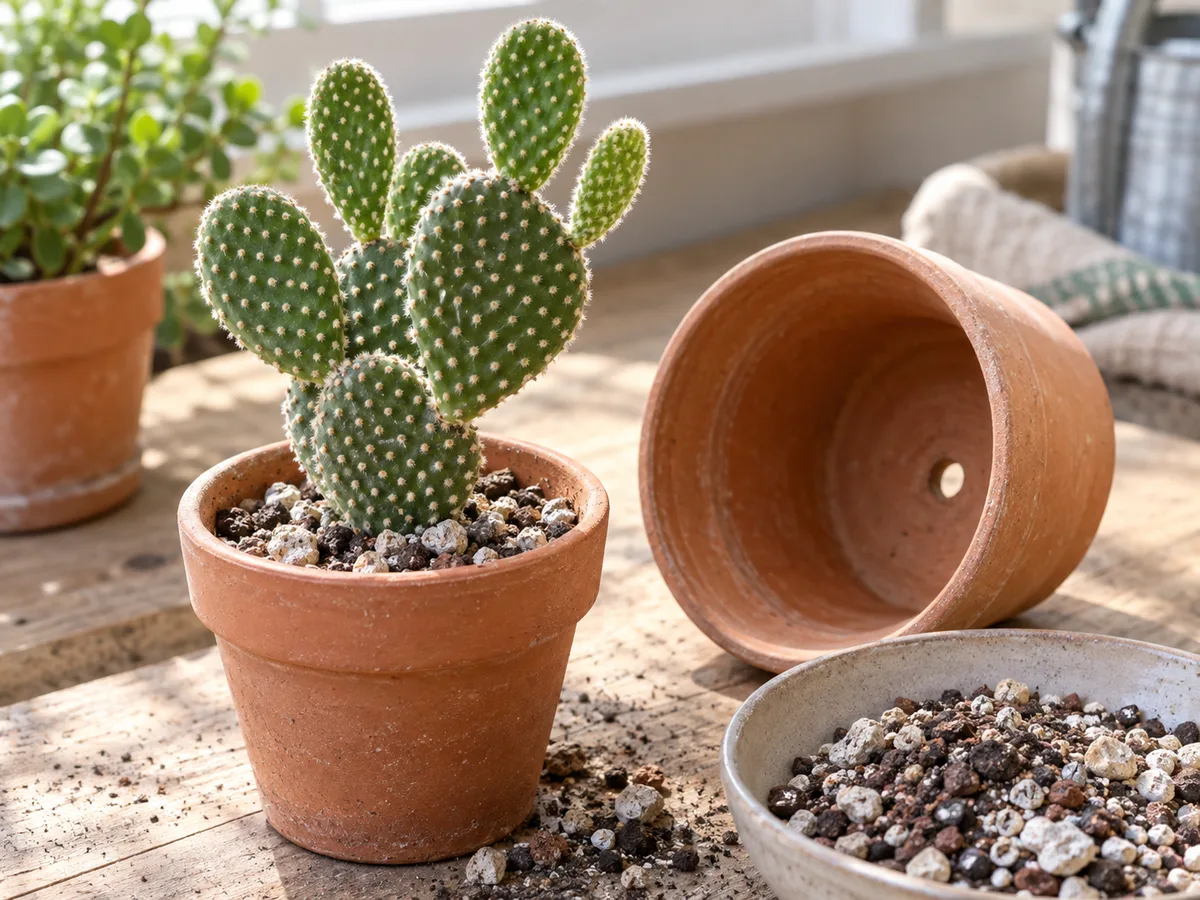
For a potted cactus, use a container with a real drainage hole, a gritty mix that dries through the full root ball, and a saucer that can be emptied. Better Homes & Gardens likewise recommends a fast-draining cactus mix and letting the soil dry fully between winter waterings for indoor plants (Better Homes & Gardens). Do not place the pot inside a decorative cachepot where runoff collects unseen. Unglazed terracotta can help a mix dry faster, but it does not correct a poor mix or compensate for a pot that is too large.
Plant new cacti in late spring or early summer
Plant cold-hardy cacti after the danger of hard frost has passed and while the growing season still has time to develop new roots. Late spring or early summer gives the plant a chance to settle before autumn nights become cold. Avoid installing a mail-order cactus just before a wet freeze, even if the species is rated for your zone; a recently disturbed root system is not the same as an established plant.
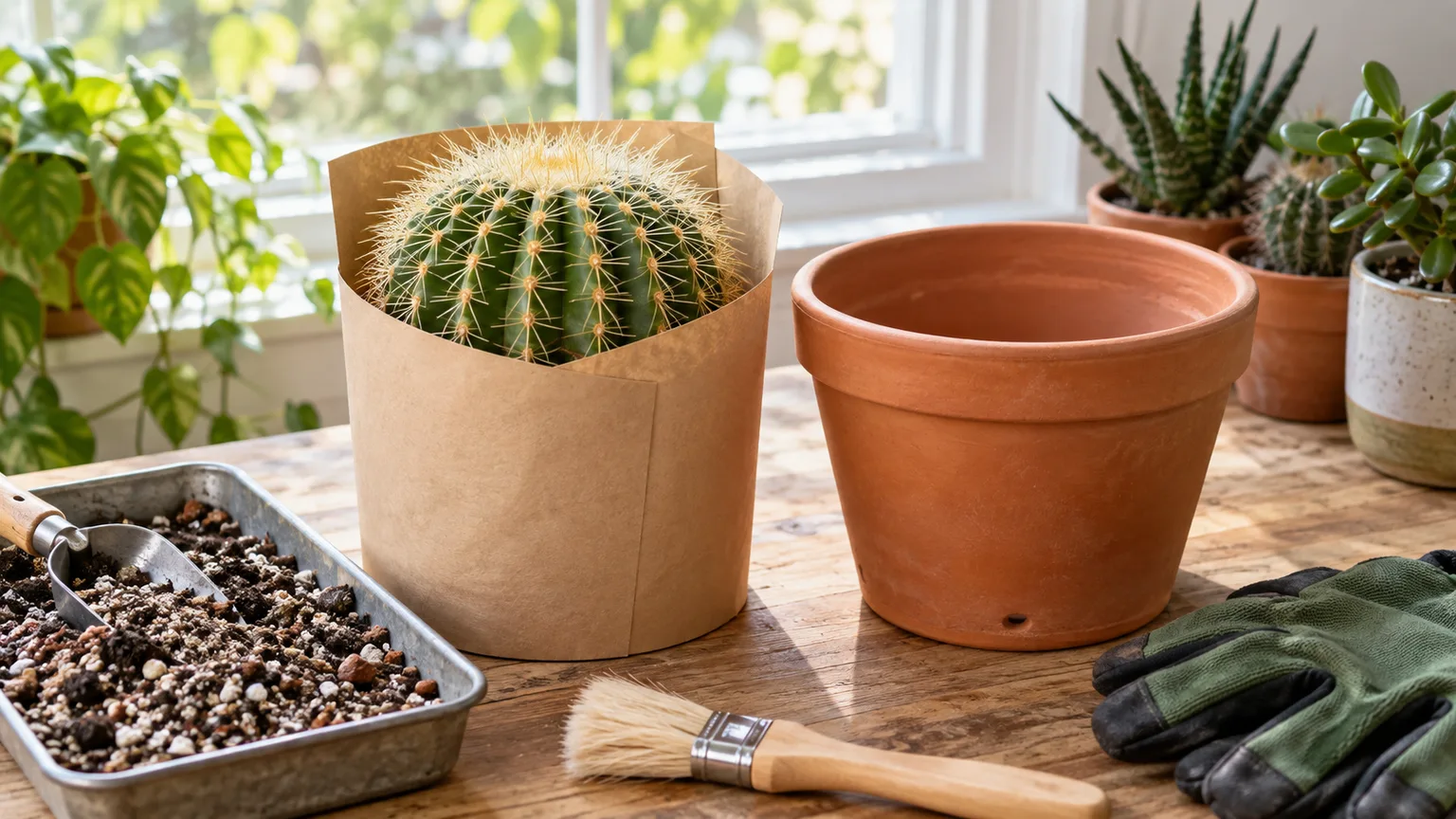
Handle spiny plants with folded cardboard, long tongs, or thick gloves rather than bare hands. Set the crown—the junction between roots and stem—at the same level it grew before, or slightly above the surrounding soil in a wet site. Water a new transplant only after any damaged roots have had time to dry and callus, then let the mix drain fully. A thin layer of angular gravel around the base can reduce soil splash without holding a damp organic mulch against the crown.
Stop watering before cold, but not by calendar alone
As days shorten and nights cool, an outdoor cactus should be moving toward dormancy and a lower water content. Stop routine irrigation early enough for the root ball to dry before a freeze. High Country Gardens uses early September as a dry-down point for established plants in its regional growing guidance, but your timing should follow local weather, soil moisture, and the plant’s growth—not an arbitrary date.
Do not give a deep drink because a warm afternoon appears in November. If the forecast includes freezing nights, water in the root zone can remain trapped around roots and expand as it freezes. The exception is a warm, actively growing indoor cactus in a bright window: it may need occasional water after its mix has dried completely, but it should never be kept on an outdoor winter schedule just because it is still technically a cactus.
How to judge whether an outdoor cactus is dry enough
Check the bottom half of the pot, not just the dry surface. Lift the container, feel its weight compared with a freshly watered pot, and use a wooden skewer or moisture probe near—but not against—the root ball. In the ground, inspect after rain: if the bed still feels cool and wet several inches down, the plant does not need more water.
Some hardy cacti intentionally shrivel or flatten in winter. Colorado State University Extension explains that reducing internal moisture helps protect cells during freezing and that winter color can change as green chlorophyll recedes and other pigments show through (Colorado State University Extension PlantTalk). That appearance is not a request for water. Water only when the plant is warm and active enough to use it, and only when the root zone can dry again.
Skip winter fertilizer
Do not fertilize a dormant outdoor cactus to make it “stronger” before a freeze. Fertilizer cannot replace hardiness, drainage, or acclimation, and soluble salts in a cold, wet root zone add another stress. Wait until spring growth is visible and the plant is taking up water, then use a diluted cactus fertilizer or a product recommended for the specific plant.
Indoor cacti in a cool, low-light winter room should also remain unfertilized. Resume feeding only after light levels and growth have increased. The goal is compact, hardened growth, not a flush of tender tissue that meets cold weather before it has matured.
Shield plants from rain and freeze-thaw damage
Protection for a hardy outdoor cactus should usually shed excess water rather than trap warmth. In a wet region, put a container under a roof overhang or use an open-ended rain shelter that keeps precipitation off the plant while allowing air to move through. A clear plastic cover can be useful as a temporary roof, but it should not lie against the cactus or seal humid air around it; remove or vent it after the storm passes.
Do not heap leaves, straw, or compost over the crown. Organic winter mulch can hold moisture against the stem and create the rot problem you were trying to prevent. A thin layer of clean gravel is a better surface treatment for many hardy cacti, especially where rain splashes soil onto the plant.
Snow is not automatically fatal to a cactus that is adapted to snow and dry cold. The real question is whether the plant can dry afterward and whether its tissues were full of water when the freeze arrived. Brush off a heavy, damaging load only when conditions are safe and the snow is loose; do not chip ice from a frozen cactus or handle brittle pads during a freeze.
Move potted cacti before the first hard frost
Treat a container cactus differently from an established plant in the ground. Even if the species is borderline hardy outdoors, its roots have less thermal buffering in a pot and the container can freeze from the sides. Move it to a bright, cool, dry porch, unheated greenhouse, garage window, or indoor window according to the species and your weather.
If the cactus is tender or the winter is wet, moving it inside before the first hard frost is safer than waiting for a dramatic temperature drop. A bright window is better than a dark basement, but avoid putting a cold plant directly against a hot radiator. Keep air circulating, do not crowd it with new plants, and inspect the pot for insects before it joins a collection.
A low-stress move-in sequence
- Check the forecast and the soil. Move before the hard frost, but let the mix dry if it is wet and the plant is not showing distress.
- Inspect every surface. Look beneath pads, around the crown, and at the drainage hole for scale, mealybugs, webbing, or sour-smelling wet soil.
- Use a barrier. Wrap the pot in cardboard, use long tongs for small pads, or wear thick gloves; never squeeze a cactus to steady it.
- Choose the brightest practical location. If indoor light is much lower than outdoor light, reduce watering and expect slower growth rather than trying to force summer growth.
- Keep it separate at first. A short observation period makes it easier to catch hitchhiking pests before they reach other houseplants.
Read winter shriveling, color, and damage
Firm wrinkling, slight flattening, or red, purple, or bronze color can be normal winter behavior in hardy cacti. It reflects dormancy, reduced internal water, cold exposure, or pigment changes rather than an urgent need for water. The University of Nevada, Reno Extension also notes that established cold-hardy landscape cacti can live with little extra water once established, with supplemental root-zone watering reserved for unusually intense drought conditions (University of Nevada, Reno Extension).
Be more concerned when tissue becomes translucent, mushy, black, foul-smelling, or wet at the crown. A cactus that feels soft after thawing may have freeze injury or rot, while a cactus that is firm but wrinkled is more likely conserving water. Do not diagnose by color alone; touch, texture, soil moisture, and the timing of the weather event matter together.
Fix common winter problems
After a freeze, do not water, fertilize, or immediately cut every discolored section. Let the plant thaw naturally in a dry, protected place, then wait long enough to see which tissue stays firm. Frozen tissue can look worse before it is fully thawed, and cutting into it while brittle can spread damage or create a large wound.
If a pad or stem becomes soft and translucent, remove only tissue that is clearly dead once the plant is stable. Use a clean, sharp blade, cut back to firm tissue, and keep the wound dry so it can callus. If the base is soft and the soil is wet, unpot the cactus after the immediate freeze risk has passed, remove dead roots, and repot into dry mix rather than watering in an attempt to revive it.
If damage appears as pale, bleached patches after a potted cactus is returned outdoors, suspect sun stress rather than cold. Indoor-grown tissue needs a gradual transition to direct sun over about a week or more, beginning with bright shade or gentle morning light. If the plant stretches indoors, increase light gradually; do not solve low light by adding fertilizer to a dormant plant.
Wake cacti up gradually in spring
Spring care is a transition, not a single watering day. Wait until hard freezes have passed, the soil is draining, and the plant shows active growth. Move overwintered pots outdoors on mild, cloudy days or place them in morning sun first, then increase exposure as the tissue adapts.
Give the first thorough drink only when the mix is dry and the forecast allows it to drain. After that, return to a soak-and-dry rhythm that matches growth and weather. Do not water every day because the cactus looks wrinkled; roots need oxygen and a newly waking plant may not yet be using water quickly.
Once growth is clearly underway, you can resume light feeding and refresh the gravel surface. Delay pruning of winter-damaged tissue until the line between living and dead tissue is obvious. A slow spring recovery is often safer than a series of emergency changes that keep the roots wet and the plant moving between extremes.
Avoid the winter mistakes that kill more cacti than cold
The most common mistake is trusting the name “cactus” more than the species label. The second is treating a hardiness-zone number as a guarantee while ignoring rain, wind, a sheltered patio, or a small exposed container. Winter success depends on the plant and the site together.
Other avoidable errors include:
- Watering on a schedule: Use soil moisture and growth, not a weekly reminder.
- Adding rich compost or peat to a wet bed: Improve drainage first; more organic matter is not automatically better for a cold, dry-site cactus.
- Using a sealed plastic wrap: Shed rain with ventilation instead of trapping condensation against the plant.
- Burying the crown in organic mulch: Keep the stem base open and use a thin mineral surface layer when appropriate.
- Putting a moved-in cactus in darkness: Lower light means lower water use, not a reason to water more.
- Fertilizing before a freeze: Feed active spring or summer growth, not winter dormancy.
- Handling prickly pear casually: Cornell Cooperative Extension warns that tiny glochids can be difficult to remove; use tools and thick gloves when working with pads (Cornell Cooperative Extension Allegany County).
Conclusion
To grow cactus plants through winter, start with the plant’s identity and your site’s actual risk. Keep genuinely cold-hardy species in full sun and fast-draining ground when they are proven for your climate; move tender or container-grown plants before hard frost; and protect outdoor cacti from winter rain more aggressively than from ordinary dry snow.
Let hardy cacti dry down as growth stops, skip winter fertilizer, and treat wrinkling or seasonal color as a clue rather than an automatic emergency. After a freeze, wait for the tissue to thaw before cutting or watering, then restart spring care slowly. The cactus that survives winter is usually the one that enters it with the right hardiness, dry roots, strong light, and no last-minute rescue routine.