How to Grow and Care for Golden Bamboo
Golden bamboo grows fast, but its rhizomes need a plan. Get practical advice on planting, light, soil, watering, barriers, containers, and pruning.
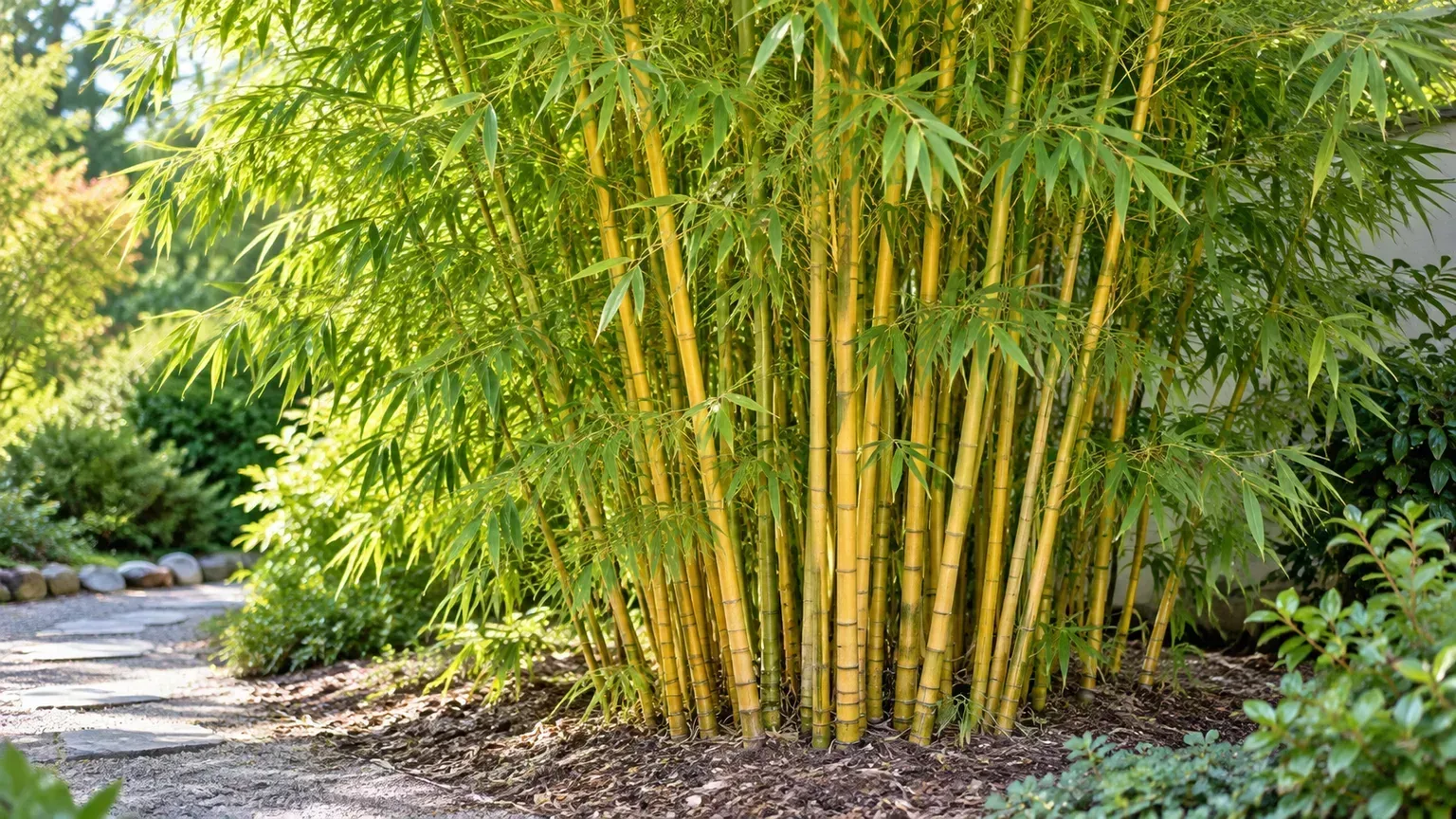
Golden bamboo (Phyllostachys aurea) can make a tall, leafy privacy screen, but the decision to plant it is mostly about where its rhizomes are allowed to go. This is a running bamboo: underground stems travel out from the visible canes and can send up shoots well beyond the original planting spot. If you cannot check a barrier or keep the plant isolated in a large container, choose a clumping bamboo or another screen plant instead.
Where it is permitted and manageable, golden bamboo grows in sun or partial shade in soil that stays evenly moist but drains. Plant in spring, water steadily while it establishes, and decide on a containment method before you dig the planting hole. The steps below cover ordinary care, but they also explain how to avoid turning a useful screen into a years-long removal project.
Golden Bamboo at a Glance
| Feature | Golden bamboo |
|---|---|
| Botanical name | Phyllostachys aurea |
| Family and habit | Poaceae; perennial running bamboo |
| Typical height | About 10–20 feet; taller plants are possible in favorable sites |
| Light | Full sun to partial shade; more sun can deepen the yellow color of mature culms |
| Soil | A range of textures, provided the root zone is not chronically waterlogged |
| Main use | Privacy screen, wind filter, or contained specimen |
| Main risk | Rhizomes can escape the intended bed |
North Carolina State Extension describes plants commonly reaching 10–20 feet and sometimes 30 feet, while UF/IFAS describes a potential height of 10 meters. Treat those as context rather than a promise: climate, age, cultivar, water, and the size of the planting area all affect the result. NC State Extension’s profile is especially useful for checking the species’ identifying traits and regional invasive status.
Know Which Bamboo You Are Planting
Golden bamboo is a woody grass, not a tree. Its upright hollow stems are called culms; they start green and may become yellow to golden with age and sun. Some culms show tightly compressed internodes near the base, which gives the species its “fishpole” name, but that feature is not present on every stem. NC State Extension also notes the flattened groove on one side of the culm.
Check the nursery label for Phyllostachys aurea. “Lucky bamboo” is a different plant, Dracaena sanderiana, and is usually grown as a small indoor plant; it is not a miniature form of this outdoor bamboo, as NC State Extension’s lucky bamboo profile confirms. If you want a tall screen, buy the species by its botanical name so you know what growth habit and mature size to plan for.
The growth habit matters more than the color. Gardeners’ World explains the difference between clumping and running bamboo: golden bamboo sends long underground rhizomes from which new shoots emerge, while clumping types expand much more closely to the original plant. That distinction should drive your purchase decision before leaf color or price does.
Decide Whether Golden Bamboo Fits Your Yard
Golden bamboo earns its place when you need a tall, fast screen and can give it a defined growing area with ongoing oversight. It is a poor match for a narrow border, a small shared boundary, or a site next to natural woodland or open land where escaped rhizomes could establish. It also is not a low-maintenance hedge simply because the foliage itself asks for little routine care.
The plant spreads by rhizomes, not by a tidy widening of the visible clump. New shoots can appear outside the screen, under mulch, or on the far side of a bed edge; cutting the canes alone does not stop underground growth. Before planting, draw the intended footprint and include the space needed to install, expose, and inspect a barrier or to set an isolated pot on hard paving.
Check Local Invasive Status Before Buying
Invasive status is regional, so do not infer what is allowed from a plant being sold at a local nursery. NC State Extension identifies golden bamboo as invasive in North Carolina, and the UF/IFAS Plant Directory lists it as a Category II invasive plant in Florida. The separate UF/IFAS assessment gives a “caution—manage to prevent escape” status, which shows why a single national label is not enough to answer the question for every state or county.
Check your state invasive-plant council, cooperative extension, and local rules before ordering. If you live near a natural area, waterway, or a property line you cannot monitor, choose a non-running alternative even where planting is legal. NC State suggests native plants such as giant cane (Arundinaria gigantea) for similar landscape roles; ask your local extension office which evergreen or tall screening plants fit your region.
Choose a Site for Light, Space, and Shelter
Golden bamboo grows in full sun and partial shade. A sunnier site supports vigorous growth and more pronounced yellowing of mature culms; afternoon shade can reduce stress in very hot locations, though it may also mean a looser or slower screen. Avoid treating shade tolerance as a reason to squeeze the plant between buildings—the underground spread still needs to be managed.
Plan around the mature height and width, not the size of the nursery pot. NC State lists a typical height of 10–20 feet and a potential width of 12–25 feet for the stand, before considering rhizomes that travel outside the visible canopy. Keep the planting away from places where fallen leaves or dense shade would be a nuisance, and leave enough access to walk the perimeter with a spade or inspect the barrier.
Hardiness listings for bamboo can vary by source and cultivar. NC State’s plant-tool record lists USDA zones 4a–10b, a very broad range that does not guarantee the same cane height, leaf retention, or vigor in every climate. Ask a regional nursery what survives locally, especially if winters are severe or summers are hot and humid, and favor a spring planting when roots have a long growing season to establish.
Prepare the Soil and Plant at the Right Depth
Golden bamboo tolerates a range of soil textures, but its roots need air as well as moisture. The practical target is a root zone that does not dry to dust for long periods and does not remain saturated after rain. Gardeners’ World’s bamboo guide likewise recommends moist, free-draining soil and warns against both boggy and dry conditions.
Install the barrier before planting if the bamboo will go in the ground. Then loosen soil across a broad area, remove perennial weeds, and dig a hole roughly twice the width of the root ball but no deeper than it is tall. Set the top of the root ball level with the surrounding grade, backfill with the original soil, and water slowly to settle it. Do not bury the base under a mound of compost or mulch; it can trap moisture against the culms and hide the barrier edge.
Plan Screen Spacing Around the Contained Bed
For a screen, space plants according to the nursery’s size information and how quickly you want the gaps to close. Closer planting costs more and can create a crowded row that needs earlier thinning; wider spacing takes longer to fill but leaves room to inspect the bed and remove older culms. Keep every plant inside the same planned containment boundary—separate planting holes do not create separate rhizome zones.
If the screen runs along a boundary, do not place the bamboo against the fence and assume the fence is a root stop. Rhizomes can run underneath ordinary edging and into neighboring ground. Set the bed far enough inside your property to leave a service strip on the outside of the barrier, where you can spot shoots and remove them while they are still small.
Water Through Establishment, Then Read the Soil
Water the root ball thoroughly at planting, then keep checking the soil during the first growing season. When the upper few inches begin to dry, soak the root zone deeply; do not give a quick sprinkle that wets only the mulch. The interval depends on rainfall, heat, soil texture, and whether the bamboo is in a pot, so a fixed weekly schedule is less useful than checking the soil itself.
Once the plant is established, it can tolerate short dry spells better than a new transplant, but long droughts can still curl foliage and slow the production of new canes. Water during extended hot, dry weather and check more often in sandy soil or a container. If the soil remains wet for days or smells sour, pause watering and improve drainage rather than adding fertilizer to yellowing leaves.
Feed Lightly and Mulch Without Hiding the Barrier
A new planting benefits more from reliable water and a suitable site than from a heavy fertilizer dose. If growth is pale and weak after the plant has settled in, use a balanced fertilizer labeled for landscape plants and follow its rate; do not use weed-and-feed or stack fertilizer over a thick layer of manure. Gardeners’ World recommends feeding bamboo during the growing season, but a rich garden soil may need little or no additional feed.
Apply a light layer of organic mulch to slow evaporation and moderate soil temperature. Keep mulch away from the culms, and pull it back from the root-barrier edge so the above-ground lip stays visible. Bamboo sheds leaves; leaving a thin, tidy layer beneath the plant can recycle nutrients, but thick mats should be cleared where they hide escaped shoots or hold standing water.
Contain the Rhizomes Before They Escape
For in-ground golden bamboo, containment is part of planting, not a later repair. The two practical options are a continuous physical barrier around the bed or a large container kept off the soil. Barriers reduce the likelihood of escape; they do not make a running bamboo maintenance-free, since rhizomes can find an open seam, grow over a buried edge, or emerge beyond an unprotected side.
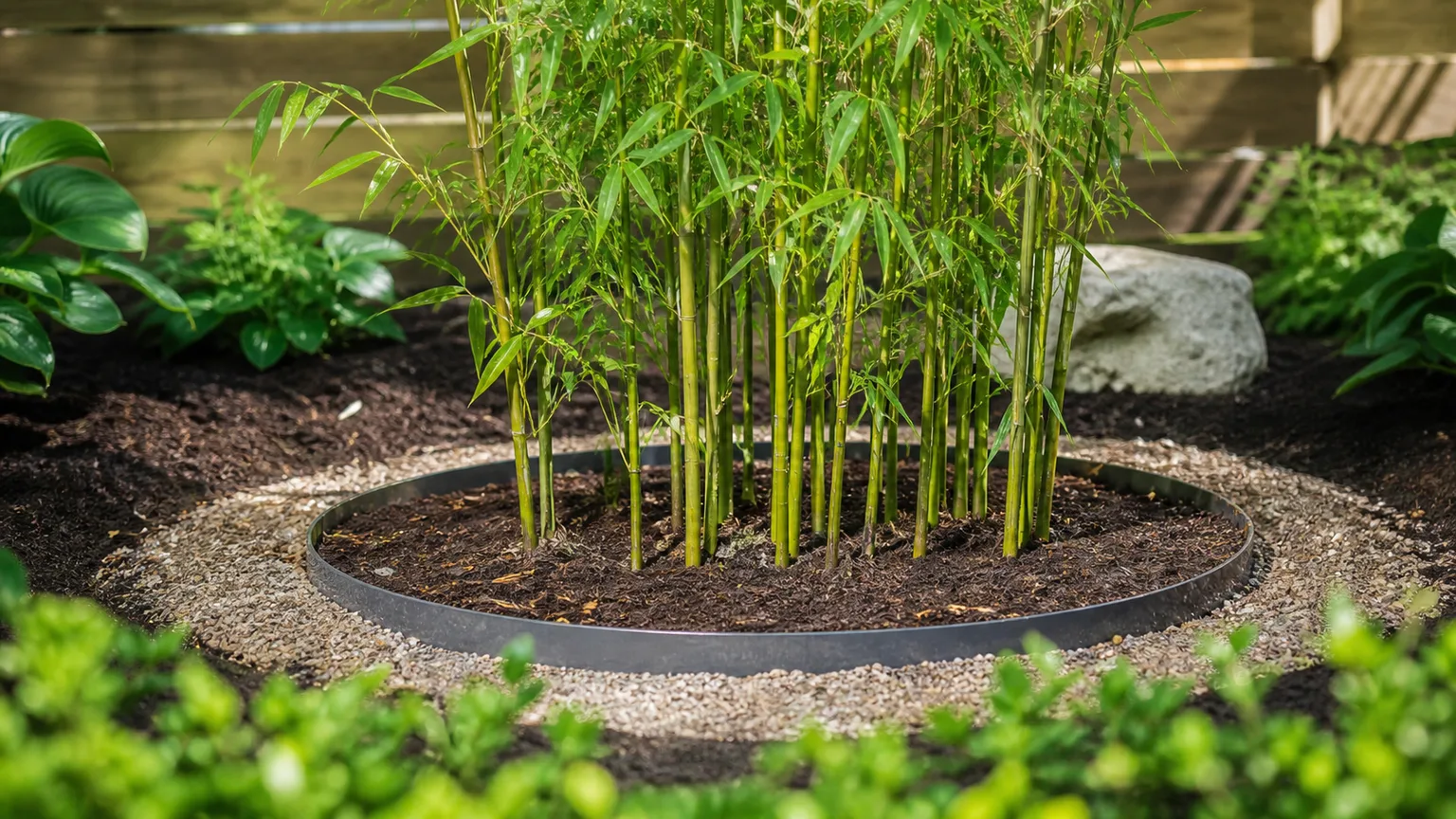
Install and Inspect a Root Barrier
Use a sturdy barrier made for running bamboo or another continuous, durable material suited to the site. Gardeners’ World recommends a trench about 40–60 cm deep, with the top of the barrier left above soil level; Gardening Know How gives a minimum depth of two feet and a four-inch exposed lip. Follow the barrier manufacturer’s instructions for depth, seams, and installation, and leave the upper edge visible rather than burying it under soil or mulch.
If you are creating a ring, make it continuous and join seams securely. After planting, mark the barrier line on a simple garden sketch and inspect the full perimeter at least once each growing season. Brush mulch away from the edge, look for shoots outside it, and cut or dig out an escape promptly. A short inspection takes less effort than trying to remove a mature colony after the rhizomes have moved through the yard.
If shoots have already escaped, cut them at ground level and trace the connecting rhizome back toward the bed where practical. Repeat removal whenever new shoots appear; one mowing or one cut does not exhaust an established rhizome network. For a larger stand, use a local extension’s control guidance and read product labels before considering any herbicide. Our guide to removing bamboo naturally explains why repeated follow-up is necessary.
Grow Golden Bamboo in a Container
A container can keep the rhizomes away from garden soil, but only when the pot sits on a hard surface and roots cannot reach through drainage holes into the ground. Choose a broad, heavy planter with drainage and enough volume for a vigorous bamboo root mass; small decorative pots dry quickly and become unstable as canes rise. A container touching lawn or bare earth is not an isolated system.
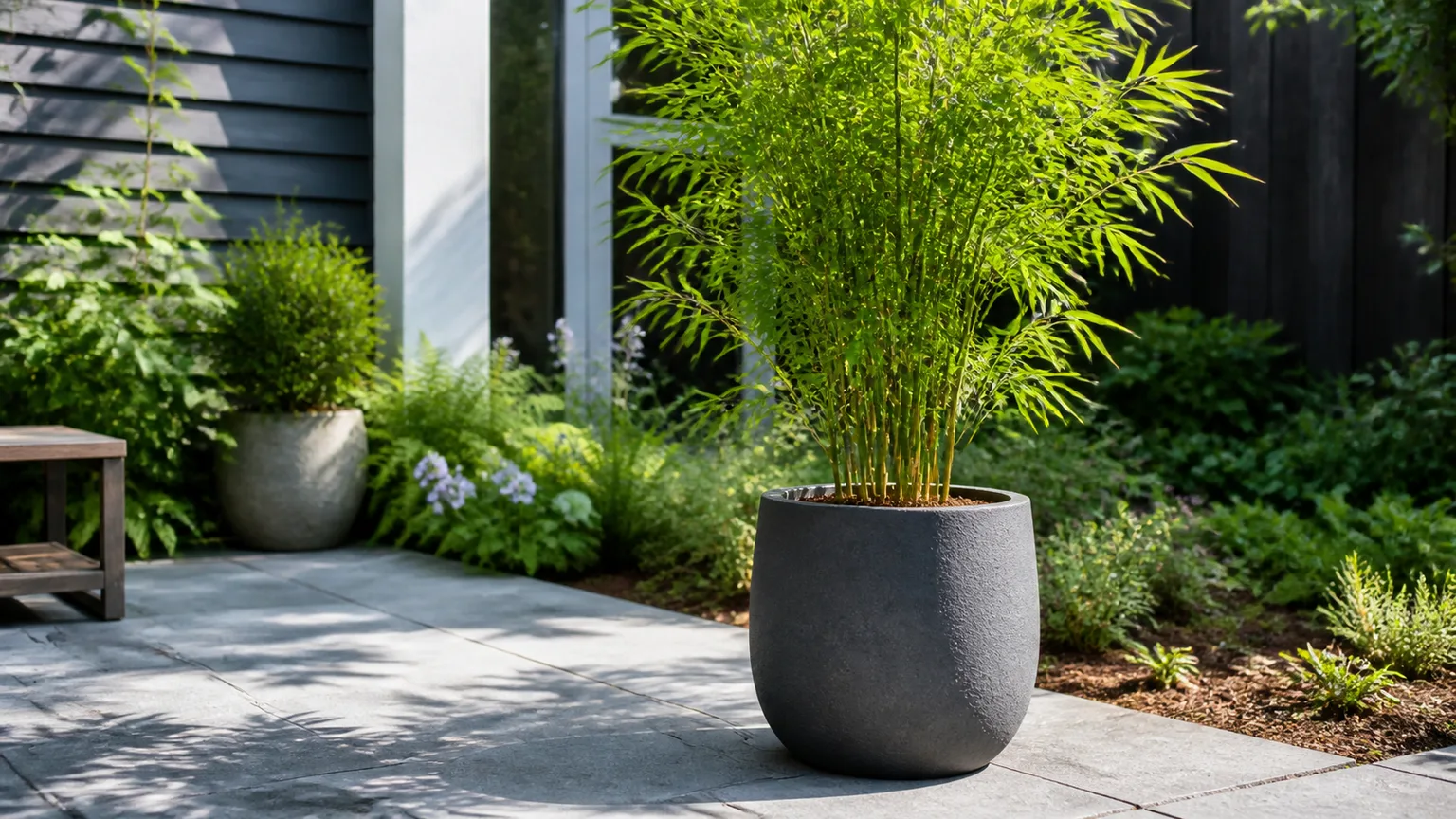
Container-grown bamboo needs more frequent moisture checks than a bed, especially in hot weather. Water when the root zone begins to dry, let excess water drain, and do not leave the pot standing in a saucer that stays full. Expect to divide or root-prune an increasingly crowded plant every few years, and choose a pot you can move or service before the root ball becomes too heavy to handle.
Prune for a Neat Screen and Healthy Canes
Prune in spring or as needed to remove dead, damaged, or crossing culms. Cut unwanted canes close to the soil with a sharp saw or loppers, then thin a few of the oldest stems at the base if the interior has become crowded. Removing selected canes opens the screen without shaving every stem into an artificial hedge.
If you like the fishpole look, you can trim small lower branches to reveal the compressed internodes on stems that have them. Keep enough leafy branches for the plant to remain a screen, and avoid stripping leaves simply to expose every cane. Topping all the culms is not a reliable way to keep the planting short; choose a lower-growing plant if the available vertical space is limited.
Pruning does not control the rhizomes. Continue the perimeter checks even after the canopy looks tidy, and remove unwanted shoots from outside the bed while they are young. For moving an established plant, our bamboo transplanting guide covers root-ball handling and timing.
Propagate by Division Only Where It Is Responsible
The dependable way to propagate bamboo is to divide a healthy root ball or rhizome section, rather than relying on a cane cutting to root. Work in spring while the plant is beginning active growth, water the parent plant beforehand, and use a sharp spade or saw to separate a section that has both live roots or rhizomes and at least one healthy culm. Replant it promptly at the same depth and water it well.
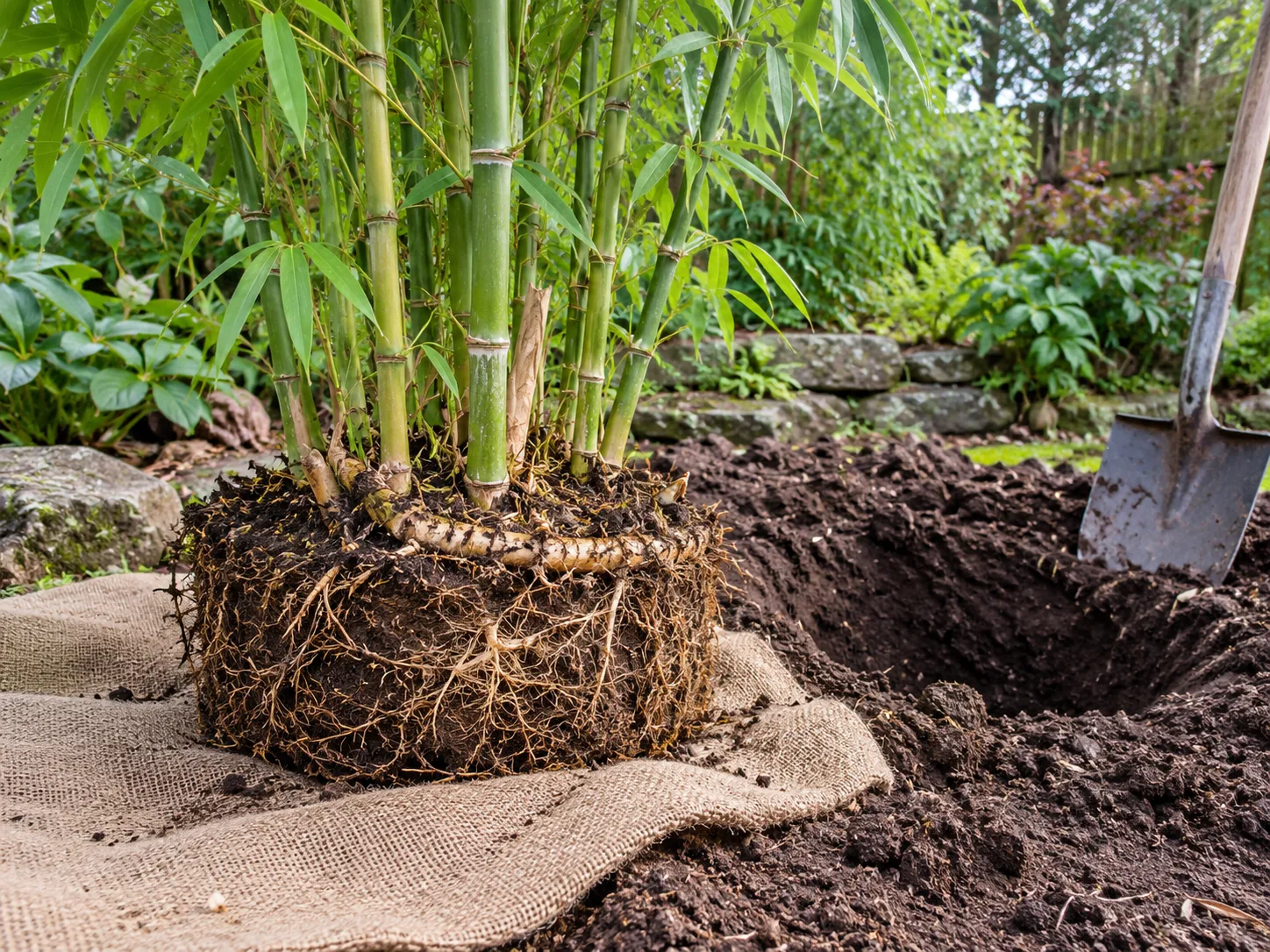
Division is physical work because a mature bamboo root mass can be dense and heavy. Wear gloves and eye protection when handling cut canes, keep the new division moist until it is planted, and sanitize tools afterward. Do not give away or move a division if golden bamboo is listed as invasive where you or the recipient live; propagation creates another opportunity for escape.
Troubleshoot Yellow Leaves and Weak Growth
Golden bamboo is evergreen in suitable climates, but older leaves are shed and foliage can react to drought, cold, or root stress. Before feeding or spraying, check soil moisture several inches down and inspect drainage. The following checks help separate ordinary leaf turnover from a care problem.
| What you see | First check | What to do |
|---|---|---|
| A few yellow older leaves | Is the rest of the plant producing healthy growth? | Remove loose dead leaves and monitor; some leaf turnover is normal. |
| Many yellow leaves with dry soil | Is the root ball dry below the surface? | Water slowly and deeply; repeat soil checks during heat. |
| Yellowing with persistently soggy soil | Does water drain away after rain or irrigation? | Pause watering and correct drainage before fertilizing. |
| Leaves curl during a hot afternoon | Does the curl ease when temperatures fall? | Check moisture and provide temporary afternoon protection to a new planting if needed. |
| New canes are sparse or short | Is the site shaded, dry, crowded, or recently planted? | Correct the limiting condition and give the plant time to establish. |
| Shoots appear outside the bed | Is the barrier edge exposed and continuous? | Remove the shoot and rhizome promptly, then repair or extend the containment. |
Pests are usually not the first explanation for general yellowing. Look beneath leaves for visible insects only if you see stippling, sticky residue, or other specific signs; otherwise start with water, drainage, temperature, and light. If the soil is right and the symptoms keep worsening, take a photo and a soil sample to your local extension office rather than adding several treatments at once.
Protect Golden Bamboo in Winter
In a mild climate, established golden bamboo may keep much of its foliage through winter. In colder sites, wind and freezing weather can damage leaves or canes even when the underground plant survives; the exact response varies by cultivar, maturity, and local conditions. Use locally verified hardiness guidance instead of relying on a single broad zone listing.
Before winter, water a dry planting deeply and keep a modest mulch layer over the root zone without covering the culms or barrier lip. Container roots are more exposed to freezing than roots in the ground, so move the pot to a sheltered outdoor position or insulate the container if severe cold is expected. Do not move the plant indoors as a houseplant, and avoid late-season fertilizer that encourages tender growth just before dormancy.
Conclusion
Golden bamboo is straightforward to water and prune, but it is not a plant to tuck into an unmanaged corner. Confirm that it is allowed in your area, choose an open sunny-to-partly-shaded site, and put a visible, inspectable barrier or isolated container in place before planting. Those decisions matter more than any feeding schedule.
After establishment, keep the soil from swinging between drought and saturation, thin old culms when needed, and walk the containment line every growing season. If you cannot commit to that routine, choose a clumping bamboo or a locally appropriate screen plant; if you can, Phyllostachys aurea can give you a tall, architectural green screen with its distinctive golden canes.



