How to Grow Strawberries in Pots, Step by Step
Learn how to grow strawberries in pots with the right variety, pot size, crown depth, sun, watering, feeding, pollination, winter care, and harvest tips.
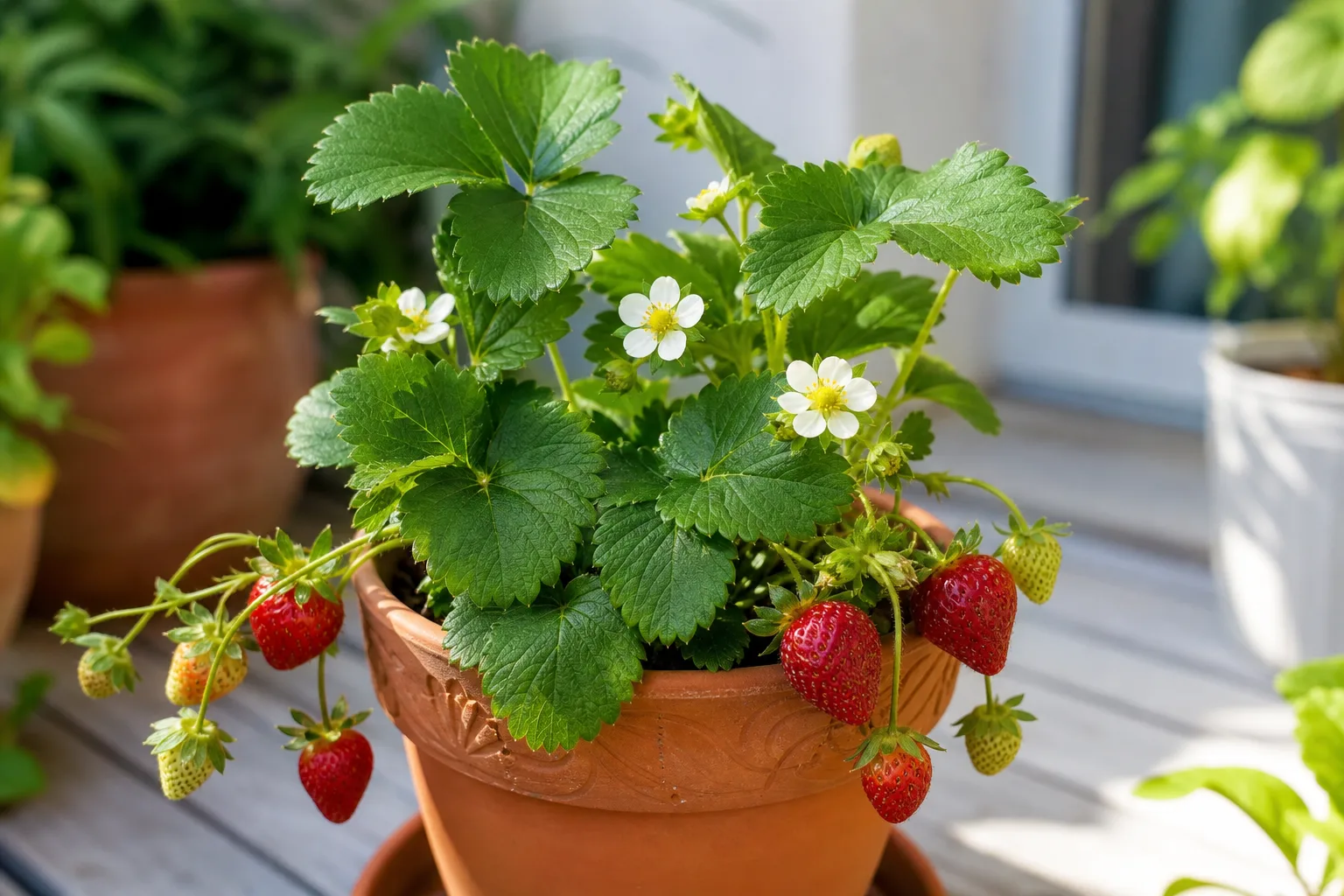
Strawberries are unusually rewarding container plants because they stay compact, flower attractively, and let you put ripe fruit close to the kitchen. They are not carefree, though. A pot gives you control over soil and weeds, but it also gives the shallow roots less moisture, less insulation, and less room for error than a garden bed.
The reliable formula is simple: choose a fruiting type that suits your harvest goal, give each plant a draining pot and airy mix, keep the crown at the soil surface, provide strong sun, and check moisture often. Add light feeding, pollination awareness, protection from birds and wet fruit, and a winter plan, and a small patio pot can produce a useful succession of berries.
Choose the right strawberry type for a container
The variety on the label influences the harvest more than many care tweaks. June-bearing strawberries produce one concentrated crop, usually in late spring or early summer. Everbearing types generally produce an early crop and another later crop, while day-neutral plants can flower and fruit in repeated flushes when temperature and light remain suitable.
For one or two pots, day-neutral or everbearing plants are usually the most satisfying choice because they spread the harvest over more than one short window. June-bearing strawberries can grow perfectly well in a container, but a small pot may deliver one brief flush rather than the long picking season a new container gardener expects. The Utah State University Extension guide to strawberries is a useful reminder that fruiting habit and plant management are linked.
June-bearing, everbearing, and day-neutral: what changes
Choose June-bearing plants when you want a large seasonal harvest and can grow several plants in a larger trough or bed. They are also a sensible choice if that is what your local nursery sells; the plant will still fruit in a pot if its roots, light, and moisture are managed well. Just plan for a defined harvest period and remove excess runners after fruiting so the pot does not become a crowded mat.
Choose day-neutral plants when you want smaller harvests over a longer season. They still pause under intense heat, weak light, drought, or root stress, so “day-neutral” does not mean “fruits regardless of conditions.” Everbearing plants are a good middle ground when you want more than one crop but do not need fruit continuously.
Start with a healthy transplant or bare-root crown
A healthy potted transplant gives you the fastest visual result, while a dormant bare-root crown is often cheaper and establishes well when planted at the right time. Look for a firm crown, pale healthy roots, and leaves without widespread spotting, mites, or collapse. Avoid a plant whose crown is buried in soggy mix at the nursery; correcting that problem before purchase is easier than rescuing a rotted crown.
Seeds are possible, but they are a slow route to a predictable harvest and may not come true to a named hybrid. If the goal is berries this season, buy a named plant or use a healthy rooted runner. Penn State Extension’s growing strawberries overview also separates establishment, cultivar type, and fruiting expectations—three details that are often blurred in quick container advice.
For a practical comparison of starting material and fruiting expectations in a constrained growing space, Home for the Harvest’s strawberry-growing guide also treats cultivar choice as a separate decision from day-to-day care.
Pick a pot that protects shallow roots
Strawberry roots are relatively shallow, so you do not need a towering planter. You do need a container wide enough for the root ball, stable enough not to tip under a crop, and equipped with an open drainage hole. For one plant, start with a pot about 10 to 12 inches wide and at least 8 inches deep; a wider trough or raised container can hold more plants if you give each crown room.
Size, spacing, drainage, and pot material
Use one plant per 10- to 12-inch pot unless the cultivar or container is clearly designed for closer spacing. In a larger box, space plants about 12 inches apart so leaves can dry after rain and you can reach the berries without crushing the crown. Crowding may look productive at first, but it increases competition for water and makes gray mold, hidden runners, and missed ripe fruit more likely.
Drainage matters more than decorative shape. A strawberry jar, hanging basket, window box, grow bag, or ordinary nursery pot can work if excess water can escape from the root zone. Do not put a small pot inside a sealed decorative cachepot and leave it standing in runoff. Empty the saucer after watering, and raise the container slightly if its base sits on a surface where drainage is blocked.
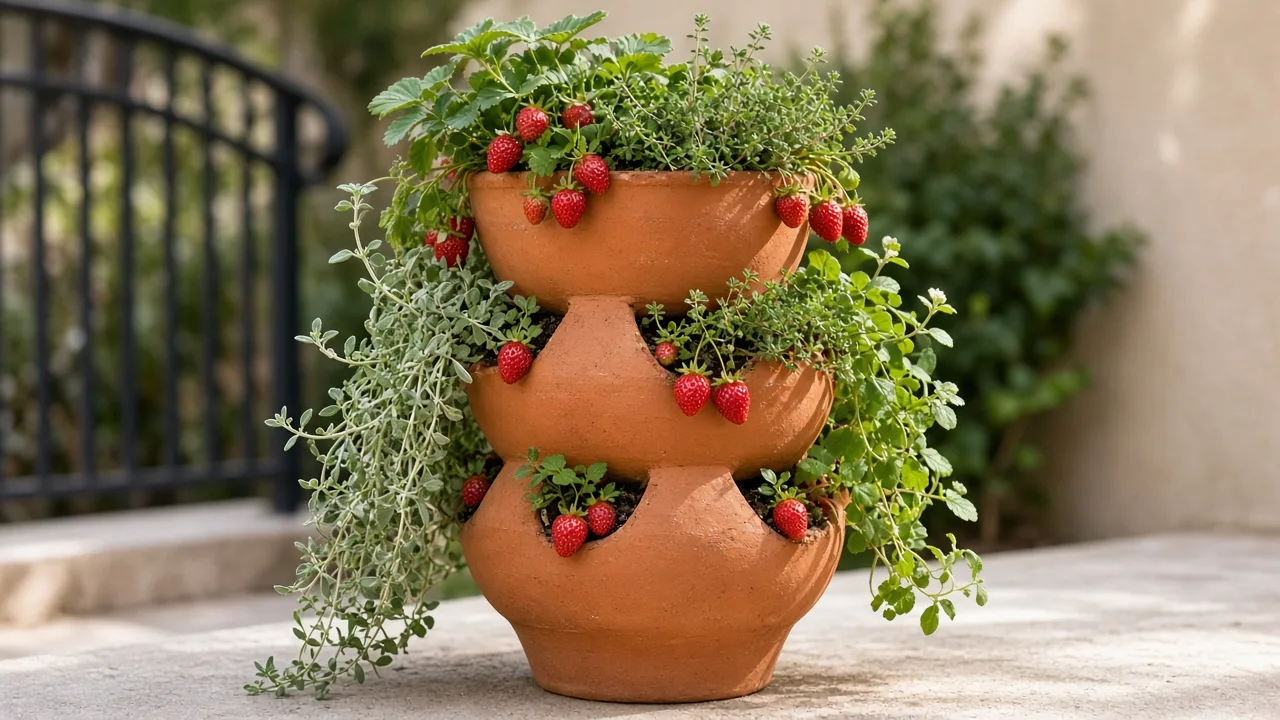
In a hot climate, light-colored plastic or a thick-walled container usually keeps the root zone cooler than a thin black pot in afternoon sun. Terracotta drains quickly but also loses moisture through its sides. That is not a reason to avoid it; it is a reason to check it more often. The decorative stacked pot shown in this container strawberry library image illustrates the space-saving idea, but the same plant-count and watering rules still apply.
Build a fast-draining mix and plant the crown correctly
Use a quality container mix rather than garden soil dug from the yard. A good mix holds enough moisture for shallow roots but leaves air-filled pores after watering. A commercial potting mix amended with a drainage material such as perlite or fine bark is a reasonable starting point; mix in only a modest amount of mature compost if the base mix is low in organic matter.
Avoid a heavy, sticky soil that remains wet around the crown. Avoid filling a pot with a dense compost-only blend, too, because it can settle, shrink, and stay saturated. The RHS guide to growing strawberries also treats drainage, clean growing conditions, and keeping developing fruit off wet soil as central to a healthy crop.
The planting sequence for crowns and transplants
First, pre-moisten the mix so it is evenly damp rather than dusty or muddy. Fill the pot until the plant’s crown will sit at the final surface, leaving an inch or two of headspace so watering does not wash mix over the rim.
For a bare-root crown, make a small mound in the center and spread the roots down and around it. For a transplant, loosen only roots that are tightly circling the pot. Set the crown—the short, thick center where roots and leaves meet—level with or just above the mix surface. Cover the roots, but never bury the crown under potting mix.
Water slowly until a little drains from the bottom. As the mix settles, add a small amount around exposed roots while keeping the crown visible. If the crown disappears after watering, correct it immediately; a buried crown can stay wet and fail even when the leaves initially look fine.
Give the pot enough sun without overheating it
Aim for at least six hours of direct sun, with more light often improving flowering and fruit color. A bright balcony, patio edge, or south- or west-facing outdoor position can work, but observe the pot rather than treating “full sun” as a command to leave it in reflected heat all day.
Containers heat and dry faster than ground beds. In a very hot climate, give the plant strong morning and midday sun, then protect the pot from harsh reflected heat during the hottest afternoon hours if the leaves wilt repeatedly even when the mix is moist. Move the pot gradually so the plant is not shocked by a sudden change from shade to full sun.
Rotate a pot every few days when light reaches it from one direction. This keeps growth more balanced and prevents the fruiting side from leaning toward a wall or window. If the plant makes long, pale leaves and few flowers, fix light before adding fertilizer; weak light is not a nutrient deficiency.
Water by root-zone condition, not a calendar
Potted strawberries often need checking every day in hot, windy, or sunny weather, but “water twice a week” is not a dependable rule. Press a finger into the upper inch of mix or lift the pot to learn its weight. When the surface is beginning to dry and the pot feels noticeably lighter, water thoroughly until drainage begins, then empty the saucer.
The target is evenly moist, never constantly soggy. A dry pot can wilt quickly because the roots are shallow; a saturated pot can lose roots and show the same limp appearance. Water at the base in the morning when possible, keep the crown from sitting in a puddle, and avoid wetting ripe berries or leaving fruit against damp mix.
If water runs down the sides without wetting the root ball, the mix may have pulled away from the pot or become water-repellent after drying. Re-wet it slowly in several passes, or set the pot in a shallow basin for a short soak and then let it drain fully. Do not solve a dry pot by keeping it permanently submerged.
Feed for flowers and fruit without forcing runners
Start with the fertilizer already present in the potting mix, then feed only when the label indicates the plant needs more. Once the plant is established and actively growing, a balanced liquid fertilizer diluted according to its label or a controlled-release product made for container crops can support flowering and fruiting.
Too much nitrogen often produces a lush crown and a tangle of runners without improving the berry crop. If leaves are dark and abundant but flowers are scarce, do not respond with another strong feed. Check light, cultivar, root moisture, and plant age first. When feeding, keep fertilizer off dry foliage and follow the product label rather than copying a rate from a different concentration.
Container mix loses nutrients faster than a garden bed because frequent watering moves soluble nutrients through the drainage holes. That does not mean more is always better. Small, regular, label-directed feeding is safer than a large dose that damages roots or creates a plant that cannot support its own foliage.
Pollinate flowers and protect forming berries
Outdoor strawberry flowers are usually visited by insects and moved by wind, and most common garden strawberries do not need a second cultivar simply to set fruit. You can still see poor fruit set when weather is cold, flowers are hidden under dense leaves, pollinators are scarce, or the pot is indoors.
If the pot is indoors or flowers remain untouched, use a clean, soft paintbrush or cotton swab on each open flower. Brush across the yellow stamens and the center of the flower, repeating as new blooms open. Incomplete pollination can produce berries that are small or lopsided because not all of the flower’s tiny seed-bearing points were fertilized.
Protect developing fruit from birds with netting held above the plant rather than draped tightly over the leaves and flowers. Keep the mesh away from the berries so birds cannot peck through it and so pollinators can visit while flowers are open. A pot near a wall may avoid some slugs, but it does not automatically avoid birds, ants, earwigs, aphids, or gray mold.
Manage runners and keep the pot productive
Runners are long stems that produce daughter plants. They are useful when you want replacements, but a small pot has limited root volume, so every runner left attached competes with the mother plant. For a fruit-focused container, snip most runners close to the mother plant while they are still small.
Keep one or two strong runners only if you have a plan to root them in a separate pot. Pin the first node into fresh mix, keep it moist while roots form, and sever the runner once the daughter plant holds itself. A runner should renew your planting, not create a crowded chain of extra crowns in the same container. This runner image from the plant library shows the connection to look for before deciding whether to keep or remove it.
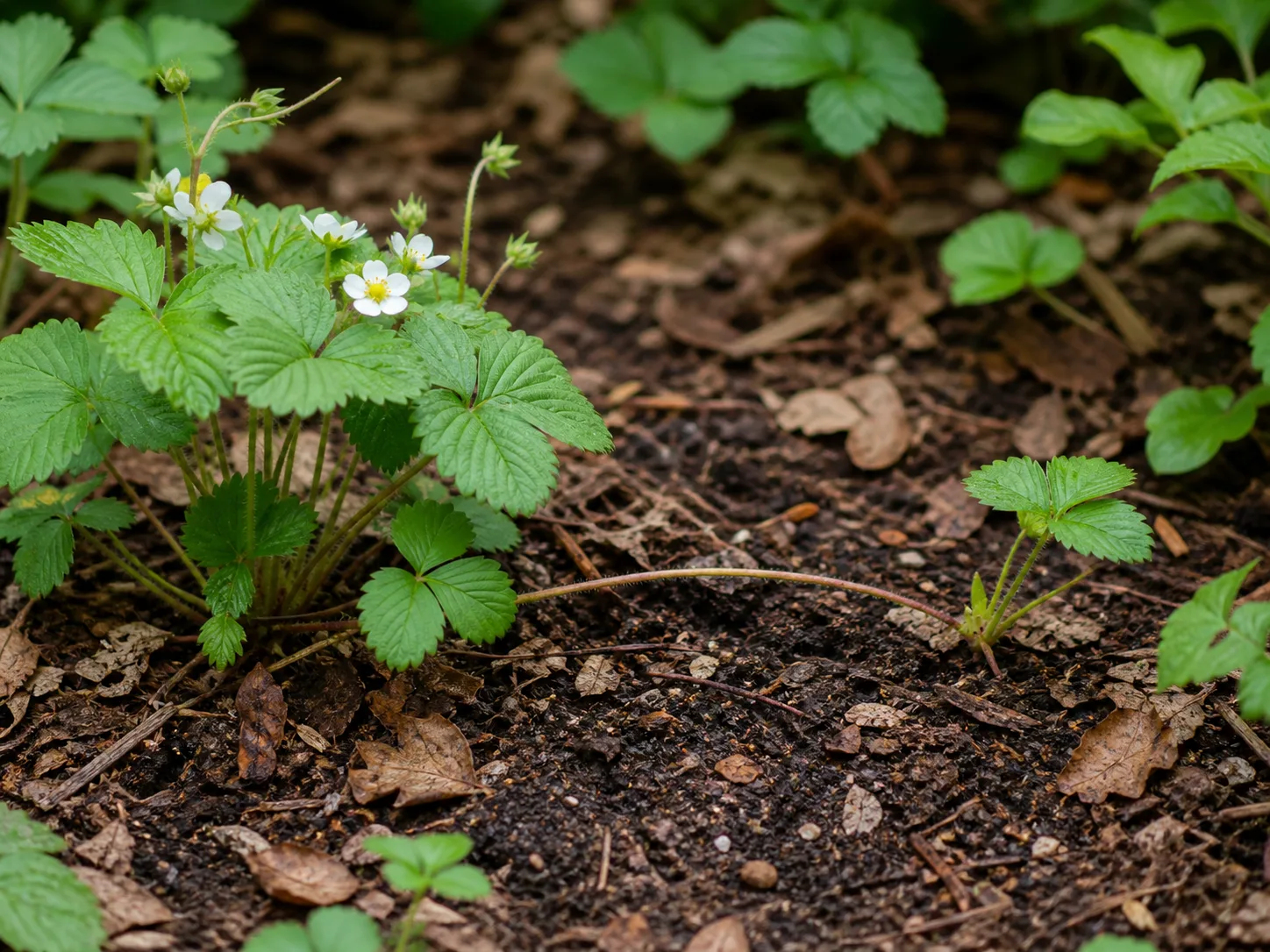
Savvy Gardening’s practical strawberry guide likewise treats runners as a choice: root a few healthy daughters for renewal, but remove the rest when the mother plant’s fruiting capacity matters more.
Remove dead leaves and spent fruit, but do not strip healthy green foliage just to make the pot look tidy. Those leaves power the next flowers and help the crown rebuild after harvest. In a small container, the best maintenance is selective: remove what is diseased, damaged, or competing, and leave productive tissue alone.
Harvest ripe berries and keep fruit clean
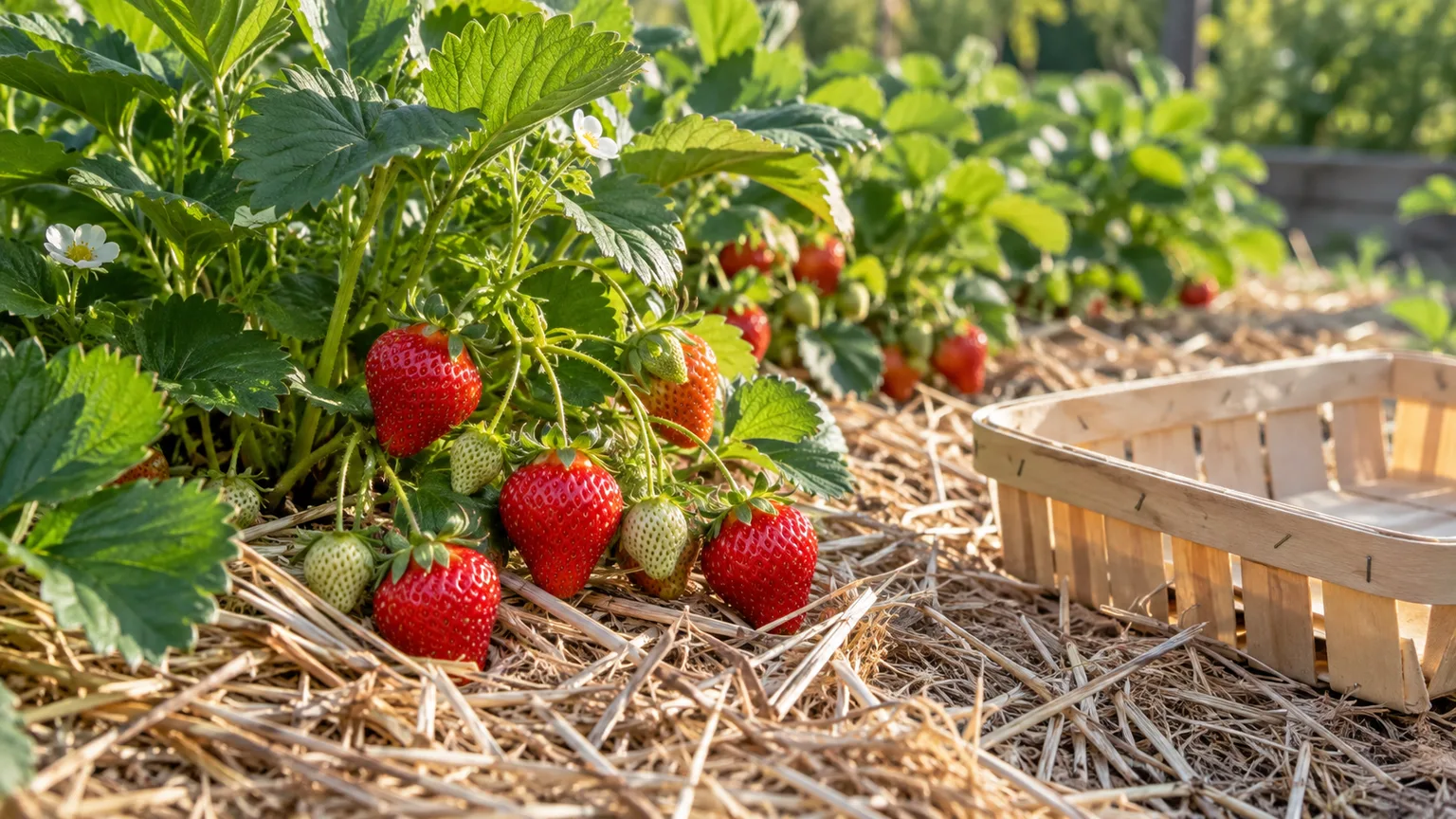
Pick strawberries when they are fully red from the shoulders to the tip and still firm. A pale shoulder usually means the berry needs more time. Harvest in cool, dry weather when possible, and pinch or cut the stem just above the leafy cap instead of pulling hard on the fruiting truss.
Check the pot every day or two once berries begin coloring. One overripe berry can become a source of mold that spreads to fruit touching it. Remove damaged fruit promptly, keep berries from resting on wet mix, and use a loose layer of clean straw or another suitable mulch if it helps separate the fruit from the container surface.
This strawberry harvest figure shows the maturity contrast to watch for: fully colored berries alongside fruit that still needs time. The exact number of berries per pot depends on cultivar, plant age, light, and weather, so judge the setup by healthy growth and repeated fruiting rather than a fixed yield promise.
Troubleshoot the most common container failures
Diagnose the stage where the process stopped before changing three variables at once. A plant with no flowers, a plant with open flowers, and a plant with tiny berries that vanish have different problems. Work through light, cultivar, crown depth, moisture, heat, feeding, pollination, and pests in that order.
Flowers but no berries
First inspect the flower centers. A brown or black center after a cold night suggests frost injury; those flowers will not recover. If flowers remain white-centered but never swell, improve pollination, check that the plant gets enough direct sun, and look for excessive heat, drought, saturated roots, or a cultivar that is between its normal fruiting windows.
Do not add fertilizer as the first response. A young transplant may need to build a crown before carrying a crop, and an old container plant may simply be declining. If the plant is vigorous but repeatedly flowerless, check whether it is receiving enough light and whether excess nitrogen is producing leaves and runners instead of flowers. The NC State Extension Plant Toolbox profile for strawberry is a helpful reference for the plant’s basic habit and growing requirements.
Wilting, yellow leaves, or soft roots
Feel the mix before you water. If it is dry several inches down and the pot is light, the plant is likely drought-stressed; water slowly and thoroughly. If the mix is wet, the saucer is full, or the roots smell sour and feel soft, stop watering, improve drainage, and inspect the crown and roots rather than adding more moisture.
Yellow lower leaves can be ordinary aging, but widespread yellowing or sudden collapse deserves a root-zone check. Repot only when the evidence supports it: use fresh airy mix, trim clearly dead roots, keep the crown high, and place the recovering plant in bright but not punishing light. A larger pot is not a cure if it holds even more water than the original.
Small, misshapen, or moldy fruit
Small or lopsided berries often point to incomplete pollination, heat, drought, weak light, or a plant carrying too many runners. Improve the conditions that match what you see rather than using a general-purpose spray. If fruit is soft, brown, or gray-fuzzy, remove it, increase airflow, keep the canopy and fruit dry, and inspect for berries pressed against wet mix.
Pests can also remove fruit before you notice it. Look for chewed edges, peck marks, webbing, aphids on new growth, or small insects hiding under leaves. Use physical barriers and identification-first control; for any pesticide, choose only a product labeled for strawberries and follow its label, harvest interval, and local rules.
Winterize the pot and plan for renewal
Strawberries are short-lived perennials, but a pot exposes their roots to colder and faster temperature swings than the ground. In a mild climate, you may leave the pot outdoors in a sheltered position after growth slows. In a colder climate, move it to an unheated garage, cold frame, or protected area, or group and insulate the pots so the root ball does not repeatedly freeze and thaw.
Do not bring a dormant plant into a warm living room and expect it to behave like a houseplant. The goal is a cool rest, not tender winter growth. Water sparingly when the mix becomes very dry, keep drainage open, and check the crown after severe weather. The University of Minnesota Extension home-garden strawberry guidance and the RHS growing guide both emphasize adapting winter and renewal practices to the cultivar and local conditions.
Plan to renew the planting before productivity collapses. Many container strawberries give their best crop for roughly two to three years, sometimes longer with excellent care and a suitable cultivar. Root a healthy runner in a new pot, replace a declining plant with fresh disease-free stock, and discard a container that has become crowded, chronically wet, or difficult to inspect.
Conclusion
Growing strawberries in pots is mostly a moisture, light, and spacing problem disguised as a fruit-growing project. Choose a day-neutral or everbearing type for a longer picking season, give one plant a wide draining pot, use an airy mix, and keep the crown at the surface. Then check the pot often, feed modestly, remove excess runners, pollinate indoor flowers when needed, and keep forming berries away from wet mix and wildlife.
If you are starting today, buy a healthy transplant, plant it in a 10- to 12-inch pot, put it where it receives at least six hours of direct sun, and observe the root zone before following any calendar. That small habit—responding to the plant and pot instead of guessing—does more for a reliable harvest than any single fertilizer or specialized strawberry container.