Hardy Geranium Care for More Flowers and Stronger Clumps
Hardy geranium care depends on the cultivar. Find a sunny or shady fit, plant at the right depth, cut back after bloom, divide clumps, and troubleshoot.
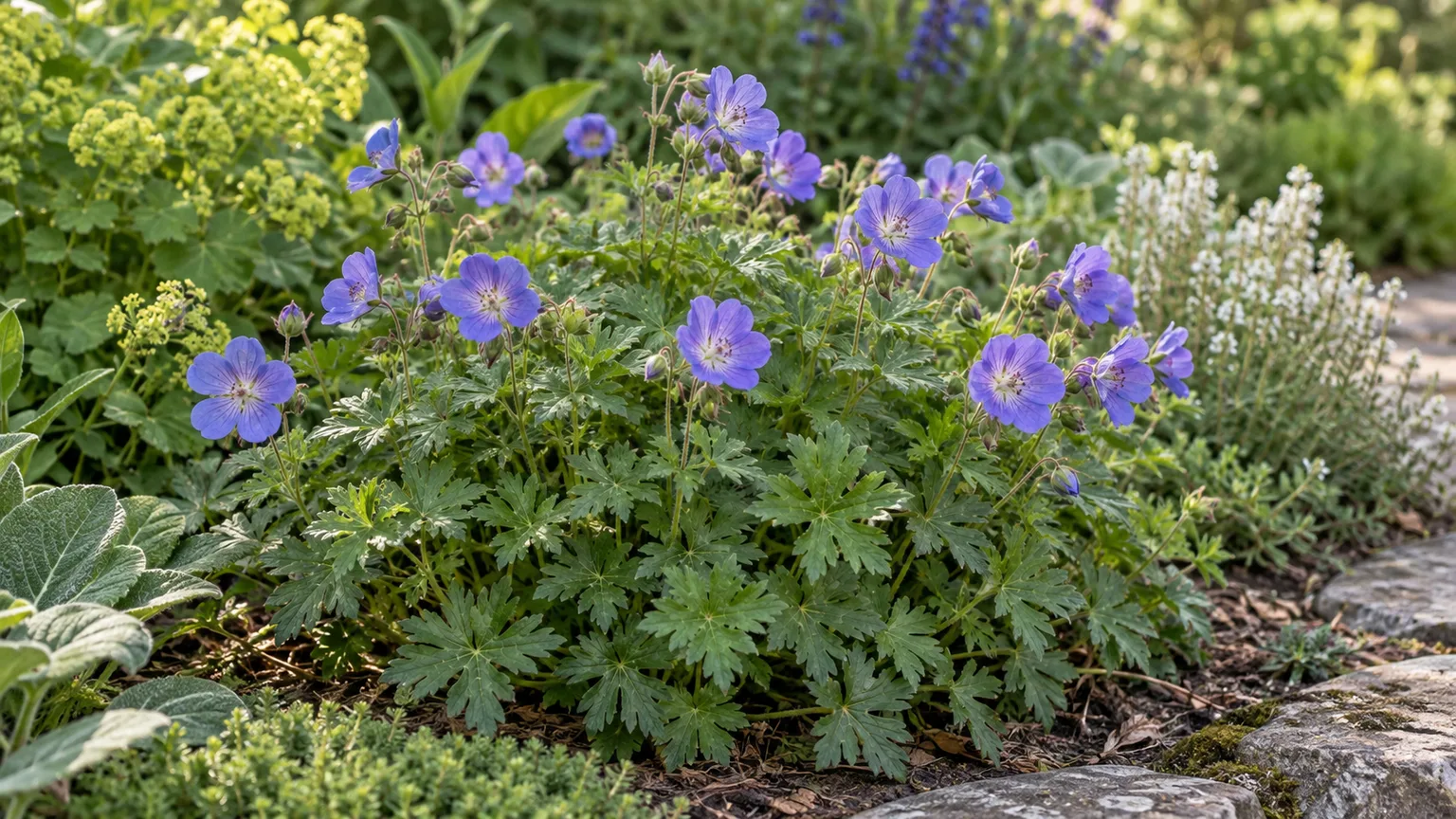
Hardy geraniums are useful garden perennials because they can knit a border together, soften a path, or cover the ground beneath taller plants without demanding constant attention. The trick is choosing a cranesbill that fits the site: the genus includes compact rock-garden plants, spreading ground covers, and larger clumps, so no single sun, spacing, or pruning rule fits every one.
First, make sure the plant is a true hardy geranium. The word “geranium” is also used for tender bedding plants in the genus Pelargonium, and their care is different. Once you have a perennial Geranium, the label’s botanical name, mature spread, and hardiness are more useful than a generic care calendar.
Identify true cranesbill before you plant
Hardy geraniums, cranesbills, or perennial geraniums are members of the genus Geranium. They typically form a low mound or spreading mat of lobed leaves, with delicate five-petaled flowers rising on slender stems. The seed capsule’s long beak-like shape gives the group its common name. By contrast, common patio “geraniums” are usually Pelargonium: their rounded clusters of flowers and often thicker stems look different, and they are generally grown as tender annuals in cold-winter regions.
This distinction matters when you buy, prune, overwinter, or check pet-safety information. A plant tag that says only “geranium” may not tell you which group you have; look for Geranium followed by a species or cultivar name. The Royal Horticultural Society describes the genus as highly varied, including annuals, biennials, and perennials, so this guide focuses on hardy perennial garden forms rather than every plant sold under the name. (RHS Geranium profile, Homes & Gardens)
| If the tag says… | What that usually means | What to check next |
|---|---|---|
| Geranium plus a species or cultivar | A true cranesbill; many are hardy perennials | Mature spread, bloom period, and local hardiness |
| Pelargonium | A tender bedding, scented, or ivy geranium | Frost protection and indoor overwintering needs |
| Only “geranium” | The name is ambiguous | Ask the nursery or verify the botanical name before planting |
Choose a type for your climate and space
Pick for the job you want the plant to do, not just the flower color. A compact clumper belongs near a path or at the front of a border; a vigorous spreading species can fill a larger gap but may need edging or periodic division. A taller, airy form can mingle through neighboring perennials, while low-growing plants are better for a rock garden or the edge of a sunny bed.
The Royal Horticultural Society groups hardy geraniums by conditions and habit: some suit sunny borders, some cope with shade, and smaller silver-leaved forms often need sharp drainage. For example, Geranium macrorrhizum is often used as a spreading ground cover, while G. sanguineum cultivars tend to make lower clumps. Treat those as starting points, not promises; cultivars within a species can still differ. (RHS growing guide, RHS hardy geraniums, Homes & Gardens)
For a blue-flowered clump, ‘Johnson’s Blue’ is a useful example of why a cultivar label helps: Missouri Botanical Garden describes it as roughly 12–18 inches tall and 24–30 inches wide, with a main bloom in late spring or early summer and lighter flowering later under suitable conditions. Those dimensions and dates describe that selection in a St. Louis garden, not the entire genus or every climate. If your summers are hot or your winter soil stays wet, ask a local nursery or extension service about cultivars that have performed well nearby. (Missouri Botanical Garden Plant Finder)
Use the plant label to compare mature height and spread against the available space. If a label gives a wide range, plan around the larger number unless you intend to divide or trim it. Also check whether a named plant is a species, a hybrid, or a cultivar; that affects how reliably seedlings will resemble the parent and how much the plant may spread.
Give it light that matches the cultivar
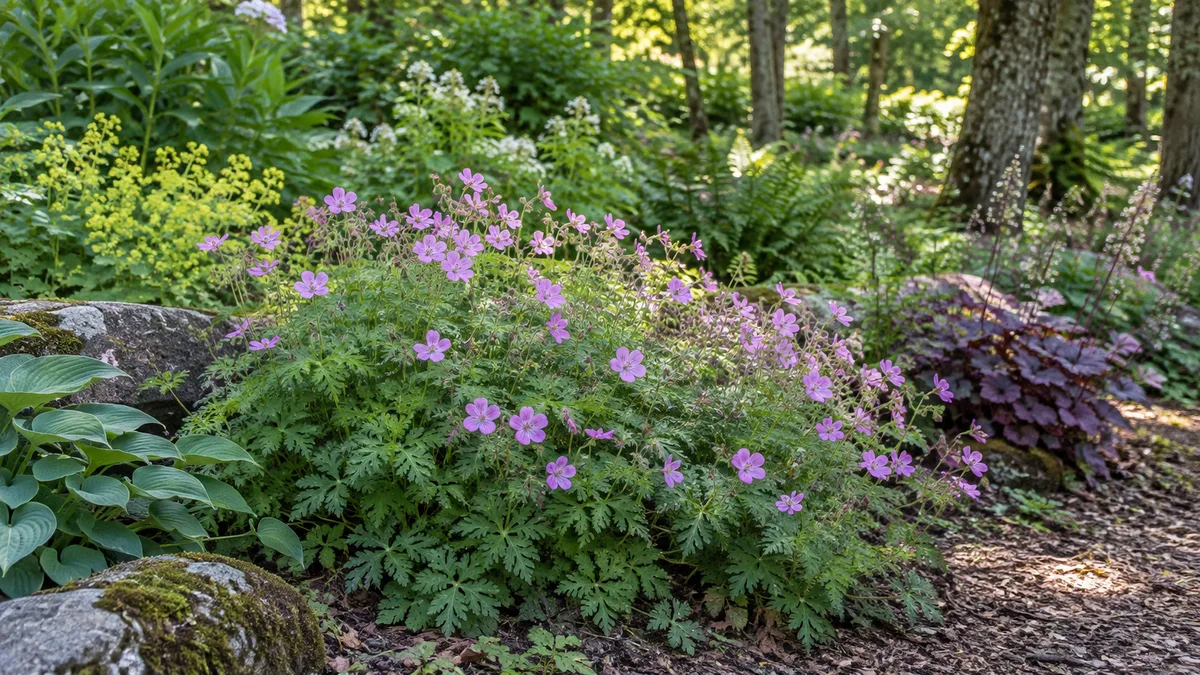
Many hardy cranesbills grow in full sun or partial shade, but flowering usually improves when a sun-loving selection gets enough direct light. In a cool-summer region, an open sunny bed can work well; in a hot-summer climate, a little afternoon shade may reduce stress and keep foliage fresher. Check cultivar guidance rather than forcing every cranesbill into the same exposure.
Shade-tolerant types can be valuable beneath open-canopy trees or along a woodland edge, but “tolerates shade” does not mean “flowers equally well in deep shade.” If a plant makes leaves and few flowers, note how many hours of direct or bright filtered light it receives, and whether nearby trees have filled in since it was planted. A sun-loving cultivar may need to be moved, while a shade-adapted species may simply be in the wrong light if its leaves scorch in a hot, exposed bed. (RHS growing guide, Missouri Botanical Garden Plant Finder)
Use soil that drains, not a special “geranium mix”
For most garden cranesbills, drainage is more important than a precise soil recipe. Ordinary garden soil with some organic matter is usually enough if water does not sit around the crown or roots through winter. The RHS notes that hardy geraniums tolerate a range of soils but should not be planted where the ground remains waterlogged; a plant that fails in heavy, wet soil may need a better-drained site, not more fertilizer.
Before planting, watch the bed after a strong rain. If puddles linger or the soil stays saturated for a long time, consider a raised bed, a slope, or a different planting spot. Adding a modest amount of compost can improve structure in many garden soils, but repeatedly adding rich amendments to the planting hole does not fix poor drainage and can leave a small pocket that holds water differently from the surrounding ground.
Avoid burying the crown under soil or mulch. If your garden is very dry, sandy, or exposed, a thin organic mulch can slow moisture loss, but keep it pulled back from the center of the plant. Small alpine and silver-leaved types may need grittier, faster-draining conditions than vigorous border cultivars, so use the plant label for those exceptions. (RHS growing guide, Harvest to Table)
Plant at the right season, spacing, and depth
Spring is an easy time to plant nursery-grown cranesbills because the plant has a full growing season to settle in. Early fall can also work where the ground remains workable and roots have time to establish before severe cold. The RHS advises avoiding planting into waterlogged soil; in hot weather, delay planting or be prepared to monitor moisture closely until the root ball and surrounding soil knit together.
Set spacing from the cultivar’s mature spread, not from how small the pot looks today. A plant expected to reach about two feet across needs room for air and neighboring foliage; a low ground-cover form can be closer together if you want it to fill a larger area. Tight spacing may make the bed look finished sooner, but it also hides basal foliage, increases competition, and forces more frequent thinning.
Water the nursery pot before planting, then loosen circling roots gently. Dig a hole about as deep as the root ball and wider than it, position the crown at the surrounding soil line, and backfill without packing the soil hard. Water slowly after planting so soil settles around the roots; do not mound soil over the crown. If planting several clumps, leave the center-to-center space recommended on the tag and remember that spreading cultivars may travel beyond their original footprint. (RHS growing guide, Homes & Gardens)
Water new plants differently from established clumps
New transplants need consistent moisture while their roots move beyond the nursery root ball. Check both the potting mix and surrounding soil during the first growing season; if the root zone is drying, water deeply at the base and let excess drain away. In warm, windy weather, check more often, but do not water automatically just because a set number of days has passed.
Established plants are more forgiving, and many tolerate short dry spells once their roots have spread. They still benefit from a thorough soak during a prolonged hot, dry period, especially in full sun or sandy soil. Watering deeply and less frequently is usually more useful than frequent light sprinkling, which wets only the surface.
If leaves droop, feel the soil several inches down before reaching for the hose. Dry soil and a recent heat spell point toward drought stress; soil that stays cold and wet suggests a drainage or crown problem, where extra water can worsen decline. In containers, check the mix more often because pots dry faster, and empty standing water from saucers after watering. (RHS growing guide, Harvest to Table)
Feed lightly—or not at all
Most established garden cranesbills do not need routine fertilizer in reasonably fertile soil. A light top-dressing of mature compost can support soil structure and reduce weeds, but a heavy annual feed is not a shortcut to more flowers. Excess nitrogen can push leafy growth at the expense of blooms and may make taller stems flop.
If a plant is weak, look first at light, drainage, root crowding, and recent watering. If those are suitable and the bed is genuinely depleted, a soil test can help you choose a targeted amendment instead of guessing. For a container plant growing in an old, exhausted mix, use a balanced fertilizer sparingly during active growth and follow the product label; stop if foliage becomes lush while flowering declines. The RHS notes that feeding is generally unnecessary for garden geraniums unless plants show a nutrient problem. (RHS growing guide)
Cut back after the main flush, not by calendar
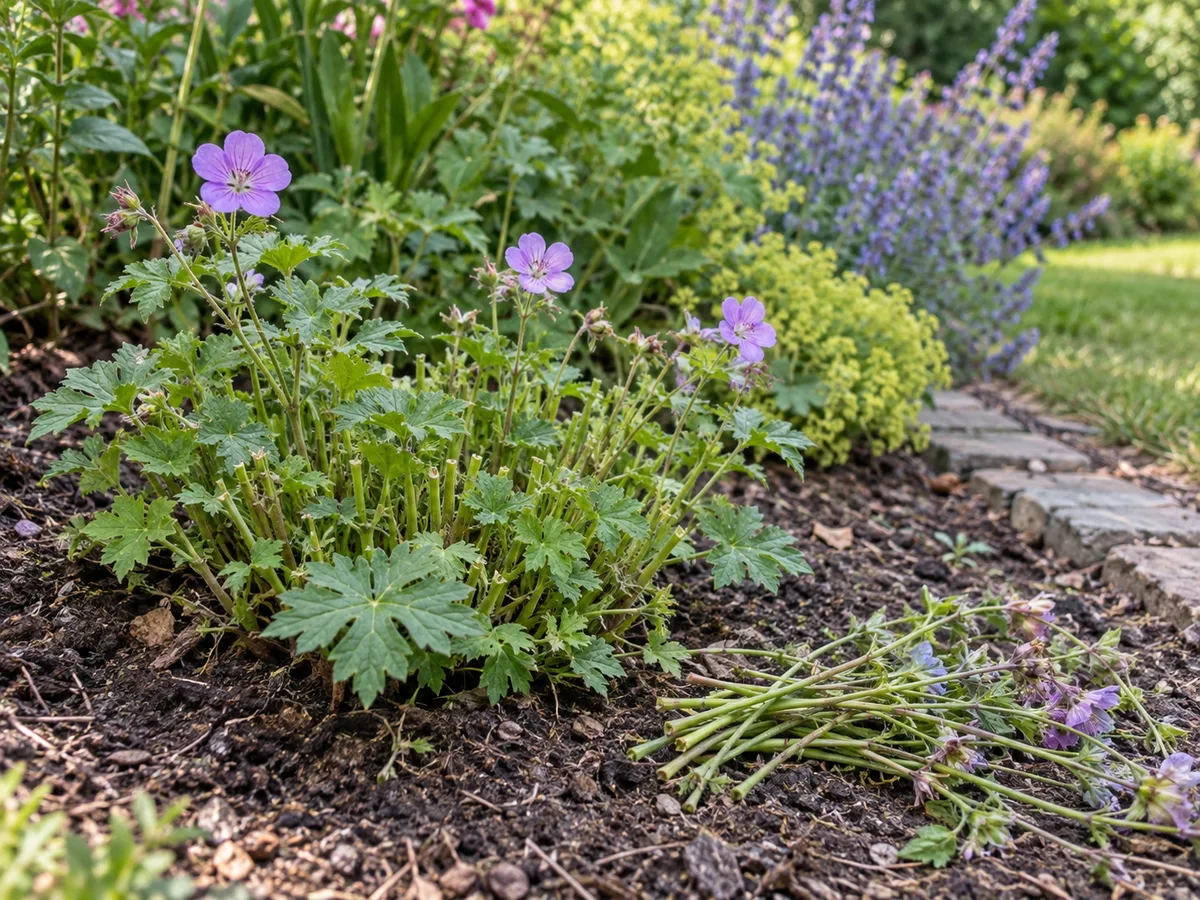
Many summer-flowering border geraniums look tired after their first strong display. If the plant’s main flowers have faded and the foliage is ragged, shear the clump back to low basal growth rather than trying to snip every wiry spent bloom one by one. The RHS describes this midsummer cutback for many hardy border forms; fresh foliage often follows, and some cultivars may flower again.
Use the plant’s condition, not a fixed month, to time the cut. In a cool region, the main flush may finish later than in a warm one, and a long-flowering cultivar may still be producing fresh buds. If you cut while a plant is actively blooming, you trade those flowers for a reset. After shearing, water during dry weather while new growth returns, but do not add fertilizer automatically.
Know when a light tidy is safer
Not every Geranium should be cut to the ground in midsummer. Some spring-flowering or summer-dormant species have a different seasonal rhythm, while evergreen or aromatic ground-cover types may only need spent stems or damaged leaves removed. A cultivar such as ‘Rozanne’ can flower over a long stretch, so frequent hard shearing may remove buds you hoped to keep.
If you do not know the cultivar, remove a few dead or collapsing stems first and watch the plant for a week before making a drastic cut. Keep healthy basal leaves if the crown is still producing fresh growth. When seedheads are part of the display or you want seedlings, leave some flowers in place; if you want to limit self-sowing, remove spent stems before capsules mature. (RHS growing guide, Homes & Gardens)
Divide when a clump becomes crowded or hollow
Division is the most reliable way to rejuvenate an overgrown clump and make more plants that match a named cultivar. You do not need to divide every hardy geranium on a strict three-year schedule. Consider it when a once-full plant develops a dead or woody center, flowering weakens, stems crowd neighboring plants, or a spreading type has moved farther than you want.
Choose a cool, mild day when the soil is workable, usually in early spring before strong growth is underway or in fall after flowering as growth slows. Avoid dividing in hot, dry weather or when the soil is waterlogged. Water the clump beforehand if the soil is dry so roots are easier to lift and less likely to snap.
Keep roots and live shoots on each division
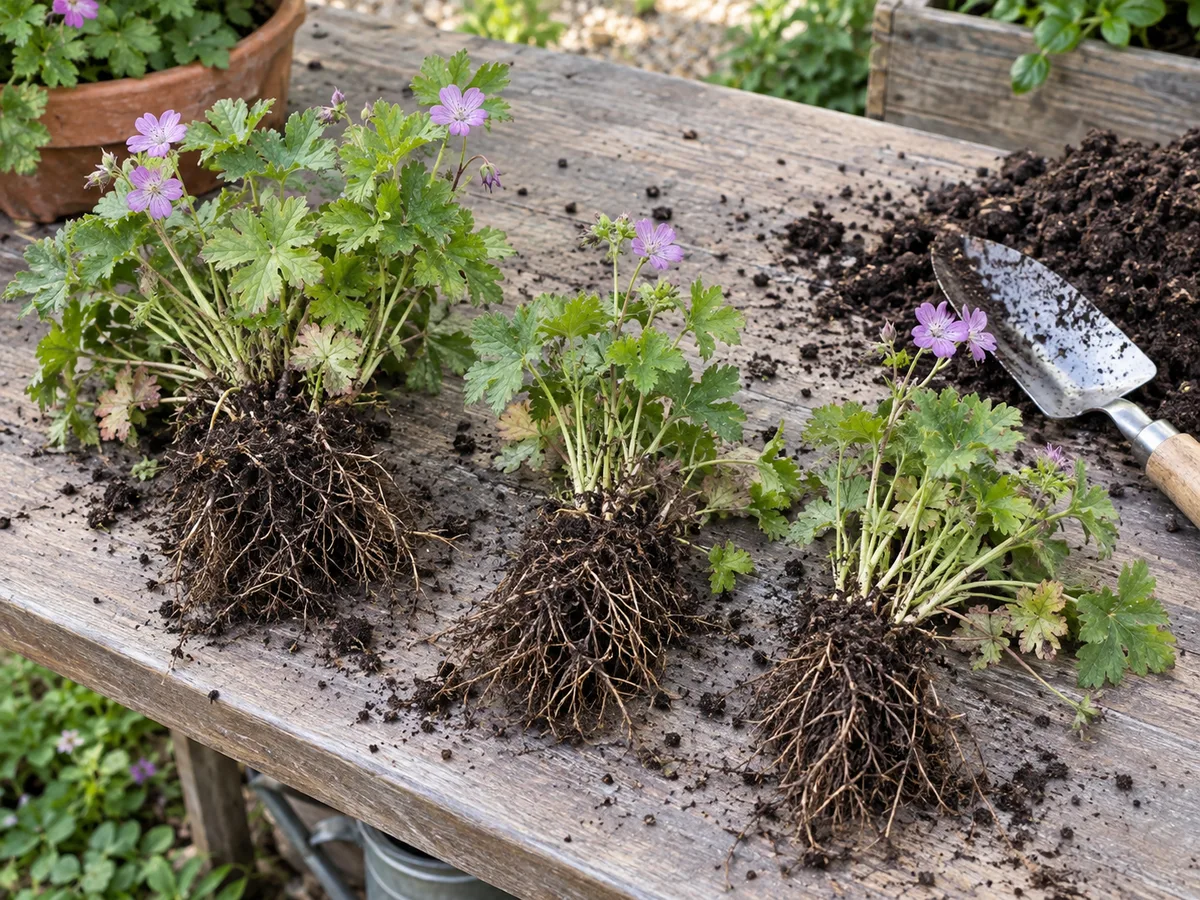
Lift the clump with a spade or garden fork, starting far enough from the crown to get beneath the roots. Shake or rinse off enough soil to see where healthy shoots and roots are attached; pull apart loose sections by hand, or use a clean sharp knife or spade through a dense crown. Each piece needs viable roots and at least one growing point or a few healthy shoots, not just a handful of leaves.
Discard dead, mushy, or badly damaged central material. Replant the strongest pieces at the same depth they were growing before, spread their roots outward, and firm the soil gently around them. Water thoroughly and keep the soil lightly moist while the divisions reestablish; avoid saturating the bed. Smaller divisions may take longer to make a substantial display, so if the parent is healthy and you only want a few plants, keep the pieces generous. (RHS dividing guide, Homes & Gardens)
Start species from seed; preserve cultivars by division
Species hardy geraniums can be grown from seed, and some self-sow around an established garden. That can be a low-cost way to add more plants if you are happy to wait and welcome variation. Seedlings may not resemble a named parent, particularly when the parent is a hybrid or selected cultivar.
For a reliable copy of a named plant, divide it instead. Seed collection can be worthwhile for species, but ripening capsules may release their seed quickly; collect them as they turn brown and split, and label the seed with the botanical name and collection date. Germination requirements vary by species, so follow the seed supplier’s instructions about sowing depth, timing, and any cold treatment rather than assuming all cranesbills germinate in the same way.
Sow in a clean seed-starting mix in a pot with drainage, keep it evenly moist but not waterlogged, and protect young seedlings from harsh sun and drying wind. Transplant only after they have enough roots to hold the mix together, and keep the label with the plant as it grows. If you want a specific flower color, habit, or foliage trait, seed is a gamble; a division or true-to-name nursery plant is a better choice. (RHS growing guide, Harvest to Table)
Grow hardy geraniums in pots with winter drainage
Hardy cranesbills can grow in outdoor containers, particularly compact or naturally trailing cultivars, but the pot needs to drain freely. Choose a container with open drainage holes and enough width for the cultivar’s mature spread. Use a quality outdoor potting mix; do not fill the container with dense garden soil, which can stay wet and compact around the roots.
Container plants need more frequent moisture checks than those in the ground, but a fixed weekly schedule is still unreliable. Water when the mix is drying near the surface, then let the pot drain completely. During active growth, feed lightly only if the mix is depleted or growth indicates a need; overfeeding can create soft foliage and fewer flowers.
Winter is the harder part of container culture because roots in a pot experience colder, wetter conditions than roots in the ground. Keep the container outside through the seasons unless the plant label says otherwise, but move it to a sheltered spot or raise it on pot feet if winter rain can keep the mix saturated. In very cold climates, choose a cultivar rated for conditions colder than your typical winter, and consider sinking the pot into the ground or insulating it rather than bringing the plant into a warm living room. (Homes & Gardens, RHS growing guide)
Prepare for winter without smothering the crown
Many hardy cranesbills are herbaceous: their top growth may fade after frost and return from the roots in spring. Others remain partly evergreen, and a few species have unusual seasonal cycles. Do not assume that brown foliage means the plant has died; check whether the crown is firm and whether the cultivar is known to die back.
You can leave healthy foliage in place until it yellows or cut dead stems down when they become untidy. Removing diseased debris is sensible, but there is no need to strip every healthy leaf in fall. In wet-winter areas, a thick mulch packed over the crown can hold moisture where rot is most likely; if you mulch for temperature or weed control, keep the material loose and away from the crown.
Hardiness ratings vary among species and cultivars, and a plant that survives cold may still fail in waterlogged winter soil. Check the tag’s local hardiness range and consider exposure, snow cover, drainage, and whether the plant is in the ground or a pot. Missouri Botanical Garden’s ‘Johnson’s Blue’ profile, for example, lists USDA Zones 4–8, but that rating is not a guarantee for every cranesbill. (Missouri Botanical Garden Plant Finder, RHS growing guide)
Solve weak blooms, floppy stems, and leaf problems
When a hardy geranium looks poor, check the growing conditions before applying a product. Start with the cultivar name, light exposure, soil moisture, and whether the trouble is limited to a few old leaves or is spreading across the crown. A quick, symptom-based check prevents treating drought wilt with more water or trying to fix deep shade with fertilizer.
Few flowers, flopping, and slow recovery
If the plant has healthy leaves but few blooms, check whether its cultivar is suited to the light it receives. Sun-loving types often flower less in deep or newly increased shade. Long drought can also slow growth; prolonged wetness can damage roots and suppress flowering. A heavy dose of nitrogen may create abundant leaves without solving either problem.
If flowering stopped right after planting or division, give the plant time to establish rather than expecting a full display in its first weeks. If the clump is mature and hollow, divide it and replant vigorous rooted sections. For stems that lean, inspect whether they are reaching toward brighter light, crowded, or simply a naturally tall cultivar; move or divide the plant at a suitable season, or place a discreet support early before stems flop.
Mildew, rust, slugs, and pet-safety identification
Powdery mildew appears as a pale, dusty coating on leaves; rust may show as orange-brown pustules, often on leaf undersides. The RHS lists mildew among possible problems and notes that it can occur in dry conditions, so do not assume every fungal-looking mark is caused by overwatering. Remove badly affected leaves, give crowded plants better airflow, water the soil rather than routinely wetting foliage, and avoid keeping the crown soggy. If symptoms spread or return despite correcting conditions, ask a local extension service or knowledgeable nursery to identify the problem before using a pesticide or fungicide. (RHS growing guide, Missouri Botanical Garden Plant Finder)
Slugs and snails may chew soft new spring growth, especially in damp, sheltered beds. Check under nearby debris at dusk, reduce hiding places next to the clump, and protect vulnerable shoots with a method appropriate for your garden and pets. A few holes on vigorous leaves rarely justify spraying an open perennial bed.
Pet-safety listings also need botanical precision. The ASPCA page titled “Geranium” specifies Pelargonium species; it does not identify every hardy Geranium species as toxic or establish that all plants with “geranium” in their common name are the same. Keep the nursery label or a clear photo, and if a pet eats an unidentified plant, contact a veterinarian or animal poison-control service rather than guessing from the common name. (ASPCA Geranium listing)
Conclusion
Hardy geraniums are easiest to grow when the species or cultivar matches the site. Choose by mature spread, light, and hardiness; plant the crown at soil level in freely draining ground; water new clumps while they establish; and avoid routine fertilizer unless the soil or plant gives you a reason.
After the first flush, shear only the types that respond well, and divide a clump when it becomes hollow or too wide—not simply because a calendar says it is time. If the plant underperforms, check its botanical identity, light, and root-zone moisture before changing care. That small sequence of checks is usually more useful than treating every cranesbill as the same plant.