How to Grow and Care for Ligularia
Learn how to grow ligularia with the right shade, soil moisture, planting depth, seasonal care, and troubleshooting for heat wilt and slug damage.
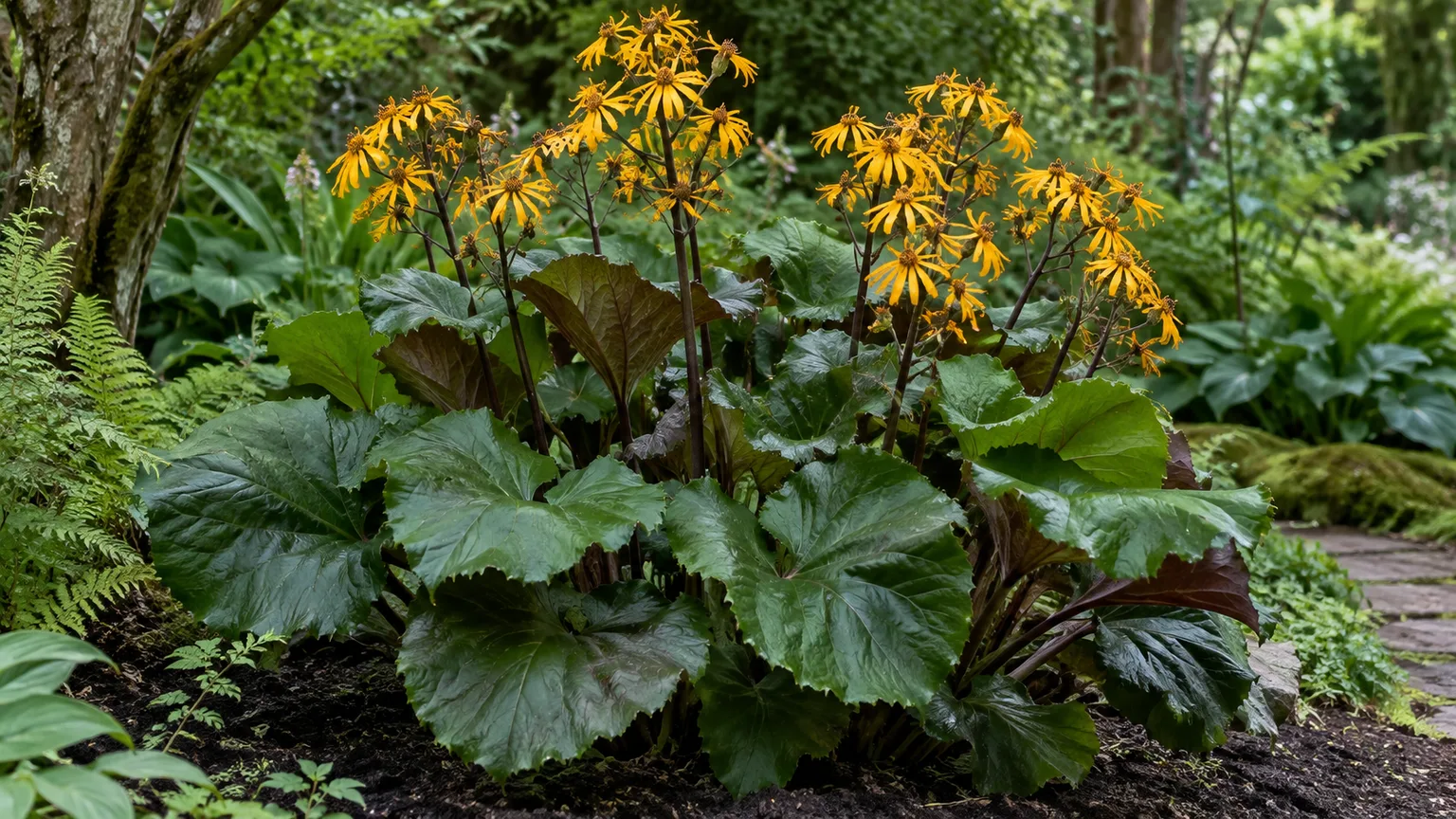
Ligularia earns its place in a garden with large, dramatic leaves and upright summer-to-fall flowers, but it is not a “plant it anywhere shady and forget it” perennial. It performs best where the soil stays reliably moist, the roots remain cool, and the plant is protected from hot afternoon sun. If a Ligularia wilts briefly in midday heat, that can be a normal response; if the root zone is dry or the leaves stay limp overnight, the site or watering needs attention.
Before planting, identify the species or cultivar on the nursery label. The name covers a varied group of clump-forming Asian perennials, and “leopard plant” is also used for Farfugium japonicum, a different plant sometimes sold under an older Ligularia name. The practical rule is to buy by botanical name, then match the particular plant’s mature size and hardiness to your garden rather than relying on a common name or a single care card.
Start With the Right Ligularia for Your Site
Ligularia is a good candidate for a cool woodland edge, a consistently damp border, a rain-garden shelf that drains between storms, or a sheltered pond margin. It is less suitable for dry shade beneath thirsty tree roots, a hot south-facing wall, or any bed where you cannot water through summer dry spells. The plant’s bold leaves lose moisture quickly, so the site must provide both shade and dependable soil moisture; solving only one of those needs often leaves the other as the limiting factor.
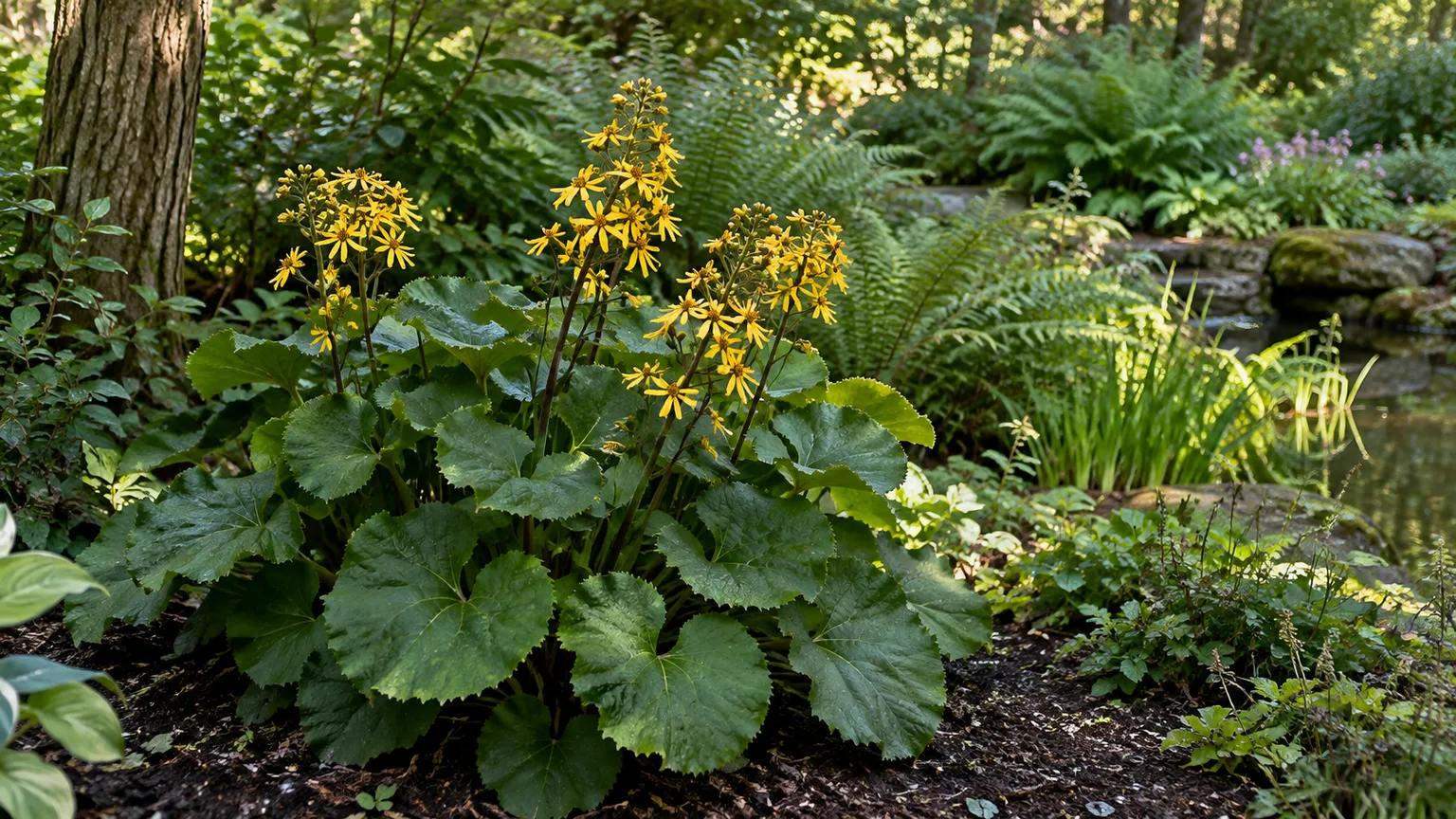
Think about the mature clump before you buy. Some forms make a broad mound of leaves while others send tall flower spikes well above the foliage, and established plants can occupy several feet of border. Check the seller’s stated mature height and spread and leave enough room for air and access around the crown. If the label gives a range, use the larger dimension when spacing plants in a moisture-rich site where growth may be more vigorous.
Leopard plant can mean different things in the trade. NC State Extension notes that Farfugium japonicum has been known by names including Ligularia tussilaginea; it is grown for rounded, often spotted leaves and can be more tolerant of somewhat drier soil than many true Ligularia. Check the botanical label if you want the tall flower spikes, large toothed leaves, or a particular cultivar rather than a look-alike foliage plant. The name on the pot is a more reliable guide than a photo caption or common-name search.
Choose the Light That Prevents Leaf Scorch
Aim for dappled light, morning sun with afternoon shade, or bright open shade. A little sun can encourage sturdy growth and flowers, but the hotter and more direct the exposure becomes, the more likely the large leaves are to wilt or scorch. In a cool maritime climate, a Ligularia may tolerate more sun than it will in a hot-summer region; climate and soil moisture change the result, so treat a universal “full sun” label cautiously.
Observe the proposed spot at midday, not just in the morning. A north or east side of a building, the bright edge of a woodland bed, or the east side of a fence may provide enough light while blocking the hottest late-day rays. A tree canopy can work if it gives broken shade and does not leave the soil bone-dry from root competition. If the plant gets morning light but droops repeatedly in late afternoon, test the soil before changing the watering routine; shade may be the missing factor.
Deep shade is not always the best choice either. A plant may grow leaves but flower less reliably if it receives very little usable light, and tall flower stems can lean toward a brighter opening. If blooms matter, look for a site with gentle morning or filtered light, then protect the plant from the more punishing afternoon exposure. In a dark corner where flowers and compact growth are unlikely, decide whether the foliage alone is worth giving the plant that space.
Give the Roots Steady Moisture Without Guessing
The most useful distinction is “consistently moist” versus “permanently submerged.” The Missouri Botanical Garden describes Ligularia ‘The Rocket’ for rich, medium-to-wet soil and notes that it must not dry out; NC State Extension likewise describes moist, rich soil for Ligularia stenocephala and lists soil conditions from moist to occasionally wet. Those descriptions support a rain garden or pond-edge planting, but they do not mean every Ligularia should sit under standing water. Keep the crown and most roots in soil that can breathe.
Before planting near a pond or in a low spot, check how the water behaves after a heavy rain. Soil that remains damp but drains slowly can suit the plant; a crown that is continuously underwater or buried in stagnant muck is a different condition. If water pools for days, raise the planting area slightly or choose a moisture-tolerant species better suited to waterlogged ground. “Likes wet soil” is not a substitute for checking the actual drainage pattern.
For ordinary garden soil, feel below the mulch and surface crust. If the top inch is beginning to dry and the soil a few inches down is only lightly moist, water deeply at the base; if it is cool and wet, wait and improve shade or drainage instead of adding more. Organic matter and a mulch layer slow evaporation, but they cannot compensate for a site that sheds rainfall or has a dense canopy intercepting it. During the first growing season, check more often while roots spread beyond the nursery root ball.
Prepare Soil That Holds Water but Still Breathes
Ligularia is not precious about a single soil texture. The Royal Horticultural Society lists several soil types for L. dentata, while NC State Extension records tolerance across clay, loam, and sand for L. stenocephala; the consistent thread is moisture, with fertile or humus-rich soil helping the root zone stay more even. In sandy ground, incorporate mature compost or leaf mold across the bed to improve water retention. In heavy clay, avoid digging when it is wet and compactable, and improve the bed structure with organic matter rather than making a deep planting pocket that can fill with water.
Prepare a broad area, not just a small amended hole. A sharply different pocket of potting mix in dense clay can hold water like a basin, while roots eventually reach the surrounding soil and experience a different moisture regime. Loosen the bed to the depth needed to remove perennial weeds and incorporate a modest layer of compost through the planting zone. A soil test is more useful than guessing at pH or adding fertilizer; Ligularia does not need a special chemical recipe to grow well.
Plant Ligularia at the Crown’s Original Level
Spring is a dependable planting time because the plant has a full growing season to establish before winter. Harvest to Table’s Ligularia guide also recommends spring planting and notes that exact spacing depends on the plant’s eventual size. Early fall can work where the soil stays workable and the plant has time to root before hard freezes; in a short-season or severe-winter garden, favor spring. Avoid planting during a heat wave or when the bed is saturated. If you have a choice, set the plant out during a cool, cloudy spell and water it in thoroughly.
Water the nursery pot first if the root ball is dry, then slide it out and loosen roots that circle tightly around the outside. Dig a hole wider than the root ball but no deeper than it was growing in the pot. Position the crown at the surrounding soil level, backfill, firm gently, and water until the root ball and nearby soil are evenly wet. Planting too deep can bury the crown; setting it too high can expose roots and make the plant dry out sooner.
Space plants according to the mature width on the label, not the small size of a new pot. For a single specimen, leave a visible buffer around its future leaf mound; for a group, use the estimated spread to decide whether you want foliage to meet or remain separate. A little extra room makes it easier to see slug damage, remove spent flower stems, and water at the base. The Missouri Botanical Garden lists ‘The Rocket’ as roughly 2 to 4 feet wide, while Fine Gardening’s cultivar notes show that sizes vary, so use cultivar-specific dimensions where available.
Water by Root-Zone Conditions, Not a Fixed Schedule
A calendar schedule such as “twice a week” ignores rainfall, soil texture, shade, wind, and temperature. Instead, check the soil near the root ball every few days after planting and during extended hot or dry weather. When the root zone is drying, water slowly and deeply enough to wet the whole planting area; shallow splashes encourage shallow roots and can leave the original nursery ball dry even when the soil surface looks dark.
Water in the morning when practical, aiming at the ground rather than repeatedly wetting the foliage. That gives the plant moisture before the day warms and makes it easier to tell whether the next day’s droop is heat-related or simply a dry root zone. If you use drip irrigation, place an emitter where it wets the root ball and recheck the soil rather than assuming the system is reaching the roots. A rain gauge or a quick finger check is more useful than a fixed number of minutes on a timer.
Established plants still need attention in hot weather. Their larger root systems can access more soil than a new transplant, but a mature Ligularia may also have a much larger leaf surface losing water in wind and sun. If your soil remains moist several inches down and the plant recovers after evening temperatures drop, adding water may not help. If the soil is dry through the active root zone, give it a thorough soak and consider adding shade or mulch before the next heat spell.
Feed Lightly and Mulch to Buffer Heat
Start with a reasonably fertile bed and do not fertilize automatically. If growth is healthy, leaves are the expected size for the cultivar, and flowers appear on schedule for your climate, extra fertilizer is unlikely to solve a problem. Too much readily available nitrogen can push soft leafy growth that needs even more water and may flop; it will not fix too much sun, poor drainage, or a dry root zone.
In spring, top-dress the root zone with a thin layer of finished compost or leaf mold if the soil is poor or the bed needs organic matter. Keep material away from the crown so it does not stay soggy against emerging growth. A layer of shredded leaves or bark can reduce evaporation and moderate soil temperature; replenish it as it breaks down, but do not pile it into a wet collar around the stems. Check moisture under mulch rather than judging by the dry surface layer.
Know What to Expect From Popular Types
Choose a cultivar for the shape of its foliage and flowers, not just the name. NC State Extension describes L. stenocephala as an upright plant with yellow daisy-like flowers on spikes and identifies ‘The Rocket’ as a compact form; the Missouri Botanical Garden’s profile describes the cultivar’s bright lemon-yellow flower racemes rising above a mound of large, toothed leaves. It is a useful choice when you want vertical yellow blooms in a moist, shaded border, but it still needs room for a substantial clump.
Ligularia dentata selections are generally valued for broad, rounded leaves and orange-yellow daisy-like flowers. ‘Britt-Marie Crawford’ is known for dark, often purplish foliage and orange flower heads; ‘Desdemona’ also offers rounded foliage with contrasting undersides and warm-colored blooms. Fine Gardening’s cultivar notes show how much mature sizes vary among named plants, and its Chicago Botanic Garden gallery notes that dark foliage on some selections can become greener as summer progresses. That seasonal shift is not automatically a nutrient problem.
The species and cultivar affect plant size, bloom shape, timing, and winter performance. A general label may place Ligularia in a broad hardiness range, but NC State’s specific profile for L. stenocephala and the RHS profile for L. dentata are not interchangeable guarantees for every cultivar or climate. Use the nursery’s botanical name and local hardiness information, and ask whether the plant is reliably perennial in your area. A container-grown specimen can be more vulnerable to winter cold than the same plant in the ground.
Keep a Simple Seasonal Maintenance Routine
In spring, clear away dead leaves and stems once new growth is visible, taking care not to cut into the crown. Refresh a light mulch layer, check whether the plant has heaved or exposed roots, and remove weeds while they are small. Newly emerging leaves are soft and attractive to slugs, so inspect underneath the foliage if damage appears early. Do not assume every ragged leaf means the plant is failing; a few blemishes are common in a damp, shaded garden.
During the growing season, maintain even moisture, remove badly damaged or yellowing leaves at their base, and stake only if a tall flower spike actually needs support. Deadhead spent flowers if you want a tidier look or want to reduce self-sown seedlings. Leaving some seed heads is also reasonable if you like their winter texture and are comfortable with possible volunteers. Cutting off spent flowers does not guarantee a second flush, so treat any later bloom as cultivar- and weather-dependent rather than the reason to prune.
As growth fades after frost, decide whether to cut stems then or wait until late winter. Clean up foliage that is diseased or heavily slug-damaged, but healthy dry stems can remain temporarily if they add shelter or structure and are not a sanitation concern. In spring, remove what remains before the new leaves are damaged. The useful goal is a clean crown and access to emerging growth, not a rigid calendar date.
Divide Established Clumps Without Drying Them Out
Division is useful when a clump has outgrown its space, its center has become sparse, or you want another plant with the same cultivar traits. It is not an annual chore. The RHS profile for L. dentata allows propagation by division in spring or after flowering, and its general perennial advice recommends dividing when plants are not in active growth and replanting divisions promptly. In a hot-summer climate, choose a cool spell and avoid lifting a large clump just before drought or heat.
Water the plant the day before if the soil is dry. Use a spade or garden fork to loosen the clump around its perimeter, then lift from beneath rather than pulling on the leaves. Shake or wash off enough soil to see the crown and roots, and split it into sections with sound roots and at least one healthy growing point each. A small piece with little root may survive, but it will take longer to re-establish and will need closer care.
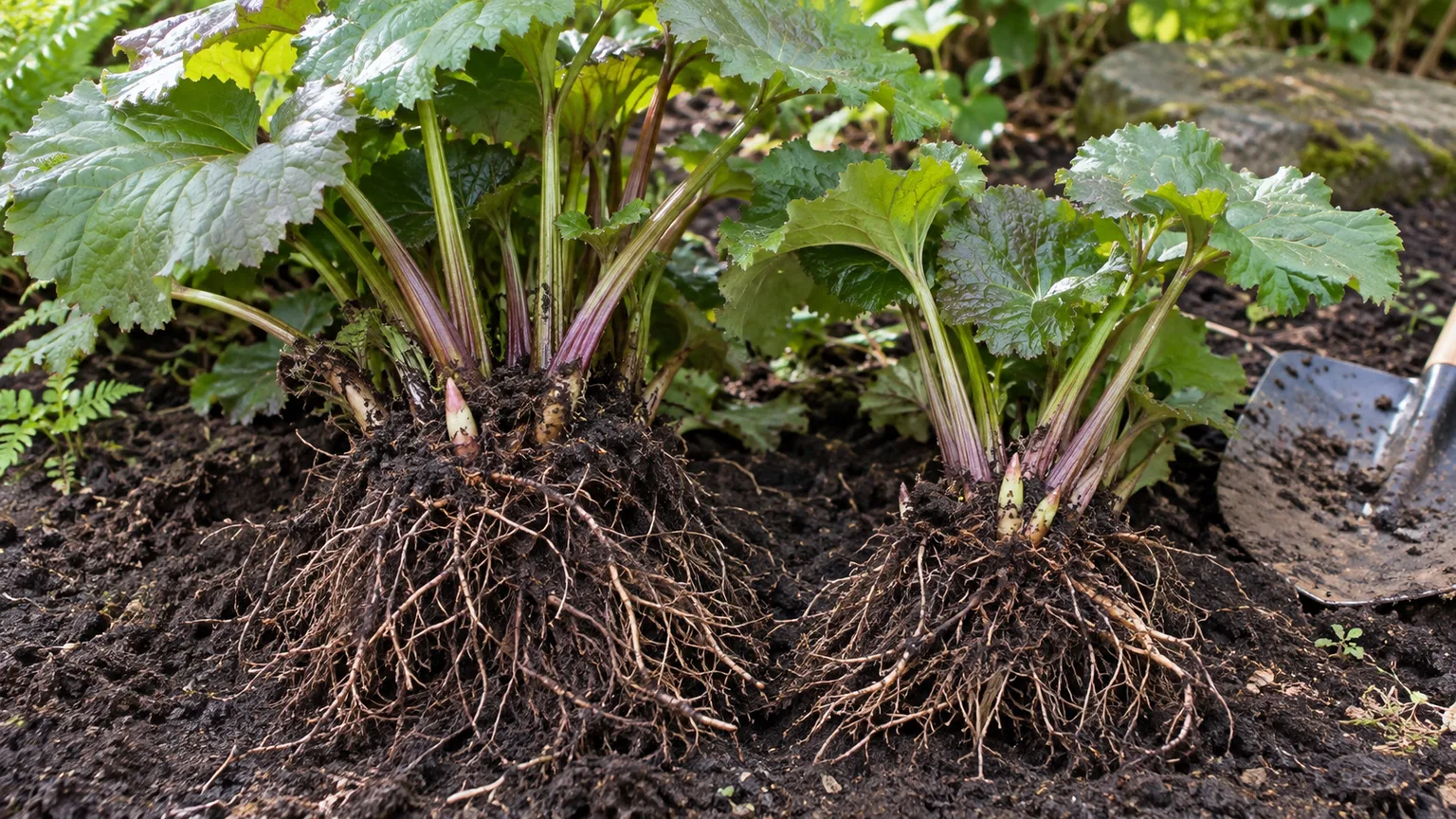
A mature clump is divided into rooted sections, each with a visible growing point.
Replant divisions at the depth they were growing before, firm the soil around each root section, and water them in immediately. Keep the soil evenly moist while they establish, especially if the weather turns warm or windy. If a division wilts, check both root contact and soil moisture before adding more water; a broken root system in saturated soil can struggle too. Pot extra divisions temporarily if you cannot replant them at once, but do not let their roots dry out in the sun.
Seed is another route for species plants, but seedlings may not resemble a named cultivar. Follow the seed source’s instructions for sowing time and any cold treatment; do not assume every Ligularia seed needs the same preparation. If your goal is to reproduce ‘The Rocket’ or a dark-leaved selection accurately, division is the more dependable home-garden method because it preserves the parent plant’s identity.
Troubleshoot Wilting, Damaged Leaves, and Weak Bloom
Ligularia can look alarming on a hot afternoon. Before watering, compare the leaves with the soil and the plant’s behavior after sundown. The shape of the problem is diagnostic: a midday slump that resolves overnight is different from wilt that persists in cool conditions, while holes and ragged edges usually point to feeding damage rather than drought.
Separate normal afternoon flop from dry-soil stress
If broad leaves droop during the hottest hours but the soil is moist and the plant perks up by evening or morning, treat it first as a heat-and-transpiration response. The large leaf blades lose water quickly, and temporary wilt does not prove that the roots are dry. Give the plant more afternoon shade or wind shelter where possible, keep mulch in place, and continue checking the soil rather than giving it an extra soak every time it sags.
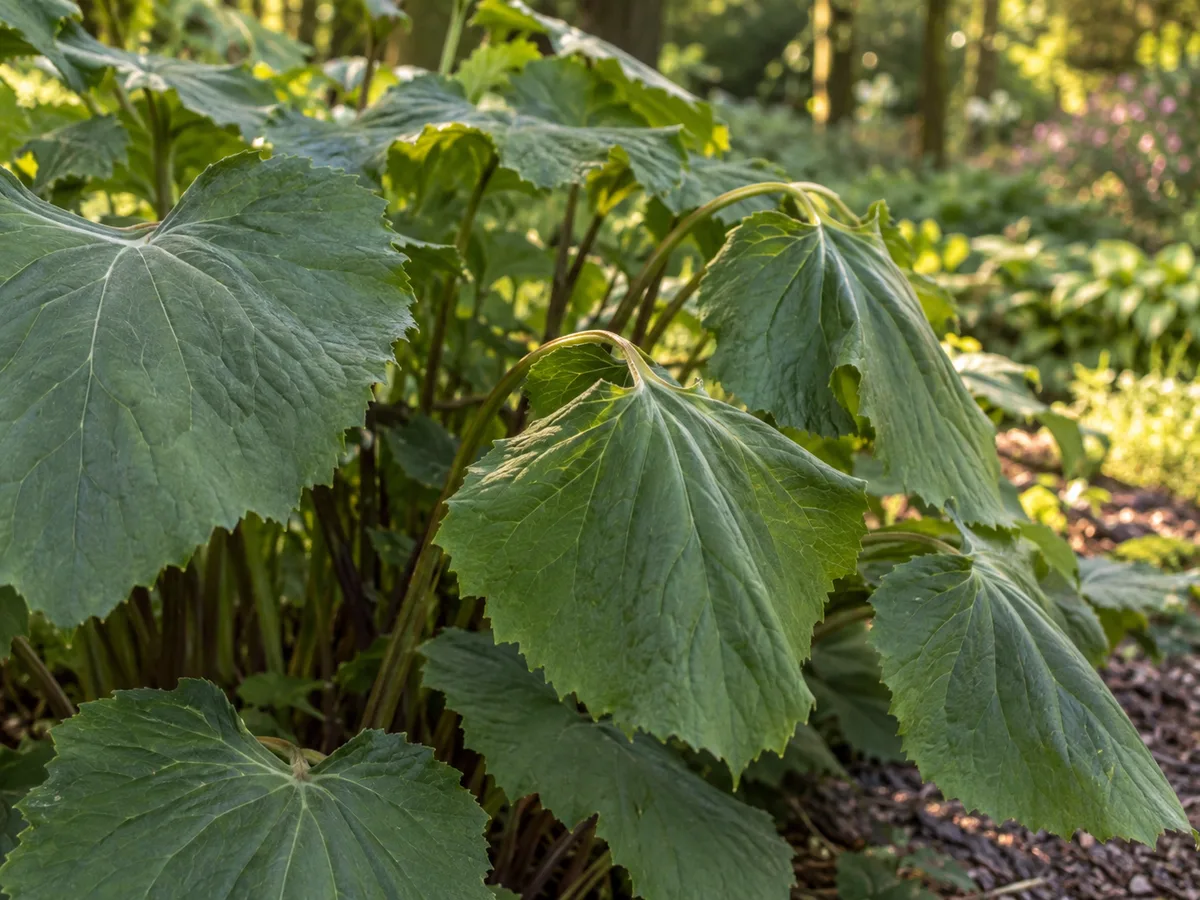
Mild afternoon droop can be temporary when the root zone remains moist and leaves recover overnight.
If leaves remain limp after the air cools, feel the soil several inches down. Dry soil calls for a slow, deep watering; a root zone that stays saturated calls for better drainage and less irrigation, not more. Persistent wilt with yellowing or collapse warrants checking whether the plant is buried too deeply, whether water is pooling at the crown, and whether roots have been disturbed. Correct the cause gradually and avoid repeatedly lifting a stressed plant to inspect it.
Weak or absent flowering can have several explanations: a young plant may still be establishing, a deep-shade location may not provide enough light for the display you expect, or heat and drought may interrupt growth. Confirm the plant’s identity and flowering period before assuming it is overdue. Avoid adding fertilizer as a first response; assess light, moisture, age, and cultivar characteristics, which are more likely to explain the pattern.
Check slugs before treating every hole as disease
Slugs and snails are common Ligularia pests, especially where the ground is damp and foliage stays close to the soil. Look for irregular holes, scalloped leaf margins, shredded new growth, and slime trails; check under leaves and mulch after dusk or early in the morning when the pests are active. NC State Extension and the Missouri Botanical Garden both flag slugs and snails as potential foliage problems on Ligularia.
Reduce hiding places by clearing wet debris that touches the crown and avoid leaving boards or pots against the bed edge. Hand-pick pests when practical and protect newly emerging leaves while they are most vulnerable. If you consider a bait or other pesticide, choose a product labeled for the site and follow its directions exactly, especially around pets and wildlife; do not use a treatment just because the leaves are imperfect. A few holes rarely justify aggressive control on an otherwise vigorous plant.
Protect the Crown Through Winter
Most garden Ligularia are herbaceous perennials: after frost, the aboveground leaves and stems can die back while the crown remains alive below the soil. That seasonal collapse is expected and does not mean the plant has died. Mark the location if the bed is busy, leave the crown undisturbed, and wait for spring growth before digging up a dormant plant.
Hardiness varies across species and cultivars, so compare the named plant with local winter conditions rather than applying one range to the whole genus. A plant hardy in the ground may be more exposed in a pot, where the root ball experiences colder and faster temperature swings. In colder areas, use a broad, light mulch after the soil cools, especially around a newly planted clump; pull excess material back from the crown as growth resumes. Do not create a wet, compacted pile over dormant stems.
Grow Ligularia in a Container Only If You Can Keep It Cool and Moist
Container growing makes sense on a shaded patio or balcony when the in-ground soil is too dry, but it requires more monitoring. Pick a substantial pot with drainage holes and enough width for the cultivar’s root system and leaf mound. Use a stable, moisture-retentive potting mix that still drains freely, and place the pot in bright shade or gentle morning sun rather than baking afternoon exposure.
Pots dry faster than garden beds, particularly when wind passes across large leaves. Check the mix frequently in warm weather and water when the root zone is beginning to dry, not only when the leaves flop. At the same time, empty water from any cachepot or saucer so the roots are not left standing in a pool. If the container is small, exposed, and difficult to water consistently, a different shade perennial will be easier and more reliable.
Plan for winter before planting in a pot. If the selected Ligularia is near the edge of its hardiness range, protect the container in a sheltered place or insulate it so the root ball does not freeze more severely than garden soil. Do not bring a hardy outdoor perennial into a warm room as if it were a tropical houseplant; it needs its normal seasonal cycle. A large, movable tub may be practical, but only if you can handle it safely and keep drainage open.
Use Ligularia Where Bold Foliage Earns the Space
Ligularia’s strongest garden role is often foliage, not just flowers. Put it where the broad leaves can be seen close up and where its height will not block a path or smaller plants. At a pond margin or rain garden, keep the crown above normal water level and combine it with other perennials that enjoy similar moisture; at a woodland edge, make sure the tree canopy does not create dry shade. This site-first approach is more dependable than pairing plants only by flower color.
Use companions with matching light and moisture needs, such as ferns, astilbes, Rodgersia, or moisture-tolerant iris where they are hardy in your region. Leave enough space for air movement and maintenance access rather than packing the bed tightly around the Ligularia’s mature leaves. A repeated group can make its bold texture feel intentional, while a single specimen can anchor a smaller damp corner. If the only available spot is hot and dry, choose a plant adapted to that reality instead of trying to correct it with constant watering.
Conclusion
For dependable Ligularia, get the site right before you worry about fertilizer or pruning: provide sheltered light, rich soil, and moisture that is steady but not stagnant. Confirm the species or cultivar, plant the crown at its original level, and water according to what the root zone is doing. In summer, check soil before reacting to drooping leaves; heat-related afternoon flop often needs shade, while dry soil needs a deep drink.
Divide only when a clump needs rejuvenation or more room, then replant and water the sections promptly. Protect the crown through winter, give containers extra attention, and expect some variation in size and bloom among named types. If you cannot provide cool, consistently moist ground or a reliable container-watering routine, choose a perennial better matched to your garden—the right plant for the actual site is the simplest long-term care plan.