How to Grow Grevillea: Sun, Soil, Water and Pruning
Grow grevillea with less guesswork: choose for frost and garden space, prevent wet roots, avoid excess phosphorus, and prune for repeat flowers.
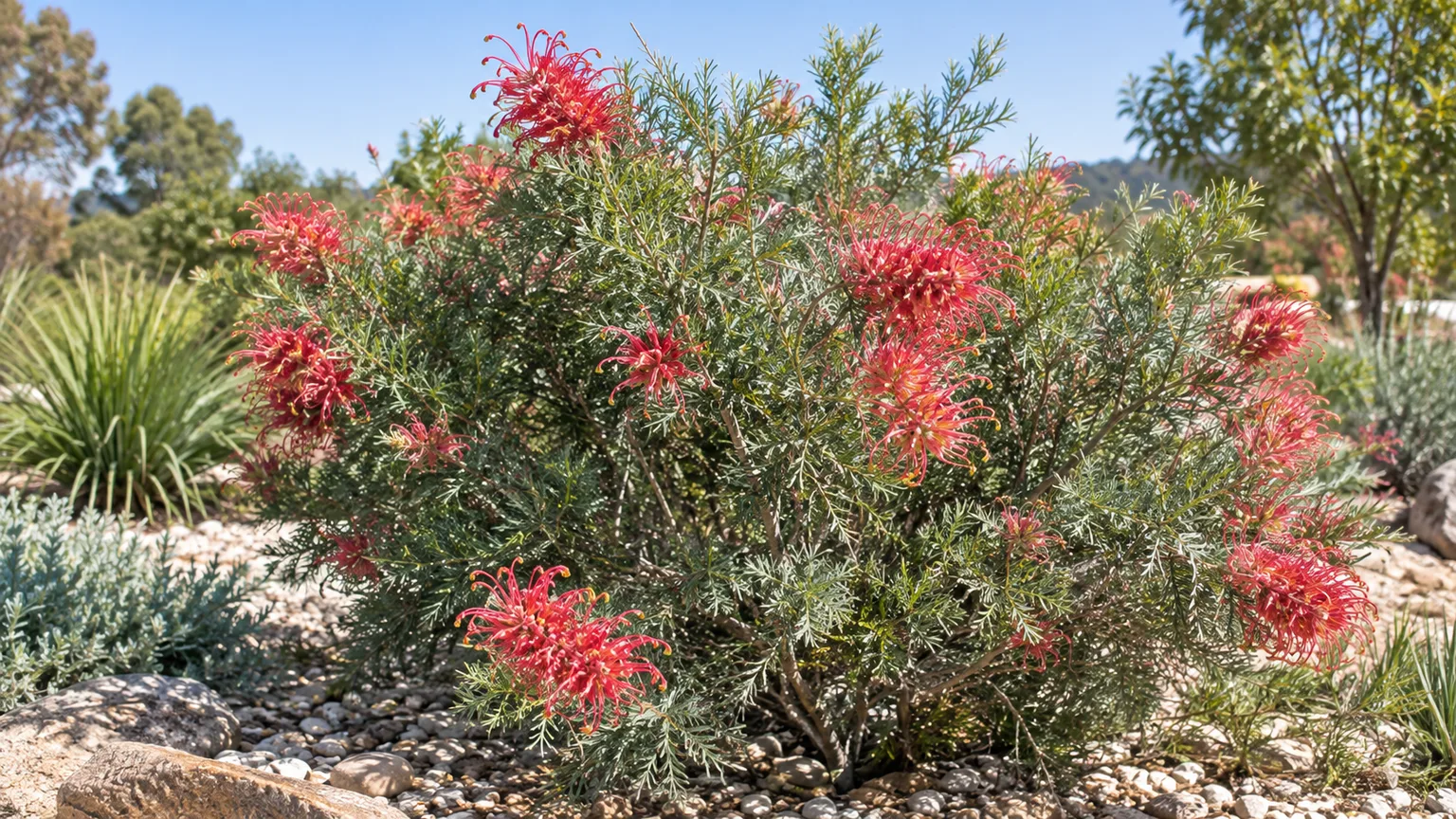
Grevillea is a large genus of evergreen Australian plants whose forms range from low groundcovers to trees. Their unusual, often spider- or toothbrush-shaped blooms and fine foliage can make them standout garden plants, but care depends on the species or cultivar: one grevillea may tolerate light frost while another fails in a brief freeze. The reliable starting point is not a generic calendar. It is matching a labeled cultivar to your climate, then giving its roots sun and fast drainage without excess phosphorus.
The broad rules are simple—bright light, freely draining soil, careful establishment watering, and restrained feeding—but the details matter. NC State Extension describes the genus as generally requiring acidic, well-drained soil low in phosphorus, while also noting that cold tolerance varies widely. Treat those as useful defaults, not a guarantee that every grevillea will accept the same soil, temperature, or pruning schedule.
Choose the cultivar before you choose the planting hole
Grevillea is not one uniform shrub. NC State Extension describes species that grow as trees, upright shrubs, or cascading plants; flower shape, mature size, frost tolerance, and preferred conditions also vary. A cultivar’s nursery label is therefore more useful than a broad “grevillea care” tag: confirm the mature height and width, cold tolerance, and whether the plant is grafted before you decide where it belongs.
Compact, spreading, and upright forms
For a low border or slope, look for a prostrate or compact selection and check its spread as carefully as its height. Better Homes & Gardens Australia’s grevillea cultivar guide lists ‘Pink Midget’ as a low, spreading plant and ‘Robyn Gordon’ as a broader ornamental form; it describes ‘Moonlight’ as a much larger shrub or small-tree type. These are starting points, not fixed dimensions for every climate or nursery stock, so leave room for the plant’s local label rather than squeezing it into a small gap.
Make the plant’s job part of the choice. A compact form can soften a rock garden or edge a sunny bed; a spreading cultivar can cover a bank; an upright shrub can screen a fence or anchor a mixed border. If you want a small patio plant, select a naturally compact cultivar instead of buying a vigorous tree-form grevillea and planning to keep it permanently miniature with hard pruning.
Check climate and frost tolerance locally
Many grevilleas favor warm, long growing seasons, and most are not dependable in freezing conditions. Some cultivars tolerate frost better than others, but a zone number is not an all-purpose promise: a plant’s label may refer to a particular cultivar, and winter wet, duration of cold, wind exposure, and drainage can change the outcome. NC State Extension lists its genus profile for USDA zones 9a through 11b and recommends container growing in North Carolina so plants can be moved when temperatures approach freezing.
Before buying, ask a knowledgeable local nursery which named cultivars succeed through your winters and summers. In a marginal climate, choose a sheltered microclimate beside a warm wall only if the spot still has air circulation and drains well. Avoid assuming that a plant labeled “cold hardy” can also handle humid summers, waterlogged winter soil, or a sudden hard freeze.
If the cultivar is marginal, a container can let you move it under cover before frost. The cultivar-specific ‘Moonlight’ growing guide from Aussie Green Thumb describes that selection as tolerating some frost and humidity; those traits should not be generalized to the genus. Container growing is a practical compromise, not a way to make every tender grevillea thrive indoors: most need strong light and outdoor airflow when weather allows, and a warm dim room is not a substitute for a bright, cool protected space.
Give grevillea enough sun without exposing it to harsh conditions
Full sun usually gives grevillea its best flowering and compact growth. NC State Extension defines full sun as at least six hours of direct light in its plant-profile conditions, while practical guides note that some plants benefit from partial shade in hotter settings. If your summers are intense, a site with morning sun and light late-afternoon shade may reduce heat stress; expect flowering to be lighter if the plant spends much of the day in shade.
Choose a position with room for mature width and reasonable protection from damaging wind. Do not place a large shrub where it will block a narrow path, rub against a wall, or require regular severe shearing to stay inside its allotted space. The aim is enough light for blooms without an exposed, poorly drained site that magnifies heat, cold, or moisture stress.
Get drainage and soil chemistry right
The root zone should drain freely after rain or irrigation. Many grevilleas are adapted to relatively lean soils; persistent saturation can suffocate roots and make root decline more likely. NC State Extension recommends acidic, well-drained soils low in phosphorus, and the Australian National Botanic Gardens’ profile for the particular species Grevillea dryandroides describes success in a raised bed with free-draining gravelly or sandy loam. That profile illustrates a species-specific preference rather than a prescription for every grevillea.
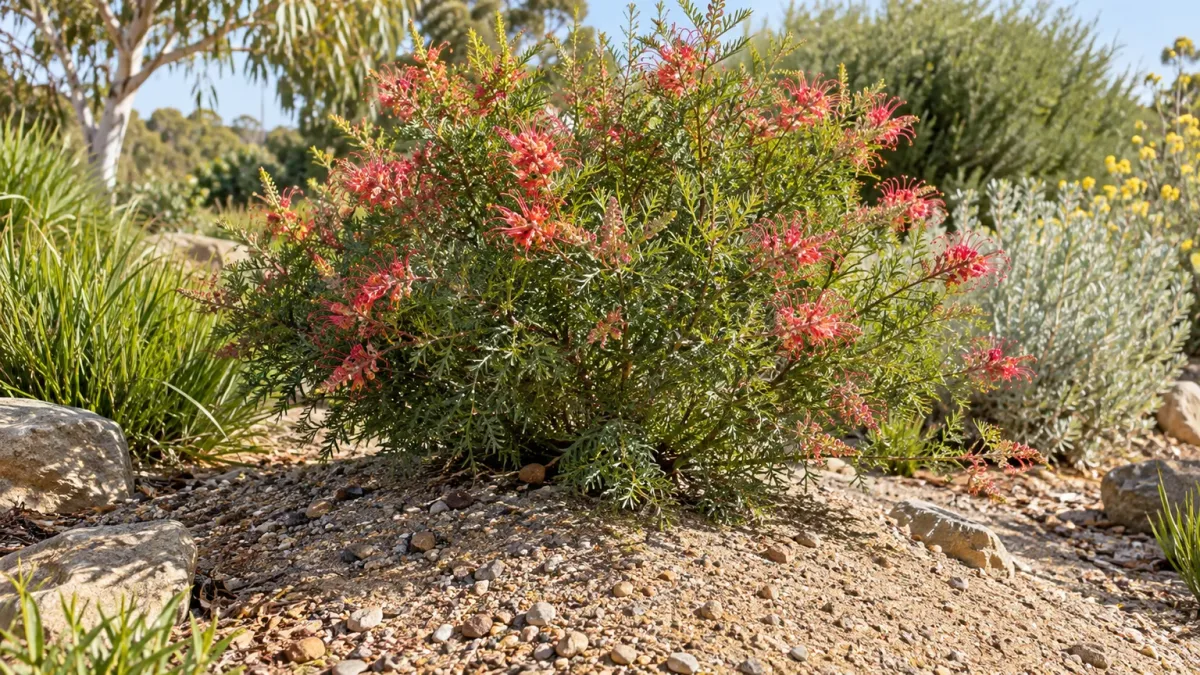
If water lingers in your planting bed, fix the site before planting. A raised mound or bed can lift roots above a slow-draining layer; in heavy clay, creating a small amended planting pocket that stays like a water-filled basin is not a reliable fix. Choose a raised area with an appropriate, consistent soil blend, or grow the plant in a container with drainage holes. Do not set the root ball in a low spot where runoff collects.
Most grevilleas do not need rich soil. Where you can, use a soil test or local guidance to check pH and fertility rather than adding lime, manure, compost, or fertilizer by habit. Keep amendments conservative: adding a high-phosphorus material to correct an unrelated problem can create a new one.
Plant at the original grade and disturb roots as little as possible
Plant during a mild period when the soil is workable and you can keep the young plant watered as it establishes. Avoid planting into saturated soil, ahead of a hard freeze, or just before the hottest, driest stretch of the year unless you can provide careful irrigation. In climates with distinct seasons, a locally recommended spring or early autumn window is usually easier on a new transplant than midsummer heat.
Dig a hole about as deep as the nursery root ball and wider than it. Gently slide the plant out of its container; loosen only circling or tightly bound roots that clearly need correction, and otherwise keep the root ball intact. The Australian National Botanic Gardens notes that G. dryandroides can be sensitive to unsuitable soil and that root handling and growing conditions affect its establishment, so avoid rough treatment and do not assume every species responds identically.
Set the top of the root ball level with the surrounding grade, backfill with the site soil, and water slowly to settle the soil around the roots. Do not bury the stem or pack soil hard around it. If the plant is grafted, keep the graft union above soil level. Skip fertilizer in the planting hole; the first task is establishing roots, not forcing a flush of soft top growth.
Water differently before and after establishment
Water a new grevillea thoroughly at planting, then keep the root ball from drying out while roots extend into the surrounding soil. Better Homes & Gardens Australia’s growing guide gives an example schedule of watering well during the first months, then tapering frequency as the plant establishes. Use that as a reminder to support the transplant—not as a universal twice-a-week rule. Heat, wind, rainfall, soil texture, plant size, and drainage all change how quickly the root zone dries.
Check moisture a few inches below the surface near the edge of the original root ball. If it is still damp, wait; if it is drying, water slowly enough to moisten the full root zone rather than wetting only the surface. In a hot, breezy week, check more often. In cool or rainy weather, check less often and make sure the bed is not staying saturated.
Once established, many grevilleas tolerate dry spells, but drought tolerance does not mean zero water. A deep drink during prolonged dry weather can support healthier growth and flowering, particularly in sandy soil. Avoid frequent shallow sprinkling, which wets only the surface, and do not keep irrigating a plant whose roots are sitting in wet soil.
Container plants need closer checks because potting mix can dry faster than garden soil, especially in sun and wind. Water thoroughly until excess drains out, then empty any saucer. Let the mix begin to dry before watering again; do not follow an indoor-plant schedule if the pot is outdoors in summer or if the plant is dormant in cool weather.
Keep phosphorus out of routine feeding
For many grevilleas, fertilizer is optional and excess phosphorus is a real risk. NC State Extension advises against phosphorus-containing fertilizer for the genus. Harvest to Table also cautions against high-phosphorus feeding, while the Australian National Botanic Gardens recommends only minimal low-phosphorus slow-release fertilizer for its specific G. dryandroides profile. The conservative default is to skip routine feeding unless a soil test, clear deficiency diagnosis, or cultivar-specific advice shows a need.
Do not assume that a product labeled “bloom booster,” “native plant food,” or “organic” is suitable. Read the guaranteed analysis: the middle number represents phosphate, and a high middle number is a warning sign for a phosphorus-sensitive plant. Also be cautious with bone meal, blood-and-bone blends, fresh manure, and rich compost because their nutrient content can be unsuitable or unpredictable for a grevillea.
If a local expert recommends feeding a particular cultivar, choose a low-phosphorus product specifically labeled for Australian natives or phosphorus-sensitive plants and follow its rate. More is not better, and adding fertilizer to a plant with poor flowering will not solve shade, waterlogging, cold damage, or an unsuitable cultivar. For a container, use a low-phosphorus growing medium and feed lightly only when there is a clear reason.
Mulch lightly and keep the crown clear
A thin mulch layer can reduce weeds and slow moisture loss, especially while a new plant establishes. Keep mulch a few inches away from stems and the crown, and do not mound it against the trunk. In a dry garden, choose a coarse, low-nutrient mulch that will not hold the root zone soggy; in a wet climate or heavy soil, a gravelly surface may be a better fit than a thick, moisture-retaining blanket.
Mulch does not replace drainage. If soil remains wet days after rain, remove excess organic mulch and correct the site or irrigation. Avoid digging rich amendments into the root zone each year, since a naturally lean soil is often safer than repeated, unmeasured feeding.
Prune after flowering, with a light hand
Pruning can shape a grevillea and encourage branching, but timing depends on the cultivar’s flowering cycle. A useful default is to trim lightly after its main flush has finished, then allow the plant time to grow before the next cold season. Better Homes & Gardens Australia recommends pruning after flowering and describes cutting back by about one-third for some plants, while the Australian National Botanic Gardens notes that its G. dryandroides needs little pruning beyond removing spent flowers. Those differences are exactly why a cultivar label or local nursery advice matters.
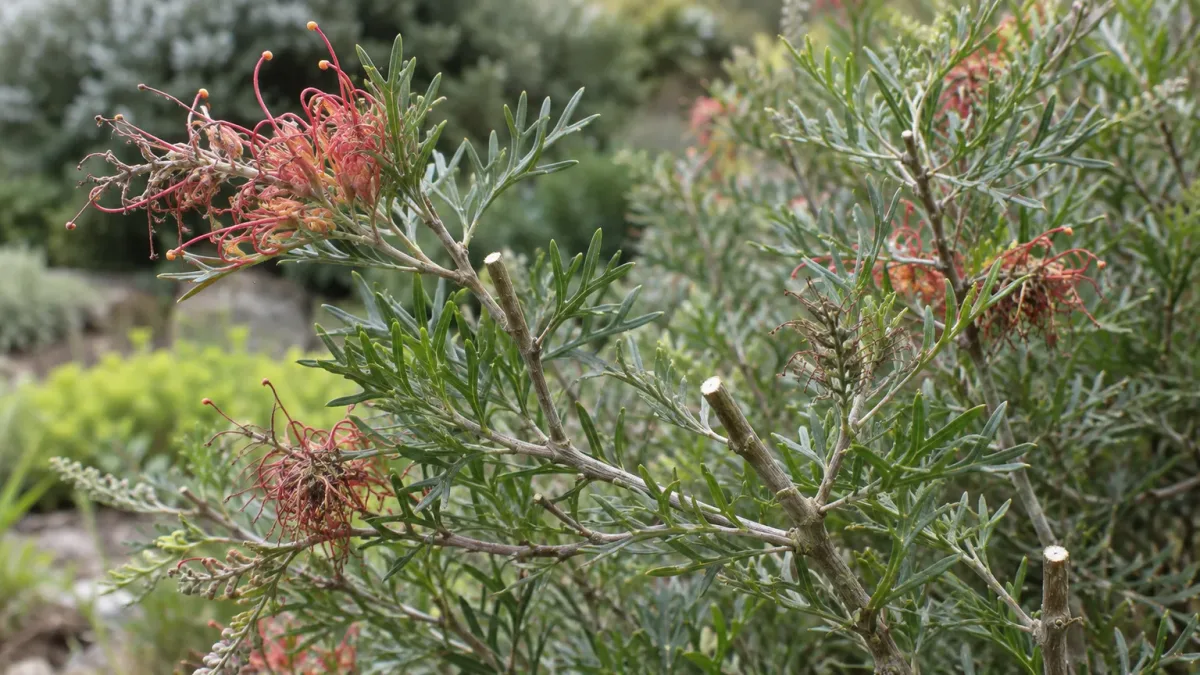
For routine shaping, remove spent flower stems and shorten soft green tips just above a healthy leaf-bearing branch. Use clean, sharp pruners and step back often so you remove only what improves the plant’s shape. Avoid cutting deep into bare, old wood unless you know that specific cultivar will break new growth from it; some grevilleas do not recover predictably from severe renovation.
If you have inherited an overgrown shrub, do not remove half its canopy in one go based on a generic rule. First identify the cultivar, note where live leaves and buds remain, and thin dead or crossing branches selectively. If a heavier reset is appropriate, stage it over more than one season and accept that bloom may be reduced while the plant recovers.
Grow grevillea in a container where winters are too cold
A container gives you control over drainage and the option to move a tender plant under protection. Choose a compact or naturally small cultivar, use a stable pot with several unobstructed drainage holes, and fill it with a coarse, well-draining mix suitable for low-phosphorus plants. The pot should leave room for roots without being so oversized that a large volume of wet mix stays cold around them.
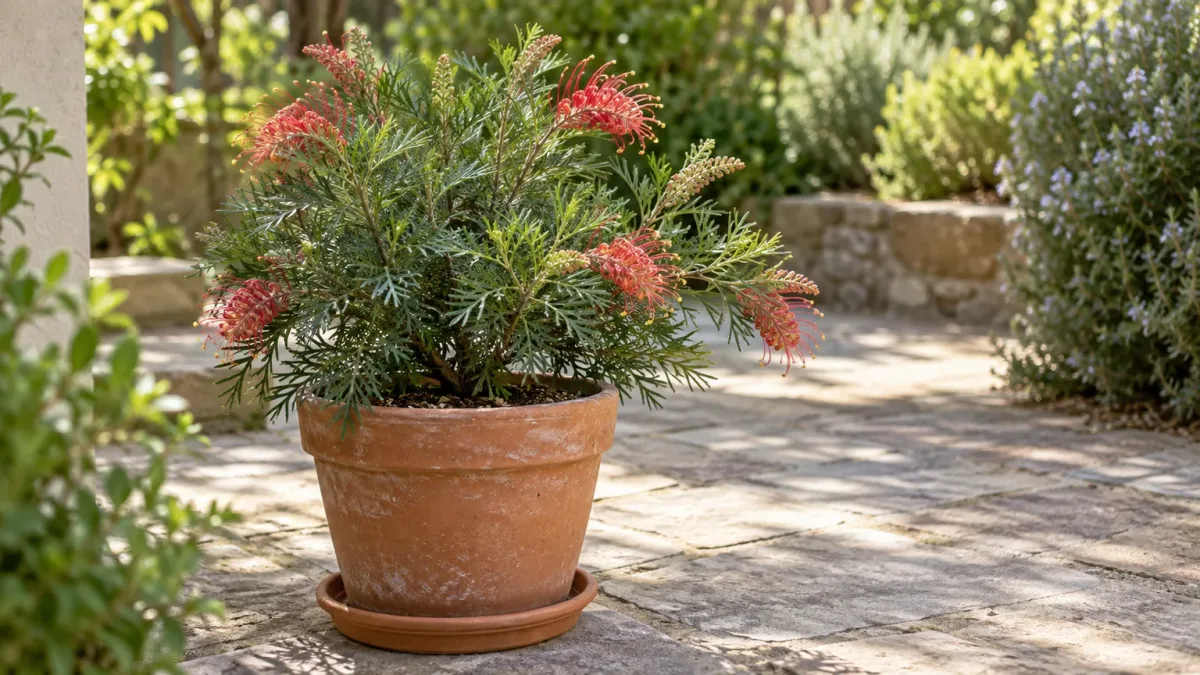
Place the pot outdoors in bright sun when temperatures suit the cultivar. Water when the mix begins to dry rather than on a fixed calendar, and reduce watering in cool weather when the plant is using less water. Repot only when roots fill the container or the mix has broken down; moving it to a dramatically larger pot can make moisture management harder.
Before cold weather arrives, move a frost-sensitive plant to a bright, sheltered, cool location. Keep it away from heating vents and give it as much direct light as the space allows. A grevillea that becomes thin and weak indoors may be telling you it needs more light or a shorter stay inside, not additional fertilizer.
Troubleshoot sparse flowering before adding fertilizer
If a healthy-looking plant produces few flowers, check the simplest causes first. Confirm the cultivar’s normal bloom season; some flower mainly in winter or spring, while others bloom in bursts or intermittently. A new transplant may also spend its first season establishing roots rather than flowering heavily.
Audit light, cultivar age, water, and pruning
Start with light: does the plant receive several hours of direct sun? If not, consider a brighter site or prune nearby vegetation, while remembering that a sudden move can add transplant stress. Next, review water and drainage. A plant kept too dry while young may be slow to establish, but a mature grevillea in chronically wet soil can lose root function and fail to bloom.
Look at recent feeding and pruning. High-phosphorus fertilizer is not a flowering shortcut for this genus, and excess nutrients can be counterproductive. Pruning during bud formation or removing the season’s flower-bearing tips can also reduce the next display. Finally, compare the plant with its cultivar description: flower color, size, and bloom timing are not identical across the genus.
Change one factor at a time and keep a short note of the date, rainfall, irrigation, and pruning. That simple record helps distinguish a one-season weather effect from a recurring mismatch between the plant and its site. If light, water, and pruning all appear appropriate but flowering stays poor, ask a local native-plant nursery to confirm the cultivar and growing conditions before trying a nutrient treatment.
Respond early to root or branch decline
Rapid yellowing, wilting while the soil is wet, or dieback from the tips inward deserves attention. First pause automatic irrigation and check whether water drains away freely. Searles Gardening identifies root rot as a common cause of decline in wet conditions; continuing to water a plant with saturated soil can make the root-zone problem worse.
For a container plant, check that drainage holes are open and that the pot is not sitting in water. If the plant is small enough to inspect safely, look for dark, soft roots and sour-smelling mix; healthy roots are generally firm. For an established shrub, do not dig up the whole root system as a first response. Correct standing water, redirect runoff, and remove only branches that are clearly dead.
If the soil is dry and the plant is wilting, water the root ball slowly and deeply, then reassess rather than flooding it repeatedly. If decline continues after drainage and watering are corrected, get a local diagnosis: root pathogens, cold injury, and unsuitable soil can look similar above ground. Avoid pesticide or fungicide use without identifying the problem and following the local product label.
Propagate by cuttings when you want a true copy
Cuttings are usually the more predictable way to reproduce a named cultivar because seedlings may not match the parent plant. Harvest to Table describes semi-hardwood cuttings as one propagation route, but timing and success differ among species and climates. The Australian National Botanic Gardens notes that one particular species, G. dryandroides, can be propagated from firm young cuttings in late winter or spring in the Australian Capital Territory; that schedule is not universal.
For a small trial, take several healthy, non-flowering shoots from the current season’s firming growth with clean pruners. Remove the lower leaves, place the cuttings in a clean, free-draining propagation medium, and keep them warm, bright, and humid without leaving the mix waterlogged. Label the cultivar and date, then wait for resistance to a gentle tug or visible new growth before potting on; do not pull the cutting up to check for roots.
Not every cutting will take, and some cultivars are sold grafted because grafting can improve adaptability or hardiness. If a plant is grafted, seed or cutting propagation from its top growth will not reproduce the rootstock combination. For a rare or valuable named selection, ask the nursery about its propagation method before you try to clone it.
Protect your skin and eyes while handling the plant
Some grevilleas can irritate skin or eyes. The Queensland Poisons Information Centre reports that Grevillea can cause allergic contact dermatitis in sensitive people, with blistering that may be delayed; NC State Extension also cautions that handling can cause significant skin irritation. This is a contact warning, not a reason to assume every species causes the same reaction or to make an unsupported claim about pets.
Wear gloves and long sleeves when pruning or moving the plant, and consider eye protection if foliage may brush your face. Wash exposed skin with soap and water after gardening, and keep cuttings away from children who might handle or taste them. If a rash develops, rinse the area and seek advice from a local poison center or health professional; for eye exposure, rinse promptly and contact a medical service.
Conclusion
Grevillea is easiest to grow when you choose the right cultivar first and build care around its roots. Give it the sun it needs, keep soil free-draining and low in phosphorus, water consistently while it establishes, and prune after its flowering flush without cutting blindly into old wood.
When flowering falters, check cultivar fit, light, water, and pruning before reaching for fertilizer. Those few habits—and a pair of gloves for pruning—make it much easier to enjoy Grevillea’s distinctive blooms while avoiding the mistakes that most often set it back.