How to Keep Groundhogs Out of Your Garden
Learn how to keep groundhogs out of your garden with a dig-proof fence, habitat changes, realistic deterrents, and safe trapping guidance.
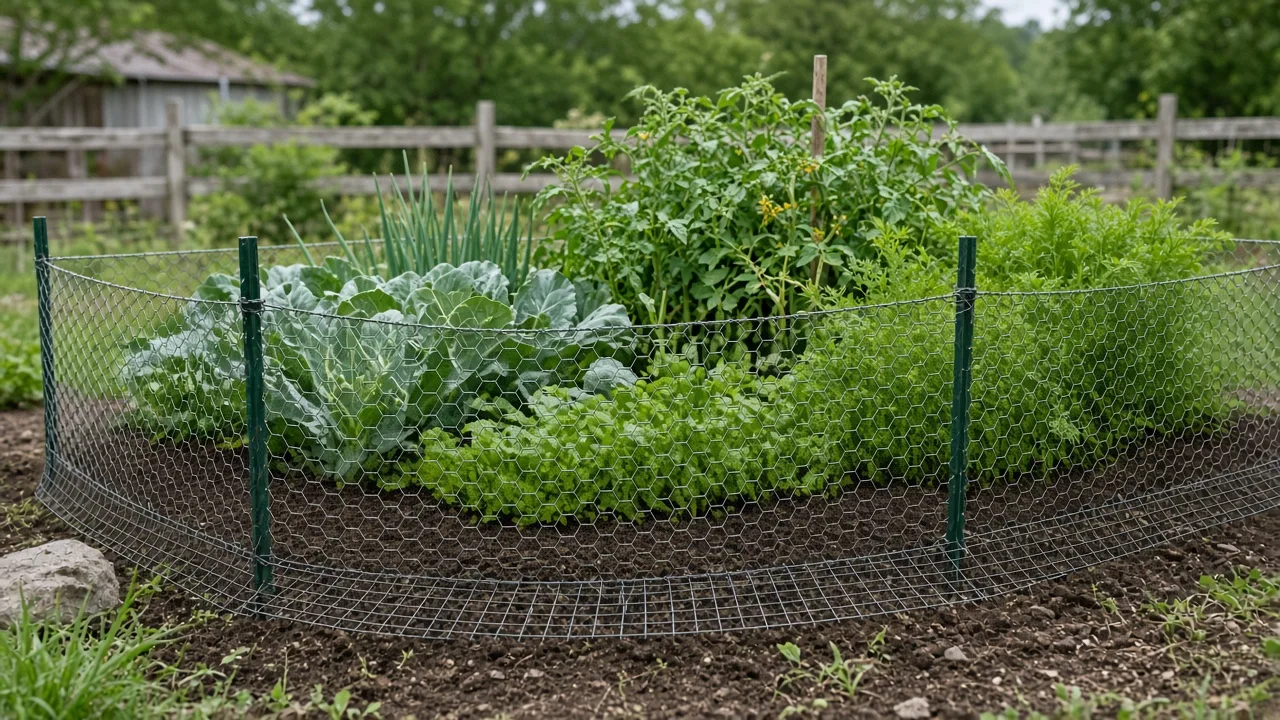
Groundhogs, also called woodchucks, can turn a thriving vegetable bed into a row of stubs with surprising speed. The most reliable answer is not a stronger-smelling spray. It is a layered plan: confirm the animal, block the garden with a fence it cannot easily climb or dig under, remove nearby shelter, and use trapping only when the law and your disposition plan are clear.
If the damage is happening now, do three things today. Photograph the missing or clipped plants, inspect the garden perimeter for fresh digging, and cover the most valuable bed with temporary wire mesh while you build a permanent barrier. That short pause matters because a groundhog can keep returning to the same food source even while a scare device is still new.
Start With the First 24 Hours
Treat the first day as a diagnosis-and-protection window, not a hunt. Pick up fallen fruit, secure pet food and compost, and move loose boards, brush, or stacked materials away from the garden edge. Then put a temporary barrier around the plants that would be hardest to replace: seedlings, beans, lettuce, peas, and young fruiting plants.
Walk the perimeter in daylight. Look for a low gap beneath a gate, soil pushed away from the fence, or a smooth opening in grass. If you cannot identify the culprit, aim a trail camera at the damaged row or watch from a window in the morning or late afternoon. The Michigan Department of Natural Resources specifically recommends a trail camera when wildlife damage is occurring but the animal is uncertain.
Do not fill a burrow or seal a gap under a shed on the first pass. An occupied den can contain young, and sealing the entrance can trap an animal inside the structure. First protect the crops; then solve the den and exclusion problem with evidence about where the animal is actually moving.
How to Confirm a Groundhog Is the Culprit
Groundhogs are daytime feeders, so the damage often has a recognizable pattern. A camera is the cleanest confirmation, but the plant evidence can narrow the field while you wait. The Virginia Tech Extension woodchuck guide describes woodchucks as strong diggers and climbers that commonly forage near a functional burrow system.
Damage Patterns That Point to Woodchucks
Look for plants clipped from one side across the row, missing seedlings, or a vegetable plant reduced to its central stem. Groundhogs commonly browse close to the soil and can remove a large amount of lush growth in a single visit. They favor tender green vegetation, including clover, beans, peas, lettuce, corn, and many young garden plants; fruit and young woody growth may also be eaten as the season progresses.
Height is a useful clue, but not a rule. The Savvy Gardening field guide notes that groundhogs often reach roughly 14 to 18 inches while standing, so a tall plant nibbled only at the top points more toward deer. A half-eaten kale plant, beans chewed down low, or a whole squash plant gone from one side is more consistent with a groundhog.
Rabbits can also create low damage, which is why the entrance evidence matters. Rabbit cuts are often small and clean on stems; groundhog damage looks heavier and more like a broad section has been removed. If the same plants disappear during daylight and you find a round opening with freshly moved soil nearby, confidence rises sharply.
Burrow Clues and Access Points
A primary groundhog burrow is usually a round opening about 10 to 12 inches wide with a fan-shaped apron of excavated soil. Secondary escape holes may be smaller, hidden under dense vegetation, or free of a visible soil mound. Do not assume the largest hole is the only entrance.
The Piedmont Master Gardeners’ overview explains that burrow systems can include sleeping, nesting, hibernation, and latrine chambers. In a garden, the more actionable clue is the route between shelter and food: a worn strip through grass, a gap under the fence, or a den near a shed, deck, woodpile, or foundation.
If the garden is already fenced, inspect the lowest six inches first. Groundhogs usually test the base before they attempt a climb. Check corners, gate hinges, the seam where two panels meet, and places where the ground slopes away from the fence. A single loose gate corner can undo an otherwise expensive barrier.
Build a Groundhog-Proof Garden Fence
For a vegetable garden, physical exclusion is the best long-term investment. A properly built fence protects the crop every day, does not need to be reapplied after rain, and can deter rabbits and other browsing animals at the same time. The exact dimensions can be adapted to the site, but the fence must address both halves of the animal’s skill set: climbing above and digging below.
Above-Ground Height and Mesh
Use sturdy welded wire, braided wire mesh, or poultry wire with openings smaller than 2 inches if young groundhogs could be present. Virginia Tech Extension recommends a finished non-electric fence about 3 to 4 feet above ground, with mesh small enough that juveniles cannot squeeze through. A flimsy plastic net may bend at the base or tear at a corner; it is better as a short-term crop cover than as a permanent groundhog fence.
The top does not need to be a rigid, attractive wall. A top section that bends outward about 8 to 15 inches at roughly a 45-degree angle makes climbing awkward. Some gardeners leave that upper section slightly loose so it gives under an animal’s weight instead of acting like a ladder. Keep branches, trellises, compost bins, and raised bed frames away from the fence so the groundhog has no convenient launch point.
An electric strand can reinforce an existing fence when local rules allow it. Virginia Tech describes a simple two-wire arrangement with the lower wire roughly 3 to 4 inches above ground and a second wire a few inches higher. Treat it as a safety system, not a casual add-on: keep vegetation from grounding the wire, maintain power continuously, post visible warnings where required, and keep children, pets, and livestock away from the energized side.
The Anti-Dig Apron and Gate Check
The bottom edge is where most garden fences fail. You have two dependable construction choices:
- Bury the mesh: Sink the lower portion at least 12 inches into the soil. This creates a vertical underground barrier that the animal cannot simply push aside.
- Build an outward apron: Extend the mesh 8 to 24 inches outward from the fence along the soil surface, fasten it with heavy landscape staples or durable anchors, and cover it with soil or mulch. The animal starts digging at the upright fence, hits the horizontal wire, and cannot create a tunnel directly beneath the barrier.
The Barnstable County garden guidance supports a four-foot fence with a buried section or an outward-bent L-shaped base. The Virginia Tech recommendations likewise pair a 3- to 4-foot fence with a buried foot and outward-facing L. Choose the version your soil and garden layout can maintain; a shallow apron that becomes exposed and loose is not a finished barrier.
Pay special attention to the gate. Add a threshold or apron that continues across the opening, keep the bottom edge close to the ground, and make the latch side tight. After heavy rain, walk the entire line and press down any lifted mesh. If you see a new scrape, do not merely pack soil into the hole; extend the apron beyond that point and anchor the seam.
Protect Individual Plants and Small Beds
You do not have to fence the entire property to save a few prized plants. A wire cylinder around a young fruit tree, a rigid cage around a small perennial bed, or a removable tunnel over lettuce can be cheaper and easier to inspect than a large perimeter fence.
Make the guard wide enough that leaves cannot press through the mesh. Anchor the base firmly, and extend wire below ground or outward across the soil wherever digging is likely. For an individual plant, leave room for watering, pruning, and growth; a cage that rubs the stem or traps heat becomes a plant problem of its own.
For small beds, a hinged or lift-off frame is practical because it lets you harvest without opening a full gate. Check the corners after every harvest. Groundhogs learn quickly that a propped-open cover is an invitation, and a gap the width of a hand may be enough for a young animal.
Plant choice can lower the stakes around an unfenced ornamental border, but it cannot make a food-rich vegetable garden groundhog-proof. Cornell Cooperative Extension lists plants such as lavender, chives, thyme, snapdragons, peonies, coreopsis, and some alliums as less likely to be eaten in observed garden settings. “Less likely” is the important phrase: a hungry groundhog may sample nearly any green plant, so use resistant plants as a design layer rather than your only defense.
Make the Yard Less Attractive to Burrowing
Exclusion works better when the animal has fewer reasons to establish a den beside the garden. Clear brush piles, loose rock piles, and unused lumber near sheds and decks. Keep vegetation trimmed around foundations so fresh digging and movement are visible. Harvest ripe produce and pick up fallen apples or other fruit promptly.
The Michigan DNR guidance recommends securing food sources, trimming vegetation near buildings, inspecting foundation gaps, and using durable metal materials where access must be blocked. These steps do not remove every groundhog from a neighborhood; they make your yard a less convenient combination of shelter and buffet.
Do not create a bare, open strip by stripping the entire yard. The goal is targeted housekeeping around the structures and garden edge, not eliminating habitat for every small animal. A maintained perimeter also makes it easier to notice a new hole before a burrow expands.
Do Repellents and Scare Devices Work?
Motion lights, reflective objects, sprinklers, loud sounds, predator scents, capsaicin products, and commercial animal repellents may buy a few days of breathing room. They are most useful while you repair a fence or protect a newly planted bed—not as the main plan for a determined groundhog with a dependable food source.
What You Can Expect From Motion and Scent
Groundhogs are adaptable. A pinwheel, scarecrow, or reflective strip that moves in one location every day becomes background after the animal learns that nothing follows the visual cue. If you use a scare device, move it often and pair it with a real barrier. Remove it once the fence is doing the work.
Commercial repellents deserve a more careful distinction. A product registered for use on groundhogs may be legal for particular crops, sites, or seasons, but registration does not promise that it will solve a garden invasion. Virginia Tech Extension describes repellents as short-term relief and emphasizes following the product label. Never spray a food crop with a product unless its label specifically permits that crop and use.
Homemade recipes based on essential oils, hair, soap, or concentrated hot powders are unreliable and can create their own risks. They may irritate pets, injure wildlife, burn foliage, contaminate edible leaves, or wash into soil without changing the animal’s behavior. A fence apron is less exciting than a novel scent, but it keeps working after rain.
How to Use Live Traps Responsibly
Live trapping is a removal tool, not a substitute for exclusion. If you trap one groundhog while the garden remains open, another animal can occupy the same food-rich route. Use a species-appropriate cage trap only after confirming the animal, checking local rules, and deciding exactly what your jurisdiction allows after capture.
Bait, Placement, and Check Routine
Groundhogs are herbivores with individual preferences, but ripe cantaloupe, apple slices, carrots, or fresh vegetables are common bait choices. Gardening Know How describes placing a wire trap near a burrow or travel route and baiting it with produce; Savvy Gardening recommends a shaded daytime setup near a feeding area with a small bait trail leading inside.
Use shade and stable footing. Keep the trap away from the hottest part of a paved surface, position it where a captured animal cannot be reached by a dog, and avoid placing it where children can touch it. Set it near evidence of feeding rather than blocking the only entrance to an active den.
Check the trap at least once every 24 hours, and more often in hot weather when practical and lawful. A captured animal can overheat, panic, or injure itself. Wear sturdy gloves when handling the equipment, keep your face away from the trap, and never open it beside the garden simply to “see what happens.”
What to Do Before You Set a Trap
Call your state or provincial wildlife agency, animal control office, or a licensed wildlife-control professional before setting the trap. Laws may govern trap type, inspection frequency, tagging, release location, season, and whether relocation is allowed at all. The Piedmont Master Gardeners’ guidance warns that county and city rules can be stricter than state rules.
Do not assume that releasing an animal in a park, vacant lot, or someone else’s land is humane or legal. Virginia Tech explains that off-property release can be restricted and that survival after untrained relocation is poor. Michigan, for example, tells homeowners that live-trapped woodchucks cannot be moved off the property where they were captured. Those are jurisdiction-specific rules, not a universal license to relocate; your local authority is the final word.
If the animal is injured, unusually aggressive, or appears to be a young animal separated from its mother, stop. Keep people and pets back and contact a licensed wildlife rehabilitator or animal-control professional rather than handling it yourself.
When a Burrow Is Under a Shed or Deck
A den beneath a structure is more serious than a groundhog nibbling a lettuce row. Burrowing can undermine soil near a foundation, create a trip hazard, and put the animal in a space that is difficult to inspect. The safest sequence is observe, encourage vacancy with professional guidance if needed, then exclude.
Watch from a distance to learn when the animal leaves. Do not close every opening, pour liquids into the burrow, or dig into the den while it may be occupied. Once a wildlife professional or your local agency has confirmed the space is vacant, install durable hardware cloth, welded mesh, or metal flashing around the opening and bury or flare the bottom so the animal cannot immediately reopen the route.
Before closing a den in spring or early summer, consider the possibility of dependent young. A mother that is shut out may dig aggressively, and young animals left inside can create a worse welfare and odor problem. When the burrow is close to a building, utility, retaining wall, or foundation, professional assessment is usually cheaper than repairing a destabilized structure.
What to Avoid: Poison, Fumigants, and Unsafe Chases
Do not use a toxic bait, gas cartridge, or improvised fumigant as a first-line garden fix. These methods can kill non-target wildlife, expose people or pets, start a fire beneath a shed or in dry vegetation, or leave an injured animal in a place you cannot reach. They also carry label, licensing, and local-law requirements.
Virginia Tech notes that some burrow fumigants are restricted-use products and that incendiary cartridges must never be used near wooden structures or dry flammable vegetation. The same guidance describes toxicants as tightly regulated and appropriate only within legal, professionally controlled circumstances. If a licensed applicator is required where you live, that is not paperwork to work around; it is the safety boundary.
Never chase a groundhog into a corner with a dog, shovel, or broom. A frightened animal can bite or scratch, and a dog may be injured when it gets close. Keep dogs leashed or behind a barrier while you repair the garden, and call for help if the animal is sick, injured, or behaving abnormally.
A Seasonal Prevention Routine
The best time to build a groundhog barrier is before seedlings go into the ground. In late winter or early spring, inspect the fence line, repair rusted or bent mesh, check the gate threshold, and clear brush around sheds and decks. If you are adding a new bed, install the buried section or apron before filling the bed with soil.
In late spring, inspect again after new vegetation appears. This is when an attractive garden can become a reliable feeding station, and young groundhogs may be exploring nearby. Check for fresh soil at the apron, newly widened gaps, and branches touching the top edge. Keep harvested produce and fallen fruit out of the animal’s route.
During summer, walk the fence after storms and mowing. A mower can lift an apron, a growing vine can ground an electric strand, and a gate can sag enough to leave a tunnel-sized opening. Recheck small plant cages after every harvest, especially if the cage has been moved.
In fall, decide whether the fence will stay in place. If it comes down, close the season by removing crop residue that could hide a den, securing structures, and marking the best line for next spring’s repair. A few minutes of maintenance is easier than rebuilding a barrier after a groundhog has learned every weak point.
When to Call a Wildlife Professional
Call for help when a den is under a building, the animal is injured or aggressive, a child or pet could contact a trap, the garden is next to a road or public path, or you cannot determine what is inside the burrow. Professional help is also sensible when local rules are unclear or when trapping would leave you responsible for an animal you cannot legally release.
For ordinary garden damage, start with a camera, temporary crop cover, and a well-built fence. That combination solves the actual access problem and avoids turning a manageable garden pest into a legal, safety, or animal-welfare problem.
Conclusion
Groundhogs are difficult to outsmart with smell alone because they can dig, climb, and return to dependable food. Confirm the damage, cover the crop immediately, then build a 3- to 4-foot wire fence with a buried section or outward apron, a secure gate, and no nearby climbing aids. Reduce shelter around structures, use repellents only as temporary support, and do not set a live trap until you know the local rules and have a lawful plan for the animal afterward.



