How to Prune a Jade Plant: Step-by-Step Guide
Leggy or top-heavy jade plant? This guide covers when to prune, where to cut above nodes, and how to train a compact miniature tree.
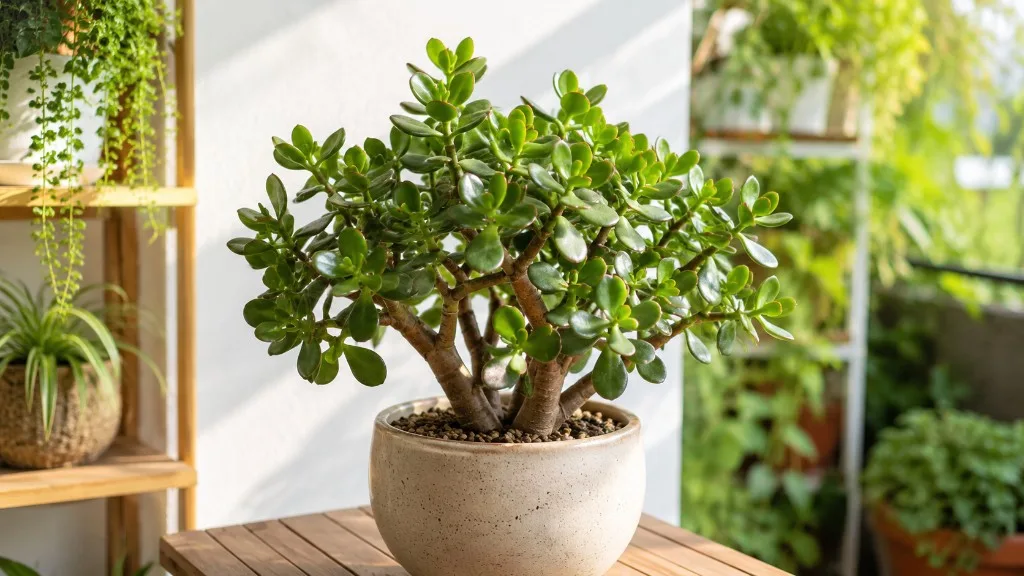
A jade plant left to its own devices will grow — often upward, often unevenly, and sometimes into a pot that tips the moment you bump the shelf. Pruning redirects that energy into thicker stems, tighter leaf spacing, and a silhouette you can actually live with. On Crassula ovata, the classic money tree succulent, cuts made in the right season and at the right nodes trigger branching that no amount of wishful watering will produce.
This is not hedge shearing. Jade stores water in every stem and leaf, heals slowly compared with herbaceous houseplants, and branches only from nodes — the joints where leaf pairs attach. Get the placement, timing, and volume right, and you reshape a leggy specimen into a compact shrub or a miniature tree in a single growing season. Get them wrong, and you sit with bare wounds and a sulking plant until spring.
Why Pruning Matters for Jade Plants
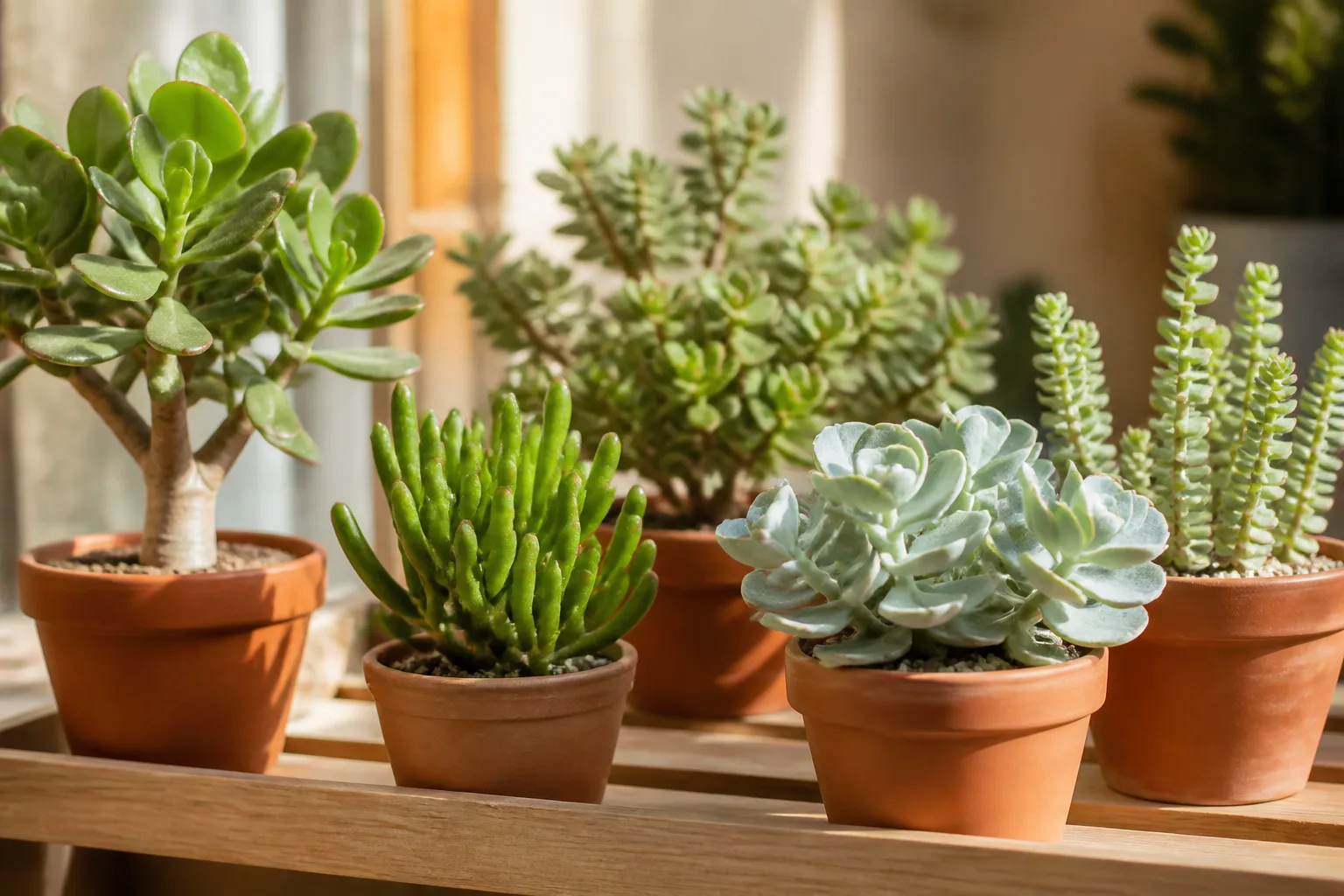
In its native South African hillsides, jade grows as a rounded evergreen shrub with thick, woody branches and leaves clustered toward stem tips. Indoors, the same genetics produce a slow, sculptural houseplant — but only when light and occasional shaping work together. Wisconsin Horticulture Extension notes that jade plants benefit from pruning to stay compact and vigorous, with cuts healing in a few days and new growth appearing within weeks under favorable conditions.
Pruning does three jobs at once on a mature jade. It removes wood that will never recover — dried tips, rot-blackened segments, pest-infested stems. It redistributes growth hormones so dormant buds below a cut break and form new branches instead of one long runner reaching for the window. And it develops trunk strength over seasons, which matters because jade leaves and stems are heavy; a thick base is what keeps a tree-form plant upright in a pot.
What pruning cannot do is replace adequate light. If your jade stretched because it lives in a dim corner, cutting it back without improving light produces another round of leggy growth from the new tips. Fix illumination first — our leggy plants guide walks through that diagnosis — then prune to reset the shape.
What Leggy Growth Looks Like on Crassula ovata
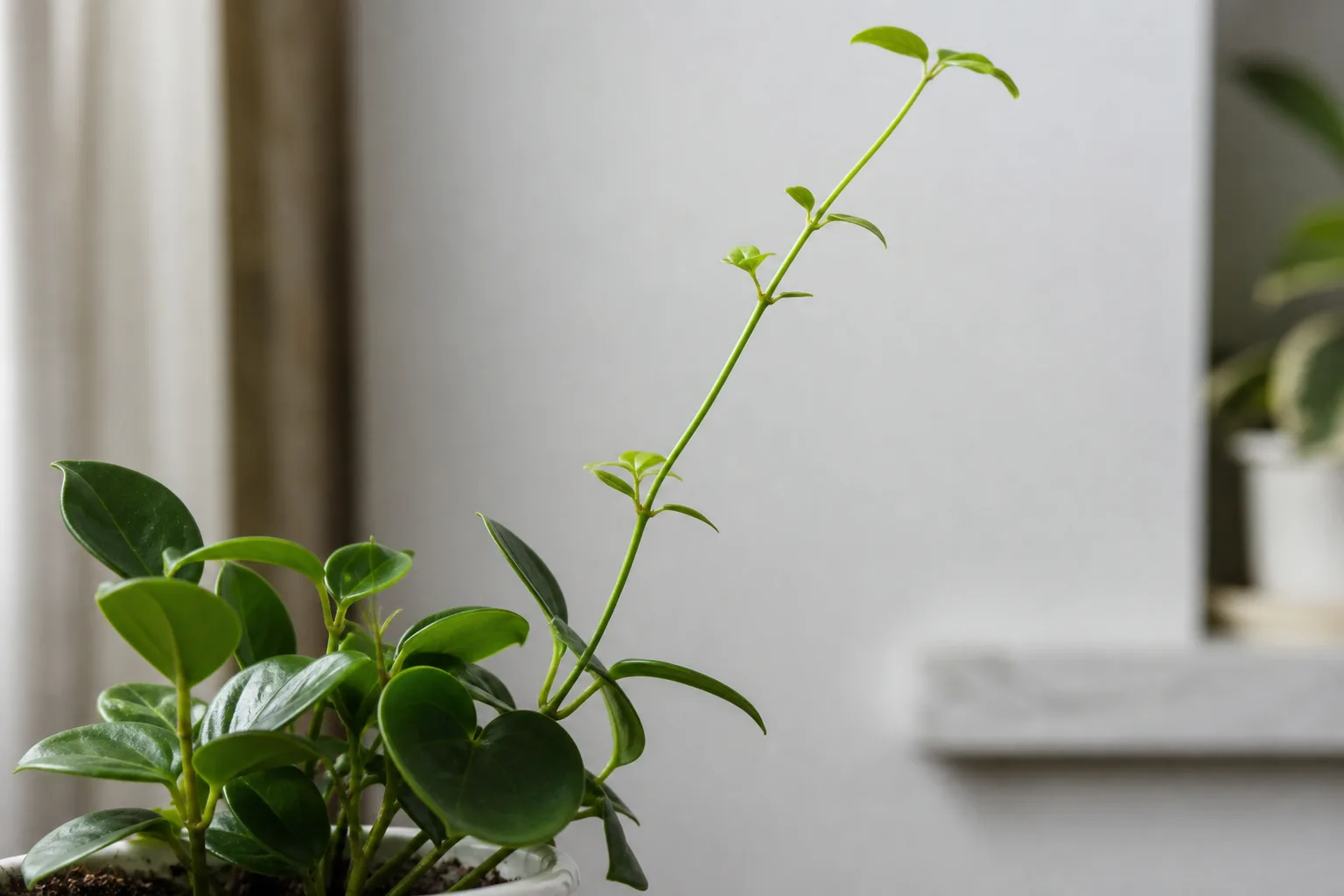
Leggy jade shows a specific pattern: long bare internodes between leaf pairs, leaves clustered only at stem tips, stems visibly thinner than older lower growth, and often a pronounced lean toward the brightest window. The leaves may stay deep green without the red edging that bright light produces. Wisconsin Horticulture Extension describes inadequate light as producing deep green leaves and drooping stems — structurally sound plants that simply lack the photons to grow compactly.
Do not confuse natural maturity with legginess. Older jade plants naturally drop lower leaves and expose woody trunk tissue; that is normal aging, not etiolation. Concern rises when new growth on the same stem shows longer gaps and smaller leaves than growth from six months ago. That comparison on one branch is the clearest diagnostic.
When a Top-Heavy Pot Becomes a Real Problem
Jade tolerates tight roots for years, which is convenient — until the canopy outweighs the base. Wisconsin Horticulture Extension warns that plants kept root-bound too long become top-heavy and susceptible to tipping. The Missouri Botanical Garden notes that indoor jade typically reaches 18–30 inches but can develop trunk-like succulent stems resembling a miniature tree as it matures.
When one side carries most of the foliage, the pot rocks. When a long branch arches outward, the stem can crack under its own weight. Pruning redistributes mass, encourages lateral branching that balances the silhouette, and pairs well with repotting into a heavier container if the plant is genuinely unstable. For full species context, see the jade plant hub.
When to Prune — and When to Wait
Timing separates a jade that branches within three weeks from one that sits unchanged until spring. Jade slows in short days and cool rooms; major cuts during that slowdown leave open wounds on a plant with little drive to push new buds.
The Spring-to-Early-Summer Sweet Spot
Cosmetic shaping, height reduction, and tree training belong in the active growth window — roughly late winter through early summer (February through June in the Northern Hemisphere for indoor plants). Penn State Extension recommends spring pruning to keep jade compact and encourage new growth, cutting stems just above a ring or lateral branch. The RHS lists propagation by stem cuttings in spring, which aligns with the same window when pruned material roots fastest.
Pinch soft growing tips anytime the plant is visibly pushing new leaves. Save trunk clearing, major height reduction, and rejuvenation of severely leggy specimens for spring when the full bright season lies ahead. Tiny Garden Habit includes jade among houseplants that benefit from summer pruning to control weak, leggy stems — but early summer is the outer edge; do not wait until late August when growth is already slowing.
Dead, diseased, damaged, or pest-infested stems come out the day you find them, regardless of month. A blackened rot tip or a branch broken by weight should not wait for spring.
Minimum Age Before Your First Cut
Hold off on structural pruning until your jade is at least one year old and has developed a stable root system and at least a few woody stem segments. Young seedlings need every leaf to photosynthesize; premature cutting can stall the trunk thickening that makes future tree training possible. Light pinching of very soft tips on a vigorous year-old plant is fine. Reserve real shaping for year two and beyond.
Do not prune when the plant is drought-stressed, freshly repotted (within two weeks), actively wilting from overwatering, or dropping leaves from a recent move. Let it stabilize first. Pruning a stressed succulent compounds the insult.
Tools and Setup for Clean Cuts
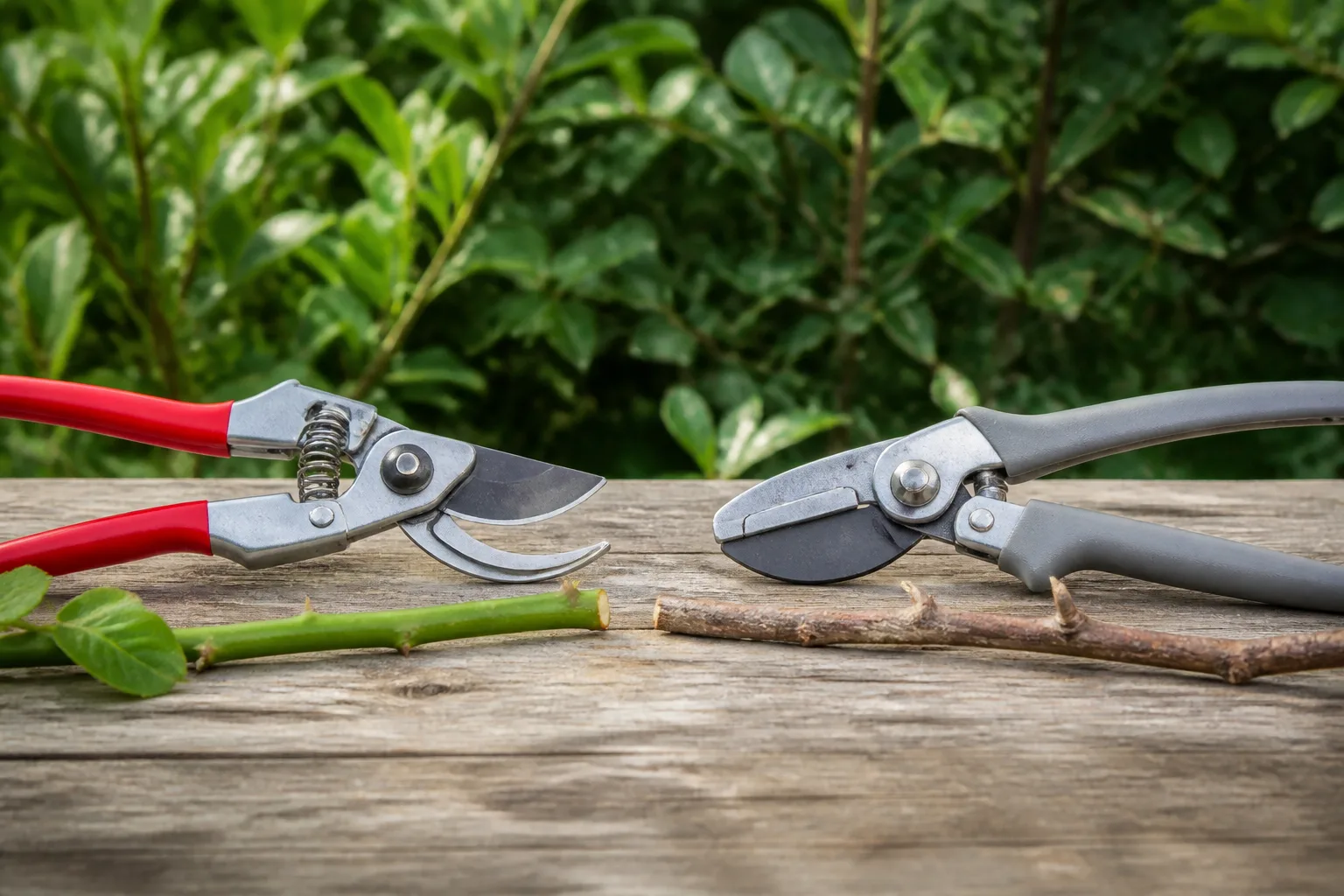
You need very little equipment, but what you use must be sharp.
- Bypass pruners or precision snips for stems thicker than a pencil; bypass action slices cleanly without crushing succulent tissue the way anvil pruners can.
- 70% isopropyl alcohol to wipe blades between cuts and between plants. Iowa State Extension recommends sanitizing pruning tools to prevent disease spread — especially important when removing spotted or yellowing leaves that may carry fungal issues.
- Disposable gloves (optional). Jade sap is mild for most people, but the ASPCA lists jade plant as toxic to cats and dogs, with vomiting and depression possible if pets chew leaves or stems. Gloves reduce sap contact and remind you to keep cuttings off the floor where curious pets investigate.
Work over a tray or newspaper if you plan to propagate cuttings. Have alcohol ready before you make the first cut so you do not skip sanitizing mid-session.
Read the Plant Before You Cut
Step back and look at the whole plant before touching a blade. You are mapping three things: balance (which side leans or carries too much weight), viability (which stems have healthy nodes below the problem zone), and intent (rounded bush, single-trunk tree, or simple size reduction).
Mark mentally — or with a loose twist tie — the tallest stem, any crossing branches that rub, and the weakest leggy runners. Decide your target silhouette before cutting. Jade does not fill in overnight; every removal is a commitment to that shape for months.
Finding Nodes and Bud Points on Jade Stems
The node is where a leaf pair attaches to the stem. On jade, nodes appear as slight swellings or rings on tan-green woody stems, often with a dry leaf scar visible on bare sections. New branches emerge from these points — not from smooth internode tissue between nodes.
To locate your cut line, trace down a leggy stem from the tip until you find the node below where you want the new canopy to start. Position the blade 3–10 mm above that node, not flush against it and not halfway down the internode. Cutting above a node preserves the bud tissue that will break into one or two new stems. Cutting too far above wastes stem and leaves a stub that dries and looks awkward. Cutting into the node itself can damage the only bud available on that section.
On very young green stems, nodes are subtler — look for the point where leaves meet the stem at a slight angle. Those soft tips are what you pinch rather than cut with shears.
Step-by-Step: How to Prune a Jade Plant
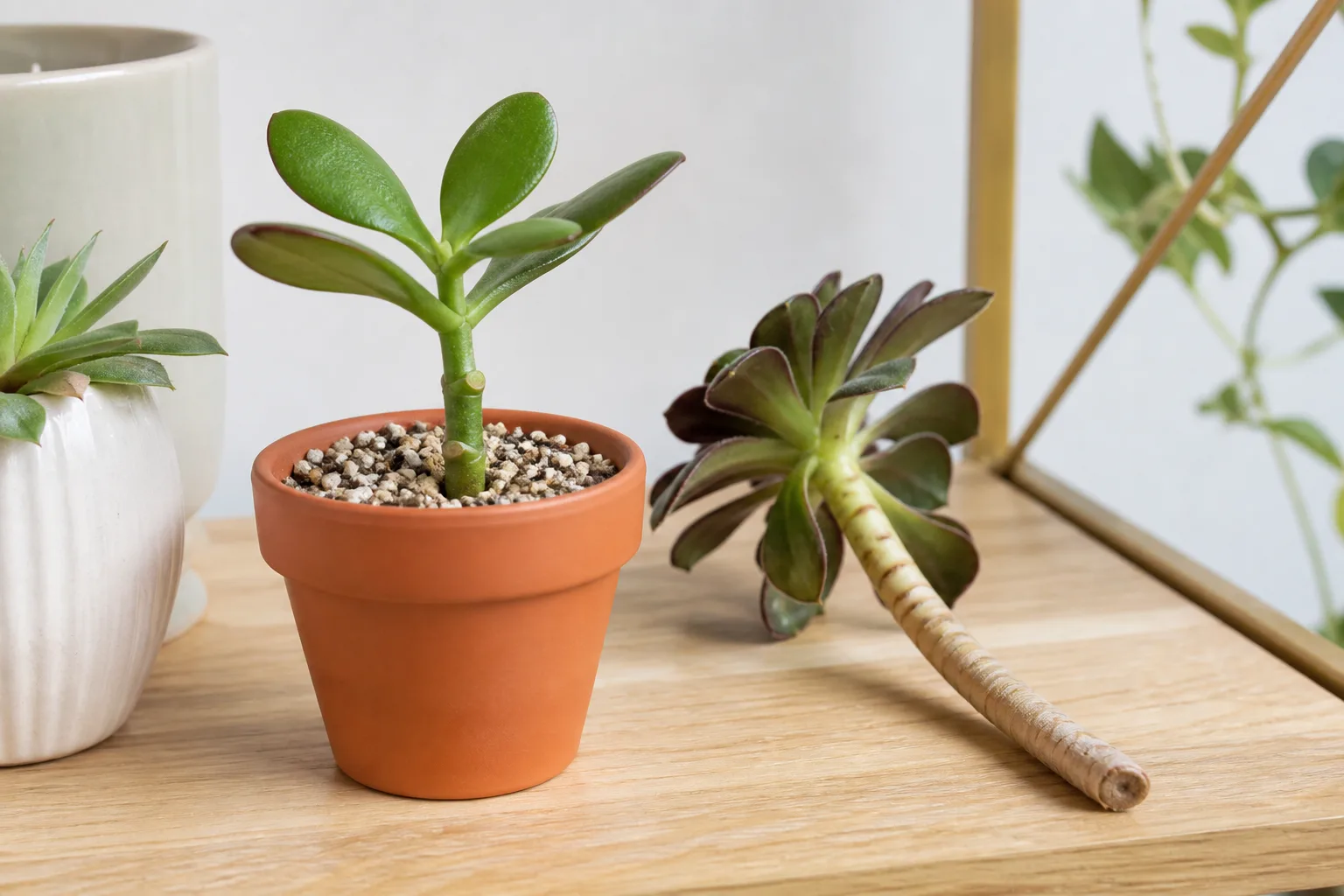
Work in this order every time. It prevents you from shortening healthy wood before you have cleared problems that could spread.
Remove Dead and Diseased Wood First
Using sharp, alcohol-wiped pruners, remove any yellowing, spotted, or shriveled leaves by cutting the leaf stem cleanly at the base. For dried or blackened branches, cut back to where tissue is firm and green-tan inside — or to the main trunk if the whole branch has failed. Do not leave stubs of dead wood; they invite rot into living tissue.
If you removed diseased material, re-sanitize your blades before touching healthy stems. This single habit prevents moving fungal or bacterial issues around the plant.
Shorten Leggy and Drooping Stems
Identify stems that are unusually long and thin compared with lower growth, or that droop under their own leaf weight before the wood has thickened enough to support them. Shorten each to a strong node roughly one-third to halfway down the leggy section — not always all the way to the trunk unless the entire segment is weak.
Yes, you can cut the top off a jade plant. Removing the apical growing tip above a node redirects growth to buds below, which is exactly how you force bushiness. Make one clean cut at a slight angle so water does not pool on the wound face. On thick stems, a single decisive slice beats several shallow nicks.
For a severely leggy plant with bare lower trunk, a one-time beheading in spring — removing the entire top above a node on the bare trunk — can reboot the canopy. That is rescue pruning, not an annual habit. Limit yourself to one major beheading per year and ensure bright light afterward so new shoots stay compact.
Pinch Tips for a Bushier Silhouette
Between major pruning sessions, pinch soft new tips during active growth. Grasp the two smallest leaves at the end of a stem between thumb and finger and snap them off cleanly at the node. This removes apical dominance temporarily and encourages side branching without open wounds large enough to stress the plant.
Pinching works best on green, pliable growth in spring and early summer. Do not pinch woody stems — use pruners for those. Repeat every few weeks on fast-growing tips if you are chasing a dense, bonsai-like pad of foliage.
Training a Jade Into a Miniature Tree
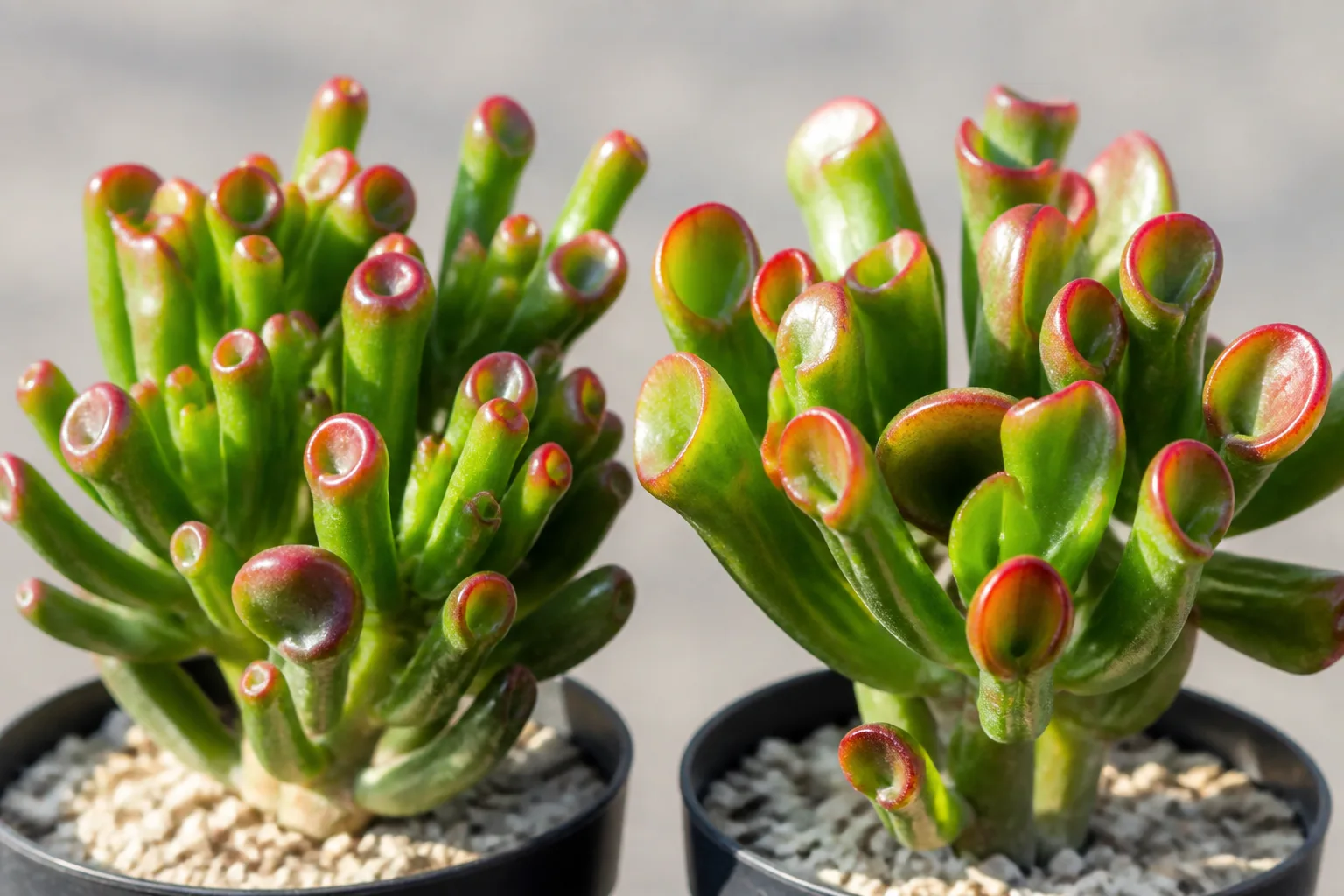
Jade is a favorite for succulent bonsai because it develops gnarled, woody trunks in pots and responds to directional pruning. Wisconsin Horticulture Extension notes that jade can be pruned into miniature trees and makes an excellent sculptural specimen.
The basic tree-training sequence runs over two to three years, not one afternoon:
- Select a single main trunk and remove competing upright shoots at the base.
- Let the trunk thicken for a season before clearing lower branches — premature stripping leaves the plant top-heavy on a thin pole.
- In year two, remove lower lateral branches one at a time, spring through early summer, exposing trunk character.
- Pinch the canopy regularly to develop a rounded head of foliage rather than a single vertical shoot.
Stake only if the trunk is actively bending; jade wood stiffens as it matures. Rotate the pot weekly so the canopy does not lean permanently toward one window. Cultivars like Gollum and Hobbit — with tubular leaves — respond to the same node cuts but produce a denser, more alien silhouette; see our jade plant types for variety-specific growth habits.
How Much You Can Safely Remove
The practical limit for routine shaping is no more than 20–30% of living foliage in one session. Removing more shocks the root system — the plant still has to support the same root mass with drastically fewer leaves to photosynthesize. Symptoms of over-pruning include leaf drop, stalled new growth for months, and soft stem tissue that was firm before the cut.
For moderate legginess, shorten individual stems across two sessions two to three weeks apart rather than one aggressive chop. Spread major reductions across the spring window. If you must remove more than one-third because of damage or severe neglect, do it once in early spring, then give the plant bright light, restrained watering, and patience — no fertilizer until new growth is obvious.
Aftercare: Water, Light, and Recovery Timeline
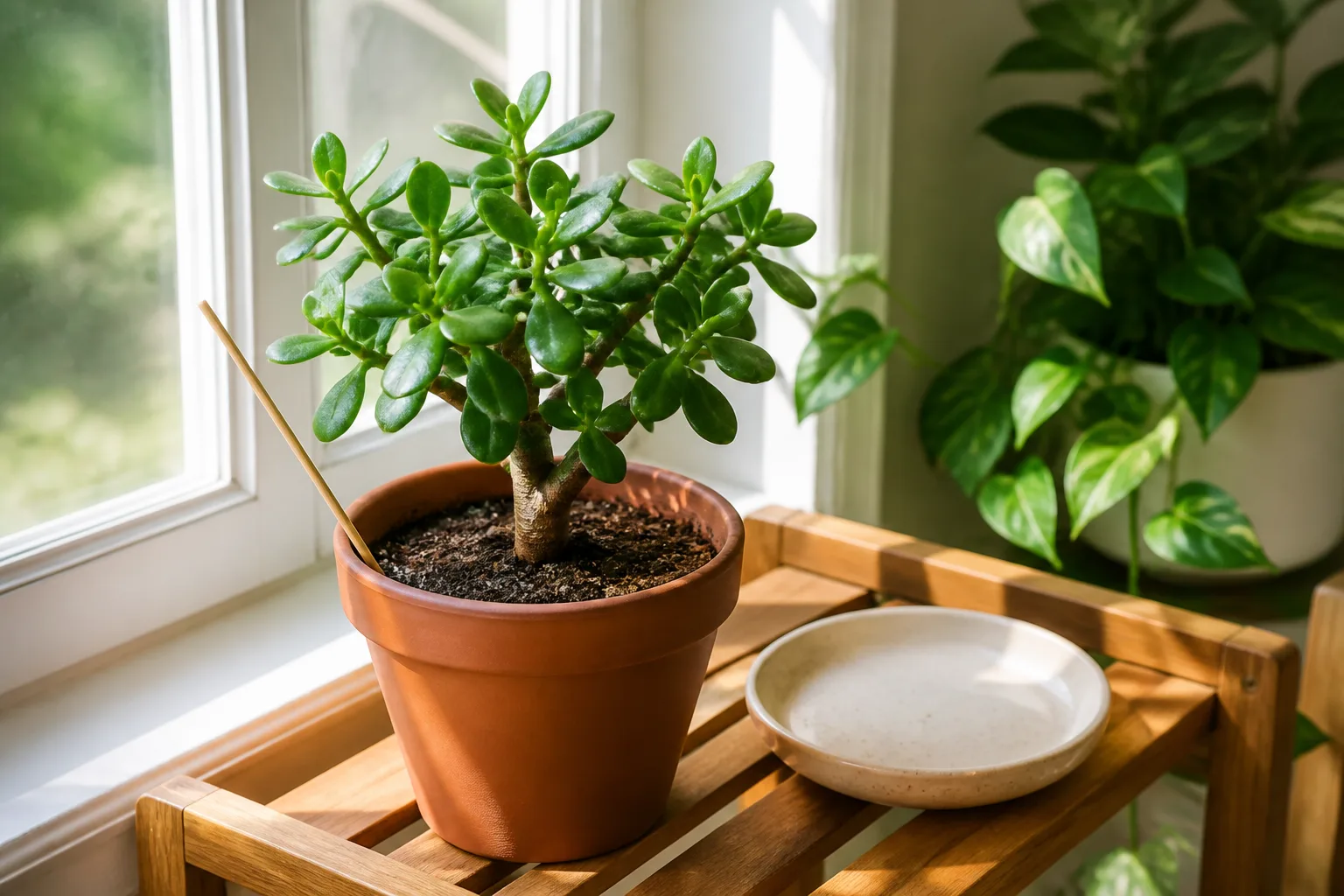
After pruning, let cut faces dry and callus for two to four days before resuming your normal watering rhythm. A light drink at the base is fine if the soil was already dry, but avoid soaking a freshly cut plant — open wounds plus wet soil invite rot at the cut surface.
Place the jade in bright light — four or more hours of direct sun if acclimated, or strong indirect light at minimum. Wisconsin Horticulture Extension emphasizes that four or more hours of direct sun produces normal compact growth and red leaf edging; dim conditions undo your pruning work on the next growth flush.
Recovery expectations in active spring or summer with good light:
- Bud swell at nodes: 2–3 weeks
- Visible new branches with firm leaves: 3–6 weeks
- Noticeable canopy fill: 8–12 weeks
The same cut made in late fall or winter may show no progress until spring warmth returns. If new shoots emerge pale and stretched, light — not more pruning — is the fix. Review the jade plant light guide before making a second round of cuts.
Hold fertilizer until new growth is established, then resume a dilute balanced feed during the active season per your normal jade plant care routine.
Common Pruning Mistakes to Avoid
Pruning for shape without fixing light is the most common error. You get a briefly shorter plant that stretches again within one growth cycle.
Cutting between nodes leaves bare stem that cannot branch. Always identify the node below your target point.
Using dull or dirty tools crushes stems and introduces infection. Wipe blades with alcohol.
Pruning a stressed plant — recently repotted, overwatered, or heat-shocked — compounds damage. Wait until leaves are firm and the soil dries on your normal schedule.
Removing too much at once stalls the plant for a season. Respect the 20–30% guideline.
Leaving cuttings on the soil surface where they root accidentally in the parent pot, creating a tangled mess. Move cuttings to a dry tray if you are not propagating immediately.
Ignoring pet safety. Fallen leaves and stems are attractive to cats. The ASPCA lists jade as toxic; discard or propagate cuttings promptly and wipe sap from floors.
What to Do With Your Pruning Cuttings
Healthy stems and leaves removed during pruning are propagation material, not compost. Wisconsin Horticulture Extension confirms that jade is especially easy to propagate from stem or leaf cuttings, with cut surfaces healing in a few days before rooting.
For stem pieces: let cuts callus in a dry, warm spot for three to five days, then insert into well-draining succulent mix. For leaves: lay them on dry soil without burying. Full step-by-step methods — water vs soil, rooting hormone, timing — live in the jade plant propagation guide. For deeper pruning technique on this species, the jade plant pruning page covers node placement and tree training in even more detail.
Conclusion
Pruning a jade plant is one of the highest-return jobs in succulent care: a few clean cuts in spring, placed above the right nodes, transform a leggy, lopsided specimen into a balanced shrub or miniature tree. Start with deadwood and disease, shorten weak stems to viable nodes, pinch soft tips through summer, and never remove more than about one-third of living growth at once.
Match every cut with bright light and patient aftercare — callused wounds, restrained water, and realistic recovery timelines. Save your healthy trimmings for propagation, keep blades clean, and keep toxic cuttings away from pets. Your jade will not grow fast, but it will grow deliberately — and that is exactly the point.



