Dispose of Old Mower Gas Safely—Reuse or Drop Off
Left gas in the mower over winter? Learn how to drain it safely, tell if fuel is reusable, when to mix it into a car, and where to drop off bad gas legally.
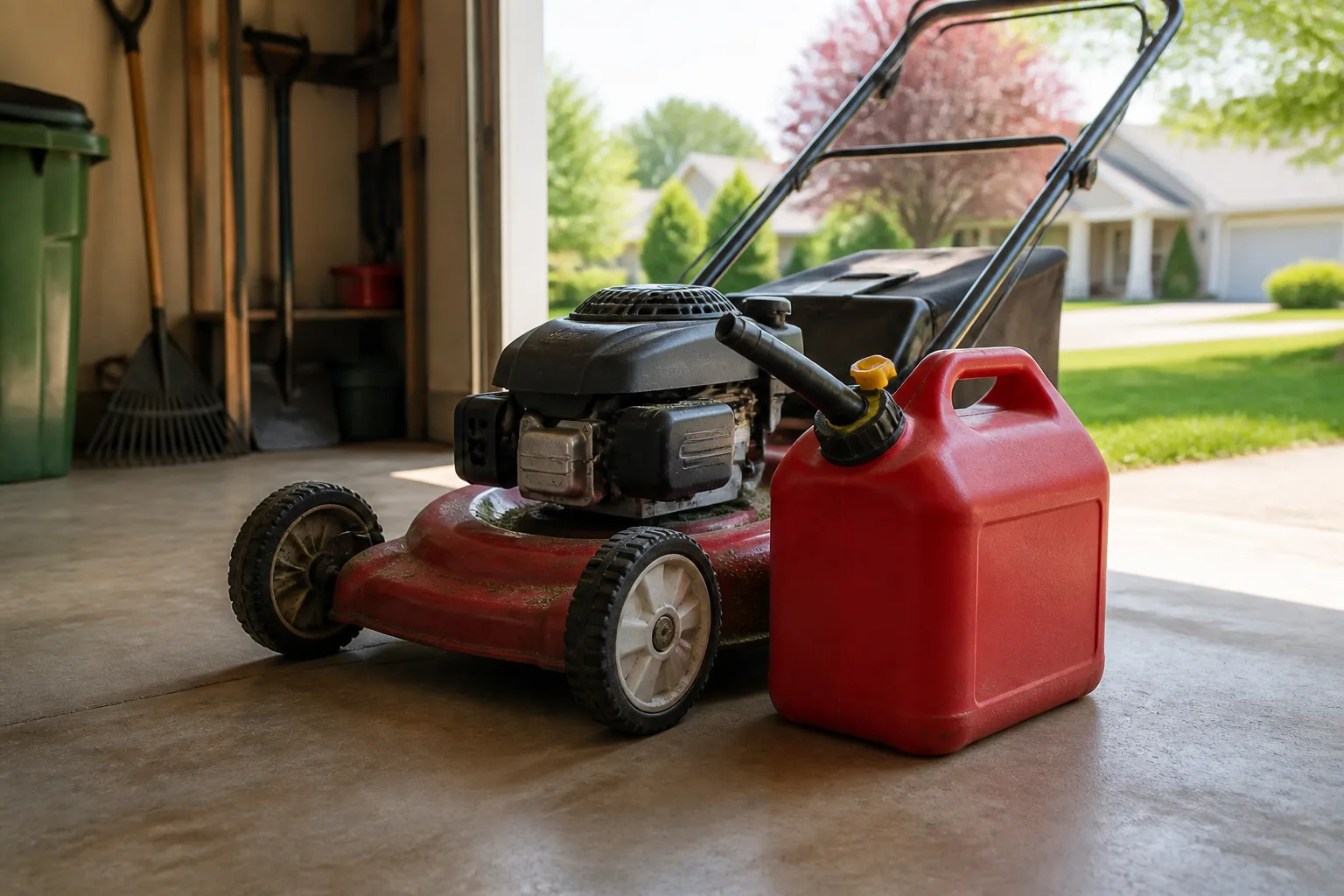
You finished mowing for the year with fuel still in the tank. That leftover gasoline is not harmless storage—it is a flammable, regulated waste that can gum up your mower by spring if you handle it wrong. The safe plan is simple: drain the tank, decide whether the fuel is still usable, then either dilute clean old gas into a vehicle or deliver bad fuel to a household hazardous waste (HHW) site. Never pour it on the lawn, into a storm drain, or into household trash.
The quick answer: drain it, test it, then reuse or drop it off
Work outdoors, away from sparks and open flames, with the engine cool and the spark plug wire disconnected if you will open fuel lines. Drain the tank into an approved portable fuel container (typically five gallons or less, with a tight cap). Pour a small sample beside fresh pump gas in clear jars and compare color, clarity, and smell.
If the old fuel looks and smells like normal gas—with no water layer, sediment, or sour odor—you can often use it up by adding a small amount to a nearly full car tank or transferring it to another four-stroke tool that will run soon. If it is dark, cloudy, separated, or smells off, do not mix it into your mower or car. Take it to an HHW collection site or community fuel drop-off event. The U.S. EPA directs homeowners with old gasoline to contact their state or local solid and hazardous waste program for legal disposal options (EPA hazardous waste FAQs).
Why old gas in a mower causes spring problems
Leaving untreated fuel in a mower over winter is one of the fastest ways to turn a reliable Saturday machine into a hard-start, surging, stall-prone headache. Small-engine fuel systems have narrow passages; once varnish or separated ethanol-water sludge forms, cleaning costs more than a season of fresh gas would have.
How fast gasoline goes stale in a small tank
Most homeowners notice problems after 30 to 90 days, depending on storage conditions. Pure gasoline can last roughly three to six months in a sealed container; ethanol-blended fuel—what most U.S. pumps sell—often degrades faster, sometimes within about three months, because it absorbs moisture and oxidizes (Bob Vila). Gas in a mower tank is worse than gas in a tight can: the tank vent breathes, temperature swings create condensation, and residual fuel in the carburetor bowl degrades first.
That is why spring “fixes” like topping off stale tank fuel with fresh gas usually fail. You dilute the problem without removing gums already forming in the carburetor. If your mower starts then dies after winter, stale fuel is the first suspect—see our lawn mower starts then dies guide after you drain and refill.
Ethanol, moisture, and phase separation over winter
Ethanol attracts water. In a shed or garage that freezes and thaws, moisture can accumulate until the blend separates: a water-rich layer sinks while degraded fuel floats above. Engines that draw from the bottom of the tank can ingest water; engines that do not may still stall on the thickened, low-volatility fraction left behind. Petroleum-product guidance from the EPA notes that gasoline releases from equipment—including lawn mowers stored with fuel—must be handled under state and federal rules because of human and environmental risk (EPA petroleum products fact sheet).
Decide first: can you reuse this fuel or must you dispose?
Not all “old” gas is bad gas. Age alone is not the test—contamination and separation are. Decide before you haul a jug across town or dump half a gallon into your sedan.

Signs the gas is still usable
Good candidate fuel is light in color, clear or only slightly darker than fresh pump gas, free of floating particles, and smelling like gasoline—not sour varnish. Pour samples into two clear containers and compare side by side, as recommended in practical disposal guides (Bob Vila). If the questionable sample is only a bit darker and otherwise clean, you can plan to use it up quickly in a large fuel tank—not store it another season.
Four-stroke lawn mowers (most modern walk-behinds) burn straight gas. That same uncontaminated fuel can often go into a car’s tank in small amounts, or into a snow blower or other four-stroke outdoor tool you will run within weeks. The Shorewood, Wisconsin Conservation Committee—a municipal source many disposal articles reference—notes that unused mower gas can be added to a car or another gas-powered engine when it is still good, while two-stroke equipment needs the correct oil mix if you transfer fuel there (Shorewood Conservation Committee).
Signs the gas must go to hazardous waste
Dispose of fuel—not reuse it—when you see cloudiness, dark amber color, gum or sediment, rust flakes, or a visible water layer at the bottom of a sample jar. A sour or varnish smell compared with fresh gas is another clear stop sign. Phase-separated ethanol blends and gas that already clogged a mower should be treated as contaminated. Do not mix this into fresh fuel in your mower tank in spring; you risk repeating the carburetor problems that sent you searching for disposal advice in the first place.
How to drain gas from a lawn mower safely
Gasoline vapor is heavier than air and travels along the ground. Work outside, keep a Class B fire extinguisher within reach if you have one, and never smoke. Disconnect the spark plug boot before loosening fuel lines so accidental crank energy cannot ignite vapor.
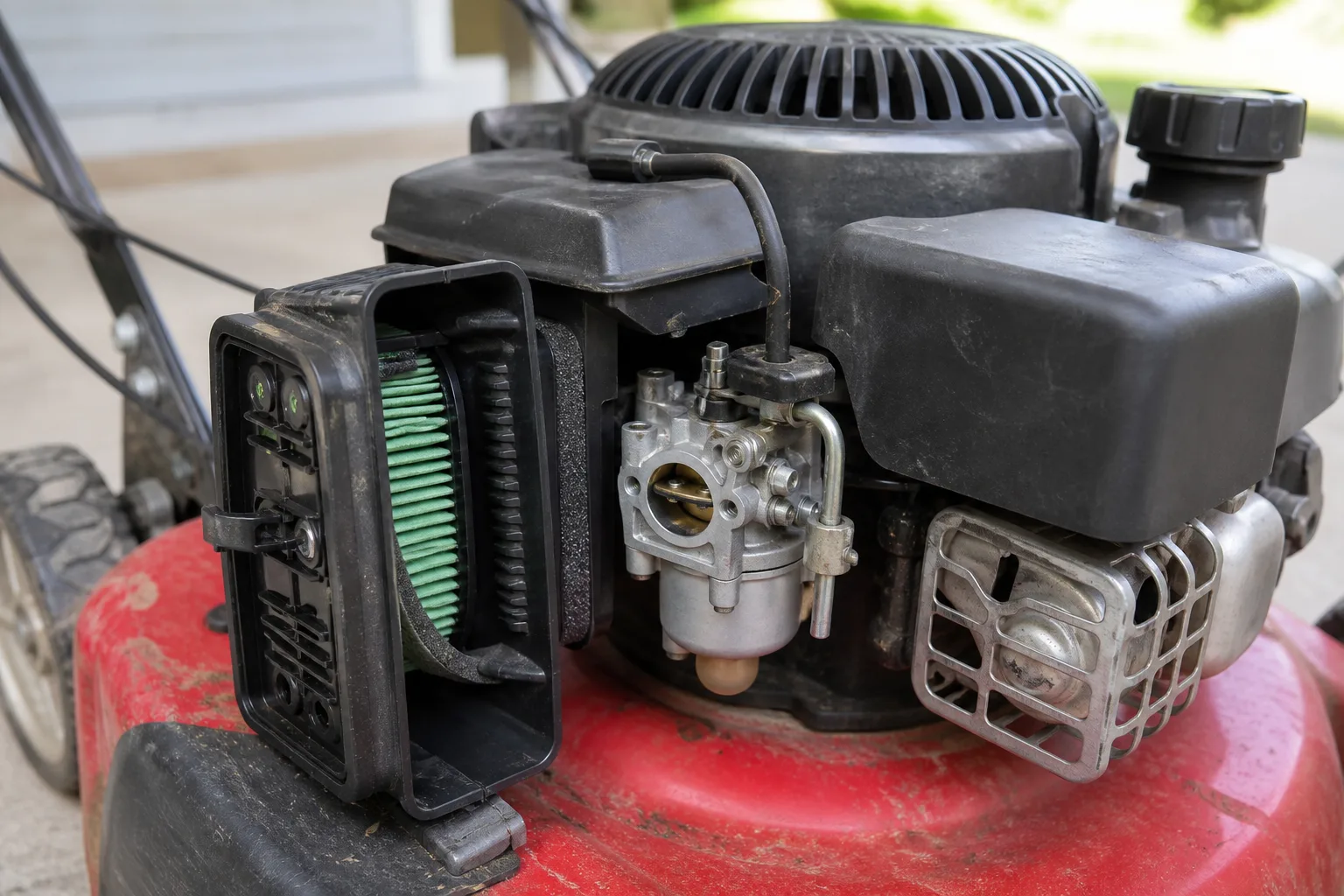
Siphon, baster, or fuel-line disconnect
Siphon pump or dedicated turkey baster: The most universal method. Insert the pickup tube into the tank, drain into an approved container, and fill the container no more than about 95 percent full so fumes have headspace. Never mouth-siphon—ingestion is a medical emergency; call poison control at 1-800-222-1222 if swallowed (Bob Vila).
Fuel-line disconnect: Some mowers—many Honda models, for example—use a visible fuel line between tank and carburetor. Clamp or pinch the line if your service manual shows how, disconnect at the carburetor end, and drain into a low tray, then funnel into your certified container. Briggs & Stratton engines on some mowers mount the carburetor directly on the tank with no separate fuel line; on those, siphon from the fill neck is usually the correct path (Shorewood Conservation Committee). Always confirm against your owner’s manual before opening lines.
After draining, run a few ounces of fresh fuel through if you will store the mower empty, then discard that rinse if it looks dirty. Replace an inline fuel filter if your model has one and the season’s fuel sat a long time—it is cheap insurance before spring.
Why running the mower dry is a last resort
Idling until the tank is empty still shows up in old advice, but municipal conservation guidance now treats it as slow, fume-heavy, and unnecessary compared with siphoning (Shorewood Conservation Committee). You spend time generating exhaust for a small volume of fuel, annoy neighbors, and still may leave residual fuel in the carburetor bowl. Reserve run-dry for equipment with no safe drain path and good ventilation—not as the default end-of-season plan.
Safe ways to use up old-but-clean fuel
Reuse is disposal-by-consumption when the fuel is still combustible and uncontaminated. The goal is to dilute old gas in a large tank so it burns cleanly without clogging a small carburetor jet.
For automobiles, practical guidance suggests adding roughly one-half gallon of old gas to a nearly full 9–10 gallon tank, or up to about one gallon into a 16-gallon tank that is at least three-quarters full—then drive normally until the tank needs refilling (Bob Vila). Avoid this shortcut for lawn mowers, trimmers, and other small carbureted tools; old gas can settle and carry sediment that blocks small passages. Power-equipment dealers routinely see spring failures after customers “refresh” mower tanks with a blend that still contains separated bottom layers.
If you will run a snow blower or generator soon, transferring clean leftover four-stroke fuel there beats storing it until spring. Label the can with the date you filled it when you buy fresh gas next year so you are not guessing in October.
How to dispose of bad gasoline legally
Gasoline is toxic and flammable. Federal and state rules prohibit treating it like regular trash or pouring it onto soil or into drains (Bob Vila). Legal disposal means delivering it to a program equipped to recycle or incinerate fuel—not “getting rid of it” on your own terms.
Find household hazardous waste collection near you
Start with your county or city waste district website and search “household hazardous waste” plus your location. Many counties run fixed HHW sites and seasonal collection events that accept gasoline, oil, and solvents. The EPA’s archived auto-service FAQ is blunt: for old gasoline, call your state solid and hazardous waste contact (EPA hazardous waste FAQs). National locators such as Earth911 can surface nearby drop-off sites; your local fire department may also know accepted locations and quantity limits.
Hours, fees, and gallon caps vary. Call ahead with: how much fuel you have, whether it is in an approved container, and whether they return empty containers or require you to leave the jug. Some programs—like those operated by regional sewerage districts—also run mobile collection units during warm months (Shorewood Conservation Committee).
Transport rules for approved fuel containers
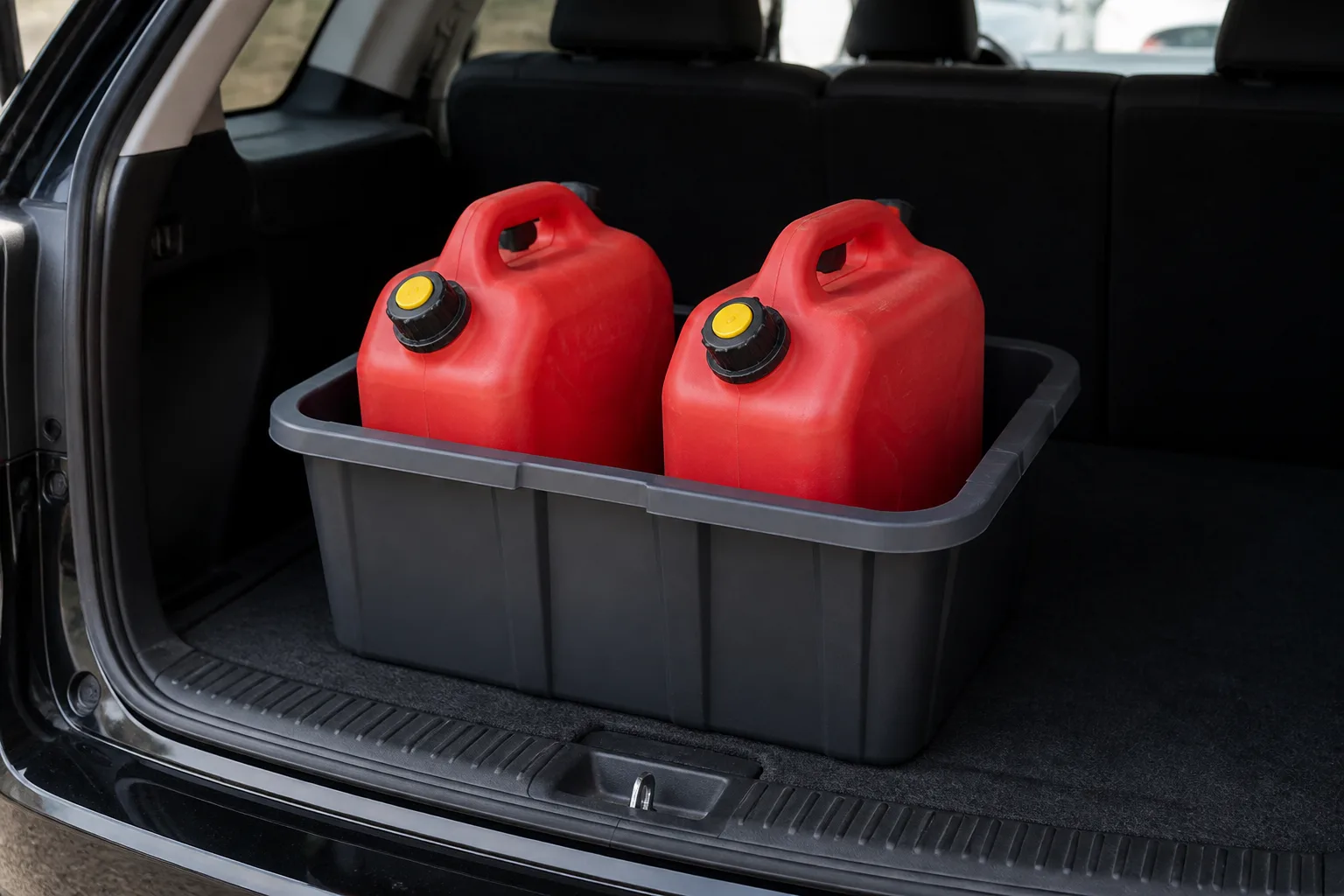
HHW sites expect fuel in UL-listed or otherwise certified portable containers, typically five gallons or less, with caps that seal tightly (Bob Vila). If your mower tank is not certified, funnel slowly to avoid static sparks; keep your face away from the spout.
For the drive, stand the container upright inside a secondary bin or cooler that can contain a spill if the cap weeps. Do not smoke in the vehicle. At the site, follow staff directions—they may pour your fuel into a bulk tank and return your can, or ask you to leave a disposable container. Treat gas-soaked absorbents (kitty litter used on a spill) as hazardous waste too, not as regular garbage.
What never to do with old gasoline
Do not pour gasoline on the lawn, garden beds, compost, or soil. Even small amounts contaminate soil, harm soil organisms, and can reach groundwater or storm drains after rain. Gasoline is highly flammable; outdoor pouring creates vapor trails that can ignite from a distant spark.
Do not dump down household sinks, toilets, or storm drains. Wastewater systems and waterways are not designed for petroleum disposal, and illegal dumping can carry fines.
Do not put liquid gas or gas-soaked materials in curbside trash or recycling. Bags rupture; collection trucks compress loads; fires result.
Do not mix clearly bad gas with fresh gas in your mower hoping spring will sort it out. Start the mowing season with fresh fuel and stabilizer if the machine will sit again; tie that habit into yearly lawn equipment maintenance so fuel care sits beside blade sharpening and oil checks.
Do not store questionable fuel “just in case” in an unlabeled milk jug or open bucket. Use only approved containers, labeled with the fill date, in a cool, ventilated area away from living spaces and ignition sources.
Prevent stale fuel next season
The cheapest disposal is the fuel you never have to throw away. Buy only what you will burn within a month during active mowing; a single gallon often covers a small suburban lot for several cuts. When you fill a can, write the date on the label.
If the mower may sit more than 30 days, add fuel stabilizer to fresh gas in the can before filling the tank, then run the engine a few minutes so treated fuel reaches the carburetor. Stabilizers slow oxidation and can extend storage toward one to three years, but they work best added to new fuel—they cannot reliably resurrect separated, sour gas (Bob Vila).
At season’s end, choose drain-and-dispose or drain-and-use-up over leaving a half tank idle. Pair that with a sharp blade and clean deck from our how to mow a lawn checklist and when to replace lawn mower blades guidance so spring starts with fresh fuel and clean iron—not a repair bill.
Battery mowers sidestep fuel disposal entirely. If you are tired of seasonal drain rituals, an electric mower eliminates the tank—but gas machines still dominate many garages, and they reward owners who treat fuel like the hazardous material it is.
Conclusion
Old gasoline from your lawn mower is a safety and environmental decision, not a shrug-and-forget chore. Drain it with a siphon or proper fuel-line method, compare a sample to fresh gas, and either use clean leftovers quickly in a large engine or deliver bad fuel to an HHW program that accepts gasoline. Pouring it on the yard, mixing separated fuel into spring tanks, or storing it in uncertified jugs creates bigger problems than the half gallon you are trying to lose. Handle this once at shutdown, and your mower is far more likely to fire on the first pull when the grass grows again.