How to Winterize Strawberry Plants for Spring
Learn how to winterize strawberry plants in beds and containers: choose the timing, renovate without losing buds, mulch correctly, and uncover in spring.
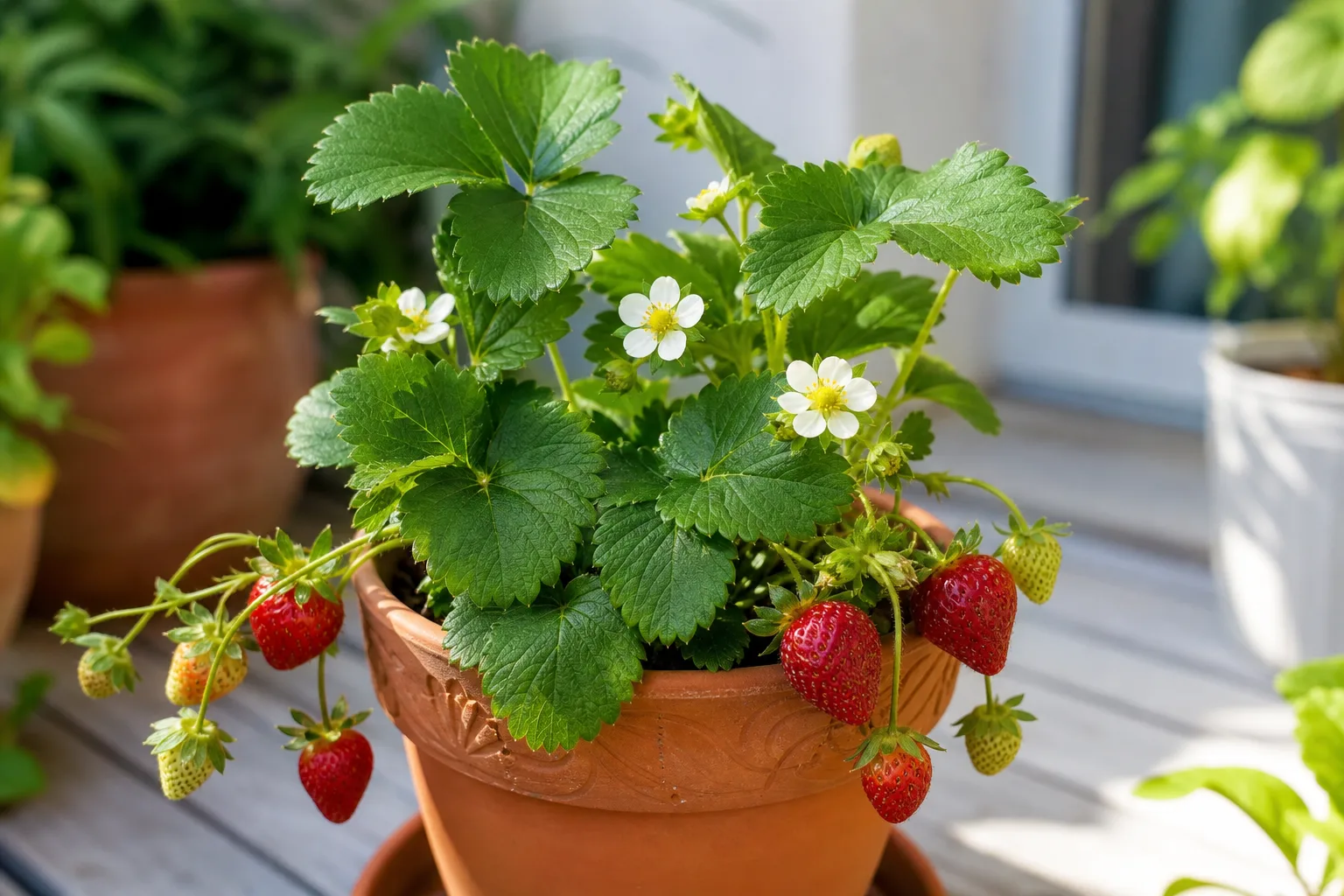
Strawberries do not need to be pampered through winter, but they do need the right kind of protection at the right time. Their shallow roots and low-growing crowns sit close to the surface, where repeated freezing and thawing can lift plants, dry out exposed tissue, or turn a poorly drained bed into a cold, wet trap. The flower buds that will make next season’s berries also develop before winter, so a careless late cut can remove the harvest you are trying to protect.
The reliable approach is simple: let plants slow down, tidy the bed without cutting into the crown, avoid stimulating tender late growth, water before the ground freezes, and cover the dormant plants with loose material that insulates without sealing in moisture. The exact date and mulch depth depend on your cultivar, snow cover, bed construction, and winter severity. Use the guide below as a decision system, then adjust it to your local extension recommendations and the behavior of your own patch. University of Minnesota Extension’s strawberry guidance is a useful regional reference for cold-climate gardeners.
The winter job in one sentence
Winterizing means protecting the crown—the short, thick center where leaves, roots, and future flower stems meet—while keeping the plant cold, evenly insulated, and just moist enough to avoid desiccation. Strawberries are herbaceous perennials, not woody shrubs. University of Maine Cooperative Extension describes their winter state as quiescence, or a form of pseudo-dormancy that offers some protection but is not as robust as the true dormancy of many trees and shrubs. That is why exposure to extreme cold and rapid temperature swings can show up as dead or weakened plants months later.
The goal is not to keep a strawberry warm and actively growing. It is to buffer the crown from sharp changes. A loose blanket of straw or pine needles can hold a more stable pocket around the plant, reduce wind drying, and help prevent soil from expanding and contracting so violently that roots are pulled upward. It should not turn the bed into a wet, airtight compost pile. The University of Maine’s winter article makes the same distinction: mulch is one part of winter preparation, not a substitute for a well-drained, sheltered site.
If you are still learning the plant’s basic needs, start with the strawberry overview before changing the winter routine. Winter protection works best when the bed already has full-enough light, drainage, sensible spacing, and healthy nursery stock.
Know which strawberry type you have before cutting
Do not begin with the pruners. First work out whether the patch is June-bearing, everbearing, or day-neutral, because those plants do not all respond well to the same fall renovation. A plant label is useful, but so is its fruiting pattern: one concentrated crop in early summer usually indicates June-bearing; repeated flushes into late summer or fall suggest everbearing or day-neutral behavior.
June-bearing plants need their fall buds preserved
June-bearing strawberries produce their main crop the following year from flower buds formed during the previous season. After harvest, a June-bearing bed can usually be renovated by thinning crowded plants, controlling runners, removing weeds, and trimming old foliage according to local guidance. The important boundary is timing: a late, aggressive haircut after the plant has already formed its autumn buds can remove healthy leaves and bud-supporting tissue.
If the crop has finished and renovation is still well ahead of your normal first frost, a larger bed may be mowed or cut to the recommended height by a grower who knows the cultivar and timing. In a small home bed, hand pruning is safer. Remove leaves that are brown, diseased, or lying over the crown, but leave the growing point intact and avoid slicing through the short central stem. When the weather is already turning cold, choose sanitation and light thinning over a dramatic reshape.
Everbearing and day-neutral plants need lighter renovation
Everbearing and day-neutral plants may continue flowering or fruiting much later than June-bearing types. They generally do not need the same hard post-harvest renovation. Remove damaged or diseased leaves, clear dead fruit and debris, and cut runners that are draining energy from the mother plant or filling a container with extra crowns. Keep healthy green leaves unless a local recommendation for your specific production system says otherwise.
Runners are a choice, not a winter emergency. Keep a few well-rooted daughter plants if you want to renew the bed, but remove weak, diseased, or badly placed runners before they create a dense mat. In a pot, clipping runners is usually worthwhile because every extra plant competes for a small root volume. For a ground bed, a healthy runner can become next year’s replacement, provided you still have room to inspect and mulch the crowns.
When to winterize strawberry plants
The best time is after several hard frosts have slowed growth but before a sustained deep freeze, not the first cool evening of autumn. University of Minnesota Extension recommends applying straw mulch after plants are dormant and soil temperatures are consistently below about 40°F (4°C). The University of Maine points to leaves turning reddish and collapsing around the crown after several hard frosts as a practical sign of quiescence.
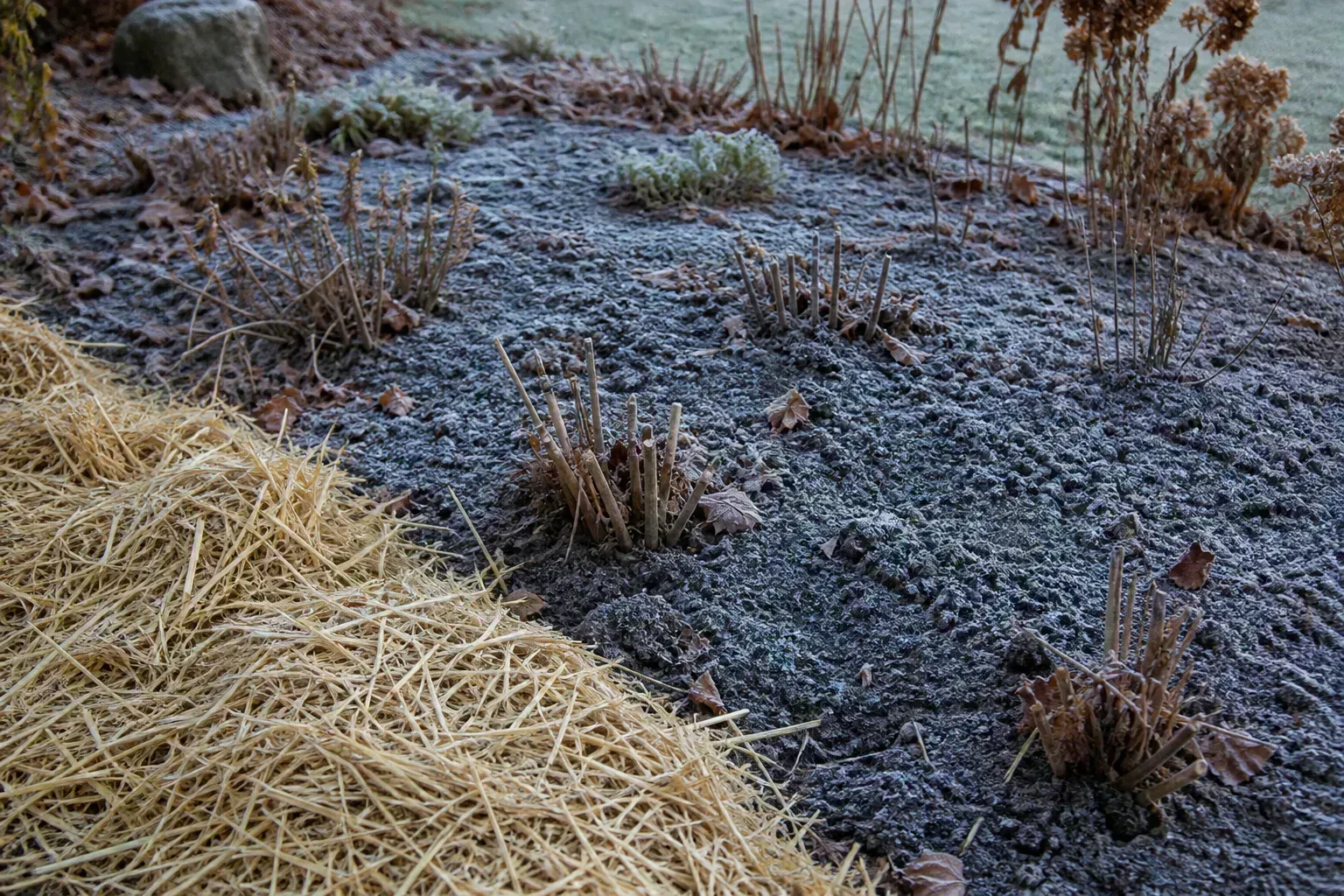
The useful timing window comes after growth has slowed, while there is still time to cover the crown before severe cold arrives.
Use plant signals, not a calendar alone
Calendar dates are only starting points. In many cold-winter gardens, the window falls in late fall, often after the first several frosts and before temperatures repeatedly fall into the low 20s°F. In a warmer area, plants may remain green for much longer, and heavy mulch applied too early can keep the crown damp and encourage unwanted growth. In a colder or windy site, waiting for a perfectly brown bed can leave an exposed crown vulnerable. Gardener’s Path gives a similar practical window while stressing that mulch should follow hardening-off rather than the first chilly night.
Look for three signals together: new leaf growth has stopped, most foliage has turned reddish or brown and lies low, and the soil is cooling rather than staying warm and actively growing. A single light frost is not enough if the plants are still pushing fresh leaves. On the other hand, if a hard freeze is forecast before the bed has fully collapsed, use a lighter temporary cover and finish the full mulch job once the plants have settled.
Adjust for snow, raised beds, and mild climates
Snow is useful insulation, but it is not a dependable plan. A garden that normally receives a deep, continuous snow cover may need less elaborate mulch than an exposed bed where wind removes snow and freezes the soil repeatedly. The UMaine winter guidance emphasizes that site drainage, wind exposure, and cultivar hardiness matter before mulch is even applied.
Raised beds and strawberry pyramids are more exposed because the soil has less surrounding ground mass to moderate its temperature. Give them the deeper end of the recommended mulch range and pay close attention to wind. In mild climates, the task may be a thin, airy layer for occasional frost and dry wind rather than a deep blanket. If your region rarely freezes the ground, do not copy a northern six-inch treatment by default; the extra moisture and shelter can create more problems than the cold.
Renovate the bed without damaging the crown
Do the cleanup on a dry day while the bed is still easy to see. Pull weeds, remove rotting berries, rake away fallen tree leaves that are matting against the plants, and discard foliage with clear disease symptoms rather than burying it under the winter cover. The purpose is to reduce hidden wet pockets and make spring inspection possible, not to make every plant look bare.
Thin the patch to the spacing your variety and growing system require. A dense matted row can be productive, but an overcrowded crown zone stays wet longer, makes rodents harder to detect, and prevents mulch from settling as an airy layer. Keep healthy replacement runners where they are useful; remove runners that have rooted in paths, climbed over neighboring crowns, or created a tangle you cannot inspect.
Use clean, sharp pruners for individual cuts and wipe away visibly diseased material between plants. Do not dig around the crown just to loosen the soil before winter. Strawberry crowns are shallow, and root disturbance late in the season can leave gaps where cold air and water collect. If a plant has been lifted by freeze-thaw movement already, wait for workable soil and reset it with the crown at soil level rather than burying it deeper.
For more detailed decisions about what to remove, use the strawberry pruning guide as a companion to this seasonal checklist. The winter rule is conservative: cut dead and diseased tissue, control crowding, and preserve the living center.
Decide on fertilizer and water before covering
Fall fertilizer is not automatically part of winterization. The attached competitor page treats a balanced 10-10-10 feed as a general step, but that advice is too broad for every bed and climate. Late applications of readily available nitrogen can push soft, lush growth when the plant should be hardening off. UMaine Cooperative Extension specifically cautions against late-season nitrogen, such as applications after mid-August in its region, because it can delay quiescence.
Use a soil test, your cultivar’s production guidance, and your local extension calendar instead of guessing from a fertilizer label. If the bed was adequately fed during the growing season and foliage is healthy, adding more fertilizer before mulch may do nothing useful. If a test or local recommendation calls for a fall application, apply the correct product and rate early enough for the plant to use it, keep granules off the crown and foliage, and water according to the label. Do not use blood meal or a high-nitrogen product as a universal winter insurance policy.
Water deeply enough to moisten the shallow root zone before the ground freezes, then stop if the soil is already wet. Gardener’s Path reports a common home-garden starting point of about one inch of supplemental water per week through the first freeze when rain is lacking, but the number is not a command to irrigate a saturated bed. Check below the surface, account for rain, and make sure drainage is working.
Containers need more winter monitoring because they dry out faster and also freeze faster. Before moving or covering a pot, water it thoroughly if the mix is dry, let excess drain, and remove any saucer that could hold ice-cold water against the root zone. Once the soil is frozen, do not keep adding water on a schedule; wait for a thaw and check the mix.
If your patch has a recurring moisture problem, fix that before adding mulch. The strawberry watering guide explains why even moisture and good drainage have to work together. A mulch layer can slow drying, but it cannot rescue a blocked pot or a bed that acts like a basin.
Apply winter mulch the way strawberries need it
Spread mulch loosely over the plants and the surrounding bed so the crown is buffered from wind and temperature swings. Do not pack it down by hand or create a dense cap. You want small air spaces between stems, not a compressed mat that remains wet for weeks. The University of Minnesota’s straw-mulch instructions also tie application to dormancy and removal to spring warming rather than to an arbitrary date.
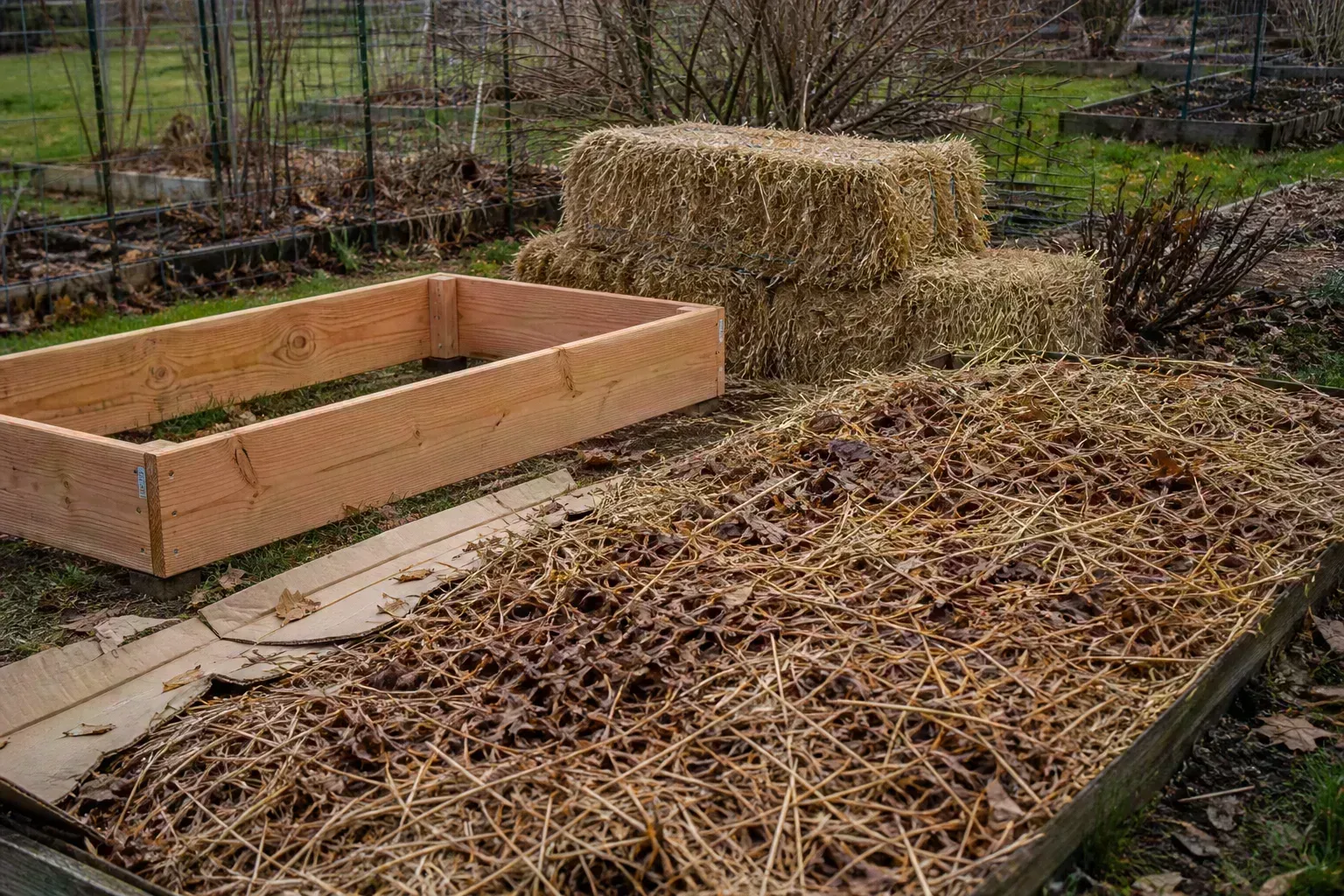
An airy layer insulates better than a wet, compressed blanket because it moderates temperature without blocking drainage and air movement.
Choose an airy, clean material
Clean straw is the standard choice in cold-winter strawberry beds. Wheat, oat, rye, or barley straw can work when it is dry and reasonably free of weed seed. Do not substitute hay casually: hay is made from forage crops and commonly carries seeds that will become a spring weed problem. Ask Extension’s recommendation likewise favors straw or pine needles and warns against materials that mat. Pine needles are another useful loose material where they are clean and plentiful.
Avoid thick layers of whole, wet leaves and fresh grass clippings. They mat, shed water unevenly, and can create a humid surface around crowns. Shredded leaves may be useful as part of a broader mulch system if they remain loose, but they are not the easiest first choice for covering strawberry crowns. Do not use plastic sheeting directly on the plants; it can trap condensation and offers poor air exchange unless it is part of a properly designed row-cover system.
Match depth to exposure
For a typical in-ground bed, start with about 3 to 5 inches of loose straw over the plants after it settles. Exposed raised beds, pyramid planters, and locations with little snow may need about 6 inches, following local extension guidance. A container or hanging pot may need a comparable insulating layer around the pot as well as over the crown because its sidewalls are exposed to freezing air.
Depth is measured after the material has settled, not only as the height of the first fluffy handful. If wind is a problem, use a light net, chicken wire, or other breathable restraint held above the foliage so the mulch stays in place. Do not lay a heavy board directly over the plants. Check the bed after a storm and add loose material if the crowns are exposed.
Keep the crown covered, but do not mound dense soil over it. The crown must remain at its original soil level. If the bed has poor drainage, more mulch is not the answer; improve the bed structure, slope, or raised-bed design in the next growing season.
Container strawberries need a different winter plan
A pot can be healthy all summer and still fail in winter because its root ball is surrounded by cold air on every side. The safest option depends on pot size, local minimum temperature, drainage, and whether you have a cold but protected space. The RHS strawberry guide confirms that strawberries grow well in containers, but container roots need more attentive moisture and exposure management than plants rooted in the ground.
First remove unwanted runners and dead leaves, then let the plant experience the same gradual cooling as the outdoor bed. Do not move a dormant strawberry straight from full sun into a heated living room and expect the transition to be harmless. Warm indoor conditions can interrupt the plant’s winter rest and produce weak growth at a time when light is limited.
You have three practical choices:
- Bury the pot: Dig a hole deep enough to bring the soil level around the pot close to the surrounding ground. Set the container in the hole, fill around it with soil, and cover the top with loose straw as you would an in-ground bed. This uses the ground as insulation and is often the most stable option for a pot that is too heavy to move.
- Use an unheated shelter: Move the pot to an unheated garage, shed, cold frame, or similarly cold space protected from wind. The space should stay cold enough for a winter rest but not so warm that the plant resumes active growth. Check the mix every few weeks during a thaw and water only if it is becoming completely dry.
- Insulate it outdoors: Group pots against a sheltered wall, keep drainage holes open, and wrap the outside of the container loosely with burlap or another breathable material. Surround the pot with straw, leaves held loosely in place, or other insulating material. This is more exposed than burying the pot, so it works best in milder areas or with additional local protection.
HGTV and Gardener’s Path both describe sheltered storage, pot insulation, and burying containers as ways to reduce winter exposure. Homes & Gardens also emphasizes bringing containers into a protected place before severe cold. Whichever option you choose, keep rodents from turning a thick straw nest into a hiding place by using clean material and checking the setup without repeatedly disturbing a frozen plant. A pot left outdoors on a stand is more vulnerable than one placed on the ground and grouped with other pots.
What can go wrong under winter cover
The most common mistake is mulching by date instead of by plant condition. A warm, green strawberry bed covered in early autumn can stay too damp and may continue growing under the cover. The second is waiting until the soil is already frozen hard. The mulch then sits on top while the crown has already been exposed to the most damaging temperature swing.
The material itself can cause trouble. Hay introduces weeds, whole leaves collapse into a wet layer, and a compacted straw cap can hold moisture against the crown. If you lift the cover during a thaw and find a sour smell, slimy crown tissue, or blackened foliage, do not simply add more material. Improve airflow and drainage, remove the worst affected debris, and reassess whether the site is staying saturated.
Late pruning is another hidden failure. Removing all green leaves from a June-bearing plant after fall buds have formed can reduce the plant’s ability to carry those buds into spring. Cutting into the crown can kill the growing point directly. And overwatering a dormant container because the calendar says “water weekly” can be more damaging than a brief dry spell.
Finally, do not expect mulch to correct an unsuitable cultivar or site. A tender variety in a wind tunnel, a crown planted too deeply, persistent crown disease, and waterlogged soil require a different fix. Winter care improves the odds; it does not erase the plant’s basic growing conditions.
Check the patch during winter
Most in-ground beds need very little attention once the mulch is in place. Inspect after heavy wind, rain, or a warm spell. Look for crowns exposed by shifting mulch, standing water, collapsed mats, and evidence that rodents are tunneling through the cover. Repair the layer with dry, loose material, but avoid turning the inspection into weekly disturbance.
In a dry winter with little snow, the crown can lose moisture even while the surrounding soil is cold. If the ground is workable and not frozen, check moisture near the edge of the bed. Water only when the root zone is genuinely dry and the weather allows it to drain. Containers in a cold shelter are more likely to need occasional water than dormant plants under frozen outdoor soil, but neither should be watered by rote.
Keep a note of what happened. Record the date you mulched, whether the material stayed in place, how much snow the bed received, and when new growth appeared. That small record will help you adjust the depth and timing next year more intelligently than copying a generic November date.
Remove mulch in spring without delaying the crop
Spring removal is not a ceremonial rake-through; it is part of protecting the harvest. Leave a deep, wet cover over actively emerging plants and you can delay growth, reduce flower-bud development, and create a cold, damp surface that encourages pests and disease. Leave no protection at all and an early frost can damage new flowers.
Use the soil and the plants as your signals. UMN Extension advises removing straw when soil temperatures reach about 40°F, while UMaine notes that strawberry growth should be allowed to begin as early spring plants awaken. In a home garden, start checking when the snow has receded, the soil is workable, and small new leaves or crowns are visible. Pull the mulch back on a dry day rather than removing every piece at once during a week of unpredictable freezes.
Rake most of the straw into the paths or between rows, leaving a light, loose layer where it can keep future berries off the soil. If a late frost is forecast after green growth appears, move some clean straw back over the plants overnight or use a breathable row cover supported above the foliage. Remove that temporary protection after the cold event so it does not shade or overheat the bed.
Do not turn old, moldy, or visibly diseased straw into a new crown cover. Compost it only if your composting system gets hot enough and local disease guidance allows; otherwise dispose of it. Fresh, clean material is cheap insurance compared with carrying a winter problem into the fruiting season.
Triage plants when spring arrives
Start at the crown, not the leaf tips. A plant that looks brown after winter may still have a firm, living center with green tissue hidden under the mulch. Gently remove cover from the crown and watch for new leaves. If the crown is firm and the roots are still anchored, clear the area, leave the plant in place, and resume normal spring care.
If freeze-thaw movement has lifted the plant, press surrounding soil around the roots and reset the crown so its base sits at soil level. Do not bury the center to compensate for heaving. Water it in once, then allow the bed to drain. If the crown is soft, hollow, or black through the center, replacement is usually more realistic than trying to revive it with fertilizer.
Check for a second issue before blaming winter: poor spring growth can also come from waterlogged soil, crown disease, severe nutrient imbalance, animal damage, or a variety that is not suited to the site. The strawberry soil guide can help you separate a drainage problem from a feeding problem, while the strawberry fertilizer guide keeps spring feeding from becoming a guess. For container survivors, inspect the drainage holes and refresh the repotting plan only after the plant is actively growing.
Conclusion
The best way to winterize strawberry plants is to protect the crown without forcing the plant to stay warm or grow. Identify the plant type, renovate gently, clear diseased debris, avoid late nitrogen unless local guidance calls for it, water the shallow root zone before a freeze, and apply loose clean straw or pine needles after the plants have settled into winter rest.
Use the deeper end of the mulch range for raised beds and exposed sites, and treat containers as a separate engineering problem: bury the pot, store it in an unheated shelter, or insulate it outdoors while keeping drainage open. In spring, uncover gradually when the soil and new growth say it is time, keep some mulch between rows, and inspect the crown before feeding. These steps cannot guarantee a bumper crop, but they give next season’s flower buds and roots a far better chance to reach spring intact.



