Nakia Maples Philly Plant Guy Episode 7 Guide
Tour Nakia Maples' 350+ plant South Philly home from In the Weeds Episode 7 — watering workflow, humidity room setup, and collector lessons.
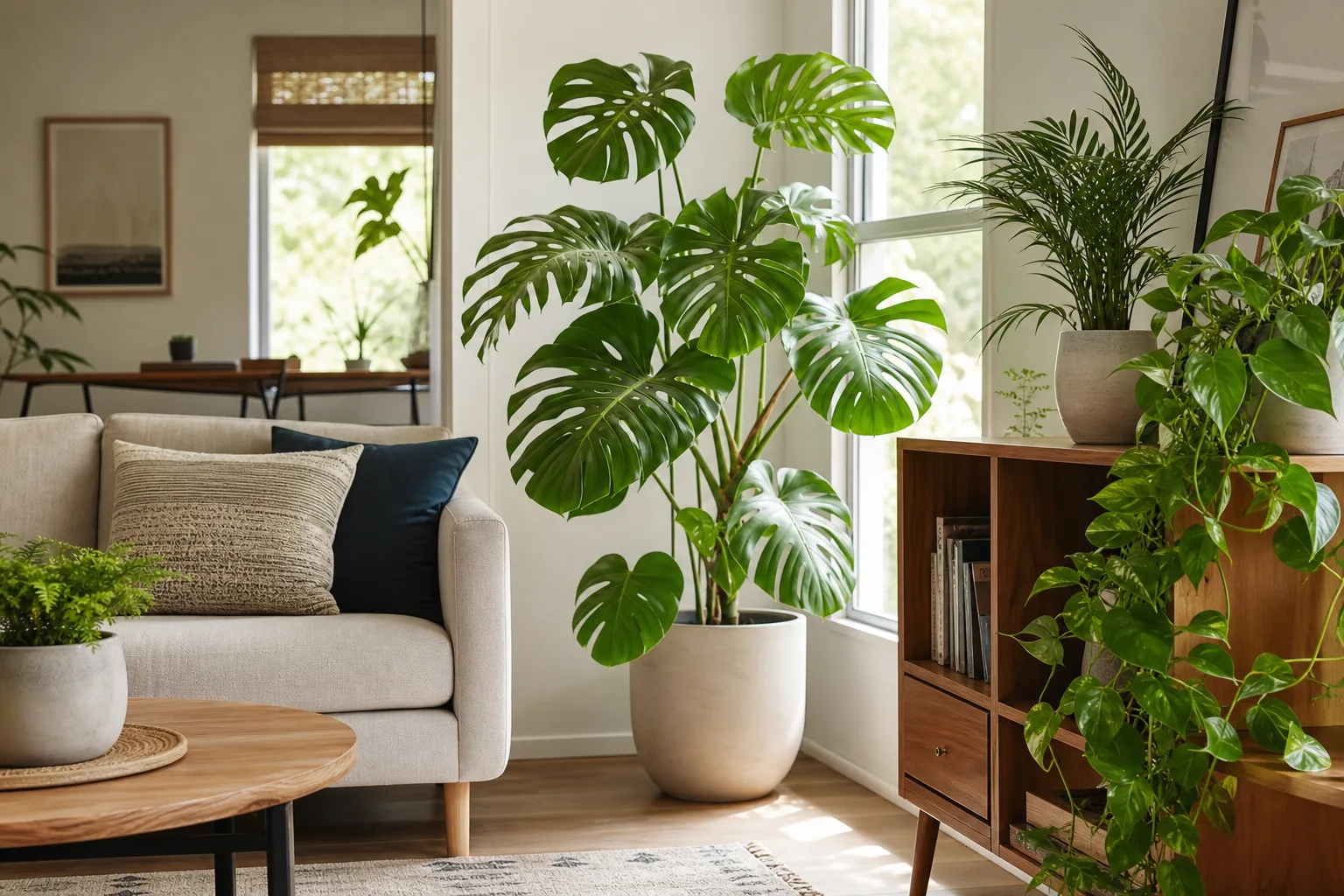
Walk into Nakia Maples’ South Philadelphia rowhouse and the first sensation is humidity on your skin, then green at every height — trailing cactus spines brushing a doorway, begonias catching window light, philodendron stems disappearing behind pots you cannot count from one spot. Nakia documents the collection as @phillyplantguy on Instagram, and Episode 7 of In the Weeds With Plant People follows him through that home with the camera at plant level: not a styled showroom, but a working indoor jungle where 350+ specimens share space with a rescued turtle, a lace-curtained plant room, and a watering routine that consumes roughly half a week.
This page treats the tour the way a serious collector would — not as background viewing, but as a case study in scale: how someone maintains triple-digit humidity lovers in a Northeast rowhouse, what breaks when density gets extreme, and which habits you can borrow even if you will never own 350 pots.
Meet Nakia Maples and his South Philly indoor jungle
Nakia Maples is known across Philadelphia plant circles as the Philly Plant Guy — a nickname that stuck after neighbors watched him carry more than 200 plants into his corner rowhouse on Halloween and started asking whether he was opening a store. He is a stagehand with IATSE Local 8 who has worked set dressing on films and opened major city venues; he credits that spatial reasoning for placing hundreds of pots so the home reads as intentional greenhouse, not chaotic clutter (Philadelphia Inquirer).
The collection has grown since that 2018 profile — episode coverage and later interviews place it above 350 plants — but the philosophy has stayed constant: plants are beyond him, something he never takes for granted, and the work of living with them can integrate into ordinary life if you build systems instead of relying on memory.
From a childhood “plant house” to 350+ specimens today
Nakia’s origin story is specific enough to remember. As a child he visited a friend’s parents’ apartment that functioned as a plant house — greenery visible the moment you crossed the threshold — and decided immediately that was how he wanted to live. That early imprint matters because large collections rarely survive on buying alone. They survive when the owner treats density as a long-term identity, not a phase.
His plant family is roughly ten years old in its current form. He began with carnivorous plants — pitcher types like Sarracenia that demand different water and light logic than tropical foliage — before expanding into the philodendrons, anthuriums, alocasias, and trailing specimens that dominate the tour today. Starting with specialists forced early lessons in mineral-free water, seasonal dormancy, and the reality that some pots will die despite attention.
Stagehand spatial skills and why placement still matters at scale
At 350 pots, “where does this go?” becomes infrastructure. Nakia hangs plants from ceilings, stacks shelves along walls, and groups humidity lovers behind a lace curtain — choices that reflect set-design thinking: sight lines, weight load, and paths you can walk while carrying a watering can.
Copy the principle without copying the count:
- Leave maintenance corridors. A wall you cannot reach without knocking neighbors guarantees hidden pests and dry pockets.
- Group by water chemistry, not only by Instagram aesthetic. Carnivorous and calcareous-sensitive tropicals should not share a tray with hard-water lovers.
- Load-test shelves. Mature aroid mixes in ceramic get heavy; a bookshelf doing double duty fails silently until it does not.
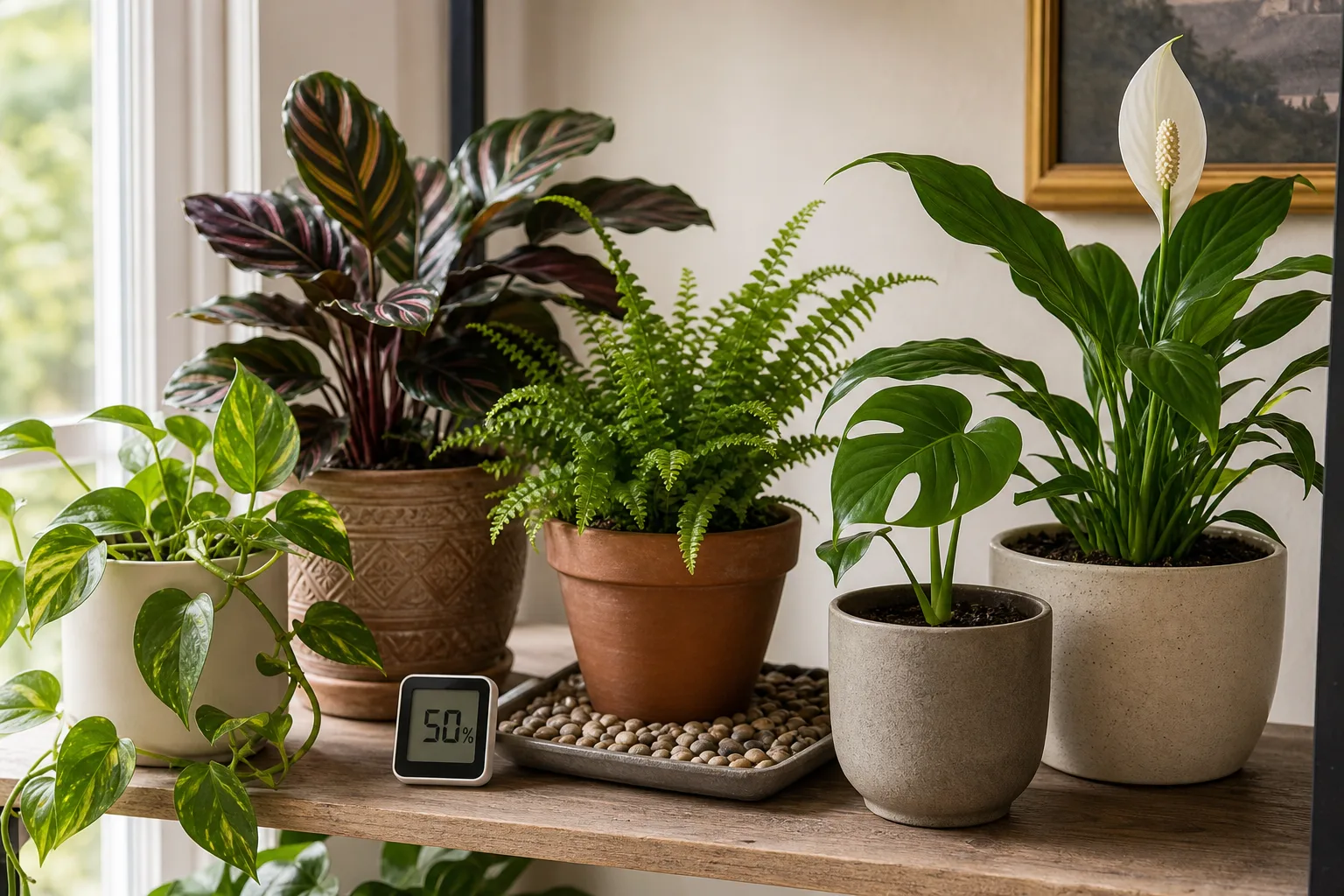
Episode 7 tour: what the camera actually shows
Episode tours move fast. Slowing Nakia’s walk exposes three recurring themes: specimens that start conversations, genetic quirks that reward close looking, and losses handled as data rather than drama.
Golden Rat Tail Cactus and other conversation-starting specimens
Nakia’s Golden Rat Tail Cactus (Cleistocactus winteri subsp. colademononis, commonly sold under rat-tail names) hangs with long cascading stems covered in fine golden spines — beautiful to collectors, intimidating to guests who brush past a doorway. That tension is part of large-collection life: you choose plants for your eye, then teach household traffic patterns accordingly.
Trailing cacti want bright light, excellent drainage, and rest periods where water slows in cooler months. In a dense jungle they also need air movement around spined stems; otherwise neighboring foliage traps moisture against epidermis and invites rot at the soil line. Position them where you will actually inspect — not where they become wallpaper.
The mutated pothos and what multi-leaf nodes really signal
Nakia’s pothos (Epipremnum aureum) produces several leaves from a single node — uncommon enough to notice, stable enough to keep. Multi-leaf nodes usually reflect genetic sport, hormone balance, or recovery growth after damage rather than a magic fertilizer outcome. Document the plant, propagate a backup cutting if you like the look, and keep expectations modest: sports can revert.
For most growers the lesson is simpler: named oddities become collection anchors because they force daily observation. The pothos gets checked because it is weird, and that check catches thirsty neighbors nearby.
Kalanchoe casualties and a healthy attitude toward plant loss
The tour includes honesty about a Kalanchoe Nakia tried to revive — “unfortunately he is passing.” That matters more than another hero shot. At triple-digit scale, annual loss rates are nonzero even for skilled growers. Nakia’s response — through experience I’ll learn how to take care of more like it — is the operational mindset that keeps collections growing instead of shrinking after every failed rescue.
Treat each death as post-mortem data: Was light wrong? Did a humidity-room plant sit in stagnant air? Did batch watering skip a dry pocket behind a larger neighbor? Keep a note on your phone. At 350 plants, intuition alone will miss patterns.
Why watering 350+ plants takes half a week
The headline hook — about three days, roughly half a week — is not performative slowness. It is what happens when every pot is inspected individually in a home without a greenhouse irrigation grid.
Short answer for collectors: Nakia spreads watering across multiple sessions because he checks soil moisture, leaf posture, and pest signals plant by plant, not because he pours the same volume on a calendar schedule. At 350 pots, even two minutes per plant exceeds eleven hours — before repotting, wiping leaves, or rotating toward light.
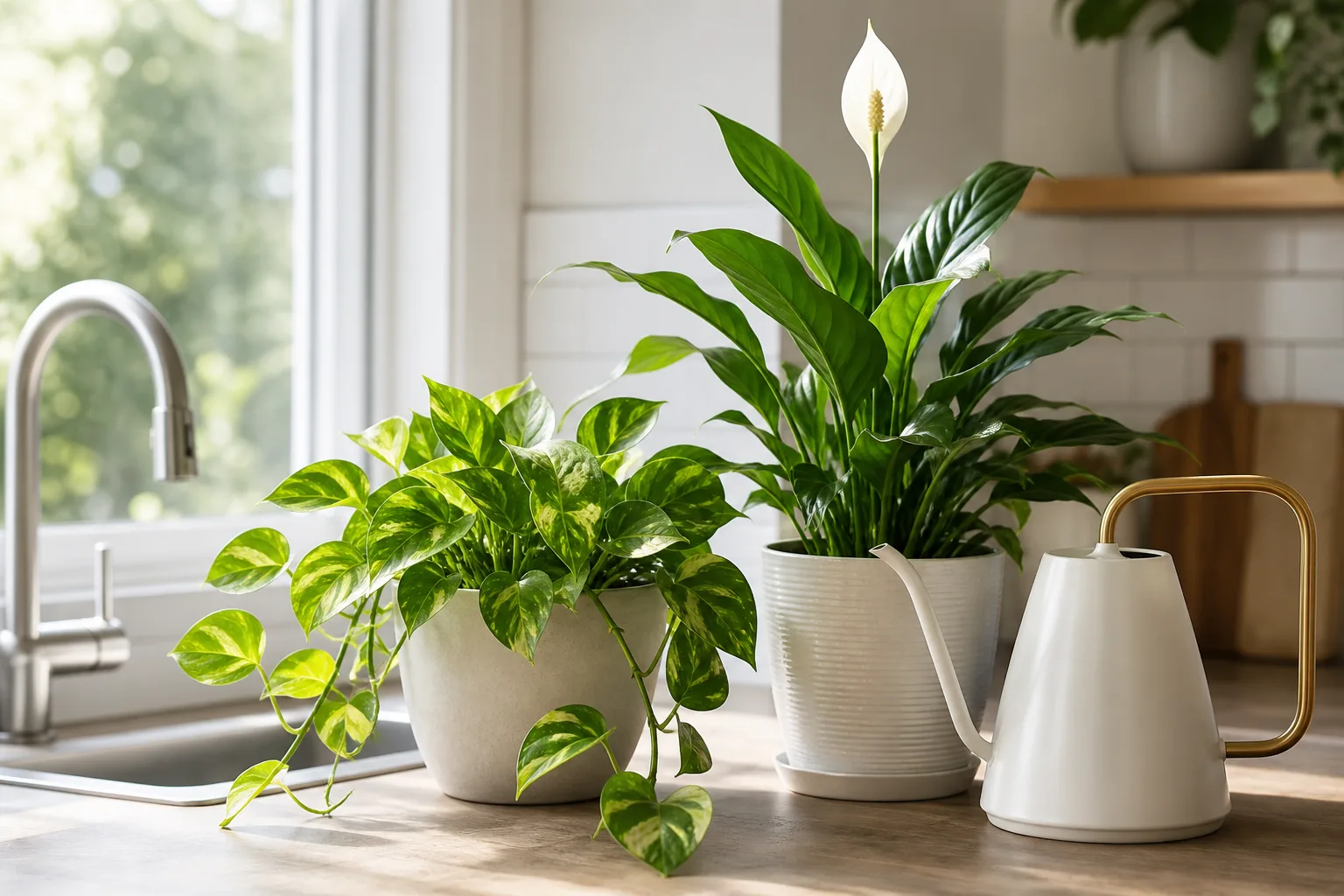
Batch zones: how collectors divide a rowhouse into watering days
Efficient large collections run on zones, not vibes:
- Humidity-room tropicals — often checked first; higher transpiration and tighter pots dry unevenly.
- Bright-window fenestration lovers — monsteras, many philodendrons, variegated ghosts that drink faster in strong light.
- Moderate-light foliage shelves — pothos, syngoniums, trailing displays.
- Succulents and cacti — separate day entirely; fat-leaf logic conflicts with aroid rhythm.
- Carnivorous trays — separate water source; never share hard tap on a batch day.
Assign one or two zones per evening after work, or a long weekend block for hanging plants that require ladder access. Nakia’s stagehand schedule makes distributed maintenance more realistic than a single Sunday marathon — and marathons hide fatigue mistakes (skipping back-row pots, overfilling trays).
Top-water vs bottom-water when pots are stacked floor to ceiling
Top watering remains the default for most houseplants because you see runoff and soil sink immediately. In stacked shelves, use a narrow-spout can and accept that lower pots may get splash — wipe standing water on saucers the same day.
Bottom watering helps seedlings, moisture-sensitive calatheas, and porous terracotta when top crusts stay dry while cores remain wet. It is slow at scale: each pot needs a reservoir tub and soak time. Collectors use it selectively, not as the only method for 350 pots.
NC State Extension notes that anthuriums prefer moist, well-drained soil and watering when soil dries to the touch, with rainwater or purified water ideal (NC State Extension). That “dry to the touch” rule is why batch days include finger checks, not calendar autopilot.
The inspection pass that prevents hidden dry pockets
Density creates microclimates: a large alocasia shades a small anthurium; a hanging rat-tail cactus dries faster than a floor pothos three feet away. Nakia’s half-week rhythm works because each pass is also surveillance — mealy behind a sheath, spider mite stippling on a new unfurl, a pot that stayed heavy ten days too long.
Build a simple checklist per zone:
- Lift or tilt small pots — weight beats memory.
- Scan new growth — pests colonize tender leaves first.
- Rotate quarter-turn when you water — uneven light shows up as lopsided growth within two weeks.
- Log the stragglers — anything skipped gets a sticky note on the shelf edge until the next pass.
Talking aloud during this round — which Nakia does constantly — helps only insofar as it slows you down to complete the checklist.
Inside Nakia’s dedicated humidity room
Behind a lace curtain sits Nakia’s plant room — floor-to-ceiling tropicals, soft background music, a leather couch with a 76ers blanket, and Silly the Turtle filtering water in the corner. Inquirer reporting describes it as a “designated place for anxiety” where friends can call, sit in silence, and reset (Philadelphia Inquirer). Episode 7 emphasizes the engineering side: humidity cranked high for rare foliage that would crisp in the dry air of the broader house.
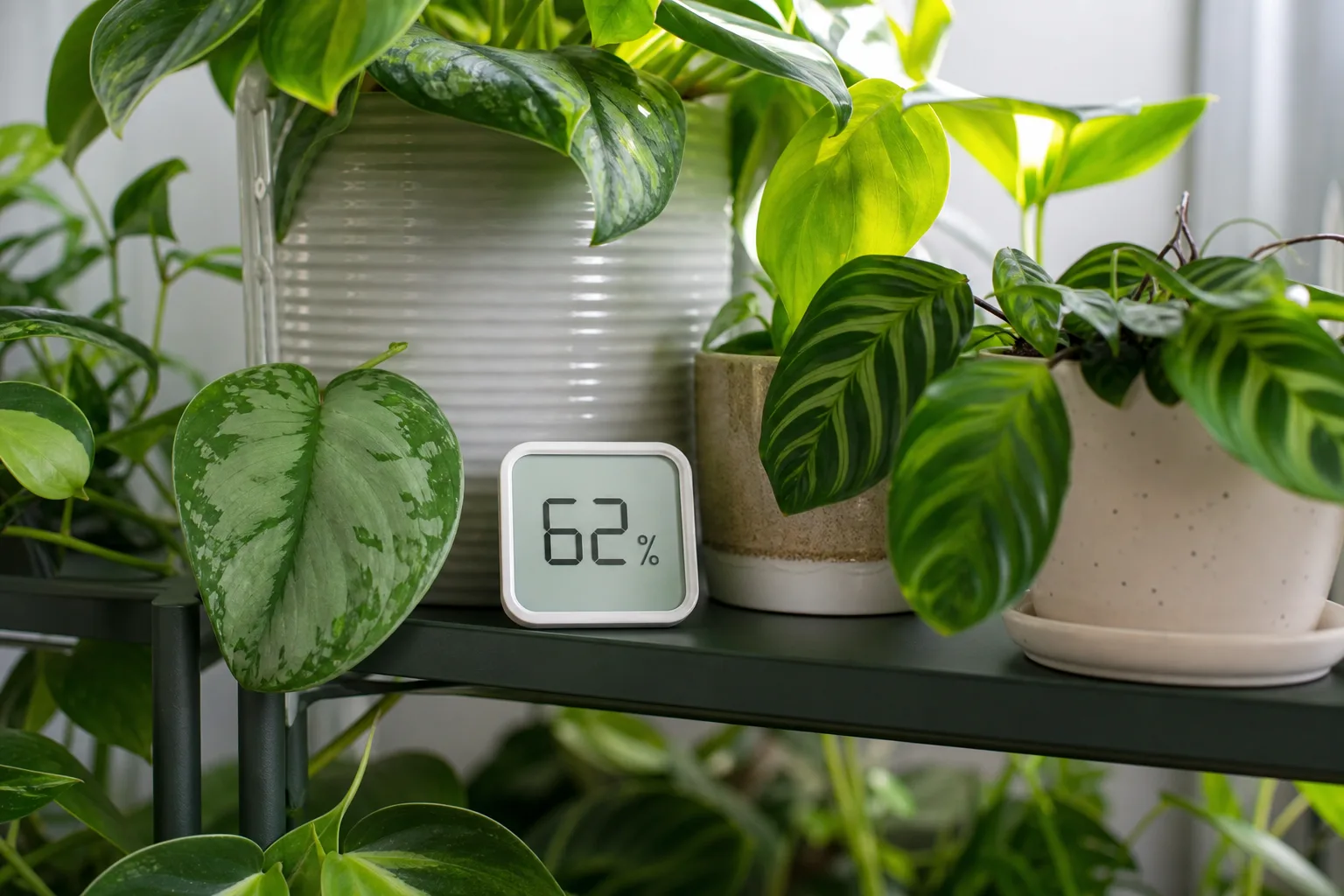
Which plants earn a sealed tropical room — and which do not
Not every houseplant belongs in a humidity chamber. Reserve closed-room treatment for species that show chronic tip burn, stuck leaf unfurls, or velvety leaf damage in normal indoor RH (often 30–45% in heated rowhouses):
- Variegated philodendrons like Florida Ghost — white sectors lack chlorophyll and stress faster.
- Anthurium radicans and other velvet-hybrid anthuriums — prefer warm, very humid conditions per extension guidance.
- Small-stature anthuriums that disappear visually among larger neighbors — exactly Nakia’s three-week hide-and-seek story.
- Select alocasias when nighttime temps stay above 65°F and air does not stagnate.
Keep succulents, most cacti, and finicky carnivores out — shared humid air encourages fungal issues on species that want dryness and sharp light.
Humidity targets, airflow, and the mold risk most tours skip
Target 60–80% RH for many tropical aroids, measured with a hygrometer, not guessed from fog on glass. Humidifiers, pebble trays, and tightly grouped foliage raise RH; small fans prevent the stale-air mold that destroys expensive leaves anyway.
Extension sources repeat the trade-off: anthuriums want humidity high enough to protect leaf margins, but overwatering still causes root rot (NC State Extension). A humid room is not permission to keep soil soggy — it is permission for transpiration without crisping.
If you cannot dedicate a room, approximate with grow cabinets, clear-bin terraria, or a bathroom with bright grow lights — smaller scale, same principles.
The $900 Variegated Florida Ghost and realistic rare-aroid budgets
Nakia’s Variegated Florida Ghost — a white-emerging philodendron cultivar — cost him about $900 and lives in the humidity room alongside Anthurium radicans. That price is not a flex; it is risk capital. Rare variegated philodendrons punish inconsistent humidity, cold drafts, and root rot faster than green pothos ever will.
Before similar purchases, budget for:
- Stable humidity and light infrastructure — often hundreds of dollars before the plant arrives.
- Backup propagation if you secure a node — insurance against single-stem loss.
- Quarantine period — two to three weeks away from the main collection to avoid pest import.
If $900 exceeds your comfort, juvenile hybrids from reputable growers or shared purchases with trusted friends scale risk the way other collector tours describe — without requiring a dedicated room on day one.
Philodendrons, anthuriums, and the plants Nakia checks first
Personality shows up in which pots get named, which get daily conversation, and which disappear until a leaf yellows. Episode 7 highlights philodendron favorites, anthurium hide-and-seek, and an alocasia love story.
Philodendron X Evansii and Burle Marx: favorites with different jobs
Nakia calls Philodendron X Evansii a favorite he checks often — a hybrid lineage plant with large ornamental foliage that signals health through new leaf size and spacing. Philodendron Burle Marx, by contrast, reads as tall, slender, cheerful structure in his words — useful vertical punctuation in rooms where trailing plants dominate sightlines.
Hybrid philodendrons vary in light appetite; treat the genus as case-by-case. When a favorite hybrid pushes small leaves or long internodes, increase bright indirect light before reaching for fertilizer. When leaf edges brown despite moist soil, suspect dry air or salt buildup first.
Anthurium radicans and the hide-and-seek problem in dense collections
Anthurium radicans — a compact velvet-leaved species — went missing for about three weeks because smaller pots vanish visually among larger neighbors. That is not a joke; it is a maintenance failure mode at scale.
Fixes collectors actually use:
- Front-row staging for small pots until they size up.
- Uniform bright cachepots for mini anthuriums so color signals location.
- Shelf maps — a phone photo with labels updated seasonally.
- Weekly “small pot sweep” on the watering calendar — nonnegotiable at 100+ plants.
Anthuriums prefer 65–85°F, bright indirect light, and very humid air without direct sun scorch (NC State Extension). Hidden behind a large elephant ear, a radicans can decline quietly until roots fail — exactly the scenario batch watering is meant to catch.
Alocasia Serendipity and the “when you’re happy, plants are happy” idea
Nakia describes Alocasia Serendipity as “the one” — love at first sight — and links its vigor to household mood: when you are happy, plants are happy. Horticulturally, translate that to consistent care rhythms: alocasias often die from irregular watering and cold drafts, not from abstract emotional fields.
Serendipity-type alocasias want warm roots, bright filtered light, and humidity high enough to finish leaf unfurls. If you chase alocasia beauty in dry winter air, pair the plant with humidity hardware or accept seasonal dormancy when bulbs pull energy back — a normal alocasia behavior, not personal failure.
Talking to plants: ritual, mindfulness, or inspection habit?
Nakia talks to his plants constantly — while passing, watering, trimming, asking how they are doing. Episode coverage frames it warmly; practical growers should extract the mechanism underneath.
Sound does not hydrate leaves. What helps is forced attention: you notice the anthurium tucked behind the begonia, the kalanchoe losing turgor, the pothos sport pushing a fourth leaf. Mindfulness language is fine if it keeps you present; checklists beat monologues when life gets busy.
If you want the benefit without the narration, set a phone timer per zone — minimum ten minutes, no skipping pots — and treat silence the same as speech. The plants do not care about vocabulary; they care that you showed up on schedule.
Building a large collection without burning out
Scale without systems becomes debt — unpaid watering, unopened mail-order boxes, guilt piles of crispy leaves. Nakia’s longevity comes from community, phased learning, and emotional realism.
Starting with carnivorous plants and learning through failure
Carnivorous beginnings taught specialized water, seasonal rest, and honest mortality before the easier foliage wins piled up. Beginners chasing jungle density should steal that sequence: master one difficult plant, then add a second only after the first survives a full seasonal cycle in your home.
Philly Plant Guy groups, swaps, and community knowledge exchange
The Philly Plant Guy Facebook group and Philly Plant Exchange extend Nakia’s rowhouse into a city network. He has reported hours-long question sessions — answering and asking in turn — because collective knowledge beats solo guesswork when species diversity explodes (Philadelphia Inquirer).
Swaps reduce cost, spread pest risk if you skip quarantine, and build local acclimated stock that already tolerates Philly rowhouse humidity swings. Treat every incoming plant as potentially carrying mealybugs until proven otherwise — nonnegotiable when your collection crosses triple digits.
When neighbors leave thank-you notes on your doorstep
Nakia keeps handwritten notes from South Philly neighbors thanking him for making the corner beautiful — “celebrating nature” on yellow paper, rescued leaves enclosed in cards from strangers who also save plants from trash piles. That feedback loop matters: large collections anchored in community visibility sustain effort when internal motivation dips.
You do not need 350 plants for that effect. One well-kept window box or a visible trellis on a porch can shift block aesthetics — Nakia’s scale is inspiration, not a minimum requirement.
Conclusion
Nakia Maples’ Episode 7 tour lands because it is honest about labor: 350+ plants in a South Philly rowhouse require days of watering, a dedicated humidity room for rare tropicals, and daily inspection habits disguised as conversation. The Golden Rat Tail Cactus, mutated pothos, passing kalanchoe, $900 Florida Ghost, and misplaced Anthurium radicans are not props — they are data points about what happens when density meets dedication.
Borrow what fits your life: zone watering, humidity hardware for finicky leaves, small-pot sweeps, quarantine discipline, and community swaps instead of solo overspending. Skip what does not: you do not need triple-digit counts, a lace-curtained anxiety room, or a half-week calendar to grow one plant house moment — the kind Nakia saw as a child and spent a decade building for real.