Is Lemongrass a Perennial? Zones, Winter Care, and Planting
Botanically perennial, practically annual in cold gardens. This guide explains USDA zones, container vs in-ground choices, indoor overwintering, and harvest timing before frost.
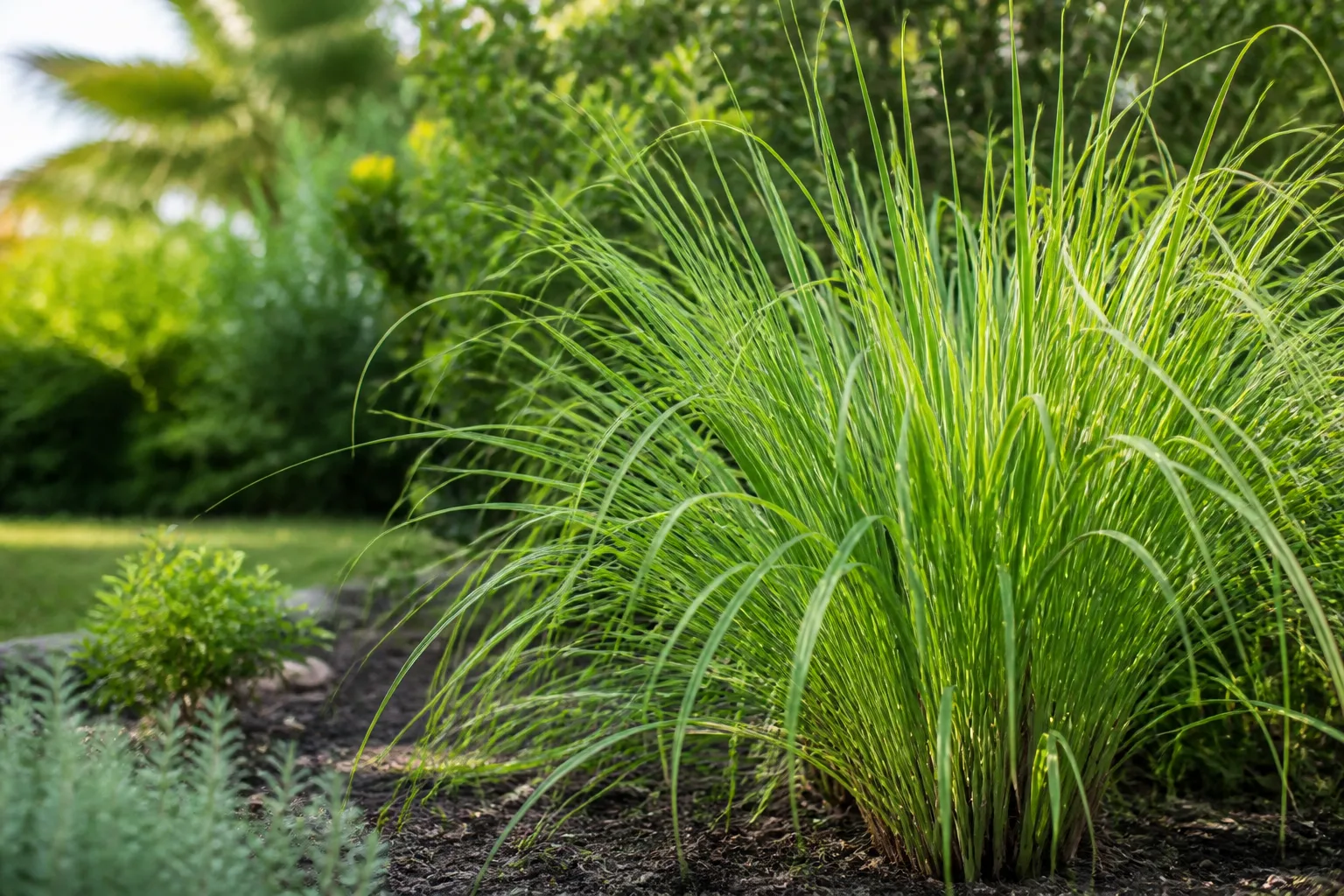
You picked up a small lemongrass start at the nursery, or rooted a grocery-store stalk in a glass of water, and now you are staring at a three-foot clump of arching green blades wondering whether it will still be there next May. Lemongrass is botanically a perennial — a clumping tropical grass that can live for many years when frost never reaches the crown. In most of the United States, though, the honest answer is more conditional: it is a perennial only where winters stay mild, and everywhere else you either grow it as a warm-season annual, keep it in a movable pot, or carry divisions indoors before the first hard freeze.
That distinction matters before you sink effort into a permanent bed. Planting in the ground without an overwinter plan in zone 6 means buying or rooting again next spring. Planting in a five-gallon pot on wheels in zone 5 can give you the same harvest with one autumn move indoors. The sections below walk zone by zone through what comes back, what dies, and exactly how to keep culinary Cymbopogon citratus alive from one season to the next.
The Short Answer: Botanically Yes, Practically Zone-Dependent
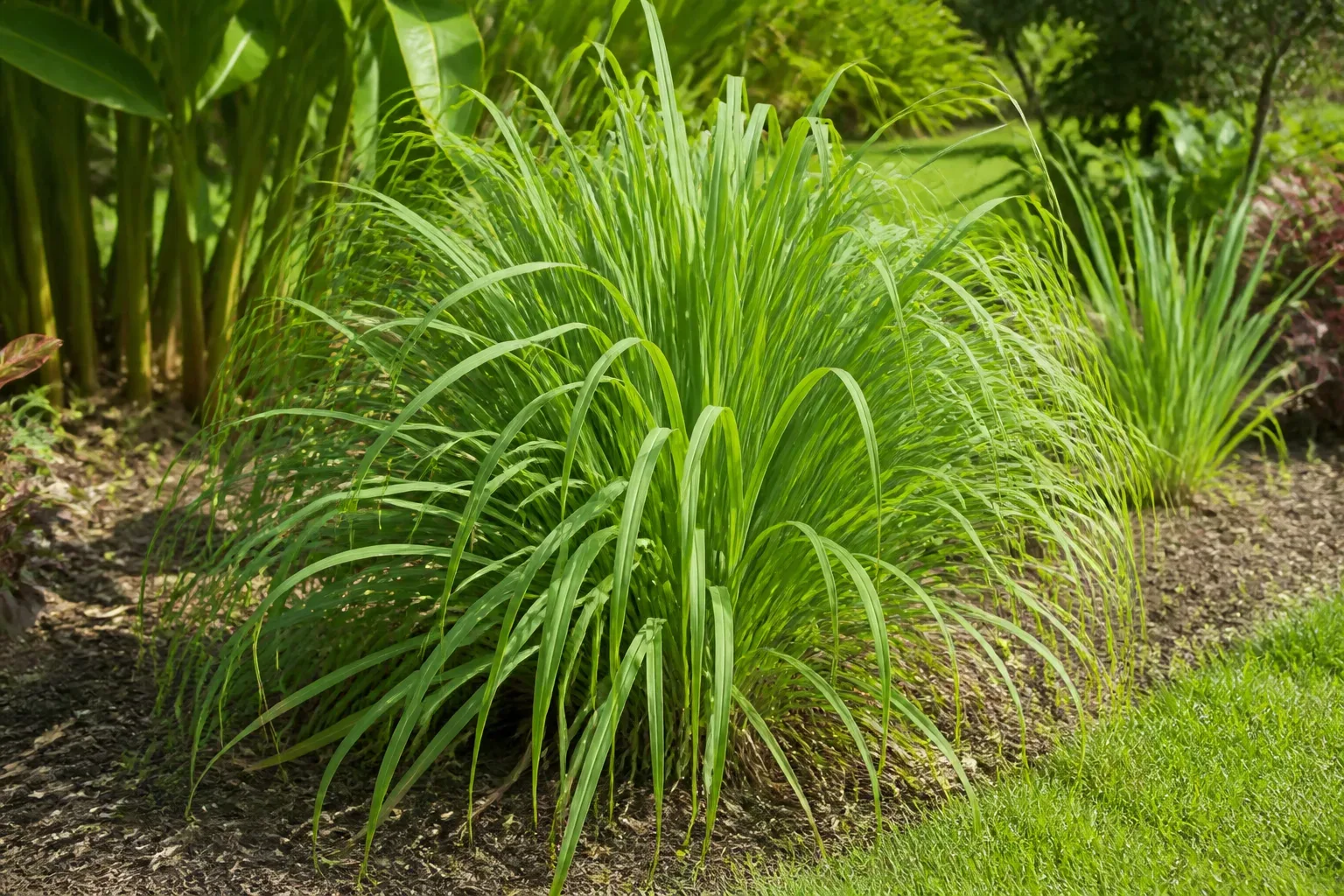
Yes — lemongrass is a true perennial in frost-free climates. Missouri Botanical Garden lists Cymbopogon citratus as winter hardy in USDA Zones 10–11, where foliage stays evergreen and clumps expand year after year (Missouri Botanical Garden). Utah State University Extension describes it as a tender perennial commonly grown as an annual in cooler parts of Utah (USU Extension). Both statements are correct because perennial describes the plant’s biology, while hardiness describes whether your winter lets it express that biology outdoors.
In practical garden terms, lemongrass behaves as a perennial in zones 9–11 when soil drains well and frost stays light. In zones 7 and colder, unprotected in-ground plants almost always die when hard freezes arrive. In the middle — zone 8 and warm zone 9 microclimates — you may see crowns survive with heavy die-back and mulch, but that is a gamble, not a promise. If you are north of zone 9 and want lemongrass to return without repurchasing, plan on containers plus indoor overwintering or the water-glass sprig method described later in this guide.
What perennial means for a tropical grass
Perennial does not mean indestructible. It means the plant’s root crown can initiate new shoots after stress if the crown itself survives. Lemongrass is a frost-tender clumping grass in the family Poaceae. It puts on rapid foliage growth in heat and humidity, then stalls below about 50°F (10°C) and dies back to the ground when frost hits the crown. NC State Extension notes that while it tolerates a range of soils, it should be overwintered as a container plant and not allowed to dry out in cold regions (NC State Extension).
Unlike hardy ornamental grasses that shrug off snow, lemongrass has no meaningful cold dormancy strategy for dark, freezing storage. Treating it like a canna or dahlia tuber in an unlit basement usually ends in a dead clump by February. Successful northern growers keep plants bright, cool, and barely moist — not dark and bone dry.
Lemongrass Species Worth Knowing Before You Buy
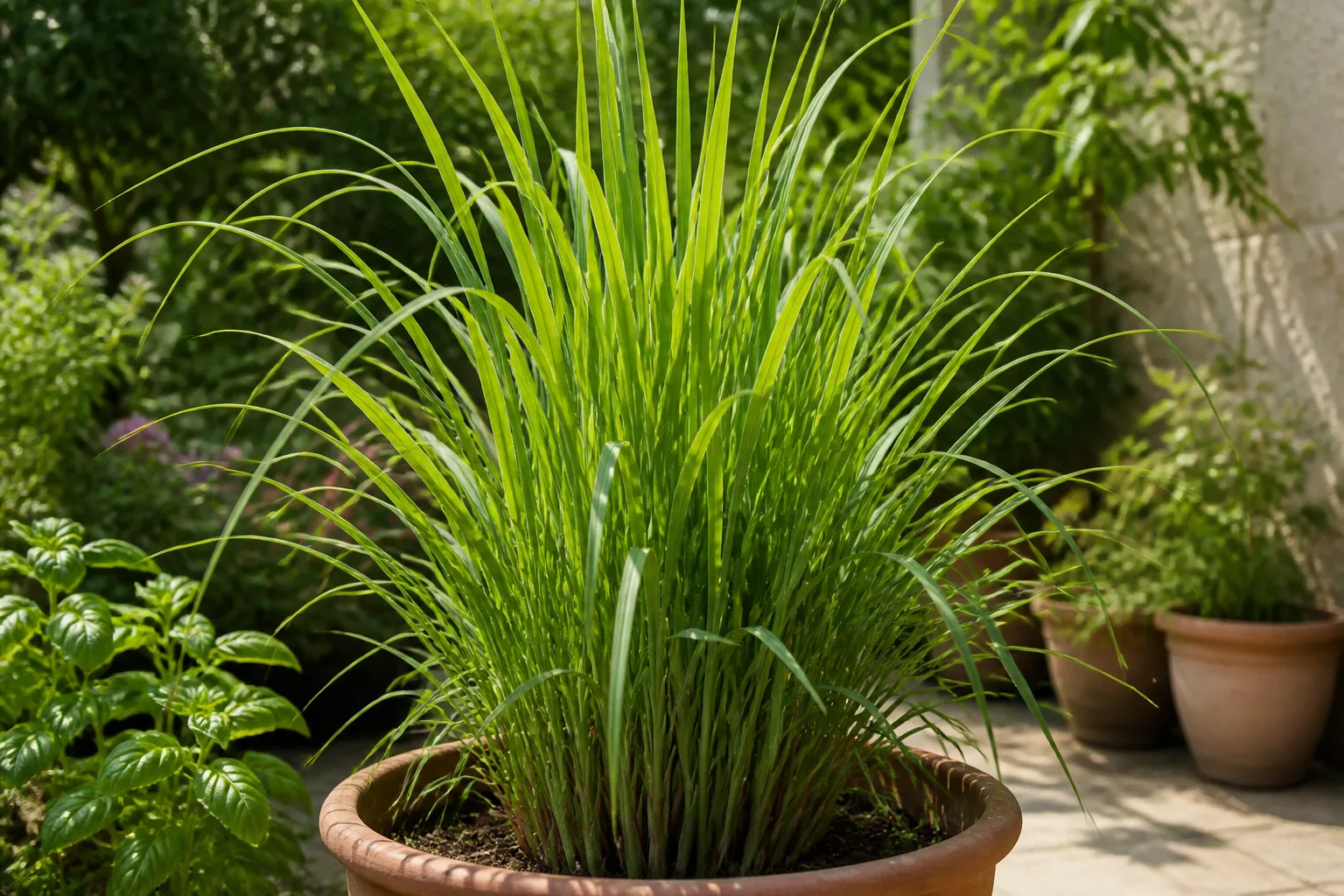
The lemongrass you want for curry paste and tom kha soup is almost always West Indian lemongrass, Cymbopogon citratus. It forms dense rounded clumps of light green, lemon-scented blades and is the species sold at herb nurseries and rooted from Asian-market stalks. USU Extension notes that only two of roughly 55 Cymbopogon species are commonly used as culinary lemongrass — West Indian and East Indian (C. flexuosus, sometimes called Cochin or Malabar grass) (USU Extension). Care overlaps; flavor and stem color differ slightly.
Do not confuse culinary lemongrass with citronella grass, Cymbopogon nardus, grown for insect-repellent oil rather than cooking. The “citronella plant” sold at big-box stores is often a scented geranium, not a Cymbopogon at all. For perennial planning, confirm the Latin name on the label or buy from a herb specialist. Wrong species still grows fast in summer; it just will not deliver the kitchen result you expect. See the citronella plant profile if you are sorting lookalikes.
West Indian lemongrass vs citronella grass
| Feature | C. citratus (culinary) | C. nardus (citronella grass) |
|---|---|---|
| Primary use | Cooking, tea | Essential oil, repellent products |
| Typical retail label | Lemongrass, West Indian lemongrass | Citronella grass, mosquito grass |
| Blade scent when crushed | Strong lemon, culinary | Sharper, more insect-repellent note |
| Perennial behavior | Same — frost-tender everywhere | Same frost limits |
Both are tropical grasses with similar sun and water needs. Your zone and overwinter strategy apply equally; only the end use changes.
USDA Zones Where Lemongrass Behaves Like a True Perennial
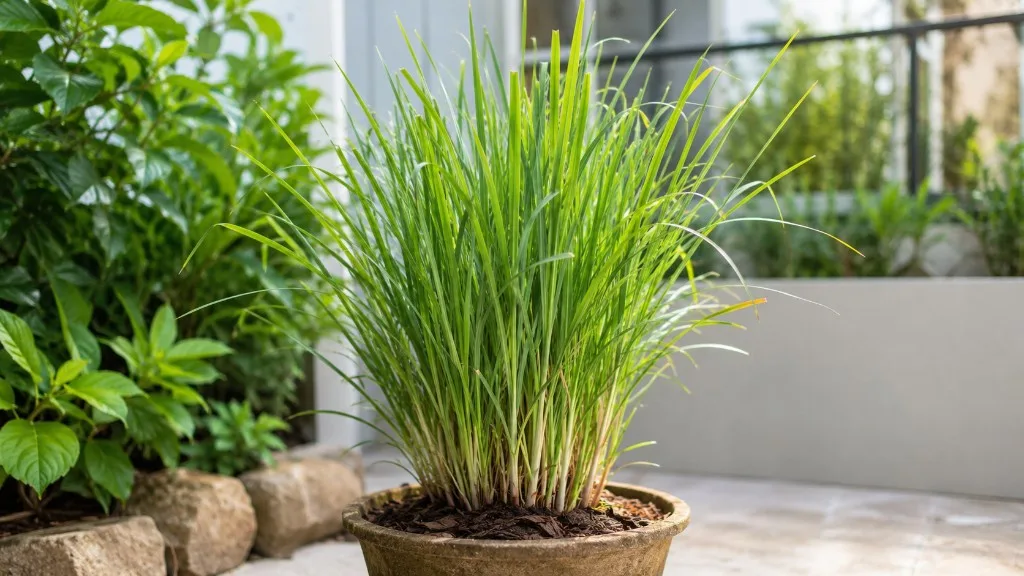
Hardiness maps translate frost patterns into actionable rules. Lemongrass does not read the map — your lowest winter temperature and soil drainage decide survival — but zones give a reliable starting point.
Zones 10–11: evergreen outdoor clumps
In USDA Zones 10 and 11 — think South Florida, coastal Southern California, Hawaii, and similar frost-free pockets — lemongrass typically remains evergreen outdoors and expands into a large clump across multiple seasons. Missouri Botanical Garden describes plants reaching 2–4 feet tall and 2–3 feet wide in a season, with potential for larger size under optimal heat, water, and fertility (Missouri Botanical Garden). UF/IFAS notes that in Florida landscapes lemongrass can push toward six feet tall and four feet wide when conditions are ideal.
Here, perennial status is straightforward: plant in the ground, harvest freely, divide every few years to control size. Winter care is mostly continued watering during dry spells and occasional cleanup of damaged outer leaves. No indoor move required unless you prefer containers for patio flexibility.
Zone 9 and borderline Zone 8: die-back and mulch gambles
Zone 9 is the transition belt. Light frosts may brown foliage while protected crowns sometimes resprout in spring, especially with a 3-inch mulch layer over the root zone and well-drained soil. Missouri Botanical Garden notes roots may be hardy to Zone 8b in protected sites (Missouri Botanical Garden). That is encouraging language, not a guarantee — saturated winter soil rots crowns faster than cold air kills them.
If you garden in zone 9 or a warm 8b pocket, treat in-ground lemongrass as a semi-perennial experiment. Keep a potted backup division the first winter so a killed clump does not wipe out your supply. For symptoms if cold arrives early, see lemongrass cold damage.
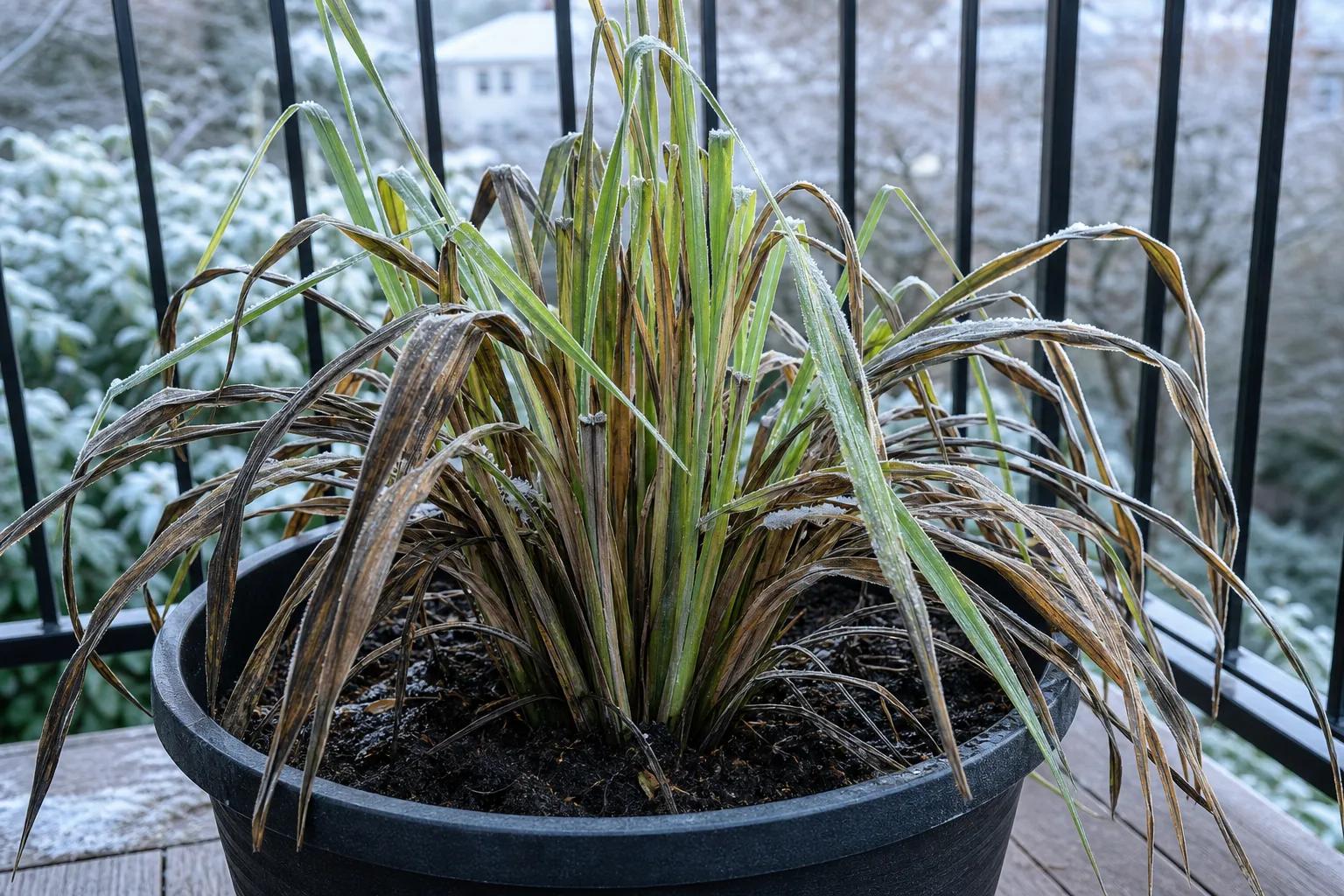
Cold-Climate Reality: Annual, Container, or Indoor Overwinter
North of zone 9, most gardeners encounter lemongrass as a fast, gorgeous warm-season plant that dies with the first hard freeze unless you intervene. That is normal. It is not a failure of your gardening skills; it is the plant’s tropical biology meeting a temperate winter.
Why zones 7 and colder treat lemongrass as a warm-season crop
In zones 7, 6, 5, and colder, assume in-ground plants will not return. USU Extension explicitly recommends growing lemongrass in pots in northern Utah, saving 6-inch sections of bulbous shoot base with roots attached, and overwintering small container plants indoors in a warm, bright location (USU Extension). The RHS advises bringing pots indoors when temperatures fall below 7°C (45°F) and keeping plants above 13°C (55°F) for active growth (RHS).
You have three realistic paths:
| Strategy | Best for | Effort | Harvest continuity |
|---|---|---|---|
| Treat as annual | Occasional cooks, short summers | Low — replant each spring | One season only |
| Container + indoor overwinter | Regular cooks, zone 5–8 | Medium — autumn pot move | Strong next-year head start |
| Water-glass sprig backup | Small spaces, backup insurance | Low-medium — windowsill sprig | Modest until spring pot-up |
Choosing before you plant saves digging panic on the night before a freeze warning.
Planting Lemongrass With Your Zone Strategy in Mind
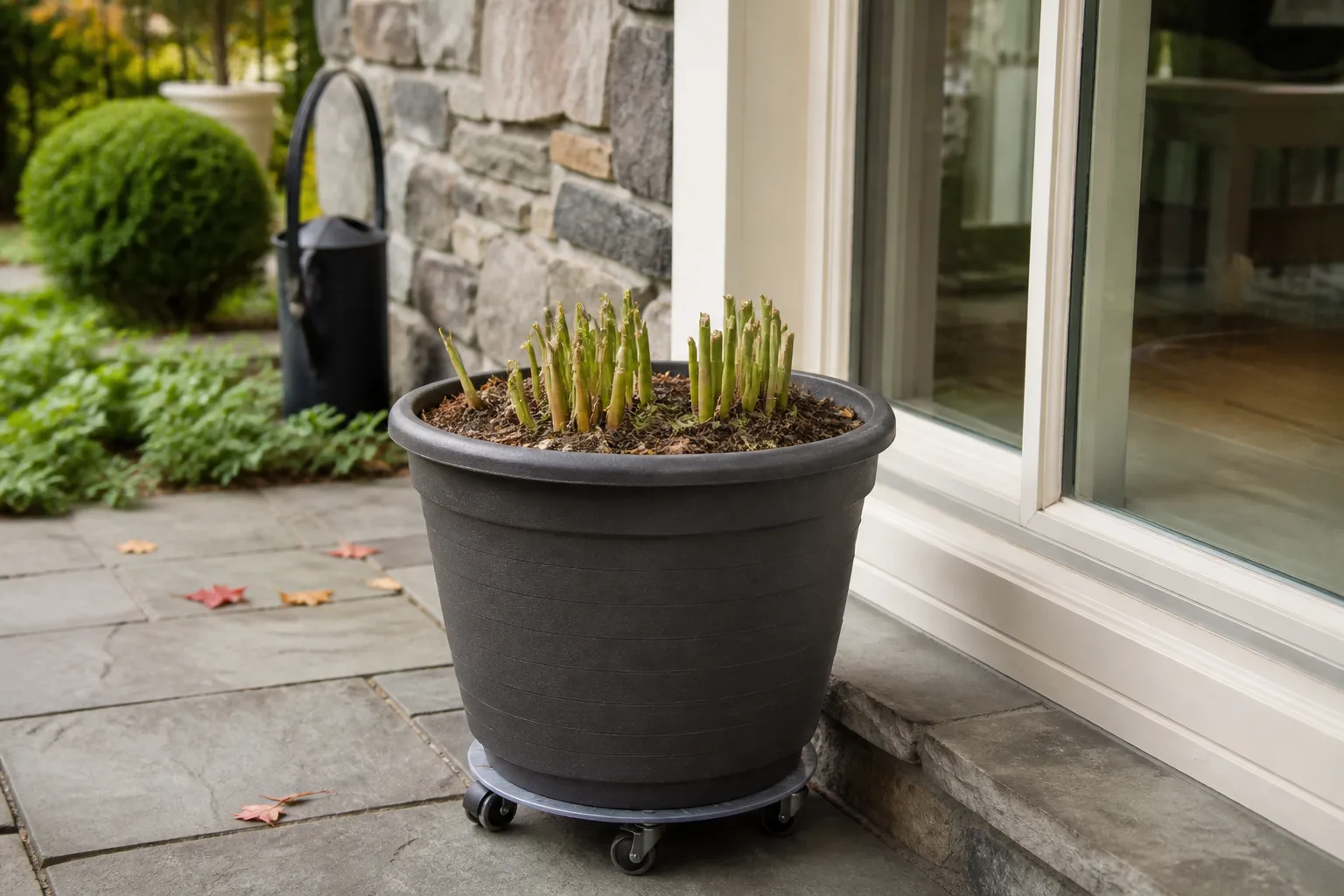
Whether lemongrass acts perennial for you starts at planting time. Cold-climate growers who want multi-year plants should default to containers large enough to move — at least 12 inches in diameter or a 5-gallon pot with a drainage hole and enough weight that a 4–6 foot clump does not topple in wind.
Ground beds vs containers: the portability decision
In-ground planting makes sense in zones 10–11 and experimental zone 9 beds with excellent drainage and a mild microclimate. Soil should be rich, loamy, and loose with organic matter worked in before planting. USU Extension recommends spacing divisions 3 feet apart because mature clumps can reach 3–6 feet tall and 3 feet wide under strong fertility and water (USU Extension).
Container planting is the perennial strategy for everyone else. A pot on casters or a trolley lets you roll the plant to a sunny patio in summer and carry or dolly it indoors in fall without traumatic root tearing. If you already planted in the ground in a cold zone, you can still dig and pot several weeks before frost — but earlier is easier on the roots than a last-minute rescue.
Light, soil, water, and spring timing
Lemongrass needs full sun — at least six hours of direct light daily — for thick, flavorful stalks. Less light produces weak, spindly growth that disappoints in the kitchen. NC State Extension lists full sun and moist, well-drained soil as baseline requirements (NC State Extension).
Do not set plants out until after your last spring frost, ideally when nighttime temperatures stay consistently above about 60°F. Plant divisions so the crown sits just below the soil surface. Water deeply and mulch the root zone in summer to preserve moisture; container plants in heat may need daily watering, while in-ground plants often need deep watering once or twice weekly depending on rainfall.
Feed actively growing plants with a high-nitrogen fertilizer — grasses are foliage producers. USU Extension suggests half-strength balanced soluble feed every 7–10 days for potted plants June through September, or monthly for in-ground clumps (USU Extension). For year-round culture details beyond hardiness, see the lemongrass care guide and lemongrass hub.
How to Overwinter Lemongrass Indoors
Indoor overwintering is how northern gardeners turn lemongrass back into a practical perennial — not by leaving it outside, but by preserving the crown through winter and returning it to full sun in spring.
Digging, dividing, and potting before frost
Start two to three weeks before your first expected frost, not the night before. If the plant is in the ground, dig the entire root ball, shake off excess soil, and pot into fresh, well-draining potting mix in a container only slightly larger than the root mass. If the clump is huge and unwieldy, cut foliage back to about 6 inches and divide so each section has roots and several green shoots. Missouri Botanical Garden describes saving leaf sections with attached roots, potting with tops removed, and holding them in a bright window for the following year’s starts (Missouri Botanical Garden).
Already in a pot? Skip digging — move the pot to a shaded spot for a few days if you also need to trim and refresh the top inch of mix. Harvest up to three-quarters of mature outer stalks before bringing plants inside; that is your last major harvest until spring growth resumes.
When frost threatens, bring pots indoors to the brightest south- or west-facing window you have, or under grow lights for 12–16 hours daily. Lemongrass is not a low-light houseplant. Dim winter windows produce thin, stretched blades and weak spring recovery.
Winter light, water, humidity, and what not to do
Indoor winter care is a balancing act: enough moisture to keep crowns alive, not enough to rot roots in cool air.
-
Temperature: Aim for above 50°F (10°C); RHS suggests above 55°F (13°C) if you want continued slow growth (RHS).
-
Water: Reduce frequency — soil should stay lightly moist, never soggy. Water when the top inch feels dry; many pots need water every 10–14 days in cool indoor air, not daily.
-
Humidity: Winter heating dries foliage. A pebble tray or room humidifier reduces brown leaf tips. See what is a pebble tray for correct setup — water must sit below the pot bottom.
-
Fertilizer: Stop feeding through winter. Resume diluted feed when new shoots lengthen in late winter.
-
Harvest: Avoid cutting heavily indoors; you are trying to preserve stored energy.
-
Pests: Spider mites thrive on dry indoor grasses. Inspect undersides weekly; rinse foliage or treat early if speckling appears.
Do not store lemongrass in a dark garage or basement expecting dormancy. Unlike elephant ears or cannas, lemongrass lacks a true dormant phase and typically dies without light (Savvy Gardening). A bright cool room beats a dark warm one.
Trim brown or crispy leaf tips anytime the inner stem hearts stay green and flexible — that is normal winter cosmetic damage, not death.
The Water-Glass Backup Method for Small Spaces
If hauling a large pot indoors is not realistic, overwinter a single rooted stalk in water as insurance. This is not how you grow a full-size clump all winter, but it is an excellent low-footprint backup that restarts fast in spring.
How to do it:
- Before frost, twist or cut an outer stalk with several small roots still attached at the base.
- Trim long leaves to reduce evaporation. Rinse roots.
- Place the base in a shallow glass of water on a bright windowsill — west-facing often works well for gentler light.
- Change the water every 7–10 days. Trim spindly new leaves if they stretch.
- In late winter, six weeks before last frost, pot each sprig into small containers and move to your brightest window or grow lights.
- Plant outdoors after frost danger passes.
USU Extension notes grocery stalks without roots can root in water in about two weeks in warm conditions (USU Extension); overwintering works best when you start with already-rooted divisions from an established clump. Full propagation steps live in the lemongrass propagation guide.
Harvest Timing and End-of-Season Choices
Lemongrass stalks are ready when at least 12 inches tall and about ½ inch thick at the base — timing varies with heat and light. Harvest outer, older stalks first by cutting at ground level or twisting off with roots intact for replanting.
At season’s end in cold zones, you face a fork:
- Final harvest and compost: Cut all usable stalks before frost, freeze sliced bases for up to six months (USU Extension), and treat the plant as an annual.
- Overwinter for next year: Pot or divide as described above, accepting that indoor plants produce fewer stalks until they return to summer sun.
- Hybrid: Heavy harvest, save two or three rooted bases in water or small pots, discard the rest.
Indoor winter plants grow slower than outdoor summer clumps — plan your curry schedule accordingly.
Common Mistakes That Kill Overwintered Lemongrass
| Mistake | Why it fails | Fix |
|---|---|---|
| Waiting until after hard frost to dig | Crown freeze damage | Pot up when nights hit ~50°F |
| Dark garage “dormancy” | No photosynthesis reserves | Bright window or grow lights |
| Overwatering cool indoor pots | Crown rot | Let top inch dry between waterings |
| Keeping a giant unpruned clump indoors | Space, mites, dehydration | Divide and trim before moving |
| Harvesting heavily all winter | Energy depletion | Harvest at pot-up; wait for spring outdoors |
| Confusing citronella grass with culinary species | Wrong plant, wrong flavor | Verify C. citratus label |
| Planting in-ground in zone 6 without a plan | Total loss at freeze | Use containers or water-glass backup |
Quick Reference: Perennial Status by Climate
| Your situation | Will it come back outdoors? | Recommended approach |
|---|---|---|
| Zone 10–11, well-drained soil | Yes — evergreen clump | Plant in ground; divide as needed |
| Zone 9, mild microclimate | Often, with die-back | Mulch crowns; keep potted backup |
| Zone 8b experiment | Sometimes roots survive | Mulch + drainage; do not rely on it alone |
| Zones 7 and colder | No — frost kills crowns | Container overwinter or annual replant |
| Any zone, no indoor space | No multi-year outdoor perennial | Final harvest; freeze stalks; restart in spring |
Conclusion
Lemongrass is a perennial by nature and a zone-limited perennial in practice. In frost-free climates it returns as a larger, harvestable clump year after year. Everywhere frost is routine, the plant becomes perennial only if you provide the winter — through a movable pot, a bright indoor window, or a rooted stalk in water waiting for spring.
Before you plant, decide which column in the table above matches your garden. Cold zones: grow in containers from day one or accept annual repurchase. Warm zones: plant in ground and harvest freely. Borderline zones: experiment outdoors but keep a backup. Match the strategy to your zone and you will stop wondering whether lemongrass comes back — you will know exactly how you are making it come back.