Kangaroo Paw Care: How to Grow and Maintain It
Learn how to grow kangaroo paw with the right cultivar, sun, drainage, seasonal watering, pruning, propagation, and winter care for your climate and garden.
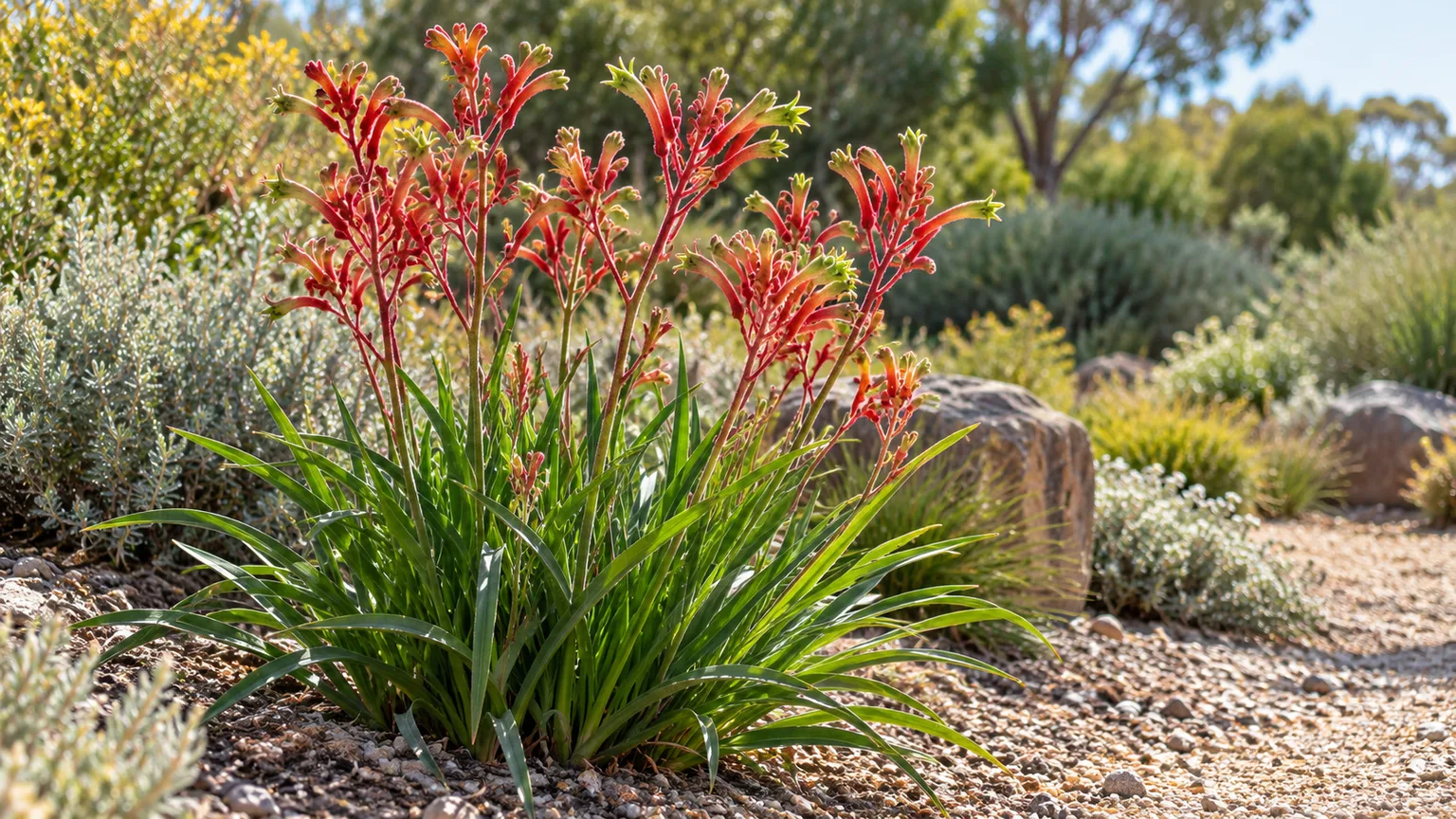
Kangaroo paw is a clump-forming Australian perennial recognized by its upright, strap-shaped leaves and fuzzy, curved flowers on long stems. The name usually refers to species and hybrids in the genus Anigozanthos; the closely related black kangaroo paw, Macropidia fuliginosa, is a different plant with more specialized needs. Kangaroo paw’s floral color and height depend on the species or cultivar, so identify the plant before you decide how much space, frost protection, and pruning it needs.
The dependable starting point is a bright site where water drains away from the crown. Give a new plant regular moisture as it establishes, then adjust watering to its flowering season and your weather. Cool, wet conditions, dense shade, and buried crowns cause more trouble than a missed dose of fertilizer. The Australian National Botanic Gardens’ kangaroo paw guide notes that species vary in lifespan, frost tolerance, and growth habit, and that clumps can decline after several years; care works best when it accounts for those differences instead of treating every plant as interchangeable.
Understand Which Kangaroo Paw You Have
Kangaroo paw grows from short underground rhizomes, with new leaf fans rising from a basal clump and leafless flower stalks extending above them. The flowers are tubular and covered in fine colored hairs; the hairs, rather than broad petals, create much of their red, green, yellow, orange, or pink appearance. Their shape and nectar also make them adapted to bird pollination in their native range. The Western Australian Herbarium’s Florabase profile describes Anigozanthos as a perennial herb with mainly basal leaves and rhizomes, while the Australian National Botanic Gardens explains the variation in stalk height and flower color across the group.
The label matters because “kangaroo paw” covers plants with different durability. Tall A. flavidus is vigorous and comparatively adaptable; its flower stalks can approach 6 feet, so give it room and expect it to need a substantial pruning reset. Red-and-green A. manglesii is striking but often short-lived in cultivation, while compact hybrids such as ‘Bush Ranger’ fit pots and smaller beds more easily. A small plant may be a deliberate dwarf selection, not a young version of a tall species.
Do not confuse kangaroo paw with kangaroo paw fern (Microsorum diversifolium). The fern has fronds and grows as a foliage plant; it does not produce the fuzzy flowering spikes described here. If your plant has leathery fernlike fronds rather than a basal fan and tall flower stems, use its botanical name when looking up care.
Choose a Variety for Your Climate and Garden
Pick for winter conditions and mature size before choosing by flower color. In a warm, dry-summer climate with mild winters, many kangaroo paws can live outdoors as perennials. In a colder area, the key question is whether the specific cultivar can tolerate your lowest winter temperatures; a generic hardiness-zone label is only a starting estimate. Some forms tolerate moderate frost, but others are damaged by it or are best treated as seasonal plants.
Humidity changes the calculation too. Kangaroo paws evolved in southwestern Western Australia, where many garden varieties encounter warm, relatively dry summers and cool, wetter winters. A humid summer or a bed that stays wet through a mild winter can invite fungal problems and shorten a plant’s useful life. Gardeners in humid regions often get better results with a raised, gravelly site, a container that dries promptly, or a cultivar selected for landscape durability. Even then, expect that some compact hybrids may be temporary rather than permanent fixtures.
Use a tall, vigorous selection for the back of a sunny border or as a vertical accent; check its mature stalk height and spread, not just the nursery pot size. Choose a compact hybrid for a patio or small bed, where you can move a pot out of cold rain and inspect the crown. The Australian National Botanic Gardens describes ‘Bush Ranger’ as drought tolerant and able to take moderate frosts, and ‘Dwarf Delight’ as a frost-hardy, longer-lived selection in its collection. Those are useful examples, not guarantees for every plant sold under a similar color or trade name; the Botanic Gardens’ cultivar notes compare these selections.
Give It Sun and Fast-Draining Soil
Aim for at least six hours of direct sun on most days. Strong light supports sturdy leaf fans and abundant flowering; a shaded plant can stay leafy while producing few stalks. Tall A. flavidus tolerates some dappled shade, according to the Australian National Botanic Gardens, but full sun is a more reliable default for bloom, as also reflected in Gardenia’s tall kangaroo paw profile.
In a very hot inland garden, protect a container from reflected afternoon heat if the potting mix dries excessively or the leaves scorch. Keep the plant in bright light rather than moving it into deep shade, which trades heat relief for fewer flowers. A bed in full morning and early afternoon sun may be easier to manage than a wall-side location that stays hot well into the evening.
Soil texture is flexible; drainage is not. Sandy loam is a useful target, but A. flavidus can tolerate a wider range than many specialty hybrids. The Gardenia profile for tall kangaroo paw describes well-drained sandy loam while noting that A. flavidus can tolerate a broader range of soils. The practical test is whether water moves through the root zone instead of sitting around the crown after rain. In heavy clay, plant on a raised mound or in a raised bed, or use a pot. Avoid digging a small pocket of loose potting mix into dense clay: the surrounding soil may hold water and leave the roots in a soggy basin.
Do not add sand to clay and assume that fixes drainage. A small amount can make dense soil harder rather than more porous. Improve the planting area broadly with organic matter where appropriate, raise the crown, or choose a different site. Keep mulch a few inches away from the plant’s base so it does not trap moisture over the crown.
Plant at Crown Level, Not Below It
Plant nursery-grown kangaroo paw in spring after the soil is workable and, in frost-prone regions, once the most severe cold has passed. In mild climates, a cooler part of the year can also work if the plant has time to establish before heat or cold stress. Follow the cultivar label if it gives local timing guidance.
Dig a hole about as wide as the root ball and no deeper than the pot it came in. Set the plant so the point where the leaf fans emerge sits at soil level; do not bury that crown under soil or mulch. Backfill, firm gently, and water thoroughly once to settle the roots. If the site is poorly drained, change the planting position rather than compensating with a lighter watering schedule. Planting with the crown exposed is also advised in Annette Hird’s kangaroo paw growing guide.
Space plants for mature width and airflow. A group of tall forms can look sparse at planting but will fill out as rhizomes and basal fans expand; crowding them to make the bed look finished immediately can trap humid air around the foliage. Use the plant label’s spread as a guide, and leave access to remove old leaves and flower stalks later.
Water by Season and Root Stage
Water a newly planted kangaroo paw when the upper part of the root ball starts to dry, then soak the soil rather than giving frequent shallow splashes. During establishment, the goal is to keep roots from drying completely while letting excess water drain. Check by touch a few inches below the surface; a dry crust does not always mean the deeper root zone needs water.
Once the plant is established, water more generously while it is actively growing and sending up flowers, especially during a long dry spell. Gardenia’s tall kangaroo paw profile and Stephen Albert’s Anigozanthos grow guide both recommend more water during the flowering season, while reducing it in winter. That does not mean keeping the bed continuously moist. Water at the soil line, then let the root zone drain; adjust for rainfall, soil type, heat, and whether the plant is in a pot.
In a container, check more often because wind and sun can dry the mix quickly. Water until the whole root ball is moistened and excess drains from the holes, then empty any saucer. Do not water on a calendar if the pot is still wet. During cool weather or dormancy, water only enough to prevent a potted root ball from becoming bone dry for a long stretch; saturated winter mix is a more serious risk.
If leaves yellow or the base feels soft, pause before adding water. Check how quickly the pot or bed drains and whether the crown is buried. A plant with dry, crisp leaves in hot weather may need a deep drink; a plant with yellow leaves and wet, sour-smelling soil needs drainage and root inspection first.
Feed Lightly and Avoid a Bloom-Only Formula
Kangaroo paw is not a heavy feeder. Start with a healthy, well-drained site and add a modest amount of finished compost if the soil is poor. If growth is weak and the plant is actively growing, use a light application of a balanced or native-plant fertilizer according to its label rather than repeatedly feeding a stressed plant.
Published kangaroo paw guides differ on fertilizer: Harvest to Table recommends a spring time-release feed, while Ultimate Backyard says a special low-phosphorus product is not needed for kangaroo paw. Because cultivar and product formulations vary, avoid both extremes: do not assume every kangaroo paw needs a specialized product, and do not use a concentrated bloom booster as a routine fix. Follow the label for your specific cultivar or local nursery’s advice, and apply lightly.
Too much fertilizer can create soft, leafy growth without solving the actual problem. If a plant flowers poorly, check sunlight, crown depth, drainage, age, and whether it was recently divided before increasing the feed rate. The Australian National Botanic Gardens notes that plants may lose vigor after several years; replacement or division may be more useful than escalating fertilizer.
Grow Kangaroo Paw in a Container
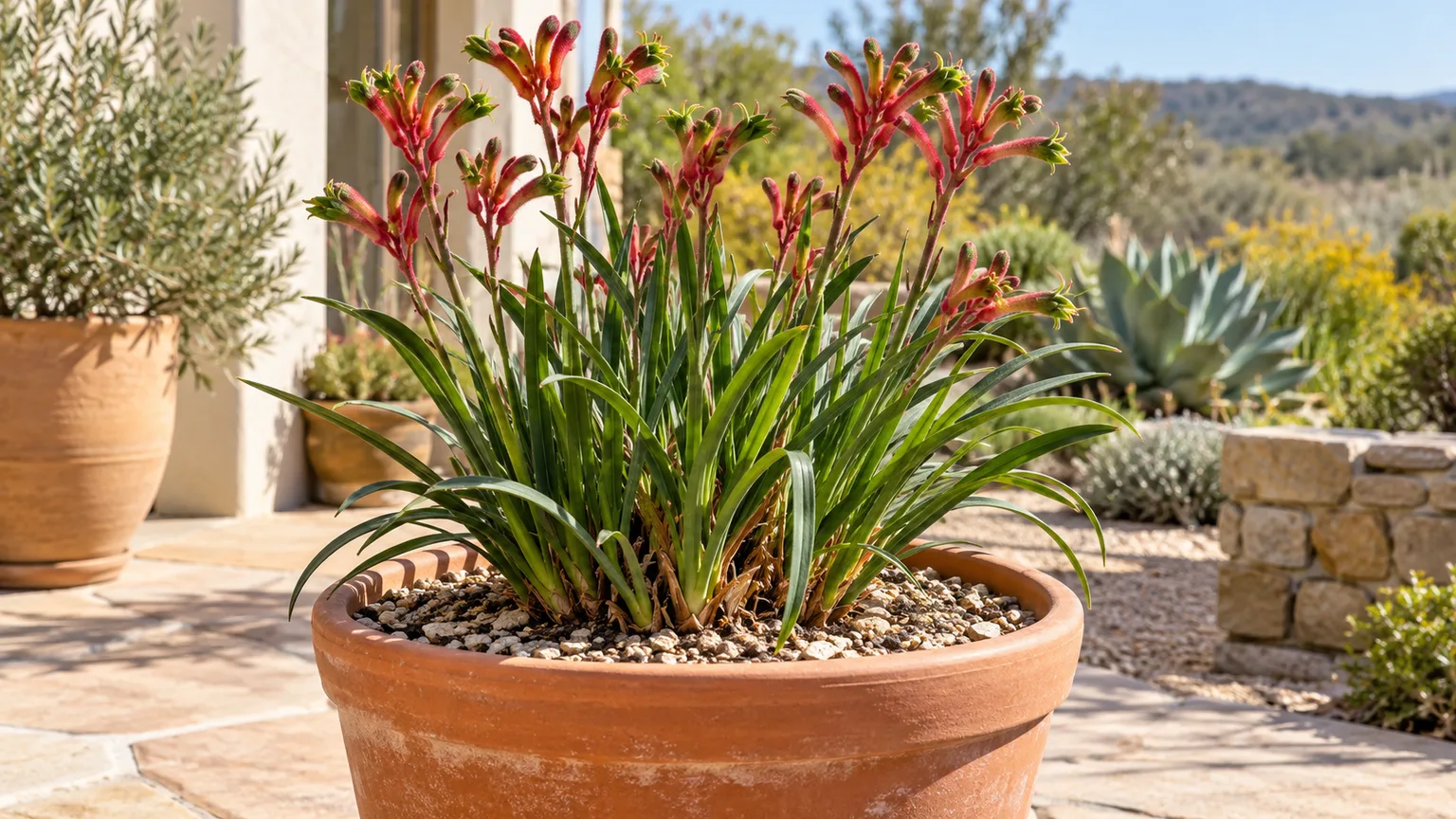
A container makes sense if you have wet winter soil, limited garden space, or a cultivar that needs protection from frost. Choose a sturdy pot with several open drainage holes and enough volume to support the mature clump. A very small pot will dry quickly in summer and can tip when tall flower stalks catch the wind.
Use a free-draining potting mix. A quality container mix amended with coarse perlite, pumice, or fine bark can keep air moving around roots; avoid packing garden clay into the pot. Set the crown level with the mix and leave room at the rim for watering. Keep the saucer empty so the pot does not stand in runoff.
Place the pot where it receives strong sun and air movement. In extreme heat, move it out of reflected late-afternoon heat if the root ball is overheating, but do not keep it in dense shade. During the flowering period, inspect the mix more often than you would in a bed; in cool, rainy weather, move it under cover if the soil remains wet.
Repot or divide when the clump becomes congested, the container dries almost immediately after watering, or roots press heavily against the sides. Do not repot a healthy plant simply because it has filled the pot: kangaroo paw often flowers well as a snug clump. Refresh the mix and check the rhizomes when you do repot, removing only dead or diseased tissue.
Deadhead Flower Stalks for a Tidier, Longer Display
Each flower stalk carries a succession of fuzzy blooms. Once the flowers on a stalk have finished, follow the stem down through the foliage and cut it near the base with clean shears. This removes a spent stem without cutting into the leaf fans that will support the next round of growth. It also keeps the clump from spending energy on seed if you do not want to collect it.
Kangaroo paws can flower over a long period, but bloom timing varies by species, cultivar, and climate. Many forms flower in spring and summer; in a mild garden, some continue later. Do not mistake a pause between stalks for a fertilizer deficiency. Keep the plant in strong light, give appropriate moisture while it is actively growing, and remove stems once their flowers fade.
If you want seed, leave a few spent flowers to form capsules and mature rather than deadheading every stem. Expect seedlings not to match the parent cultivar exactly. If you want repeat blooms and a tidy clump, cut the stalks down after flowering instead.
Cut Back Foliage at the Right Time
Deadheading a flower stem and cutting back the whole plant are different jobs. Remove individual spent stalks as they finish. Save a hard foliage cutback for the plant’s seasonal rest or just before new growth resumes, with timing based on your climate and cultivar.
At the Australian National Botanic Gardens, clumps are cut to about 4 inches (10 centimeters) in late winter to remove old, diseased, and frost-damaged foliage before active growth. Australian horticulturist Annette Hird describes a harder late-autumn or early-winter cutback in a garden with warm, dry summers and cool, wet winters; compare the Botanic Gardens’ timing with Hird’s regional pruning advice. These schedules differ because local seasons and plant responses differ. In your garden, use the plant’s growth stage: wait until most flowering has ended and older foliage is ready to be renewed, but make the major cut before healthy new fans are tall enough to be clipped.
For a conservative first cut, remove brown, frost-damaged, or spotted leaves at the base and trim the oldest outer foliage, leaving any firm, green fans intact. If you know your cultivar responds well to a full reset, shorten the remaining foliage to roughly 4 inches above the crown with clean shears. Avoid cutting through the crown or new central growth. Where ink disease is present, clean the blades between plants and discard infected leaves in household waste according to local rules rather than leaving them in the bed.
Divide a Mature Clump Without Losing Its Crown
Division can refresh a crowded clump and give you more plants, but it is not a cure for every declining plant. The Australian National Botanic Gardens recommends division as a way to retain vigor, while also noting that short-lived forms may be better replaced. Divide a vigorous plant that has outgrown its space; replace one that is extensively diseased or failing in a site that remains wet.
Choose a moderate-weather window when active growth is beginning or flowering has finished, avoiding a heat wave, hard frost, and waterlogged soil. Horticultural sources vary on season—spring is a common time in general grow guides, while the Australian National Botanic Gardens notes early summer—so use plant growth and local weather rather than a fixed month.
To divide:
- Water the plant lightly the day before if the soil is dry, then lift the clump with a garden fork or sharp spade.
- Shake or wash enough soil from the roots to see where healthy fans and rhizomes connect.
- Separate the clump into sections with a sharp knife or spade. Keep several firm fans and a substantial piece of healthy rhizome on each division.
- Discard mushy, blackened, or badly spotted material, and clean the blade before cutting healthy sections.
- Replant each division at the original crown depth in well-drained soil, water to settle, then keep the root zone lightly moist until new growth shows.
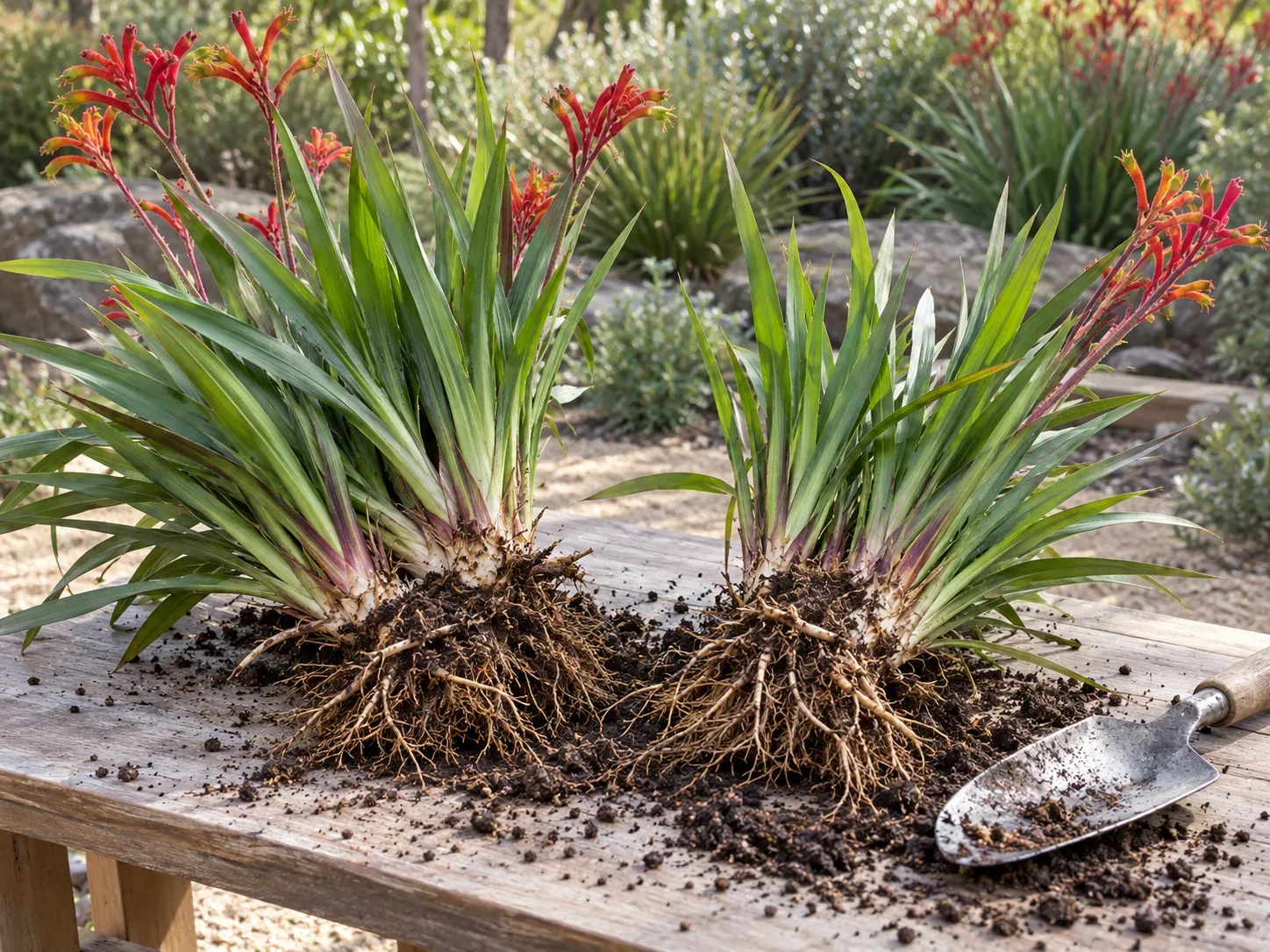
Smaller divisions recover more slowly and may not flower immediately. If you want a quick display, keep the strongest divisions and pot up or share the rest rather than splitting the plant into tiny pieces.
Start Kangaroo Paw from Seed
Seed is useful when you want several plants or are curious about variation, not when you need an exact copy of a named hybrid. Seedlings can differ from their parent in color, size, and flowering habit; division is the better route for preserving a selected cultivar.
Collect mature seed after the flower capsules dry and begin to open, or buy seed for a named species. The Australian National Botanic Gardens recommends sowing in a freely draining seed-raising mix during spring or summer. Stephen Albert’s grow guide gives a germination range of about 55–64°F (13–18°C); conditions vary by seed lot, so follow the supplier’s directions if available.
Sow in a shallow tray with drainage holes, barely cover the seed if the packet calls for it, and keep the mix evenly moist rather than waterlogged. Provide bright light and warmth appropriate to the seed instructions. Once seedlings are large enough to handle, pot them separately and grow them on before planting outdoors. A seed-grown plant may take time to reach flowering size; do not assume a young plant that has not bloomed in its first season is unhealthy.
Troubleshoot Ink Spot, Root Rot, and Slugs
Kangaroo paw can have few serious pest problems in a sunny, open site, but damp conditions raise the risk of disease. Ink disease is the major fungal problem cited by the Australian National Botanic Gardens. It appears as dark or black blotches on leaves and is more likely in cool, moist climates. Remove affected leaves, improve airflow, water at the soil rather than over the foliage, and keep the crown exposed.
Root rot is usually a site or watering problem. If leaves yellow while the soil stays wet, check drainage before feeding. A soft or discolored crown and roots that are brown and mushy point toward decay; healthy rhizomes should feel firm. Trim only clearly dead tissue with a clean tool, then repot or replant in a draining mix if enough healthy crown remains. A severely rotted plant in a persistently wet bed may not recover.
Snails and slugs may chew young leaves and emerging fans, especially after rain. Look for ragged holes and silvery trails rather than black spotting. Remove hiding debris around the clump, inspect in the evening, and use only locally approved controls according to their labels if hand removal is not enough. Avoid treating an unidentified symptom with fungicide or pesticide; first determine whether the damage comes from wet soil, fungus, or chewing.
Read the Pattern Before Treating It
| What you see | Check first | Useful first response |
|---|---|---|
| Black blotches spreading across leaves | Cool, wet weather; dense planting; wet foliage | Remove affected leaves, improve airflow, water at soil level |
| Yellow leaves with a soft base | Standing water; buried crown; blocked pot holes | Let the root zone drain, expose the crown, inspect rhizomes |
| Ragged holes on new leaves | Slugs or snails; damp hiding places | Inspect after dark and clear debris |
| Lots of foliage but few flowers | Shade; high nitrogen; recently divided clump; old declining plant | Improve light, reduce excess feeding, allow recovery or replace an old clump |
One symptom rarely tells the whole story. A few old leaves can yellow naturally as the clump renews itself, while several leaves collapsing at the base point to a more urgent moisture problem. Compare the pattern across the plant and check the soil before you choose a treatment.
Protect the Plant Through Winter
Cold tolerance varies too much for one rule to cover every kangaroo paw. Start with the cultivar name and local minimum temperatures. A hardy selection may handle light or moderate frost; a less tolerant form can lose leaves or the whole crown in a hard freeze. A tag’s zone range describes typical conditions, not protection from a cold snap combined with wet soil.
In mild-winter gardens, leave a healthy clump outdoors and reduce irrigation as growth slows. Keep fallen or diseased leaves from accumulating around the crown. If winter rain is frequent, a sloped or raised bed is safer than a low spot that remains saturated for weeks.
In frost-prone areas, grow a compact form in a movable container or treat it as a seasonal plant. Move the pot to a bright, sheltered, frost-free place before temperatures reach the cultivar’s limit. Water sparingly while it is resting, but do not let roots dry to the point of shriveling. Bring it back outside gradually when the cold risk has passed, starting in a protected position and increasing sun exposure over several days.
Do not wrap wet foliage tightly or pile damp mulch over the crown. If the top is frost-damaged but the rhizome remains firm, wait until the extent of damage is clear before removing healthy-looking fans. New growth from the base is a better sign of recovery than the appearance of a single scorched leaf.
Use the Flowers as Cut Stems and Bird Food
Kangaroo paw’s tall stems bring color above the leaf clump, making it useful near a path, in a sunny border, or in a gravel garden. Leave room around the plant for its mature spread and for airflow. A mass of the same cultivar can make the unusual flower shape more visible from a distance, while one compact plant works as a focal point in a large patio pot.
The tubular flowers contain nectar and are adapted to bird pollination; the Australian National Botanic Gardens describes visiting birds transferring pollen between flowers, and Gardenia notes the value of tall kangaroo paw to nectar-feeding birds and as a cut flower. In the garden, the stalks can provide a perch as well as a nectar source for local nectar-feeding birds. Keep the plant’s origin in mind when choosing companion plants: pair it with sun-loving species that tolerate the same drainage and seasonal watering rather than with moisture-loving plants that need a constantly wet bed.
For a vase, cut a stem when several flowers have opened and others remain in bud. Strip leaves that would sit below the waterline and place the stem in clean water. Remove the remaining stalk at its base after the display fades so the plant can direct growth into fresh fans and subsequent flowers.
Conclusion
Kangaroo paw is easiest to grow when the plant’s label informs the plan: a tall, adaptable A. flavidus and a compact, short-lived hybrid do not ask for identical space or winter care. Give either type strong light, an exposed crown, and soil that drains; water more during active flowering and less when cold weather slows growth. In wet or humid climates, airflow and a raised site can matter more than extra feeding.
Remove spent stalks as flowers fade, time a full cutback around dormancy and new growth, and divide only a healthy clump in moderate weather. If a plant declines despite good care, its cultivar lifespan or climate mismatch may be the cause, and replacing it can be more successful than repeatedly amending the soil. For the next step, check the botanical name and drainage at the plant’s base; those two details will guide most care decisions.