16 Low-Light Succulents for Rooms Without Bright Windows
Choose low-light succulents for your window, compare 16 plants by tolerance, and learn when brighter indirect light or a grow lamp is still needed.
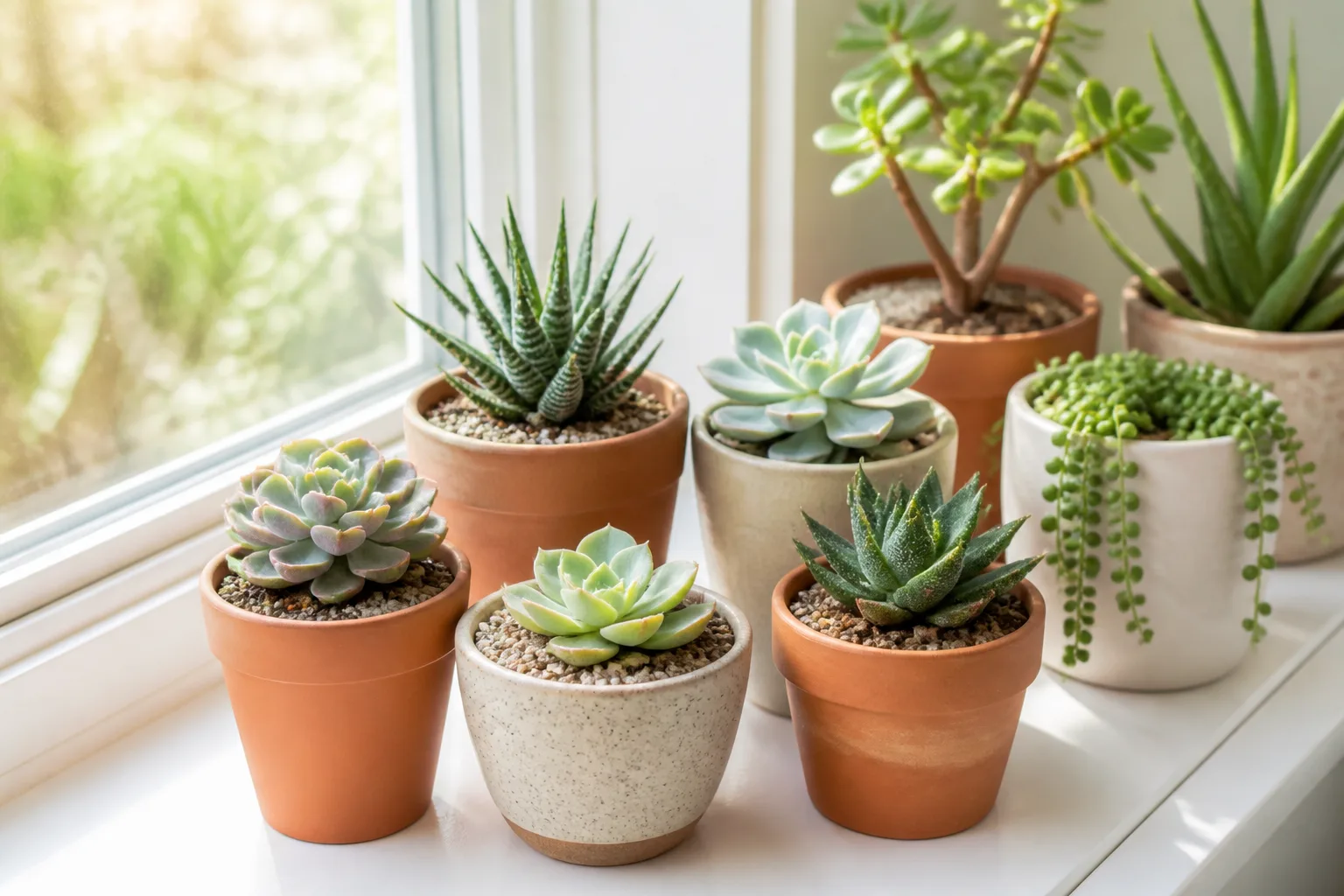
A room does not need a sunbeam crossing the floor to support every succulent, but “low light” still means usable daylight, not a windowless closet. A few plants on this list tolerate a spot several feet from a window or a room with filtered daylight; many others only cope with less-than-ideal light for a while and will stretch, fade, or stop growing if they stay there.
That difference matters more than the list itself. The best choices for a genuinely dim but daylit room are the ZZ plant, common snake plant, some Gasteria and Haworthia, and the two tropical forest cacti. Echeverias, aloe, jade, bear paw, panda plant, and burro’s tail are better near the brightest window you have, even if they can survive a less sunny position.
The word succulent describes water-storing tissues rather than one botanical family. A ZZ plant stores water mainly in rhizomes, snake plants in thick leaves, and a ponytail palm in its swollen stem base; they are often grouped with succulents for care, but they are not interchangeable with a desert rosette. Christmas cactus and mistletoe cactus are forest epiphytes, so they appreciate filtered light and a more evenly drying mix than most desert succulents.
Can Succulents Grow in Low Light? 16 Choices, Ranked
Yes, some can grow in lower light, but none can grow without light. North Carolina Extension describes Dracaena trifasciata as able to tolerate very low light, and its ZZ plant profile says the plant can grow in very low light while doing best in bright indirect light. That is a useful distinction: tolerance is not the same as best growth, and a plant may survive while producing smaller leaves or longer gaps between them. NC State Extension Plant Toolbox: Snake Plant and ZZ Plant.
Use the rankings below as a starting point, not a guarantee. A large clear north-facing window, an obstructed north-facing window, and a plant on a shelf across a deep room can provide very different amounts of light; the same spot also changes when days shorten or nearby trees leaf out. A light-tolerant plant is the safer pick for a dim room, while a brighter-window plant may be worth trying only if you can move it closer or supplement the light.
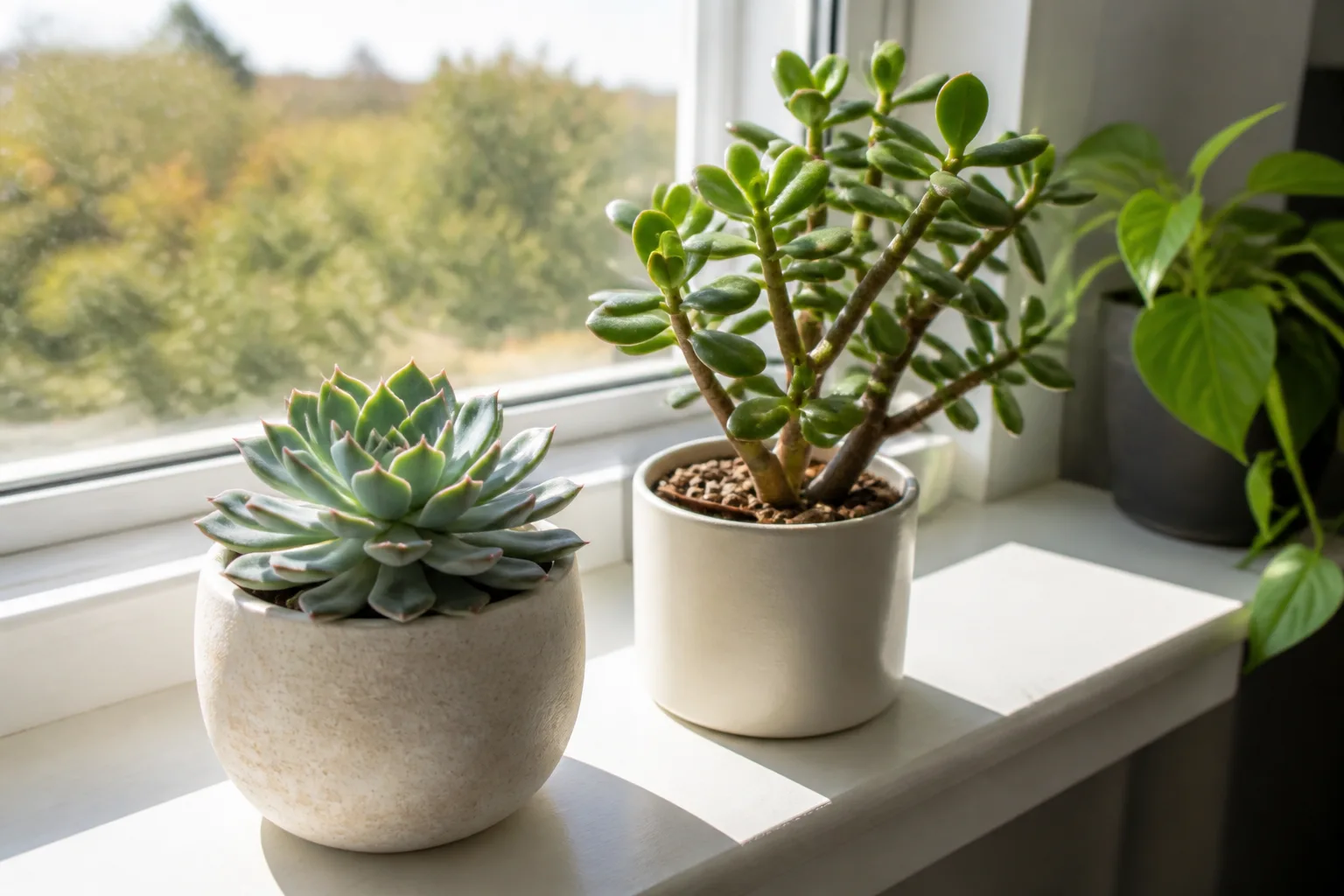
1. ZZ Plant (Zamioculcas zamiifolia)
The ZZ plant is the most forgiving choice here for a room that gets daylight but no direct sun. Its thick underground rhizomes store water, and the plant is widely used in interior spaces because it tolerates deep shade better than most succulents. NC State notes that it can grow in very low light, including fluorescent-lit interiors, but bright indirect light supports better growth; expect a slow pace in a dim corner rather than rapid new stems.
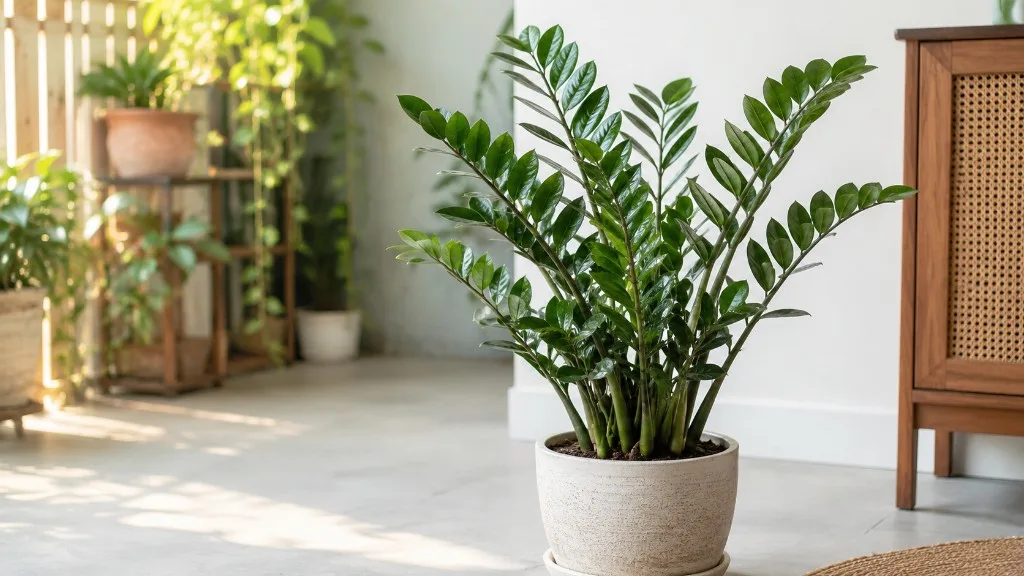
Let the potting mix dry substantially before watering, and do not pour more water in just because a month has passed. In dim conditions the plant uses water slowly, so a wet, oversized pot can stay soggy long enough to damage the rhizome. Keep it out of reach of chewing pets and children: the plant has toxicity concerns, and NC State lists it as potentially harmful to cats and dogs.
2. Snake Plant (Dracaena trifasciata)
The common snake plant is a stronger low-light candidate than most fleshy-leaved rosettes. It can handle a spot well back from a window and may keep its upright form there, although growth slows and some variegated cultivars may look less vivid. NC State calls out very low-light tolerance and advises well-drained soil with careful watering, which is a good fit for a room where pots dry slowly.
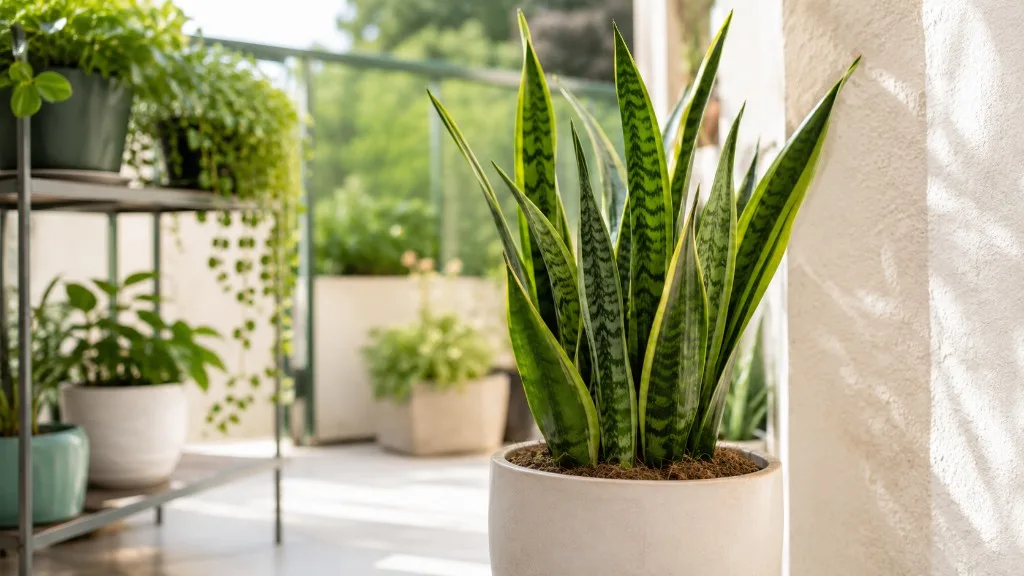
Let the root zone dry between thorough waterings; do not use a weekly schedule, especially in winter. The species is commonly sold under its former name, Sansevieria trifasciata, so labels may use either botanical name. The ASPCA lists snake plant as toxic to cats and dogs, with gastrointestinal signs possible after chewing; place it where pets cannot reach it and contact a veterinarian if ingestion occurs. ASPCA: Snake Plant.
3. Ox Tongue (Gasteria spp.)
Gasteria has thick, often spotted leaves arranged in a compact fan or rosette, and it is better suited to filtered light than many desert succulents. A bright room with no harsh midday sun is a sensible home; it may tolerate some distance from the window, but in deep shade it will make little new growth and is unlikely to flower. A plant sold simply as “ox tongue” may be a hybrid, so check the label if you want to compare a specific species.
Use a small pot with a drainage hole and a gritty mix, then let the mix dry before watering again. If new leaves are unusually narrow, widely spaced, or leaning toward the window, move it closer to daylight rather than watering or fertilizing more. Gasteria is a better candidate for a dimmer shelf than an echeveria, but it still needs a visible source of daylight.
4. Zebra Plant (Haworthiopsis attenuata)
The striped zebra plant is often sold under the older name Haworthia attenuata. It handles bright shade and filtered light well, so it can be a compact option for an east-facing window or a bright room where the sun is softened by a sheer curtain. Gardeners’ World describes a related Haworthia as thriving in bright indirect light; use that as a practical baseline rather than assuming the genus wants a dark corner. Gardeners’ World: Small House Plants.
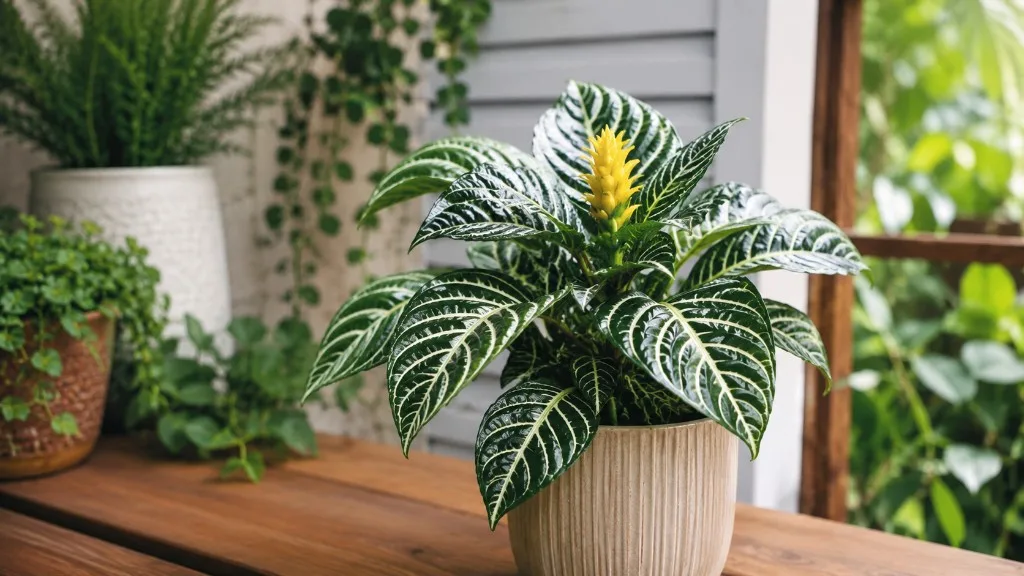
The rosette can stay small for a long time, especially away from a window, but slow growth is not automatically a problem. Give it a porous cactus mix and water only after the mix is dry; avoid leaving water pooled in the center of the rosette. If the leaves flatten or the plant gradually leans, increase light in steps over several days instead of moving it straight into strong afternoon sun.
5. Mistletoe Cactus (Rhipsalis baccifera)
Mistletoe cactus is a tropical epiphyte, not a desert cactus. In nature, Rhipsalis grows on trees or in sheltered, humid settings, so it can handle filtered light better than a sun-loving cactus and works well in a bright room away from a hot window. In very dim conditions, though, trailing growth will slow and the stems may look sparse; a shelf closer to a north- or east-facing window is a better long-term position.
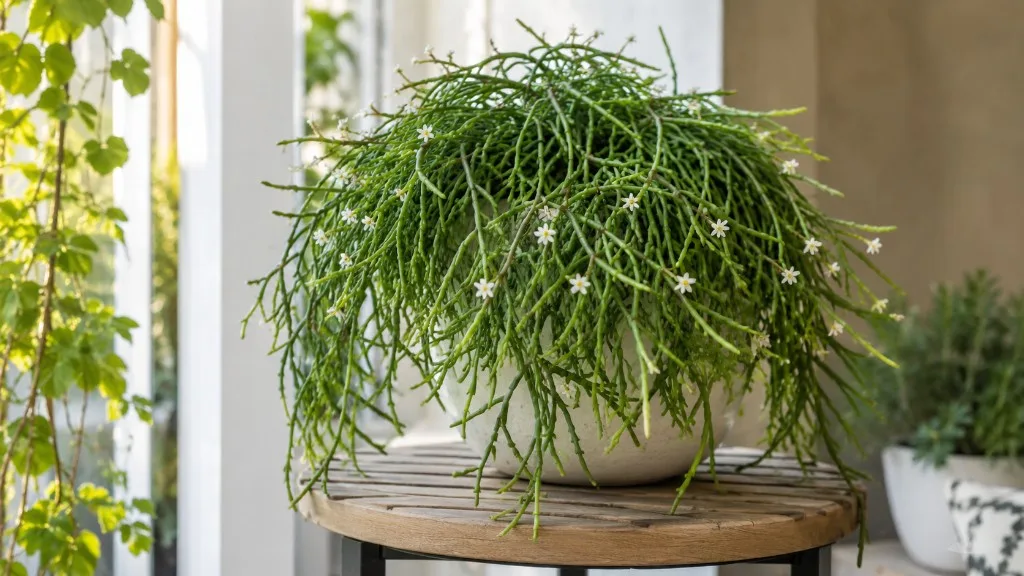
Use an airy mix that retains a little more moisture than a typical desert-cactus mix, while still draining freely. Water when the upper part of the mix has dried, then empty the saucer; do not keep it constantly wet or leave the roots in standing water. The practical goal is a steady dry-down, not complete desiccation between every drink. Epic Gardening’s guide to lower-light succulents also distinguishes shade-tolerant options from the sunniest rosette types.
6. Christmas Cactus (Schlumbergera spp.)
Christmas cactus is another forest cactus, with flattened stem segments that grow as an epiphyte rather than a desert plant. It can live in bright shade and often does not need direct sun, making it more adaptable to an indoor room with filtered daylight than aloe or echeveria. For sturdy new segments and reliable flowering, keep it near a bright window with indirect light; the darker the room, the less likely it is to bloom well.
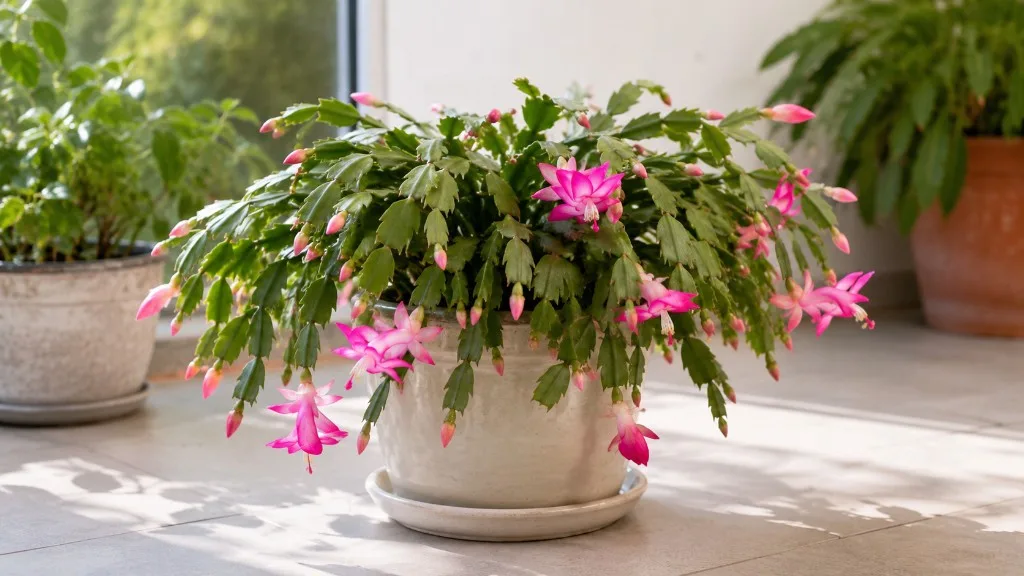
Give it a faster-draining but slightly more moisture-retentive mix than you would use for a desert succulent. Water when the top portion begins to dry, then drain the pot completely; if the mix is still wet, wait. Keep the plant in one place while it forms buds, because a sudden change in temperature, light, or orientation can disrupt flowering even when its overall light level seems acceptable.
7. Cylindrical Snake Plant (Dracaena angolensis)
The plant sold as cylindrical snake plant or cylindrical sansevieria is now classified as Dracaena angolensis and is also called African spear. It is succulent and drought-tolerant, but do not assume it shares the common snake plant’s very-low-light tolerance: NC State recommends a brightly lit window and only morning sun outdoors. It is a reasonable choice for a bright indirect spot, not the darkest shelf in the house. NC State Extension Plant Toolbox: African Spear.
Water only after the mix has dried well, and use a pot with open drainage. The cylindrical leaves can store water, which helps the plant endure dry spells but does not make wet soil harmless. If the fan of leaves stops growing or new leaves are noticeably thinner, give it a brighter position before changing the fertilizer or watering routine.
8. African Milk Tree (Euphorbia trigona)
The African milk tree’s upright, three-sided stems make it look cactus-like, but it is a succulent spurge. Indoors it prefers bright indirect light; partial shade is possible, while an especially dim room can lead to slow, weak growth. NC State recommends well-drained, sandy or succulent mix and sparing watering, and notes that the milky sap can irritate skin and eyes. NC State Extension Plant Toolbox: African Milk Tree.
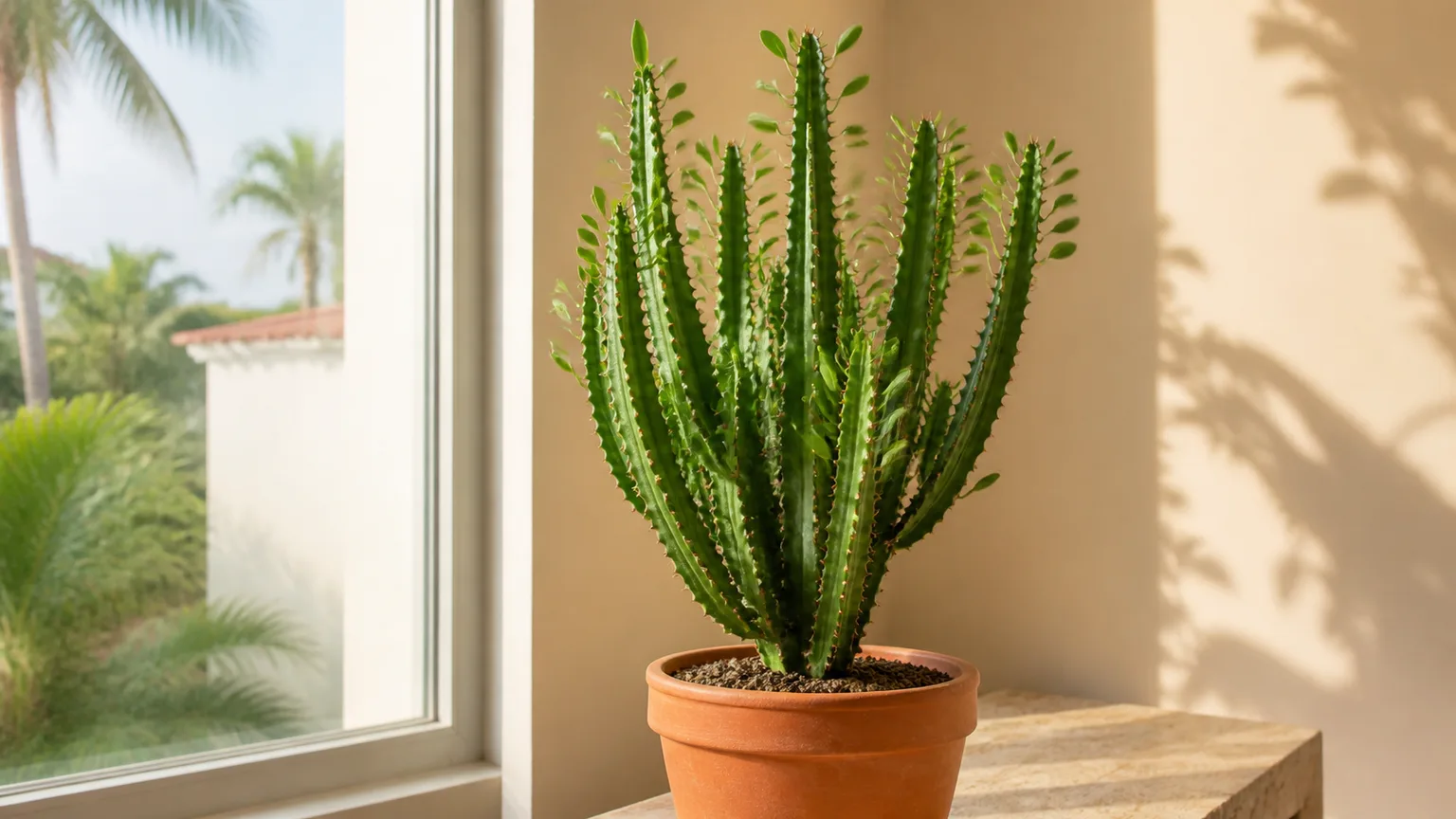
Keep it near a bright window, but acclimate it gradually if you move it into direct sun. Wear gloves if pruning or handling a broken stem, wash exposed skin promptly, and keep the plant away from pets and children; sap exposure is a more important concern than the plant’s low-maintenance reputation. Let the soil dry before watering, especially in a cool or low-light season.
9. String of Hearts (Ceropegia woodii)
String of hearts stores water in small tubers and fleshy leaves, and its trailing stems can handle a little less light than an echeveria. It still looks best in bright indirect light. Far from a window, the heart-shaped leaves tend to become smaller and farther apart, and the vines may lose their full, even appearance; hang it where the foliage can receive daylight rather than treating it as a plant for a lightless corner.
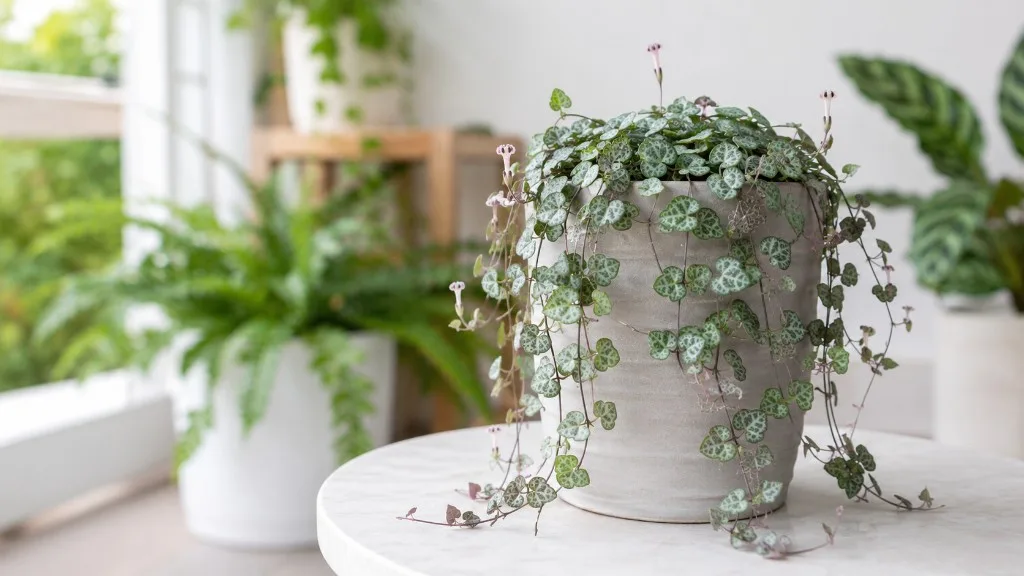
Choose a freely draining mix and let it dry substantially between waterings. A plant that has been dry for a while may have wrinkled leaves, but that does not mean you should keep adding small sips; water the root ball evenly and let excess drain. If the plant is growing only on the window side, rotate the pot occasionally so new growth receives more even light.
10. Ponytail Palm (Beaucarnea recurvata)
Despite the common name, ponytail palm is a succulent tree with a swollen base that stores water, not a true palm. It can tolerate moderate indoor light and may survive in a less sunny room, but a bright window is better for an attractive crown and continued growth. The swollen base lets it cope with a dry period; it does not compensate for a position that is too dark to support new leaves.
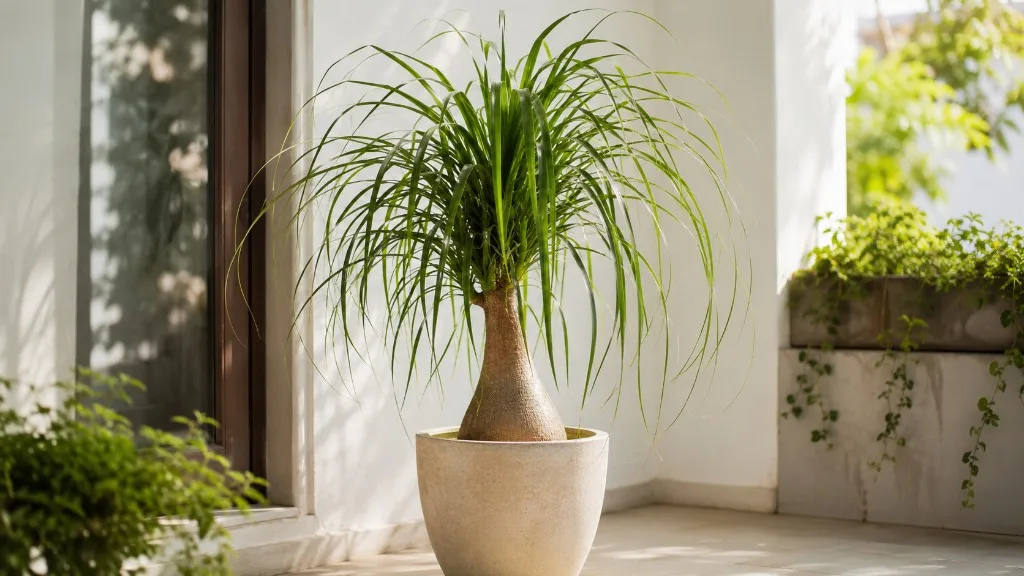
Use a pot with drainage and wait until the mix dries before watering. In lower light or cool weather, that wait may be much longer than expected, so check below the surface instead of using a calendar. Do not move a plant that has adapted to a dim room into full sun all at once; sunburn can appear on leaves that were previously protected.
11. Jade Plant (Crassula ovata)
Jade can live in a room without direct sun, but a truly low-light position is not its best home. It forms sturdier branches and compact leaf clusters with bright light, and a dim spot encourages stretched stems and more space between leaves. Gardeners’ World places echeverias on sunny windowsills and similar light guidance is prudent for jade; aim for a bright east or south-facing window in the Northern Hemisphere, or the corresponding orientation in the Southern Hemisphere.
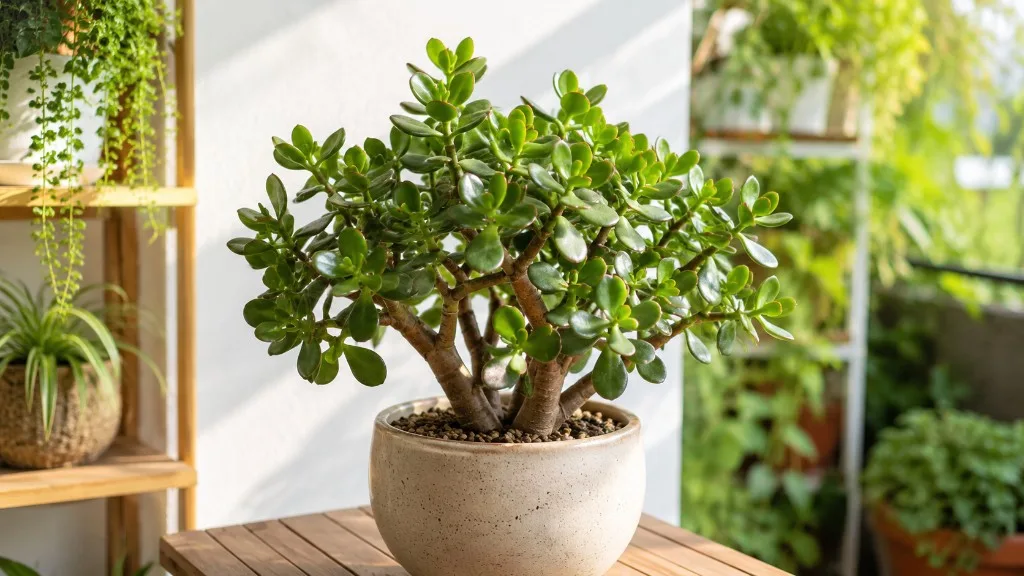
Let the soil dry before giving the pot a thorough drink. If a stem leans, rotate the plant gradually and move it closer to light; pruning can improve its outline, but it cannot replace the energy the plant needs to make compact new growth. The ASPCA lists jade plant as toxic to cats and dogs, so choose another plant if a pet is likely to chew it. ASPCA: Jade Plant.
12. Aloe Vera (Aloe vera)
Aloe vera often survives indoors away from direct sun, which is why it appears on lists of low-light succulents, but it needs more light than a dark-room promise suggests. Near a bright window it can make sturdy leaves; several feet back in a dim room, growth may become elongated, pale, or lopsided. If your brightest window is shaded by a building, aloe is a poor choice unless you can add a grow light.
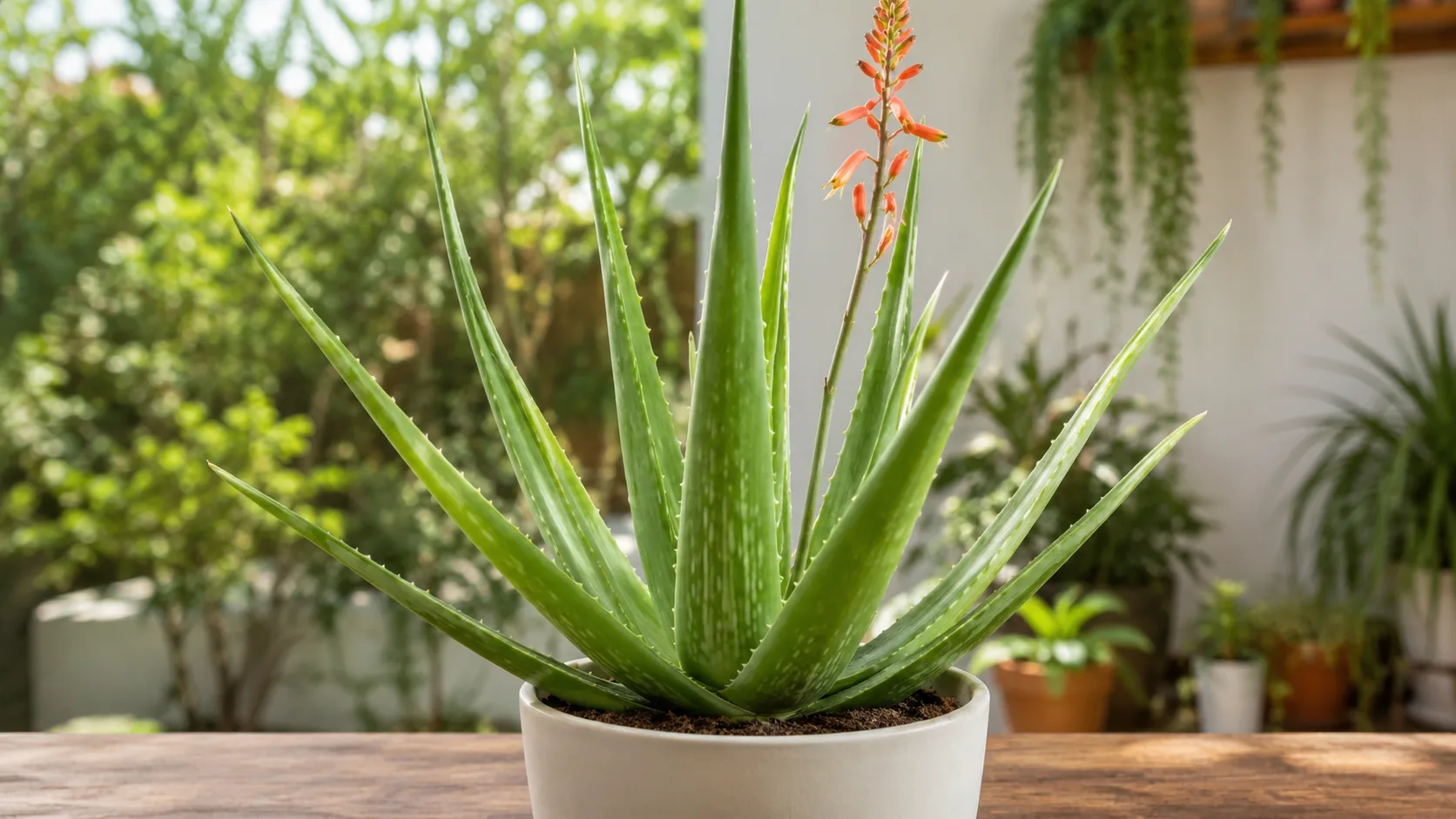
Use a gritty mix and let it dry before watering again. Avoid leaving water inside the leaf rosette or a decorative cachepot, where it can stay trapped around the crown. Aloe is toxic to cats and dogs according to the ASPCA, even though some processed aloe gel products are sold for human use; do not let pets or children chew the plant. ASPCA: Aloe.
13. Burro’s Tail (Sedum morganianum)
Burro’s tail is a trailing succulent with tightly packed, water-filled leaves. It can take bright filtered light and some gentle morning sun, but it is not a dependable low-light plant: weak light stretches the spaces between leaves and can leave the strands thin. A hanging pot can help it sit close to a window without taking up sill space, and the leaves detach easily, so position it where people will not brush past.
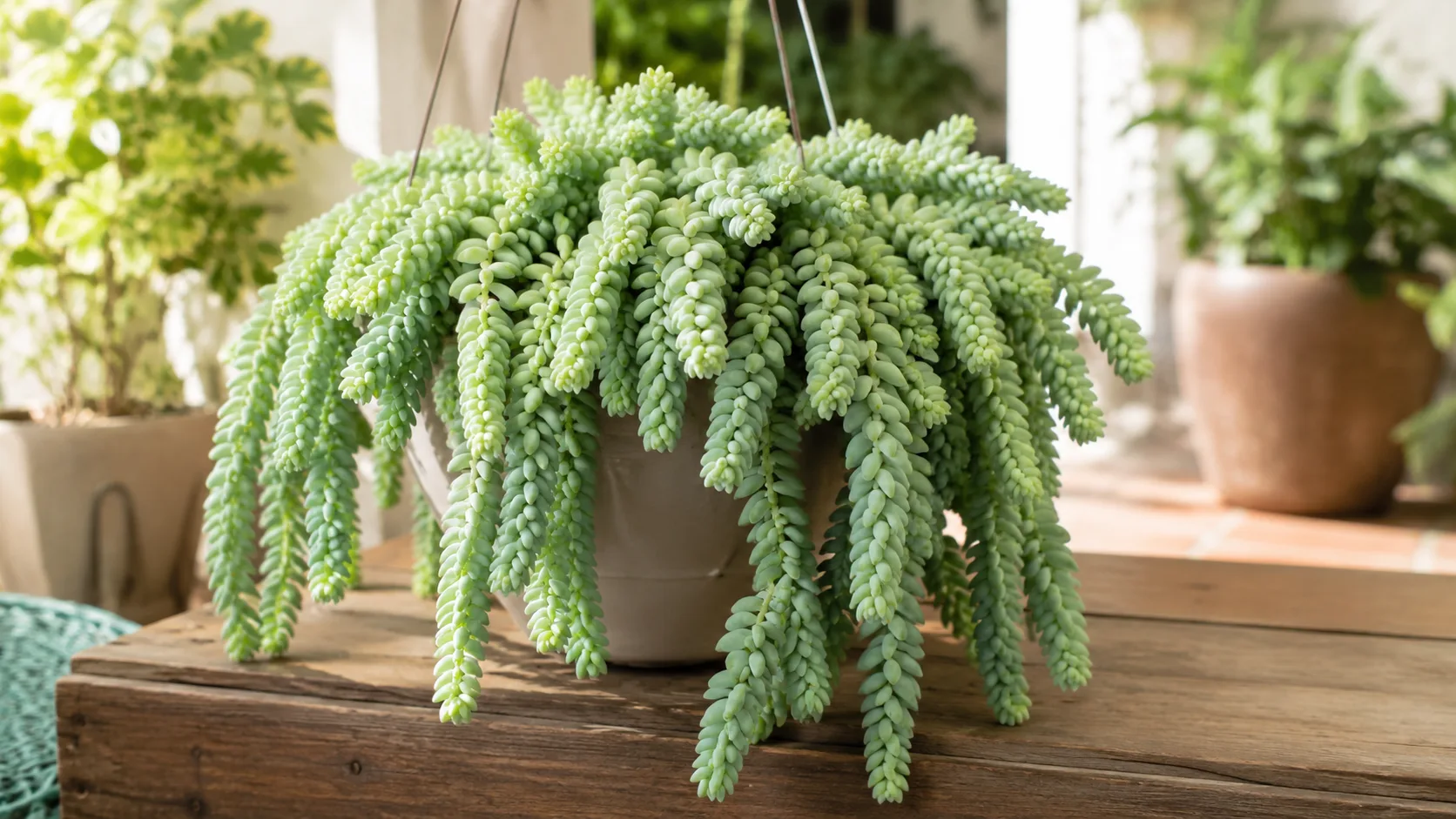
Use a porous mix, water only after it has dried, and handle the stems gently while rotating or moving the pot. A few fallen leaves after a move are not always a light problem; rough handling can dislodge them. If the whole strand is getting sparse and reaching in one direction, improve the light gradually rather than compensating with more frequent watering.
14. Panda Plant (Kalanchoe tomentosa)
The panda plant’s fuzzy leaves and dark tips are easiest to maintain in bright light, even though the plant may tolerate some shade. In a low-light room it can survive but grow more slowly and lose its compact shape; place it on the brighter side of a room rather than at the back of a shelf. Its fuzzy coating is a natural leaf surface, not dust, so do not scrub it to make the plant look cleaner.
Water after the potting mix has dried, and avoid splashing water onto the hairy leaves, where droplets may linger. If the stems stretch, provide more light and check the plant’s root-zone dryness before increasing water. Like several plants in this list, its ability to store water reduces how often it needs a drink; it does not make it a low-light specialist.
15. Bear Paw (Cotyledon tomentosa)
Bear paw has plump, fuzzy leaves with small claw-like tips and can tolerate partial shade better than the most sun-demanding succulents. For a compact plant and the best chance of its seasonal flowers, give it a bright spot with indirect light or gentle morning sun. A shaded corner may keep the plant alive, but it can also produce weak, stretched growth and fewer flowers.
Water only when the mix has dried, and keep the leaves dry if you water overhead. The leaf hairs make the surface look soft, but repeated moisture and poor air circulation can leave foliage damp longer than a smooth-leaved plant. If you do not have a bright window, consider a snake plant or Gasteria instead of asking bear paw to adapt indefinitely.
16. Ghost Echeveria (Echeveria lilacina)
The pale, powdery rosette in this list is Echeveria lilacina, usually called ghost echeveria; some sellers call it pinwheel desert rose. That label can be confusing because “desert rose” usually refers to Adenium obesum, a different succulent. NC State confirms Adenium obesum is the true desert rose and recommends full sun, so neither plant is a good pick for a dim room. NC State Extension Plant Toolbox: Desert Rose.
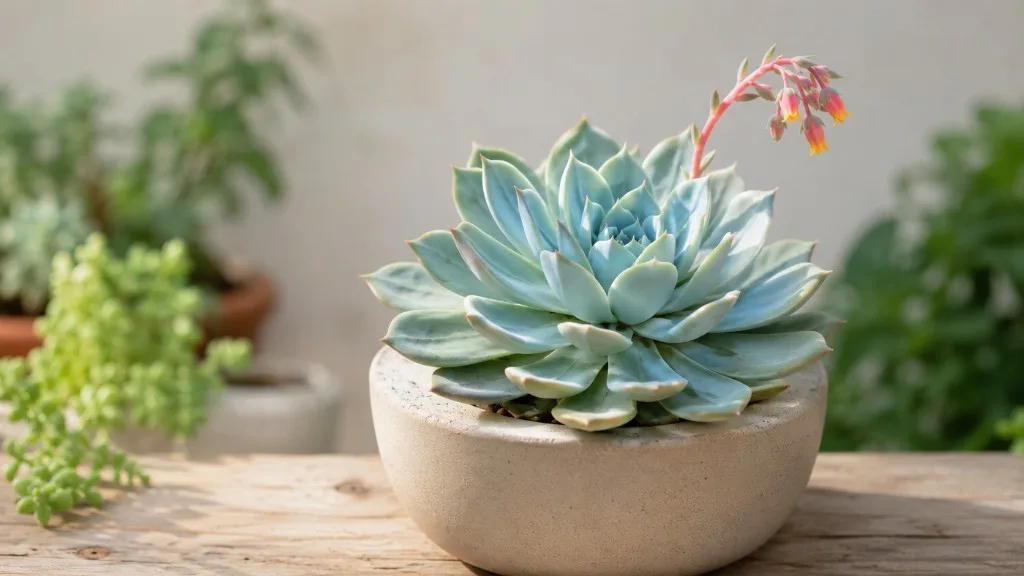
For Echeveria lilacina, choose the brightest window you have or provide supplemental light; Gardeners’ World likewise treats echeveria as a sunny-window plant. Its powdery leaf coating is easily rubbed off, so avoid handling the rosette. Let the potting mix dry between waterings, and do not make up for low light with frequent feeding, which cannot restore the plant’s compact rosette shape. Gardeners’ World: Small House Plants.
How to Keep Low-Light Succulents From Declining
Pick a position by what reaches the leaves. In the Northern Hemisphere, a north-facing window usually gets less direct sun than a south-facing one; in the Southern Hemisphere, that relationship reverses. East windows generally offer gentler morning light, while west windows can deliver warmer afternoon sun. Buildings, trees, screens, tint, latitude, window size, and distance can change the picture, so “three feet from a window” is not a reliable light rating by itself.
Compare candidate spots at the same time of day. A soft-edged shadow on a piece of paper suggests more usable light than no visible shadow, but this is only a rough check, not a plant-light measurement. A phone light-meter app can help you compare two locations consistently, although readings vary by device; the plant’s new growth over several weeks is the better final test. Rotate a pot a little if it leans toward the window, and recheck placement when winter days shorten or the sun angle changes.
Water for the plant’s habitat, then adjust for the room. In a dim, cool spot, potting mix often takes longer to dry because the plant is growing more slowly. For desert succulents such as jade, aloe, burro’s tail, bear paw, and echeveria, wait until the mix is dry through much of the root ball, then water thoroughly and let it drain. For the forest cacti, let the top portion of the more organic mix dry before watering; do not force Schlumbergera or Rhipsalis through a long desert-style drought.
A pot with an open drainage hole is more useful than a calendar reminder. Check below the surface with a wooden skewer or your finger, and empty a cachepot or saucer after watering. If the leaves look soft and translucent while the soil stays wet, suspect excess moisture before thirst; if they are wrinkled and the mix is bone-dry, a deep drink may help. A small, frequent splash can wet only the surface and leave roots dry while still keeping the lower pot damp.
Use a grow light when the room is genuinely dim. If a plant receives no useful daylight for most of the day, a nearby full-spectrum LED grow light on a timer is more dependable than moving it between rooms at random. Follow the light maker’s placement and duration guidance, then judge the response in new growth; light distance and output vary too much for one universal number of inches or hours. Keep the light close enough to be effective without heating or bleaching the leaves.
When moving a plant from shade to a brighter window or lamp, step it up gradually over about a week or two. Leaves formed in low light can scorch if the plant suddenly receives strong direct sun, even when the species ultimately prefers more light. A sheer curtain or a position just back from the glass can soften the change while the plant acclimates.
Read growth, not one old leaf. Etiolation is new growth that becomes unusually long, narrow, pale, or widely spaced as the plant reaches for light. One old leaf yellowing at the base may be normal; a whole plant leaning or repeatedly making smaller, weaker leaves is stronger evidence that the spot needs more light. Add light before increasing fertilizer, and do not cut off healthy stems until the new placement is working.
Finally, check toxicity before bringing a plant into a home with a pet that chews. The ASPCA lists aloe, jade, and snake plant as toxic to cats and dogs, while NC State flags ZZ plant and African milk tree safety concerns; Euphorbia trigona sap can also irritate skin and eyes. Keep risky plants out of reach, wear gloves if you handle damaged African milk tree stems, and contact a veterinarian or animal poison-control service if a pet eats a plant. A plant’s common name can be ambiguous, so confirm the botanical name before relying on a general “safe succulent” label.
Conclusion
A few succulents can manage lower indoor light, but “low-light tolerant” does not mean happy in a dark room. Start with the ZZ plant, common snake plant, Gasteria, Haworthia, or a forest cactus if your room has usable daylight; save echeveria, aloe, jade, bear paw, panda plant, and burro’s tail for your brightest window or a grow light.
In a dim room, the safest care adjustment is usually to water less often and check the soil before every drink, while watching new growth for stretching or weakness. Give each plant the light its leaves can actually use, change exposure gradually, and let the plant’s response—not the label on the pot—tell you whether the location works.



