How to Grow and Care for Sensitive Plant
Grow Mimosa pudica indoors: why leaves fold, light and watering rules, seed scarification, invasiveness warnings, and what to do when the plant declines after bloom.
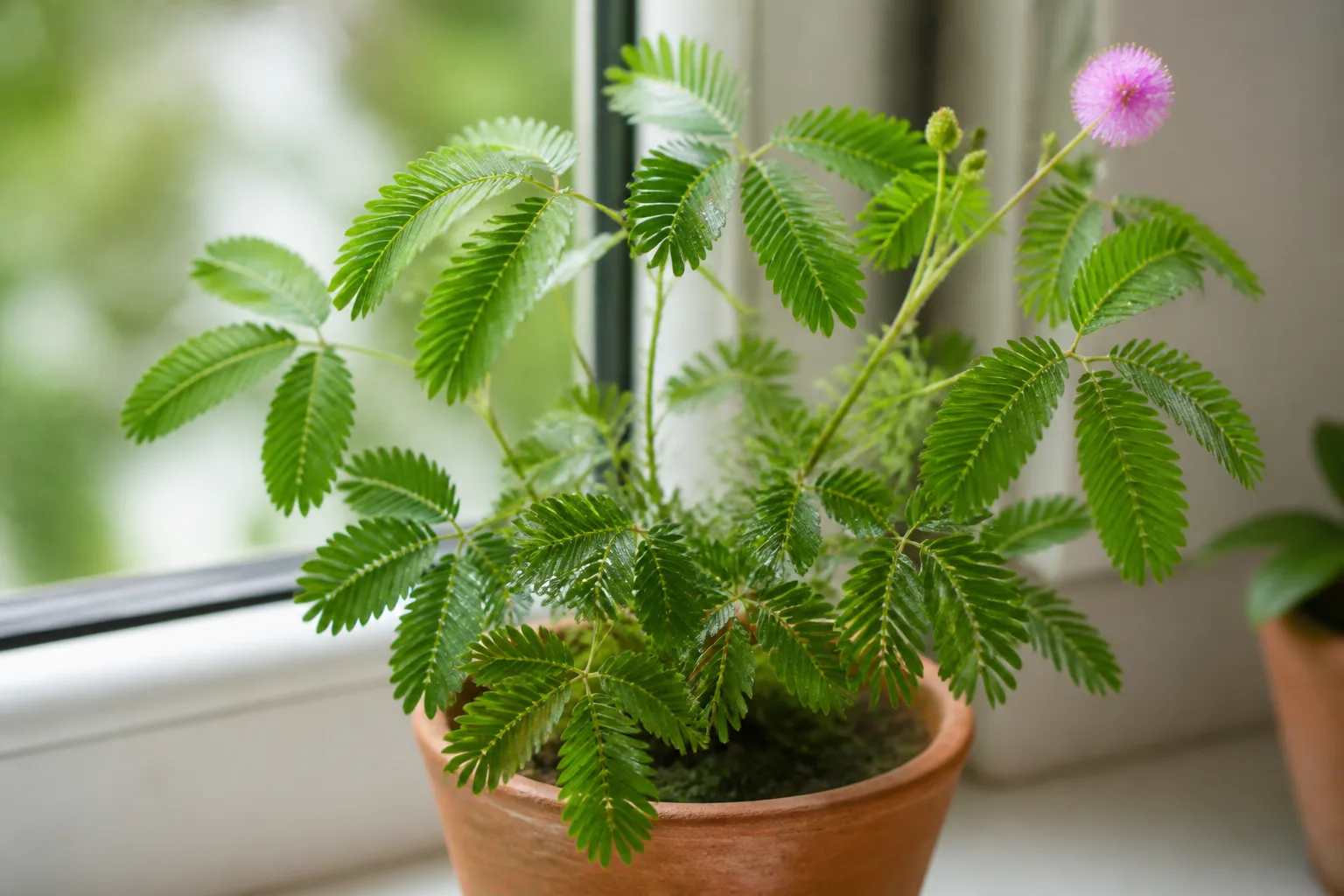
Sensitive plant (Mimosa pudica) is the houseplant that folds its feathery leaves when you brush a finger across them—a reflex so fast it looks like a magic trick. Behind the show is a tropical legume from Central and South America that wants bright light, steady moisture, warm air, and a gardener who understands its short indoor lifespan. Treat it like a curiosity you grow from seed each year, not like a pothos you expect to keep for a decade, and you will get far fewer “why is my sensitive plant dying?” moments.
What Sensitive Plant Actually Is (and What It Is Not)
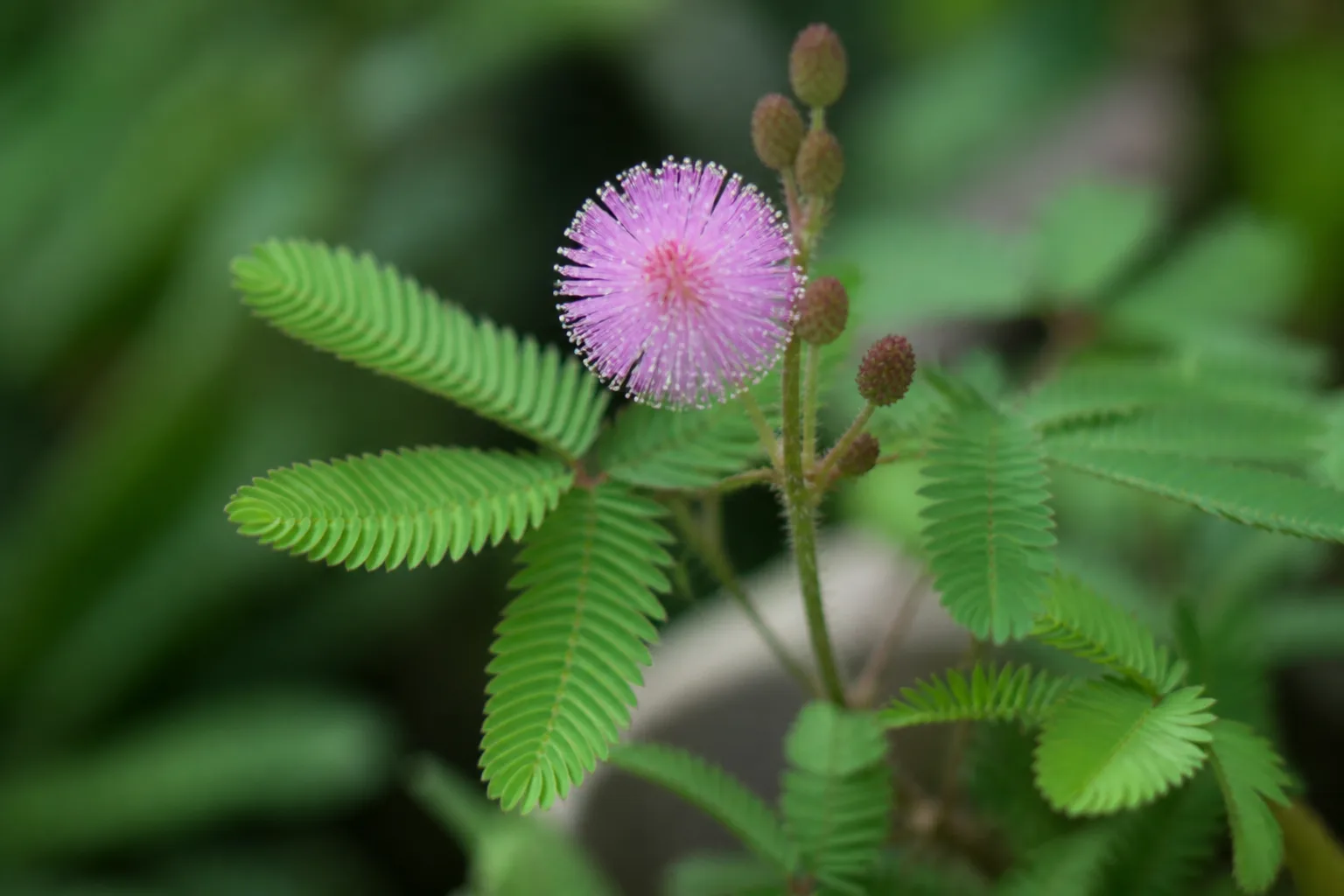
Mimosa pudica is a spiny subshrub in the pea family (Fabaceae). Britannica describes it as a widespread weed in tropical regions that is commonly grown as a greenhouse curiosity elsewhere. Mature plants typically reach about 12–18 inches (30–45 cm) tall with bipinnate leaves—pairs of tiny leaflets along a central rachis that give the foliage a fern-like look. In summer, round pink or mauve pompom flowers rise on short stalks above the foliage.
The species name pudica means shy in Latin, which matches the leaf-folding habit. You may also see it sold as touch-me-not, shameplant, sleepy plant, or branded names like Tickle Me Plant™. Seeds and young plants are widely available online; starting from seed is often easier than finding a mature specimen at a local garden center.
Sensitive Plant vs Mimosa Tree
Do not confuse Mimosa pudica with the silky mimosa tree (Albizia julibrissin) or other landscape mimosas. The sensitive plant is a low, touch-responsive herbaceous subshrub grown in pots. Mimosa trees are woody ornamentals many times taller, with very different care, hardiness, and pruning needs. If you searched “mimosa” hoping for a patio tree, you have the wrong plant profile entirely.
| Feature | Sensitive plant (M. pudica) | Silk mimosa tree (A. julibrissin) |
|---|---|---|
| Habit | Low, spreading subshrub | Small to medium tree |
| Signature trait | Leaves fold on touch | Feathery pink flower clusters |
| Typical use | Houseplant, classroom demo | Landscape specimen |
| Indoor fit | Yes, with bright light | Poor long-term houseplant |
For more movement-driven houseplants worth a windowsill, see our guide to unusual houseplants.
Why the Leaves Fold — Thigmonasty and Nyctinasty
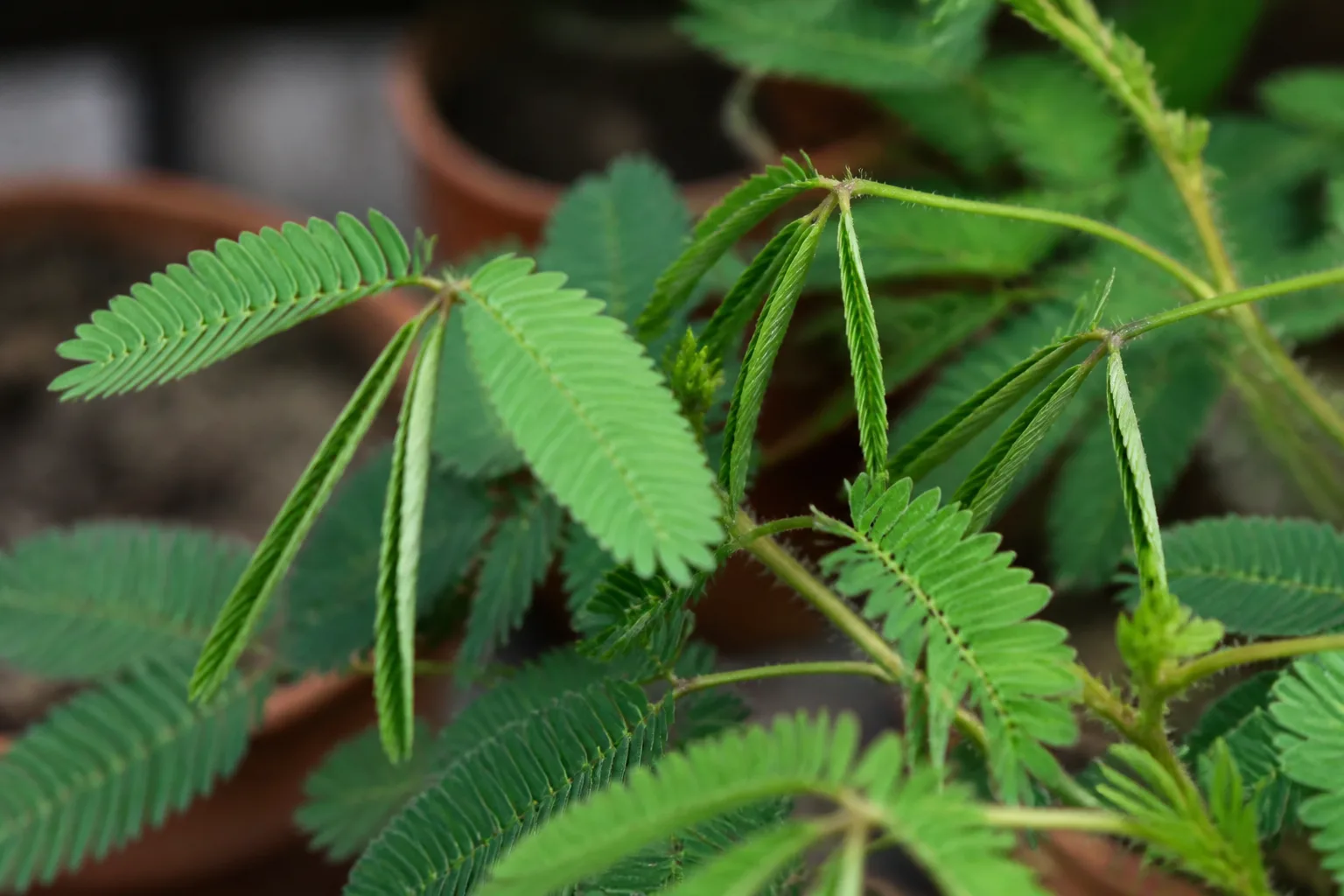
When you touch a leaflet, specialized motor cells at the base of each leaflet and leaf stalk lose turgor pressure—water moves rapidly between cells on opposite sides, and the leaflets collapse inward. The whole branch may droop. Britannica notes the leaves usually reopen within several minutes if left alone. This rapid touch response is thigmonasty (sometimes called seismonasty), not thigmomorphogenesis, which is a slow growth response to chronic mechanical stress on trees and stems.
The same plant also performs nyctinasty: leaves fold at night and open again in daylight. Heat can trigger folding too—Guide to Houseplants reports sustained temperatures around 75–85°F (24–29°C) may cause temporary closure even without touch.
Should You Keep Touching It?
The folding reflex is a defense against browsing, not an invitation to poke the plant all day. Each closure costs energy. Repeated stimulation while the plant is already stressed—dry soil, low light, or heat—slows growth and can leave leaflets closed for longer stretches. Demonstrate the movement once or twice, then let the plant recover. If you are buying this for a classroom, rotate several seedlings so no single plant bears all the handling.
Researchers at the University at Albany found another defense most care guides skip: when roots are disturbed or pulled from soil, M. pudica releases strong sulfur-based volatile compounds from microscopic sacs along root shafts. The odor is a below-ground alarm—another reason to disturb roots only when repotting is truly necessary and to handle the root ball gently when you do.
Quick Care Checklist
Sensitive plant rewards consistency more than perfection. Before you adjust anything exotic, confirm these basics:
- Light: Bright light with some direct sun indoors; at least several hours of strong daylight daily.
- Water: Keep potting mix evenly moist; never let the plant sit in soggy soil.
- Soil: Well-draining peat- or coir-based mix; avoid heavy garden soil in pots.
- Temperature: Aim for 65–75°F (18–24°C); avoid sustained exposure below 60°F (16°C).
- Humidity: Moderate to high; misting, a pebble tray, or a small humidifier helps in dry winters.
- Fertilizer: Light and optional; native soils are nutrient-poor.
- Lifecycle: Expect decline after flowering indoors; save seeds and start fresh plants.
Light Requirements
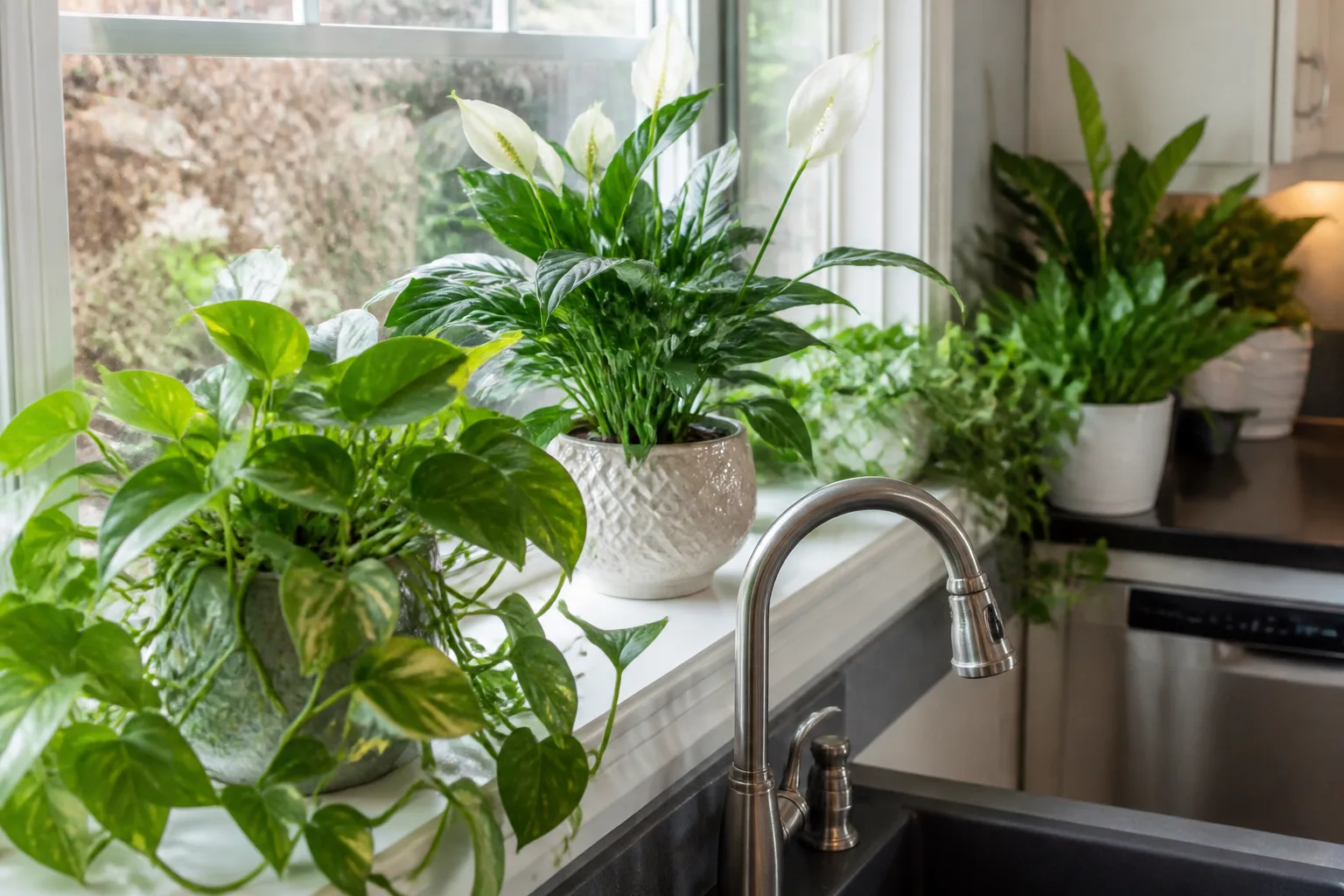
Sensitive plant is not shade-tolerant. Sprout Home’s care sheet recommends bright, indirect light near a north- or east-facing window, with the plant close enough to a sunny window that leaflets stay open during the day. Guide to Houseplants adds that bright light with some direct sun and supplemental grow lights both work well.
Outdoors in warm climates, give morning sun and light afternoon shade in hot-summer regions. A pot on a bright patio for spring and early summer often triggers better flowering than a dim indoor shelf year-round.
Signs Your Plant Needs More or Less Light
Too little light: Leaflets remain folded through daylight hours, internodes stretch, new leaves look smaller, and flowering stalls. Relocate before you fertilize—extra nutrients cannot replace photons.
Too much scorching sun: Bleached or crispy leaflet tips, especially on south glass with no sheer curtain. Pull the pot back a foot or filter afternoon sun.
If light is marginal, a full-spectrum LED grow light 6–12 inches above the canopy for 12–14 hours daily is a practical fix. For broader houseplant light troubleshooting, our leggy plants guide explains how stretch and closed foliage often share the same root cause.
Soil and Container Setup
In pots, use a standard commercial potting mix amended with perlite or coarse sand for extra drainage. Sensitive plant tolerates slightly acidic to neutral pH and does not need rich, heavily fertilized soil. In the ground—only where invasiveness is not a concern—loamy, well-drained soil with compost is adequate; compacted clay suffocates the fine root system.
Choose containers with drainage holes. Terra cotta dries faster than plastic, which can help prevent waterlogging but demands more frequent checks. Because growth is rapid, plan on repotting one to three times per year while the plant is young. A self-watering pot can work if the reservoir does not keep the mix saturated at the bottom—roots rot quickly in stagnant water.
Watering Without Rotting Roots
Keep the mix consistently moist but never waterlogged. Water when the top of the soil begins to dry, then soak until excess drains into the saucer and empty the saucer within 30 minutes. Guide to Houseplants suggests allowing the surface to dry slightly between waterings while avoiding full dry-down—this plant wilts faster than many common houseplants.
Reduce watering slightly in winter when growth slows, but do not let the plant go bone dry for days. If leaflets fold and stay folded in good light, check moisture first with a finger or skewer two inches deep. Chronic overwatering shows up as yellow lower leaves, mushy stems at the soil line, and sour-smelling mix—repot into fresh mix and trim black roots if you catch it early.
Temperature, Humidity, and Indoor Climate
Warm, stable room temperatures suit sensitive plant best. Sprout Home targets about 70°F (21°C) and warns against prolonged exposure below 60°F (16°C). Keep pots away from cold drafts, single-pane winter glass, and blasting heat vents that desiccate foliage overnight.
Humidity should stay moderate to high. Average homes are often acceptable in summer; winter heating drops humidity sharply. Options, in order of usefulness:
- Room humidifier near the plant (best sustained fix).
- Pebble tray under the pot—see our DIY pebble tray guide for correct water-line setup.
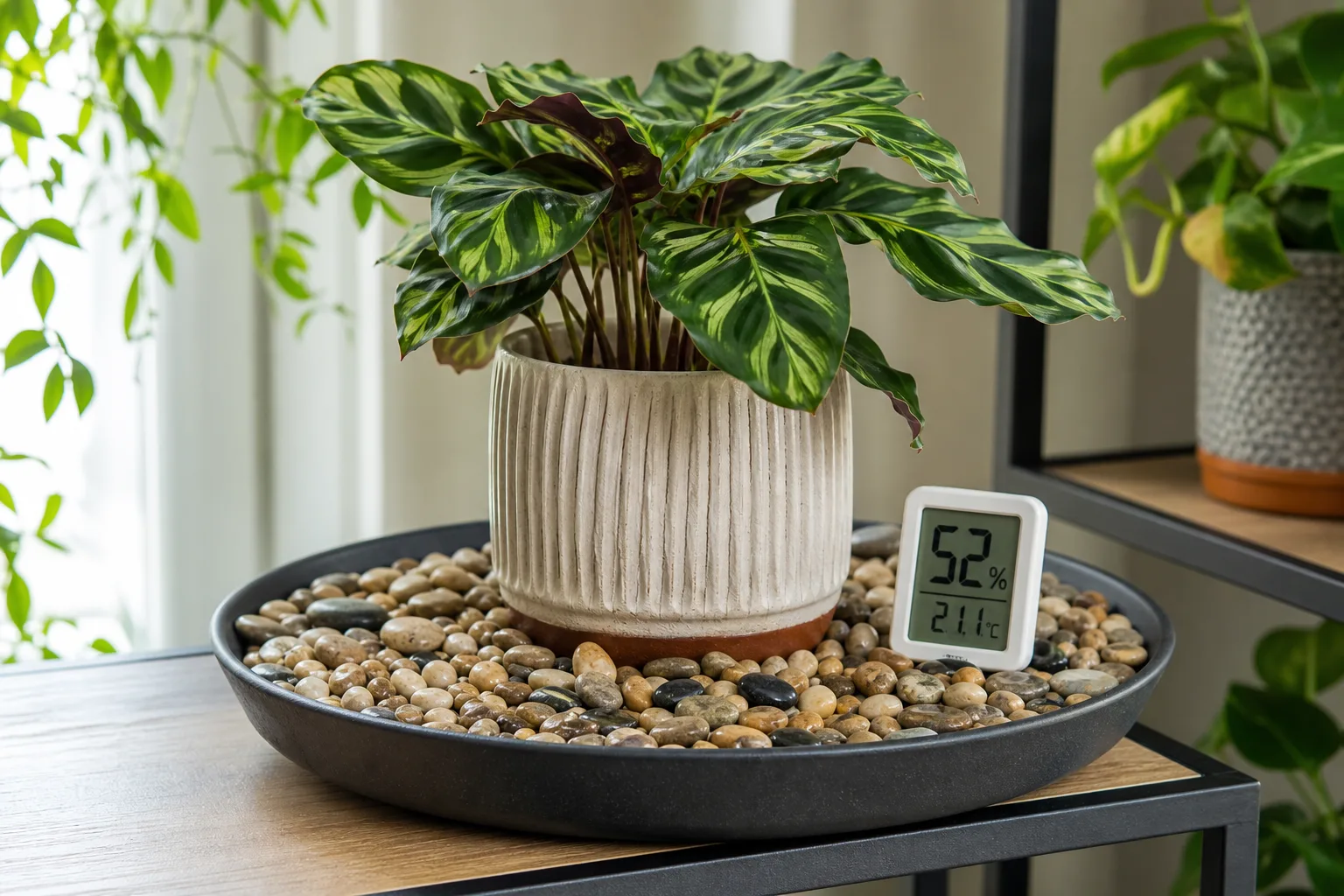
- Light misting in the morning only; it is a minor boost, not a substitute for a humidifier in desert-dry rooms.
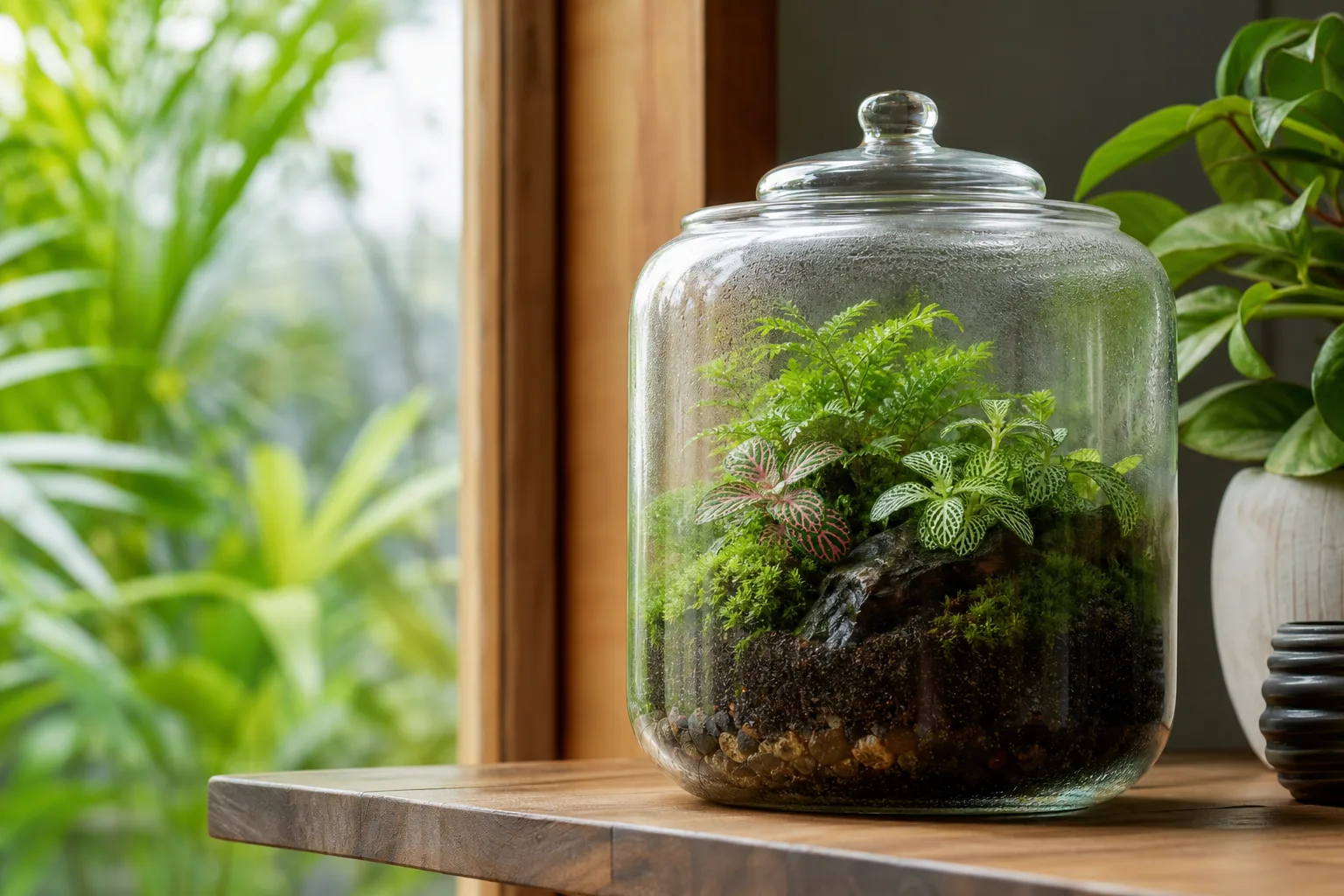
Sensitive plant also makes an excellent terrarium or cloche candidate because enclosed glass holds humidity—just ventilate briefly every few days to limit mold. Our unusual houseplants guide notes terrarium culture for humidity lovers when you can provide adequate light to the glass enclosure.
Fertilizing a Nutrient-Poor Soil Specialist
In the wild, sensitive plant colonizes nutrient-poor soils, so heavy feeding is unnecessary and can burn fine roots. If you want slightly faster summer growth, apply a balanced or high-potassium liquid fertilizer diluted to half strength every two to three weeks during active growth only. Water the plant lightly before feeding. Skip fertilizer entirely in winter and on newly repotted plants for four to six weeks.
Growing Sensitive Plant From Seed
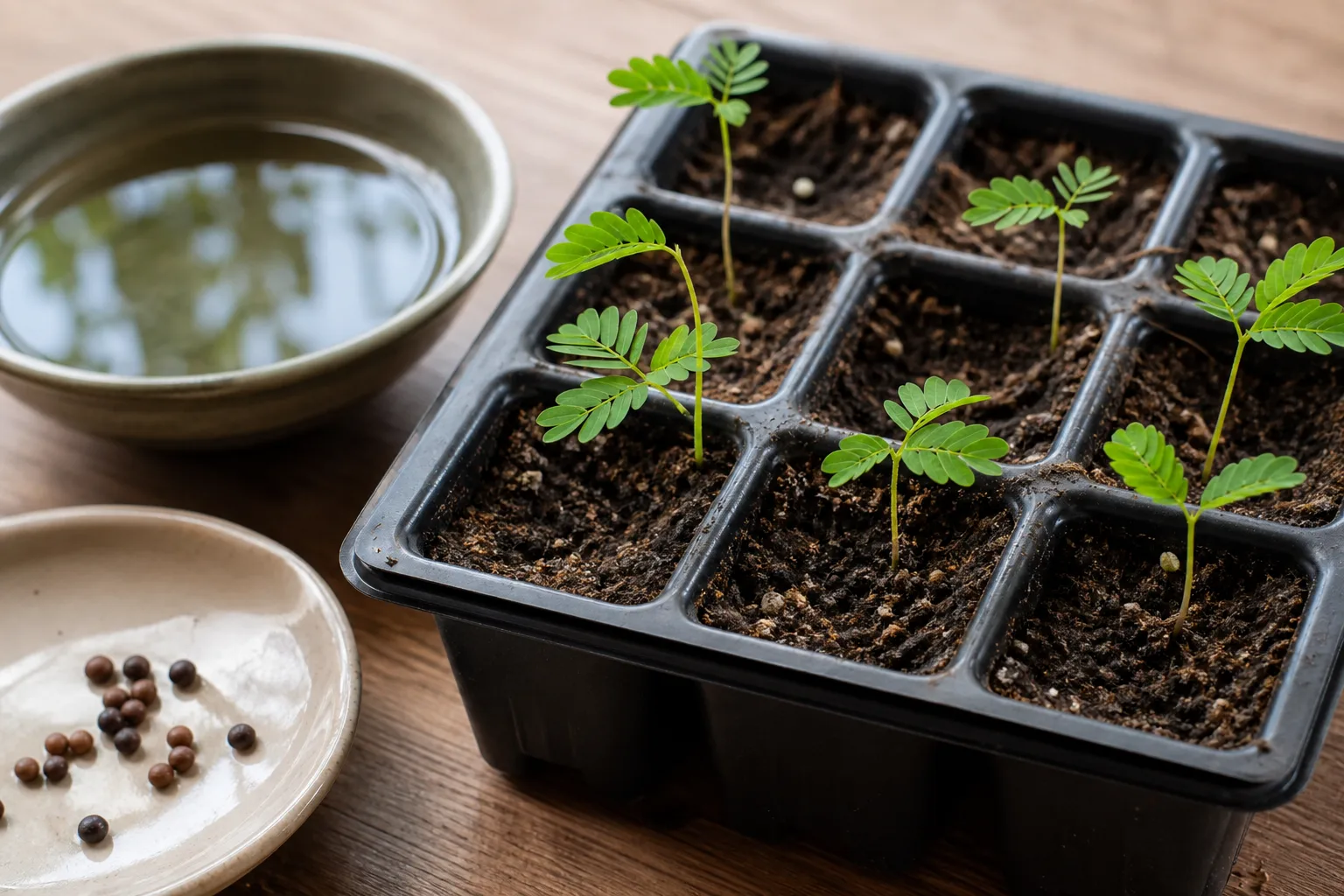
Seed is the most reliable way to grow new plants—and the workflow you will use every year if you keep this species indoors long term. Guide to Houseplants reports germination in about a week under warm, bright conditions.
Step-by-step:
- Scarify the hard seed coat by gently nicking one side with a sharp knife or rubbing briefly with fine sandpaper until you expose white tissue—do not crush the seed.
- Soak scarified seeds in warm water for 12–24 hours to soften the coat further.
- Sow in moist seed-starting mix, barely covered (about ¼ inch deep).
- Warm the tray to roughly 70°F (21°C) with a heat mat if your room runs cool.
- Provide bright light without baking seedlings under hot midday sun.
- Pot up individually when roots fill small cells and true leaves are handling well.
Collect seeds from dried pods after summer flowers fade if you want free stock for next season. Store dry seed in a labeled envelope in a cool indoor drawer until spring.
Propagating From Stem Cuttings
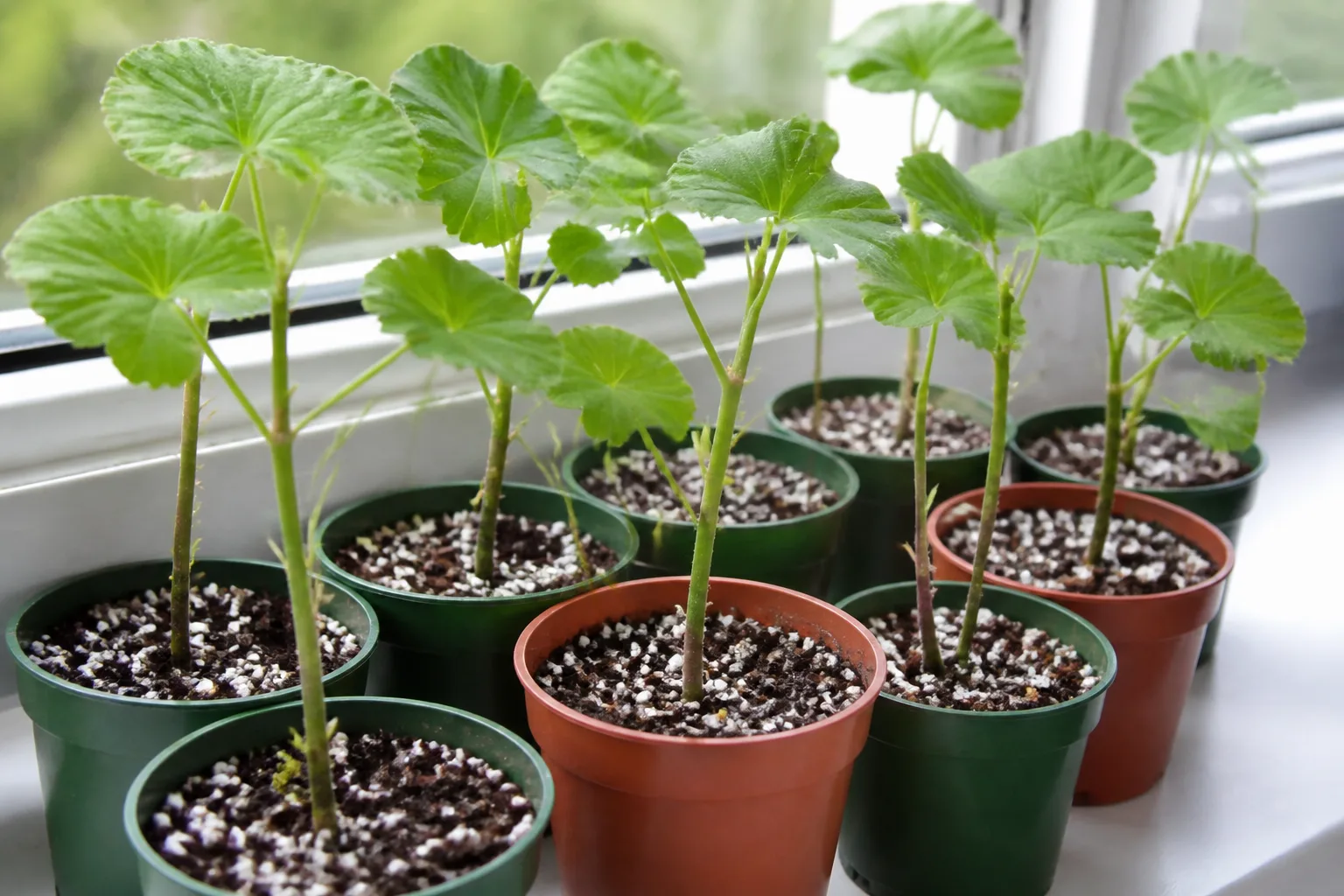
Stem cuttings work but are less foolproof than seed. Take a 4–6 inch tip cutting with at least one leaf node exposed. Remove lower leaflets, dip the cut in rooting hormone if you have it, and insert into a mix of peat and perlite. Cover with clear plastic or a propagation dome to hold humidity, keep warm and bright, and expect roots in one to four weeks. Vent the cover daily to prevent mold. Rooted cuttings go into the same potting mix you use for seedlings.
Pruning, Repotting, and Managing Fast Growth
Sensitive plant grows quickly and can become leggy without enough light or regular pinching. Prune trailing stems any time of year to encourage bushiness—use clean scissors and cut just above a node. You can train long stems up a small trellis if you prefer a vertical habit on a desk.
Repot when roots emerge from drainage holes; young plants may need several repots in one year. Expect temporary leaf droop after repotting; stable light and moisture bring the plant back within days. Because root disturbance triggers odor and stress, repot only when necessary, not on a calendar schedule.
Getting Sensitive Plant to Bloom
Pink pompom flowers usually appear from late spring through summer when light is strong. Blooms are short-lived but charming—a bonus on a plant grown mainly for foliage movement.
To encourage flowers:
- Move the pot to a bright outdoor location for spring if frost is past and you can bring it in at night when temperatures dip.
- Add supplemental light indoors if leaflets stay open but no buds form by early summer.
- Avoid temperature swings; extremes can abort buds even when light is adequate.
After the main flowering flush indoors, many plants begin a gradual decline. That is normal—not a sign you failed. Save seed, start replacements, and compost the parent when it looks tired.
Invasiveness and Outdoor Planting Rules
Britannica classifies M. pudica as a widespread tropical weed that has naturalized in warm areas worldwide. Each plant can produce hundreds of seeds in prickly pods that cling to animals and clothing; seed banks persist in soil. In USDA zones 10–12 and similar tropical climates, planting in open ground can spread the species beyond your yard.
Safe approach for most gardeners: grow in pots only, deadhead or collect pods before they shatter, and never compost seed-filled material outdoors. If you summer a pot on a patio, sweep fallen seed and discard it in trash, not in garden beds. In cooler climates, frost kills outdoor plants, but imported seed in potting waste is still worth containing.
For a native, low-growing legume alternative in the southeastern U.S., look at sunshine mimosa (Mimosa strigillosa)—a different species with mat-forming habit and pollinator value, not a houseplant substitute but a responsible landscape choice where appropriate.
Pests and Disease Troubleshooting
Sensitive plant shares pests with many tropical houseplants. Watch for:
- Spider mites — fine webbing, stippled yellow leaflets, worse in dry air. Rinse foliage, raise humidity, and see our spider mites on houseplants guide for escalation steps.
- Mimosa webworm — larvae web leaflets together, interfering with folding. Remove affected stems and treat with insecticidal soap on a test leaf first.
- Mealybugs and thrips — cottony masses or silvery scarring; isolate and treat early.
Diseases are uncommon indoors. Root rot from overwatering is the main killer—fix culture before reaching for sprays. Horticultural oil can control soft-bodied pests if you cover leaflet undersides thoroughly.
Common Problems and Fixes
Leaflets closed all day in good light: Usually underwatering, cold stress, or recent over-handling. Check moisture, temperature, and leave the plant alone for 24 hours.
Sudden decline after blooming: Expected indoors. Collect seed, start new plants, discard the old specimen.
Leggy, sparse foliage: Insufficient light or infrequent pinching. Move to brighter exposure, prune tips weekly until bushier.
Yellow lower leaves: Often overwatering; sometimes cold drafts or nitrogen excess. Dry the mix slightly, verify drainage, and hold fertilizer.
Brown crispy tips: Dry air or salt buildup from hard tap water. Humidify and flush the pot with distilled or rainwater monthly in winter.
Plant dried out completely: Cut stems back to green tissue, soak the pot once, and place in a humid, bright spot—recovery is possible if roots are still firm.
Conclusion
Sensitive plant is worth growing if you accept what it is: a fast-moving tropical legume with a seasonal houseplant rhythm, not a permanent foliage fixture. Give it bright light, even moisture, warm humid air, and gentle handling. Start from scarified seed, enjoy the summer pompoms, save pods for next year, and keep it in pots unless you live where Mimosa pudica is already a known weed and you have a containment plan. Get those basics right and the leaf-folding trick stays impressive instead of a prelude to another dead windowsill experiment.