19 Unusual Houseplants to Grow at Home
Discover 19 unusual houseplants, from desert roses and living stones to jewel orchids and carnivores, with care rules, difficulty, and safety notes.
An unusual houseplant can be a swollen little tree, a leaf that folds when touched, a plant that looks like a pebble, or a flower shaped like a bat. The visual novelty is only half the decision. The plant’s native strategy—desert storage, forest-floor humidity, bog living, or seasonal dormancy—will determine whether it thrives on your shelf or slowly declines.
The 19 plants below are unusual, but they are not all equally rare or equally difficult. Start with your brightest window, your normal watering habits, and the water available from your tap. Then choose a plant whose needs fit that reality. Gardening Know How makes the useful distinction that a plant can be unique without being genuinely rare; availability, propagation speed, and demand change over time, while the plant’s care requirements remain the more important buying question. (Gardening Know How)
What makes a houseplant unusual—and what “rare” does not mean
“Unusual” describes the experience of growing the plant: it may have an exaggerated caudex, translucent leaf tips, carnivorous traps, corkscrew foliage, moving leaves, or flowers that look nothing like a typical houseplant bloom. “Rare” is a supply claim. A plant can be common in specialist nurseries but still look extraordinary, while a genuinely scarce species may be a poor home grower or an ethically questionable purchase.
The best choice is not the plant with the highest price or the strangest photograph. It is the one with a clear match between its biology and your room. A bright, dry windowsill is a good home for several succulents; it is a bad home for club moss. A humid plant cabinet may suit a jewel orchid; it will be a poor place for a dormant desert rose if its pot stays wet.
The practical distinction is also difficulty. Epic Gardening’s horticulture coverage describes difficult houseplants as species that demand a closer recreation of their natural environment, not simply plants with exotic names. That is the useful test here: how narrow is the plant’s acceptable range for light, moisture, temperature, and airflow? (Epic Gardening)
Choose by your home’s growing conditions
Before choosing a name, choose a growing lane. The Royal Horticultural Society advises positioning houseplants for their actual light, temperature, water, and humidity needs instead of placing them purely for decoration. That principle matters more with unusual plants because their care margins can be narrower than a pothos or snake plant. (RHS houseplant growing guide)
| Your home | Strongest matches from this list | The non-negotiable |
|---|---|---|
| Sunny window or grow light; dry-down is easy | Desert rose, cement leaf, Cooper’s haworthia, living stones, lavender scallops, pencil cactus, corkscrew albuca | Fast drainage and no calendar watering |
| Bright indirect light; you can maintain humidity | Coffee plant, bat flower, jewel orchid, club moss | Moisture without stagnant air |
| You enjoy a contained setup | Club moss in a terrarium; jewel orchid in a ventilated cabinet | Watch condensation and fungal growth |
| You can provide pure water and low-nutrient media | California pitcher plant, sundew, Venus flytrap | No softened or ordinary mineral-rich tap water |
Bright sun and a dry mix
Choose this lane if your plant receives several hours of direct sun or a strong grow light, and if you are comfortable waiting for the potting mix to dry before watering. Succulents do not need less attention because they are unusual; they need more accurate timing. A small pot in a hot window may dry quickly, while the same plant in a dim, cool room may stay wet for weeks.
Use a container with a drainage hole and a gritty or fast-draining mix. Do not add a pebble layer inside a pot as a substitute for drainage. Lift the pot, inspect the mix below the surface, and adjust the interval to the plant’s temperature and active-growth season.
Bright indirect light and humid air
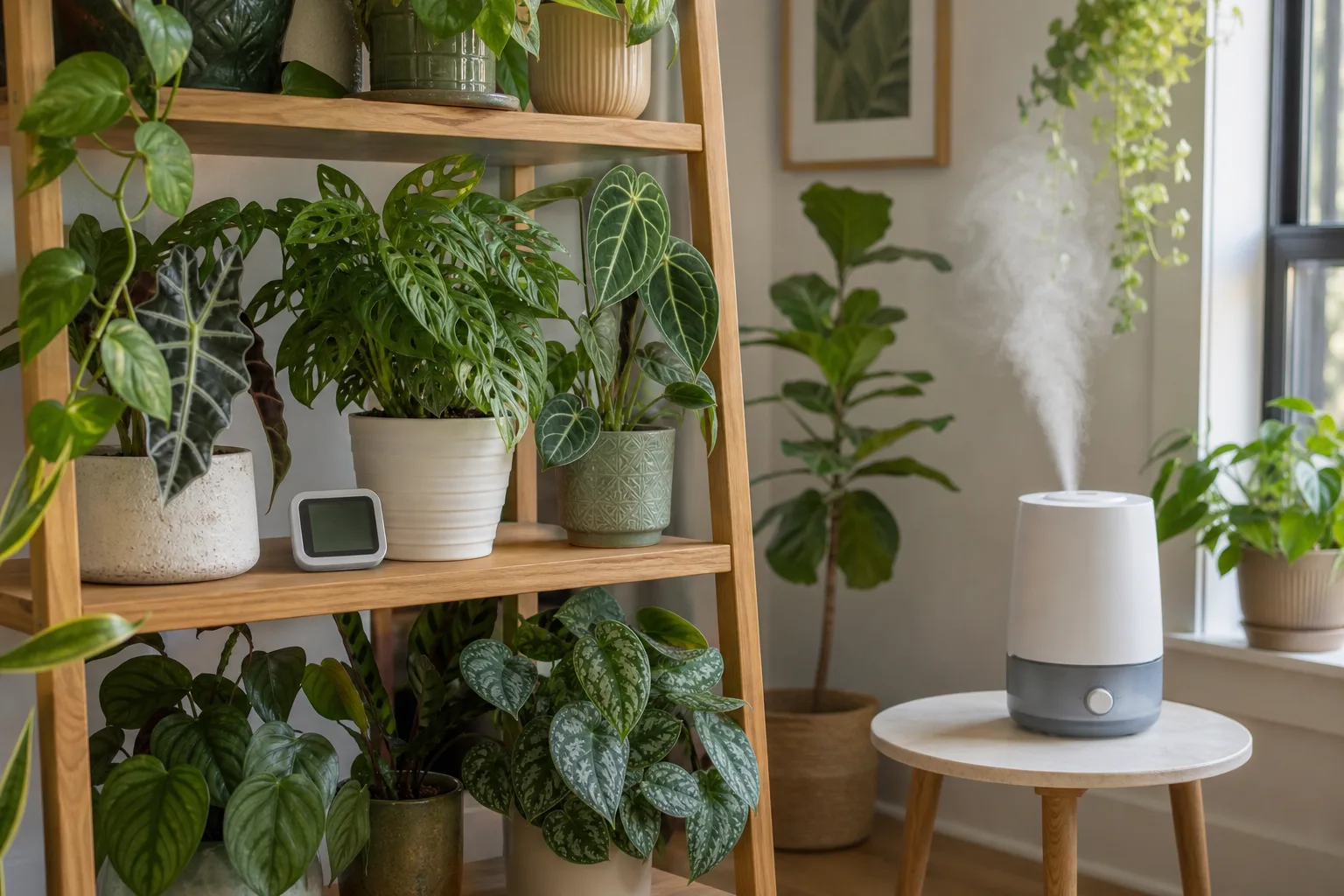
This lane suits plants from warm, shaded habitats, but “humid” does not mean sealed and airless. Coffee plants, bat flowers, jewel orchids, and club moss prefer moisture around their leaves and roots, yet saturated foliage and stagnant air make fungal problems more likely. Group plants, use a clean humidifier when needed, and leave space for air to move between leaves.
Do not move a newly shipped plant directly into the strongest window or beside a hot radiator. Let it recover from transport in bright indirect light, then increase light gradually. A plant that needs humidity still needs a stable temperature and a pot that drains.
Terrarium or bog conditions
Terrariums and bog setups are not interchangeable. A terrarium holds humid air around plants that like even moisture but still need a breathable root zone. A bog-style container for carnivorous plants uses low-nutrient media and water with very few dissolved minerals. Putting a desert succulent in either setup is a reliable way to create rot.
If you choose a terrarium plant, keep the container bright but out of harsh midday sun, where trapped heat can cook the foliage. Vent a closed terrarium when condensation stays heavy or leaves remain wet. For a bog plant, focus less on decorative humidity and more on pure water, suitable media, and the species’ temperature range.
19 unusual houseplants to grow at home
The entries are grouped by growing strategy, not by a claim that one category is universally easier. The short care notes tell you what makes each plant special, where it fits, and the mistake most likely to cause trouble.
Dry-climate oddities and sculptural succulents
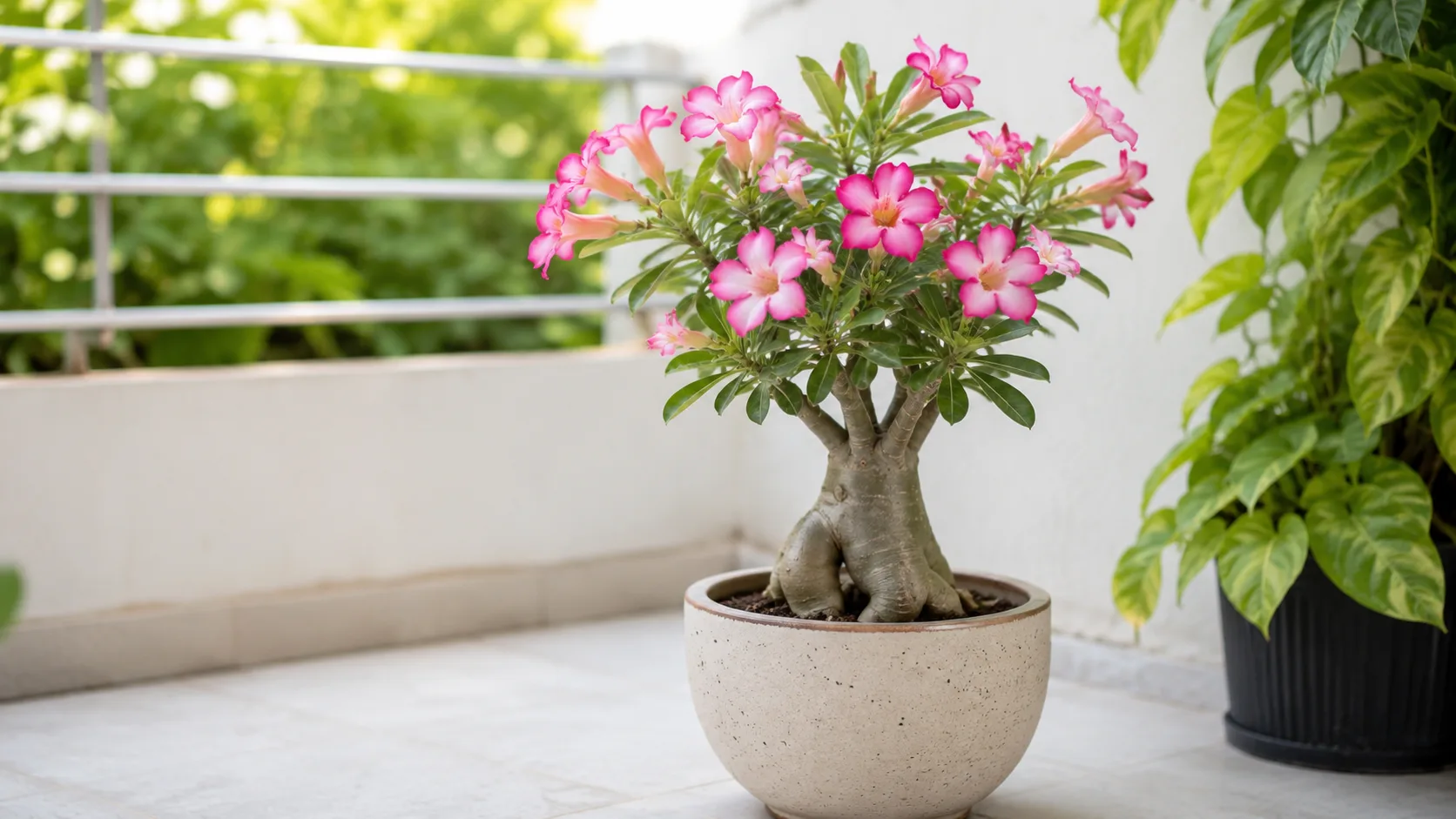
1. Desert rose (Adenium obesum). A swollen caudex and trumpet-shaped flowers make desert rose look like a miniature flowering tree. Give it the sunniest window you have, a cactus-style mix, and a pot with several open drainage holes. It can tolerate dry intervals because the caudex stores water, but cool weather changes the calculation: NC State Extension advises bringing it in around 55°F (13°C), reducing water during dormancy, and letting the mix dry between drinks. (NC State Extension)
This is a good first unusual plant for a bright, dry home, not a low-light apartment. If leaves drop in a cool season while the caudex stays firm and the mix is dry, the plant may be resting. If the caudex is soft and the soil is wet, suspect rot instead. Desert rose is also toxic to dogs, cats, and horses; the ASPCA lists cardiac glycosides and signs that can include vomiting, diarrhea, depression, and irregular heartbeat. (ASPCA)
2. Banana shrub (Michelia figo, commonly sold under Magnolia figo). This compact woody plant earns its name from the sweet banana-like fragrance of its flowers, not from edible banana fruit. It works for a collector who wants an unusual flowering shrub and has room for a bright window, warm temperatures, and a larger container than most shelf plants.
Keep the mix lightly and evenly moist while it is actively growing, but never let the pot sit in runoff. Use a slightly acidic, well-drained medium and prune after flowering if the plant becomes rangy. The main trap is expecting a small nursery plant to remain a miniature shrub forever; plan for height and width before placing it on a narrow shelf.
3. Climbing sea onion (Bowiea volubilis). This strange bulb sends out delicate, twining green growth that needs a small trellis or nearby support. The exposed bulb is part of the display, so keep it above the mix rather than burying it like an ordinary onion. Give it bright light, gritty soil, and moderate water during active growth.
Climbing sea onion is a seasonal plant. It may slow down or lose its vine when its growing season ends, and watering a resting bulb as though it were still producing foliage can cause rot. Let the mix become much drier during rest, then increase water only as new growth returns.
4. Cement leaf plant (Titanopsis calcarea). Cement leaf, also called concrete leaf or jewel leaf, has rough, knobbly leaves that mimic the rocky ground of its South African home. It is a small specimen for a sunny sill, especially if you want texture rather than flowers or height.
Use a shallow pot, a mineral-heavy succulent mix, and direct or very bright light with protection from the most intense summer heat through glass. Water thoroughly during active growth, then wait until the mix is dry before repeating. The plant’s compact size makes overwatering deceptively easy: a small splash every few days is worse than one complete soak followed by a real dry-down.
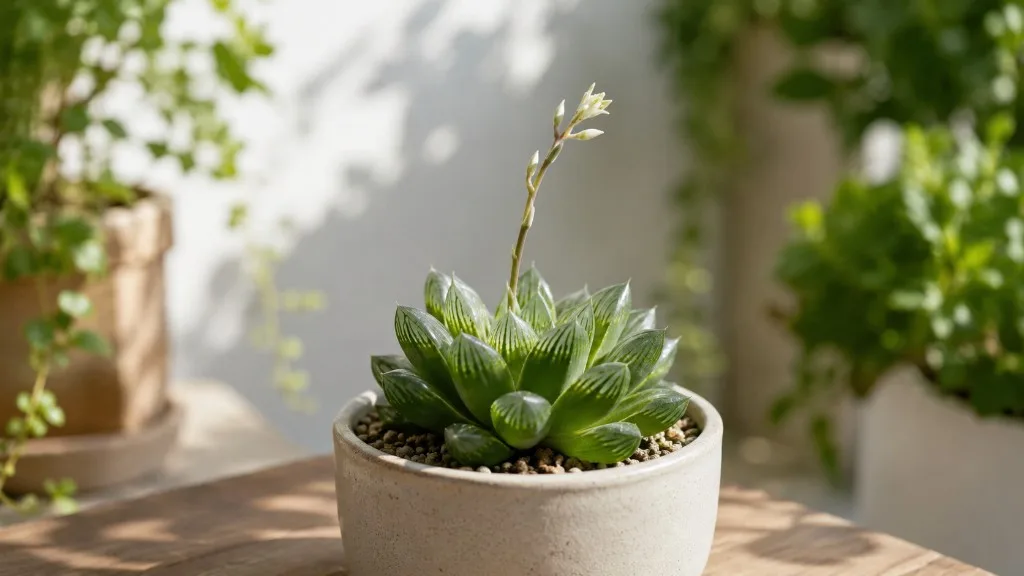
5. Cooper’s haworthia (Haworthia cooperi). The rounded, translucent leaf tips of Cooper’s haworthia look as if they have been filled with glass. This slow-growing rosette is one of the better choices for a beginner who wants an unusual succulent without a giant plant or a strict humidity setup.
Give it bright indirect light or gentle morning sun, an airy cactus mix, and water only after the soil is completely dry. A wrinkled plant can need water, but a soft, yellowing rosette in wet mix needs a root check instead. Keep the crown above the soil and empty the saucer so water cannot collect around the base.
6. Living stones (Lithops spp.). Living stones are pairs of succulent leaves that resemble pebbles, often with patterned windows on their tops and a daisy-like flower emerging from the center. Their unusual appearance invites over-care; the safest approach is to watch the plant’s growth cycle rather than use a weekly watering reminder.
Give living stones the brightest light available and a very free-draining, mostly mineral mix. They need water during active growth, but the old leaves may shrivel as a new pair develops. Do not water simply because the outer leaves look wrinkled during leaf replacement. Wait for the plant to complete that transition, then resume cautiously when the new leaves are established and the season supports growth.
7. Lavender scallops (Kalanchoe fedtschenkoi). This trailing succulent has blue-green leaves edged in pink, lavender, or cream, and it produces plantlets along the leaf margins. It is less rare than its name suggests, but it is unmistakably unusual and easy to display in a small pot or hanging container.
Place it in bright light, use a gritty mix, and let the pot dry fully between waterings. Too little light makes the stems stretch and reduces the colored margins; too much water makes the lower leaves soft. Remove fallen leaves from the soil surface so they do not stay damp against the stem.
8. Lifesaver plant (Huernia zebrina). This small stapeliad has angular succulent stems and flowers with a dark ring that resembles a lifesaver candy. It is compact enough for a sill or shelf but needs the dry-climate treatment of a succulent, not the damp care its strange flower might suggest.
Give it bright light with some protection from harsh afternoon glass, a sandy cactus mix, and a full dry-down between waterings. Water less in cool or dim periods. If stems become soft at the base, stop watering and inspect the roots; adding humidity or more water is the wrong response.
9. Pencil cactus (Euphorbia tirucalli). Pencil cactus is a branching succulent with narrow, pencil-like stems and a shape that can become a small indoor tree. It likes strong light, fast drainage, and long dry intervals. It is not a true cactus, despite the common name, and it can grow much wider than a young cutting suggests.
Give it space, rotate the pot for even growth, and wear gloves when pruning. The milky latex can irritate skin and eyes, so keep cut stems away from children and pets and wash tools after use. RHS guidance for indoor euphorbias also warns against cold, wet conditions and hot, stagnant humidity—two common indoor causes of stem and root rot. (RHS indoor euphorbia guide) If the plant is stretching, move it toward stronger light rather than increasing fertilizer.
10. Corkscrew albuca (Albuca spiralis). Corkscrew albuca produces narrow leaves that twist into springs, especially under strong light and the plant’s active-season conditions. Its winter-growing rhythm makes it a useful choice for someone who likes observing seasonal change rather than keeping a plant identical year-round.
Use a sunny window and a sharply draining succulent mix. Water when the plant is actively growing and the mix has dried, then reduce or stop water as the foliage dies back for summer dormancy. Do not force the plant to stay leafy by watering through rest; the bulb needs a dry pause before the next growth cycle.
Humidity-loving plants with unusual flowers or foliage
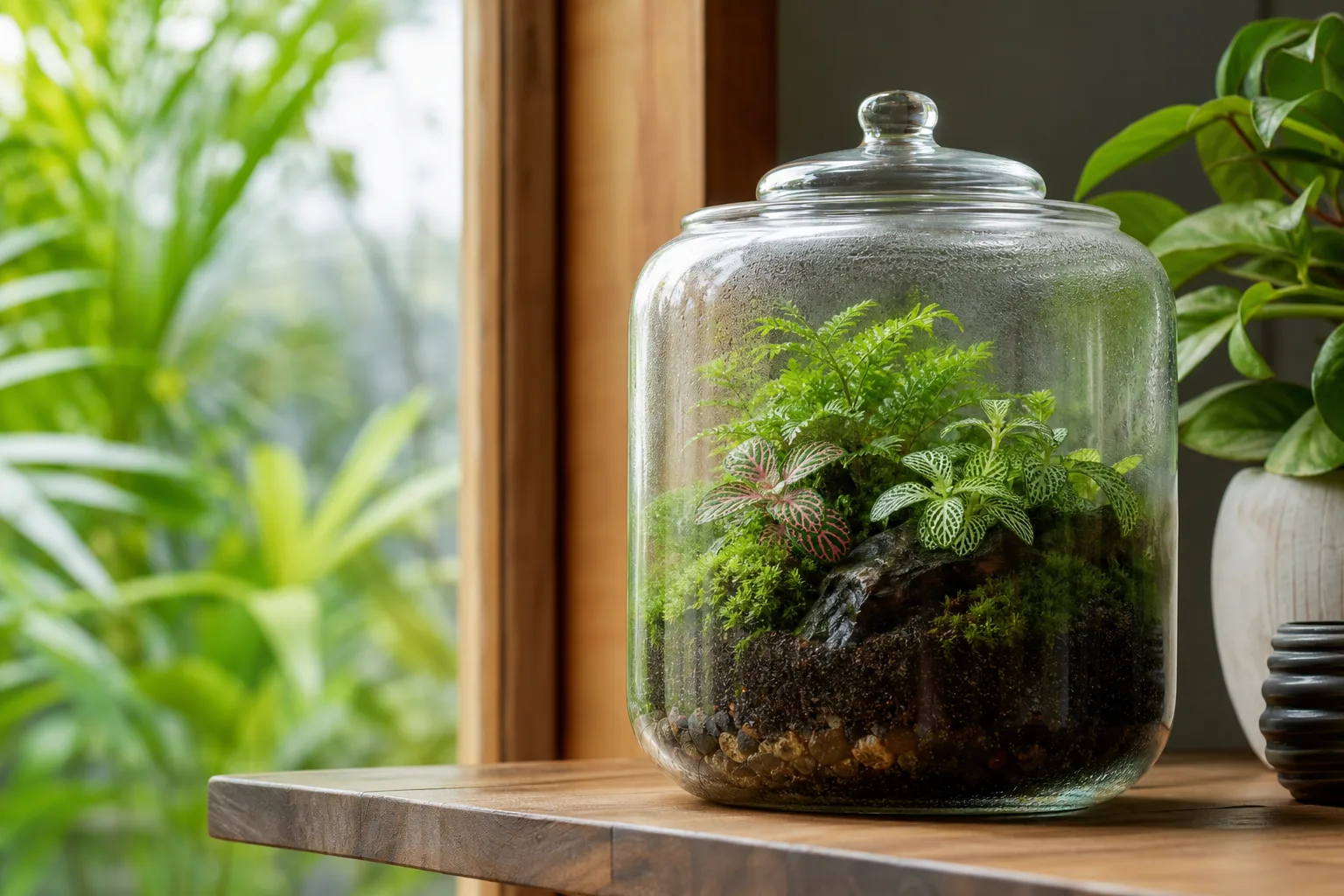
11. Club moss or spike moss (Selaginella kraussiana). This low, fern-like plant spreads into a soft green mat and is a natural candidate for a terrarium. It wants bright filtered light, consistently light moisture, and more humidity than a dry heated room usually provides.
Keep the soil damp but not sour and water with room-temperature water. A terrarium can help, but do not seal a struggling plant into a wet container and hope humidity fixes everything. Remove dead growth, provide gentle airflow when possible, and keep it out of direct sun, which can heat the small enclosure quickly.
12. Coffee plant (Coffea arabica). Coffee plants have glossy foliage, fragrant white flowers, and the possibility of red fruit, although a houseplant may take years and ideal conditions to produce a meaningful crop. Their unusual appeal is the connection between a familiar drink and a living tropical shrub.
Give coffee bright filtered light, warm temperatures, and a moisture-retentive but draining mix. Water when the upper layer begins to dry, then drain the pot fully. Low humidity, dry roots, and harsh direct sun can all cause leaf problems, while dim light and constant wetness create weak growth. Treat fruit as a bonus, not the reason to buy the plant.
13. Bat flower (Tacca chantrieri). The black bat flower is one of the most theatrical houseplants, with dark bracts and long, whisker-like structures around its flowers. It is a specialist choice for a warm, humid room with filtered light, excellent drainage, and steady air movement.
Keep the root zone evenly moist during active growth without turning it into a swamp. High humidity alone will not compensate for cold drafts, compact soil, or a dark corner. It may flower only when the plant is mature and settled, so buy it for the foliage and form first and consider blooms a reward for a stable environment.
14. Jewel orchid (Ludisia discolor). Unlike orchids grown mainly for flowers, jewel orchids are prized for velvety leaves with bright pinstriped veins. They are terrestrial orchids that grow in the forest-floor layer, so they prefer a moisture-retentive, airy mix rather than the coarse bark-only treatment often used for epiphytic orchids.
Provide bright indirect light, moderate to high humidity, and enough airflow to keep the crown from staying wet. Water when the top layer begins to dry, and avoid leaving the pot in a saucer of water. A terrarium-style setting can work if ventilation is built into the routine.
Carnivorous plants for a dedicated water routine
Carnivorous plants are not ordinary houseplants with a novelty feeding trick. The RHS describes them as plants adapted to nutrient-poor conditions that need special low-nutrient compost and damp conditions; extra fertilizer can be harmful because their nutrient strategy is different. (RHS carnivorous-plant growing guide)
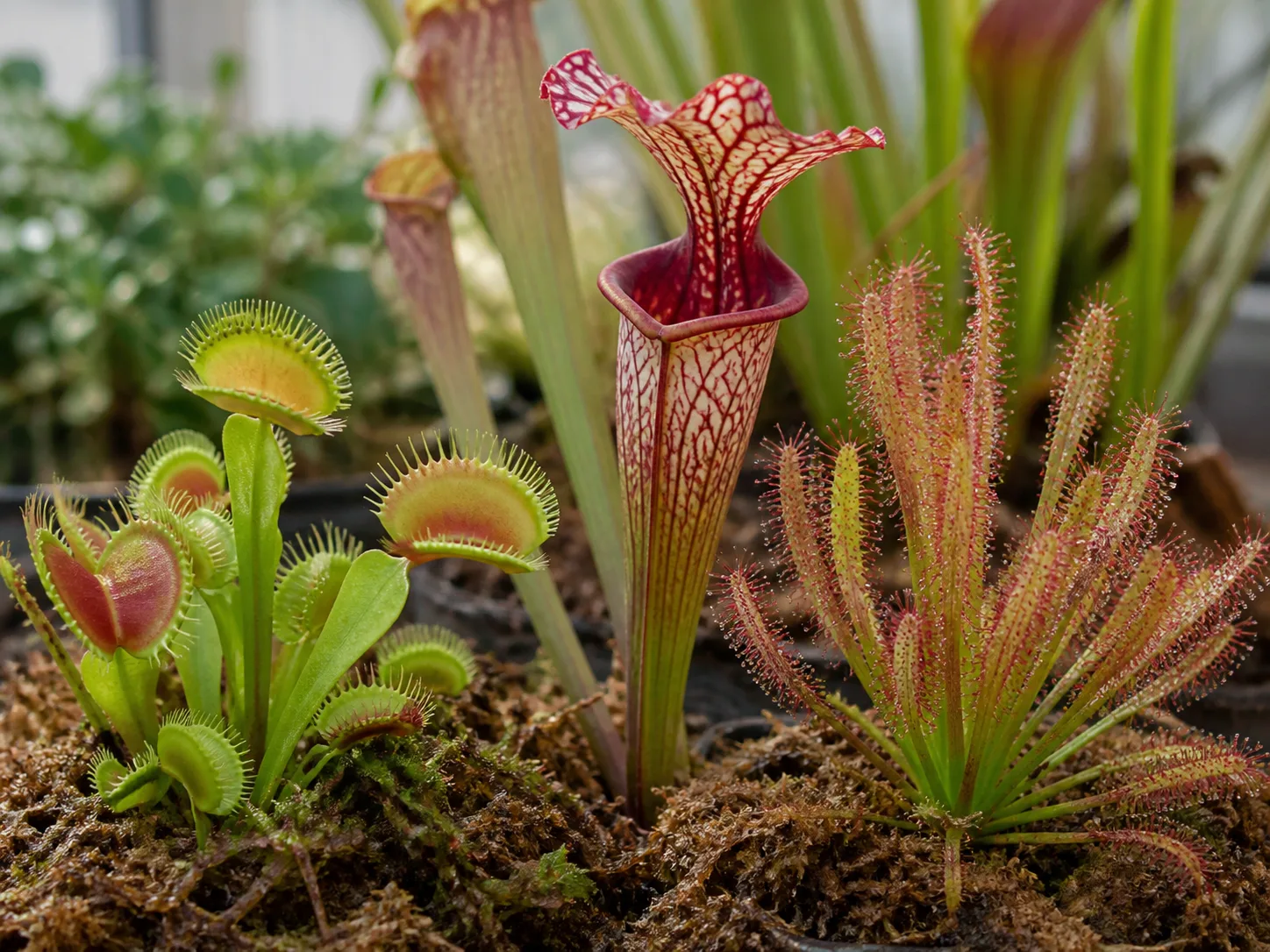
15. California pitcher plant or cobra lily (Darlingtonia californica). The cobra lily’s tubular leaves curl into hooded shapes that look like upright snakes. It is one of the most challenging plants on this list because it wants bright light, very pure water, low-nutrient media, and cool roots even when the room around it is warm.
Use rainwater, distilled water, or another water source confirmed to be low in dissolved minerals. Never fertilize ordinary potting soil or let the root zone heat in a dark container beside a sunny window. If you cannot provide a cool, bright setup and monitor water quality, choose a different unusual plant; the plant’s dramatic shape is not a reason to ignore its habitat.
16. Sundew (Drosera capensis). Cape sundew catches small insects on sticky, glistening tentacles. Compared with some carnivores, it is a more forgiving introduction, but it still needs the right medium and water. Keep the soil consistently moist with rainwater or distilled water and provide strong light.
Do not use standard fertilized potting soil, plant food, or mineral-rich tap water. The sundew can catch its own prey; feeding it by hand is unnecessary and can damage the leaves if food is too large. A saucer method can maintain moisture, but keep the container clean and watch for algae or mold.
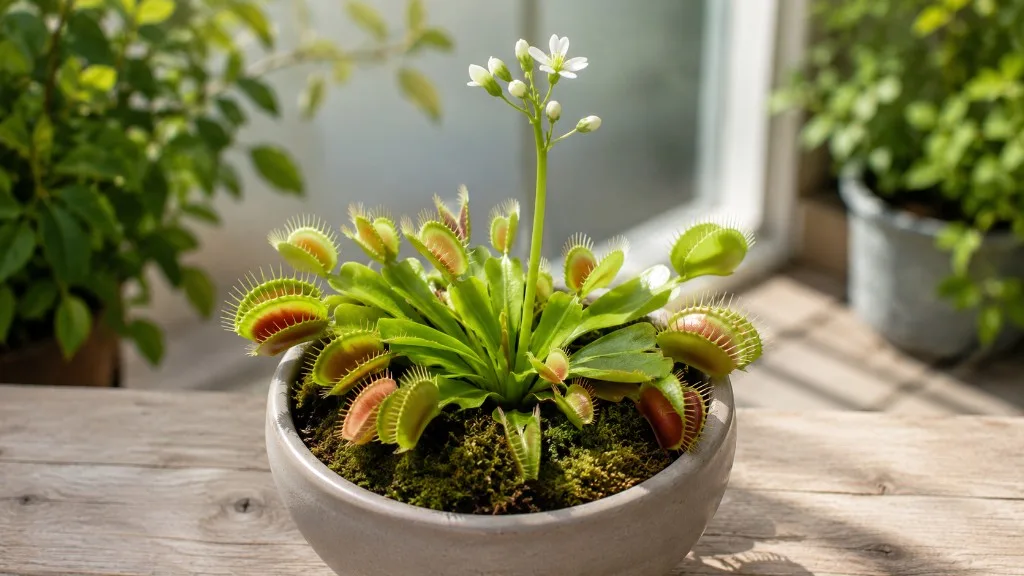
17. Venus flytrap (Dionaea muscipula). The Venus flytrap is the classic unusual houseplant because each trap is a modified leaf that closes around moving prey. The RHS recommends permanently wet conditions, suitable low-nutrient media, and rainwater or distilled water; full sun also helps the traps develop color and strength. (RHS Venus flytrap guide)
Keep the pot in a shallow saucer of pure water during active growth, never let the medium dry, and do not fertilize. Do not trigger the traps for entertainment or feed them meat. RHS grower Matt Soper notes that a trap has limited closing cycles and that the plant needs only a few bugs a year; a cool winter rest is part of the long-term routine. (RHS Venus flytrap care advice)
Plants that move, climb, or twist
18. Sensitive plant (Mimosa pudica). Sensitive plant folds its leaflets when touched, a movement caused by changes in water pressure in specialized cells. It is a memorable desk or classroom plant, but the movement is not an invitation to poke it all day. Repeated closing uses energy and can slow the plant when it is already stressed.
Give it bright light, warmth, and evenly moist but well-drained soil. It is more thirsty than the dry-climate plants above, especially while growing strongly. If the leaves remain closed, check for cold, drought, low light, or root trouble rather than touching them again to test the response.
19. Parachute plant (Ceropegia sandersonii). Parachute plant is a climbing or trailing succulent vine with unusual flowers that form a canopy-like shape over the opening. It looks best trained on a small support or allowed to spill from a hanging pot, and its flowers are more likely when the plant receives strong, indirect light and a clear growing season.
Use an airy mix and allow the upper portion to dry between waterings. Do not keep the vines constantly wet because the succulent stems and roots store water. Give the plant a support before it tangles, and handle the thin growth gently when you reposition it.
How to buy and introduce an unusual houseplant
Source the plant without harming wild populations
Buy from a nursery or grower who can provide the correct botanical name, recent photos, a clear description of the growing medium, and a shipping plan suited to the weather. A seller who calls every plant “rare” but cannot identify it is giving you a marketing label, not useful care information.
Prefer nursery-propagated stock. Gardening Know How’s practical guidance warns against taking hard-to-find plants from nature because removing specimens can damage the ecosystem and leave a gap that may not be replaced. That concern is especially important for slow-growing plants and species with narrow native ranges. (Gardening Know How rare-plant guidance)
Before buying, ask four questions: What is the exact species or cultivar? What light is it growing under now? Is it actively growing or dormant? What water and medium has it been using? The answers make acclimation safer and prevent a dormant succulent from being treated like a thirsty tropical plant.
Quarantine and acclimate before you rearrange your shelf
Keep a new plant separate from the rest of your collection for at least two weeks while you inspect leaves, stems, the soil surface, and the pot’s drainage. Look for webbing, cottony clusters, scale, sticky residue, fungus gnats, and unexplained leaf spots. Do not repot automatically on arrival; first check whether the existing mix is draining and whether the plant is stable.
Place the plant in bright indirect light unless you know it arrived from full sun and is already acclimated. Increase light over several days, protect it from cold transport shock and hot glass, and let the plant settle before adding fertilizer. A plant that loses one older leaf after shipping may be recovering; a plant that keeps collapsing in wet soil needs diagnosis, not more time in quarantine.
Common mistakes that shorten the life of rare-looking plants
Stop using one watering rule for every pot
“Water once a week” is not a plant-care system. It may be too little for club moss, too much for a dormant albuca, and chemically unsuitable for a Venus flytrap. The RHS recommends checking whether a plant actually needs water, watering thoroughly so excess can escape, and emptying filled saucers; roots need air as well as moisture. (RHS houseplant growing guide)
Use a plant-specific cue instead. Dry-climate plants need a real dry interval. Tropical foliage plants need a more even supply without waterlogging. Carnivorous plants need a wet, low-nutrient root zone with suitable water. Seasonal bulbs and living stones need a change in routine when they enter rest or replace leaves.
When a plant declines, compare the symptom with the pot condition. Wilting in dry mix points toward thirst; wilting in wet mix points toward damaged roots or poor drainage. Yellow leaves do not automatically mean the plant needs food, and brown tips do not automatically mean the room needs a misting bottle.
Do not fertilize the biology out of the plant
Fertilizer is not a shortcut to unusual color, bigger flowers, or faster rarity. Use a dilute fertilizer only when the plant is actively growing and the species can use it. Never fertilize carnivorous plants in their low-nutrient media; they obtain nutrients through prey and can be injured by normal fertilizer salts.
Avoid repotting, pruning, feeding, and moving into full sun all at once. Change one major variable, give the plant time to respond, and record what happened. This simple sequence is more useful than chasing a symptom with several products because unusual plants often react slowly and may carry stress from the nursery, shipping, or a seasonal transition.
Safety around pets, children, and sensitive skin
Treat an unusual plant as unidentified until its botanical name is confirmed. Common names overlap, cultivars are mislabeled, and a plant that looks like a harmless succulent may belong to a genus with irritating sap or documented toxicity. Keep desert rose out of reach: ASPCA lists Adenium obesum as toxic to dogs, cats, and horses. Pencil cactus also deserves careful handling because its latex can irritate skin and eyes.
Use gloves for plants with milky sap, wash hands and tools after pruning, and keep fallen leaves and trimmed stems away from pets and children. For any plant not covered by a trusted toxicity reference, check the exact botanical name with a veterinary poison-control resource before bringing it into a pet-accessible room. If ingestion is suspected, contact a veterinarian or an appropriate poison-control service promptly rather than waiting for symptoms.
Conclusion
The most rewarding unusual houseplant is not necessarily the rarest one. It is the plant whose growing strategy fits your home: desert rose, Haworthia, living stones, or albuca for a bright dry setup; club moss, coffee plant, bat flower, or jewel orchid for a humid room; and a sundew or Venus flytrap if you are willing to manage pure water and low-nutrient media.
Choose one plant, confirm its botanical name, quarantine it, and copy the conditions it was already growing in before making changes. Once you learn to read dry-down, dormancy, airflow, and water quality as part of the plant’s biology, even a strange-looking specimen becomes manageable—and the collection can grow from informed curiosity instead of expensive guesswork.