How to Keep Ants Out of Your Home: What Works Better
A pest pro's ant-control method explained: when bait works, where expanding foam fits, how to protect pets, and what stops summer trails from returning.
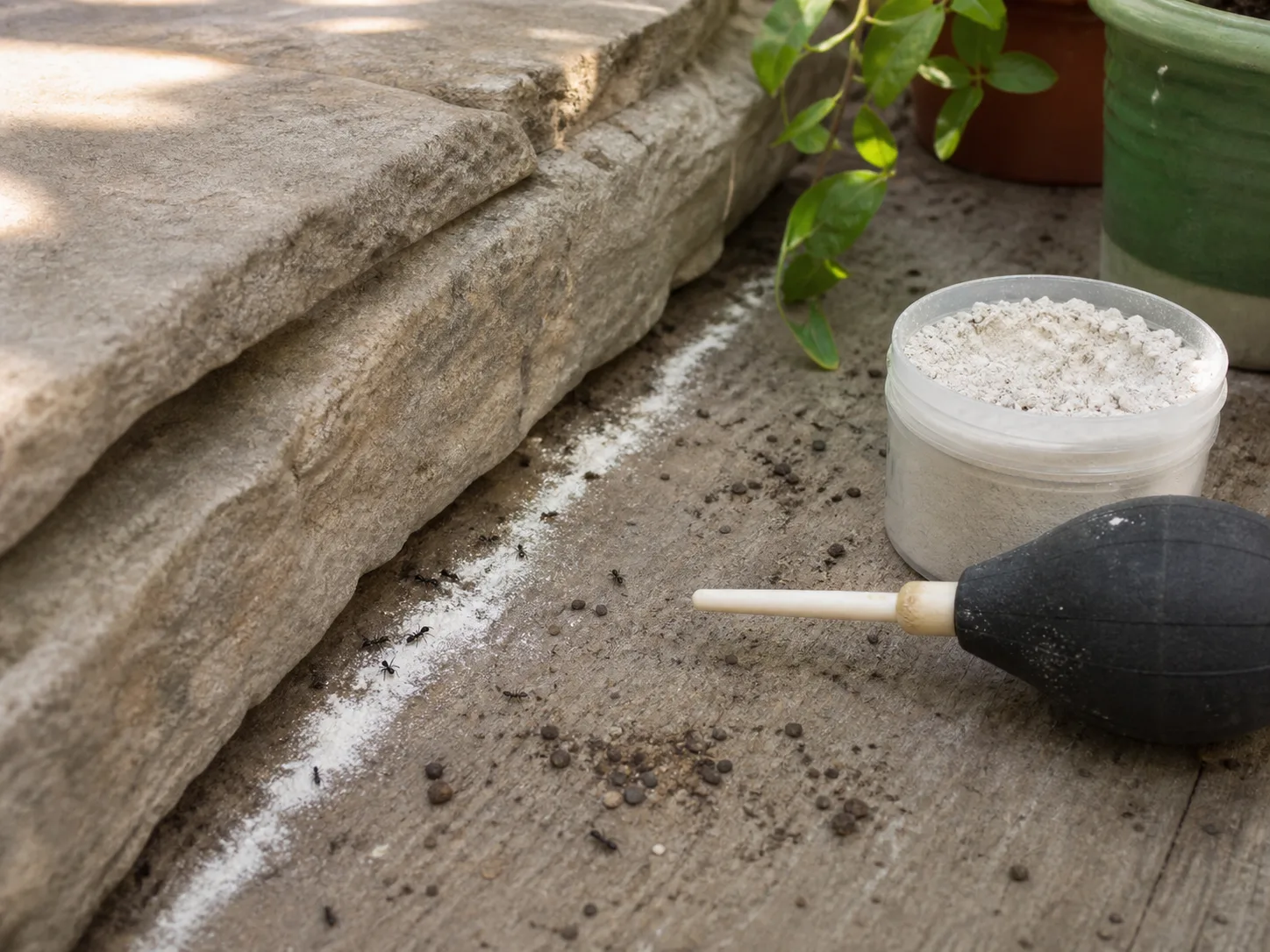
The clever part of a professional ant-control routine is not finding a spray that kills faster. It is making the colony do the work: identify the route, remove competing food, place a slow-acting bait where workers already travel, and close the opening after activity falls. That sequence reaches the nest while also making your home less rewarding to revisit.
One expanding foam can be useful in the right structural situation, but it is not a universal shield for every ant that crosses a kitchen floor. The best plan depends on whether ants are foraging in from outside, nesting in a wall or damp wood, living in a plant pot, or representing a stinging species that should not be handled casually.
The professional trick is colony control, not a stronger spray
Ants are social insects. The workers you see are the foraging and transport crew, while the nest contains queens, larvae, and other workers that can replace the ones you wipe off the counter. A contact spray can make the visible line disappear quickly, but that satisfying result may only remove the smallest, most exposed part of the problem.
The professional principle is reach the colony without making the workers abandon the route. A slow-acting bait combines an attractive food source with an insecticide that gives workers time to feed, carry some of it home, and share it with nestmates. UC Integrated Pest Management describes baiting this way and notes that baits must act slowly enough for workers to return to the nest (UC IPM ant management guidance).
That does not mean every bait works for every species, or that a bait station is always the first thing to put indoors. It means you should choose the method that matches the job: clean and exclude a few scouts, bait a recurring trail, treat a confirmed structural void, or call a professional when the evidence points to carpenter ants, termites, or stinging ants.
Why ants keep returning after you kill the visible trail
An ant trail is a route marked with chemical cues. One successful scout finds sugar, grease, pet food, moisture, or shelter, then other workers follow the same path. Sweeping away the ants without removing that cue leaves the route available for the next wave.

This is why repeated spraying often feels like a loop. The product kills foragers, but it may not reach the queen or nest, and a repellent spray can make workers avoid a bait station or split the colony’s traffic into a new crack. UC IPM specifically warns that indoor sprays do not stop more ants from entering; exclusion, sanitation, and baiting work on different parts of the problem.
The practical goal is not to win a one-minute battle at the baseboard. It is to make the path unprofitable, then close it. A trail that disappears after a thorough wipe but returns at the same pipe, window, or foundation joint tells you that the entry point still needs attention.
Identify the trail before choosing the product
Before treating, watch one active route for several minutes. Note the ant’s size and color, whether it is carrying food, whether the line ends at a crack or a plant, and whether the insects appear only after rain, heat, or a plumbing leak. Capture a few on clear tape or in a small container if you need an extension office or pest professional to identify them.
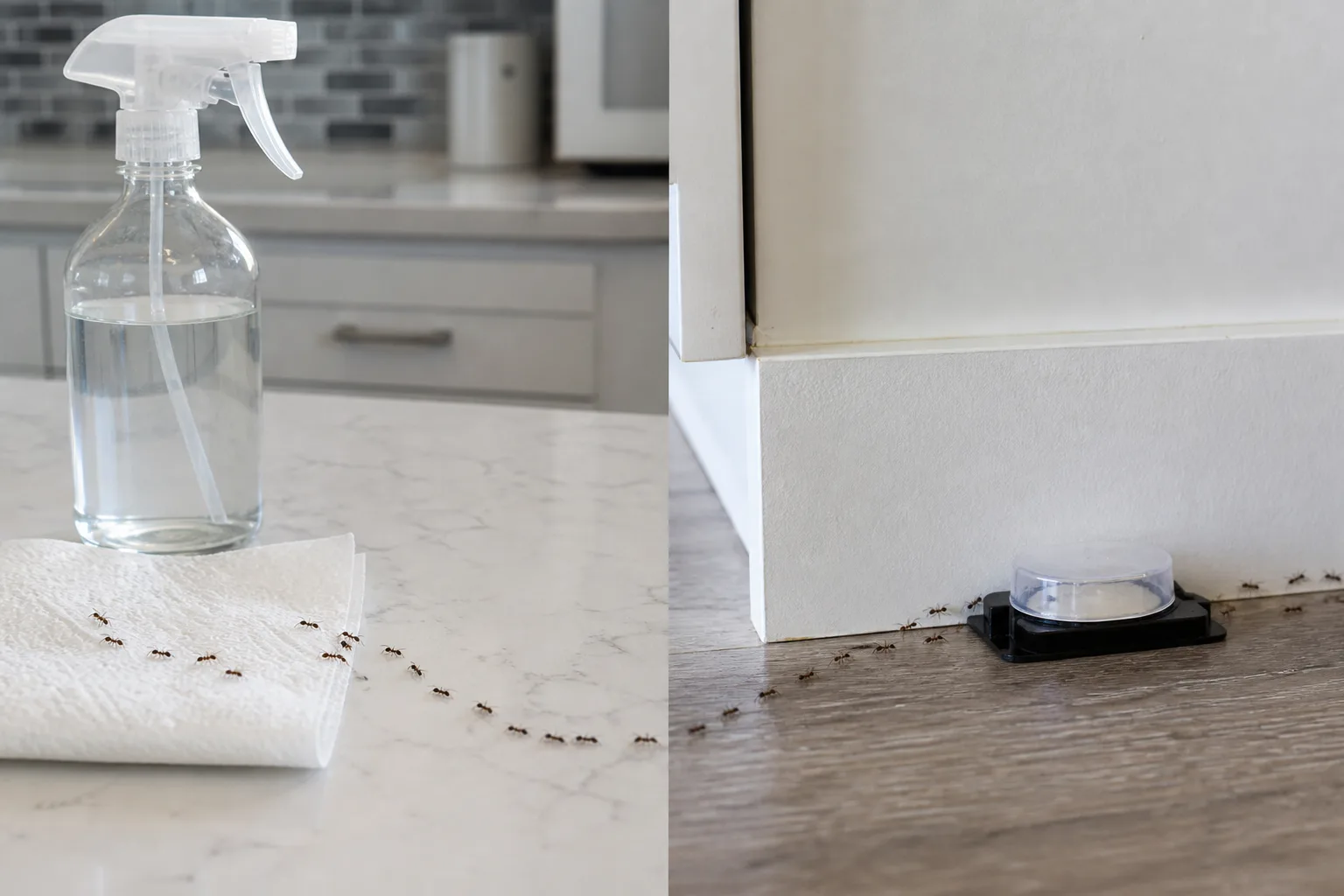
Species matters because food preferences and nesting sites differ. Small ants may be harmless outdoor foragers using a gap under a door, while a large ant trail emerging from damp trim points to a different level of risk. A product that is labeled for one ant and one use site is not automatically appropriate for another.
Small kitchen ants versus carpenter ants
Tiny brown or black ants along a counter, sink, pantry, or bathroom baseboard are often searching for food or water. Pavement ants and odorous house ants commonly nest in soil, under slabs, around foundations, or in protected indoor gaps; the exact species varies by region. They are irritating, but a short trail alone does not prove that your walls are being damaged.
Large workers—often around a quarter to half an inch in common carpenter-ant species—deserve closer inspection. Carpenter ants excavate galleries in wood rather than eating it like termites, and they are attracted to damp or decaying wood, leaks, window damage, clogged gutters, and other moisture problems. Penn State Extension distinguishes carpenter ants from smaller nuisance ants and recommends identification before choosing control (Penn State Extension’s ant IPM guide).
Look for coarse sawdust-like frass, small openings in trim, rustling inside a wall, or a trail that continues after food is removed. Frass is not proof by itself—other insects and old construction debris can look similar—but it is enough reason to photograph the evidence, check for moisture, and consider professional inspection rather than filling the first crack you see with foam.
When winged or stinging ants change the plan
Winged ants indoors can be a mating swarm from a mature colony. They are not automatically termites, but a winter swarm, repeated indoor swarms, or winged ants emerging from a wall raises the priority of identification. Ants have a pinched waist, elbowed antennae, and front wings longer than hind wings; termites have a broad waist, straight antennae, and wings of equal length.
Fire ants and other stinging species are another stop sign. Do not poke a mound, spread a homemade powder, or put children and pets near an active nest while trying to identify it. If the ants sting, are unusually aggressive, are entering from a wall void, or cannot be identified confidently, use local extension guidance or a qualified professional.
The 15-minute inspection that finds the real invitation
You do not need to dismantle the kitchen to learn why ants are inside. Start with the route and work outward. Use a flashlight under the sink, behind the trash bin, along baseboards, at window corners, under appliances, around pipe escutcheons, and where cables or utility lines pass through walls.
Check the outdoor side of the same wall. Look under stones, mulch, boards, pavers, firewood, dense groundcover, and pots. Inspect the foundation for cracks, gaps at siding, failed door sweeps, and branches that touch the roof or wall. Ants often use structural edges, wires, pipes, and plant bridges as ready-made runways.
Ask four questions in order:
- What are they eating? Look for sugar, syrup, fruit, grease, crumbs, recycling residue, and pet food.
- Where is the water? Check leaking faucets, damp cabinets, condensation, wet pot saucers, plumbing penetrations, and downspouts that dump against the foundation.
- Where is the shelter? Note wall voids, wet wood, mulch against siding, empty boxes, firewood, and dry soil under slabs or stones.
- Where is the entry? Follow the most consistent line until it disappears at a gap, pipe, window, door, crack, or plant bridge.
This inspection prevents the common mistake of treating the room where ants are visible instead of the place that keeps feeding or sheltering them. It also tells you whether an indoor station, an outdoor station, a sealant, or a structural inspection makes sense.
Do this first indoors: remove food, water, and scent trails
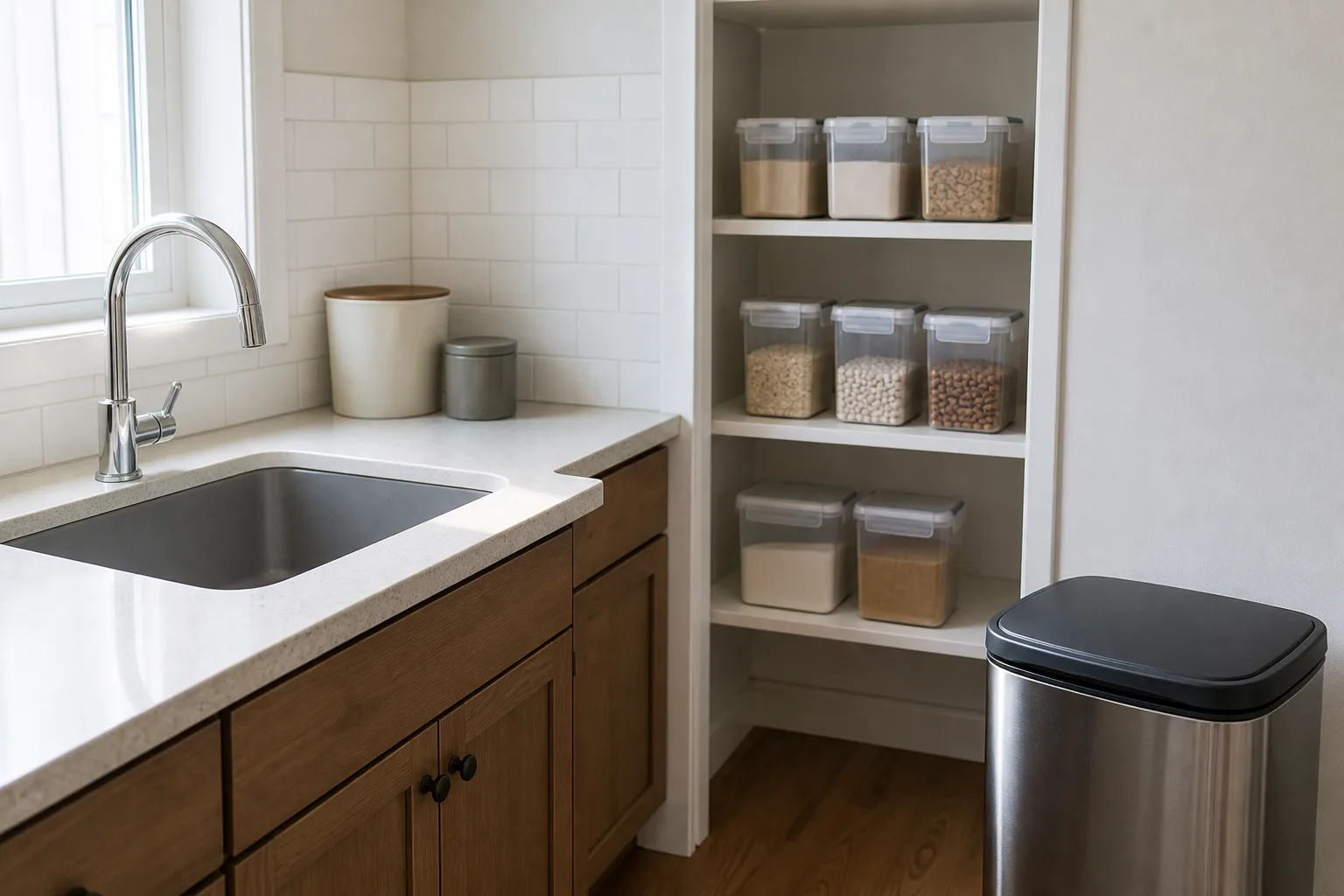
Put open pantry foods into clean, sealed containers rather than folded bags. Wipe syrup, honey, juice, and grease; rinse sticky recycling; empty food waste; clean the trash-can rim; and pick up pet food between meals if it is attracting ants. Dry the sink and fix leaks, but do not pour water into a wall, electrical opening, or suspected nest.
Then clean the trail with soapy water. A careful wipe removes both the visible insects and much of the chemical route they leave behind. BBC Gardeners’ World describes the same practical logic for vinegar-water trail cleaning, but a mild soapy wipe is a useful default because it also lifts food residue (BBC Gardeners’ World ant guidance). Test any cleaner on a small area first and keep it off sensitive finishes and plant foliage.
There is one timing nuance: if you plan to bait, do not erase the only active trail before placing the station. Let workers discover the bait beside the route, observe acceptance, and clean the remaining path once activity begins to decline. If the ants are on a food-contact surface, move the bait beside—not on—the surface and clean the food area promptly.
Put bait at the intersection, not in every room
Choose a ready-to-use, enclosed, tamper-resistant bait station or a gel product whose label names ants and the intended use site. Put it next to an active trail, near the entry point, or beside a nest opening when that location is allowed. The point is to intersect the route so workers can find the bait naturally, not to create a pesticide obstacle course throughout the house.
Keep bait away from food, dishes, children’s reach, pet bowls, bedding, drains, and areas where a station could be tipped, chewed, or washed away. A bait being sweet or food-based does not make it safe to leave loose. The active ingredient and the label determine the risk, placement, storage, and disposal requirements.
The basic choice looks like this:
| Situation | Better first move | What to avoid |
|---|---|---|
| A few scouts and an obvious crumb or spill | Remove the attractant, wipe the trail, seal the gap | Spraying the whole room |
| A persistent small-ant trail from outdoors | Outdoor or indoor labeled bait, chosen by the route and label | Killing every worker before bait is accepted |
| Ants appear to emerge from damp wood or a wall void | Inspect moisture and nest location; call a professional if uncertain | Drilling or foaming blindly |
| A confirmed structural void with a product labeled for that site | Targeted crack, crevice, or void treatment | Treating the foundation as a blanket perimeter |
| Stinging, winged, or unidentified ants | Capture evidence and seek identification | Disturbing the mound or using a homemade recipe |
Match the bait to what workers accept
Ant colonies do not all want the same food. Some workers readily take sweet liquids; others prefer protein or grease, and preferences can shift with season and brood needs. UC IPM lists several bait attractant types and recommends observing what the ants accept rather than assuming one formulation is universal.
If workers walk around a fresh station, check the basics before adding more product. Is it beside the trail? Is it stale, dry, flooded, or blocked? Is another food source more attractive? Is a repellent cleaner or spray crossing the route? Reposition the station or choose a different labeled formulation when the directions allow it.
Do not make a homemade borax, cornmeal, jelly, or essential-oil recipe the default around food, pets, children, or plants. A pantry ingredient may attract ants, but a homemade mixture has uncertain concentration, acceptance, exposure, and legal use. A contained commercial bait gives you a known formulation and directions; it also makes it easier to remove the treatment when the problem is over.
Give slow-acting bait time to work
Bait can look like it is failing because activity may increase at first. More workers at the station can mean recruitment is happening, not that the product is useless. Avoid spraying over the trail while workers are carrying bait, and do not move the station every hour just because the ants are still visible.
Expect a noticeable decline over several days, and allow longer when the colony is large, the nest is hidden, weather changes, or the bait is competing with abundant food outdoors. UC IPM notes that five to ten days may be needed to see fewer ants in some situations, while outdoor colony control can take several weeks. The better success signals are less replenishment at the station, shorter trails, fewer new routes, and no return after the entry point is sealed.
If activity continues beyond the label’s expected window, replace dry or empty bait, change the accepted food type, and inspect for a second entry point. If the trail branches through several rooms, returns from walls, or appears alongside carpenter-ant evidence, stop escalating DIY chemicals and arrange an inspection.
Where the expanding foam fits—and where it does not
The product highlighted by the professional is an expanding foam containing fipronil and imidacloprid. Its useful feature is not that foam is inherently better than bait; it is that foam can carry a labeled insecticide into a hard-to-reach crack, gallery, or structural void when the nest or harborage has been located.
That makes it a specialist tool. The current product information and label describe targeted indoor and outdoor spot or crack-and-crevice uses and list specific ant types; they do not turn the can into permission for a blanket foundation treatment. The label also excludes some ants, including Pharaoh and fire ants, so never infer coverage from a product name or a retailer description (FUSE Foam label).
Why a void treatment can outperform a perimeter spray
An exterior barrier spray mostly contacts workers that happen to cross the treated surface. It may reduce visible traffic for a short time, but the colony can remain in soil, a wall, a stump, or damaged wood. UC IPM recommends focusing on exclusion and baiting and warns that broad outdoor sprays can create environmental problems through runoff, especially on hard surfaces.
A targeted void treatment is different because it is aimed at the place ants are nesting or entering. It still will not repair a leak, remove rotten wood, identify the queen, or guarantee that another colony cannot arrive later. If you cannot locate the void, injecting foam into random holes can contaminate an inaccessible area, damage finishes, or simply miss the nest.
For a normal small trail along a kitchen baseboard, begin with food removal, trail cleaning, exclusion, and a labeled bait. Reserve foam for a label-approved structural problem or for a professional who can identify the gallery and control the application.
Label and safety checks before you use it
Read the entire current label before opening the can. Confirm the ant is listed, the site is listed, the application is allowed in your jurisdiction, and the use is a spot, crack-and-crevice, gallery, or void treatment—not an improvised perimeter spray. Product registrations and directions can change, so a remembered interval such as “every 90 days” is not a substitute for the label.
Remove or cover food, dishes, pet bowls, toys, and aquariums from the treatment area. Keep children and pets out for the label’s required period, ventilate or leave the area as directed, and prevent foam or residue from reaching sinks, drains, ponds, streams, or stormwater. Do not apply to a plant pot, edible crop, soil, or flowering plant unless the label explicitly allows that exact use.
Wear the protective equipment the label names, do not over-apply into a closed void, and wipe or remove excess only as directed. If anyone is exposed, keep the container and label available and contact poison-control or a veterinarian instead of guessing whether a dried residue is harmless. “Natural” and “dried” are not universal safety categories; the label and exposure route matter.
Seal the route after the ants stop using it
Bait solves the colony problem; sealant solves the invitation. Wait until the trail is inactive enough that you are not trapping or redirecting a large number of ants indoors, then close gaps around window frames, door thresholds, pipes, cable penetrations, siding joints, and foundation cracks with an appropriate sealant or weather strip.
Clean the surface before caulking so dust and grease do not weaken adhesion. Do not seal a wet, soft, or visibly damaged wood cavity before you understand what is inside; carpenter-ant activity can continue behind a cosmetic patch, and hidden moisture will keep attracting insects.
Outside, keep branches and vines from touching siding or rooflines. Move firewood, boards, and dense mulch away from the foundation, keep gutters clear, and direct downspouts away from the house. UC IPM and Penn State both emphasize that exclusion and maintenance reduce the conditions that make repeated pesticide use seem necessary.
Outdoor prevention that protects the house and garden
A few ants outdoors are not a problem to eradicate automatically. Ants can eat other insects, clean up dead material, and support the garden food web. Gardening Know How notes that outdoor ants may be beneficial but also may be tending aphids, scales, whiteflies, or mealybugs for their sugary honeydew (Gardening Know How’s ant guidance).
Treat the reason they are gathering near the house. Pick up fallen fruit, clean sweet spills, repair dripping spigots, reduce damp hiding places, and manage honeydew-producing pests on shrubs that touch siding. Pruning a plant bridge can remove an entire runway without putting pesticide on foliage.
If the colony is outside and the label permits outdoor bait, place an enclosed station beside an active trail or nest opening, protected as directed from rain and away from children, pets, pollinators, edible crops, drains, and water. Do not broadcast granules or spray every hard surface simply because ants are visible. UC IPM warns that some outdoor pesticide applications can pollute waterways and harm non-target organisms.
Avoid pouring gasoline, bleach, concentrated cleaners, or boiling water against the foundation or into an unknown mound. Even a hot-water treatment that might disturb a shallow outdoor nest can injure roots, soil life, turf, people, or pets when used carelessly. The house-pro method is targeted because the target is the route and colony, not every ant in the yard.
Ants in houseplant soil need a separate diagnosis
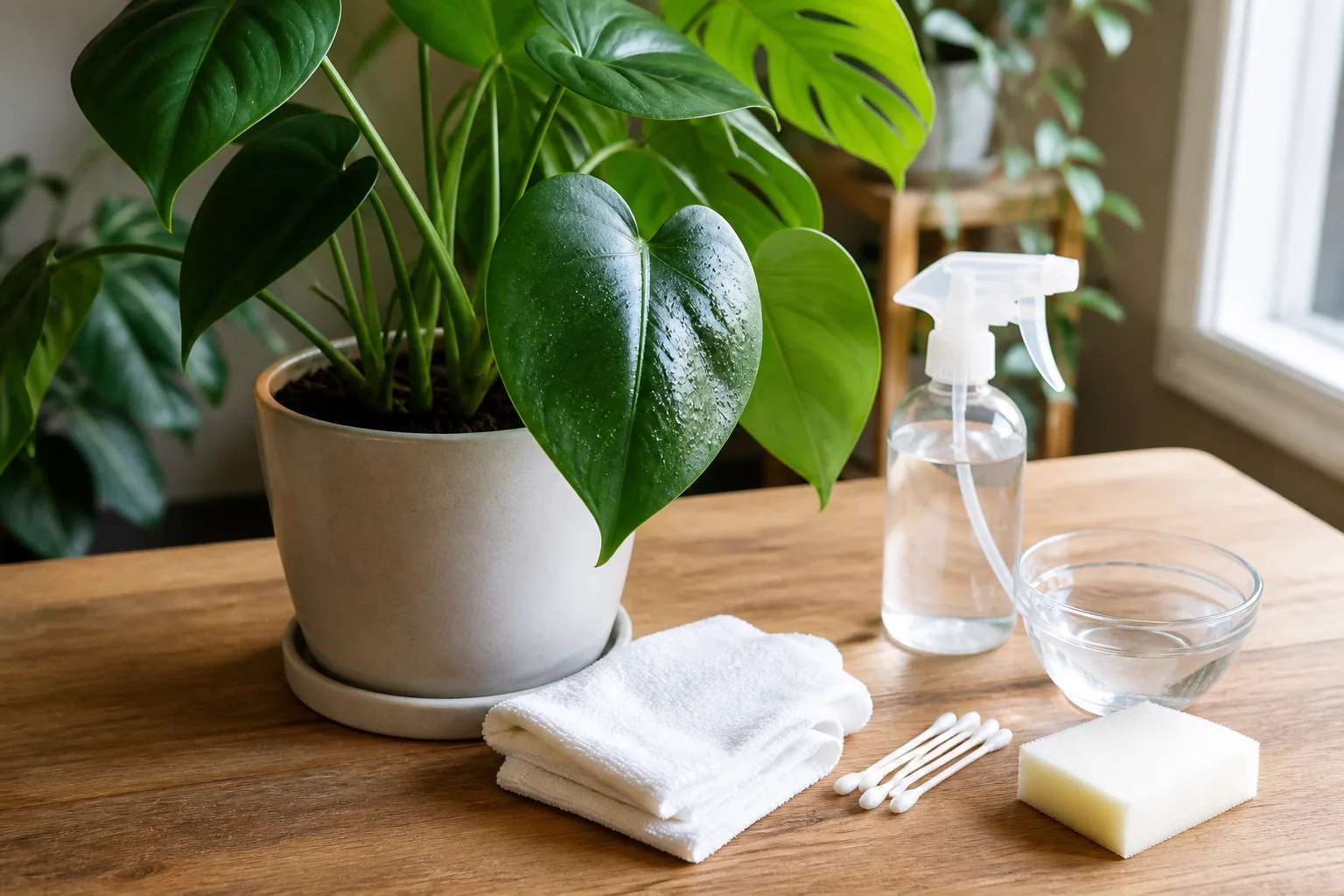
Ants around a houseplant often point to a plant problem or a nesting opportunity rather than a need to spray the foliage. Check leaf undersides, stems, and the pot rim for aphids, scale, mealybugs, whiteflies, sticky honeydew, or shed skins. The ants may be harvesting that sugary material and protecting the insects that produce it.
Separate the plant from the collection while you inspect it. Empty the saucer, clean the outside of the pot, and check whether the mix is unusually dry, the drainage holes are blocked, or ants are carrying soil in and out. Do not sprinkle outdoor insecticide granules or homemade borax into potting soil; an indoor plant container is a small root zone with no safe assumption that a yard product belongs there.
Treat the plant pest with a method appropriate for that plant, then address the ants’ route separately. If the pot is clearly being used as a nest, repotting or an isolation plan may be necessary, but do not drown a plant as an improvised ant treatment. The plant’s roots need air, and excess water creates a second problem.
What to do when the first plan fails
Failure usually gives you information. If ants ignore bait, test placement, freshness, access, competing food, and bait type before increasing the amount. If activity drops and then returns, inspect for a second colony, an unsealed gap, outdoor honeydew, a leaking pipe, or a nearby plant bridge.
If spraying made things worse, stop applying repellent products across the route. Clean the new trails, find which branch is active, and restart with a fresh, correctly placed bait only if the label and safety conditions fit. Do not stack several active ingredients in the same room or mix products; more pesticide does not compensate for a missing diagnosis.
Call a qualified pest professional when any of these conditions apply:
- Large ants, sawdust-like frass, damp or hollow wood, or repeated wall-void activity suggests carpenter ants.
- Winged ants appear indoors, especially in cold weather, or you cannot distinguish ants from termites.
- Stinging or aggressive ants are near a doorway, play area, pets, or someone with a sting allergy.
- The trail persists after careful sanitation, bait acceptance, and exclusion, or appears in several rooms.
- The treatment area is inaccessible, adjacent to food or water, or unsafe for children and animals.
- You are considering drilling, injecting foam, opening a wall, or using a product whose label you cannot verify.
Ask the professional to identify the ant, explain where the colony is likely located, and use targeted bait or spot treatment where appropriate. A recurring monthly spray may be convenient, but a plan that explains the route, moisture, food, colony, and follow-up gives you a better chance of lasting control and fewer unnecessary exposures.
Conclusion
The genius part of the pest-pro approach is the order of operations: find the invitation, preserve the trail long enough to place bait, let slow-acting bait reach the colony, seal the entry, and correct the moisture or plant-related cause. That is why a quick spray often disappoints: it treats the workers you can see while the nest and the access route remain.
Use expanding foam only when the current label covers the ant and the exact structural or crack-and-crevice site, and treat its narrow application as a specialist option rather than a universal home perimeter. For most recurring household trails, careful identification, sanitation, contained bait, exclusion, and realistic patience are the combination that keeps ants out without turning every surface, plant, or garden bed into a pesticide zone.



