14 Outdoor Plants That Grow in Full Shade
No direct sun outdoors? Match 14 shade perennials to your light, moisture, and zone with a spec table, site chooser, and failure fixes.
Written by Sai Ananth and reviewed by the LeafyPixels Review Board. Plant specs and shade-tolerance claims were checked against NC State Extension Plant Toolbox profiles and RHS growing guides cited inline.
If an outdoor bed gets no direct sun, you still have strong perennial options. The correction that matters first is linguistic: “zero sunlight” cannot mean literal darkness. Plants need light to photosynthesize. In garden usage, a full-shade or deep-shade site receives little or no direct sun but still gets ambient daylight from the open sky, nearby walls, and reflected surfaces.
That distinction changes what will succeed. A north-facing border with open sky, a tree-covered bed, and a covered patio are all “shady,” but they do not give a plant the same light, rainfall, soil moisture, or winter protection. Use the tables and spec matrix below as a shopping shortlist, then match each plant to the actual site. For complementary texture at ground level, see our guide to shade-loving grasses.
“Zero sunlight” means no direct sun — not literal darkness
No flowering perennial thrives in a sealed, pitch-dark space. If a wall, roof, or dense evergreen blocks the sky so thoroughly that the area stays gloomy even at midday, plants will stretch, thin out, and eventually decline. Move the planting toward the edge of the shadow, open a sightline to the sky, or use a container you can relocate; a darker corner may be better suited to hardscape or seasonal pots.
The plants in this guide are shade-tolerant, not light-independent. They can make a living with filtered or indirect daylight because their leaves are adapted to capture limited light. Most will flower more heavily with some morning sun or bright dappled light, while foliage plants often remain attractive deeper in the shade.
There is a second misconception to correct: shade is not automatically damp. A roof overhang can keep a north-facing bed surprisingly dry, and mature trees intercept rain while their roots compete for water. Conversely, a low spot with slow drainage can stay wet enough to rot a plant that otherwise loves shade. Read moisture and drainage as carefully as light.
Read your shade site before you shop
Spend one ordinary day watching the planting area rather than relying on a phone compass or a label that says “shade.” Check it in late spring or summer when leaves are on the trees, and note whether rain reaches the soil. If the site changes dramatically through the year, record that too: many deciduous-tree beds are bright in early spring and deeply shaded by July.
Full shade, deep shade, and dappled shade
NC State Extension plant profiles describe light in practical terms that map well to real gardens. Partial shade means direct sun for only part of the day, often two to six hours. Dappled sunlight is light filtered through an upper canopy all day. Full shade sites may receive brief sun flecks but rely mainly on bright indirect light. Treat the ranges as guides, not laboratory measurements.
| Site condition | What it usually means | Best plant strategy |
|---|---|---|
| Bright indirect or dappled shade | Sky light filtered through branches; brief sun may reach the soil | Broadest choice: coral bells, brunnera, columbine, woodland phlox, many ferns |
| Full shade | Little direct sun, often with bright ambient light from open sky | Hostas, hellebores, Solomon’s seal, hardy geraniums, shade-tolerant foxgloves |
| Deep shade | Very little direct light under dense canopy or beside a north wall | Foliage-led combinations: hostas, Christmas fern, Solomon’s seal, selected hellebores |
| Literal darkness | No meaningful daylight | Do not plant perennials; improve light or choose a nonliving design feature |
Moist shade versus dry shade
Moist shade has soil that stays evenly damp but drains excess water. It is the natural home for astilbe, many ferns, and woodland phlox. Dry shade is common under mature trees, beside foundations, under roof overhangs, and near walls that block rainfall; plants there need to tolerate root competition and periodic drought after establishment.
Do not “fix” dry shade by piling a thick layer of soil over tree roots. That can suffocate surface roots and create a poorly drained mound. Instead, add a modest layer of compost to the existing soil, plant small plugs or young perennials between major roots, and water deeply while they establish. RHS guidance on dry shade emphasizes choosing adapted plants, improving soil with organic matter, and mulching to conserve moisture rather than forcing thirsty species into the wrong site.
Quick chooser: match the plant to the problem
Use this table to narrow the list before you shop. Zone ranges are approximate because hardiness varies by species and cultivar; confirm the plant tag and your local USDA Plant Hardiness Zone Map before buying.
| If your site needs… | Start with… | Main caution |
|---|---|---|
| Early spring flowers | Bleeding heart, hellebore, woodland phlox | Some finish early or go dormant, leaving a visual gap |
| Long-lasting foliage | Hosta, coral bells, brunnera, hardy ferns | Slugs, deer, dry soil, or scorch can still damage leaves |
| Damp soil near a downspout or pond edge | Astilbe, ferns, woodland phlox | Damp is good; stagnant, waterlogged soil is not |
| Dry shade beneath trees | Coral bells, bigroot geranium, Solomon’s seal, Christmas fern | Water deeply during the first growing season |
| Vertical height | Hardy fuchsia, foxglove, Solomon’s seal, tall amsonia | Stake or site tall stems where they will not flop into paths |
| Pollinator activity | Columbine, coral bells, woodland phlox, foxglove | Bloom quantity depends on available light and cultivar |
| Juglone under black walnut | Bleeding heart, hosta, astilbe, Solomon’s seal | Juglone tolerance is not immunity—monitor new plants closely |
| Road-salt or coastal runoff in shade | Hosta, astilbe, columbine, coral bells, hellebore, Solomon’s seal | Flush soil in spring; choose salt-tolerant species per Gardener’s Path salt-tolerant shade guidance |
| Pet- or child-accessible beds | Confirm every species before planting | Hellebores, foxgloves, and Solomon’s seal deserve extra caution |
Full spec matrix for all 14 plants
Shop with this matrix open. Heights and spreads are typical mature ranges; dwarf cultivars and giant hostas will fall outside the averages.
| Plant | USDA zones | Typical height | Moisture preference | Main bloom season |
|---|---|---|---|---|
| Bleeding heart (Lamprocapnos spectabilis) | 3–9 | 2–3 ft | Moist, well-drained, humus-rich | Spring to early summer |
| Coral bells (Heuchera spp.) | 3–9 | 6–20 in | Moist, well-drained; established plants tolerate dry shade | Late spring–summer |
| Hardy fuchsia (Fuchsia magellanica) | 5–10 | 5–10 ft | Rich, moist, well-drained | Summer |
| Astilbe (Astilbe × arendsii and hybrids) | 3–9 | 1.5–4.5 ft | Moist to occasionally wet | Late spring–summer |
| Hosta (Hosta spp.) | 3–9 | 4 in–2.5 ft (cultivar-dependent) | Moist, organic, well-drained | Summer |
| Columbine (Aquilegia spp.) | 3–8 | 1–3 ft | Moist, well-drained | Mid-spring–summer |
| Brunnera (Brunnera macrophylla) | 3–8 | 1–1.5 ft | Even moisture; well-drained | Early–mid spring |
| Hellebores (Helleborus spp.) | 5–8 | 1–2 ft | Moist, well-drained, alkaline to neutral | Late winter–spring |
| Hardy ferns (e.g. Christmas fern) | 3–9 | 1–3 ft | Moist to dry once established | Non-flowering |
| Woodland phlox (Phlox divaricata) | 3–8 | 6–12 in | Moist, well-drained | Spring |
| Solomon’s seal (Polygonatum spp.) | 3–9 | 2–3 ft | Cool, moist, organic | Late spring–early summer |
| Amsonia (Amsonia tabernaemontana) | 3–9 | 2–3 ft | Adaptable; moist preferred | Spring |
| Hardy geranium (G. macrorrhizum, G. phaeum, G. cantabrigiense) | 3–9 (species vary) | 6–24 in | Moist to dry shade once established | Spring–summer |
| Foxglove (Digitalis purpurea) | 4–10 | 2–5 ft | Moist, organic, well-drained | Late spring–summer (often biennial) |
Spring-flowering shade accents
Shade gardens are often sold as flower gardens, but the most reliable design treats blooms as a sequence of accents among durable foliage. These three choices cover early spring color with different moisture and maintenance needs.
Bleeding heart, woodland phlox, and columbine
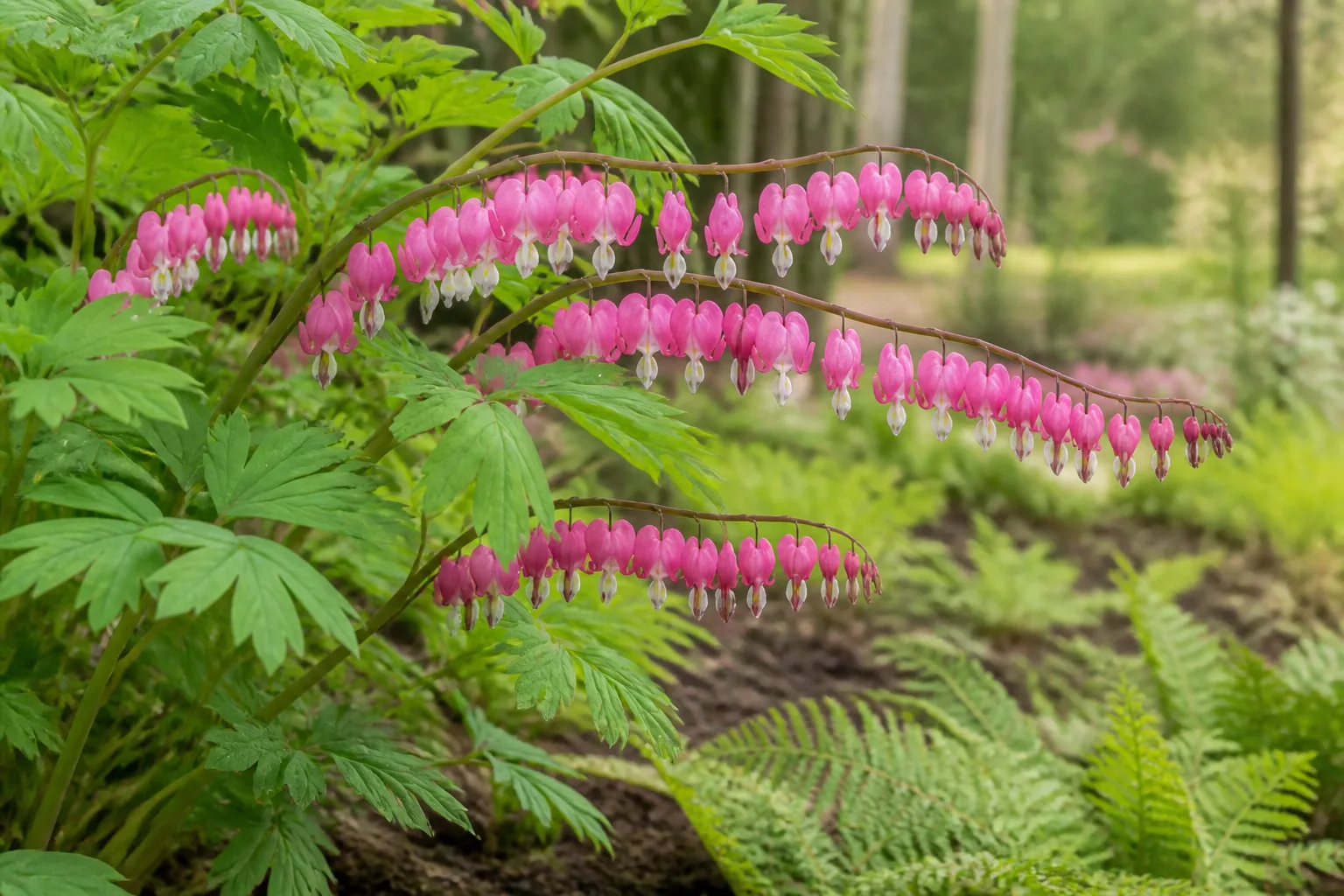
Bleeding heart (Lamprocapnos spectabilis) is a spring showstopper for cool, humus-rich shade. NC State Extension describes arching stems with pink or white heart-shaped flowers, tolerance of heavy shade, and a practical limitation: foliage often yellows and declines after flowering. Plan for the summer gap by pairing it with hostas or ferns. The profile also notes black-walnut toxicity tolerance—a useful trait under juglone-producing trees. All parts are poisonous if ingested.
Woodland phlox (Phlox divaricata) makes a soft spring carpet in moist, well-drained shade. NC State Extension lists loose clusters of blue to lavender flowers in April–May, a spreading habit useful around stepping stones, and a preference for partial to full shade with good drainage. For related ground-cover context, see our creeping phlox guide—but remember woodland phlox wants more moisture and less sun than moss phlox.
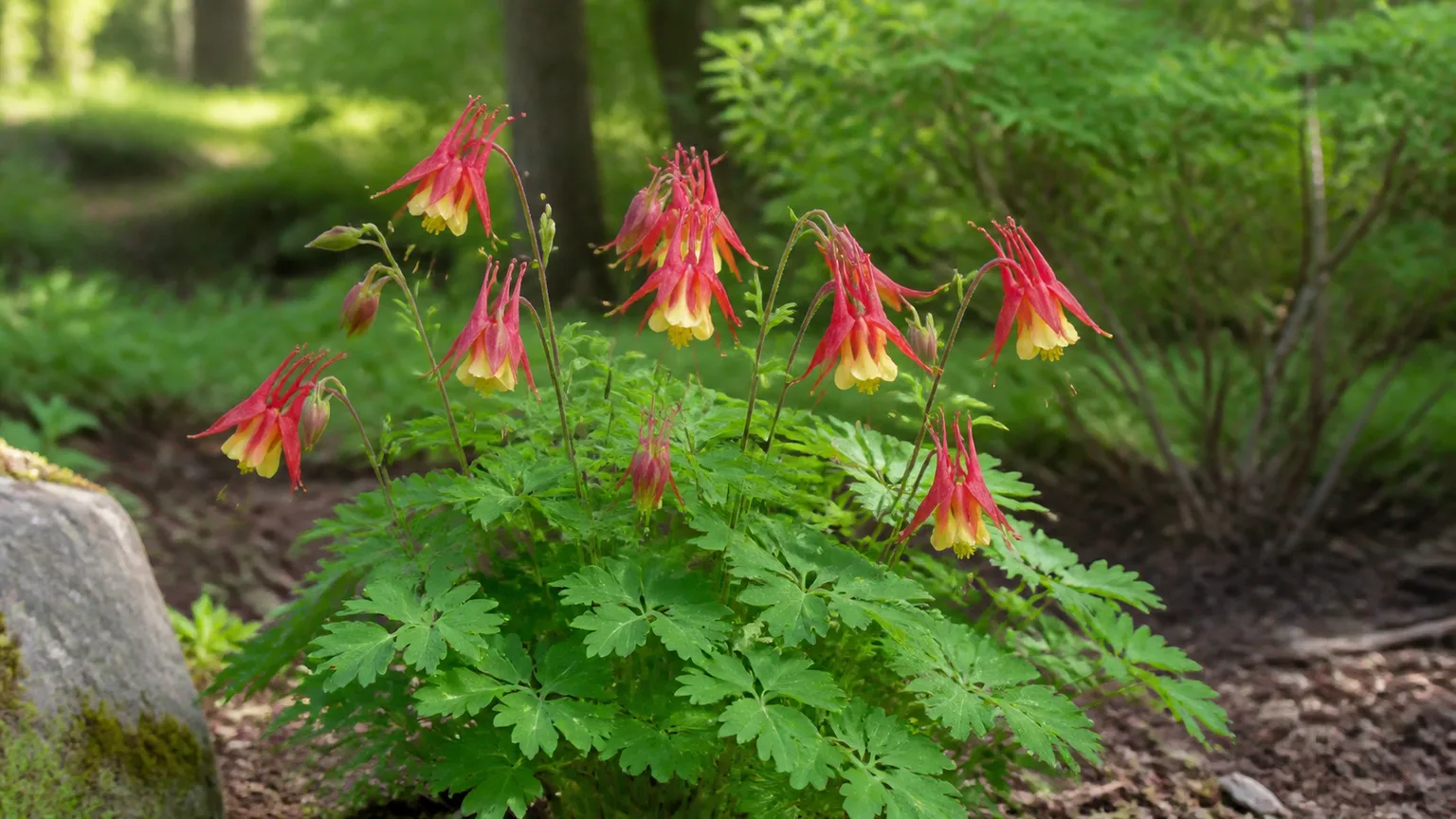
Columbine (Aquilegia spp.) handles partial to full shade and blooms in mid-spring into summer, often reseeding freely. NC State Extension notes spurred flowers in many colors and the common outcome that seedlings may not match the parent because columbines hybridize. Remove spent stems if you want to limit self-sowing. For bell-shaped bloom inspiration, browse flowers that look like bells.
Moist-shade bloomers and foliage anchors
When light is scarce, foliage does more design work than flowers. Mix leaf size, color, and texture: one broad-leaved plant beside a finely divided fern reads more intentional than fourteen green mounds in a row.
Astilbe, hosta, and coral bells
Astilbe (Astilbe × arendsii and hybrids) supplies feathery plumes in white, pink, red, or mauve and works especially well in damp shade. NC State Extension describes hybrids 18–36 inches tall that prefer shady, moist, organically rich sites; RHS’s astilbe guide adds that they dislike drying out even though they also dislike standing water. If your soil turns dusty in midsummer, astilbe is the wrong “low-light” plant unless you can irrigate consistently.
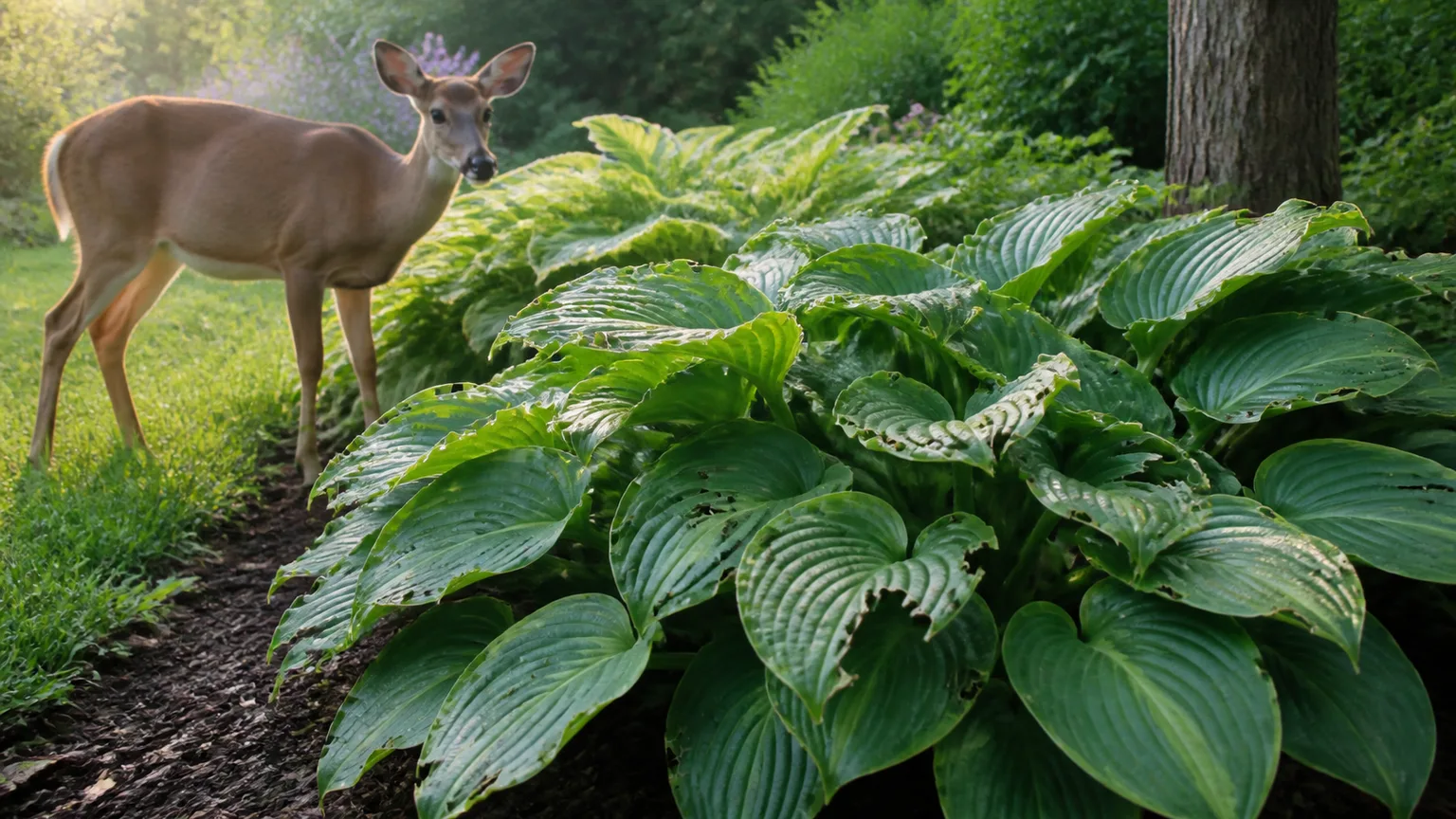
Hosta (Hosta spp.) remains a dependable full-shade perennial because its value is the leaf, not a brief flowering window. NC State Extension notes thousands of cultivars from dwarf to giant, summer bloom, and preference for morning sun or dappled shade with moist, organic soil. RHS’s hosta growing guide recommends matching cultivar to conditions: blue-leaved types for deeper shade, yellow-leaved types for brighter spots. Deer, slugs, and voles are recurring problems; for seasonal care after establishment, see how to care for hosta plants in the fall.
Coral bells (Heuchera spp.) are compact mounds grown mainly for foliage in purple, bronze, orange, lime, silver, and green. NC State Extension lists a mature height under two feet, preference for moist well-drained soil, and deer and rabbit resistance from leaf tannins. Plant the crown at soil level and keep mulch away from the stem; buried crowns are a common failure point in shade beds that stay wet.
Brunnera and hardy ferns
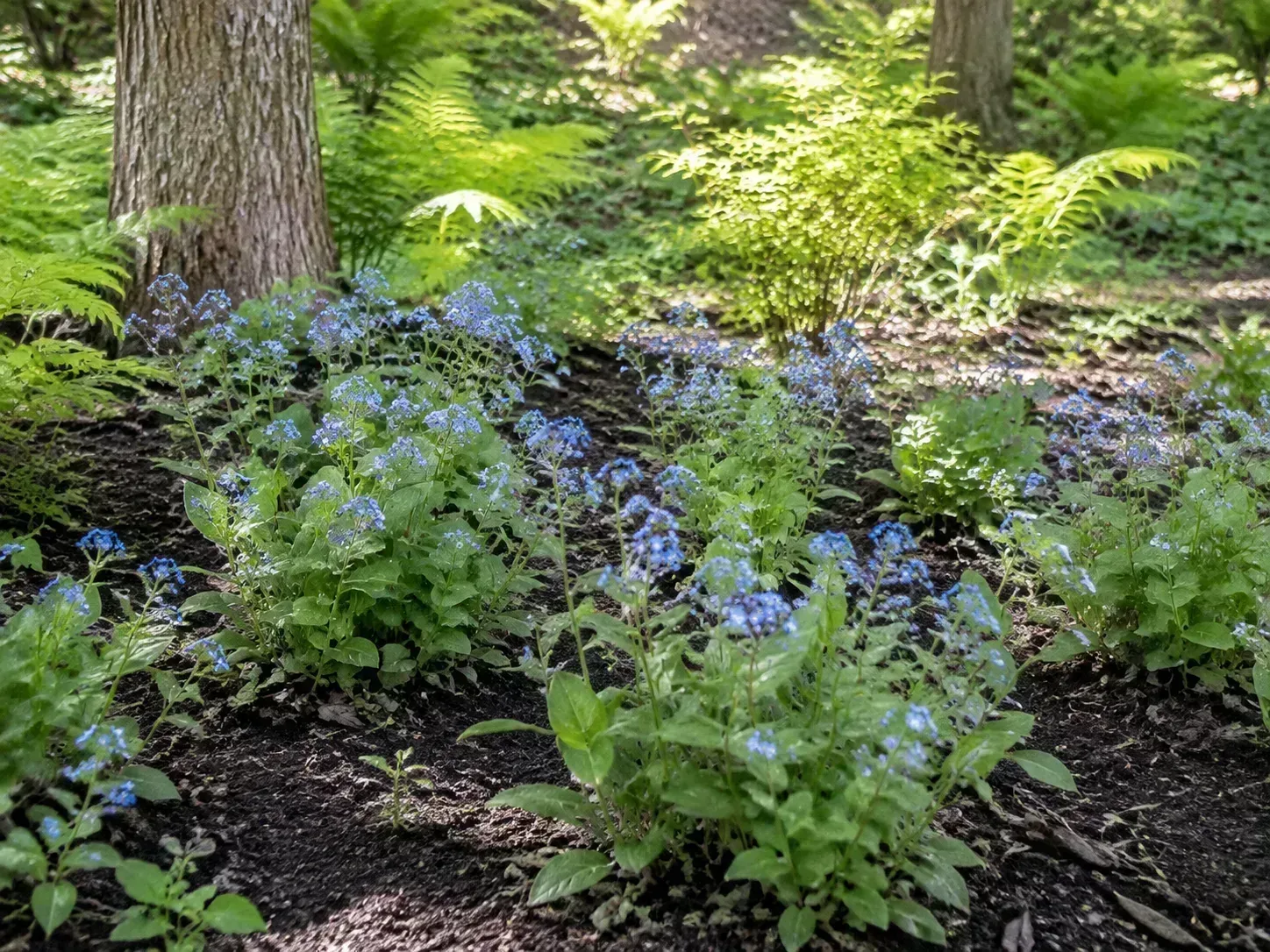
Brunnera (Brunnera macrophylla) combines forget-me-not-like blue flowers in spring with heart-shaped leaves that may be green, silver, or veined. NC State Extension describes blooms from early to mid-spring on stems to 18 inches and a preference for partial to full shade with even moisture. It is particularly effective in bright shade where silver leaves lift a dark border. For a related moist-shade bloomer, see our forget-me-not plant profile.
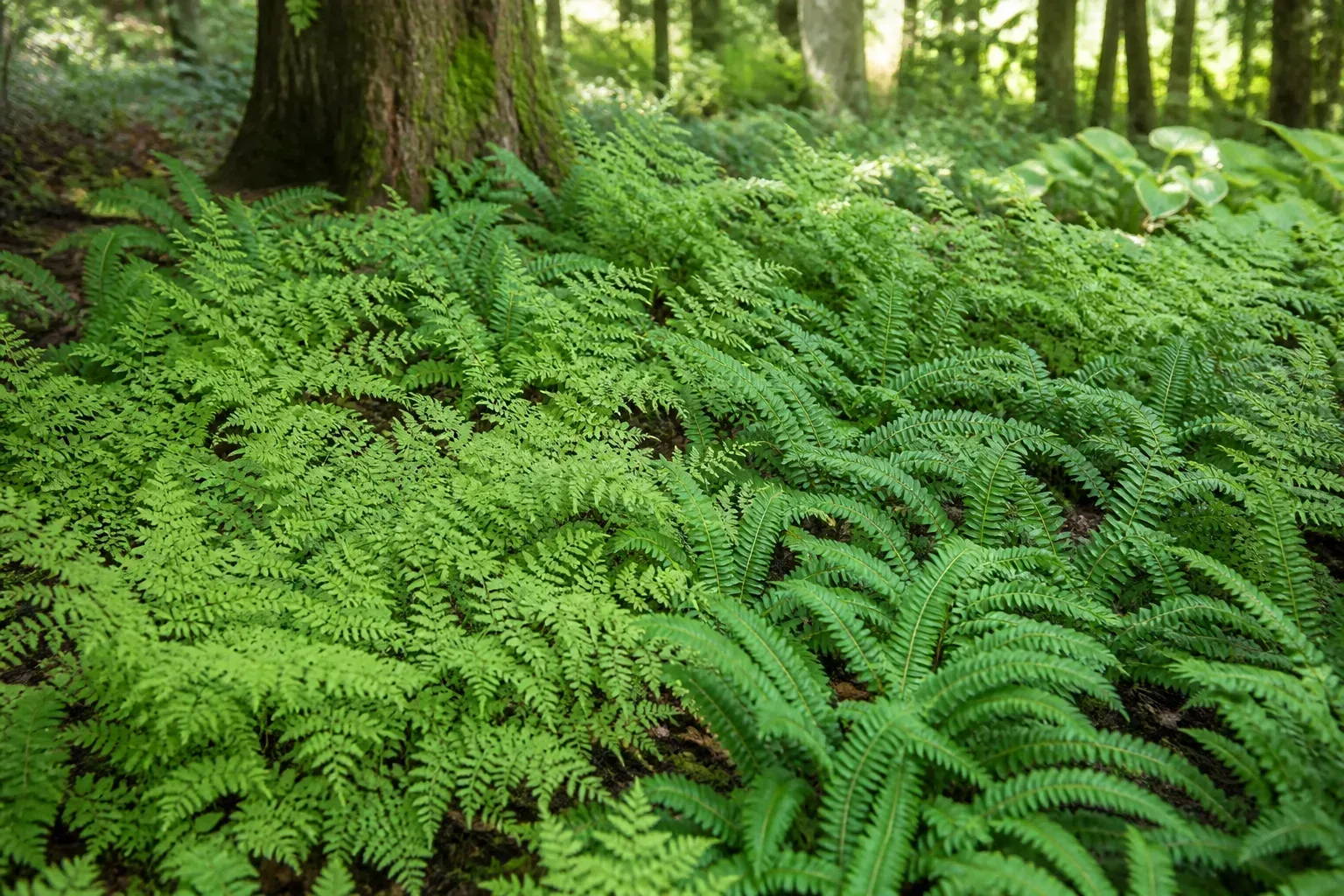
Hardy ferns are texture specialists—and they are not interchangeable with tender houseplant ferns. For outdoor full shade, start with species that survive winter in your zone:
| Fern type | Example species | Shade/moisture notes |
|---|---|---|
| Christmas fern | Polystichum acrostichoides | Evergreen in mild areas; tolerates dry shade once established per NC State |
| Lady fern | Athyrium filix-femina | Prefers moist, organic soil; fine texture |
| Ostrich fern | Matteuccia struthiopteris | Moist to wet sites; can spread aggressively |
| Japanese painted fern | Athyrium niponicum var. pictum | Bright shade; needs consistent moisture |
RHS dry-shade guidance recommends shield ferns (Polystichum) and Dryopteris species for dry gardens once established. Do not plant Boston fern (Nephrolepis exaltata) outdoors in temperate climates—it is a tender species suited to containers and interiors, not a stand-in for Christmas or lady fern in a permanent shade border.
Structure plants for height and seasonal rhythm
These four plants add vertical interest, cottage-garden drama, or shrub-like presence. Their trade-offs matter more than their shade label.
Solomon’s seal, foxglove, hardy fuchsia, and amsonia
Solomon’s seal (Polygonatum spp.) adds arching stems, two-ranked leaves, and small dangling flowers. NC State Extension lists tolerance of deep shade, preference for cool organically rich moist soil, and spread by rhizomes. Berries are mildly toxic if eaten—factor that into placement near play areas.
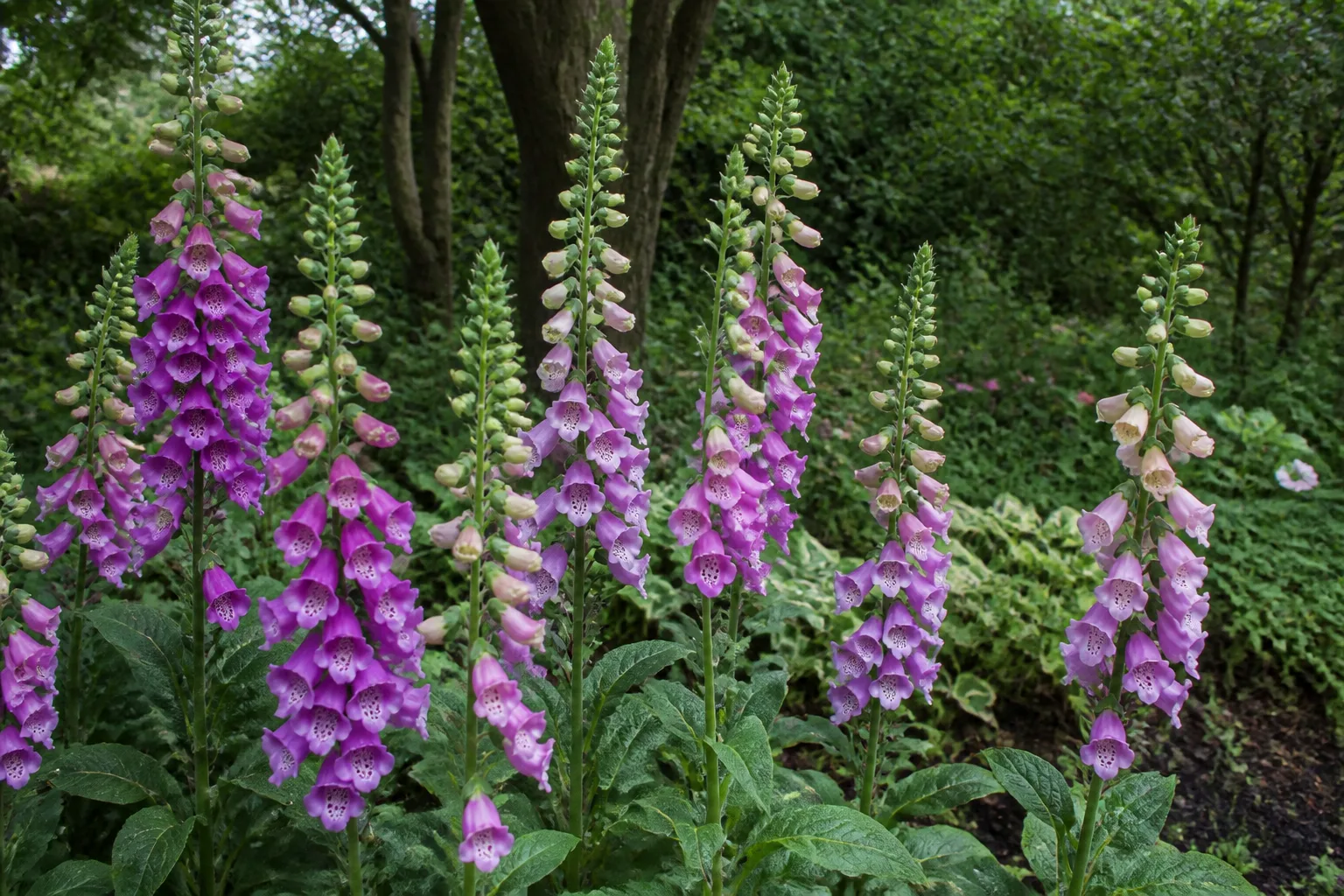
Foxglove (Digitalis purpurea) supplies tall spires in pastel to bright hues and often reseeds. NC State Extension describes a biennial rhythm—leafy rosette the first year, flower spike the second—and notes toxicity to humans and pets. Site spikes where children and pets are unlikely to chew foliage. Afternoon shade suits foxglove better than hot western exposure.
Hardy fuchsia (Fuchsia magellanica and cultivars) is a shrub-like option for sheltered shade with pendant summer flowers that attract hummingbirds. NC State Extension lists hardiness to zone 5a with winter protection in colder areas, heights to 10 feet, and preference for rich moist soil out of drying wind. Treat top growth as potentially dieback-prone in zone 5–6 unless the cultivar and microclimate are proven locally.
Amsonia, including eastern blue star (Amsonia tabernaemontana), is a clumping perennial with narrow foliage and starry blue spring flowers. NC State Extension describes a 2–3 foot mound, adaptability to a range of soils, and value to pollinators. Fuller light produces denser bloom, but the plant remains useful as a mid-layer in bright shade.
Winter and early-season interest
When much of the garden is bare, these two groups anchor the border with foliage or very early flowers.
Hellebores and hardy geraniums
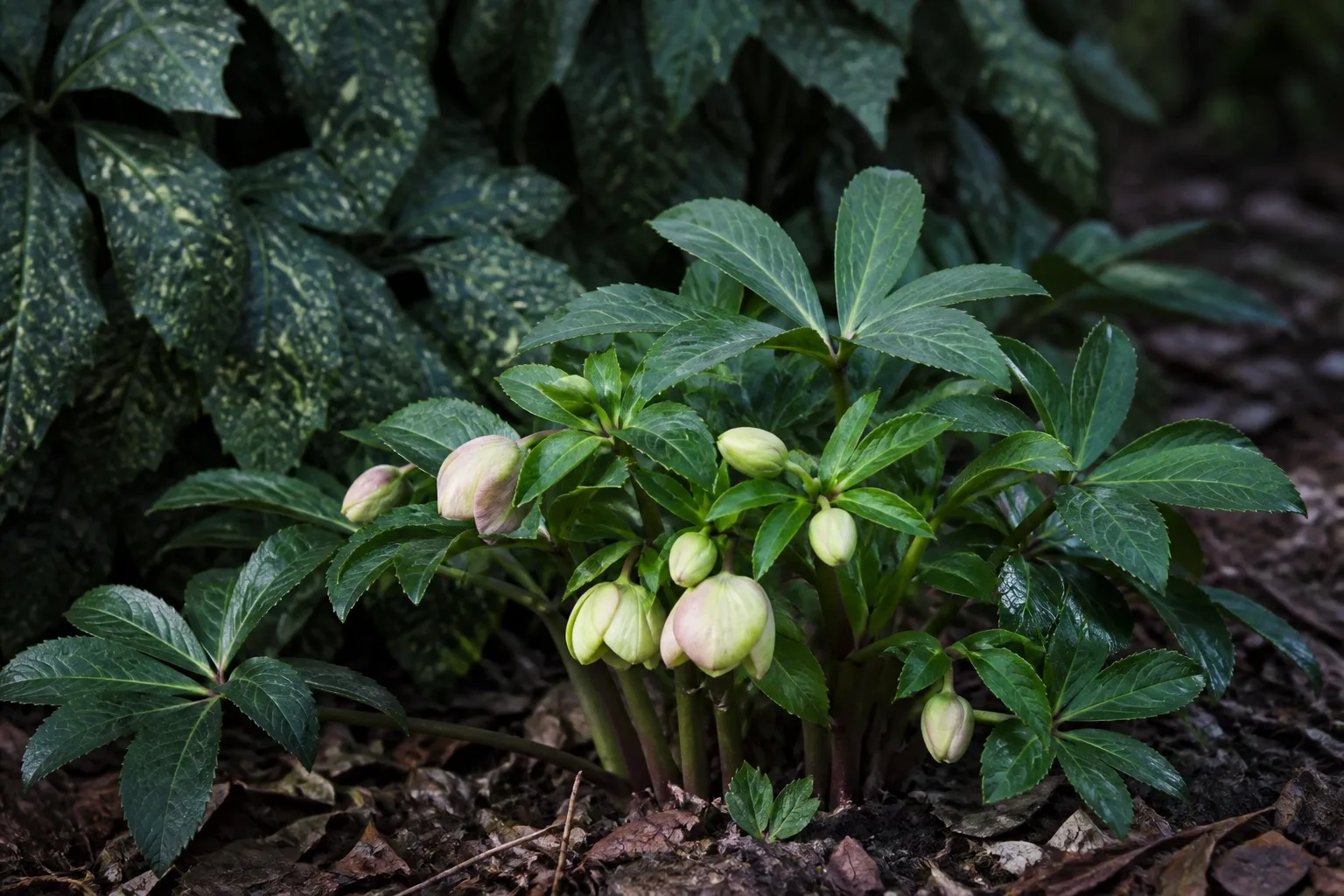
Hellebores (Helleborus spp.) bring cup-shaped flowers from late winter into spring when little else is in bloom. NC State Extension notes evergreen or semi-evergreen foliage, preference for light to moderate shade with alkaline to neutral soil, and high toxicity with possible skin irritation—wear gloves when cutting back old leaves. Keep them away from children and pets that chew plants.
Hardy geraniums—especially bigroot geranium (Geranium macrorrhizum), dusky cranesbill (G. phaeum), and G. cantabrigiense—are useful in partial or full shade and often more forgiving than many flowering perennials in dry shade. RHS’s hardy geranium growing guide recommends G. macrorrhizum, G. phaeum, and G. sylvaticum for shaded spots and notes that bigroot geranium makes strong groundcover but needs occasional division. Do not confuse these with tender bedding “geraniums,” which are Pelargonium species; our geranium care hub covers the indoor bedding type, while the hardy species above are the outdoor shade performers.
How to establish a shade bed under trees
The first season determines whether a shade planting becomes low-maintenance or a weekly rescue job. Water newly planted perennials thoroughly at the root zone, then check soil moisture with a finger or trowel instead of watering by calendar. Shade reduces leaf evaporation, but tree roots can remove moisture rapidly and a roof can prevent rainfall from reaching the bed.
Improve compacted soil with compost worked into the planting area, but avoid burying trunks, tree root flares, or perennial crowns. A two-inch mulch layer helps moderate moisture and temperature; keep it a few inches away from stems. Good drainage still matters beside buildings where wet pockets linger after irrigation.
Plant in layers. Put taller foxgloves, hardy fuchsia, or Solomon’s seal behind medium hostas, hellebores, and astilbes; edge with coral bells, woodland phlox, or hardy geraniums; weave in ferns to connect shapes. Repeat three or five plants rather than buying one of everything. Under established trees, use smaller plugs where possible—large holes sever surface roots and leave air pockets. Water the root ball into contact with soil and keep it moist through the first growing season.
Common reasons shade plants fail
| Symptom or situation | Likely cause | First fix |
|---|---|---|
| Sparse, stretched stems; few flowers | Site darker than the label implied | Move toward a brighter edge; choose deeper-shade foliage plants |
| Wilt returns after deep watering | Dry shade from roots or roof | Mulch, water slowly at roots; switch to dry-shade species long term |
| Yellowing, soft crowns, sour smell | Wet soil, not moist shade | Improve drainage; choose wet-tolerant plants or raise the bed slightly |
| Plant “died” midsummer after spring show | Natural dormancy (bleeding heart) | Mark location; pair with later-emerging hosta or fern |
| Ragged hosta leaves | Slugs or deer | Barriers, traps, or resistant edging plants on browsed borders |
| Coral bells collapse at center | Crown planted too deep or wet mulch | Replant at nursery depth; pull mulch back from stems |
| Astilbe crisps in July | Drought stress | Irrigate consistently or relocate to a naturally damp pocket |
| Fern fronds brown in winter | Wrong species expectation | Choose evergreen Christmas fern vs deciduous ostrich fern intentionally |
Pet- and child-safety notes
Treat ornamental shade beds as display gardens, not snack gardens. NC State Extension records hellebore toxicity and skin irritation risk. Foxglove profiles note cardiac glycosides dangerous if ingested. Solomon’s seal berries can cause illness. Bleeding heart is poisonous if eaten. Teach children not to taste garden plants, supervise pets that dig or chew, and contact poison control or a veterinarian promptly after a suspected ingestion.
Conclusion
The best outdoor plants for “zero sunlight” are really plants for full shade with ambient daylight. Before you buy, run this printable chooser:
1. Light check (one summer day)
- Dappled bright shade, full shade, or deep shade?
- Any direct sun flecks longer than 30 minutes? Note morning vs afternoon.
2. Moisture check
- Evenly moist, dry under trees/roof, or wet pocket?
- Rain reaches soil or is blocked by canopy/overhang?
3. Special-site flags
- Black walnut nearby → prioritize bleeding heart, hosta, astilbe, Solomon’s seal
- Road salt or coastal runoff → prioritize hosta, astilbe, columbine, hellebore; flush soil in spring
- Pets/children with unsupervised access → avoid or fence foxglove, hellebore, Solomon’s seal berries
4. Shortlist three roles
- One early flower (hellebore, bleeding heart, woodland phlox)
- One foliage anchor (hosta, coral bells, brunnera, fern)
- One height or structure plant (Solomon’s seal, foxglove, fuchsia, amsonia) if space allows
5. Shop using the spec matrix
Confirm USDA zone, mature height, moisture match, and bloom season on each tag.
6. First-season plan
Water at roots through year one, mulch without burying crowns, and protect hostas from slugs and deer.
With the right plant in the right kind of shade, a north wall or tree island can become one of the most layered, restful parts of the garden—and you will not need to search again for basic zones, bloom timing, or dry-versus-moist matches.



