42 Common Weeds: How to Identify and Control Them
Identify 42 common lawn and garden weeds by leaves, flowers, growth habit, and roots, then match each to safer control steps and timing.
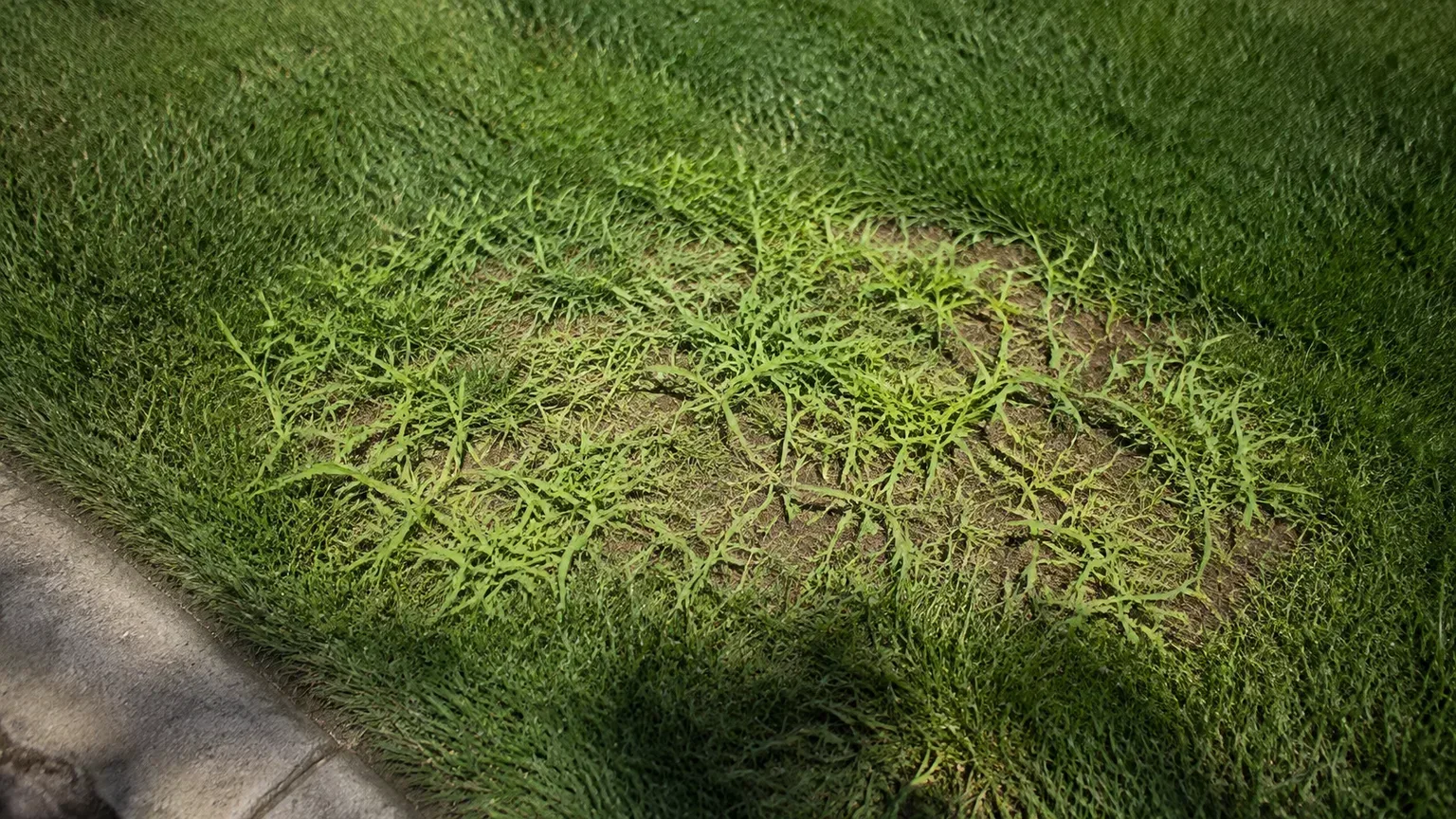
A weed is simply a plant growing where you do not want it. That definition matters because a white clover patch in a low-input lawn, a dandelion in a vegetable bed, and poison ivy along a play path call for very different decisions. The best first step is not a stronger weed killer; it is a confident identification and a clear idea of what “controlled” means in that location.
This guide covers 42 weeds found in lawns, borders, vegetable gardens, paths, and disturbed soil. Use the entries as a field guide, then match the plant’s spread strategy—seed, taproot, creeping stem, rhizome, or tuber—to the control method. Names and control options vary by region, so use your county extension service for a final identification and check local noxious-weed rules before moving soil or plant material.
Identify an Unknown Weed Before You Pull It
Start with the site. A low plant in a frequently mowed lawn is likely to be a different group from a tall annual in freshly turned soil, a vine climbing a shrub, or a sedge in a wet patch. Note sun, moisture, compaction, mowing pressure, and whether the plant is in a crack, bed, lawn, or unmanaged edge.
Next, examine more than one feature. Look at leaf arrangement and shape, stem cross-section, flower color and timing, seed heads, and the way the plant meets the soil. If you can, dig one specimen from damp soil and inspect whether it has a taproot, fibrous roots, white rhizomes, runners that root at the nodes, or small underground tubers. The Royal Horticultural Society’s identification guide likewise recommends using flowers, leaves, and growth habit together rather than relying on a single clue.
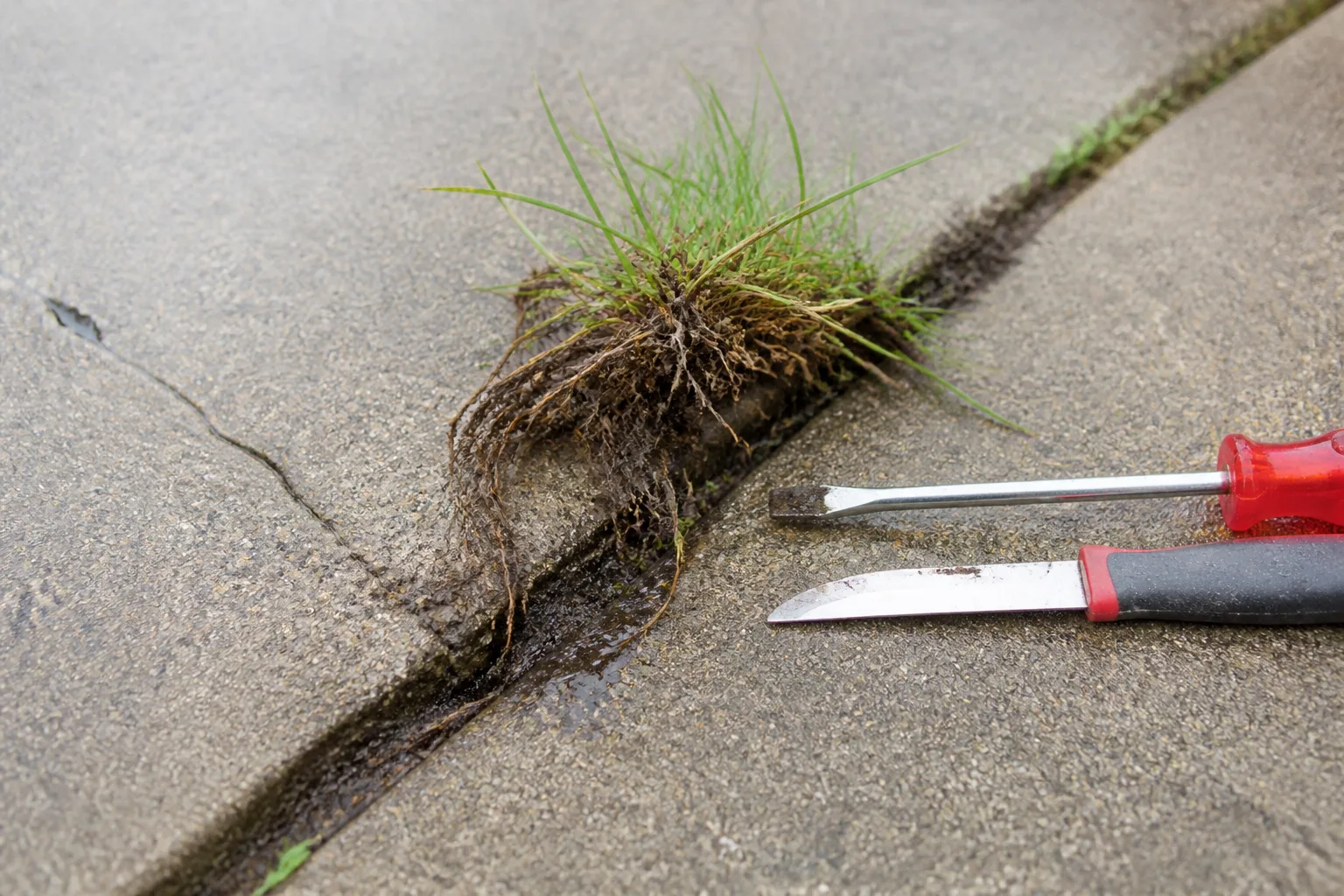
Do not touch an unknown vine or shrub with bare hands. Three leaflets can suggest poison ivy, but leaf shape changes with age and site, and poison sumac grows as a woody plant in wet areas. Photograph the plant from several angles, keep children and pets away, and identify it before pulling, mowing, burning, or applying a product.
Match the Control to the Weed’s Life Cycle
Annual weeds live one growing season and reproduce mainly through seed. Pull or hoe them while young, and the job becomes much harder if they flower and shed seed. Mowing can prevent seed production in a lawn, but it does not always kill the plant. A seed-producing annual that is chopped repeatedly may still leave a large seed bank for next year.
Perennials survive from year to year. Dandelion and curly dock store energy in taproots; bindweed, quackgrass, and Japanese knotweed use extensive underground stems; nutsedge forms tubers. Removing only the leaves gives these plants time to rebuild. Dig small infestations carefully, smother where the site allows, and expect follow-up visits rather than a one-day cure.
There is an important difference between suppression and eradication. A lawn can suppress a broadleaf weed by shading it, while regular mowing can suppress a bindweed vine without removing its roots. For an ornamental bed, the goal may be to prevent flowering and protect desirable plants, not to sterilize every inch of soil. Choose the least disruptive method that meets the goal.
42 Common Weeds, Grouped by the Clue That Matters
The short descriptions below emphasize what to look for and the first control move. A plant’s common name may refer to several species, so treat the scientific name as a useful check, not as a substitute for a local identification.
Toxic, Invasive, or High-Risk Weeds
1. Poison sumac (Toxicodendron vernix) — Look for a woody shrub or small tree in very wet ground, with seven to 13 smooth leaflets, reddish stems, and loose pale fruit clusters. Every part contains urushiol, and the sap can remain hazardous on leafless stems and tools. Do not cut or burn it yourself; isolate the area and use a professional or local invasive-plant service when the identification is uncertain.
2. Japanese knotweed (Reynoutria japonica) — Hollow, bamboo-like canes, zigzag stems, broad leaves, and late-season sprays of small flowers point to this aggressive perennial. Tiny rhizome fragments can regenerate, so do not put pulled stems or root pieces in a casual compost pile or spread soil from the patch. Repeated cutting can suppress it, but an established stand usually needs a documented, multi-season plan.
3. Poison ivy (Toxicodendron radicans) — Three leaflets, a trailing or climbing habit, and hairy-looking aerial roots are useful clues, but the plant changes color and form through the year. Urushiol remains active on bare stems, clothing, shoes, tools, and dead leaves. The UF/IFAS identification guide advises prompt washing with warm soapy water after exposure and warns that smoke from burning these plants can irritate the lungs. Wear disposable or washable gloves, bag the material, and never burn it.
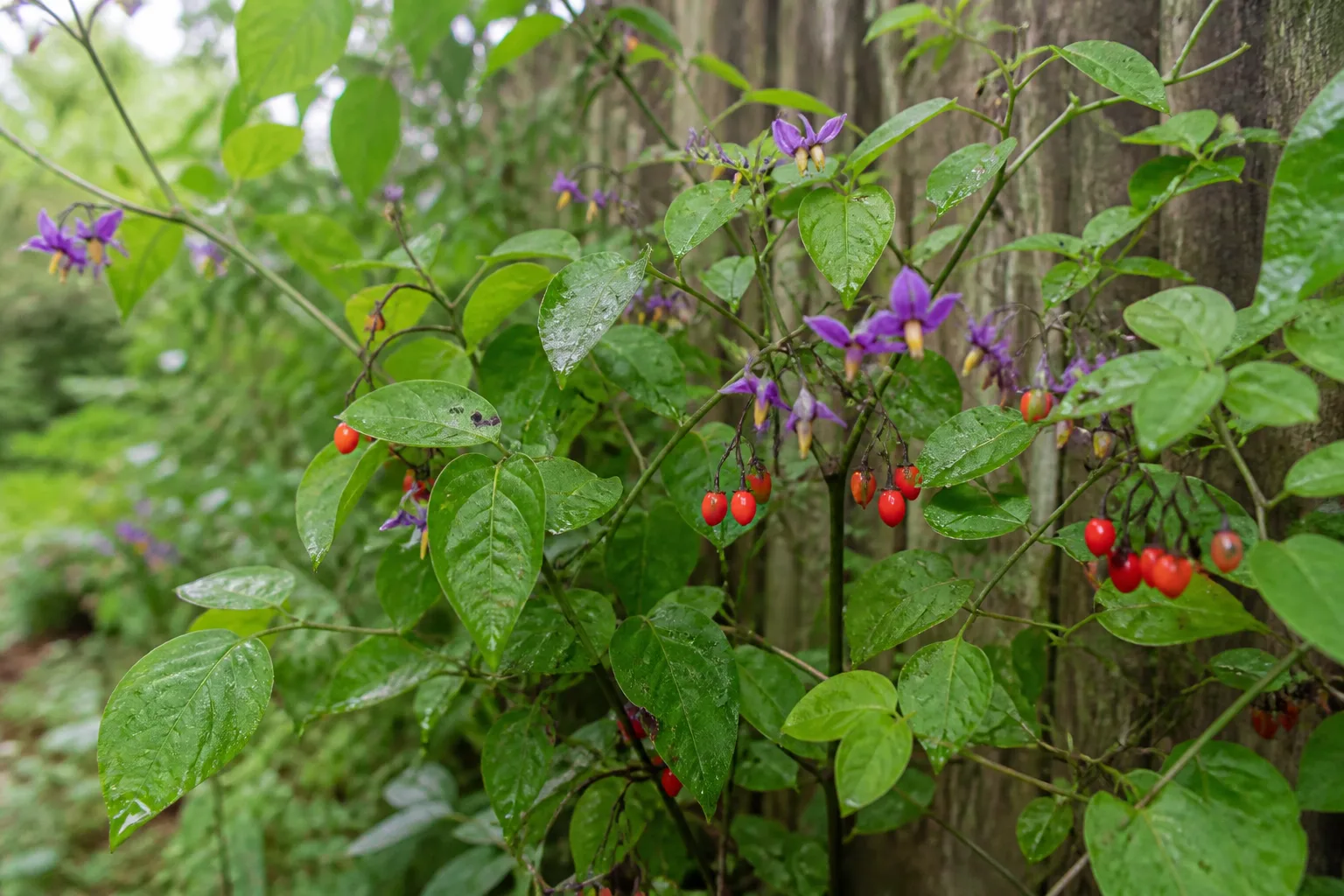
4. Bittersweet vines and bittersweet nightshade — Oriental bittersweet (Celastrus orbiculatus) is a woody vine that can girdle shrubs and trees; American bittersweet is a native look-alike, so confirm before removing a large vine. Bittersweet nightshade (Solanum dulcamara) has purple flowers and red berries and is toxic. Cut vines away from trees without pulling bark, remove the root crown where possible, and seek local advice before treating a mature infestation.
Broadleaf Lawn Weeds
5. Dandelion (Taraxacum officinale) — The familiar yellow flower, toothed rosette, and long taproot identify it. Mowing only removes the flower; use a narrow dandelion tool after rain to lift the crown and as much root as possible. A few dandelions can be left for pollinators if that suits your lawn, but remove flowers before seed if you do not want the population to grow.
6. Common plantain (Plantago major) — Broad ribbed leaves form a flat rosette, often in compacted, heavily used turf. Its presence is a site clue: foot traffic and thin grass are helping it. Dig the crown when soil is moist, then repair the bare spot and reduce compaction. Repeated mowing keeps it short but does not remove a mature rosette.
7. White clover (Trifolium repens) — Three rounded leaflets, pale markings, creeping stems, and white flower heads make it easy to spot. Clover tolerates drought and dog urine better than many turfgrasses and supports pollinators, so removal is a preference rather than an automatic necessity. If you want grass-only turf, improve density and correct the underlying thinness before spot-treating clover; blanket herbicide can create more bare soil.
8. Ground ivy or creeping Charlie (Glechoma hederacea) — This low perennial has round, scalloped leaves, square mint-family stems, and a creeping habit that roots at nodes. Pulling a small patch is possible, but every rooted piece matters. Rake and remove runners, then thicken the lawn or cover the bed. Large lawn infestations often require repeated, well-timed management rather than one pass.
9. Wild violet (Viola sororia and related violets) — Heart-shaped leaves and purple, white, or yellow flowers appear in shady lawn edges and moist beds. Violets can be attractive and useful, but their crowns and short rhizomes make them persistent. Hand-dig isolated clumps; where a lawn must remain uniform, improve light and turf vigor, then use only a product labeled for that turf and weed.
10. Black medic (Medicago lupulina) — Small clover-like leaves, yellow flowers, and a low mat signal this annual or short-lived perennial of dry, poor soil. Pull young plants before seed and water the lawn deeply enough to support the turf rather than frequent shallow watering. Mulch beds and amend soil based on a test, not by guessing.
11. Common mallow (Malva neglecta) — Look for round, scalloped leaves, low sprawling growth, and small pale flowers. It often appears where turf is thin, compacted, or mowed too short. Pull seedlings before the deep root develops, raise mowing height within your grass species’ range, and reseed bare areas. Mature plants may break when pulled, so loosen the soil around the crown.
12. Curly dock (Rumex crispus) — Long, wavy-edged leaves and tall rusty-brown seed stalks are the key clues. Its taproot and durable seed make repeated mowing a suppression measure, not a complete solution. Dig small plants deeply before the seed stalk matures, bag seed-bearing tops, and follow regrowth. Do not eat an unknown dock, especially when children or pets can access it.
Low-Growing and Mat-Forming Weeds
13. Purslane (Portulaca oleracea) — This succulent annual has smooth, fleshy leaves and reddish, prostrate stems. Pull it while young and remove every piece from moist soil because stem fragments can root and mature plants produce seed. A two- to three-inch mulch layer in a bed blocks new seedlings. Avoid cultivating the soil repeatedly, which brings more seed to the surface.
14. Wild madder or bedstraw (Galium mollugo) — Trailing, square-ish stems, narrow leaves arranged around the stem, and small white star flowers form loose mats. Mow or cut it before flowering in rough turf, and hand-pull or dig crowns in beds. Close planting and mulch reduce the bare ground that lets new seedlings establish.
15. Orange jewelweed (Impatiens capensis) — Orange, slipper-shaped flowers and succulent stems often appear in damp shade. It pulls easily from wet soil, but its seed capsules can fling seed when touched. Remove before seed set if it is unwanted; bag plants with mature capsules and keep the patch if it is providing a useful native habitat away from paths and play areas.
16. Chickweed (Stellaria media) — A soft green mat, tiny white star flowers, and a line of hairs along one side of the stem identify this cool-season annual. Pull or hoe it in fall and winter before spring seed production. Mulch garden beds and avoid leaving damp, bare soil exposed. Do not mistake “easy to pull” for “no need to monitor”; one flowering patch can replenish the seed bank.
17. Wild violet’s lawn look-alikes and creeping speedwells — Small creeping plants with rounded leaves and tiny flowers are easily misidentified in spring. Before treating a broadleaf lawn weed, check the flower, leaf arrangement, and whether stems root at nodes. Raking low creepers before mowing can remove stems, but a dense lawn is the longer-term control. If the plant is desirable in a wildlife lawn, simply mow paths and leave the rest.
Summer Annual Broadleaf Weeds
18. Common ragweed (Ambrosia artemisiifolia) — Deeply divided leaves and upright branching stems distinguish it from goldenrod and many harmless garden seedlings. It is a major allergy concern because wind carries its pollen. Pull young plants with gloves, mow before flowering, and keep disturbed soil covered. The NC State Extension profile is a useful check when leaves are immature.
19. Giant ragweed (Ambrosia trifida) — Large, three-lobed leaves and a tall, coarse habit separate it from common ragweed. Do not let it mature along fence lines or field edges; remove or mow before seed heads release pollen. Because it can tower over garden plants, wear eye protection when cutting dense stands and avoid stirring dry debris on a windy day.
20. Shepherd’s purse (Capsella bursa-pastoris) — The low rosette and heart-shaped seedpods on slender stalks are distinctive. Pull or hoe before seed, then cover the exposed soil. It favors sunny, disturbed ground and can flower in cool weather, so inspect beds in late winter as well as spring.
21. Woodsorrel (Oxalis stricta) — Three heart-shaped leaflets fold in bright sun, with small yellow five-petaled flowers. Pull young plants before seed capsules form and mulch the bed. Do not assume that a shallow-looking plant has no underground persistence; some oxalis types form small bulbs or bulbils, and identification matters before digging or treating.
22. Lambsquarters (Chenopodium album) — Gray-green leaves with a mealy coating on young growth and upright branching stems indicate this fast-growing annual. Hoe or pull while small, before the inconspicuous flowers mature. Mulch prevents light from reaching many new seedlings. In vegetable beds, avoid deep tillage after removal because it can expose buried seed.
23. Pigweed (Amaranthus retroflexus) — Look for an upright summer annual with alternate oval leaves, a reddish taproot, and dense green flower clusters. Pull seedlings before flowering, especially around edible crops. Cover bare soil after removal and do not allow seed heads into home compost unless the pile reaches reliable weed-seed-killing temperatures.
24. Smartweed (Polygonum pensylvanicum) — Lance-shaped leaves may carry a purple chevron, while jointed stems have swollen nodes and pink or white flowers. Pull or hoe before seed, and use mulch in beds. Smartweed often signals moist, disturbed ground, so improve drainage only if that matches the needs of the plants you want to keep.
25. Quickweed or gallant soldier (Galinsoga parviflora) — Jagged, hairy leaves and tiny white daisy-like flowers identify this shallow-rooted annual. It can produce several generations in one warm season. Pull weekly while young, mulch immediately, and remove flowers from any plants you cannot get out that day. A single late-season pass is not enough.
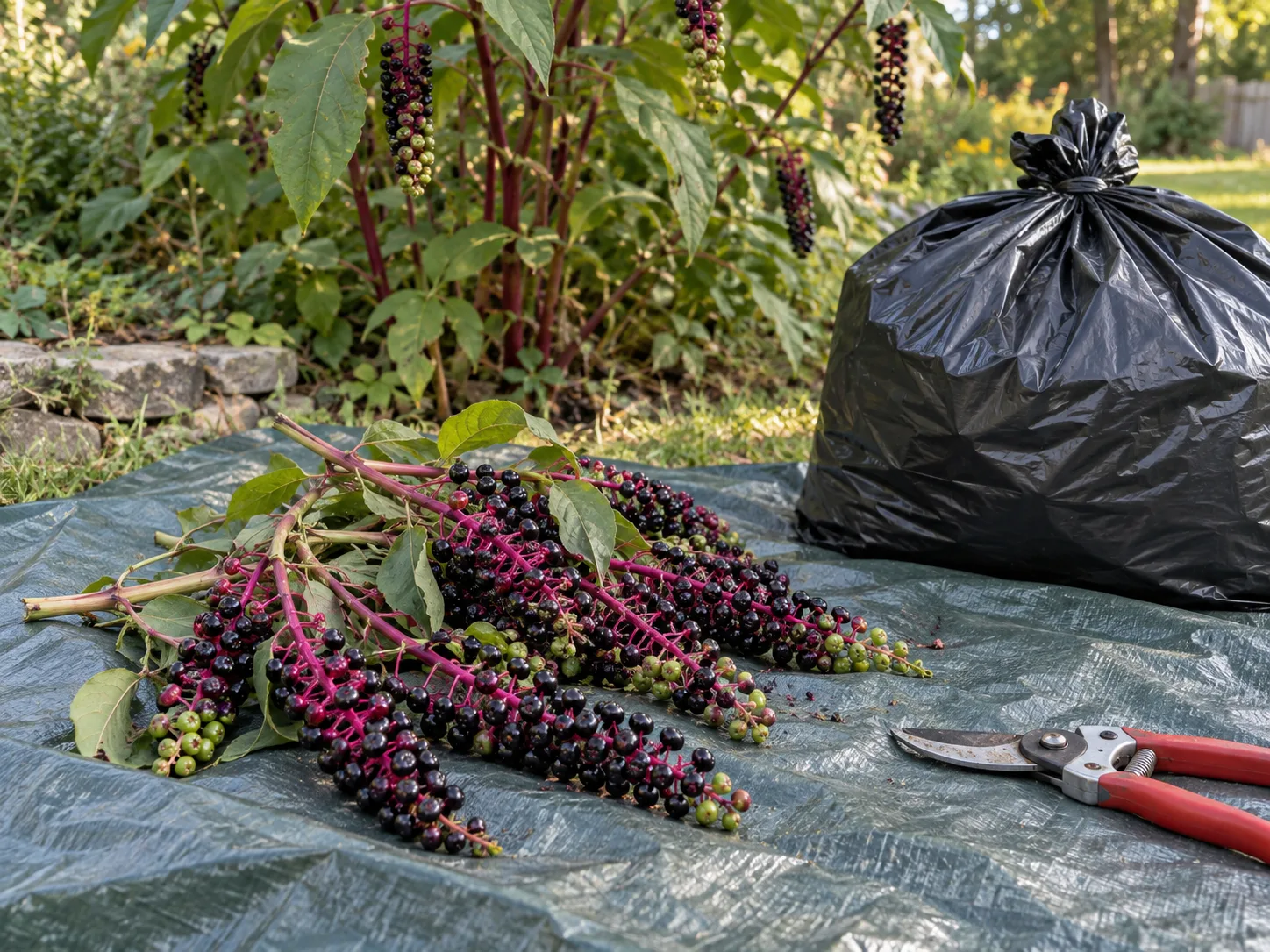
26. Pokeweed (Phytolacca americana) — Red-purple stems, large leaves, white flower clusters, and dark berries make it conspicuous. Birds spread the seed, and an established plant has a substantial root. For a young plant, dig the crown while wearing gloves; for a tall, berry-bearing plant, cut and bag the fruiting parts first and do not compost them. Identification should come before handling, especially once berries are present.
27. Black nightshade (Solanum nigrum) — White or purple flowers, dark berries, and a bushy annual habit can resemble edible tomato relatives. Treat berries and plant parts as unsafe for eating, and keep children away while identifying it. Pull young plants before berries mature, bag fruiting stems, and use a labeled product only where the site and crop label allow it.
28. Velvetleaf (Abutilon theophrasti) — Large, soft, heart-shaped leaves and a tall, fuzzy stem give this annual its name. Pull seedlings before yellow flowers and seed capsules develop. Avoid turning an infested patch deeply; burial can simply distribute long-lived seed through the planting zone. Mulch and crop rotation reduce new emergence in open beds.
Weedy Grasses and Grasslike Plants
29. Crabgrass (Digitaria sanguinalis) — A low, spreading summer grass forms a crab-like rosette of coarse blades and roots at lower nodes. It is an annual, so the prevention target is seed. Hand-pull small plants before seed heads, keep turf dense, and apply a pre-emergent only when the product is labeled for your grass and timed for your local germination window. NC State Extension confirms the importance of removing plants before they set seed.
30. Quackgrass (Elymus repens) — Blue-green blades, rough leaf surfaces, and white rhizomes distinguish this persistent perennial grass from crabgrass. In beds, dig and screen out rhizomes rather than chopping them with a tiller. In lawns, mowing suppresses it but will not remove the underground network. Repair thin turf and use a targeted plan; nonselective herbicides cannot distinguish quackgrass from desirable grass.
31. Barnyard grass (Echinochloa crus-galli) — Thick blades, a pale midvein, reddish lower stems, and a branched seed head are useful clues. Pull small plants while soil is moist and mow frequently enough to prevent seed. It thrives in disturbed, wet-to-moist ground, so avoid overwatering a lawn while trying to make it greener.
32. Goosegrass (Eleusine indica) — This summer annual forms a flat, pale-centered rosette with tough leaves and fingerlike seed heads. It often tolerates compacted, hot lawn edges. Hand-pull young plants, relieve compaction where appropriate, and use only a pre-emergent or post-emergent labeled for the specific turf species and region.
33. Annual bluegrass (Poa annua) — Fine bright-green tufts and small pale seed heads stand out in cool weather. It dies after setting seed, but the seed bank keeps returning. Mow before seed heads, improve drainage and light where feasible, and avoid overwatering in cool seasons. A dense, correctly managed lawn is more durable than trying to remove every tuft by hand.
34. Bahiagrass (Paspalum notatum) — The distinctive Y-shaped seed heads and coarse, bright-green blades identify this warm-season perennial. It spreads by rhizomes and can persist in poor, dry soil. Dig small patches and remove rhizomes; in larger lawn infestations, first decide whether the plant is actually suitable turf for your region before attempting chemical control.
35. Nutsedge or nutgrass (Cyperus species) — Roll the stem between your fingers: a sedge stem is often triangular, not round like a grass stem. Glossy leaves form a V, and underground tubers help the plant return after mowing. Pull early without snapping the stem, then monitor for regrowth. Do not use a general grass killer; nutsedge requires correct identification and a product labeled for the turf and sedge species.
Perennial Runners and Root-Spreading Weeds
36. Hedge bindweed or field bindweed (Convolvulus arvensis) — Arrowhead leaves, thin twining stems, and small white-to-pink trumpet flowers identify this perennial vine. Its roots can reach very deep, root fragments can make new plants, and long-lived seed can wait in soil. UC IPM’s peer-reviewed field bindweed notes recommend prevention, repeated removal of top growth, competition, and a multi-season integrated plan. Never rototill an established patch between desirable plants.
37. Canada thistle (Cirsium arvense) — Spiny leaves, upright stems, and pink-purple flower heads are familiar, but the real problem is its creeping root system. Hoe or dig young rosettes before they establish, cut flowering stems before seed, and expect repeated treatment. Because it is regulated as a noxious weed in many jurisdictions, check your local list before transporting or disposing of it.
38. Horsetail weed (Equisetum arvense) — Jointed, hollow stems and separate fertile shoots make this ancient-looking plant easy to recognize, but it can resemble ornamental horsetail. It favors conditions where many garden plants struggle and spreads through underground structures. Pulling alone rarely solves an established patch. Improve drainage or site conditions only if that will not harm desirable plants, and get local advice before using herbicide near water.
39. Dayflower (Commelina species) — Broad, succulent leaves and small blue flowers can make young plants look like healthy grass. Broken stems may root, and some populations are difficult to control chemically. Pull intact plants before flowering, mulch thickly, and inspect the soil for pieces. Do not leave pulled stems on damp ground.
40. Lawn burweed or spurweed (Soliva sessilis) — This low winter annual has finely divided leaves and painful burs that mature near the soil surface. Remove or suppress it before burs form. In warm regions, prevention often begins in fall with a labeled pre-emergent; timing is local, and the right window is before emergence rather than after a child or pet has stepped on the burs.
41. Stinging nettle (Urtica dioica) — Opposite leaves, serrated edges, and stinging hairs on stems and leaves are the warning signs. Wear thick gloves, long sleeves, and eye protection; bag plants that have flowers or seed. Mowing can prevent seed in rough areas, but repeated hand removal is safer than grabbing a hidden clump.
42. Hairy bittercress (Cardamine hirsuta) — Small rosettes, four-petaled white flowers, and upright seed capsules identify this winter annual. Pull it before capsules mature because the seed can be launched when the plant is disturbed. Check greenhouse pots, nursery edges, and moist cracks in late winter, then cover bare soil.
Control Weeds Without Creating a Bigger Problem
The RHS lawn guidance makes a useful distinction: many lawn weeds can be managed without chemical weedkiller, but it takes time and follow-up. The same principle applies in a garden bed. Remove the plant, remove or exhaust its reproductive structures, repair the opening it used, and check the area again.
Repair the Lawn So Weeds Lose Their Openings
Mow at the highest height that suits your turf species, especially during heat or drought. Water deeply enough to support roots rather than keeping the surface constantly damp, fertilize from a soil test or local lawn recommendation, and overseed thin areas in the season when your grass establishes best. Aerate only when compaction is genuinely limiting roots; unnecessary disturbance can expose more weed seed.
For a few taproot weeds, dig after rain and reseed the hole. For a creeping patch, rake or lift the affected turf, remove the roots, add suitable soil, and lay or sow new grass. If a lawn is mostly weeds, a reset may use less time and product than years of spot treatment. Decide based on the percentage of desirable turf, irrigation, sun, soil, and the lawn standard you actually want.
Protect Garden Beds With Timing and Ground Cover
Weed after rain or irrigation has softened the topsoil, but do not work wet soil until it smears; compaction creates the next weed opening. Hoe shallowly around annual weeds, dig taproots, and lift runners from the bed instead of cutting them into fragments. The Fine Gardening weed-control sequence captures the practical logic: disturb soil as little as possible, mulch, weed early, prevent seed, plant closely enough to shade soil, and water the plants rather than the weeds.
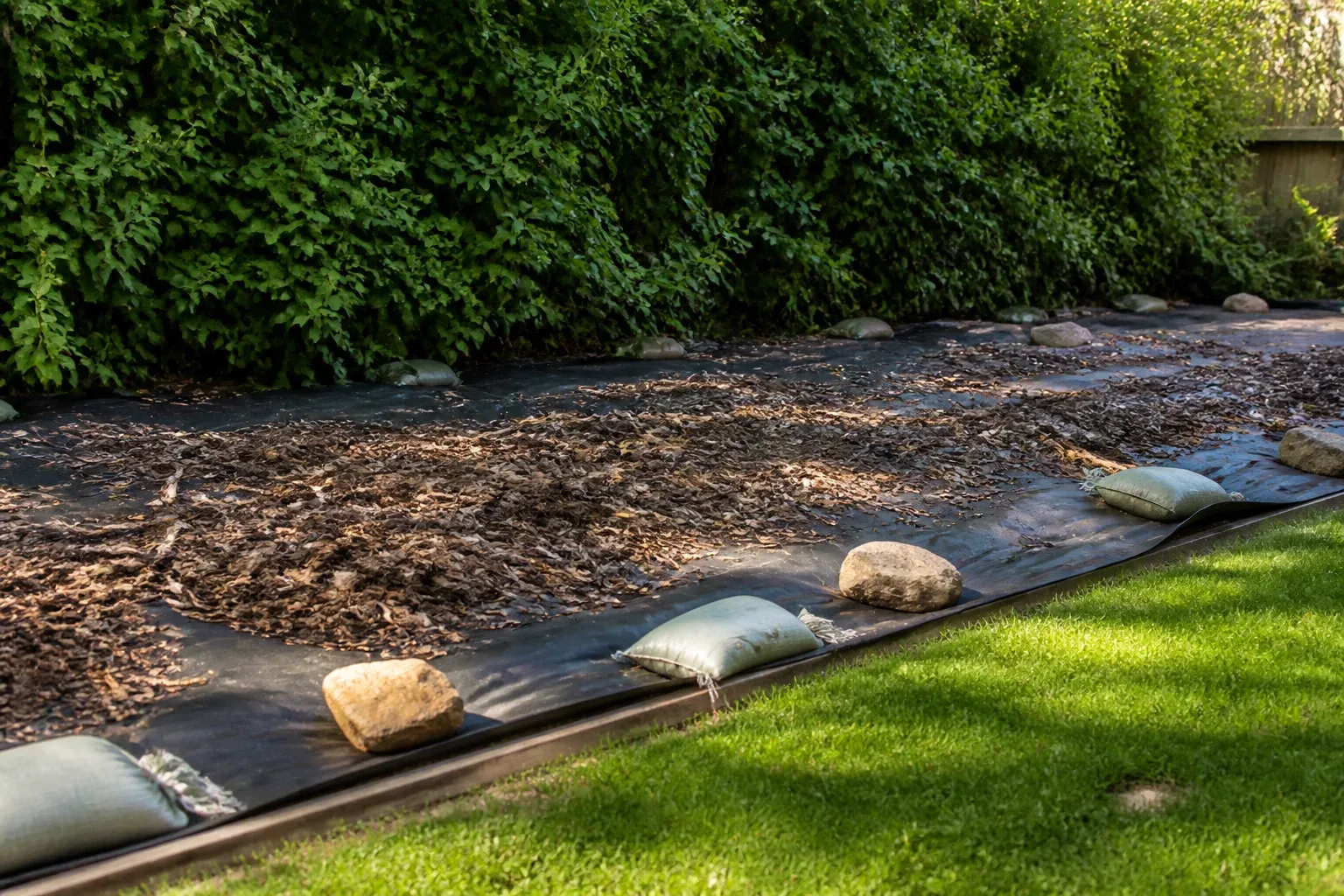
Apply two to three inches of organic mulch around established plants, keeping it away from crowns and trunks. Cardboard or opaque landscape cover can suppress a larger patch, but overlap edges and monitor holes around desirable plants; bindweed and other runners can find tiny openings. Mulch is prevention, not a permanent barrier, so top it up and pull seedlings while they are small.
Use Herbicides Only as a Site-Specific Tool
Read the entire label before buying or applying a product. The label determines the legal site, target weeds, turf or crop tolerance, protective equipment, mixing, weather limits, re-entry, and disposal. A broadleaf lawn product can damage flowers and vegetables; a nonselective product can kill every green plant it contacts; a pre-emergent can interfere with seeds you want to germinate.
Never use salt, bleach, or homemade mixtures as a shortcut in soil. Vinegar can scorch foliage without solving roots, salt can injure soil structure and desirable plants, and bleach is not a soil-safe weed strategy. Keep sprays away from ponds, drains, edible crops, pollinator flowers, and windy conditions, and follow the label’s instructions for people and pets. If the weed is near a prized shrub, physical removal and a shielded, carefully targeted method are usually less risky than broadcast spraying.
Know When a Weed Problem Needs Local Help
Ask your county extension office, master gardener program, or licensed vegetation manager when the plant is toxic, invasive, regulated, growing near water, entwined with a tree, or covering a large area. Bring clear photos of the whole plant, close-ups of leaves and stems, and a note about location, season, and soil moisture. A local expert can identify regional look-alikes and tell you which products are legal and effective there.
Get help rather than improvising when you suspect poison ivy or poison sumac, have a severe allergy, need to remove a mature Japanese knotweed patch, or are considering herbicide near children, pets, edible crops, wells, or a pond. Invasive-plant rules differ by state and county; Oregon’s noxious-weed resources, for example, publish state classifications, which illustrates why a generic national list cannot replace local guidance.
A Seasonal Weed-Control Checklist
Late winter and spring: identify winter annuals before flowering; pull bittercress, chickweed, henbit, shepherd’s purse, and lawn burweed; repair bare turf; and time crabgrass prevention for local soil and weather conditions rather than a calendar date copied from another climate.
Late spring and summer: scout weekly for fast annuals, dig dandelions and plantain after rain, cut ragweed and thistle before seed, and pull purslane, pigweed, lambsquarters, and quickweed while young. Keep mulch in place and do not let a missed plant become a seed head.
Late summer and fall: control perennial regrowth while plants are actively growing, reseed lawns at the right local window, and clear paths before winter annuals establish. Inspect fence lines and compost areas for vines, berries, and rhizome fragments.
All year: keep unknown plants away from bare hands, children, and pets; clean tools after removing toxic or diseased material; record recurring patches; and fix the condition that invited the weed—compaction, bare soil, excess water, poor light, or weak turf.
Conclusion
The most useful weed-identification rule is simple: identify first, then choose the method that matches how the plant survives. Pull seed-producing annuals early, dig taproots, remove runners and rhizomes without chopping them into pieces, prevent tubers, and repair the bare or compacted conditions that let weeds return.
You do not have to remove every wild plant to have a healthy garden. Keep low-risk clover or flowering lawn weeds if they fit your goals, but treat poison ivy, poison sumac, stinging nettle, toxic berries, and regulated invasive plants with extra caution. A steady cycle of observation, timely removal, mulch, healthy turf, and local advice beats a one-time spray for most home landscapes.